
THIS POST MAY CONTAIN AFFILIATE LINKS. PLEASE READ MY DISCLOSURE FOR MORE INFO.
You have sorted a load, picked up a shirt, and found a little cut edge where the washing instructions used to be. Or you have brought home a secondhand find with a faded tag. It is tempting to choose a cold delicate cycle and hope for the best, especially when everyone needs clean clothes for tomorrow.
Before you wash clothes with a missing care label, try to recover the instructions for that exact garment. If you cannot confirm a suitable method, set it aside and ask the manufacturer or a garment-care professional. Cold water, a mesh bag, and hand washing can reduce some kinds of wear, but none makes an unknown garment automatically washable.
Here is a manageable way to work through the decision without letting one mystery item hold up the rest of the laundry. The free care-record sheet near the end gives you somewhere to save the answer once you find it.
Disclosure: This post may contain affiliate links. As an Amazon Associate, Clean Home Challenge earns from qualifying purchases. If you make a purchase through these links, we may earn a small commission at no extra cost to you. This helps us keep creating practical cleaning tips, routines and resources for busy families! 🧽
Find the Original Care Instructions
Start with a short information search while the garment is still dry. You are looking for instructions that match the actual item, rather than a general rule for a fabric that looks similar.
Look beyond the neck tag
Turn the garment inside out and gently check the side seams, lower hem, waistband, pockets, and lining. Care information can be on a separate label from the brand and size. Unfold any remaining label leaves and photograph both sides in good light. Do not pull apart a seam to find a tag.
If the label is faded, a clear phone photo may make remaining letters easier to enlarge. Record only what you can actually read. A partially visible temperature or symbol is a clue to investigate, not a complete washing instruction. A fiber-content label also does not establish how the finished garment should be cleaned.
Match the item before using online advice
Gather the brand, product name, style number, color, and approximate purchase date. An email receipt, order history, original listing, or packaging may help identify it. Search the brand’s own website for the exact style, then compare photographs and construction details. A shirt from the same collection can still have different care requirements.
Ask customer service to confirm the washing, drying, bleaching, and ironing instructions, including any restrictions. A useful message is: “The care label is missing from this garment. Can you confirm the full care instructions for this style and color? I have attached photos of the item and its remaining labels.”
Save a screenshot or written reply with the date. If the manufacturer cannot identify the item, keep that uncertainty in your record instead of turning a general fabric guide into a replacement label.
Include the whole garment
Look for a lining, bonded layers, shoulder shaping, decorative trim, glued details, pleats, prints, and mixed-color panels. These details help you describe the item to the brand or cleaner; they do not let you confidently identify its care method at home. A washable-looking outer fabric may be attached to a component that needs different treatment.
The FTC’s care-labeling guidance treats the finished garment and its components as part of the care decision. That is a useful reason to avoid copying instructions from an unrelated cotton shirt, even when both items feel similar.
Decide Whether Home Washing Can Wait

If the exact instructions are still unknown, make a deliberate next-step decision. You do not need to solve the garment’s fiber composition before you can move the rest of your laundry along.
| What you know | A sensible next step |
|---|---|
| The brand has confirmed care for the exact garment | Follow the complete instructions, including drying and warnings. |
| Only the fiber content or a general brand care page is available | Ask for garment-specific advice before choosing a method. |
| The item has a lining, bonded details, delicate trim, or sentimental value | Arrange a professional assessment before wetting or treating it. |
| You remember one successful wash but not the full method | Record what happened, but do not treat it as proof that repeated washing is safe. |
| Nothing reliable identifies the item | Keep it out of the normal load and ask a garment-care professional about the options and remaining risks. |
Give uncertain items a clear place
Put a clean, dry item awaiting advice in a separate basket or breathable bag with a note: “Care instructions needed.” Keep the note outside the garment so nobody mistakes it for a laundry additive or leaves paper in a pocket. Tell the family that this basket is not ready to wash.
If the garment is damp, do not seal it in a plastic bag or leave it buried in a pile. Seek prompt care advice and explain why it is wet. An item contaminated with bodily fluids, chemicals, or another hazardous substance needs advice suited to that situation; airing it is not a cleaning or disinfecting method.
Choose a different outfit for an urgent event if you can. A deadline is a good reason to simplify the plan, not to escalate to hot water or a strong stain treatment.
Know what a home test cannot tell you
Feeling the fabric, stretching a seam, or looking at a loose thread cannot reliably tell you whether the garment will shrink, bleed, lose its finish, or distort. Do not burn a thread or use solvent experiments to identify a textile.
A small hidden-area test, when a known compatible treatment calls for one, checks only that treatment on that small area. It does not prove the entire garment can be immersed, machine washed, steamed, or tumble dried. Skip experiments when the method itself has not been established.
The Drycleaning & Laundry Institute explains that professionals can assess care options when a label is missing or illegible. Tell the cleaner about previous washing, repairs, stains, and anything already applied. Ask what testing they can do and what uncertainty remains; professional assessment is helpful, but it is not a guarantee against every possible problem.
Wash Only After You Confirm the Method
Once you have reliable instructions for the item, use those instructions to build the wash. This section is a preparation checklist for a confirmed washable garment, not a universal recipe for unlabeled clothes.
Get the wash and the drying plan ready together
Before adding water, confirm whether washing should be by hand or machine, the permitted temperature and cycle, the appropriate detergent, and how the garment should dry. Note any restrictions on soaking, spin, bleach, ironing, or steam. If “wash gently” is the only answer you have, ask for the missing details.
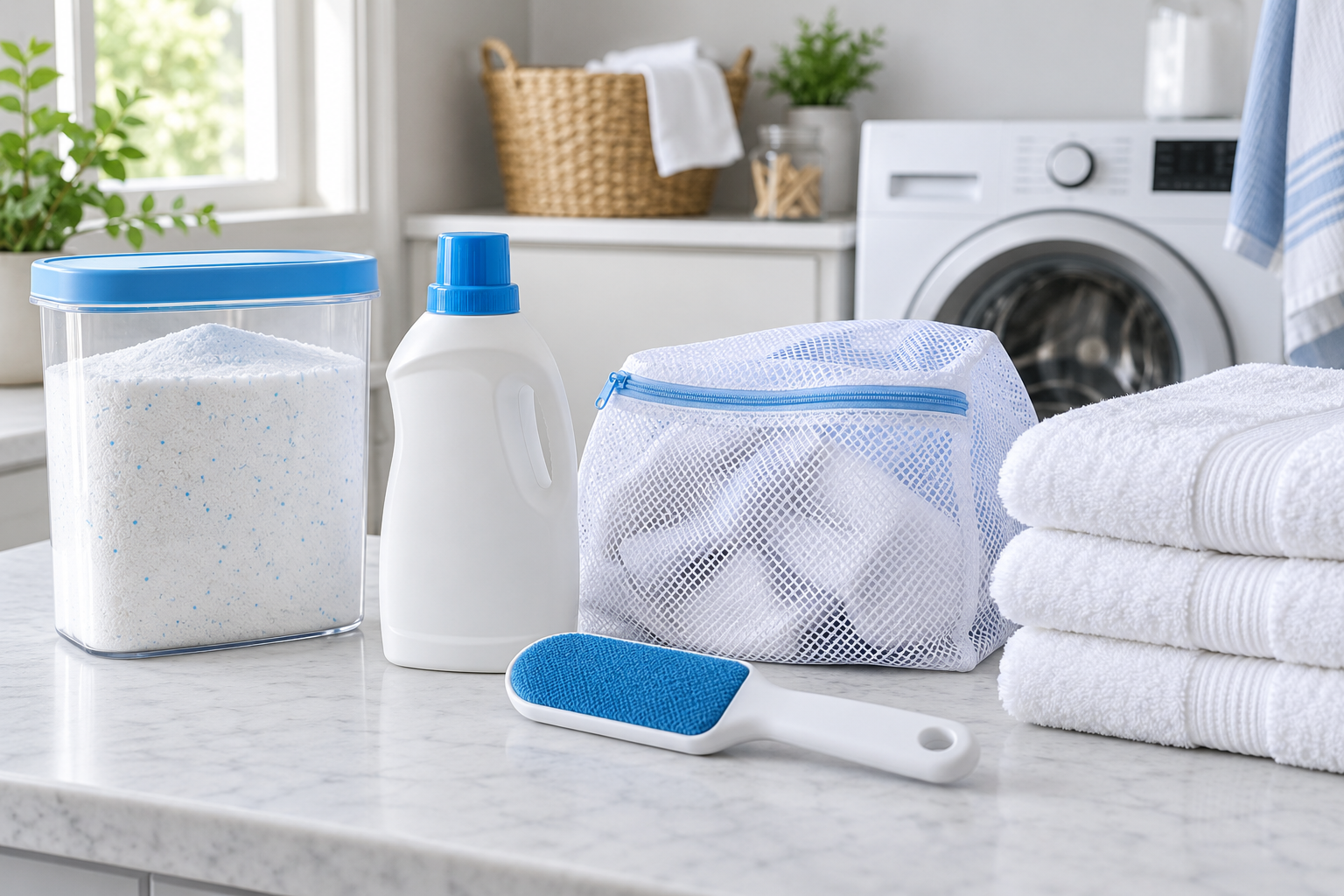
Have the recommended detergent, a clean basin or suitable machine, and the required drying space ready. You might also need a clean towel, a drying rack, or a mesh bag if the garment’s confirmed instructions recommend one. You do not need to buy a special product just because a label is missing.
Allow time for the garment to dry completely before it is needed. There is no reliable universal drying time for an unknown construction, and increasing heat to meet a deadline can undo careful washing.
Use a simple order of work
- Inspect the dry garment. Empty pockets and check for loose trim, damaged seams, and anything needing repair before washing. Photograph pre-existing damage if you are discussing it with the brand or cleaner.
- Prepare it as directed. Follow instructions for fasteners, turning inside out, removable parts, and any bag. A mesh bag limits some mechanical contact; it does not change whether a garment is washable.
- Separate it appropriately. Follow color and fabric-separation advice. Do not add an uncertain dark or mixed-color item to the family’s white load to save a cycle.
- Measure the suitable detergent. Use the product’s dose for the load and machine, together with the garment’s restrictions. More detergent does not compensate for uncertain care instructions. Do not combine cleaning products.
- Use the confirmed method. Select the specified machine settings or follow the actual hand-wash directions. Avoid adding a long soak, vigorous rubbing, wringing, or an extra treatment that was never recommended.
- Dry the permitted way. Move the item promptly to its specified drying arrangement and support it as directed. Do not assume that every garment should hang, lie flat, or go in a dryer.
- Check before storing. Let it dry fully, then note any changes and the settings actually used. If something looks wrong, pause before another treatment and ask for advice.
For a general refresher on sorting, dosing, and following care instructions, see Whirlpool’s laundry preparation guide. Your garment’s specific instructions still control the choice of method.
Avoid these tempting shortcuts
Hand washing is not automatically the safest option. It still wets the entire garment and can affect shape, color, or construction. Likewise, a cold delicate machine cycle does not stand in for missing instructions.
A wool-like feel is not enough to select a wool cycle. Woolmark’s washing guidance links the method to the garment’s care claim. Confirm the actual garment rather than applying a wool routine to an unidentified blend or lining.
Skip bleach, stain removers, steam, and dryer heat until permitted. A product described as gentle, natural, or suitable for colors may still be unsuitable for the garment. A stain does not remove the need to establish compatible care. If professional help is planned, describe the stain and previous treatments instead of trying several products first.
Keep a Care Record for Next Time

The most useful outcome is a clear answer that you can use again. Once the brand or cleaner has established a care plan, save it somewhere the person doing the next load can find it.
Download the Missing Care Label: Garment Care Record (free PDF). It has space for the garment’s identity, the source of confirmed instructions, the washing and drying details, and a short record of what happened. Use one sheet per garment. Leave unknown fields blank and mark the item as waiting for advice; a partly completed sheet is not permission to wash.
Make the record specific enough to help
Attach or save a photo showing the whole garment and any remaining label. Record the exact style and color, who provided the instructions, and when. Include drying and restrictions as well as the wash cycle. “Delicate” on its own will not tell another family member whether hand washing, low spin, or a particular drying method was intended.
After an authorized wash, note the date, actual settings, products, and visible result. Keep the source instructions even if the first wash goes well. If you later discover conflicting advice, pause and clarify the difference rather than combining the most convenient parts of each version.
Fit the check into a small laundry routine
For a busy week, give yourself one short admin task: photograph the item and send the care question. Wash the rest of the suitable load as usual. When the reply arrives, update the record and return the garment to the appropriate place.
Saturday’s laundry catch-up can include checking the “care instructions needed” basket, but you do not need a growing stack of mystery clothing. Give each item a next action, such as contacting the brand or booking an assessment, and write it down.
For support with a more manageable household rhythm, the Cleaners Clubhouse offers practical routines and printable support. You can explore the details below after saving your free care-record sheet.
CLEANERS CLUBHOUSE
Make Laundry Catch-Up Feel More Manageable
Use Saturday to catch up without letting laundry take over the whole weekend. Inside the Cleaners Clubhouse, practical routines and printable support help you keep washing, folding and household jobs moving.
One missing tag does not need to derail laundry day. Find the best evidence you can, keep uncertain garments out of the normal load, and save the answer once it is confirmed. That small pause can make the next wash much easier to organize.