

THIS POST MAY CONTAIN AFFILIATE LINKS. PLEASE READ MY DISCLOSURE FOR MORE INFO.
A favorite sweater with faux-leather elbows or a shirt with leather-look pockets can make an ordinary laundry load feel suddenly complicated. The fabric may look easy to wash, while the shiny panel leaves you wondering whether it will peel, crack, or bleed color.
The safest way to wash clothing with faux-leather panels is to follow the care instructions for the complete garment, including its trim. Wash only when those instructions allow it. A cotton or polyester body, a tiny panel, or a cold-water setting does not establish that the whole item is washable.
Start with one garment and a clear counter. The label check may take just a few minutes; cleaning and drying need their own time. You do not need to solve every unusual item in the laundry basket today.
Disclosure: This post may contain affiliate links. As an Amazon Associate, Clean Home Challenge earns from qualifying purchases. If you make a purchase through these links, we may earn a small commission at no extra cost to you. This helps us keep creating practical cleaning tips, routines and resources for busy families! 🧽
Read the Whole Garment Care Label

Find the sewn-in care instructions, then read the entire label before choosing a product or filling a basin. Look for washing, bleaching, drying, ironing, and professional-cleaning directions. Check any wording about panels, lining, removable parts, or cleaning separately. The fiber-content tag is useful information, but it is not a washing method.
GINETEX explains that care labeling takes vulnerable features into account, including finishes, accessories, and applied details. That is why “mostly cotton” cannot answer this question by itself. Faux leather can be a coated material attached to a different fabric, and the coating, backing, seams, and surrounding fabric all need to tolerate the chosen treatment.
Use this simple decision guide:
| What the garment says | What to do next |
|---|---|
| Machine washable, with a specified temperature or cycle | Follow those instructions for the complete item; also check drying restrictions. |
| Hand wash | Wash by hand as directed. Do not substitute a delicate machine cycle just because it sounds gentle. |
| Wipe clean or spot clean only | Keep to the stated local-cleaning method. Do not immerse the garment. |
| Do not wash, with professional-cleaning directions | Show the complete label and trim to a suitable professional cleaner before treatment. |
| Missing, illegible, or contradictory instructions | Contact the garment maker with the style number and photographs. Set the item aside while you check. |
Manufacturer instructions genuinely differ. UNIQLO’s Faux Leather Blouson, product 491662, lists cold hand washing and prohibits dry cleaning. In contrast, 12 STOREEZ’s faux-leather care page advises against washing its faux leather. These are examples of why a method for another brand’s jacket cannot decide how to clean your mixed-material shirt.
Before starting, inspect the panels in good light. Look at edges, elbows, underarms, stitching, and folds. Stop if the surface is already sticky, flaking, cracked, bubbling, or separating from its backing. Take a photo and ask the maker about the condition. Peeling material is not ordinary dirt, and a stronger wash cannot reliably replace a damaged coating.
If a collar, belt, or trim piece is designed to detach, remove it only when the instructions say to do so, and follow each part’s directions. Do not unpick sewn panels to make a garment washable. If the instructions seem incompatible, ask the manufacturer rather than choosing whichever option looks easiest.
For a busy wash day, make a small “check care first” space away from the general hamper. Leave a note identifying the garment so someone else does not helpfully put it into the next hot load. Keep the original label attached; a phone photo is a useful backup, not a reason to remove it.
Spot-Clean Only When the Instructions Allow

For an item whose maker permits surface wiping, local cleaning may be enough for a small mark. ILSE JACOBSEN’s faux-leather guide, for example, recommends a damp cloth for its faux-leather materials. That supports a restrained approach for compatible items; it is not permission to wet every faux-leather garment.
Gather two clean, soft, white cloths, water at the permitted temperature, a towel to protect the work surface, and only the cleaner the garment instructions allow. White cloths make transferred dye easier to notice. Keep products out of children’s reach and follow their labels; use protective gloves if the product requires them.
- Check the whole item first. Decide whether the mark is on the coated panel, the fabric body, or the seam between them. A treatment suitable for one may not suit the neighboring part.
- Test a hidden area. Use the intended cloth and permitted method on a small, inconspicuous section with the same finish. Let it dry before checking for color loss, tackiness, a tide mark, or a change in sheen. A successful small test cannot guarantee an aging coating will stay intact everywhere.
- Use very little moisture. Where damp wiping is permitted, wring the cloth well. Support the panel on the towel and wipe gently without repeatedly rubbing its edges. Do not pour water or spray cleaner over the garment.
- Handle cleaner residue as directed. If the approved product requires a clean-water wipe, use the second well-wrung cloth. Do not leave a detergent film or saturate seams while trying to remove it.
- Let the treated area dry and reassess. Stop if color transfers, the finish changes, or the panel feels different. If the mark remains, ask about that particular stain before escalating.
For a fresh spill, lift away loose material carefully and blot a wet spot gently where the garment permits. Avoid dragging food or colored liquid across the join between materials. Do not scrape a panel with a blade, rough sponge, or abrasive eraser. A dark smear could be transferred dye or damaged coating rather than something that needs harder scrubbing.
Leave vinegar mixtures, baking soda pastes, alcohol, bleach, nail-polish remover, and all-purpose stain treatments out of an improvised faux-leather routine. Also avoid assuming a real-leather conditioner, furniture wipe, waterproofing spray, or cooking oil belongs on clothing. Use a treatment only when both the garment maker and product instructions support that application. Never mix cleaners.
Sometimes the fabric body is dirty but the panel is clean. Do not try to soak the shirt while holding the trim above the water: moisture can travel through fabric, and accidental immersion is easy. Ask the maker how the assembled garment should be cleaned. A wipe-only instruction also does not mean a surface wipe will clean perspiration throughout a lining.
Wash Gently Only If the Label Permits

Once the complete garment is confirmed washable, write down its method, temperature, detergent restrictions, and drying instructions. Keep those details together. Do not start a wash if you have no suitable place to dry the item afterward.
Empty pockets and remove loose objects. Check which fastenings should be closed, whether the item should be turned inside out, and whether a laundry bag is recommended. Follow the garment’s instructions rather than applying all three steps automatically. Protect delicate panels from rough neighbors such as exposed zippers, heavy denim, and hook-and-loop fasteners.
If the instructions say hand wash
Use a clean basin and the specified water temperature. Measure a suitable detergent according to its label and the amount of water; extra detergent means extra rinsing, not better care. If the garment has special detergent requirements, those control your choice.
Lower and support the item gently, then use the maker’s permitted washing action and contact time. Do not add a prolonged soak as a stain-removal shortcut. Avoid kneading, scrubbing, or twisting the panels. Rinse according to the instructions, supporting the wet garment rather than lifting it by one sleeve or a small piece of trim.
Remove excess water without wringing the coated panels. If the maker allows towel pressing, place the supported garment on a clean towel and press gently. Do not twist it into a tight rope. Move directly to its permitted drying setup.
If the instructions allow machine washing
Choose the garment’s stated cycle and temperature and use detergent compatible with both the garment and your washer. A mesh bag can reduce contact with other items when recommended, but it cannot turn a nonwashable coating into a washable one. Keep the load small enough for the garment to move without being jammed against rough items, following the washer’s load guidance.
Do not replace a label’s gentle setting with a heavy-soil, sanitize, steam, or hot program to deal with an odor. Do not add a prewash, extended soak, high-speed spin, bleach, or fabric softener unless the garment instructions permit it. If the allowed method cannot deal with the problem, seek garment-specific advice instead of increasing intensity.
Whirlpool distinguishes hand-wash-only garments from items suitable for its delicate cycle. The practical takeaway is to read the care tag and appliance instructions together: the name on a washer dial is not evidence that every hand-wash garment can go inside.
Remove the garment promptly after its permitted wash. Support its weight and check the panels before the next step. If there is a change in texture, color, adhesion, or shape, stop. Keep it separate from other garments if dye or flaking material is transferring, and contact the maker with photographs and the care method used.
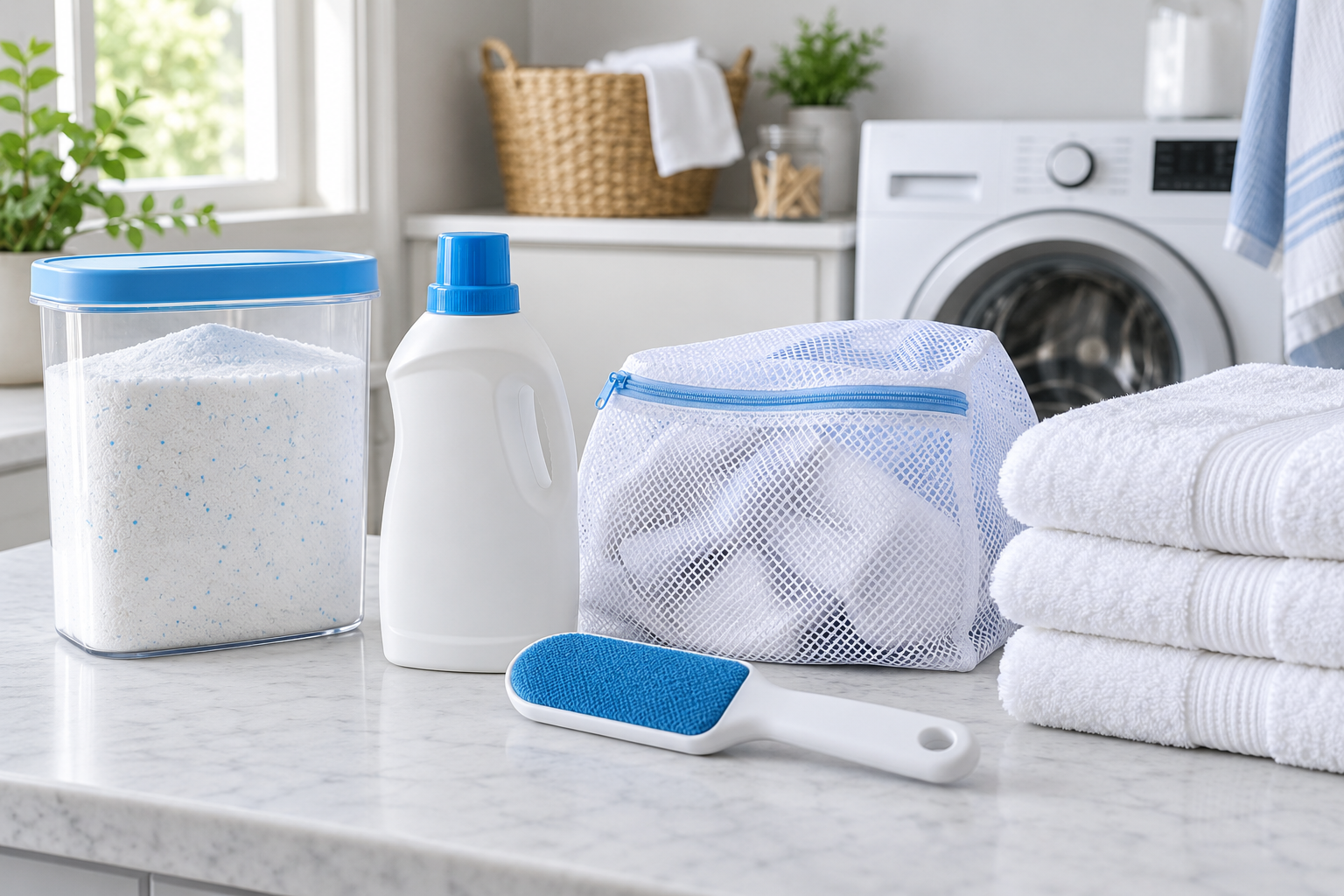
You do not need a special collection of products to begin. Start with the suitable supplies you already own; choose replacements only when they solve an actual need. Our laundry-room collection is a useful place to browse ordinary tools, while the garment label still decides what can touch this particular item.
Dry, Inspect, and Store With Care

Drying is part of the care method, not an afterthought. Follow the label’s specified shape and position. A knit garment may need flat support, while another item may permit hanging. Do not hang a heavy wet sweater by its shoulders just because its panels look sturdy.
Keep faux-leather panels away from radiators, hair dryers, and direct heat. Do not use a tumble dryer as a quick finish for this general routine. The synthetic-leather guidance checked for this article recommends avoiding tumble drying. If your garment seems to give conflicting instructions, clarify them with the maker before applying heat.
Use a well-ventilated drying space and allow room around the item. Keep it away from direct strong sunlight and do not fold wet panels against one another. If drying flat, use a suitable clean support and reposition or replace a wet towel as needed without stretching the garment. Keep the drying setup clear of walkways and children’s play areas.
Do not iron or steam a panel to tidy it up unless the exact garment instructions expressly support the treatment. Another brand’s reverse-side steaming tip is not permission to use steam on your garment. A crease is a reason to check its care guidance, not to experiment with an iron temperature.
Before storing, check seams, thicker panels, cuffs, lining, and folds for retained moisture. Inspect the dry finish in daylight and note any change. UNIQLO warns that polyurethane and other resin-based items can deteriorate over time even when unused; careful cleaning does not guarantee that an old coating will never peel.
Store the clean, fully dry garment according to its instructions with space around it, away from heat and damp conditions. Avoid tightly compressing coated surfaces together. If the item needs a hanger, choose one that supports its shape; if it needs folding, avoid forcing a sharp crease through a panel.
Save a note so the next wash is easier
Use the free Faux-Leather Panel Garment Care Note to record the exact label instructions, a hidden-test result, the chosen method, and the drying setup. It includes a short stop-and-check list so another person can help without guessing.
Download the free Faux-Leather Panel Garment Care Note (PDF).
Keep the note with your laundry information or take a photo of the completed page. It is a reminder of this garment’s instructions, not a replacement label or a universal care recipe. Update it if the manufacturer gives new advice or the panel’s condition changes.
For a lower-energy wash day, do just three things: read and photograph the label, set the garment safely aside, and record what needs checking. Leave the main family’s laundry moving while this item waits for the right method. That is useful progress, even when nothing has been washed yet.
If you would like help making everyday washing and household jobs more manageable, explore the Cleaners Clubhouse. The free care note is available without joining; the membership invitation below offers the routine and printable support described in our existing laundry resource.

CLEANERS CLUBHOUSE
Make Laundry Catch-Up Feel More Manageable
Use Saturday to catch up without letting laundry take over the whole weekend. Inside the Cleaners Clubhouse, practical routines and printable support help you keep washing, folding and household jobs moving.
Sources and garment-care guidance
Guidance checked November 3, 2026. Follow the current instructions supplied with your own garment and cleaning product. Manufacturer examples illustrate differing care requirements; they are not universal directions for mixed-material clothing.
- GINETEX: care labeling principles
- UNIQLO: Faux Leather Blouson, product 491662, materials and care
- 12 STOREEZ: faux-leather care guide
- ILSE JACOBSEN: faux leather and PU care guide
- Whirlpool: delicate and hand wash cycles
- UNIQLO: synthetic-leather care and storage guidance
- FTC: care-label guidance and alternative cleaning risks