
THIS POST MAY CONTAIN AFFILIATE LINKS. PLEASE READ MY DISCLOSURE FOR MORE INFO.
A sticky mark needs removing, the cleaning cupboard is open, and a spray seems like the quickest answer. Then you notice the word flammable. That small warning changes how you plan the job, even if you only intended to clean a tiny patch.
Flammable means that a product, its vapor, or an aerosol spray can catch fire under the conditions described on its label. Heat, flames, and sparks matter. The warning is about the whole job: where you use the product, what is nearby, how you store it, and what happens to the used materials afterward.
You do not need to memorize chemical classifications to make a better decision. Start with the exact container in your hand. This guide explains the warning in everyday terms and gives you a short label-check routine you can repeat before the next clean.
Disclosure: This post may contain affiliate links. As an Amazon Associate, Clean Home Challenge earns from qualifying purchases. If you make a purchase through these links, we may earn a small commission at no extra cost to you. This helps us keep creating practical cleaning tips, routines and resources for busy families! 🧽
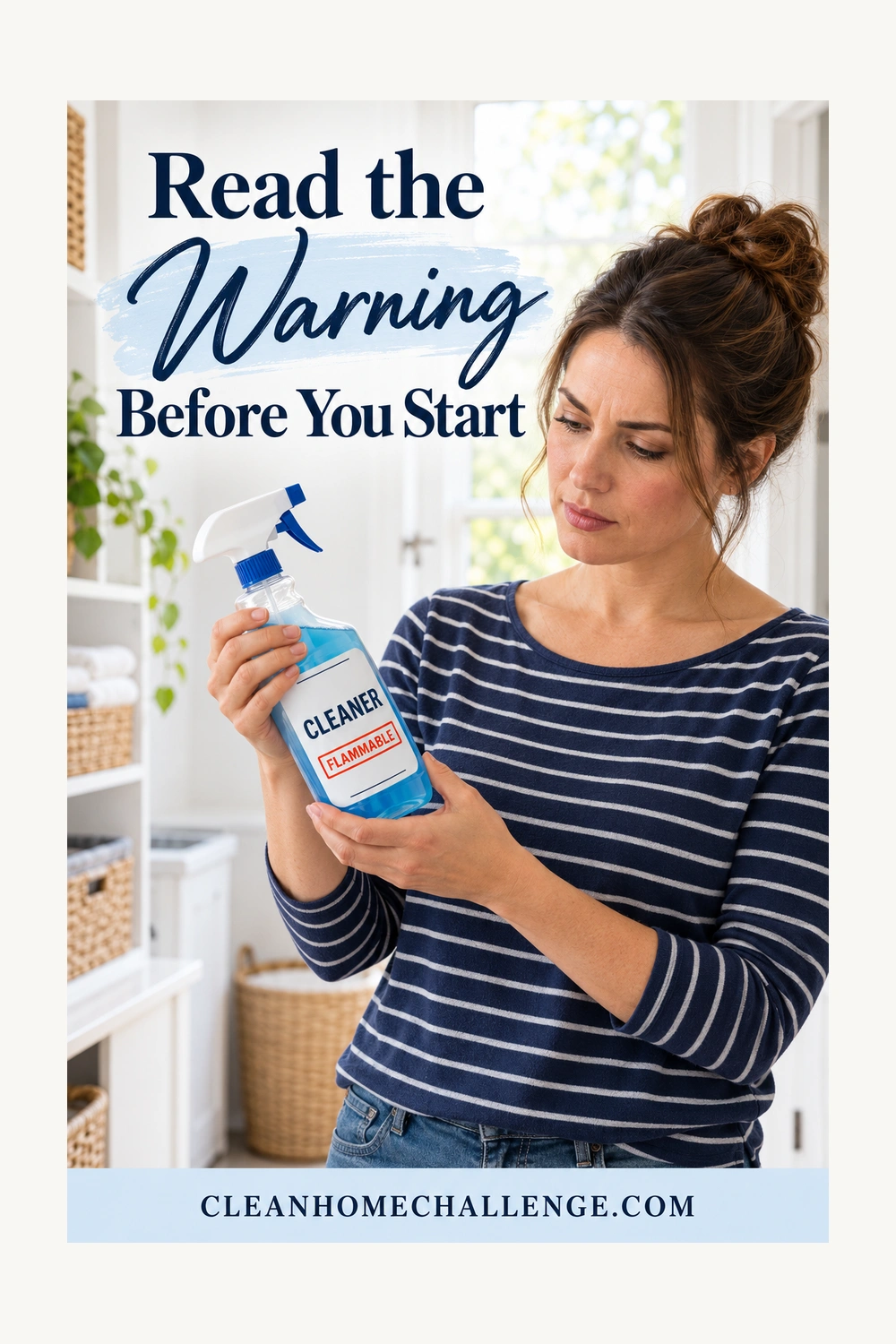
Read the Warning Before You Start
Read past the front of the bottle
The front tells you what a cleaner promises to do. The back or side often tells you the conditions you must meet to use it. Read those directions before opening the container, rather than trying to work them out with product already on a cloth.
Look for the hazard wording, application directions, ventilation requirements, protective equipment, storage conditions, cleanup instructions, and first aid. A warning about fire can sit beside a separate warning about harmful vapor or skin irritation. Following one instruction does not replace the others.
The CPSC’s household product labeling guidance explains that precautionary labels communicate hazards and measures for use, storage, and first aid. Its guidance also distinguishes consumer labels from workplace safety data sheets. You may see different symbols or terms on products sold in different countries; read the wording on your own product rather than using a picture from another bottle as the rule.
A few terms worth understanding
| Label term | What it should prompt you to check |
|---|---|
| Flammable liquid or vapor | Ignition warnings for both the liquid and what evaporates from it. |
| Flammable aerosol | Spray and propellant hazards, plus pressure and heat warnings on the can. |
| Combustible | Fire precautions still matter; do not treat the word as permission to use near heat. |
| Flash point | A laboratory measure relevant to ignition, not a recommended cleaning or storage temperature. |
| Danger, Warning, or Caution | Read the particular hazard statements and precautions that accompany the signal word. |
Do not turn the table into a way to rank two products as universally safe or unsafe. Formulation, packaging, intended use, and the conditions of the task all matter. A trigger bottle and an aerosol can that look similar on a shelf may need different precautions.
For a concrete manufacturer example, WD-40 UK’s aerosol FAQ classifies its Multi-Use Product aerosol as extremely flammable and directs users to its label or safety data sheet. That example does not establish the classification of every WD-40 product, every solvent, or every country-specific formula.
If the directions are unclear, pause the job
Write down the full product name, package type, and manufacturer contact details. Ask about your actual task: the surface, the room, nearby equipment, and any instructions you cannot meet. The safety data sheet may offer supporting detail, but it does not make an unsuitable household task suitable.
A useful decision is sometimes, “I am leaving this mark until I have checked.” Choose a simpler method only when the surface manufacturer permits it. For ordinary dirt, a suitable cloth and an approved mild cleaner may be all the job needs. Do not replace a specialist product with an improvised chemical mixture.
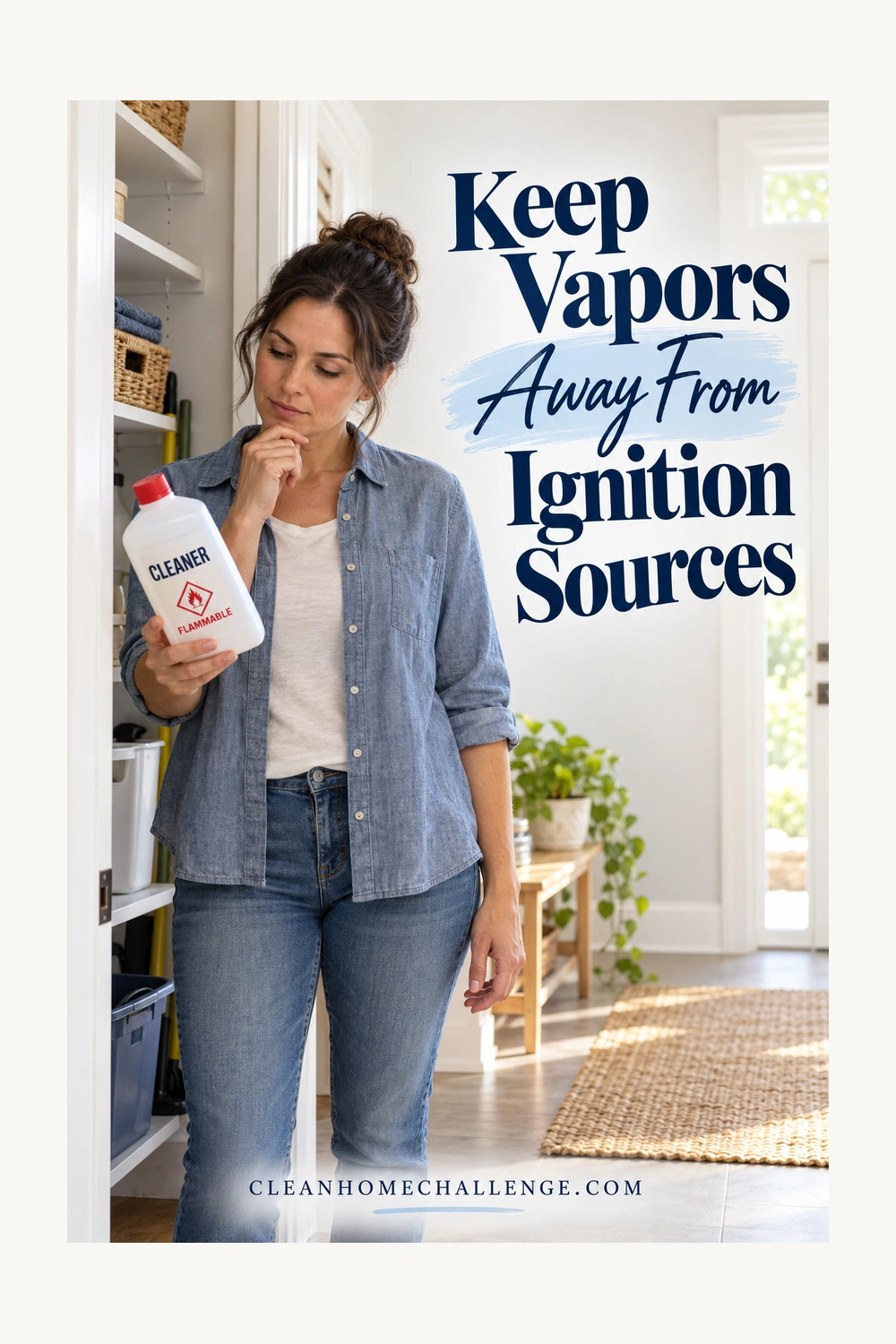
Keep Vapors Away From Ignition Sources
The risk is bigger than a visible flame
Vapor is the gas that a liquid gives off. You may not see it. The CPSC’s flammable liquids safety alert warns that vapors can ignite and identifies gas dryers, furnaces, and older water heaters as possible ignition sources. A bottle can be away from a flame while its vapors enter a hazardous area.
Before use, consider nearby pilot lights, smoking or vaping, heaters, hot equipment, and electrical equipment that can spark. Do not use flammable sprays or solvents near flames, hot surfaces, or energized equipment. A switched-off appliance may still be hot or have another ignition source nearby. Simply pulling out a plug is not a complete safety plan.
This is why “I will just spray a little” is not a useful exception. If the product’s conditions cannot be met in the location, leave it closed and choose a permitted alternative or get product-specific advice.
Plan ventilation before opening the product
Follow the product’s ventilation directions for use and afterward. An open window does not automatically make an enclosed space appropriate, and a household fan is not equipment certified for a flammable atmosphere. Do not improvise by placing a plug-in fan beside a solvent job or switching equipment on to move a suspected vapor cloud.
The Canadian Centre for Occupational Health and Safety’s flame pictogram guidance explains the role of vapor and ignition control. Workplace equipment and engineering controls are not a DIY recipe for making a household room safe. For a home task, the practical question remains whether you can follow the exact product instructions in that space.
Dry-looking is not a timed clearance
There is no universal wait such as five or ten minutes that makes every solvent-treated surface ready for heat or electricity. Product amount, formulation, ventilation, and the material all affect the situation. Follow the label and the equipment or surface manufacturer’s instructions; ask the product maker when they do not answer your question.
Do not use smell as your test. Do not put your face near the container to check fumes, and do not decide a space is safe just because an odor seems weaker. Never test flammability with a match, lighter, heater, or spark.
If there is a fire, a substantial or uncontrolled spill, a suspected dangerous vapor buildup, or uncertainty about safe cleanup, get everyone clear and call the fire department from a safe location. Do not stay to experiment with cleanup or operate electrical switches in the affected area. If someone has been exposed, seek your local poison service’s advice and emergency help for serious symptoms.
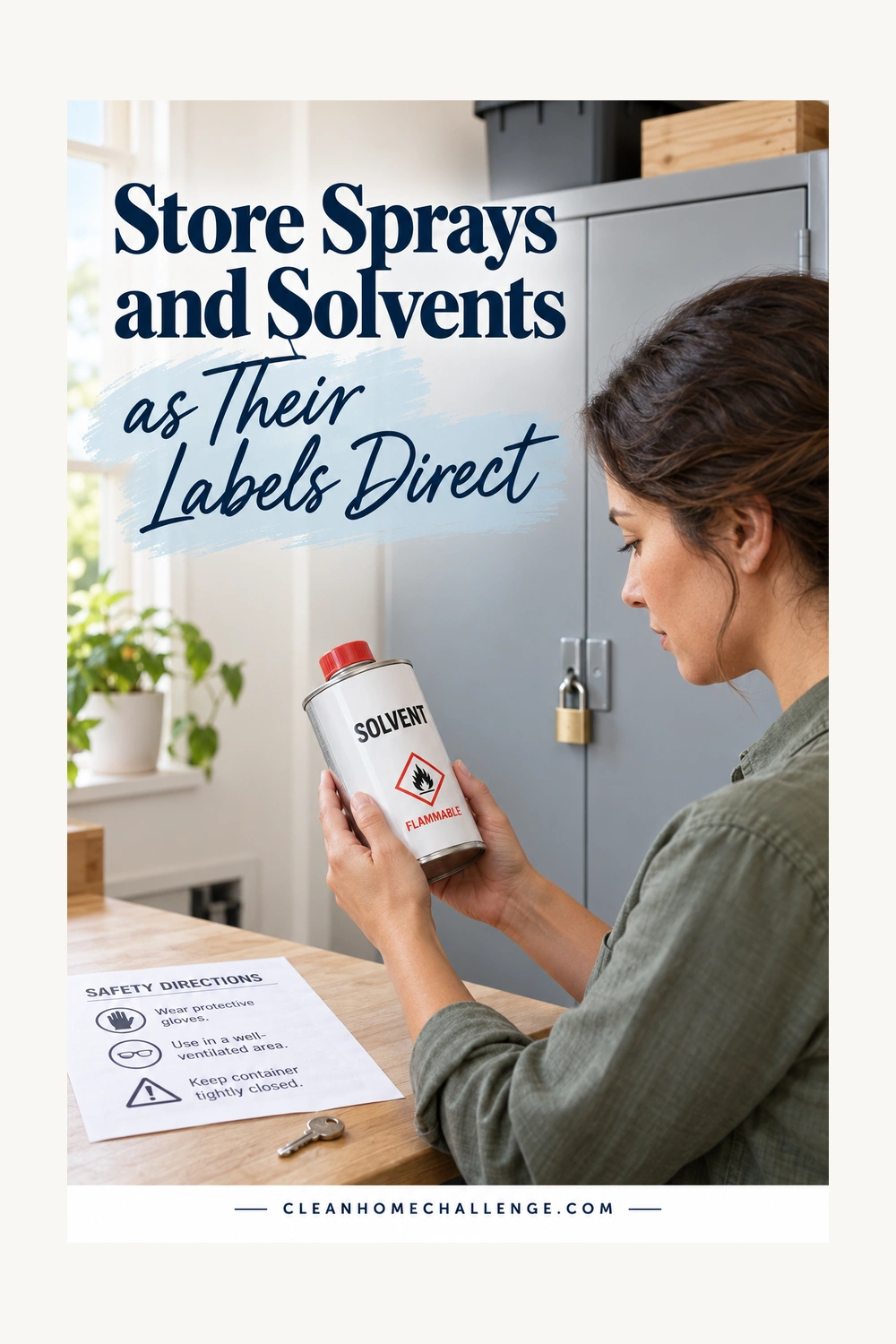
Store Sprays and Solvents as Their Labels Direct
Choose the place for the product
A tidy shelf is useful only if the storage conditions suit its contents. Consider the label’s temperature limits, sunlight restrictions, ventilation needs, ignition warnings, and requirements to keep incompatible products apart. Do not assume that an under-sink cupboard, attached garage, or shed suits every flammable product.
Health Canada advises storing products tightly closed in original containers and keeping products that release harmful fumes or can catch fire outside the home, preferably in a separate building disconnected from its ventilation. Local fire guidance and your product’s directions still determine the appropriate arrangement. If you have no suitable location, ask your local fire service or manufacturer before buying or keeping the product.
Keep supplies inaccessible to children and pets, with a suitable lock where needed. Height alone does not address heat, fumes, or access by a climbing child. Do not use a storage photo online as evidence that a location meets your label.
Keep the identity with the contents
Leave the original label attached and readable. Do not decant solvent into a drink bottle, food jar, or attractive refill bottle. Do not combine leftovers. Close the original closure as directed after use, and avoid buying more than you can reasonably use and store properly.
Make a simple inventory on paper without opening products: full name, intended job, warning, storage direction, and manufacturer contact. A photo of the intact label can help you read small print later. The photo or record supplements the label; neither replaces keeping the original container.
Aerosols and cleanup materials need their own plan
Aerosol cans have pressure hazards as well as any flammability hazard. Follow their heat and sunlight warnings, and never puncture or burn them, including apparently empty cans. Do not leave a can in a hot car while doing errands. Check the manufacturer’s directions and local disposal rules for damaged, unwanted, or partly full containers.
Plan for used cloths before beginning. Some product-contaminated rags can pose fire risks, including self-heating with certain products. Do not put solvent-wet materials into a washing machine, dryer, ordinary laundry hamper, or an improvised storage bag. Follow the specific product’s cleanup and disposal instructions and ask the manufacturer or local hazardous-waste service when unsure.
The EPA’s household hazardous waste guidance recommends retaining original containers, avoiding mixtures, and consulting local waste agencies. Damaged or corroding packaging needs specific handling advice. Do not pour unwanted solvent down a drain or deliberately evaporate it to get rid of it. Our guide to disposing of old cleaning products can help you organize the questions to ask your local program.

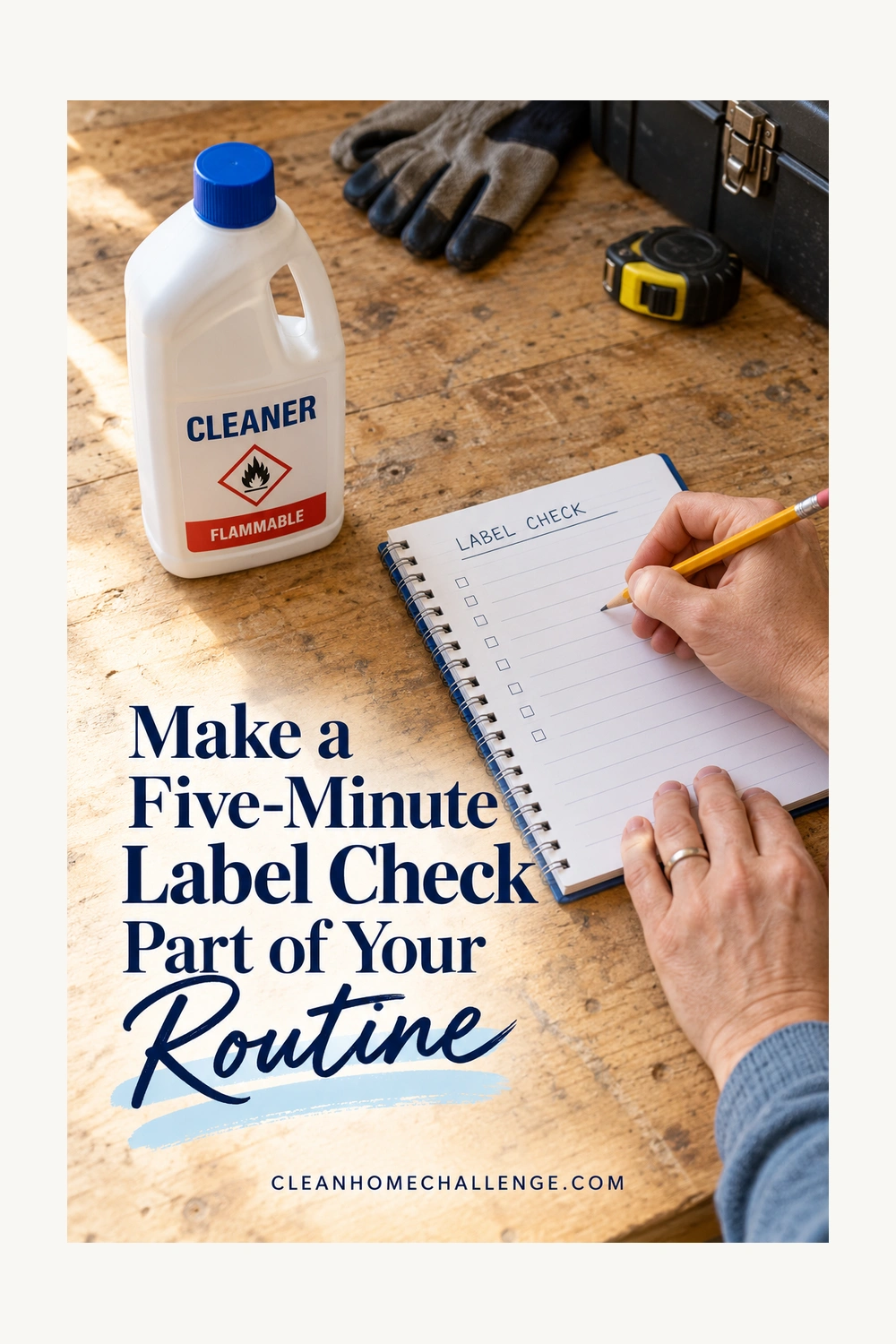
Make a Five-Minute Label Check Part of Your Routine
You do not need to empty every cupboard today. Start with one sound, clearly labeled product that you already use. This is an administrative check, not a speed target for a chemical cleanup. Stop if you find damage, leakage, missing information, or conditions you cannot assess safely.
- Name the job. Write the exact surface and what you are trying to remove. Check the surface care instructions before selecting the product.
- Read and record. Note the hazard wording and the conditions for application, protective equipment, ventilation, storage, and cleanup. Keep the product closed while reviewing it.
- Check the location. Decide whether the task and storage place actually meet those conditions. If not, do not use the product there.
- Resolve one uncertainty. Add a question for the manufacturer or local service. A blank answer means the decision stays open.
- Share the plan. Make sure another adult who cleans knows where the original directions and record are kept. Return the product to its appropriate secure location.
Download the free Cleaning Product Label Record (PDF).
The free record has space for the product identity, label warnings, storage requirements, cleanup directions, and one question to resolve. Keep it with your cleaning notes so the information is easy to find before the next job. Recheck the actual label when buying a replacement; a familiar name does not guarantee unchanged instructions.
For a lower-energy day, record just one product name and the question you need answered. Leave the rest for another day. Safe decisions matter more than getting the whole cupboard ticked off.
If you would like help fitting these small checks into a manageable cleaning routine, you can explore Cleaners Clubhouse. Keep the label record free and practical, and use the membership as optional support for building consistent habits.
CLEANERS CLUBHOUSE
Build a Safer, Simpler Cleaning Routine
Clean confidently with practical guidance that helps you choose sensible products and use them correctly. The Cleaners Clubhouse combines safer cleaning support with realistic routines, worksheets and challenges.