
THIS POST MAY CONTAIN AFFILIATE LINKS. PLEASE READ MY DISCLOSURE FOR MORE INFO.
Start with the places your guests will actually use: the path through the door, somewhere to sit, the bathroom, and a clean place for drinks or food. Work on visible mess and practical comfort before decorative details. Your bedroom closet can wait.
A quick clean before guests is a short reset, not a compressed deep clean. Trying to finish every room in an hour usually creates more half-finished jobs: cushions on the floor, soaking oven racks, and a wet hallway just as the doorbell rings. The better goal is a home that is easy to enter and comfortable to visit.
This plan gives you a clear order, time limits, and permission to stop. It assumes ordinary household mess, one main gathering area, and one guest bathroom. The timing is a suggested workflow, not a tested guarantee. A bigger home, mobility needs, or a significant spill may require fewer tasks or extra help. Use the shorter version at the end whenever a full hour is more than you have.
Disclosure: This post may contain affiliate links. As an Amazon Associate, Clean Home Challenge earns from qualifying purchases. If you make a purchase through these links, we may earn a small commission at no extra cost to you. This helps us keep creating practical cleaning tips, routines and resources for busy families! 🧽
Choose Your Guest Route Before You Start
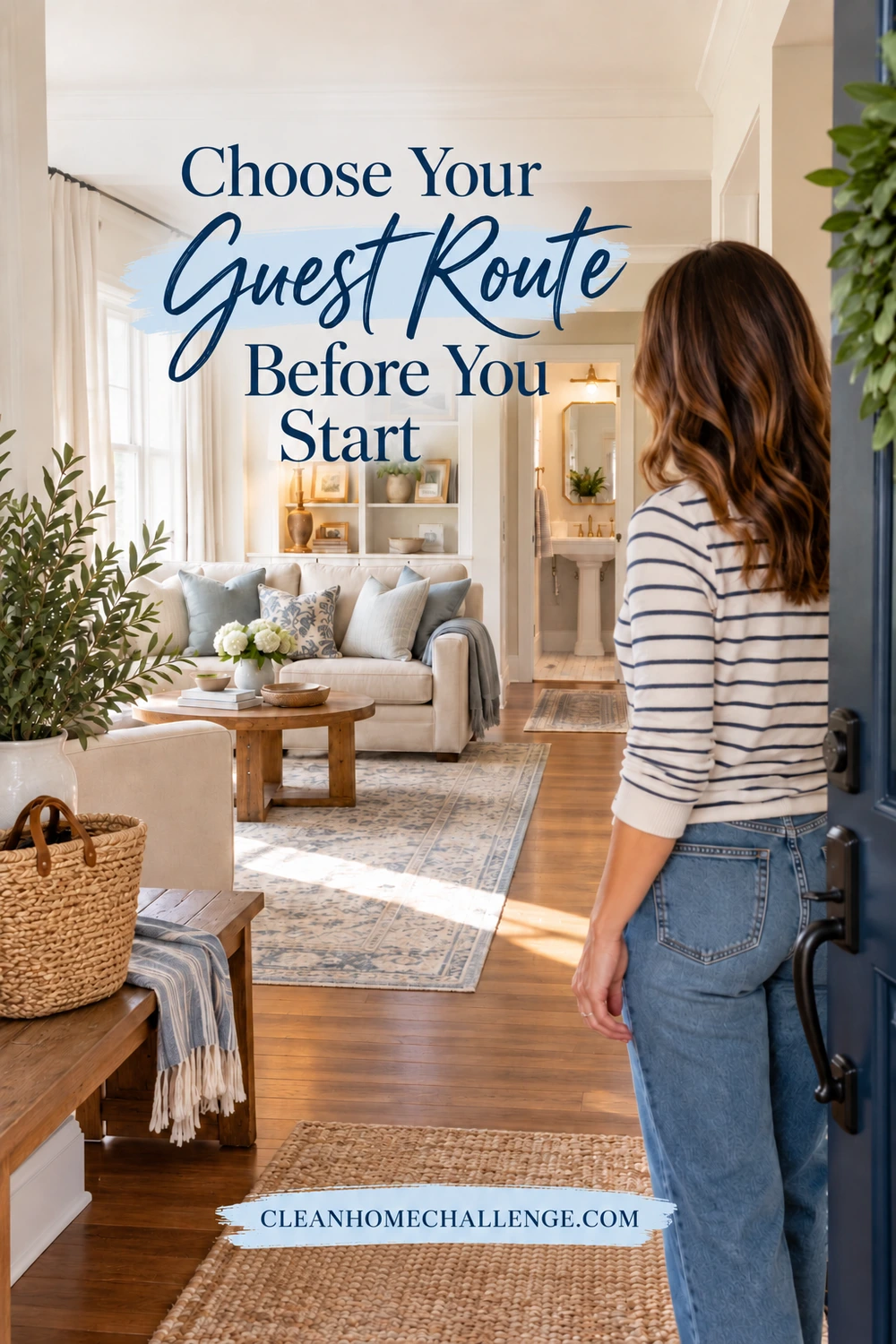
Picture the visit for a moment. Will everyone sit in the living room, eat at the kitchen table, or walk through to the patio? Which bathroom will they use? That route is your cleaning boundary. Rooms outside it do not need to become part of today's project.
Choose three outcomes before touching a cloth:
- Guests can move from the entrance to their seats without stepping over belongings.
- The bathroom has a usable toilet and sink, soap, toilet paper, and a clean hand towel.
- There is a clean surface for whatever you are serving.
Those outcomes matter more than a polished appliance or a perfectly styled shelf. If you finish them early, you can add a small extra. If you run short, you still know what needs attention.
Gather one small kit
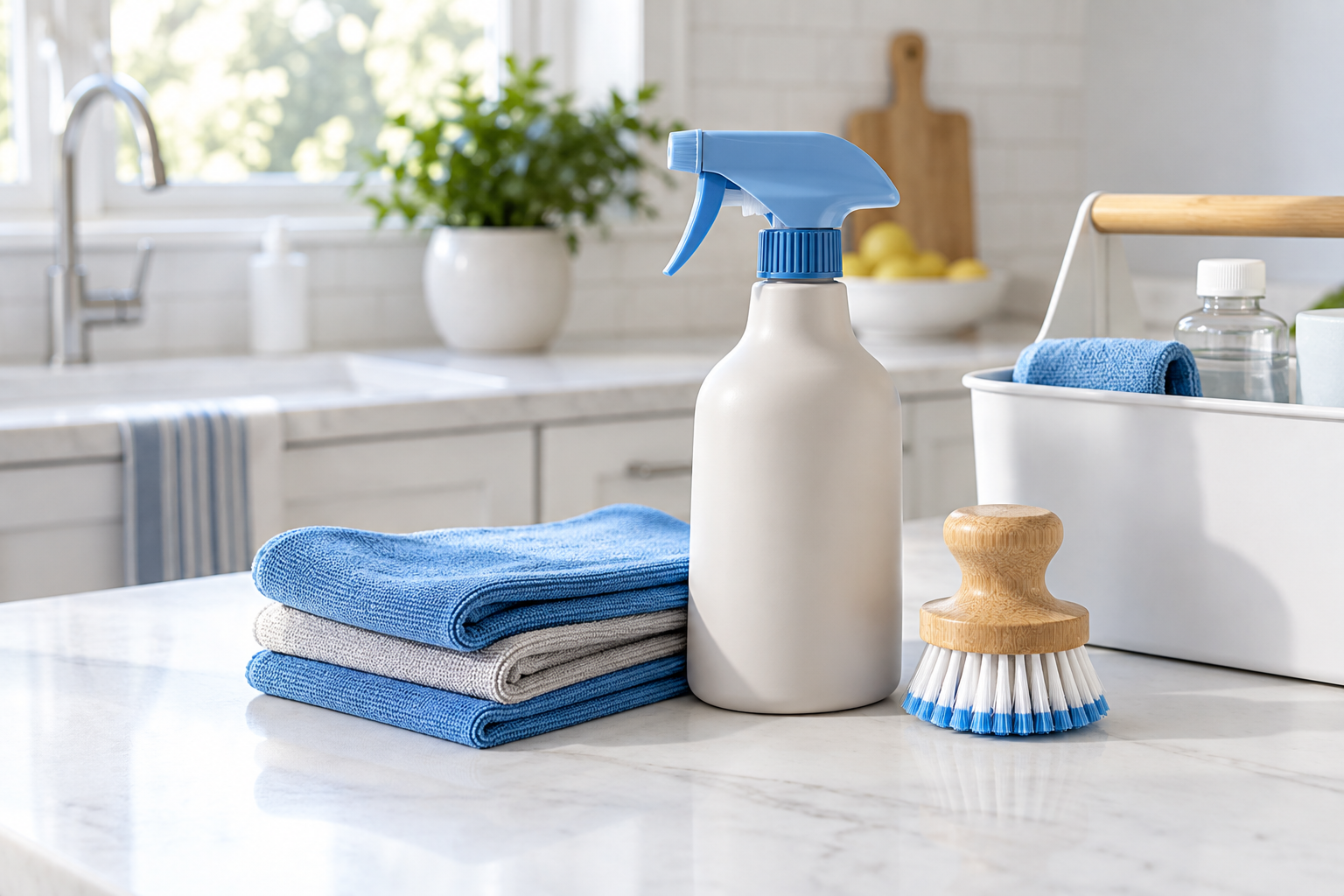
Bring a trash bag, a basket for out-of-place belongings, separate clean kitchen and bathroom cloths, and the surface-appropriate cleaners you already know how to use. Keep your vacuum or broom nearby. Do not spend this hour assembling a new collection of products or trying an unfamiliar stain treatment.
For ordinary household cleaning, you generally do not need to disinfect every surface before a visit. The CDC distinguishes routine cleaning from disinfection and recommends additional disinfection when someone is sick or has a weakened immune system. If illness changes your plans, a fast cosmetic reset is not a substitute for appropriate precautions. CDC household cleaning guidance
Follow product instructions, ventilate as directed, and never combine cleaners. Keep bottles away from children and pets. A time limit is a reason to reduce the task list, not skip safe use.
Give helpers a complete job
If another adult or an appropriately supervised child can help, assign an outcome rather than saying, “Help me clean.” Try “Put the shoes on the rack and clear the doorway” or “Put a clean towel and spare toilet paper in the bathroom.” Keep chemicals, toilet cleaning, and unsuitable lifting with a capable adult.
Set a timer for each stage. When it rings, finish the immediate safe stopping point and move on. Do not let the first room consume all the available time.
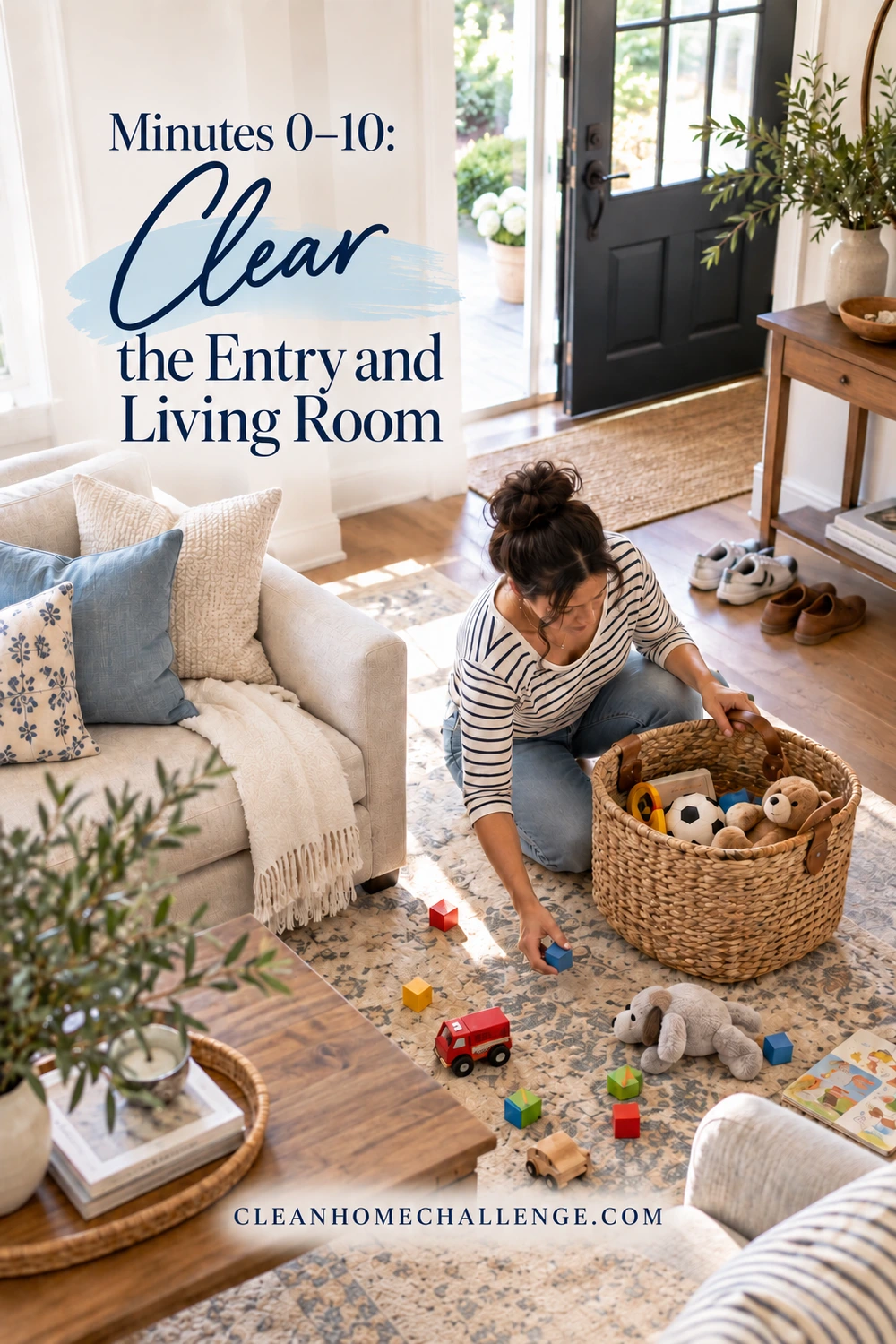
Minutes 0–10: Clear the Entry and Living Room
Spend the opening minutes creating space. Clearing the main route first prevents you from carrying supplies around piles and gives guests an obvious place to walk and sit.
Minutes 0–3: Remove the obstacles
Move shoes, bags, toys, and loose charging cords out of the walkway. Use their usual storage spots when those are close. Otherwise, collect ordinary displaced belongings in your basket and place it somewhere stable that does not block an exit or stairs.
Keep medicines, sharp objects, batteries, small choking hazards, and anything valuable out of a mixed temporary basket. Return those to secure storage. Do not sweep an entire tabletop into a box without looking at what is on it.
For a guest using a mobility aid, prioritize a clear route and accessible seating over styling. Do not roll up a rug or move heavy furniture alone in a rush. Remove simple obstacles you can manage safely and ask what arrangement would help if you need to.
Minutes 3–7: Make the seats usable
Put laundry into a hamper, collect dishes, and remove belongings from the chairs you expect people to use. Straighten cushions without stripping the whole sofa. Fold one throw if it is in the way; leave the others alone.
If pet hair is obvious on a seat, make a quick pass with the upholstery tool or a suitable lint remover. A complete sofa vacuum, cushion rotation, or stain treatment belongs on another day's list. Avoid wet-cleaning upholstery immediately before someone needs to sit on it.
Minutes 7–10: Clear the landing surfaces
Choose the coffee table, one side table, or the dining table as the place for drinks. Remove trash and dishes, then wipe sticky marks with a suitable cleaner and a clean cloth. Leave enough clear space for glasses without balancing them beside a stack of papers.
You do not need to empty every shelf. Focus on the surfaces people will touch or use, not objects they may glance at. Leave papers that require decisions together rather than starting a filing project.
Stop rule: When the route is clear, the seats are available, and there is a place to set a drink, leave the living area. Dusting blinds, sorting toys, and reorganizing the entry cabinet are not part of this hour.
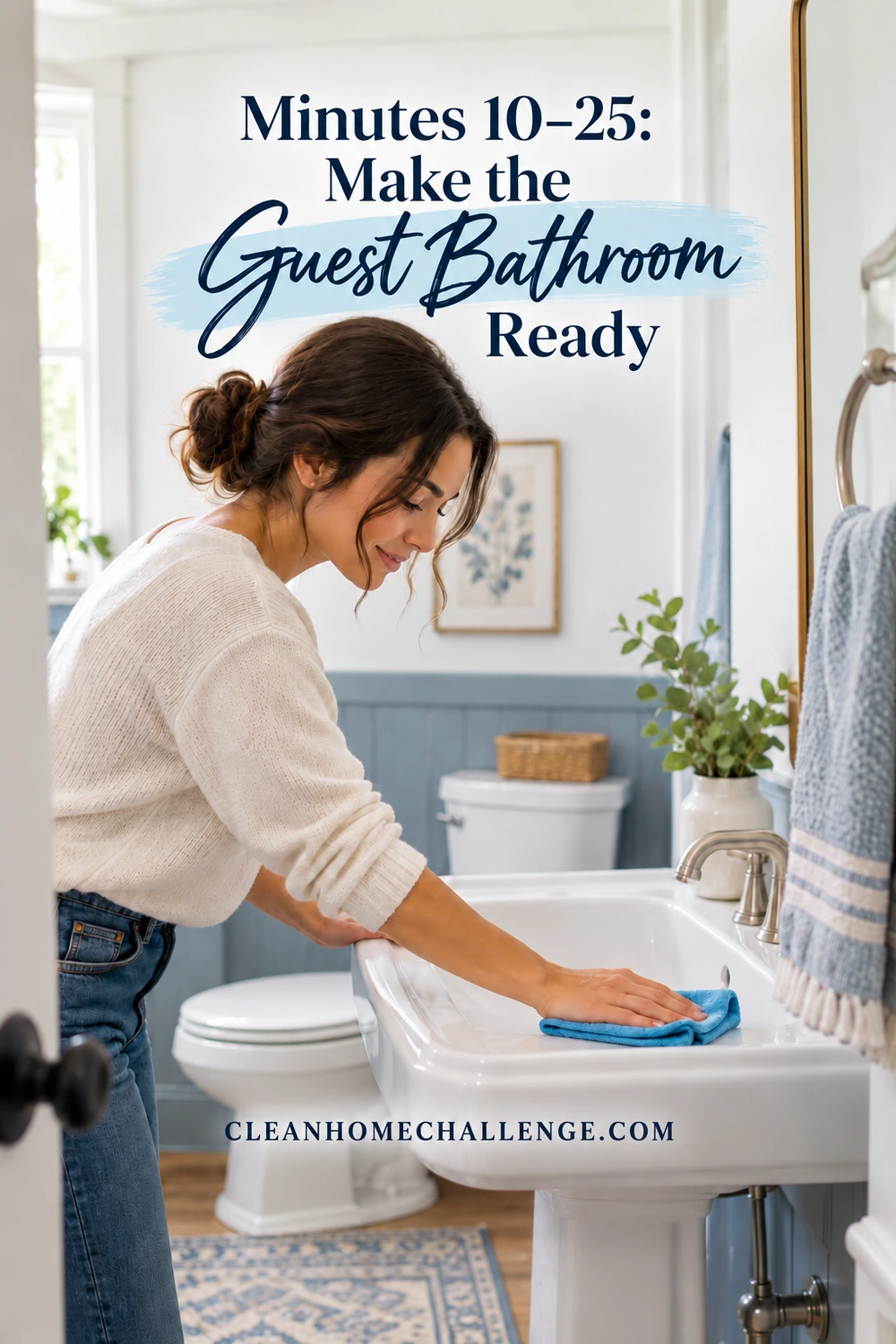
Minutes 10–25: Make the Guest Bathroom Ready
The bathroom deserves a defined block of time because it needs to work, not simply look tidy. Pick the bathroom guests will use and leave the others outside the plan.
Minutes 10–13: Clear and restock
Remove discarded packaging and obvious trash. Put personal items away, but do not reorganize the medicine cabinet. Check the toilet paper roll and place a spare where a guest can find it without opening several cupboards.
Replace the hand towel with a clean one and check that the soap dispenser works. These small checks often do more for a visitor than making the mirror completely streak-free.
Minutes 13–22: Clean the sink and toilet
Use a bathroom cloth to clean the sink, faucet, and visible countertop marks with a product suitable for those materials. Work from the less dirty areas toward the dirtier ones. Give the toilet its own cloth or disposable material; do not bring that cloth back to the sink or into the kitchen.
Clean the toilet bowl and the accessible exterior, including the seat and handle, following the relevant product directions. Do not add a second product to a bowl containing another cleaner. If the label requires a waiting time, start that step early enough to complete it properly.
If disinfection is needed, the surface must remain wet for the full labeled contact time. A quick spray followed by an immediate wipe does not automatically disinfect it. The EPA also tells users to check that the product is suitable for the intended surface. EPA safe disinfectant use
Minutes 22–25: Do the useful finishing checks
Wipe obvious mirror splashes only if time remains. Remove hair or visible debris from the floor, check that the floor is dry, and empty a full trash can. Put cleaning products away and wash your hands before moving to the kitchen.
A shower guests will not use can stay outside this reset. Close its curtain or door normally if you like, but do not hide a leak, dirty water, or another problem that needs attention.
Stop rule: Once the toilet and sink are clean and usable, the supplies are present, and the floor is safe, move on. Grout whitening, shower descaling, and cabinet fronts can wait. A blocked toilet or plumbing leak changes the plan: address the problem or offer another bathroom rather than decorating around it.
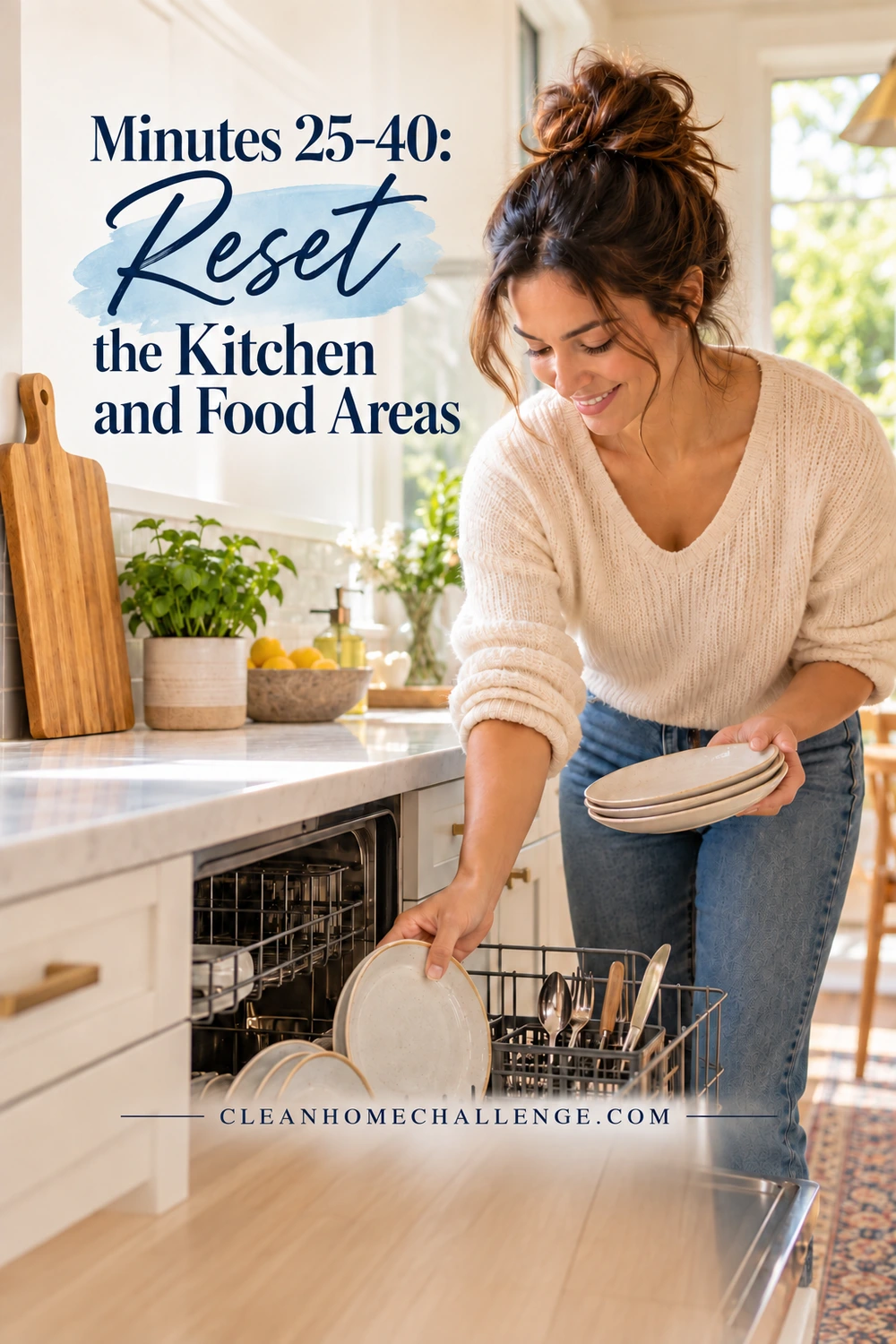
Minutes 25–40: Reset the Kitchen and Food Areas
The kitchen priority is a safe, usable serving area. An empty sink is helpful, but it is less important than clean preparation space and properly stored food.
Minutes 25–30: Deal with dishes and food
Load dishwasher-safe dishes into the dishwasher if it is ready to receive them. If it is full of clean dishes, put away only what you need to create space or wash the few items required for the visit. Do not scatter clean dishes across every counter to begin an ambitious unload.
Put perishable food back in the refrigerator promptly. USDA guidance says to refrigerate perishables within two hours, or one hour when the temperature is above 90°F. That limit includes time already spent out; starting your cleaning timer does not reset it. USDA food safety basics
Never stash dirty dishes in the oven to make the room appear finished. It creates a problem for the next person who turns the oven on. A neatly contained group beside the sink is preferable to a hidden hazard.
Minutes 30–37: Clean the working surfaces
Use a fresh kitchen cloth, not the bathroom cloth. Clear the area where you will prepare or serve food, remove crumbs, and clean it with a product appropriate for both the material and its intended use. Follow any label instructions for a food-contact rinse.
If raw meat, poultry, or their juices have contaminated a counter or sink, clean and then sanitize it appropriately before preparing food there. That is a food-safety task, not an optional cosmetic extra. Keep ready-to-eat food away while you do it. CDC guidance for kitchen surfaces
Wash any cutting board you need with hot, soapy water after use, rinse it, and let it dry or dry it with clean paper towels. Use separate preparation arrangements for raw animal foods and foods served without further cooking. USDA cutting board guidance
Minutes 37–40: Create one serving spot
Put out clean cups, napkins, and the items you actually plan to offer. Wipe visible spills around the sink and deal with a full or leaking trash bag. Keep hot surfaces and appliance controls clear of cleaning materials.
Stop rule: Stop when the food area is safe and usable. Skip oven interiors, refrigerator shelves, cabinet doors, and stainless-steel polishing. If food preparation itself needs the remaining time, simplify the menu rather than cleaning faster around open food.
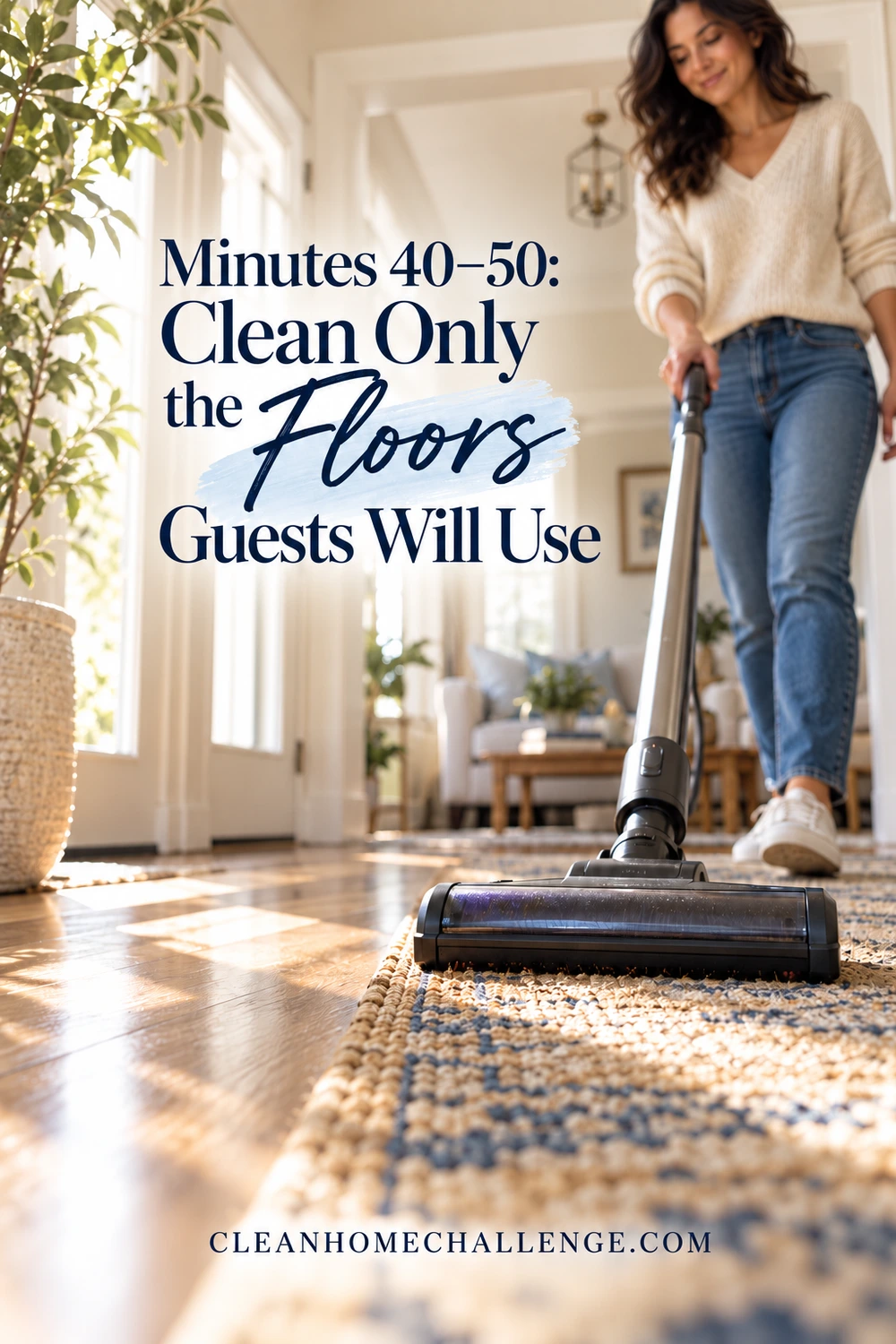
Minutes 40–50: Clean Only the Floors Guests Will Use
Now that crumbs and clutter are off the surfaces, clean the route you selected. There is little value in vacuuming a room your guests will never enter while leaving a pile of shoes by the door.
Make one targeted pass
Vacuum or sweep the entry, the main seating area, the kitchen serving area, and the guest bathroom as needed. Concentrate on visible debris and the places people will put their feet. Use the attachment that is already fitted if it is appropriate; this is not the time to pull every tool from the cupboard.
Leave the sofa and heavy furniture in place. Do not extend a ten-minute floor pass into a search for every crumb behind every object. If a room has no noticeable debris, move on instead of cleaning it simply because it is on a list.
Spot-clean rather than soak
Deal with an obvious sticky patch using the method recommended for that floor. Keep moisture controlled and allow the area to dry before people walk through. Do not assume steam, vinegar, or a strong multipurpose cleaner is suitable for every finish.
Skip a full mop if it would leave the only entrance wet when visitors arrive. The useful result is a floor that is clear and safe to walk on. A glossy appearance is not worth a slippery surface.
Stop rule: At minute 50, put away the vacuum and secure its cord. If a spill remains wet, keep people away until it is safely dealt with. Never leave a cleaning machine, bucket, or trailing extension cord in the guest route while you rush to change clothes.
Minutes 50–60: Finish the Comfort Checks and Stop
Use the final ten minutes to switch from cleaning to hosting. Do not discover a new room to tackle.
Minutes 50–55: Walk the route once
Stand at the entrance and follow the path a guest will take. Check that doors open, seats are available, the bathroom light works, and a guest can find soap and a towel. Put away the basket and cleaning kit in their temporary safe locations.
Notice odor sources rather than automatically adding fragrance. Empty food waste, remove a damp towel, or attend to the pet area if that is the issue. Avoid trying to conceal an unidentified strong smell with sprays or candles. An unusual smell that suggests a safety problem needs attention before hosting.
Open a window if conditions and household safety allow, or use suitable ventilation. Keep pets secure. You do not need a scented room to have a welcoming home.
Minutes 55–60: Prepare yourself
Wash your hands, get water, and take the few minutes you need to feel comfortable. Check your messages for arrival changes. If guests are early, stop at a safe point and welcome them instead of making them stand outside while you finish optional polishing.
Your finish line is simple: a clear route, usable seating, a ready bathroom, and a safe place for refreshments. A pile of folded laundry in another room does not undo that work.
After the visit, return the basket's contents to their normal places. A temporary collection spot works best when it has an ending; otherwise, today's quick reset becomes next week's mystery box.

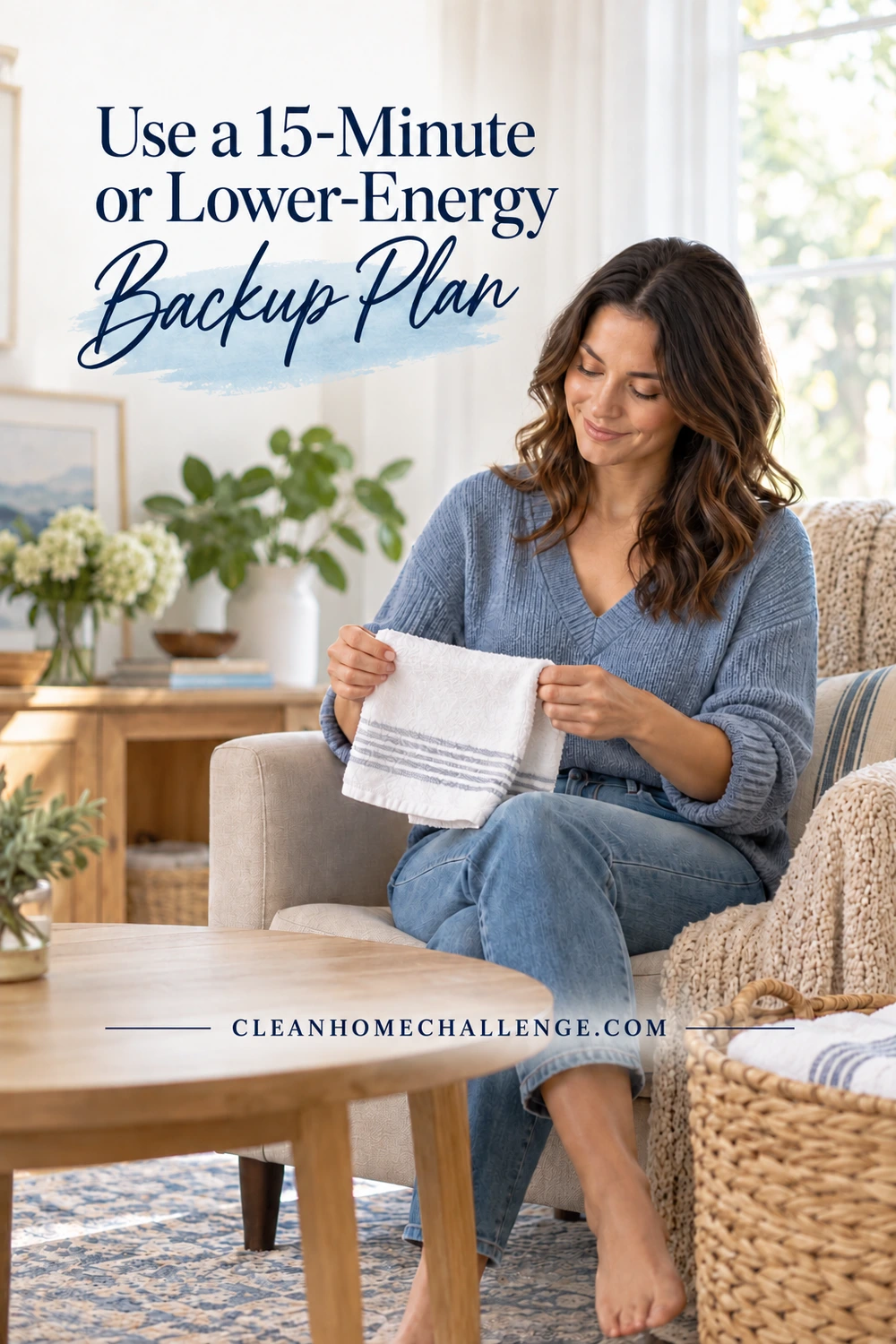
Use a 15-Minute or Lower-Energy Backup Plan
Sometimes the hour disappears, or you never had the energy for it. Keep the same priorities and shrink the work. You do not owe visitors an exhausted host.
The 15-minute version
- Minutes 0–3: Clear the entry and the route to the seating area. Remove obvious trash and make the needed seats available.
- Minutes 3–8: Check toilet paper, soap, and a clean towel. Clean obvious sink and toilet soil using safe product directions.
- Minutes 8–12: Clear and clean one surface for drinks or food. Put perishables away and deal with any food-safety issue before serving.
- Minutes 12–15: Remove obvious floor hazards, put supplies away, wash your hands, and stop.
This compressed plan still cannot shorten a product's required contact time or make a contaminated food area safe through appearance alone. Drop a cosmetic task whenever a safety task takes longer.
The lower-energy version
Choose one room for the visit, bring supplies to that area, and work at a comfortable pace. Sit for tasks that can be done safely seated, such as folding a towel or sorting ordinary belongings from a table. Avoid lifting heavy baskets, kneeling, or climbing to reach decorative surfaces.
Ask another household member to own the bathroom or floors rather than leaving you to supervise every step. If nobody can help, offer simple refreshments and leave nonessential cleaning undone. Rescheduling or meeting elsewhere is also reasonable when your home or health needs more time.
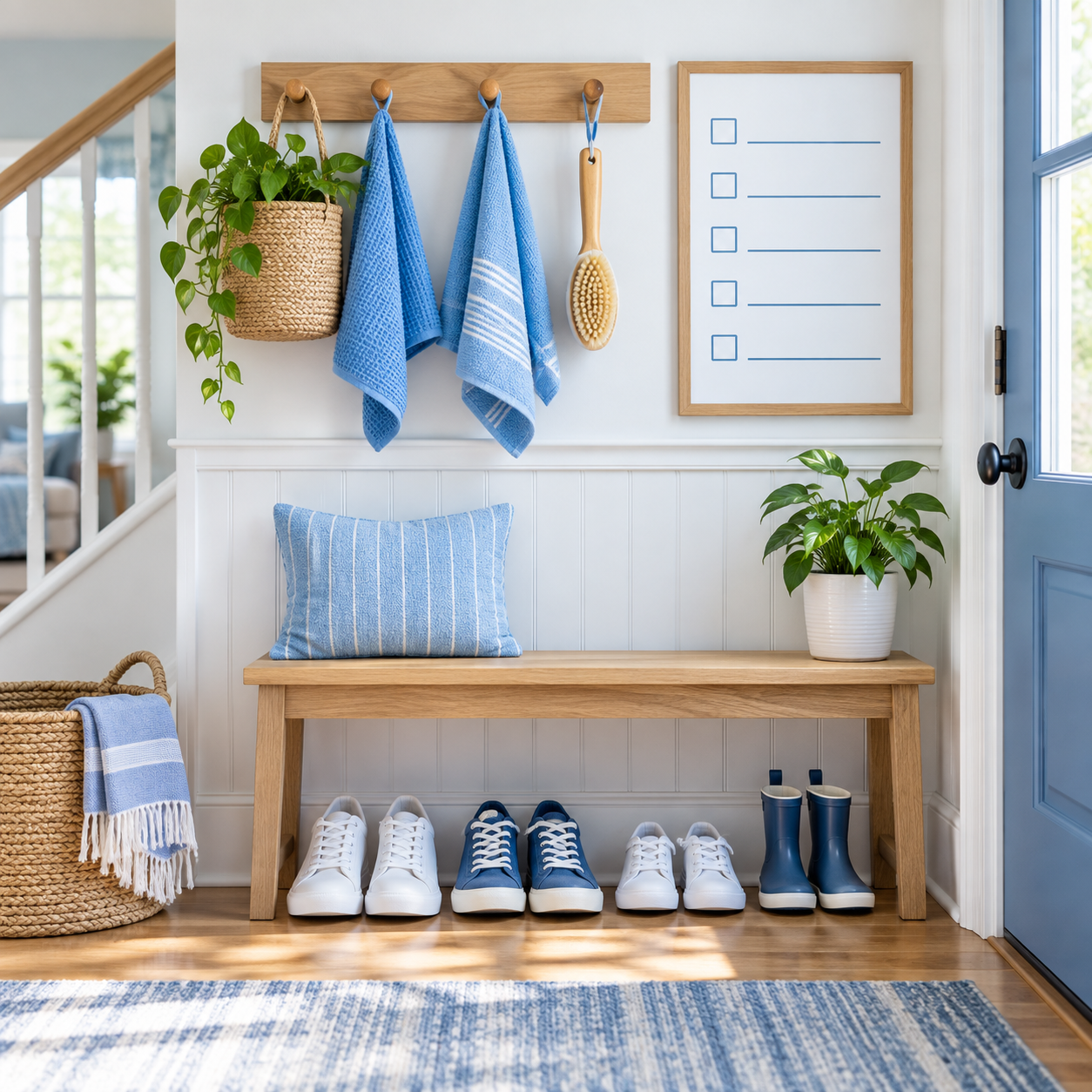
For the next visit, keep a tiny ready-to-host checklist in your phone: route, seats, bathroom, serving spot. Those four decisions will serve you better than an enormous emergency cleaning list. A quick clean before guests is successful when it makes the visit easier for everyone, including you.
CLEANERS CLUBHOUSE
Turn Small Daily Habits Into a Cleaner Home
Make cleaning feel more achievable by sharing simple routines and building habits that stick. The Cleaners Clubhouse includes the 7-Day Daily Habits Bootcamp, printable support and motivating monthly challenges.