
THIS POST MAY CONTAIN AFFILIATE LINKS. PLEASE READ MY DISCLOSURE FOR MORE INFO.
A whole house decluttering checklist works best when it helps you finish one useful space, rather than empty every cupboard at once. Start with something that makes daily life harder: the counter where you prepare breakfast, the shoes blocking the doorway, or the drawer you can never close. Finish that small space, remove the outgoing items, and choose another space when you have time.
You do not need a perfectly matching storage system or an empty-looking home. You need room to cook, get dressed, play, rest, and find the things your household actually uses. A family home can look lived in and still work beautifully.
Use the room checklists below as a menu, not an assignment to finish today. Tick only the areas you have checked and reset. If you have five minutes, choose a single shelf or basket. If you have more energy, work through a room in several short sessions. Leave sentimental collections, disputed possessions, and important documents for a separate decision session.
Disclosure: This post may contain affiliate links. As an Amazon Associate, Clean Home Challenge earns from qualifying purchases. If you make a purchase through these links, we may earn a small commission at no extra cost to you. This helps us keep creating practical cleaning tips, routines and resources for busy families! 🧽
Start Small and Set Up Your Sorting System
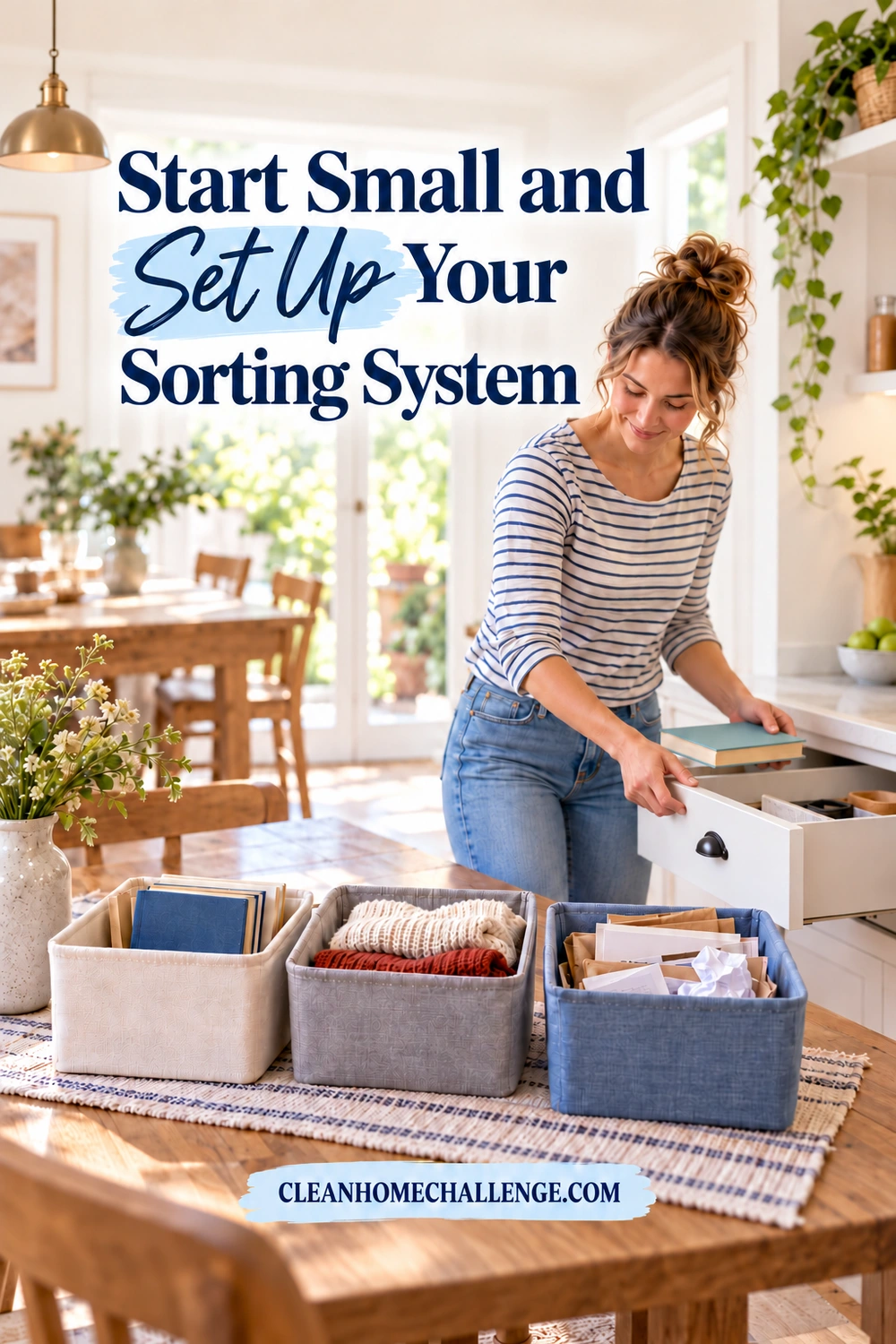
Before touching a cupboard, decide what “finished” means. A useful goal is “the cutlery drawer closes and everything in it is used here.” “Sort out the kitchen” is too big to guide your next ten minutes. Set a timer for an amount of time you can comfortably spare, leaving the last few minutes for putting things away. The timer is a stopping reminder, not a race.
Gather a donation bag, a small recycling container, a trash bag, and a basket for items that belong elsewhere. You can use containers you already own. Keep chemicals, batteries, sharp objects, medicines, and private papers out of general sorting bags; they need their own safe handling decisions.
For each item, ask these questions:
- Do we use this, need it for a real purpose, or genuinely value it?
- Does it work, fit, and have the pieces it needs?
- Is it safe to keep, give away, or sell?
- Where will it live so the person using it can return it?
An item can be worth keeping even if you use it infrequently. Seasonal equipment, disability aids, emergency supplies, and meaningful belongings do not have to earn their place through daily use. Equally, an expensive purchase does not need to occupy your cupboard forever because it cost money.
Use a small, dated decision box for a few genuinely uncertain belongings. Write a review date and put it somewhere you can retrieve safely. Do not let this become the destination for every difficult decision. If the item belongs to someone else, ask before removing it; a shared home needs shared decisions.
Do not buy organizing products yet. First reduce the contents, group what remains, and measure the actual space. A spare shoebox can test whether a divider helps before you buy one. Sorting is the decision stage; organizing is giving the kept items a practical home; cleaning is removing dirt. Trying to do all three across the whole house at once usually creates more work than you can finish.
Finish this small space: put kept items back, return the elsewhere basket, secure outgoing items, and leave the floor and exits clear. A drawer that works is a completed result even when the neighboring drawer still needs attention.
Kitchen and Dining Room Decluttering Checklist
Work in small zones: one stretch of counter, one drawer, one food shelf, or one set of dishes. Keep meal preparation possible while you work. Do not leave food out or spread cupboard contents across every available surface.
Counters and everyday drawers
- Remove objects that belong in another room and return them there.
- Keep frequently used tools close to where you use them; move occasional equipment away from the main preparation area.
- Check utensils for broken handles, damaged working surfaces, and duplicates your household does not use.
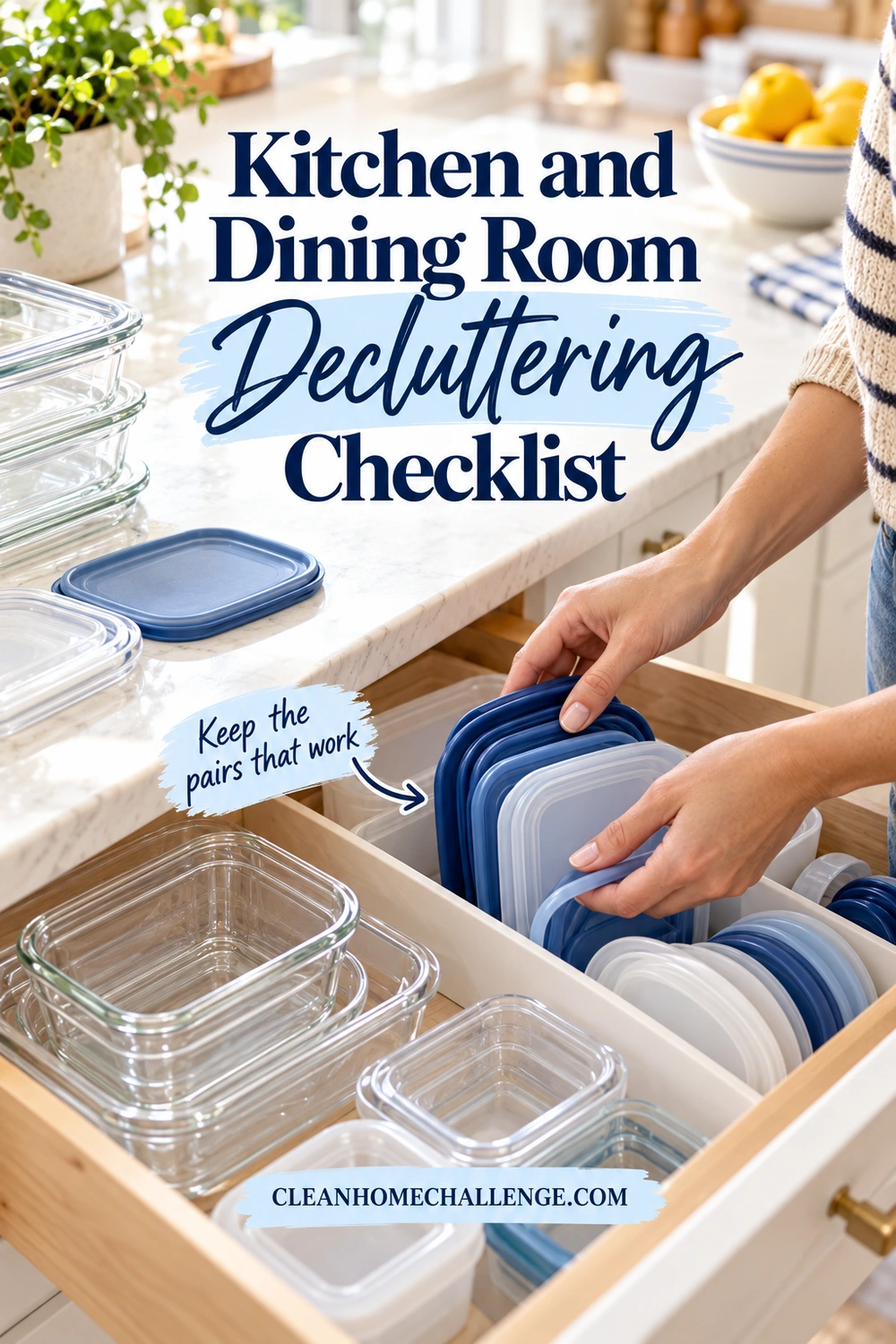
- Match food containers with their lids. Keep the combinations that close properly and fit your real leftovers.
- Clear the table of mail, packaging, and abandoned projects, then give active projects a specific temporary home.
You do not need to reduce every utensil to one. A family that cooks several dishes together may use several mixing bowls. Look for unused excess, not an arbitrary number. Keep adaptive tools and items that make cooking easier for a household member, even if they look like duplicates to someone else.
Food, cookware, and serving items
- Check pantry foods for damage, pest signs, and label or storage instructions; do not make every date a universal safety rule.
- Group similar foods and move suitable older items forward so they are visible.
- Review mugs, lunch boxes, baking equipment, and entertaining dishes against your actual household habits.
- Check appliances before deciding to donate them; include safe accessories and instructions where available.
- Remove chipped or damaged pieces that are unsuitable for continued food use, following the manufacturer’s advice where needed.
For food donations, check the receiving organization’s current requirements before packing anything. Do not assume opened packages or food with damaged seals will be accepted. For unused appliances, an honest description is better than passing on a faulty item for somebody else to discover.
Dining storage often holds things that were useful in a different season of life. Keep table linens you like and use, serving pieces that fit your gatherings, and a realistic supply of candles or decorations. Move important family keepsakes into an appropriate home rather than throwing them into the donation bag because they are not used at dinner.
Finish by wiping the emptied shelf with a method suitable for its finish, letting it dry, and returning the kept contents. Do not line every shelf with a new basket. Make the cupboard easy to use first. For a deeper pass, follow the kitchen decluttering checklist without turning this session into a second full project.
Entryway Living Room and Home Office Checklist
Start with the routes people walk and the places where things land. A clear path to the door matters more than styling the bookshelf. Keep stairs, doorways, heaters, electrical panels, and escape routes unobstructed. Choose an outgoing-item location that does not create a trip hazard or give children access to unsafe contents.
Entryway and family drop zone
- Pair shoes and return extras to bedroom storage; keep only the current practical selection by the door.
- Empty bags with their owners, checking for school notices, food containers, and needed belongings.
- Give keys, daily bags, and incoming papers a specific accessible home.
- Review jackets, hats, umbrellas, and pet-walking supplies for what is in current use.
- Remove packaging and broken accessories through the appropriate disposal route.
Let the drop zone suit the people using it. A child may manage an open basket better than a high hook. A household member with limited vision may need a consistent location more than a decorative rearrangement. Explain changes and keep essential items predictable.
Living room
- Return dishes, clothing, and paperwork to their proper rooms.
- Review magazines, catalogs, games, and entertainment accessories.
- Check games for missing pieces before offering them to someone else.
- Group remote controls and chargers only after confirming which device each belongs to.
- Keep favorite books and decorative pieces with enough room to reach and dust around them.
Do not unplug unfamiliar equipment or discard a cable just because you cannot identify it. Ask the person who uses it. Keep small magnets, loose batteries, and damaged electronic accessories away from children while you decide their destination. If moving furniture, maintain its required anti-tip anchoring; heavy objects belong low, and tempting items should not encourage children to climb.
Home office and paperwork
- Separate action papers, documents to retain, and papers suitable for secure disposal.
- Keep identity documents, legal papers, tax records, warranties, and medical information until you have checked the relevant retention requirements.
- Remove empty packaging, dried-out pens, and stationery you do not use.
- Check old electronics for personal data and follow manufacturer guidance before recycling or passing them on.
- Give active work one tray or folder rather than scattering it across the dining table.
An unopened envelope is not automatically trash. Give paperwork a focused session when you can read and decide properly. For private papers, use a suitable secure destruction method instead of putting readable personal information in open recycling. Keep one short action list so clearing the surface does not make an important task disappear.

Bedrooms Bathrooms and Laundry Checklist
These spaces work better when the everyday essentials are easy to reach. Start with a bedside table, one clothing drawer, one bathroom shelf, or the top of the dryer. Avoid emptying a whole wardrobe onto the bed shortly before bedtime.
Adult bedrooms and clothing
- Return dishes, packaging, and belongings that have wandered in.
- Clear enough bedside space for the items you use at night.
- Review one clothing category at a time for fit, comfort, condition, and current needs.
- Set aside realistic repairs with a next action; do not keep an unlimited repair backlog.
- Check spare bedding against the beds you actually have, retaining useful guest and seasonal sets.
You can keep clothes for a foreseeable change in circumstances without filling your accessible drawers with them. Put occasional items in a suitable, clearly identified location. Store things according to their material and your home’s conditions; do not seal damp fabric into bags or squeeze everything into a space that cannot close.
Children’s rooms and play areas
- Involve the child in suitable decisions rather than secretly removing favorite possessions.
- Separate broken toys, incomplete sets, outgrown items, and current favorites.
- Check safety and recall information before selling or donating children’s products.
- Keep books and toys where children can return them without climbing.
- Review artwork together and agree on a practical display or keepsake system.
Offer small choices: “Which puzzles do you want in this basket?” is easier than asking a child to declutter their entire room. Keep adult-only disposal decisions with an adult. Do not donate a recalled item or treat a charity as the place to offload unsafe equipment.
Bathroom and linen storage
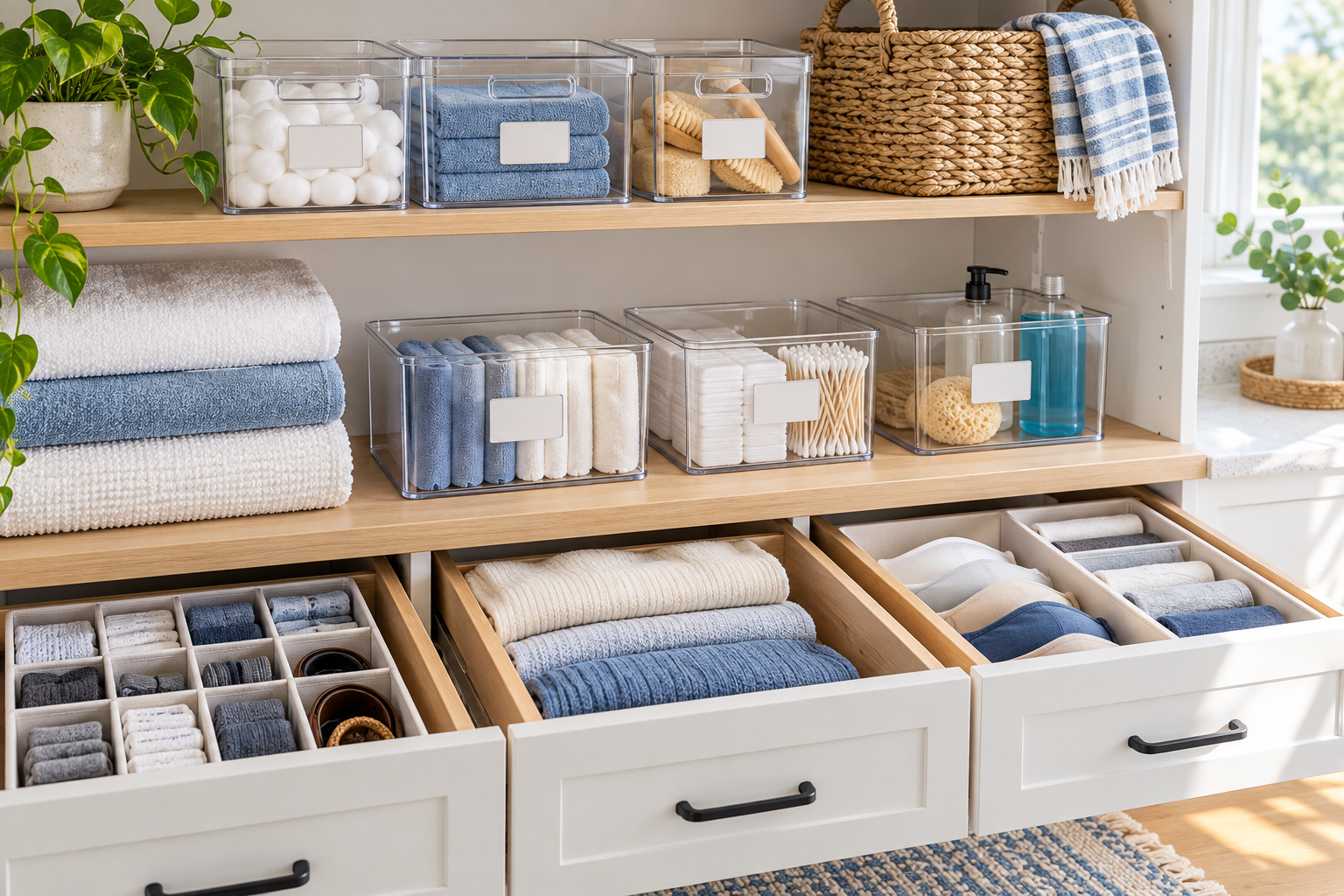
- Check toiletries for deterioration and follow any product expiry or opening-period instructions.
- Group usable products by the person or purpose they serve.
- Review worn towels, duplicate grooming tools, and empty containers.
- Keep medicines and cleaning products in their proper secure storage; follow local medicine-return guidance.
- Retain the towels and linen your household realistically needs between wash days.
Laundry area
- Return items that are waiting to go elsewhere.
- Pair suitable socks and decide what to do with genuinely unneeded strays.
- Review unused hangers and laundry accessories.
- Keep products in their original labeled containers, safely stored away from children.
- Clear the work surface without blocking the appliance ventilation or access specified by its manufacturer.
Never combine leftover cleaning products to save shelf space. If a product needs disposal, follow its label and local hazardous-waste guidance. Decluttering is not a reason to decant chemicals into drink bottles or leave detergent pods in open decorative containers.

Garage Storage and Outgoing Items Checklist
Treat the garage, shed, utility cupboard, and stored seasonal items as separate small projects. Choose a shelf you can reach safely. Leave heavy lifting, unsafe stacks, and inaccessible overhead storage until you have appropriate help and equipment. Do not stand on furniture or balance on boxes.
Stored household items
- Check seasonal decorations for damage and whether you still use them.
- Match equipment with its safe working parts and instructions.
- Review sports gear, luggage, spare furniture, and project materials against real plans.
- Keep emergency equipment accessible and maintained rather than labeling it clutter.
- Move heavy items to suitable low storage and keep access routes open.
Give unfinished projects a decision: a named next step and realistic date, suitable storage until needed, or a responsible exit. A project does not become useful just because its materials have moved into a prettier container.
Before anything leaves, sort by destination. Donation is for safe, clean, usable items accepted by the recipient. Goodwill’s donation guidance advises against broken, soiled, recalled, or banned products; check your chosen organization because acceptance varies. Include necessary pieces and do not leave items outside a closed collection point.
Recycling depends on your local service and the material, not just whether an item looks recyclable. Keep electronics and batteries separate from ordinary mixed recycling until you have checked the correct program. The EPA warns that lithium-ion batteries should not go in household trash or municipal recycling because they can cause fires. For damaged batteries or devices, get the manufacturer’s handling advice rather than prying them apart.
Household chemicals such as leftover paint, solvents, pesticides, and some cleaners can require hazardous-waste collection. Keep labels and original containers, never mix leftovers, and do not pour unwanted products into a drain to empty the bottle. Ask your local waste authority what collection options and packaging rules apply.
Selling needs a boundary too. Decide whether the likely return is worth photographing, listing, answering messages, and arranging collection. Set a review date for unsold items so a permanent sales pile does not replace the original clutter. Honor safety warnings and recalls regardless of whether money changes hands.
Record each destination and the next practical action. An outgoing box is progress, but the job finishes when its contents reach the correct destination. Keep it safely stored until then, not in a doorway or a vehicle where temperature-sensitive or hazardous items could create another problem.

Keep the House Easier to Reset
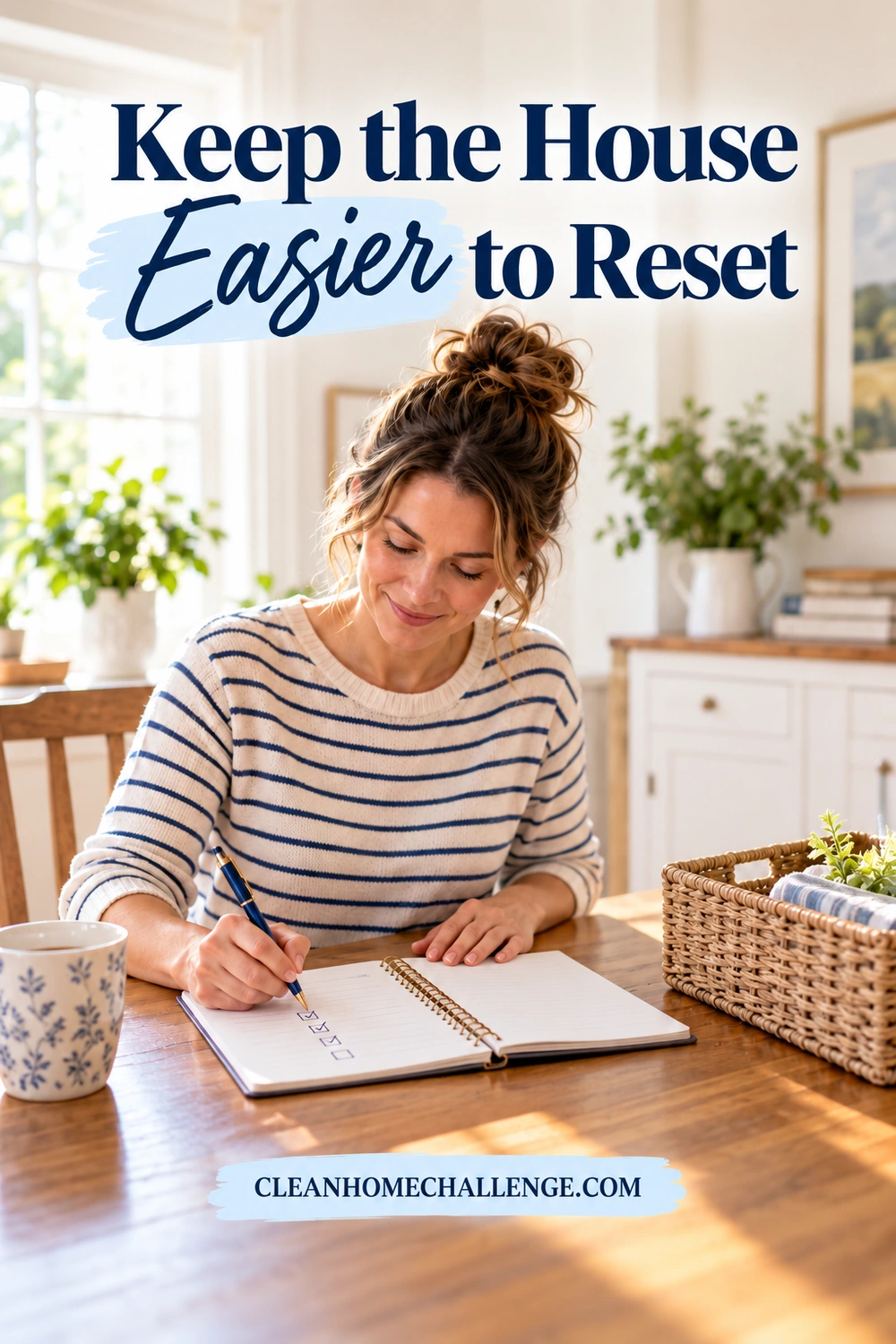
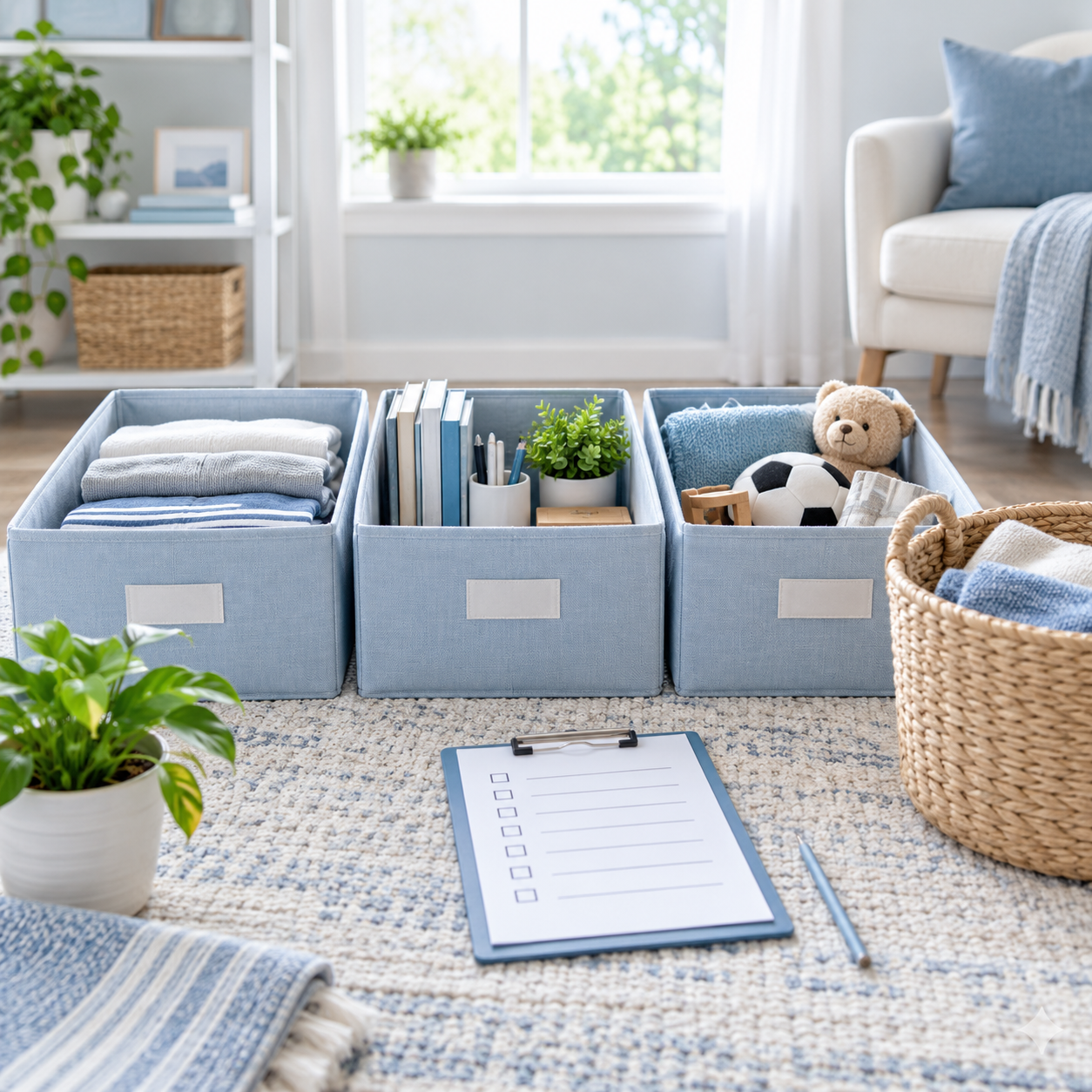
Use this simple whole-home tracker as often as it helps. You can copy it into a notebook or print this section. One completed small space counts; you do not need to declare an entire room finished.
| Area | Small space to finish |
|---|---|
| Kitchen and dining | One drawer, food shelf, or table surface |
| Entryway | One shoe basket or bag station |
| Living room | One shelf or game basket |
| Home office | One paper tray or stationery drawer |
| Bedrooms | One bedside surface or clothing drawer |
| Children’s spaces | One agreed toy category |
| Bathroom and linen | One shelf or towel category |
| Laundry | One work surface or supply shelf |
| Garage and storage | One safely reachable shelf |
For each session, add four notes: space completed; items leaving; destination and date; next small space. This turns an impressive-looking pile into an action you can finish. For example: “Lunch-box drawer; two usable spare boxes; donation center after acceptance check on Saturday; next session is the baking tray shelf.”
If your week is full, try this five-minute version: return three items that belong elsewhere, remove obvious packaging through the right route, and reset one surface you use daily. Stop while the space is usable. On another day, choose five or ten minutes for a drawer. A repeating small session is a practical option, not a guarantee that every backlog disappears in a week.
Build upkeep around your family’s actual habits. Return everyday items after use, review the incoming paper tray at a regular convenient time, and arrange a donation or recycling trip when there is enough to justify one. Before buying storage, ask whether a smaller quantity, a closer location, or a clearer household agreement would solve the problem.
Revisit a trouble spot when putting things away becomes difficult. It may contain too much, but the location or container may also be wrong for the user. Ask, “What makes returning this awkward?” and adjust that one step. Keep belongings accessible, preserve safety arrangements, and let the system be practical enough for everyone to use.
If you would like a guided next step, the Cleaners Clubhouse’s 30-Day Declutter Challenge can help you choose small spaces and keep moving with printable support. Start with one space, finish its exits, and enjoy the useful room you have made.
Sources and safety guidance
Reviewed October 18, 2026: EPA household hazardous waste guidance, EPA used household batteries, CPSC product recalls, CPSC furniture anchoring guidance, and Goodwill donation acceptance guidance. Local collection and donation rules vary; check the relevant service before packing or traveling.
CLEANERS CLUBHOUSE
Ready to Clear the Clutter One Step at a Time?
Join the 30-Day Declutter Challenge and work through your home in small, achievable steps. The Cleaners Clubhouse includes the plan, printable support and encouragement to help you keep going.