THIS POST MAY CONTAIN AFFILIATE LINKS. PLEASE READ MY DISCLOSURE FOR MORE INFO.
A quick squeeze of a trigger can send cleaner farther than the mark you meant to wipe. You might be aiming at a bathroom mirror while droplets land on toothbrushes below, or cleaning a counter beside an open lunchbox. A small pause before you spray helps keep the job contained.
Spray direction matters when cleaning because the cleaner needs to reach its intended, compatible surface without drifting toward your face, food, other people, or electrical openings. The right approach starts with the product label and the surface instructions. Applying a product to a cloth can offer more control when those instructions allow it, but it is not a universal replacement for direct application.
You do not need a complicated cleaning system. Start with one clear work area, the correct product, and a plan for where every squeeze will land. This guide covers ordinary household trigger sprays, not pressure washers, steam equipment, foggers, or specialist chemical treatments.
Disclosure: This post may contain affiliate links. As an Amazon Associate, Clean Home Challenge earns from qualifying purchases. If you make a purchase through these links, we may earn a small commission at no extra cost to you. This helps us keep creating practical cleaning tips, routines and resources for busy families! 🧽
Check the Label Before You Aim
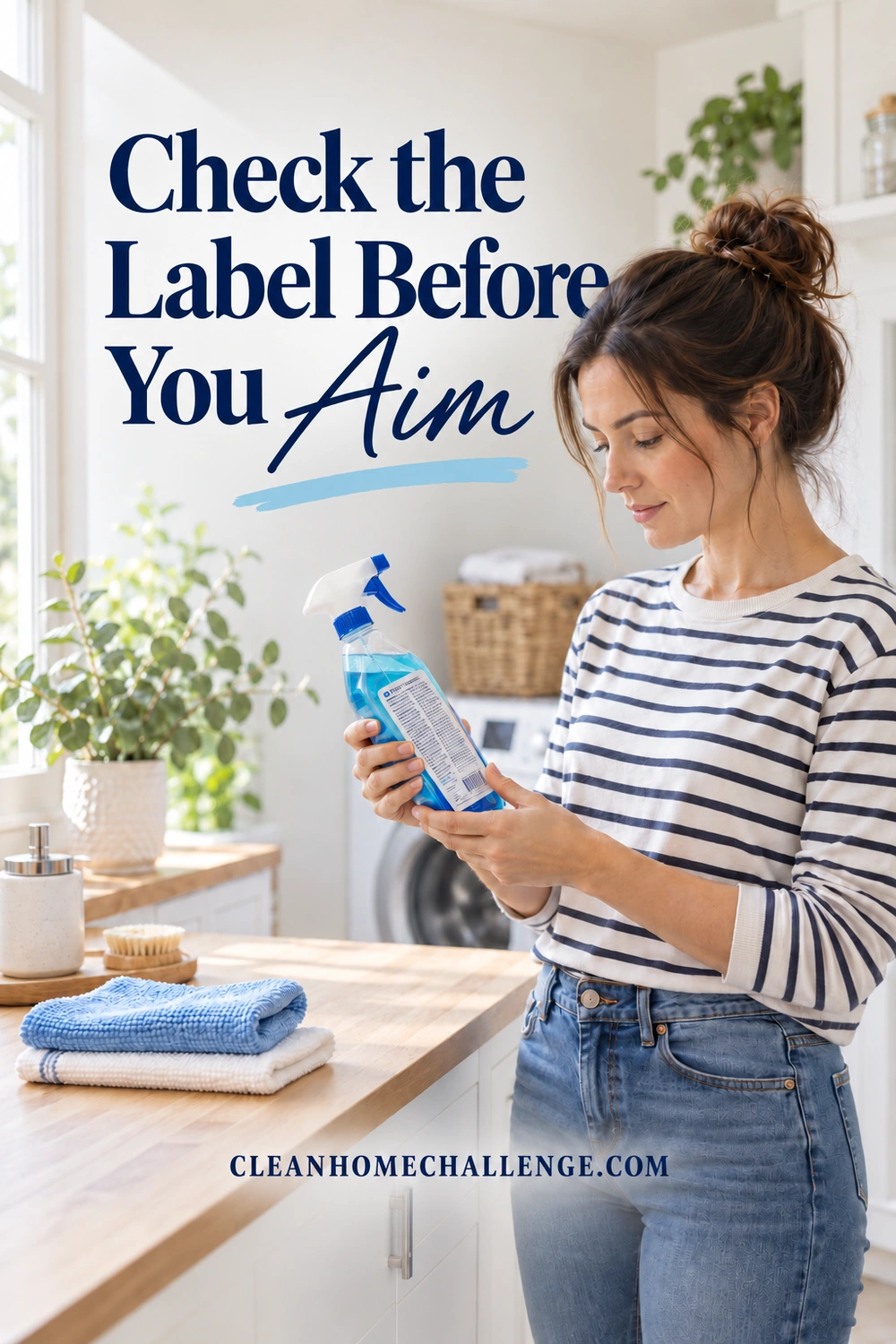
Two similar-looking bottles can have very different instructions. A cleaner used to lift everyday dirt may be wiped away promptly. A disinfectant may need to leave a compatible surface visibly wet for a specified contact time. Changing the application method can change how much product reaches that surface.
Find the directions that match your actual job
Read the bottle you have in your hand, including its warnings. Check whether you are cleaning, sanitizing, or disinfecting, and whether the named surface is permitted. The EPA’s label-reading guidance explains why the amount, location, and method of application all matter.
Look for the application method, distance if one is stated, dilution instructions, protective equipment, ventilation, contact time, rinsing, and drying. Do not borrow a distance or timing from a different product. If the label is damaged or the directions are unclear, check the manufacturer’s current instructions before using it. Keep products in their original labeled containers; do not make an unidentified bottle easier to reach than the information needed to use it.
The surface also gets a say. A product suitable for ordinary glass may not be suitable for a coated screen, acrylic panel, stone counter, or nearby painted trim. Check the item’s care instructions and test a permitted method in an inconspicuous area when appropriate. A successful spot test does not override an express prohibition.
Use this short decision check
- Is this product appropriate for this material and task? If you cannot confirm that, pause.
- Does the label specify direct spraying, cloth application, or another method? Use that method rather than a general cleaning tip.
- Can you carry out the method without exposing nearby people, food, or vulnerable materials? Clear or change the setup before starting.
- Can you complete any required wet time, rinse, and drying? Choose a manageable section so those steps are realistic.
For disinfectants, avoid turning “use less spray” into “use too little to work.” The CDC’s home cleaning guidance emphasizes following the label and keeping the surface wet for the specified contact time. Routine cleaning and disinfection are different jobs; do not assume every everyday wipe-down needs a disinfectant.
Keep Overspray Away From People, Food, and Power

Think about the area around the target, not just the spot under the nozzle. Spray can miss the edge, bounce off a surface, or drift with moving air. There is no single angle that makes every cleaning spray safe in every room. Your position, the product’s instructions, and what sits nearby all matter.
Clear the work area first
Move food, drinks, utensils, open lunchboxes, pet bowls, and food preparation equipment away from the spray area. In the bathroom, move toothbrushes, contact lens supplies, cosmetics, and towels that could catch droplets. Put them somewhere that will remain outside the work area, rather than on the next section you plan to spray.
Keep children and pets away while you work and for any additional period specified by the product. If someone needs to pass through, stop and let them pass before continuing. Do not spray around a person holding a baby, preparing food, or sitting at the same table. A brief delay is easier to manage than an unintended exposure.
Position yourself so your face is outside the path between the nozzle and the target. Avoid spraying above your head or reaching around a corner where you cannot see the nozzle and landing area. For a high surface, use a manufacturer-permitted wiping method with a suitable tool or leave that part for a safer setup. Do not climb on a counter or chair to make an awkward spray angle work.
Allow fresh air without pushing spray across the room
Follow the label’s ventilation instructions. Open a suitable window or use appropriate room ventilation when it is safe to do so. A portable fan aimed straight across your hands can move droplets toward you, another person, or the next surface. Reposition the fan or your work area so you are not spraying into its airflow. Ventilation does not make it acceptable to spray into the air or ignore product warnings.
Treat electrical openings as a boundary
Do not aim household cleaner at outlets, switches, charging ports, vents, appliance controls, or gaps around electrical parts. Turning a device off does not make spraying liquid into it safe. Follow the exact manufacturer’s cleaning procedure, including disconnection from power where directed.
For example, Apple’s cleaning instructions tell users to avoid moisture in openings and not spray liquid directly on specified devices and displays. That is an example of product-specific care, not permission to use the same liquid on every electronic item. If a device’s instructions permit a lightly damp cloth, prepare it away from the device and keep it from dripping.
Choose a Controlled Application Method
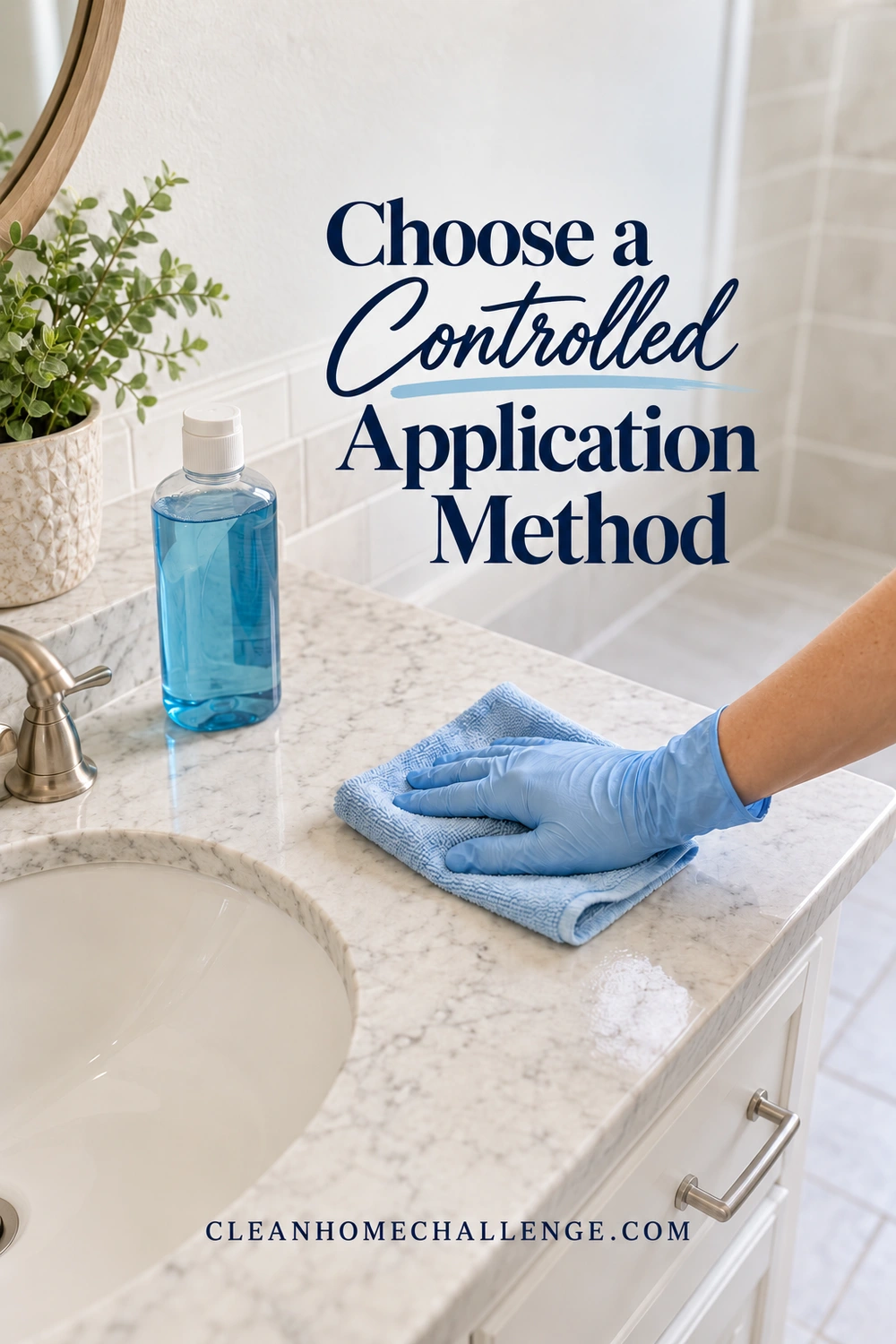
Once you know what the product and surface allow, choose a position where you can see and control the application. Put the cloth and other tools within reach before opening the nozzle. Wear the protection the label requires. Never mix cleaners or add another chemical to solve a spraying problem.
When direct application is required or permitted
Clear the target and its surroundings, then hold the bottle as directed. Use any stated distance and nozzle setting. Aim at the intended surface with your face outside the path, and apply only to a section you can finish correctly. Do not wave the bottle across a whole room or use repeated squeezes as a substitute for checking coverage.
Watch where the first application lands. If it misses, runs toward a seam, or scatters beyond the work area, stop and adjust the setup before squeezing again. A sputtering or leaking nozzle needs attention under the manufacturer’s instructions; do not peer into it, point it toward your face, or force it with a sharp object. Follow the product’s directions for a faulty container or nozzle.
After application, complete the required wiping, contact time, rinse, and drying. For a disinfectant, dividing a large area into smaller sections can help you track wet time. Do not wipe it dry immediately unless that is the instruction for the job you are doing.
When application to a cloth is allowed
Prepare a clean cloth on a stable, compatible work area away from food and electrical items. Keep your face back and direct the permitted product into the cloth without spraying toward your supporting hand. Do not hold a cloth up near your face to catch a cloud of mist. Use only enough for the permitted task, then wipe the intended surface without leaving it flooded.
Fold the cloth so you have a clean working face. Change to a fresh cloth as it becomes dirty, and keep bathroom cloths separate from kitchen work. Follow the product and cloth care instructions afterward. Cloth application still requires ventilation and any specified gloves or eye protection; it does not remove the chemical’s hazards.
If the label gives only direct-spray directions, do not invent a cloth method for disinfection. Ask the manufacturer or choose a product whose approved directions fit the task. Similarly, do not dilute a ready-to-use cleaner to make its spray feel gentler unless its label specifically instructs dilution.
Three familiar situations
- Bathroom mirror: move toothbrushes and cosmetics first. Check the mirror’s care instructions and cleaner directions, protect vulnerable edges, and use a permitted application method without spraying upward into your face.
- Kitchen counter: remove food and preparation items, confirm surface compatibility, and follow the product’s food-contact instructions. A cleaner being suitable for a counter does not automatically mean no rinse is needed.
- Appliance exterior: identify the finish and controls. Follow the appliance’s own instructions and keep moisture away from openings. A cloth method may suit the job only when both sets of instructions allow it.
A spray-free product or a simple permitted damp wipe may suit some routine jobs. Choose it because its instructions match the surface and task, rather than transferring a chemical into an unapproved dispenser.

Make a Safer Setup Part of Your Routine
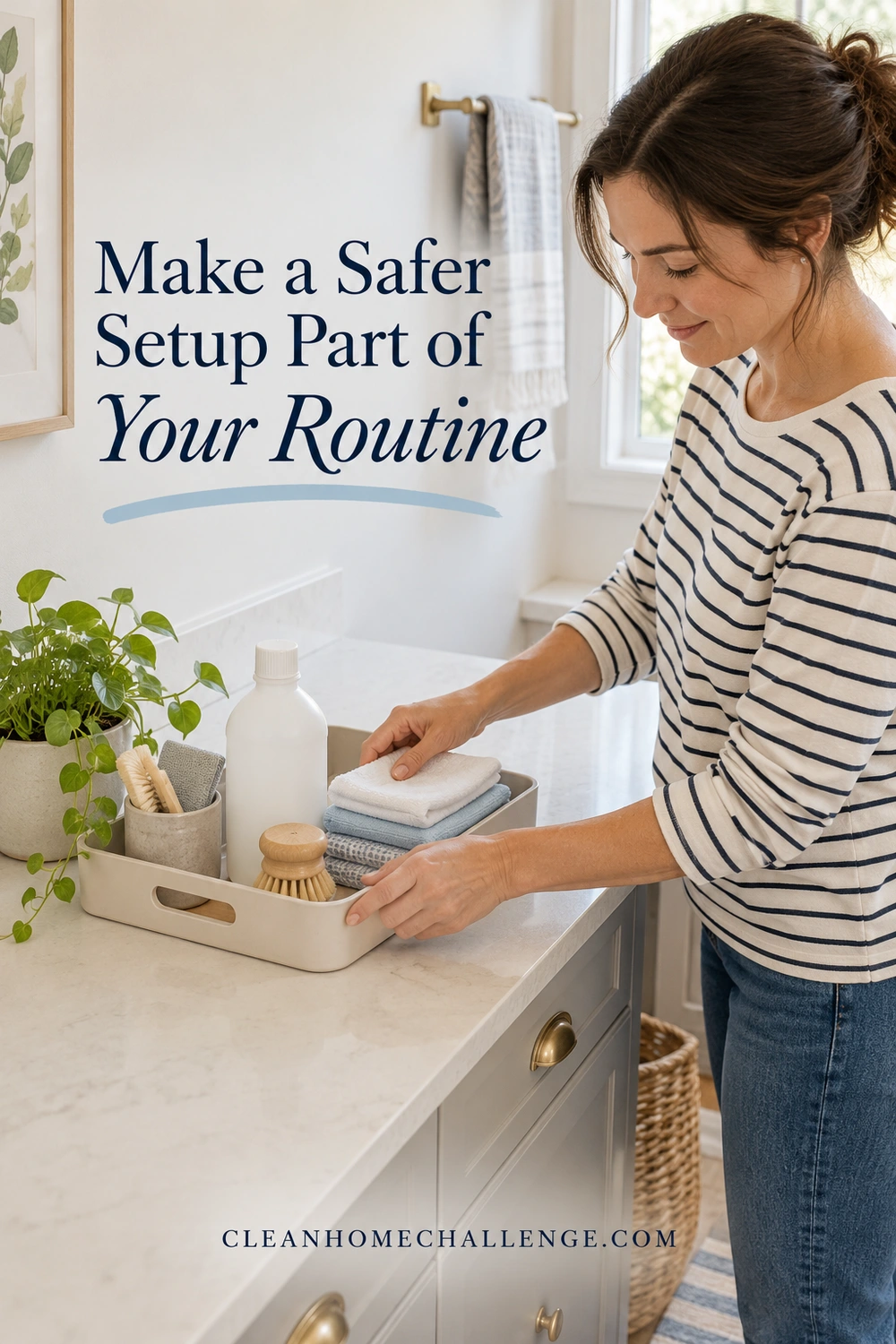
You can build this habit into a normal surface wipe without adding a large planning job. Before opening the nozzle, pause for three questions: What am I treating? Where will the product land? What must happen after application? Keep the answers specific to the bottle and surface in front of you.
For a lower-energy clean, choose one clear surface and finish it properly. Leave another section for later rather than spraying several areas you cannot manage at once. Keep one cloth for the current task, another for any required rinse, and a dry cloth if the care instructions call for one. This makes it easier to avoid accidental product mixing or returning a dirty cloth to a finished surface.
Save the instructions you actually use
The free Cleaning Spray Label and Setup Card (PDF) gives you space to record the exact product, compatible surface, permitted application method, contact time, and rinse instructions. It also includes a before-and-after checklist. Use a separate card when the product or surface changes, and always check the current label again; the card is a reminder, not a replacement.
After the job, look beyond the cleaned spot. Check nearby floors and surfaces for stray droplets, and clean up unintended residue according to the product and material instructions. Follow any drying or re-entry directions before returning food items, children, or pets to the area. Close the nozzle as directed, store the original bottle securely out of reach, and wash your hands after handling products.
If cleaner gets into eyes, onto skin, or is breathed in and causes symptoms, stop cleaning and follow the product’s first-aid instructions. Contact your local poison information service or seek medical help as appropriate; breathing difficulty or other severe symptoms need urgent help. Do not add another chemical to an accidental exposure or spill.
For practical help turning careful habits into a manageable routine, you can explore Cleaners Clubhouse. Start with the small change that helps today: clear the space, check the directions, and aim deliberately before you squeeze.
CLEANERS CLUBHOUSE
Build a Safer, Simpler Cleaning Routine
Clean confidently with practical guidance that helps you choose sensible products and use them correctly. The Cleaners Clubhouse combines safer cleaning support with realistic routines, worksheets and challenges.