
THIS POST MAY CONTAIN AFFILIATE LINKS. PLEASE READ MY DISCLOSURE FOR MORE INFO.
You pull a warm towel from the dryer, fold it neatly, and expect the laundry to be finished. Then it smells sour after the next shower. Or the whole load has a musty smell before it even reaches the drying rack. Either way, another scoop of detergent is a tempting response.
If you’ve searched “why do towels smell after washing,” start by checking three things: whether the wash is removing soil and residue, whether the washer itself smells, and whether the towels dry completely. Several small problems can overlap, so a simple check is more useful than adding a collection of laundry boosters.
This guide walks you through a manageable reset for ordinary bath towels. Allow about 10–15 minutes of hands-on work, plus your machine’s wash and drying time. Washer maintenance or an optional labeled soak will take longer. You don’t need to rescue every towel today; begin with one sensible-sized load and learn what changes the result.
Disclosure: This post may contain affiliate links. As an Amazon Associate, Clean Home Challenge earns from qualifying purchases. If you make a purchase through these links, we may earn a small commission at no extra cost to you. This helps us keep creating practical cleaning tips, routines and resources for busy families! 🧽
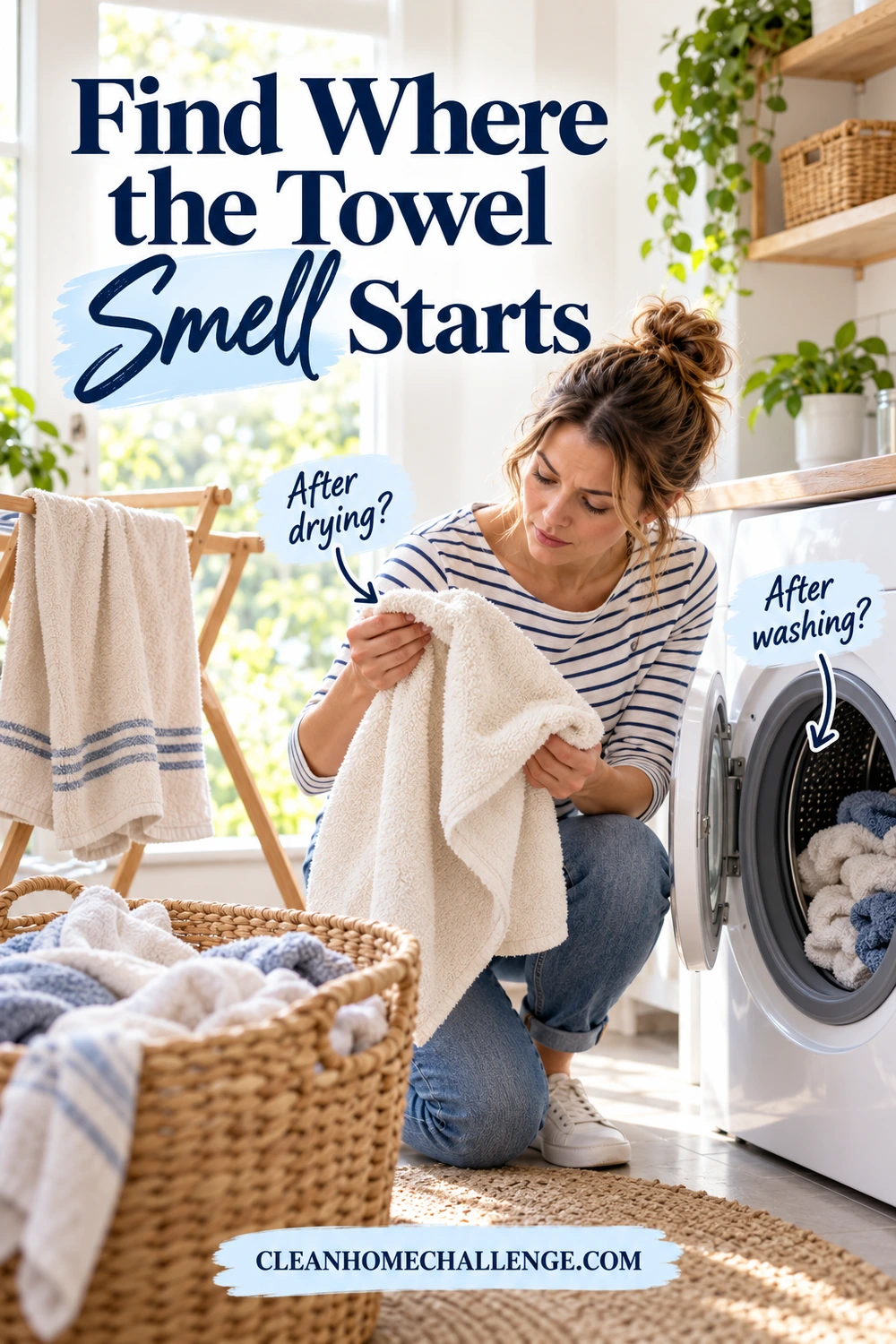
Find Where the Towel Smell Starts
Before changing your routine, work out when you first notice the odor. These clues help you choose a starting point, although they cannot identify a particular germ or prove that an item is hygienically clean.
- Musty straight from the washer: Check the empty machine, load size, detergent dose, and cycle. If different kinds of laundry all emerge with the same smell, give the washer particular attention.
- Fine after washing, sour after sitting wet: Focus on the delay before drying. Whirlpool identifies lingering moisture and wet laundry left in the drum as potential sources of musty odors.
- Fresh when dry, smelly as soon as it gets damp: Residue or incomplete cleaning is worth investigating, alongside drying between uses. Rewash before putting the towel back into rotation.
- Fine on laundry day, musty in the closet: Check the thick hems for dampness before folding, then check whether the storage space feels damp or smells musty itself.
- Only one towel keeps smelling: Set it aside from the next batch. Its material, care instructions, thickness, or previous product buildup may differ from the others.
Make a quick comparison
Choose two or three affected towels with compatible care labels and colors. Check each one before washing, immediately afterward, after complete drying, and after its next normal use. You’re looking for the stage at which the problem returns, not trying to judge the towels by detergent perfume.
Write a four-line note on your phone: load size, measured detergent amount, wash setting, and how you dried the load. A record this short is enough to stop the “What did I try last time?” cycle.
Keep the scope practical. This guide covers ordinary musty towels and a sour laundry smell. Towels contaminated with sewage, hazardous chemicals, or substantial mold need situation-specific advice. A sewage-like smell from the machine or drain also deserves a plumbing or appliance check rather than repeated towel treatments.
Reset Your Towel Wash
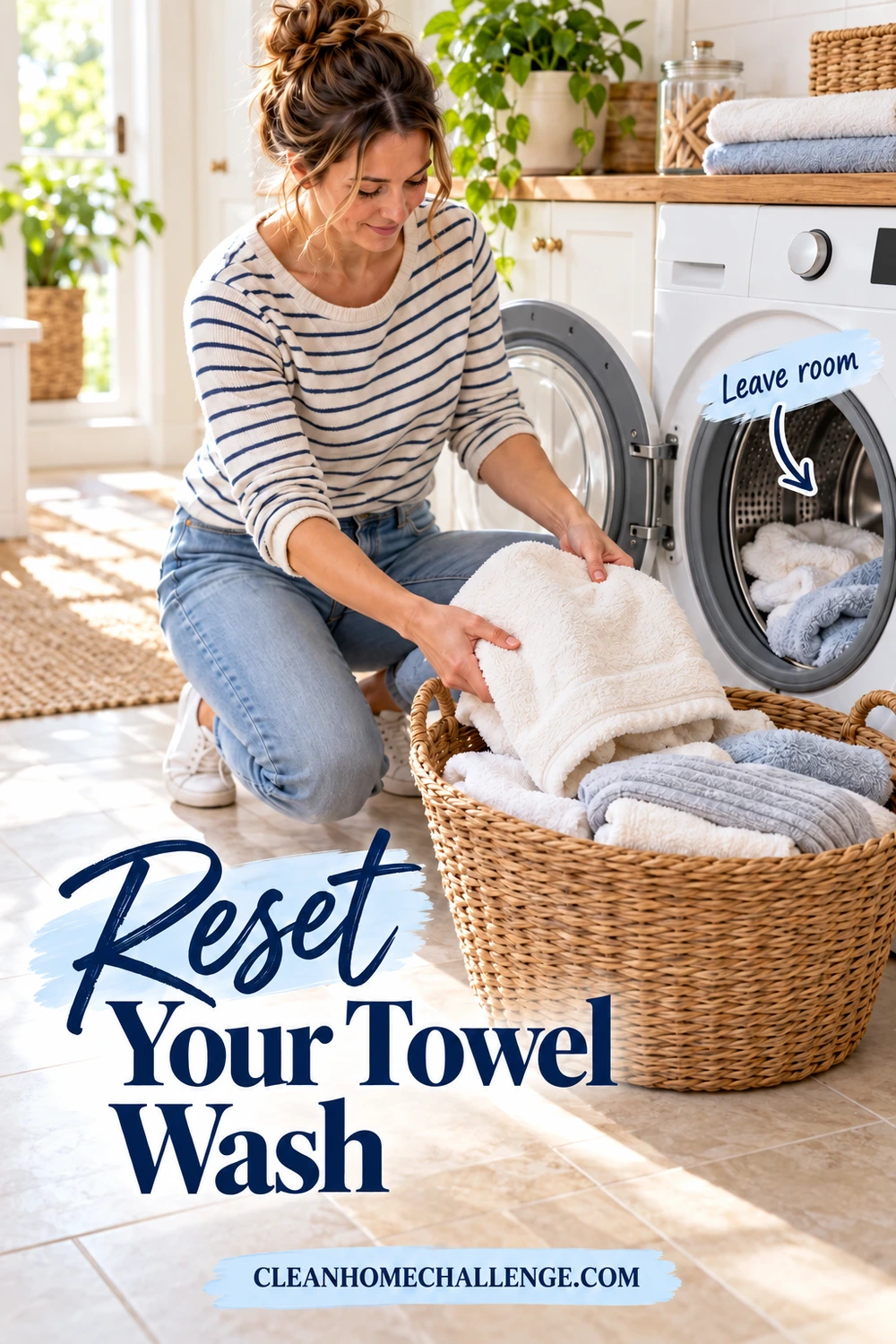
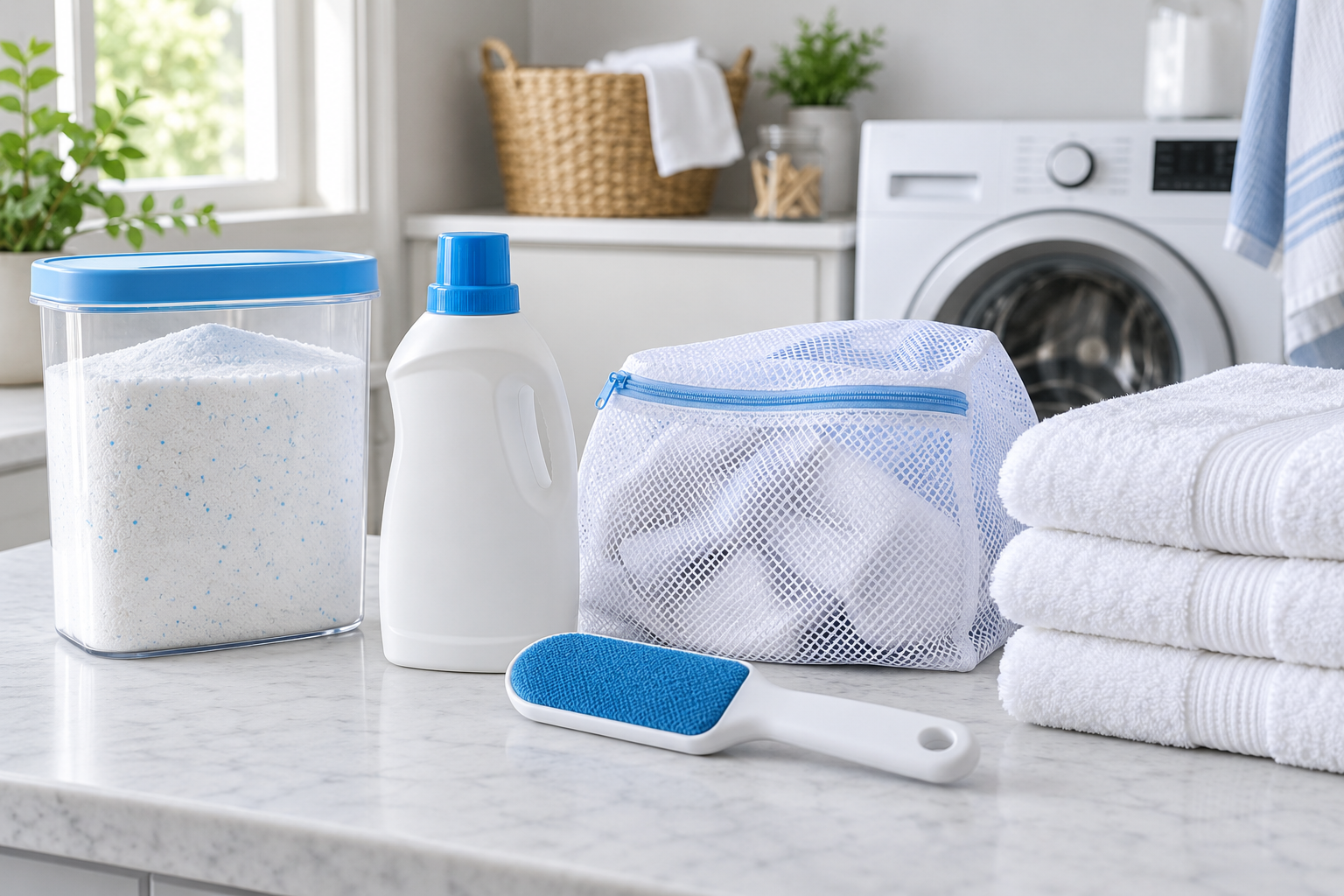
Start with the least complicated useful wash. Gather your regular machine-compatible detergent, the towels’ care labels, a clean basket, and somewhere to dry the load as soon as the cycle finishes. Leave optional additives on the shelf for this first attempt.
- Read the labels and separate incompatible towels. Sort by color and care needs. A decorative guest towel, microfiber hair wrap, and heavy cotton bath sheet may need different treatment. Wash bath towels separately from oily cleaning cloths and other unusually soiled items.
- Give the load room to move. Load loosely according to the washer’s manual. Don’t press down the pile to squeeze in the last few towels. Maytag cautions that overloading can reduce cleaning performance. Towel thickness matters, so a fixed “six towels per wash” rule won’t suit every machine.
- Measure the detergent for this load. Use the product’s directions and the washer’s requirements. Skip fabric softener while you troubleshoot. The next section explains how to choose the dose without automatically using more or less.
- Choose a suitable full cycle. Use the cycle your manual recommends for that towel load, such as Normal or Towels. A quick wash intended for a small, lightly soiled load may be a poor match for several dense, sour-smelling bath sheets.
- Use a label-approved water temperature. Warmer isn’t automatically better for every towel. For example, Brooklinen specifies cold washing and low tumble drying for several of its towel ranges. Follow the actual towel label rather than setting every load to 140°F/60°C.
- Unload promptly and check the result. If the towels still smell unpleasant before drying, move to the washer and detergent checks. If they smell normal, dry them completely and reassess after use.
For scheduling, use the cycle time displayed by your machine, then leave enough time to dry the load. Maytag’s cycle guide illustrates how much full cycles can vary; its towel-cycle examples run roughly 65 minutes to two hours. That’s a planning reference, not a required wash duration for every appliance.
If you have only a few minutes today, read the labels, separate the affected towels, and choose a wash time when you’ll be home to finish the job. Starting a load that will sit wet until tomorrow creates another task.
Get the Detergent Dose Right
More detergent does not guarantee a cleaner towel. Neither does an internet rule that every load needs only a teaspoon. Both overusing and underusing detergent can cause disappointing results.
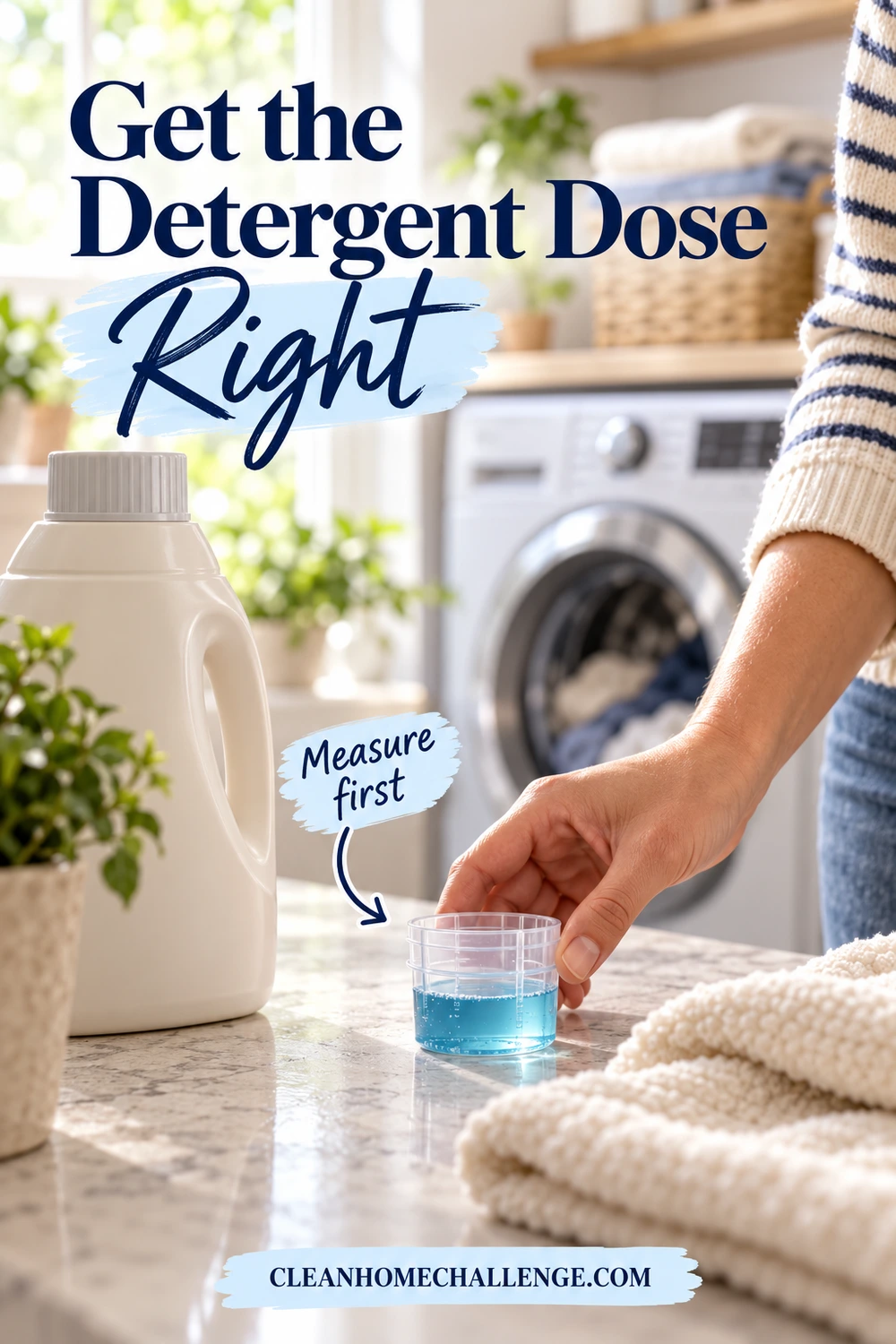
Tide’s dosing guidance considers load size, soil level, and water hardness. Start with the directions on your exact product, including its concentration. A capful of one liquid may contain a very different dose from a capful of another.
Check these four details
- Washer type: Use HE detergent when your high-efficiency washer requires it. Check how your manual tells you to load liquid, powder, or laundry packets.
- Actual amount: Find the correct line on the measuring cap instead of filling it to the top. Use good light; some molded markings are surprisingly difficult to see.
- Water conditions: If your water supplier reports hard water, follow the detergent’s hard-water guidance. Don’t keep reducing the dose solely because the towels feel stiff; several different problems can affect their texture.
- Automatic dispensing: Check the concentration and dose settings against the detergent you actually refill it with. A change of product is a good time to revisit the washer manual.
A heavily perfumed towel is not a useful pass/fail test. During troubleshooting, avoid adding scent boosters just to cover the sour smell. If you already have an appropriate fragrance-free detergent, it can make the result easier for you to judge, but buying a new product is not essential.
Brooklinen advises against fabric softeners for towels because they can reduce absorbency. If you regularly use softener, leave it out while you test the simpler routine. Dryer sheets can also leave a coating; you don’t need either product to complete this reset.
If a finished load has obvious suds or detergent residue, follow your machine’s instructions for an extra rinse. Then correct the cause on the next wash. An extra rinse should be a response to a problem, rather than a permanent way to compensate for a crowded drum or an unsuitable dose.
Make one note of the amount and settings that work. Keeping the measuring cap with the detergent and sharing that dose with the other person who does laundry is often more useful than adding another laundry product.
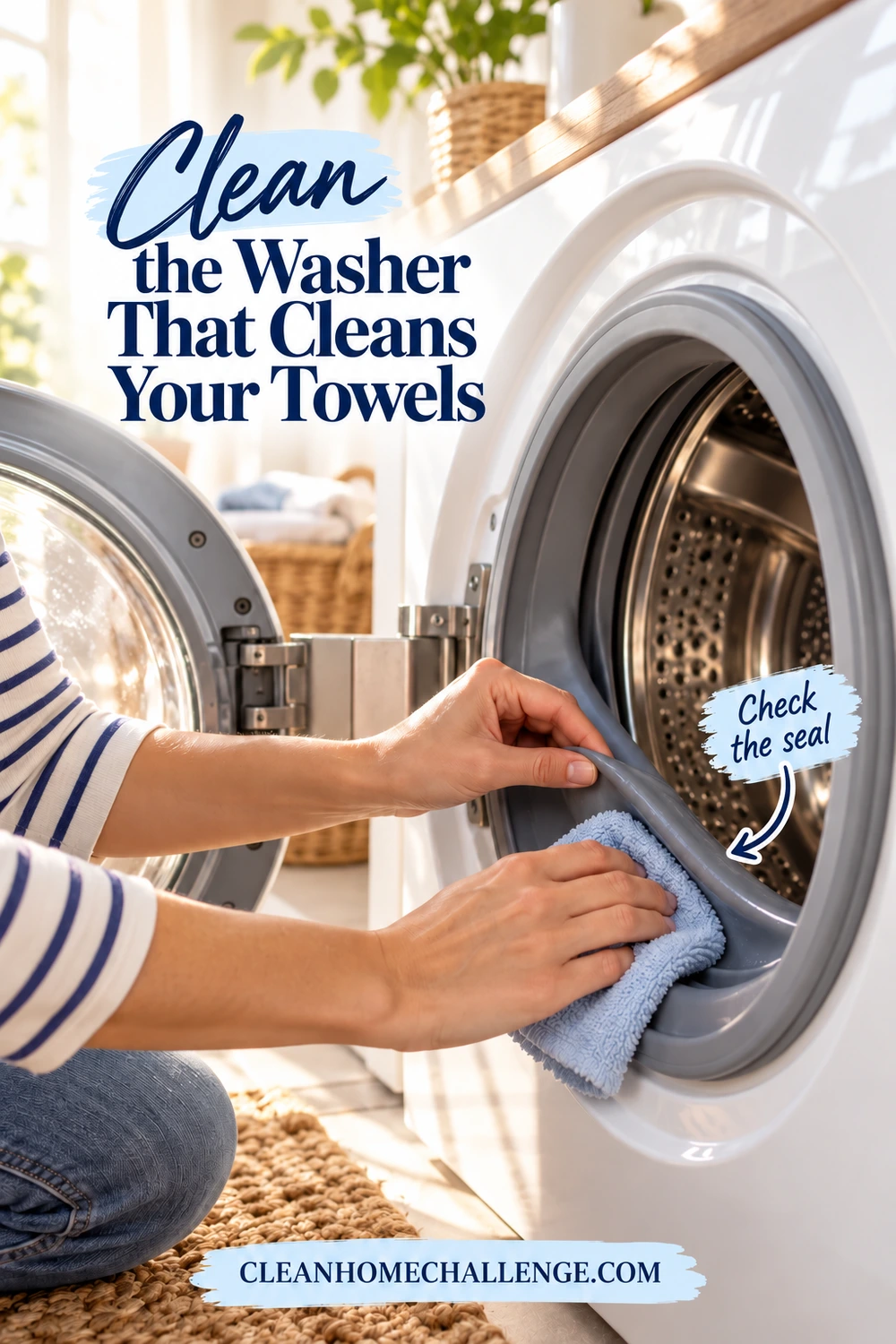
Clean the Washer That Cleans Your Towels
If the empty washer smells musty, address it before washing the same towels again. A shiny drum does not show everything hiding around a door seal, dispenser, or serviceable filter.
LG’s odor troubleshooting guidance identifies detergent buildup, debris in the gasket, and poor drainage from a clogged pump filter as possible contributors. Your washer’s instructions decide which parts you can clean and how.
A practical washer check
- Open the manual first. Find the cleaning cycle, approved cleaner, dispenser-care instructions, and any owner-accessible filter directions. Search using the full model number if you need the manual online.
- Check accessible surfaces. Remove loose lint and forgotten objects. Wipe the door glass and visible gasket folds using the manufacturer’s approved method. Avoid scraping the seal or experimenting with concentrated chemicals.
- Clean the dispenser if it is removable. Follow its removal instructions, rinse away residue, and use an appropriate soft brush where recommended. Don’t force a drawer that is not designed to come out.
- Run the designated cleaning cycle with an empty drum. Use the specified cleaner and placement. A washer-cleaning product is not an additive for the towel load.
- Address a filter only as instructed. Some models have an accessible drain-pump filter; others don’t. Follow the shutdown, cooling, and draining procedure, and prepare for retained water. If the instructions are unclear, get service help.
For one manufacturer example, LG’s Tub Clean instructions call for an empty drum, a suitable tub cleaner used according to its package, and ventilation afterward. LG generally recommends monthly maintenance. Use your own machine’s interval and method rather than assuming every washer works the same way.
Between loads, wipe away accessible moisture and use the recommended drying or ventilation routine. Leave a door or drawer ajar only when the manual permits it and children or pets cannot access the appliance. Keep laundry products secured in their original containers.
Persistent standing water, leaks, drainage errors, or odor that returns despite the prescribed cleaning process are reasons to contact the manufacturer or a technician. Repeatedly adding cleaner won’t repair a drainage fault.
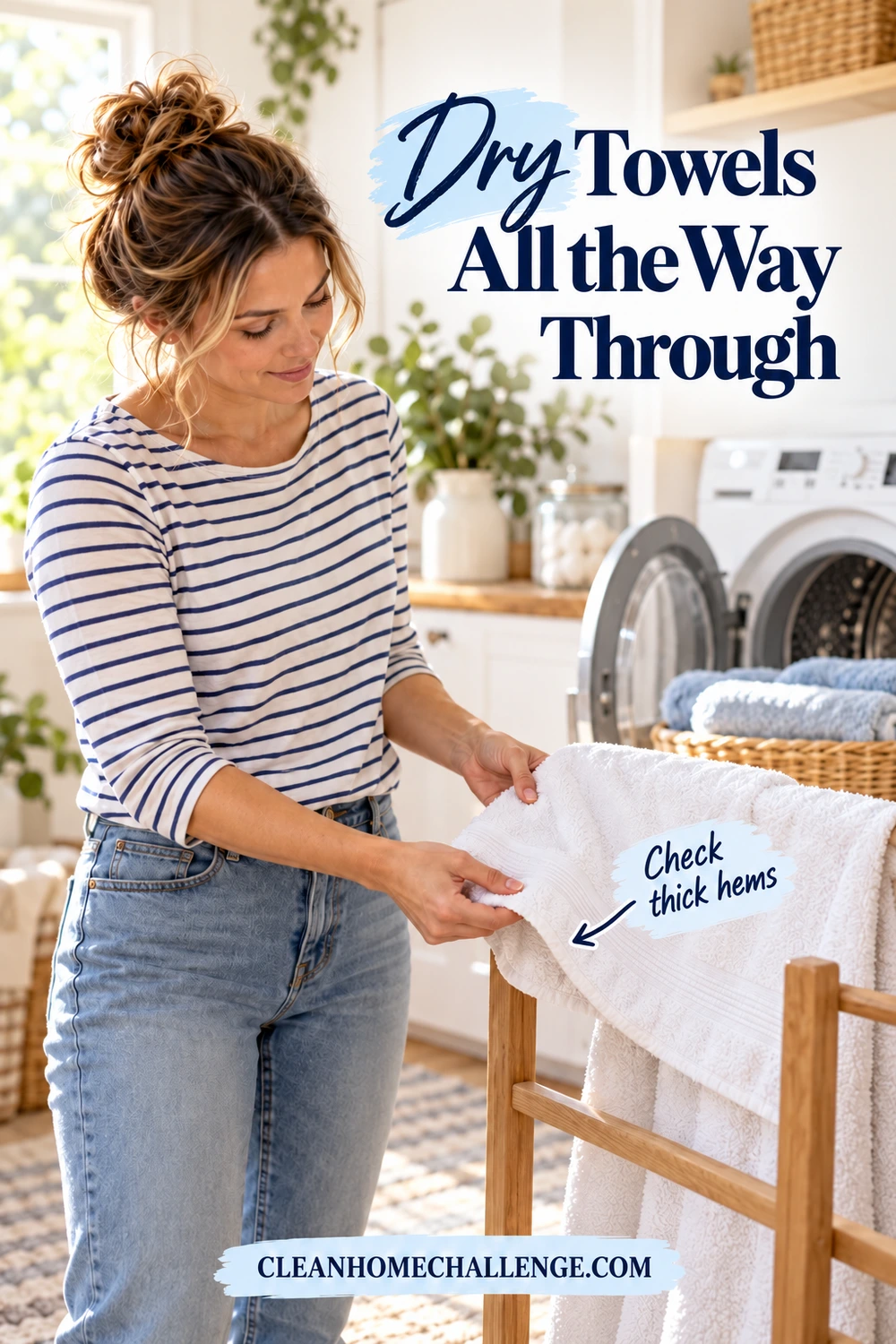
Dry Towels All the Way Through
A successful wash can be undone by incomplete drying. Aim to transfer the towels promptly, separate bunched fabric, and check the thickest parts before folding.
If you use a dryer
Choose a setting permitted by the towel label and give the load room to tumble. If the dryer capacity is smaller than the washer capacity, split the washed load rather than packing every towel into one drying cycle.
Whirlpool’s towel-care guide recommends prompt transfer, label-appropriate heat, and complete drying before storage. It also cautions that excessive heat and overdrying can damage the fabric. You’re aiming for fully dry towels, not the hottest possible setting.
When the cycle ends, unfold one bath sheet and check its center, hems, and decorative bands. Let a sample cool enough to handle comfortably before checking again. If part still feels damp, continue drying according to the care label and appliance instructions. Don’t fold a slightly damp edge into a warm stack and hope it finishes in the closet.
Clear the lint filter before or after each load. The U.S. Consumer Product Safety Commission warns that unusually long drying times or clothing left damp after a typical cycle can indicate a blocked lint screen or exhaust duct. Investigate a change in performance instead of simply running more cycles. Follow the manual’s maintenance instructions or arrange service when needed.
If you air-dry
Shake each towel open and hang it with space around it. A rail or line that allows a wide spread usually makes the fabric easier to check than a crowded cluster of hooks. Avoid piling several wet towels across the same narrow section of a rack.
Use a well-ventilated location suitable for drying laundry. Turn or reposition a towel if its folded edge remains damp. On humid or rainy days, reduce the load to what you can realistically dry, or finish in a dryer if the care label allows it.
Drying time depends on the towel, room conditions, airflow, and equipment. A universal 30-minute promise won’t help a family drying thick bath sheets indoors. Check the actual fabric, then put it away only when every part is dry.
Choose a Safe Treatment for Lingering Odor
If sensible loading, a suitable wash, washer maintenance, and complete drying haven’t solved the smell, consider one compatible laundry treatment. First reread both the towel’s care label and the product’s instructions. “Color-safe” on a container does not override a towel label that prohibits bleach.
Consider a labeled oxygen-based laundry product
Choose a product explicitly labeled for the fabric and the problem you’re treating. Follow its dose, water temperature, soak limit, rinse instructions, and material exclusions. Test colorfastness as directed, particularly with dark towels or contrasting trim.
For a concrete example, OxiClean’s Odor Blasters powder instructions describe dissolving the product, soaking suitable items for three to six hours, and then washing normally. That timing belongs to that product; it is not permission to soak every towel overnight or substitute another formula at the same dose.
Use a suitable container kept safely away from children and pets, follow any glove or ventilation directions, and dispose of the solution as instructed. Set a timer for the labeled soak. Rewash and dry thoroughly before judging the result.
Keep the chemistry simple
- Do not improvise a mixture of laundry boosters, bathroom cleaners, vinegar, and bleach.
- Never mix chlorine bleach with vinegar, acids, ammonia, or other cleaners. Poison Control explains that bleach mixed with an acid can release chlorine gas.
- Use chlorine bleach only when the towel label, washer instructions, and bleach label all permit that specific laundry use. White fabric alone is not proof of compatibility.
- Don’t assume vinegar is safe for every washing machine. Bosch advises against using vinegar to clean its washers because of potential damage to rubber parts. Check your manufacturer instead of adopting a universal vinegar recipe.
These steps are for odor removal and routine cleaning. A better smell does not prove sanitizing or disinfecting, and an ordinary oxygen-based stain remover should not be described as a sanitizer unless its label supports that use.
Towel stripping is a separate, more involved approach to certain buildup problems. If that is the issue you’ve identified, read how to strip towels safely and check compatibility first. It is not the automatic next step for every musty towel.

Keep Towels Fresh Between Washes
Once the load is improved, build a routine that fits how your household actually uses towels. A few repeatable actions are easier to keep up with than a monthly rescue session involving every towel you own.
After each use
Spread the towel so it can dry, with each family member using an assigned rail or space. Unfold bunched corners and move towels off beds, floors, or bathroom doors where they remain crumpled. If there isn’t enough hanging room, rotate a smaller number of towels or add a suitable drying spot.
The American Cleaning Institute recommends drying bath towels between uses and washing them after about three to five normal uses. Treat that as a starting point for ordinary use. Wash sooner when a towel is soiled or smells, and don’t stretch the interval to match a calendar when it is staying damp.
Before the hamper
If wash day isn’t today, let used wet towels dry before putting them into the laundry basket. Keep a clear distinction between towels airing before washing and clean towels ready to use. A separate designated spot prevents someone from returning a used towel to the linen shelf.
On towel-washing day
Use this short checklist:
- Care labels and colors are compatible
- The load fits loosely within the machine’s guidance
- Detergent is measured for the load and water conditions
- The wash cycle suits the towels and soil level
- Drying space or dryer time is available
- Thick hems are dry before folding
- Clean towels go into a dry, uncrowded storage space
You can attach this job to Saturday laundry catch-up, or choose a smaller midweek load if your family runs out sooner. Set a reminder for the end of the wash rather than relying on hearing the machine from another room.
If one towel repeatedly fails the same wash that restores the others, check its care information and contact its maker if useful. Replacement can be reasonable when compatible treatment has failed or the fabric is deteriorating. There is no need to keep buying products to save one worn-out towel.
For now, choose one change you can maintain: measure the detergent, move the load promptly, or give every used towel proper drying space. Keep the change that solves your household’s problem, then let the routine do the work.

CLEANERS CLUBHOUSE
Make Laundry Catch-Up Feel More Manageable
Use Saturday to catch up without letting laundry take over the whole weekend. Inside the Cleaners Clubhouse, practical routines and printable support help you keep washing, folding and household jobs moving.