
THIS POST MAY CONTAIN AFFILIATE LINKS. PLEASE READ MY DISCLOSURE FOR MORE INFO.
A whole-house cleanout can take over a weekend before you see a result. This 30-day declutter challenge gives you one small, finishable space each day. Most tasks can fit into 10–20 minutes. You can pause, swap days, or repeat a task; the goal is a home that works better for your family, not a perfect photograph.
What you need: A trash bag, a donation bag or box, a basket for things that belong elsewhere, and a timer. Start with what you own. Storage bins and labels can wait until you know what you are keeping.
The rule for each day: Pick the named space, set a timer, remove obvious trash, return items that belong elsewhere, choose what to keep, and put those items back. Move donations to a designated exit spot. If the timer ends, close the space and carry on tomorrow. Do not empty an entire room to sort one drawer.
Disclosure: This post may contain affiliate links. As an Amazon Associate, Clean Home Challenge earns from qualifying purchases. If you make a purchase through these links, we may earn a small commission at no extra cost to you. This helps us keep creating practical cleaning tips, routines and resources for busy families! 🧽
How to Make the Challenge Fit Your Week
Choose a time you can usually spare, such as after breakfast or before dinner. Ten minutes counts. For a shared area, ask everyone who uses it before discarding something that is not yours. Keep one small “decide later” box with a review date for genuinely difficult decisions, rather than filling every surface with piles.
Use four simple destinations: keep here, move elsewhere, donate, and dispose or recycle. Only donate clean, usable items that your chosen organization accepts. Check local recycling and disposal rules before tossing batteries, electronics, medicines, paint, or chemicals. Keep products in their original labeled containers; do not combine leftovers. The EPA recommends checking with your local waste agency for household hazardous waste options.
If you miss a day, resume with the next small task. Day 7, 14, 21, and 28 are catch-up days, so there is room for real life.

Week 1: Clear the Everyday Landing Spots
- Day 1 — Entryway hook or basket: Remove old flyers and receipts; put keys, bags, and shoes where your household will reach for them.
- Day 2 — One kitchen counter section: Clear just one work area. Return appliances you seldom use to an accessible cupboard only if they fit safely.
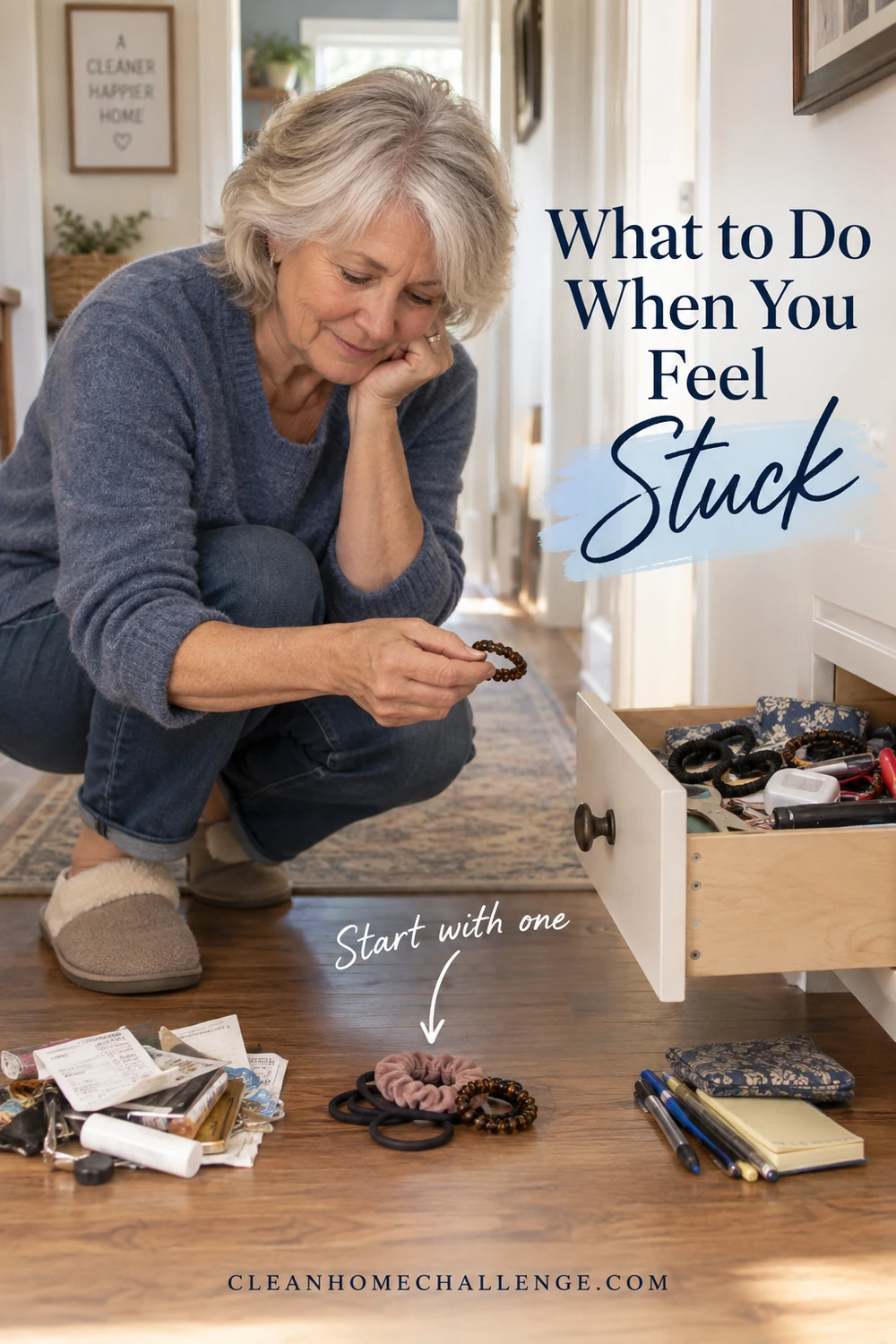
- Day 3 — Junk drawer: Pull out one drawer, discard dead pens and scraps, and group the useful items you actually reach for.
- Day 4 — Dining table or family drop zone: Put paperwork in an action tray and return dishes, toys, and clothing to their homes.
- Day 5 — Fridge door shelves: Remove items one shelf at a time. Check labels and food condition; use USDA FoodKeeper guidance when unsure about storage time. Wipe and dry the shelf before replacing food.
- Day 6 — One bathroom drawer: Sort empty packaging, duplicates, and products you will not use. Keep medicines secure and follow local take-back guidance.
- Day 7 — Catch up and take out donations: Finish any small task you missed; carry the donation bag to the car or your chosen drop-off spot.
Low-energy option: On any day, remove five obvious items from the named space and stop. That still makes tomorrow easier.

Week 2: Make Clothes and Laundry Easier
- Day 8 — Sock drawer: Pair what you can; remove socks that are worn beyond repair, and give unmatched ones a short deadline.
- Day 9 — One shelf of everyday clothes: Keep what fits and gets worn. Put seasonal items where you can find them again.
- Day 10 — Hangers and closet floor: Free up hangers and clear the walking space; leave other people's clothes for them to decide.
- Day 11 — Laundry shelf: Group detergent and tools, remove empties, and store products securely away from children and pets.
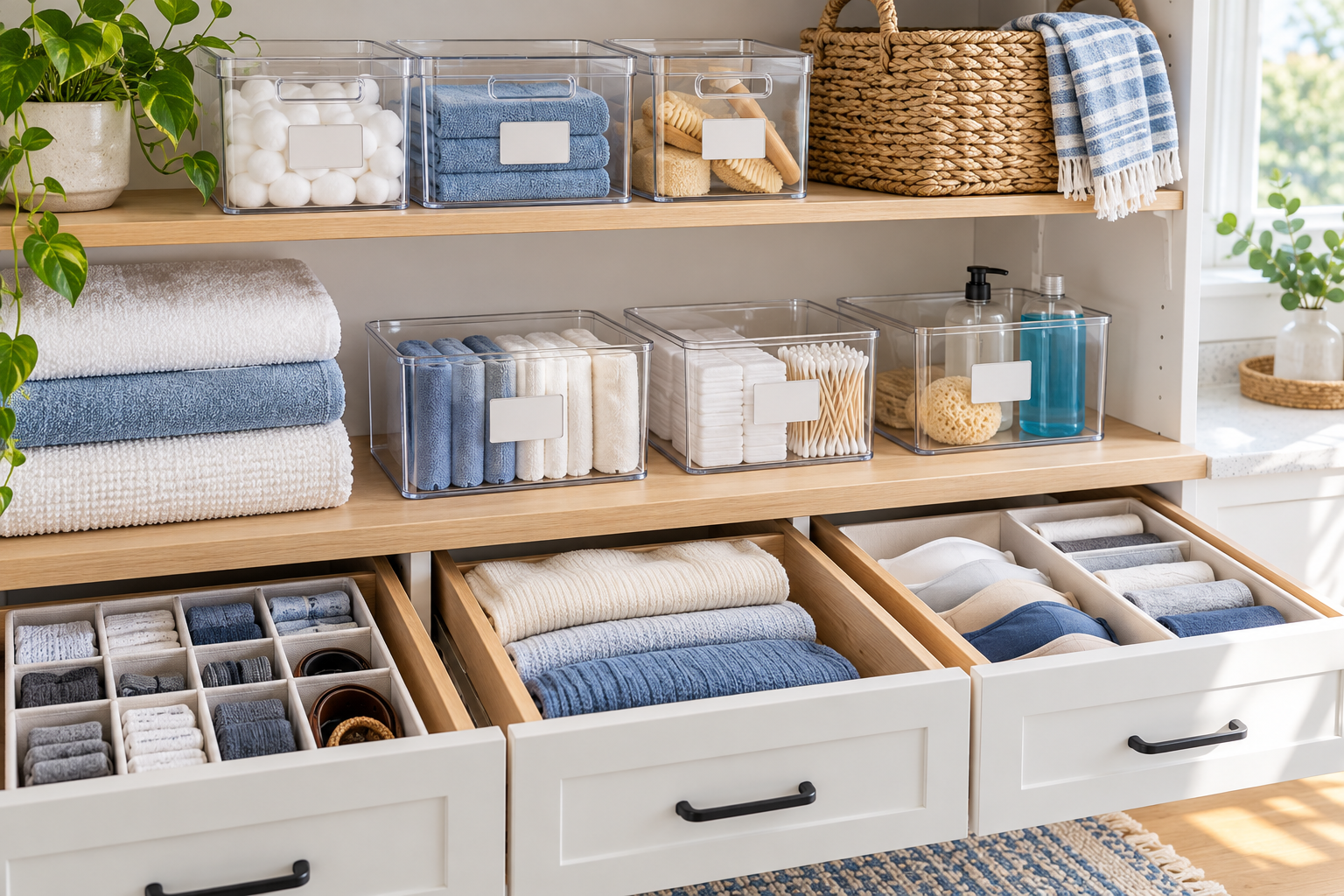
- Day 12 — Linen shelf: Keep a practical number of towels and sheet sets for your household. Rehome usable extras if you have too many.
- Day 13 — One shoe spot: Pair shoes, check fit and condition, and make everyday pairs easy to reach.
- Day 14 — Catch up and finish the laundry loop: Put away one clean load and remove donations. Do not turn this into a wardrobe overhaul.
If deciding about clothes is hard, ask whether you would choose the item this week and whether it has a realistic place in your current life. A memory item may be worth keeping; place it intentionally rather than forcing it into an everyday drawer.

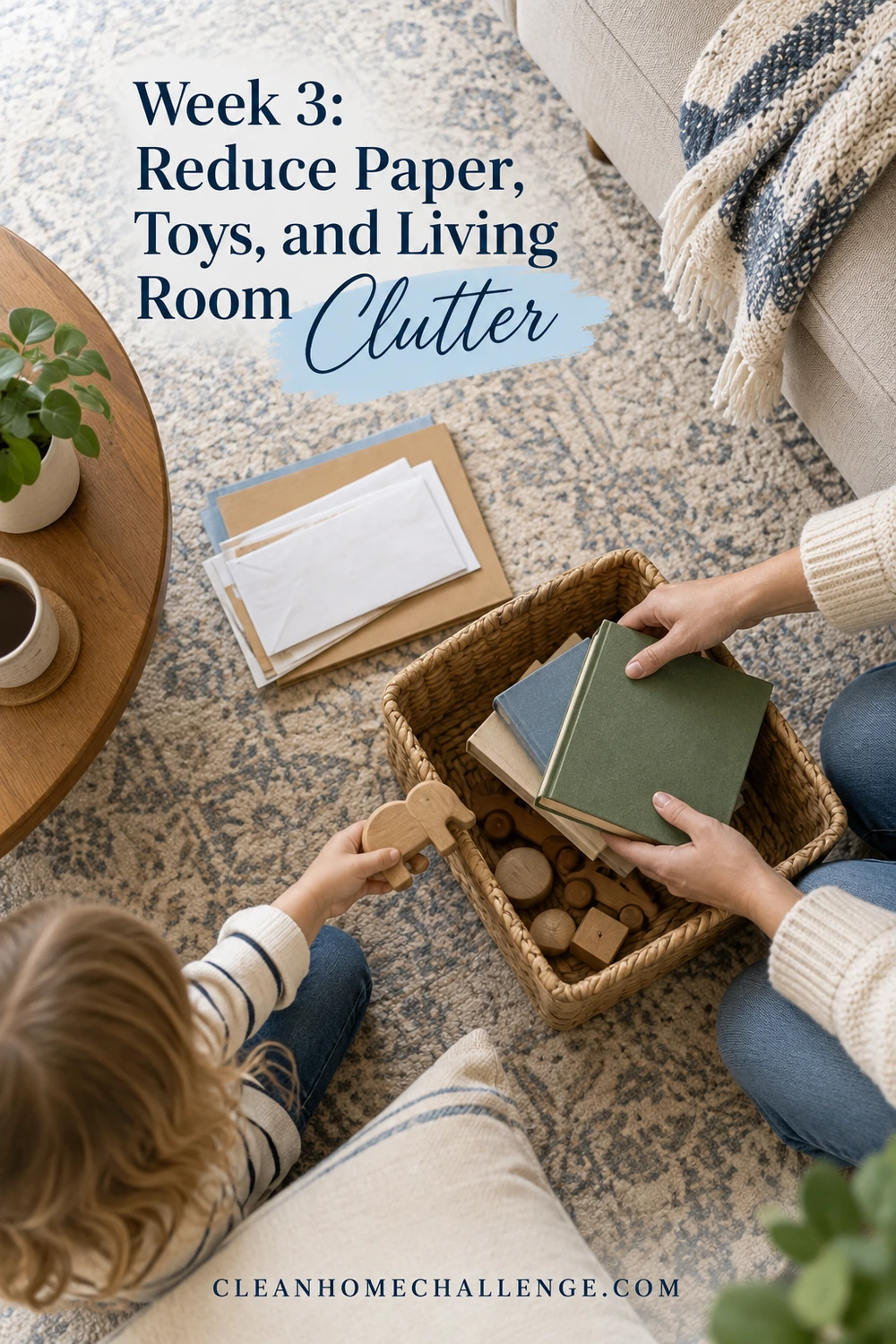
Week 3: Reduce Paper, Toys, and Living Room Clutter
- Day 15 — Mail pile: Sort into action, file, and recycle. Shred documents with personal or financial details when they are no longer needed; the FTC advises storing important records securely.
- Day 16 — One file or folder: Remove duplicate copies and unrelated papers. Check tax, legal, insurance, and medical retention requirements before discarding records.
- Day 17 — Coffee table: Clear cups and stray objects; leave the few things the family actually uses there.
- Day 18 — One toy bin: Invite children to choose what they still play with. Set aside broken items for appropriate disposal and donate only complete, usable toys.
- Day 19 — Bookshelf section: Keep favorites and current reads visible. Offer unwanted books to a group that accepts them.
- Day 20 — Device and cable basket: Match cables to devices; set aside obsolete electronics for an approved collection point. Do not toss batteries into an ordinary bin without checking local rules.
- Day 21 — Catch up and clear the exit spot: File the week's action papers, deliver donations, or book a drop-off.
Give children choices within a manageable boundary: “Which three would you like on this shelf?” works better than dumping every toy onto the floor. Do not secretly discard treasured belongings.
Week 4: Tackle Storage Without Buying More Storage
- Day 22 — One pantry shelf: Bring older packages forward, check for damaged packaging or pests, and group foods you use together. A printed “best if used by” date is generally a quality cue; use food-specific guidance and do not eat food that seems unsafe.
- Day 23 — Food container drawer: Match bases to lids and let go of broken or unusable pieces. Keep enough for the meals your family actually packs.
- Day 24 — Cleaning supply shelf: Remove empty containers, keep original labels, and check local hazardous waste rules for products you cannot use.
- Day 25 — One under-sink section: Wipe up any leak and keep products upright and secured. Avoid storing cleaners within children's reach; never combine partly used products.
- Day 26 — One desk or craft drawer: Group essentials, recycle clean scraps where accepted, and give ongoing projects a defined home.
- Day 27 — Car glove box or console: Remove trash and expired nonessential papers while keeping required vehicle documents accessible.
- Day 28 — Catch up and take out donations: Finish one missed space or simply deliver the bags already sorted.
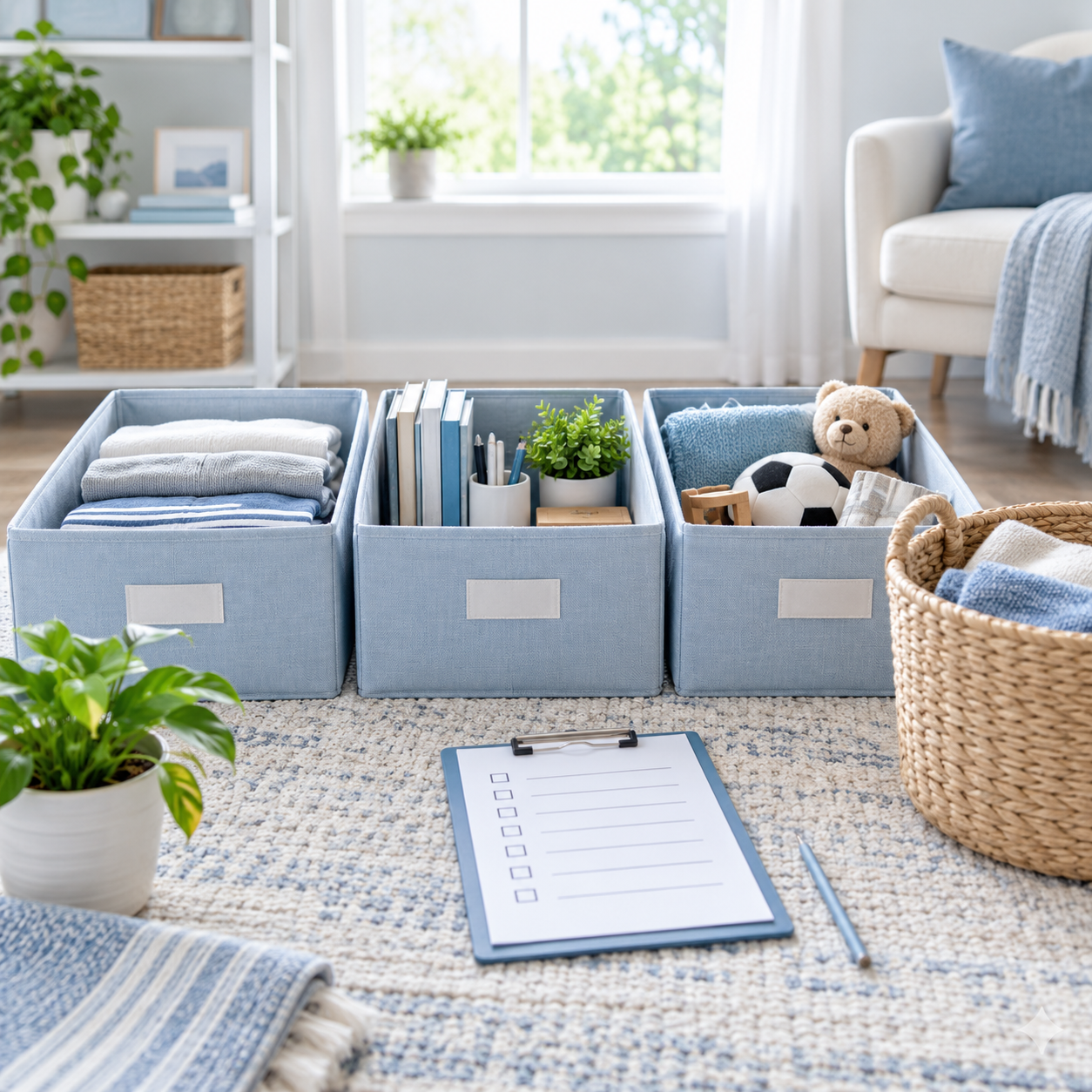
Choose organizers only after the shelf works with what you kept. Measure first, leave room to take items out easily, and avoid making a “miscellaneous” bin for everything you did not decide about.

Days 29 and 30: Keep the Progress Going
- Day 29 — Return basket: Walk through the house with one basket and return stray items to their homes. Notice which items still have no sensible place.
- Day 30 — Ten-minute review: Revisit your busiest surface. Keep one small daily reset, and schedule a weekly donation check or paper sort. Celebrate the spaces that are easier to use, even if other rooms still need attention.
A useful maintenance rhythm is a five-minute evening return, a weekly donation exit, and a monthly ten-minute check of a trouble spot. When a drawer starts to crowd again, remove a few things before buying another container.

What to Do When You Feel Stuck
Everything is important: Start with trash and items that belong somewhere else. Leave sentimental decisions for a separate day when you have time.
The room looks worse halfway through: Reduce the area to a single shelf or drawer; put undecided items into one dated box and clear the working surface before you stop.
No one else is helping: Declutter your own belongings and shared trash first. Agree on one family landing place rather than assigning blame.
You missed a week: Pick any numbered day that solves a current irritation. The challenge is a menu, not a streak.
CLEANERS CLUBHOUSE
Ready to Clear the Clutter One Step at a Time?
Join the 30-Day Declutter Challenge and work through your home in small, achievable steps. The Cleaners Clubhouse includes the plan, printable support and encouragement to help you keep going.
Your First Small Space Is Enough for Today
Start with the entryway basket or any drawer that takes less than 20 minutes. Set out a donation bag, finish one contained space, and put the keepers back before moving on. Thirty modest decisions can make daily life easier without requiring thirty perfect days.
Sources for disposal and record decisions
- U.S. Environmental Protection Agency, Household Hazardous Waste.
- Federal Trade Commission, Which documents to keep and which to shred.
- USDA Food Safety and Inspection Service, Food Product Dating.