THIS POST MAY CONTAIN AFFILIATE LINKS. PLEASE READ MY DISCLOSURE FOR MORE INFO.
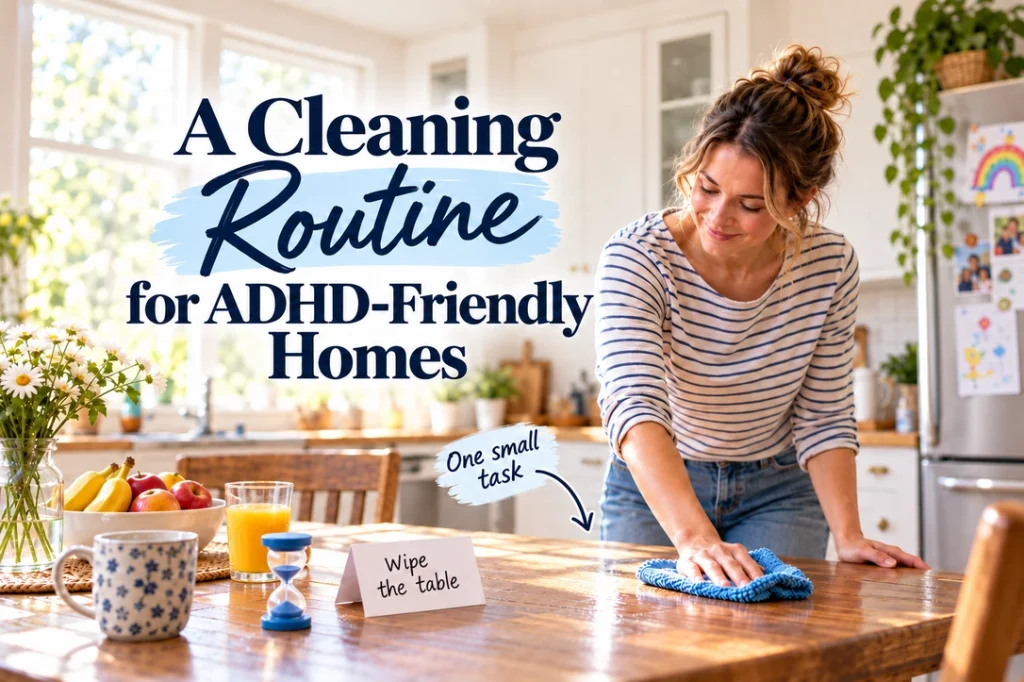
A useful ADHD cleaning routine makes the next action easier to see, start, and finish. It does not require a perfect house, a complicated app, or catching up on every missed chore. Begin with one small job that makes the room more usable, then build a routine around the support that actually helps you.
This guide offers practical household adaptations, not a treatment for ADHD. CHADD recommends breaking organizing projects into small tasks and experimenting with reminders, short timed sessions, and support from another person. The examples below translate those ideas into family home care. Change the timing, cues, and task size to fit your needs; a timer that creates stress can be replaced with a short checklist or a song.
Disclosure: This post may contain affiliate links. As an Amazon Associate, Clean Home Challenge earns from qualifying purchases. If you make a purchase through these links, we may earn a small commission at no extra cost to you. This helps us keep creating practical cleaning tips, routines and resources for busy families! 🧽
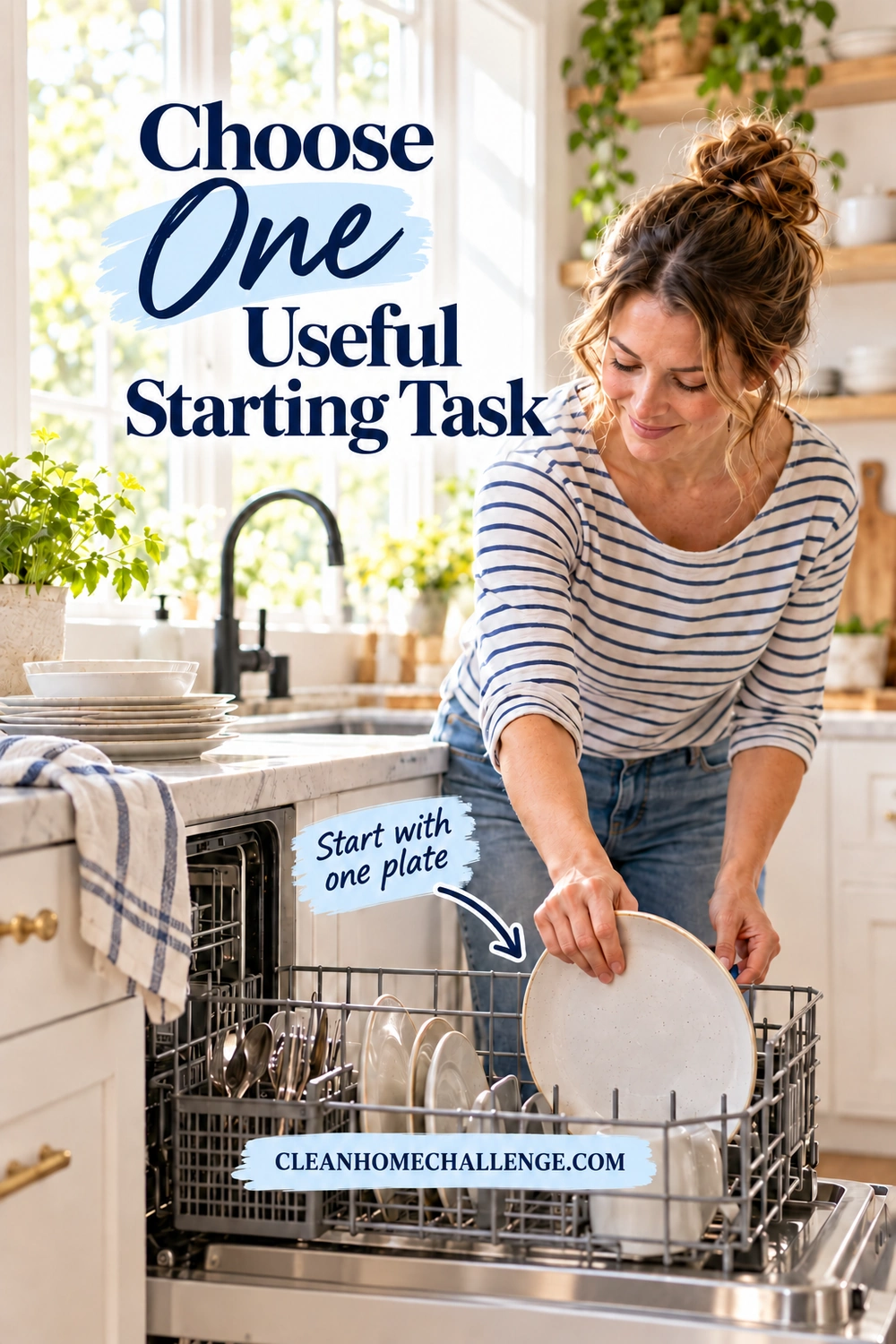
Choose One Useful Starting Task
When a room feels like one enormous job, choose a visible result instead of the instruction “clean the kitchen.” Try “put the breakfast plates in the dishwasher,” “clear one chair,” or “wipe the table where we eat.” Each has a recognizable finish. Cleaning the whole room can wait until the first task is closed.
Start with immediate household needs: deal with a spill that could cause a slip, remove spoiled food, or clear a safe walking route. Then choose one surface needed for the next meal, work session, or bedtime. You do not have to organize a drawer before the family can use the table.
- Stand in one room and name the useful result: “We can sit at this table.”
- Write one physical action: “Move the dishes to the sink.”
- Gather only what that action needs. A carry basket can hold items going elsewhere; it is a temporary collection point, not the new permanent home for everything.
- Complete that action before choosing another. If you must leave the room, take the basket to one destination and return to the original task.
- Stop at the stated result or select one further action deliberately.
A small starting task might take a minute or several minutes; these are planning estimates, not deadlines. If the job turns out larger, shrink it. Moving two plates is a valid start. Use the same plain action language for everyone sharing the home rather than leaving one person to interpret “help more.”
Build a Small Visual Cleaning Checklist
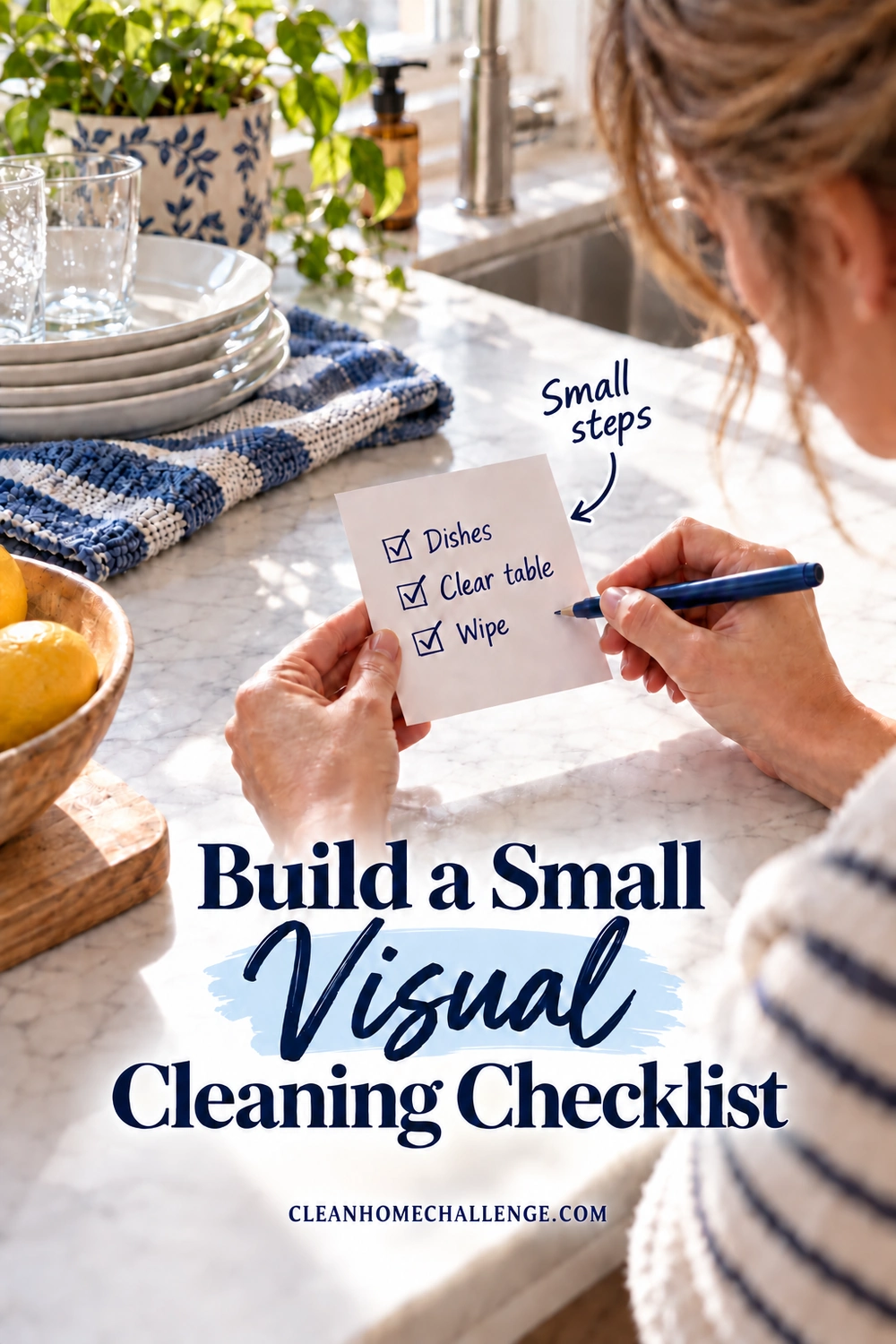
Keep the checklist where the action happens and make it short enough to read at a glance. A card beside the kitchen sink can say “dishes to sink, clear eating space, wipe compatible surface.” A card near the laundry basket can say “start one load, set reminder, move it when ready.” Store cleaning chemicals securely even when a visible cue is useful.
Use three or four actions for the routine you are testing. Long lists can be saved separately for occasional deeper cleaning. Separate tidying from cleaning: putting objects away clears the surface; wiping it with an appropriate method removes soil. “Put away the cups” and “wipe the table” are different steps, and either can have its own check mark.
| Place | Visible action | Clear finish |
|---|---|---|
| Kitchen table | Move meal dishes, then wipe as the finish allows | Eating space is usable and dry |
| Entry | Put shoes in their assigned spot | Walking route is clear |
| Laundry | Complete the next stage of one load | Clothes are moved or a useful reminder is set |
| Living area | Return items from one chair | Someone can sit there |
Check off completed actions, then reset the card for the next session. If check marks stop being useful, try a movable marker or a single “next job” card. Keep changes simple: test one cue for a week before adding several boards, apps, and alarms. A household member may prefer written steps while another prefers a brief spoken agreement. Choose supports together instead of assuming everyone needs the same one.
Use Short Sessions with a Clear Finish
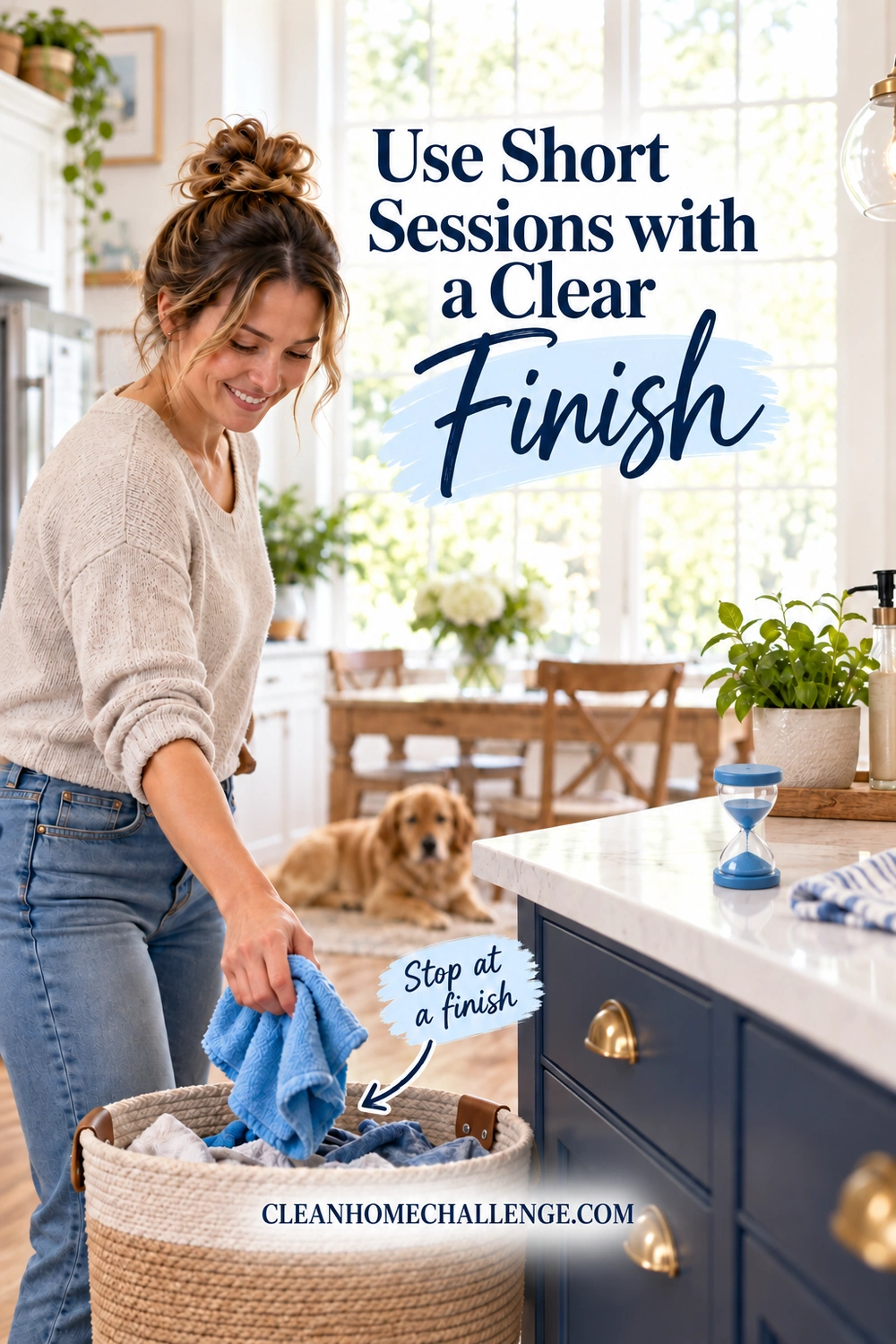
CHADD describes bite-size timed organizing sessions with breaks. For cleaning, a five- or ten-minute session can be a starting experiment, and a shorter session is fine. Set the timer to signal a decision point: stop, take a break, or deliberately continue. It is not a race, and a timer is optional.
Choose the task before setting the timer. Place the task card and tools within easy reach, then work on that task only. If you think of another job, note it for later rather than opening a second project. When time ends, spend a moment closing the task: return tools, secure products, leave a wet surface safe, and name the next action if more work is needed.
For a kitchen example, start after clearing your breakfast dish. Move remaining dishes to the sink or dishwasher, clear the eating space, and wipe only the compatible surface. The finish is a dry, usable eating area; reorganizing the pantry is outside this session. If the timer interrupts a necessary rinsing step, finish the product’s required instructions before leaving the area safe.
An event cue can be more helpful than a rigid clock time: after breakfast, before the evening show, or when a laundry cycle finishes. Use a reminder that names the action, such as “move the wash to the dryer,” instead of a vague “clean.” Choose an accessible sound or visual cue that works for you. Avoid piling up reminders you routinely dismiss; review the one that failed and change its timing or task size.
Make Supplies Easy to Use and Safe to Store
Reduce unnecessary decisions without leaving products within children’s or pets’ reach. Keep a small set of appropriate tools together: clean cloths, a dusting tool, a carry basket, and a cleaner suitable for the actual surface. A dry cloth or task card can be visible while chemicals remain locked or otherwise securely stored in their labeled original containers.
Before buying a timer or task board, try a paper card and a reminder already available to you. If a visual timer helps, choose readable markings and a sound you can tolerate. If a board helps, leave room for a few concrete actions rather than filling every square. These tools support a routine; they cannot guarantee that a task will feel easy every day.
Keep clean and used cloths separate, wash them appropriately, and let damp tools dry in a suitable place. Return supplies to their known spot at the end of the session so the next start needs fewer steps. A duplicate dry cloth in another room may help; duplicate chemical products are not necessary if they make secure storage harder.
Follow the cleaner label and surface-care instructions, including any required ventilation, gloves, rinsing, or drying. Never mix cleaning products. Do not transfer them to drink bottles or decorative containers. Give children age-appropriate, chemical-free tasks with suitable supervision, such as putting toys in their bin or carrying their own dry clothes. Adults handle chemical selection and use.

Share Tasks with Clear Roles
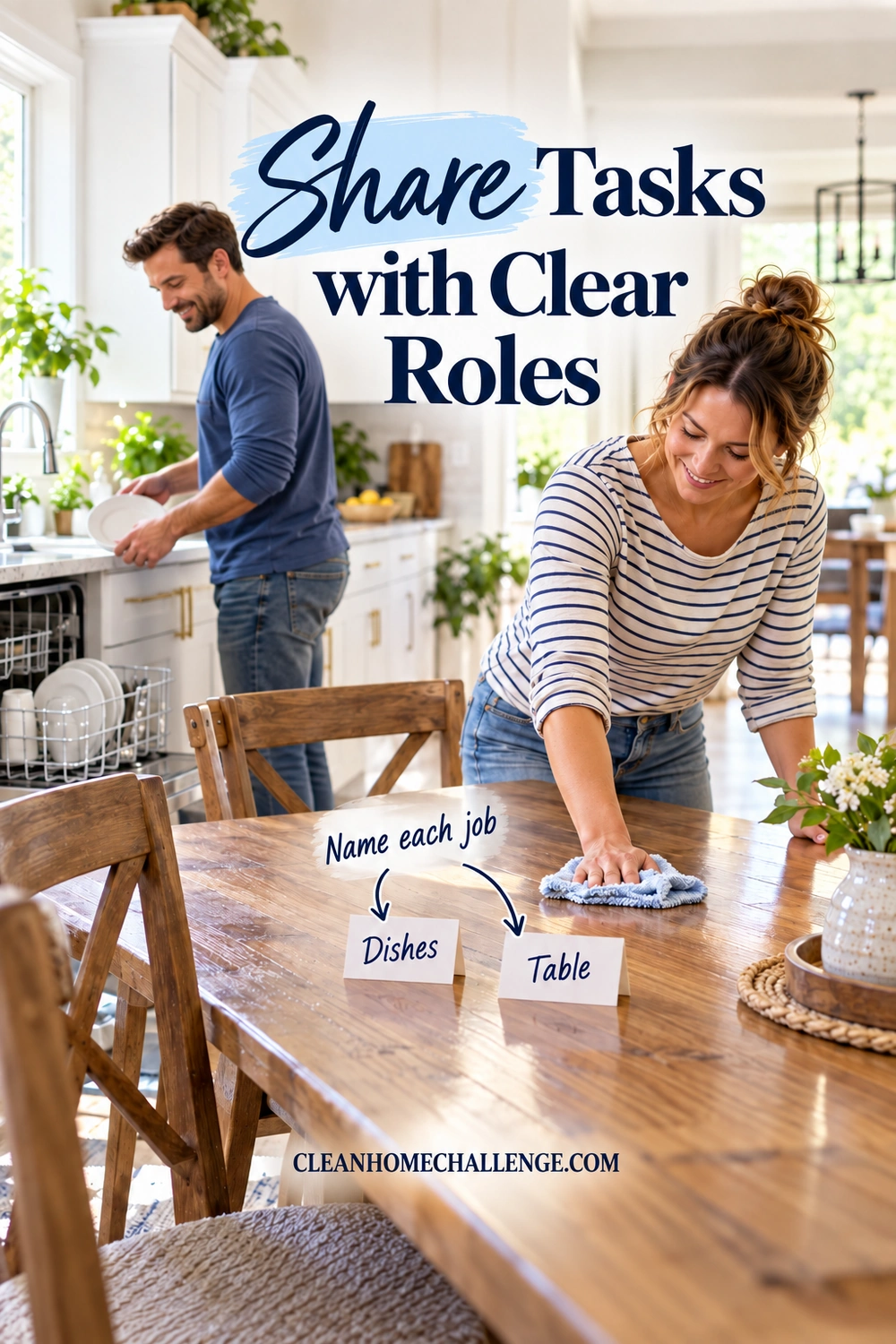
Make the work visible to the people who share it. “You handle the dishes while I clear and wipe the table” is more useful than “everyone tidy.” Agree on the finish and who returns the tools. Split planning and cleanup responsibilities too, so one person is not always assigning, reminding, and checking every job.
Some adults find quiet company helpful for starting or staying with a task. You can try body doubling with a willing household member or friend: each person names a small job, works nearby or on a call, and checks in at the end. The other person does not need to monitor, criticize, or take over. Ask whether conversation, quiet company, or a brief check-in feels useful. For a fuller explanation, see our guide to body doubling for cleaning.
Keep the arrangement specific: choose one shared session and one job per person, then agree that stopping at the finish is allowed. If video calls distract you, try an opening and closing message instead. Avoid using household support as a reason to shame someone for missed chores. Review what got in the way—unclear steps, inaccessible supplies, too much noise, or an oversized task—and adjust the plan together.
Restart the Routine Without Catch-Up Pressure
A routine needs a restart route. After a missed day, return to today’s useful actions rather than adding every unfinished task to the next session. Handle an immediate safety or food issue first, restore one working area, and then choose the next priority. A missed checkbox is information about the plan, not a verdict on you.
Here is a flexible weekly menu based on the Clean Home Challenge room rhythm. Pick one action on the relevant day; completing an entire room is optional. Change days to match work, family needs, and energy.
| Day | Area | One possible action |
|---|---|---|
| Monday | Kitchen | Clear and wipe the eating space |
| Tuesday | Bathrooms | Clean one compatible sink surface |
| Wednesday | Bedrooms | Clear one chair or bedside area |
| Thursday | Living areas | Return items from one seating space |
| Friday | Floors | Collect debris from one safe walking route |
| Saturday | Laundry | Finish the next stage of one load |
| Sunday | Review | Choose the next useful task and reset the card |
On a lower-energy day, use a minimum version: clear the walking route, move food waste to an appropriate bin, or make one needed surface usable. Secure products and leave the area safe before stopping. On a higher-energy day, add one clearly defined job rather than emptying several cupboards at once.
At the weekly review, ask which cue you noticed, which task was too large, and which finish made the day easier. Keep what worked, shrink what did not, and write one next action. If household routines remain very difficult despite adaptations, an ADHD-informed clinician or other appropriate support professional can help with individualized strategies. Cleaning advice does not replace that care.
Download the accompanying one-page routine card to write your own starting task, cue, finish, and next step. A comfortable home can be built through many small returns to the routine.
Sources and research notes
Guidance checked October 2, 2026: CHADD: Organizing the Home and Office Space, CHADD: Organize Your First Living Space, and NHS: ADHD in adults. CHADD’s organization strategies support the use of smaller tasks, short sessions, and shared support. The particular household examples and weekly menu are practical adaptations, not clinical treatment instructions or guaranteed outcomes.
Download the ADHD-friendly cleaning routine card (PDF)

CLEANERS CLUBHOUSE
Make Your Cleaning Routine Easier to Follow
Stop wondering what to clean next. Inside the Cleaners Clubhouse, you’ll get a practical 12-month cleaning calendar, printable worksheets and monthly challenges to help you keep moving without trying to do everything at once.