THIS POST MAY CONTAIN AFFILIATE LINKS. PLEASE READ MY DISCLOSURE FOR MORE INFO.
The birthday cards, tiny shoes, and box of family photographs may be the hardest things in your home to sort. Each one can raise a different question: Will I forget the story? Will someone else want this? What if I change my mind?
If you’re wondering how to declutter sentimental items, begin with a small collection, choose the pieces you genuinely want to keep, and give uncertain decisions more time. You don’t need to empty every memory box or make your home look like someone else’s.
No method can guarantee that you’ll never miss something you release. A careful process can help you avoid rushed decisions, preserve important information, and make the keepsakes you love easier to find. Set aside about 20 minutes for your first session, including time to put everything away. A five-minute version counts, too.
Disclosure: This post may contain affiliate links. As an Amazon Associate, Clean Home Challenge earns from qualifying purchases. If you make a purchase through these links, we may earn a small commission at no extra cost to you. This helps us keep creating practical cleaning tips, routines and resources for busy families! 🧽
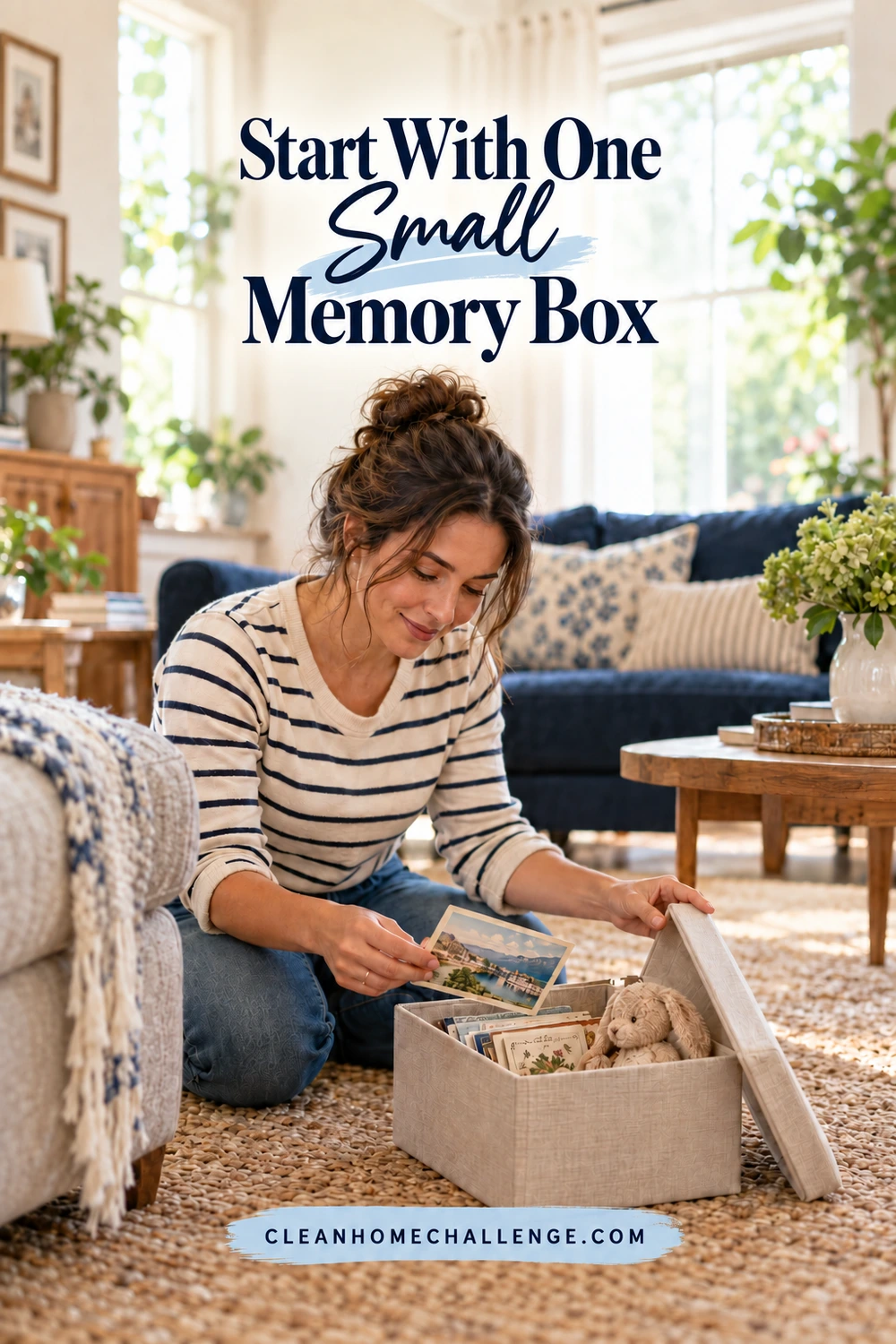
Start With One Small Memory Box
Choose one manageable starting point: a handful of cards, a small souvenir box, or one folder of school papers. Leave the entire closet for another day. You want a collection you can safely put away before you need the table again.
If one category feels especially difficult, begin somewhere easier. Recent vacation souvenirs may be a gentler first step than a late parent’s letters. You can postpone any item, even if it seems easy to someone else.
Set up a simple sorting space
Clear a dry table and gather:
- One small box or tray containing the items you will consider today
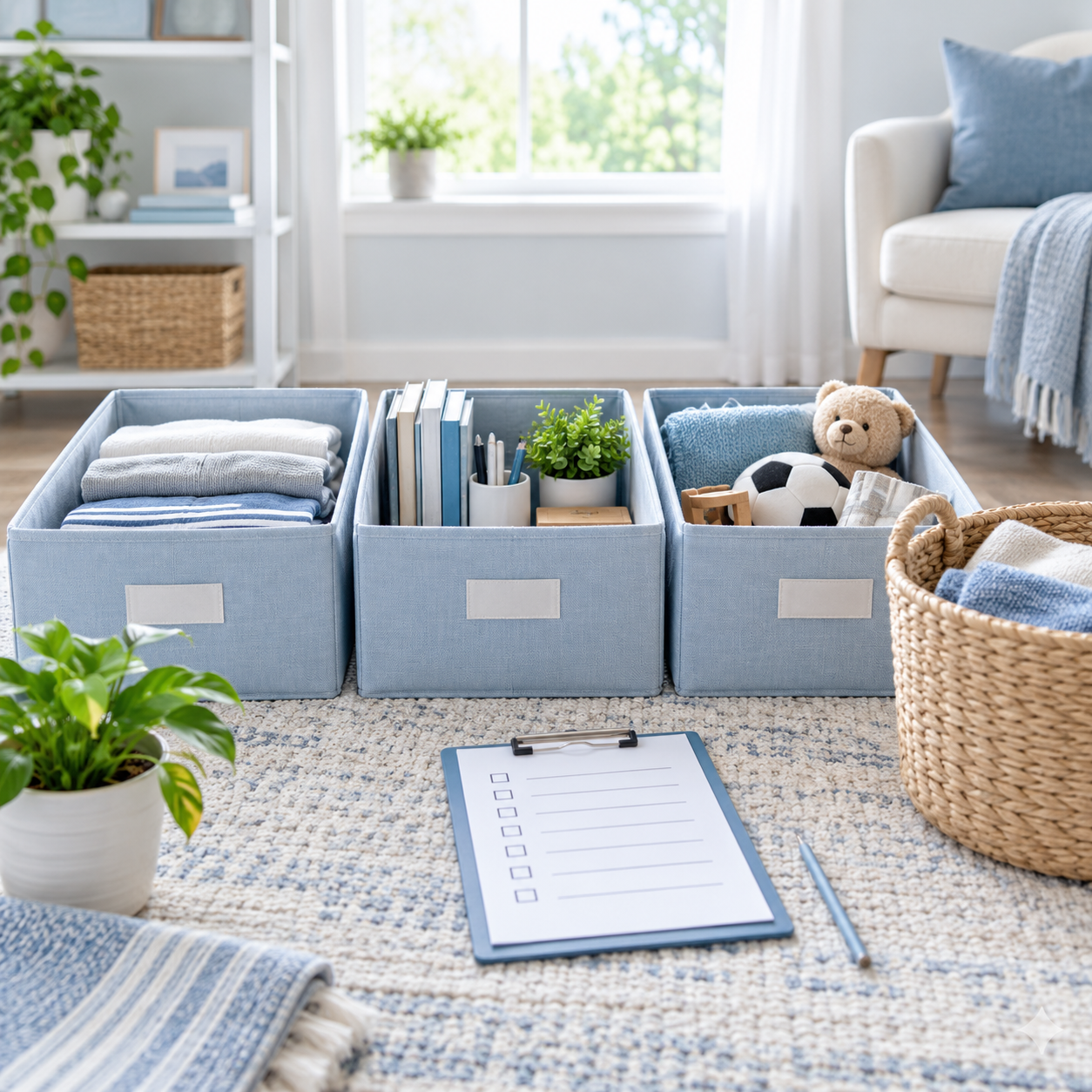
- Three temporary spaces labeled Keep, Review Later, and Ready to Pass On
- A notebook or phone for recording stories and next steps
- A separate folder for documents that need careful checking
Keep food and drinks away from originals. The National Archives recommends clean, lotion-free hands for paper and gloves when handling photographs and negatives. Prepare the work surface before taking fragile items out. See its family-paper handling guidance.
Before sorting, separate anything borrowed, jointly owned, or being stored for another person. Also set aside official records, certificates, and papers that may still be needed. A sentimental sorting session is not the time to guess whether an original document can be discarded.
Try a 20-minute first session
Spend about three minutes setting up, twelve minutes considering a few items, and five minutes closing the boxes and clearing the surface. These are flexible starting points, not a target you have to meet.
Avoid filling a donation bag as you go. Keep the Ready to Pass On items visible until you have finished checking ownership, stories, and destinations. Nothing has to leave the house during this first session.
Lower-energy option: Choose one item, write down what you know about it, and put it somewhere safe. That is useful progress even if you keep everything.
Decide What Each Keepsake Means
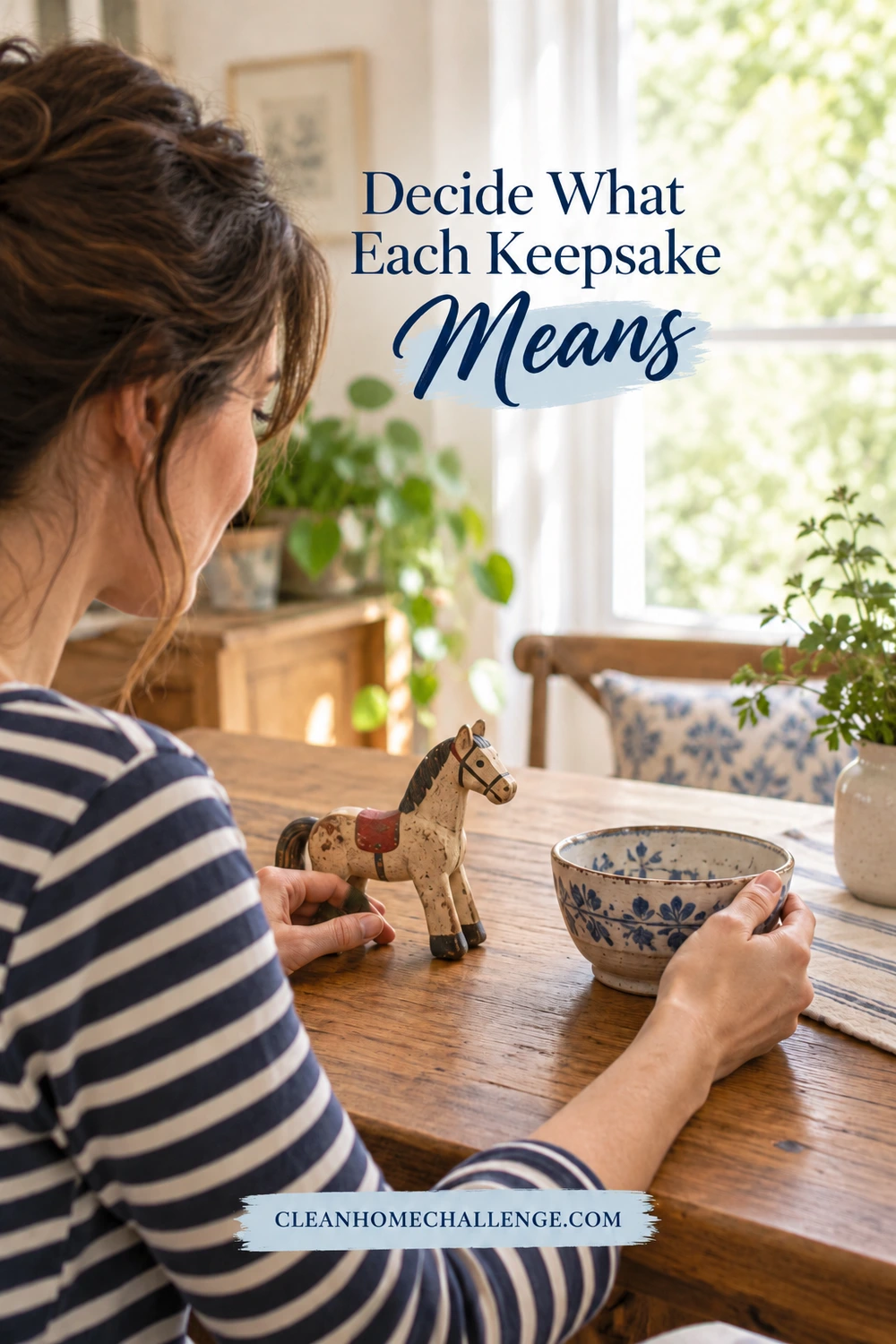
Instead of asking whether something is useful enough to deserve space, ask what role you want it to have now. A handwritten note may matter precisely because you enjoy seeing that person’s handwriting. It doesn’t need a practical household use.
Try these questions one at a time:
- What specific person, event, or part of my life does this remind me of?
- Is the physical object important, or would a photograph and story meet my needs?
- Do I want to see, use, or revisit it, even occasionally?
- Am I choosing to keep it, or do I need more information before deciding?
- Does it belong to me to make this decision?
You don’t need five perfect answers. The questions simply help you notice why an item matters. If your answer is “I don’t know yet,” put it in Review Later and note what would help: asking a relative, identifying a date, or having more time.
Compare similar items gently
Place a small group of related objects together. You might keep the birthday cards with personal messages, select a few favorite school projects, or choose the souvenir that brings back the clearest memory of a trip. Comparing similar things can make those differences easier to see.
There is no universal number you should keep. One person may want every letter from a loved one; another may choose a small selection. Consider your available space and how you want to use the collection.
Check apparent duplicates before letting them go. Two prints may have different notes on their backs. A worn recipe card may include a handwritten change missing from the neat copy. Keep related information together until you understand it.
For children’s artwork, invite children who are old enough to participate to choose favorites with you. Avoid quietly discarding an item they still consider theirs. An adult child’s possessions also need their input, even when they have been sitting in your spare room for years.
If a gift no longer fits your life, you can appreciate the thought behind it while considering a new home for the object. You can also keep it. The aim is a decision you understand, without pressure to prove how grateful or organized you are.
Choose a Home for What You Keep
Before buying matching containers, decide where the keepsakes will live. An accessible closet shelf, a small cabinet, or a drawer may work better than a large collection packed into an awkward corner. Measure the space and consider how much weight you can comfortably lift.
Give each retained item one of three homes:
- In use: A sturdy keepsake that can safely serve a purpose, such as a familiar serving bowl suitable for food use
- On display: A favorite piece you enjoy seeing, placed where it will be protected
- In storage: A labeled collection you can find and revisit without unpacking the whole room
You don’t have to display everything at once. A small shelf with a few chosen objects can be easier to enjoy and maintain. For an unfamiliar antique or delicate heirloom, check appropriate care and use before putting it into service. Use older dishes for food or drinks only when their food safety and suitability are known; uncertain ceramics can stay display-only. The FDA’s pottery guidance explains what to check.
Protect paper and photographs
For long-term paper storage, choose appropriately sized acid-free, lignin-free boxes or folders. For photographs, look for storage materials that have passed the Photographic Activity Test, rather than relying only on an “archival” label. Keep items supported and avoid folding or cramming them into small containers.
Avoid self-adhesive photo albums, rubber bands, ordinary tape, and unknown plastics against originals. Photo-safe corners can hold prints in suitable albums without sticking adhesive to the photograph. Store the collection on an indoor shelf away from leaks, heat, and dampness. Hot attics, garages, and damp basements are poor choices for family papers. These precautions follow the National Archives storage guide.
Displaying a copy can protect a treasured original from light exposure. Keep the original safely stored; the National Archives explains why copies are a useful display option.
Label the outside of each container with useful words, such as “Family letters, 1980s” or “School artwork, elementary years.” Add a simple contents list if it helps. Different materials may need separate storage, so a single decorative memory box does not have to hold everything.
For sentimental textiles, minimize folds and support any unavoidable folds with unbuffered acid-free tissue rather than pressing sharp creases. The Canadian Conservation Institute’s textile-storage guidance explains suitable support and packing. Delicate, damaged, or historically important pieces may need advice from a textile conservator before cleaning or changing their storage.
If the chosen space is full, review the collection before automatically buying another bin. You may decide to keep more and allocate additional space. Make that choice deliberately, while leaving ordinary household storage usable.

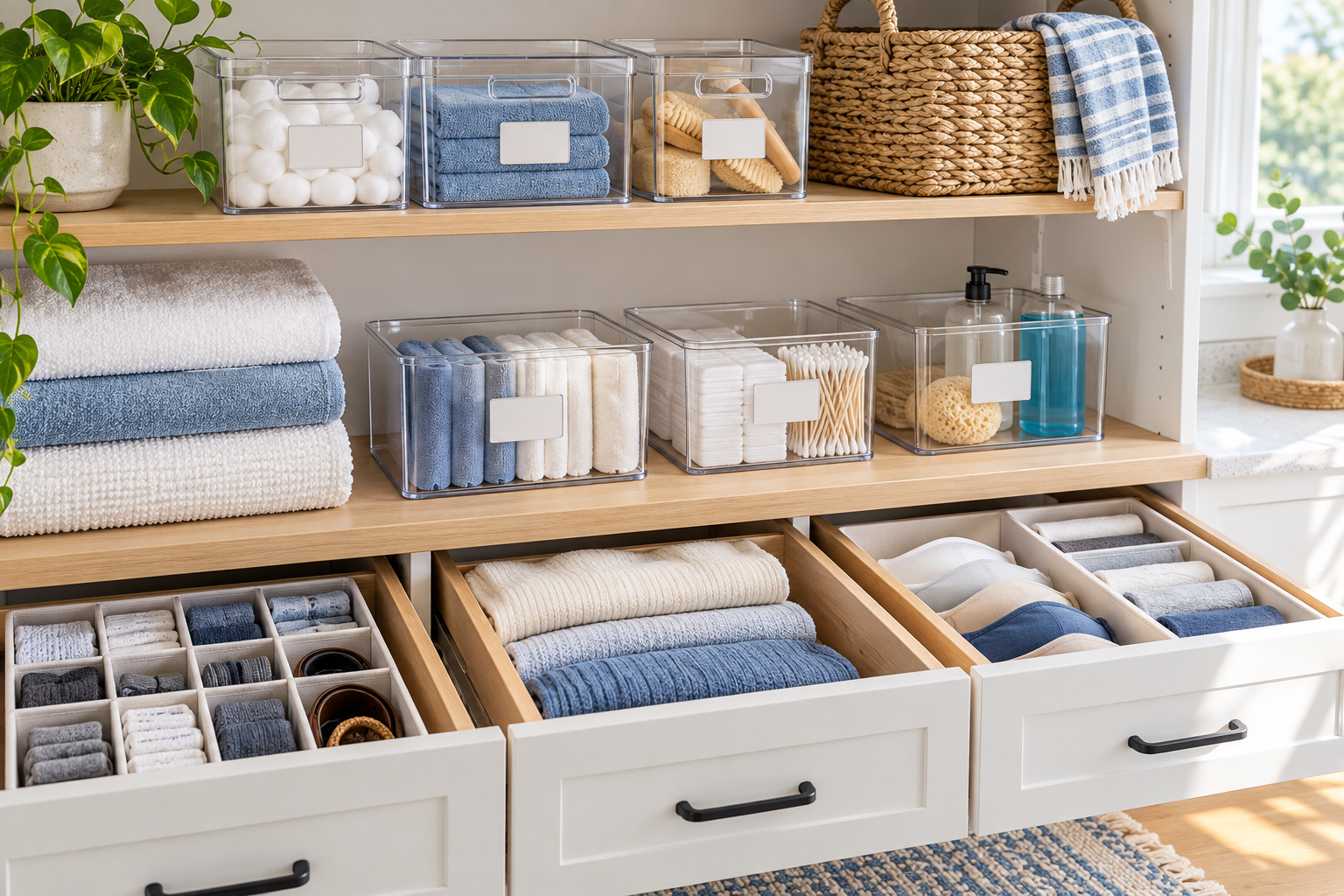
Save the Story, Not Every Object
A keepsake’s story can be easy to lose when the only person who knows it never writes it down. Recording a few details makes the collection more meaningful, whether you keep the original or eventually pass it on.
Start with one object and capture:
- Who owned, made, or gave it
- What occasion or everyday tradition it recalls
- An approximate date and place, clearly marked if uncertain
- One detail that explains why it matters to you
Two sentences are enough: “This bowl was on Grandma’s table every Sunday. She used it for the potatoes, and everyone tried to sit close enough for seconds.” This is an example of the kind of detail to record, not a script you need to copy.
Make a useful digital record
Photograph an object in good light, then capture any meaningful details or markings. For a card, photograph the cover and personal message. For a school project, record its size and the child’s explanation if they want to share one. Check the images before putting the item away.
For fragile papers or photographs, use a method that keeps the original fully supported. Avoid automatic-feed scanners for fragile or valuable material, and never force an album flat. The National Archives recommends careful digitization and keeping original family papers and photographs because digital files carry their own risks. Its digitizing guidance also explains the 3-2-1 backup approach: three copies, on two types of storage, with one copy elsewhere.
Save files in a folder you can recognize and use descriptive names, such as “1987-family-reunion-group-photo.” Add the story in a caption or a clearly matched text file. The Library of Congress recommends descriptive organization, copies in different locations, and checking at least annually that important photos remain readable. See its personal digital photograph guide.
Digitizing doesn’t automatically mean discarding. A photo may be enough for an ordinary bulky souvenir, while an original letter or unique family photograph may be something you choose to preserve. If a photograph cannot replace the tactile or personal value for you, keep the object without turning the decision into another project.
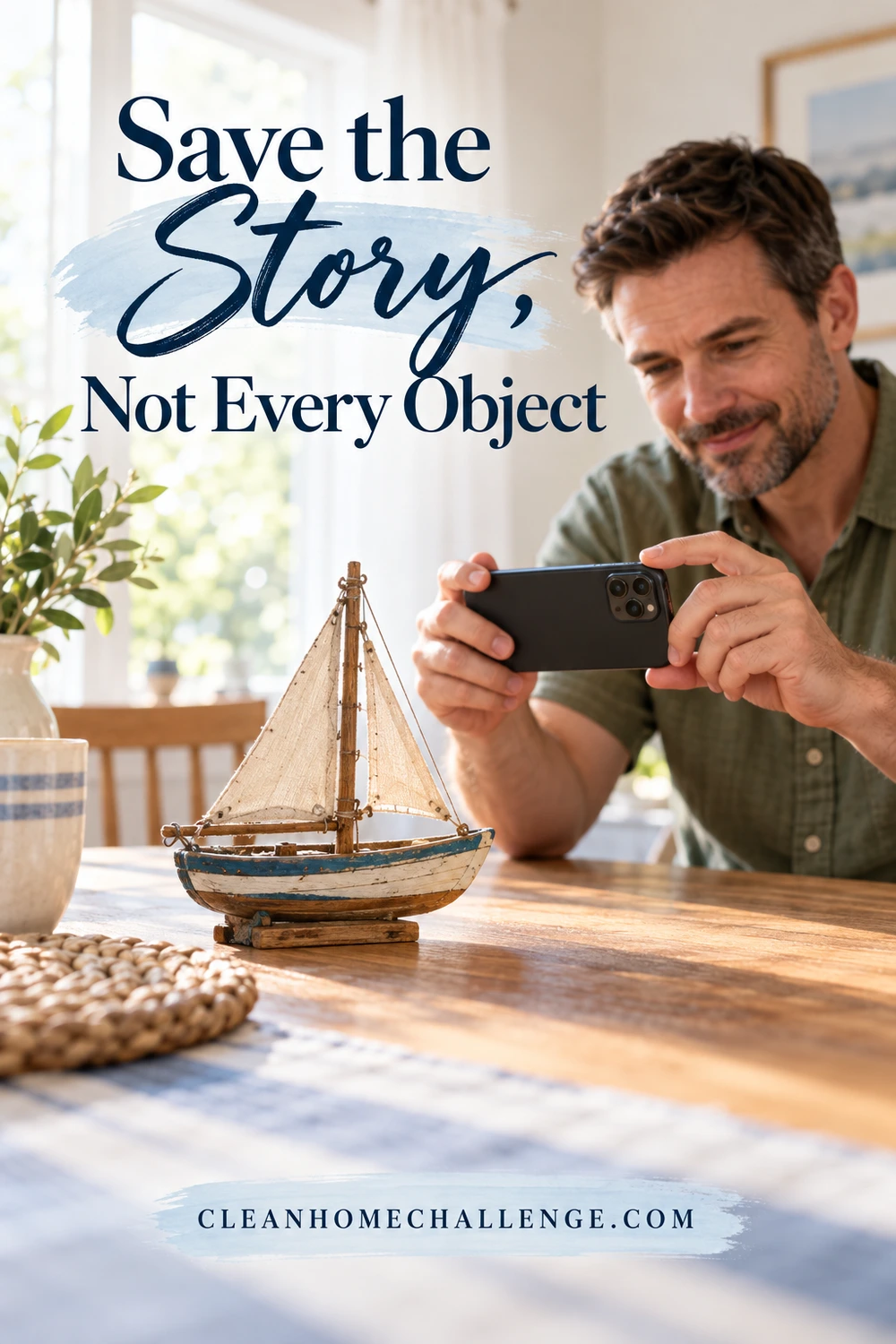
Give Family Keepsakes a Thoughtful Next Step
An item can mean something very different to another person. University of Minnesota Extension’s Who Gets Grandma’s Yellow Pie Plate? resources encourage families to discuss personal belongings, consider different meanings, and agree on a fair process.
Begin with ownership. Having something in your home doesn’t necessarily make it yours to give away. Ask before releasing borrowed items, shared keepsakes, or possessions left with you for storage. If ownership or an estate decision is unresolved, pause and get clarification from the appropriate person rather than using a decluttering deadline to settle it.
Make an offer that is easy to answer
For an item you own and are ready to release, send the relevant person a clear photo and a brief description. Include the story if you know it, and make it easy to say no.
For example: “I’m making room in the cabinet and would like to offer you the blue serving bowl. It was used at our Sunday lunches. Would you like it? No pressure if it doesn’t suit your home.”
If they want it, agree on a practical pickup or delivery plan. If you need an answer by a certain date, explain why and allow reasonable time. Don’t send an unsolicited box or assume someone will eventually want an entire collection.
When several people want the same heirloom, pause the transfer and discuss a process together. Photographs or copies of its story may let several people share the memory, even when one person keeps the original. A casual first-to-reply message may not be suitable for something important to the whole family.
Match the destination to the object
Donate only usable items that the organization currently accepts. Ask before bringing unusual collections, large furniture, or fragile goods. Museums and local archives have collection policies; family significance alone does not guarantee that they can accept an item.
Before selling something potentially valuable, take time to identify it and consider a qualified appraisal. Before donating a bag or box, check pockets, envelopes, and drawers for photographs, identifying information, and papers. Keep private letters and personal records out of general donation boxes.
A thoughtful next step can be a family handoff, a verified donation, or continued storage while you decide. You don’t have to invent the perfect recipient to justify every object you release.
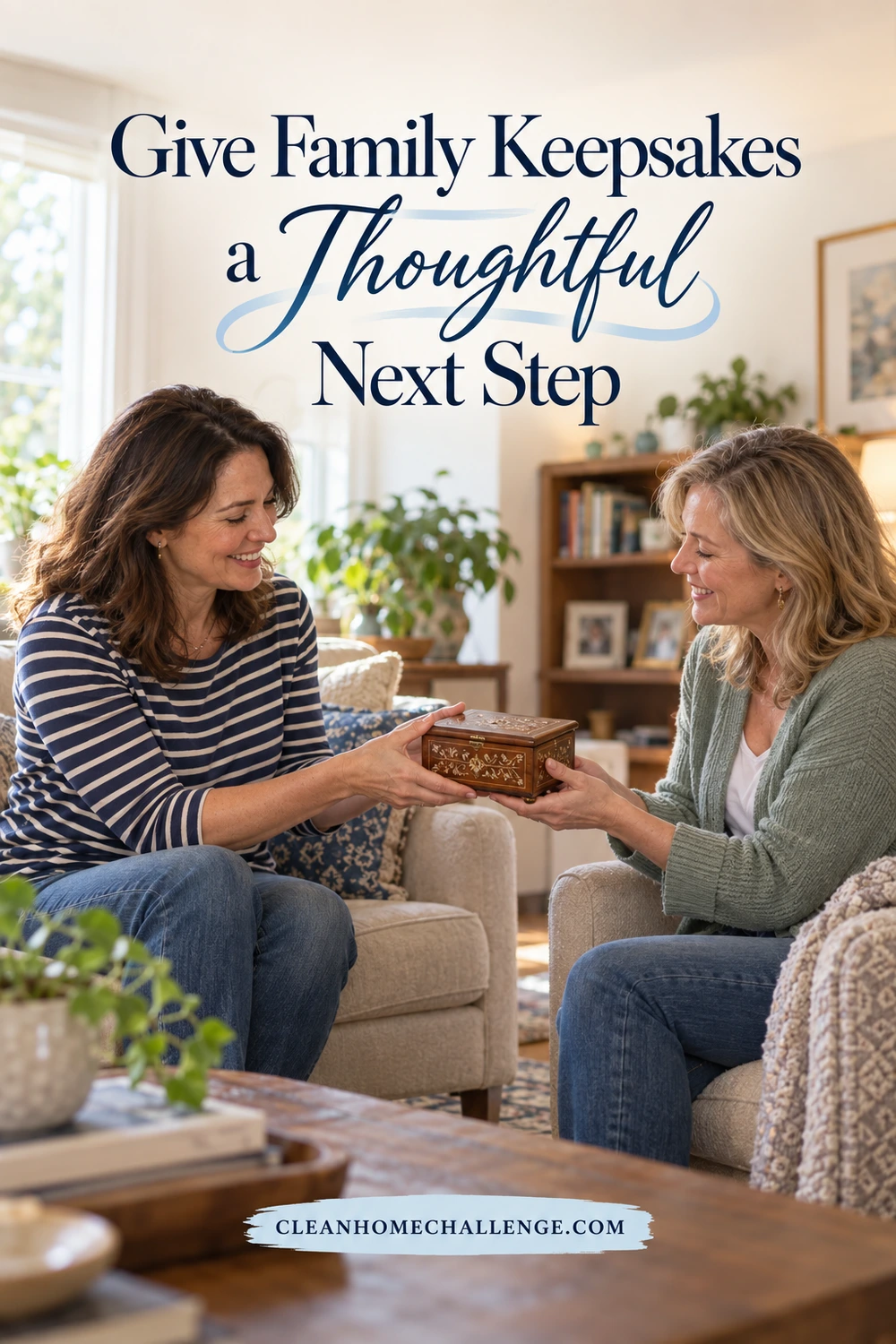
Make a Gentle Plan for the Rest
Give the Review Later box a specific home and a short note explaining what is inside. Add a review date that suits your circumstances, perhaps next month. That date is an invitation to reconsider, not an automatic instruction to throw the contents away.
At the next session, ask what has changed. Did someone answer your question? Did you find a better way to preserve the story? Do you still want the object? You may keep it, pass it on, or leave it for a later decision.
Avoid rules that tell you to discard a sealed box simply because you haven’t opened it for a set period. Infrequent use is normal for many keepsakes, and important information can be hidden among ordinary-looking papers.
Finish with a five-minute reset
Before stopping:
- Return the chosen keepsakes to their assigned homes.
- Save and back up any new photos or notes.
- Write the next action on items awaiting a family reply or donation check.
- Put the Review Later box away and clear the sorting surface.
- Choose one small collection for a future session, only if you want to continue.
If you’re dealing with a recent loss or a difficult life change, you can focus on protecting and labeling belongings for now. There is no required timetable for deciding what you can part with. A patient friend can help record stories or pack items without making decisions for you.
For ongoing upkeep, keep a small place for newly arriving cards, artwork, and mementos, then review it when you have the capacity. Leave room for your collection to change as family life changes.
The next step can be very small: label one photo, choose one favorite card, or make one shelf easier to reach. Learning how to declutter sentimental items takes practice and permission to move at your own pace. A home with room for daily life and accessible memories is a worthwhile result, even when you still have another box to sort.
CLEANERS CLUBHOUSE
Ready to Clear the Clutter One Step at a Time?
Join the 30-Day Declutter Challenge and work through your home in small, achievable steps. The Cleaners Clubhouse includes the plan, printable support and encouragement to help you keep going.