
THIS POST MAY CONTAIN AFFILIATE LINKS. PLEASE READ MY DISCLOSURE FOR MORE INFO.
A trash bag should stay around the rim, reach the bottom of the can, and leave enough room to close it. When one of those things is missing, taking out the trash becomes an awkward balancing act. Buying the biggest bag on the shelf does not necessarily solve it.
To choose a trash-can liner that fits, start with your can’s recommended liner code or dimensions, compare the bag’s actual width and length, and test one small pack before stocking up. Capacity is a useful starting point; shape, the opening, and the closure decide whether it works in your particular can.
Allow about ten minutes to measure a clean, empty can and write down the details. You will need a flexible measuring tape, the can’s removable bucket if it has one, and the packaging from a bag you already use. There is no need to replace a working trash can just because the current liners are wrong.
Disclosure: This post may contain affiliate links. As an Amazon Associate, Clean Home Challenge earns from qualifying purchases. If you make a purchase through these links, we may earn a small commission at no extra cost to you. This helps us keep creating practical cleaning tips, routines and resources for busy families! 🧽
Measure the Opening and Usable Depth First
Check under the lid, around the bucket, and in the manual for a model number or liner code. Some manufacturers match their own liners to a particular can. Simplehuman, for example, offers letter-coded custom-fit liners. A code is specific to that maker’s system: it is not a universal size shared by every brand.
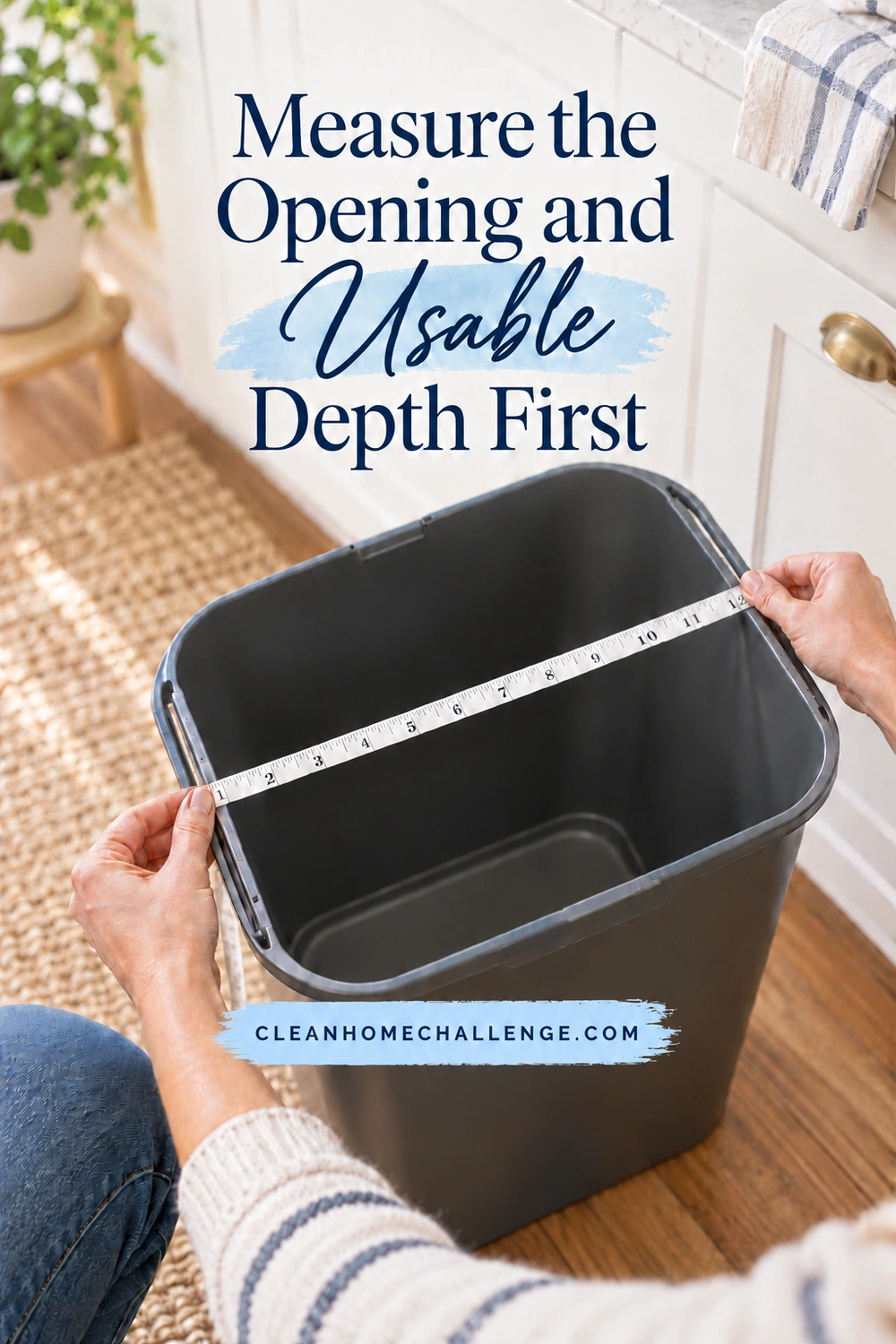
If there is no clear recommendation, measure the part the bag actually fits around. That may be the removable bucket rather than the decorative outside shell. Open the lid fully and remove the clean bucket according to the can’s instructions. Do not dismantle a pedal or powered lid to find a measurement.
Write down four things:
- The opening’s width and front-to-back depth, or its diameter if round.
- The distance around the rim where the bag folds or grips.
- The inside depth from that rim to the bottom.
- Any collar, retaining ring, handles, or corners that affect how a bag seats.
Use the same unit throughout. Measurements in inches are perfectly useful; centimeters work too. Photograph the model label and save the measurements in a phone note called “trash liners.” For a two-compartment can, measure each bucket separately. A combined capacity on the outside does not describe the individual openings.
Why gallons alone can mislead
Two containers can hold the same volume but have different shapes. A tall, narrow can needs a different balance of width and length from a short, wide one. Likewise, two bags with the same capacity label may differ in dimensions, gussets, stretch, and closure construction. Use the capacity to narrow your shopping choices, then check the dimensions and fit information.
For a basic, nongusseted bag laid flat, opening circumference is approximately twice its flat width. This is a geometry screening check, not a universal buying formula: seams, stretch, drawstrings, rim shapes, and the manufacturer’s fit system still matter. Do not buy an exact mathematical minimum and assume it will stretch safely over every rim. When a bag’s usable opening is unclear, ask the manufacturer or try a small pack.
Match Bag Dimensions, Closure, and Everyday Load
Look for the bag’s dimensions on its package or product listing. Check whether the numbers describe the bag itself rather than the shipping box. Width and length are more informative than a photograph of a roll beside a kitchen can.
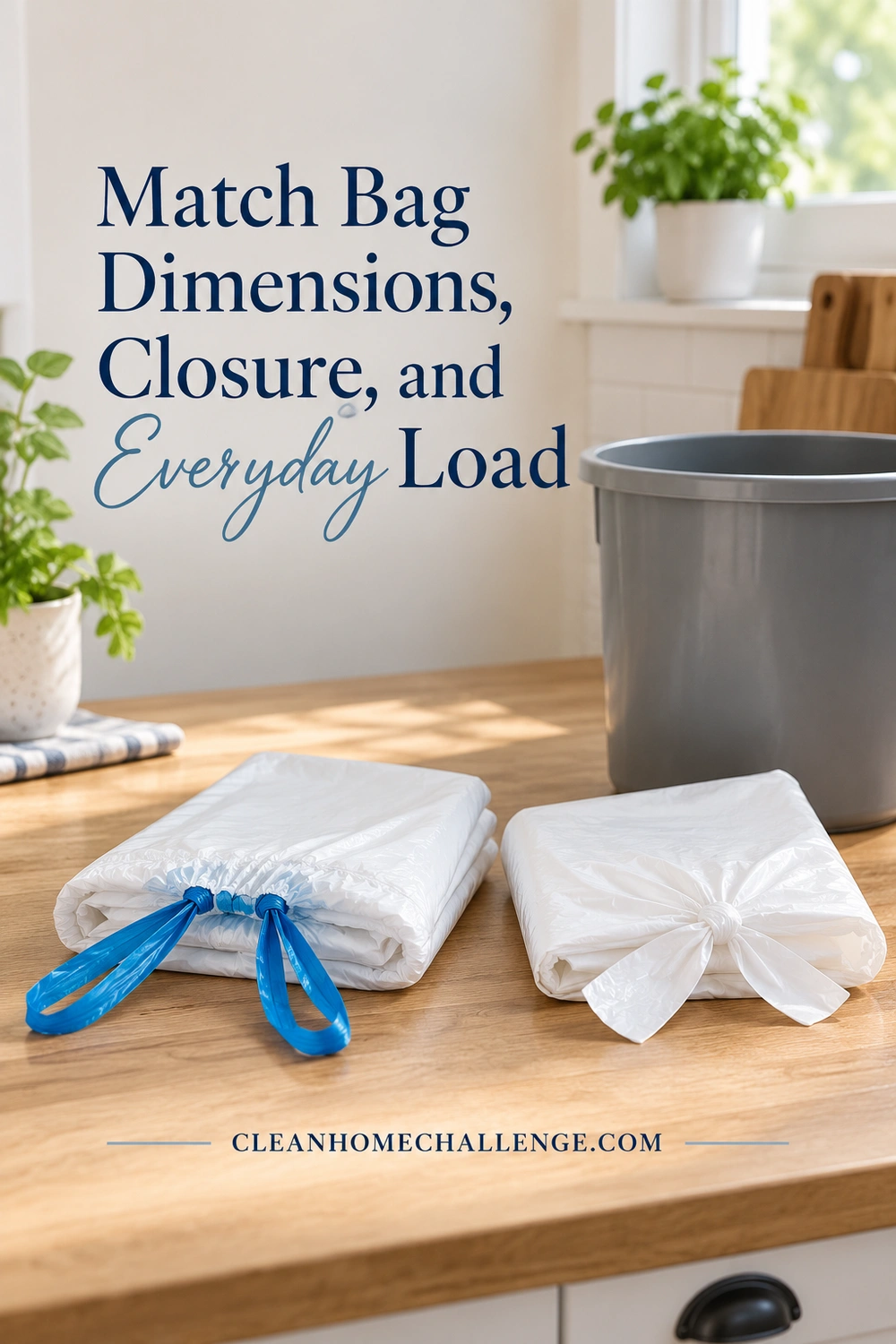
A bag needs enough usable length to reach the bottom while its top is fitted normally. If it hangs suspended above the base, the waste pulls down on the rim and may drag the bag inside. A bag that reaches the base but has no spare material to tie is also a poor match. Drawstrings and tie flaps need working space; the entire printed length is not necessarily available for holding waste.
There is no single extra-length allowance that works for every closure and can. Follow the manufacturer’s sizing guide, then check the empty bag in your own container. Do not trim an oversized bag or cut its closure to make it fit.
| Feature | What to check at home | Common mismatch |
|---|---|---|
| Opening | Seats around the rim or approved retaining ring | Too tight to fit or loose enough to slip |
| Length | Reaches the base with closure space left | Bottom suspended or no room to tie |
| Drawstring | Can be reached and pulled without tearing | Trapped under a collar or overloaded |
| Tie flaps | Leave enough clean material to knot | Waste fills the area needed for tying |
| Can mechanism | Lid, pedal, and bucket work normally | Bag catches in the hinge or under the bucket |
| Intended load | Suitable for the waste the package describes | Thin light-duty bag used for heavy or sharp waste |
Choose strength for the job
A bathroom can collecting tissues has a different job from a kitchen can collecting mixed household waste. Read the intended-use and strength information, including thickness where stated, without treating one number as a guarantee. Material construction, seams, and the contents also affect performance. “Heavy duty” does not make a household liner appropriate for every sharp object, hot item, chemical, or renovation waste.
Do not put hot ashes or hot waste into a plastic liner. Follow local disposal instructions for broken glass, sharps, chemicals, batteries, and other special waste. Keep bags and packaging away from children and pets; plastic bags pose a suffocation hazard. A fitted liner also does not turn the can into a safe place to store hazardous items.
Scent is a preference, not a fit feature. If you prefer an unscented home, check the actual product name before buying a multipack. Odor-control claims are not a substitute for removing food waste or cleaning a dirty bucket. For bucket care, see how to clean a bathroom trash can with a foot pedal.

Test One Bag Before Comparing Bulk Prices
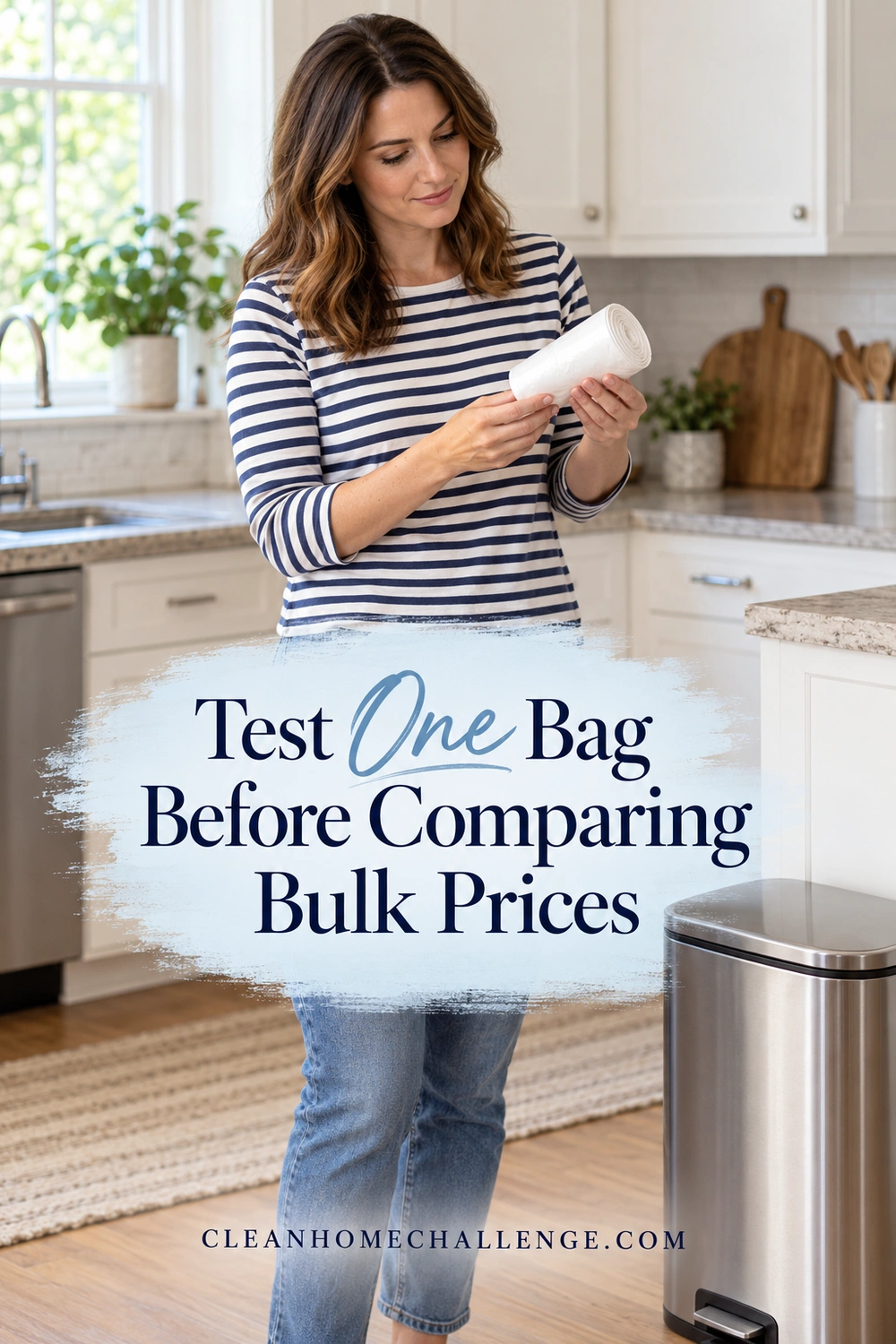
Buy the smallest practical pack of a promising size. Keep its packaging until you have tested it through an ordinary change of the trash. A bag that looks tidy while empty can still be awkward to remove when it holds your usual waste.
Start with a clean, dry can. Open one bag fully without shaking it near your face. Lower it into the bucket and seat the top using the can’s recommended method. Check the base by sight rather than putting your hands into a dirty bag. Let trapped air escape normally; do not puncture the liner to make it sit down.
Close and reopen the lid. Operate the pedal or usual opening mechanism and make sure the bag does not catch. Add normal waste gradually, leaving it below the closure area and within any stated limit. Do not press waste down with your hands or feet to force in more. Remove the bag before it becomes too heavy to lift comfortably, even when space remains.
At the next change, check whether the bag releases without pulling the bucket out, tearing at the top, or requiring an awkward tug. If removal is difficult, reduce the fill level and revisit the fit. Follow the can manufacturer’s advice about venting or removal; do not drill holes or modify a powered container as a bag-fitting fix.
Compare the cost of a bag that works
Divide the pack price by its bag count. As a made-up example, a $12 pack of 60 bags costs $0.20 per bag. A $9 pack of 30 costs $0.30 per bag. These are arithmetic examples, not current prices or product recommendations.
Then ask whether the cheaper bag fits, closes, and handles the intended waste without needing a second liner. A larger pack offers poor value if it leaves you using two bags every time or storing a size you dislike. Count rolls carefully: “three rolls” does not tell you how many bags are in the package.
For a simple estimate of annual use, multiply the number of bag changes per week by 52. Three changes a week is about 156 bags a year; this is only a planning estimate and your household may vary. Multiply by the cost per bag for an approximate annual supply cost. Never keep food waste indoors longer just to meet a target number of bags.
If the bin is used for recycling or food-scrap collection, check your local service’s rules before buying any liner. Ordinary plastic, compostable, and specialty collection bags are not interchangeable. A bag’s marketing label does not establish acceptance in your local program.
Keep a Simple Liner Record for Easier Restocking
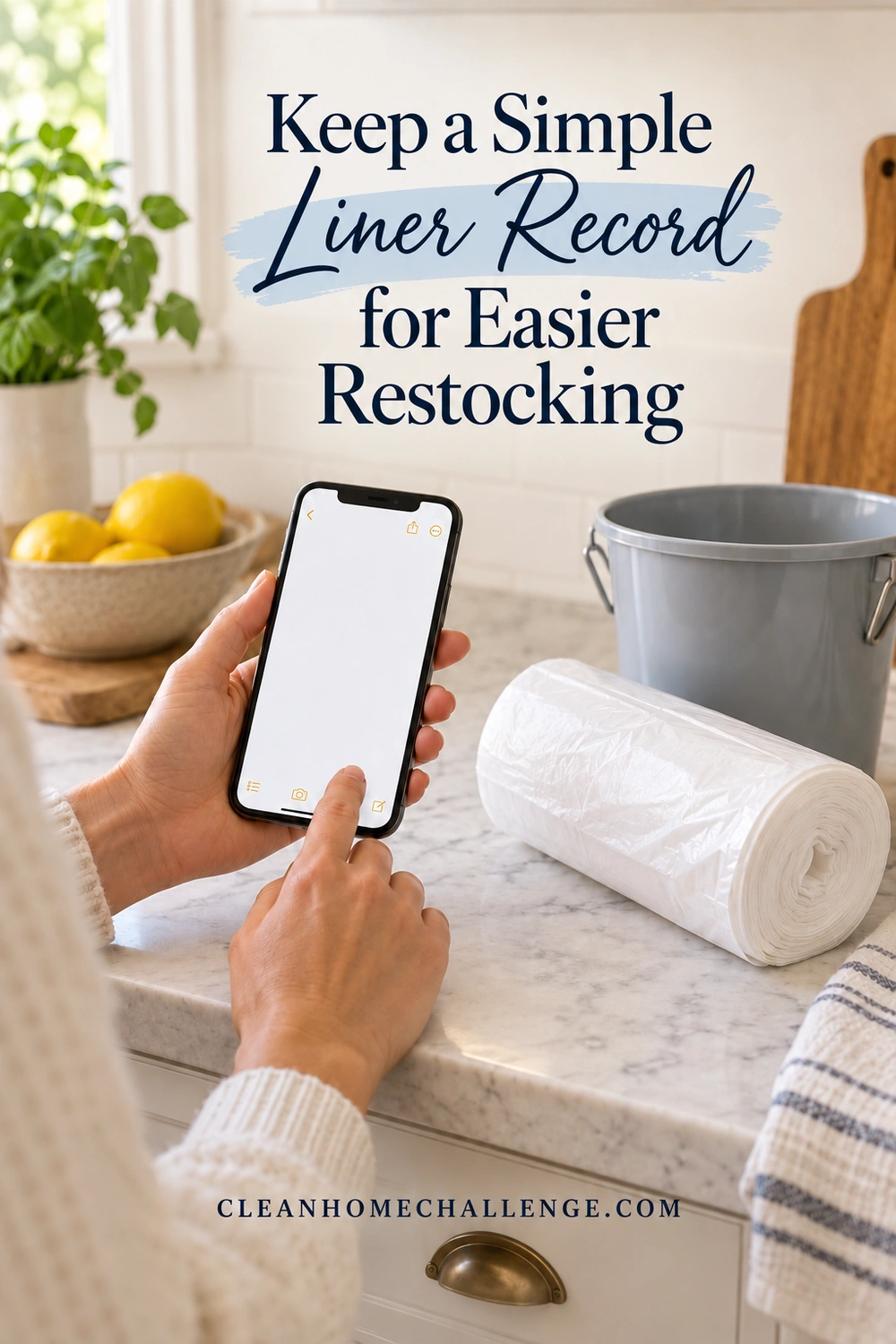
Once a bag works, record its exact brand, size or code, dimensions, closure, and count. Add a photo of the package front and back. That small record is more useful than remembering “the medium white bags,” especially when another family member does the shopping.
Keep one opened pack where the adult changing the trash can reach it, safely away from children and pets. Store spare rolls somewhere dry and suitable for the product. Avoid placing loose spare bags where a child or animal can pull them out, or where they interfere with the can’s mechanism.
Use the printable liner-fit card to record the opening and depth, compare two packs, and tick off one real-world trial. The card is a shopping aid, not a guarantee of load capacity. Keep your completed card with the package photo for the next shopping trip.
If you only have five minutes today, find the can’s model or liner code and photograph the current package. You can measure at the next empty-bin change. For a household using several sizes, label a safe storage shelf by room so bathroom and kitchen rolls are easy to distinguish without handling every pack.
If a bag keeps slipping, check width and the retaining method first. If it tears while you fit it, check the opening and any rough or damaged part of the rim. If it splits during removal, reduce the load and examine the intended use and condition of the container. Repeated leakage needs investigation of the waste, seam, and fit; routine double-bagging should not be the first way to avoid choosing a suitable liner.
You do not need a cupboard full of options. One tested choice for each can, a readable package photo, and a small restocking note can make the next trash change much easier. If you would like support building manageable household routines, explore the Cleaners Clubhouse using the invitation below.
CLEANERS CLUBHOUSE
Use the Right Tools With a Routine That Works
Good cleaning tools work best when you know where and when to use them. Inside the Cleaners Clubhouse, recommended products sit alongside practical routines, printable worksheets and monthly challenges.
Sources and useful sizing guidance
- Glad: trash bag sizes and dimensions. Used for capacity, dimensions, and thickness comparison; no universal size chart is assumed.
- Simplehuman: custom-fit liner codes. Used for the manufacturer-specific code approach.
- Rubbermaid Commercial: liner construction and intended use. Used as product-construction context, without converting commercial claims into a household load rating.
Sources checked October 27, 2026. Follow your can’s instructions, the liner packaging, and local disposal rules where these differ from general guidance.