
THIS POST MAY CONTAIN AFFILIATE LINKS. PLEASE READ MY DISCLOSURE FOR MORE INFO.
You clear the breakfast dishes, turn around, and find the toy basket emptied across the floor. Meanwhile, yesterday’s clean laundry is still waiting to be put away. It can feel as though you have been working all morning without finishing anything.
Cleaning with toddlers is more manageable when you protect the essentials, work in small stages, and expect to pause. Keep immediate hazards and food mess under control, choose a few repeatable resets, and arrange suitable supervision for jobs that need your full attention. Your toddler can sometimes join in with simple tidying, but the routine should still work when they cannot help.
There is no universal number of minutes that makes a home “clean enough.” Your child’s needs, your space, other responsibilities, and the support available all affect what fits. This plan gives you a starting point you can reduce, rearrange, or share with another adult.
Disclosure: This post may contain affiliate links. As an Amazon Associate, Clean Home Challenge earns from qualifying purchases. If you make a purchase through these links, we may earn a small commission at no extra cost to you. This helps us keep creating practical cleaning tips, routines and resources for busy families! 🧽
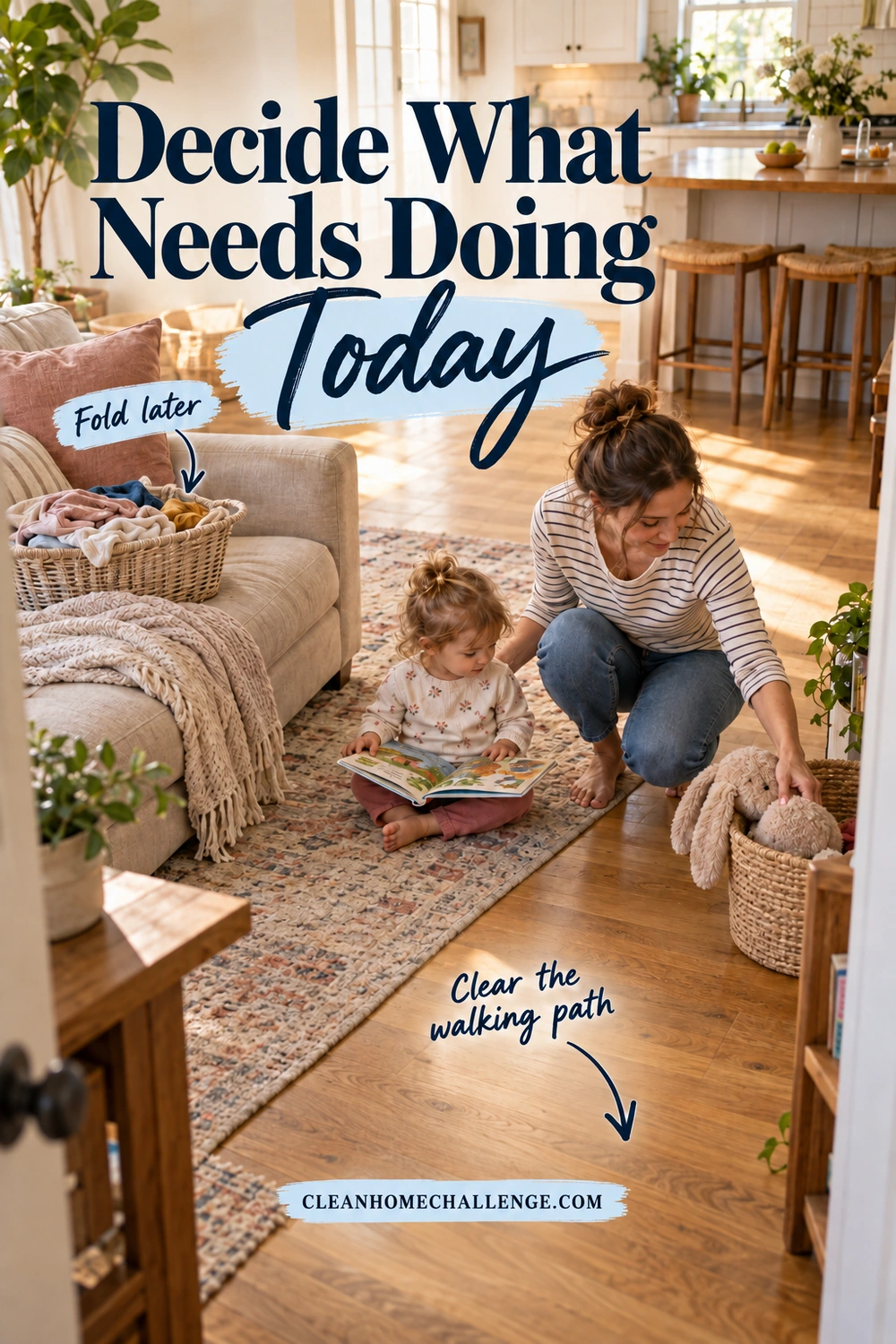
Decide What Needs Doing Today
Before picking up a cloth, decide what would make the next part of the day easier. A clear place to prepare lunch may matter more than an organized bookshelf.
It helps to separate two kinds of work. Tidying returns things to their homes: toys into a basket, clothes into a hamper, books onto a shelf. Cleaning removes food, dirt, and other residue. Putting toys away gives you floor space, but it does not clean a sticky spill underneath them.
Use three levels of priority:
- Deal with immediate hazards. Remove small objects your child could swallow, broken items, and anything slippery in a walkway. Keep your toddler away while you make the area safe.
- Keep daily necessities usable. Attend to food preparation and eating surfaces, dirty dishes, spills, bathroom needs, and the clothes your household needs next.
- Choose appearance jobs only if there is room. Straightening cushions, detailed toy sorting, and polishing fingerprints can wait when more important care is competing for your attention.
Regular cleaning is usually the main household task. CDC’s home-cleaning guidance distinguishes cleaning from sanitizing and disinfecting; additional measures may be needed when someone is ill or has a weakened immune system. A whole-home disinfecting round is not an automatic daily requirement.
Do not put contamination from raw meat, toileting accidents, or illness into the optional appearance category. Those situations need the appropriate hygiene procedure, with your child kept away from the affected area.
Choose one clear stopping point before you start: “The food spill is cleaned and the floor is dry,” or “We have clean bowls for breakfast.” Finishing that useful piece counts, even if another room still looks busy.
Set Up a Safe, Simple Cleaning Kit
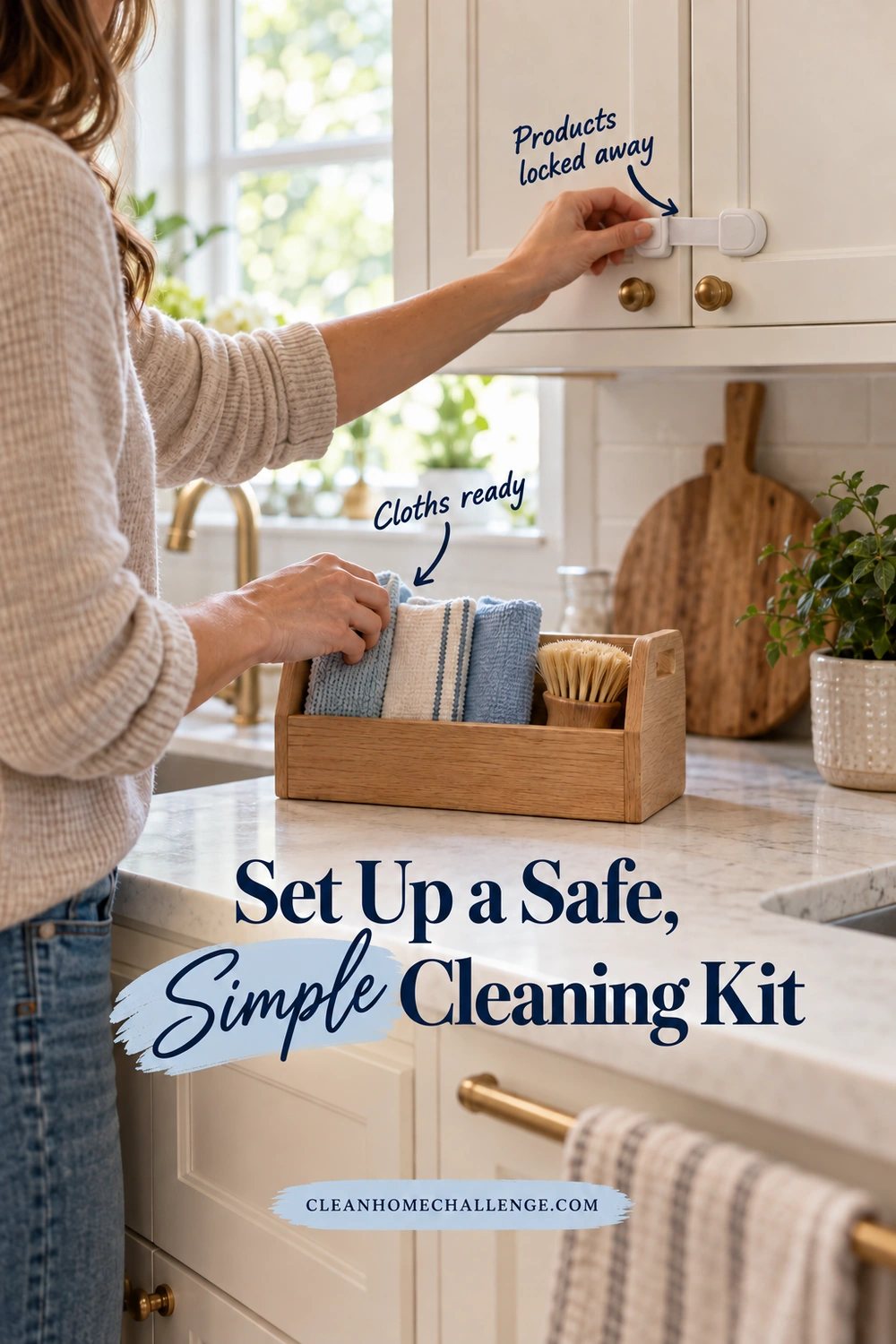
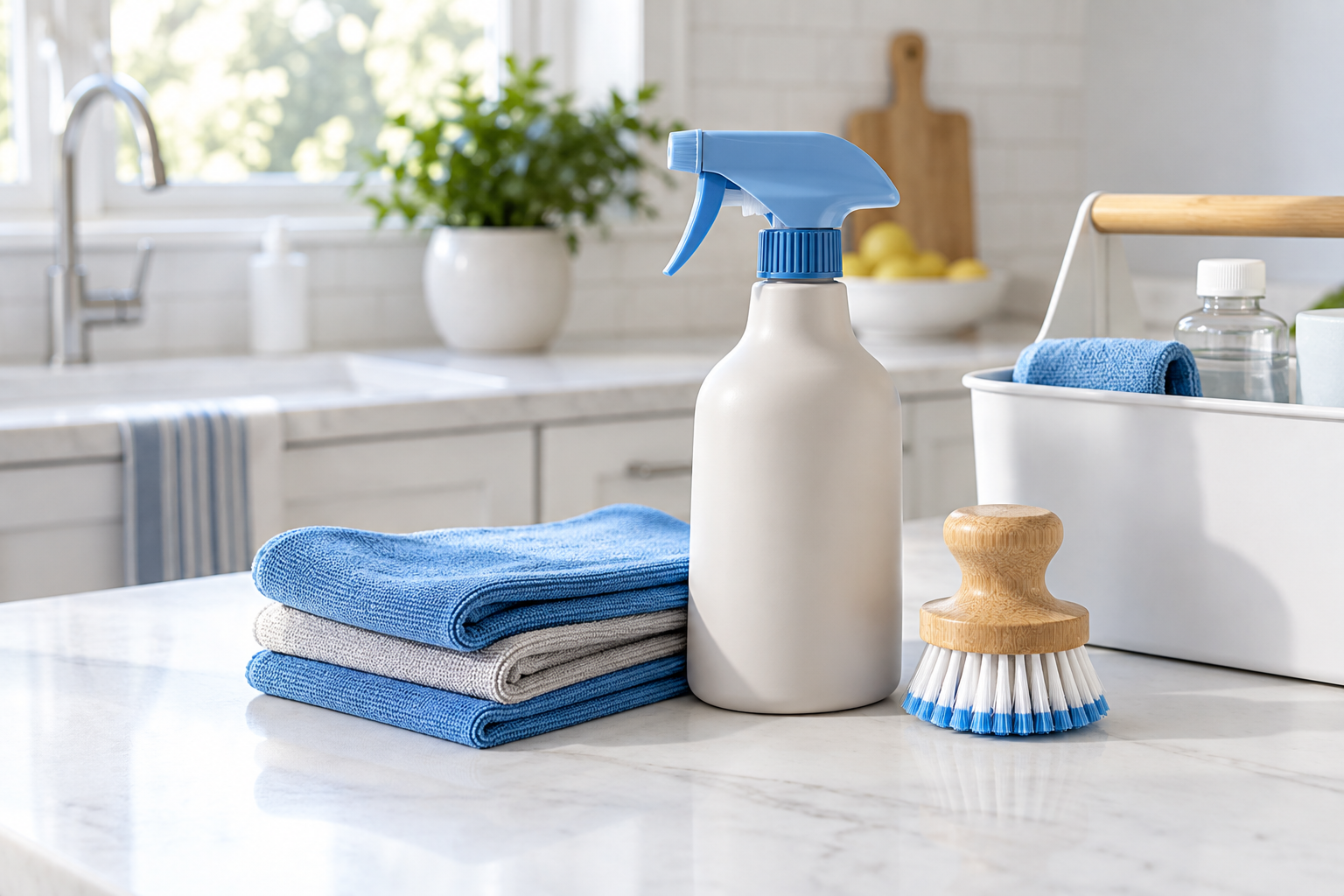
You do not need a new collection of products. Start with clean cloths, an adult-use brush and dustpan, and a small selection of cleaners appropriate for your surfaces. Keep kitchen cloths separate from those used in the bathroom.
Store cleaning products safely in their original containers, locked away and out of children’s sight and reach. Bring out only what you need and put it away before moving to another task. A caddy on the floor is convenient for an adult and easily accessible to a curious toddler.
The American Academy of Pediatrics’ poison-prevention advice specifically warns against letting children handle laundry detergent packets. Keep every detergent format, including liquids, powders, tablets, and packets, adult-only and securely stored.
If your cabinets need child locks, choose ones compatible with the doors or drawers and install them according to the manufacturer’s instructions. Check that they engage after every use. CPSC notes that safety devices are not completely childproof, so locks support careful storage and supervision rather than replacing them.
For each cleaning job:
- Check the surface’s care instructions and the product label.
- Keep your child away from the product, used cloths, and treated area.
- Follow directions for ventilation, protective equipment, rinsing, and drying.
- Return products and tools to secure storage before you turn your attention elsewhere.
Never mix cleaning products. Words such as “natural” or a pleasant scent do not make a cleaner suitable for toddler handling. If you cannot use a product while maintaining the required separation and supervision, postpone that job until you have help.
Avoid leaving water in a cleaning bucket. CPSC warns that toddlers can fall into buckets; empty and store them promptly after use. A bucket of water is not a cleaning-time activity for your child.
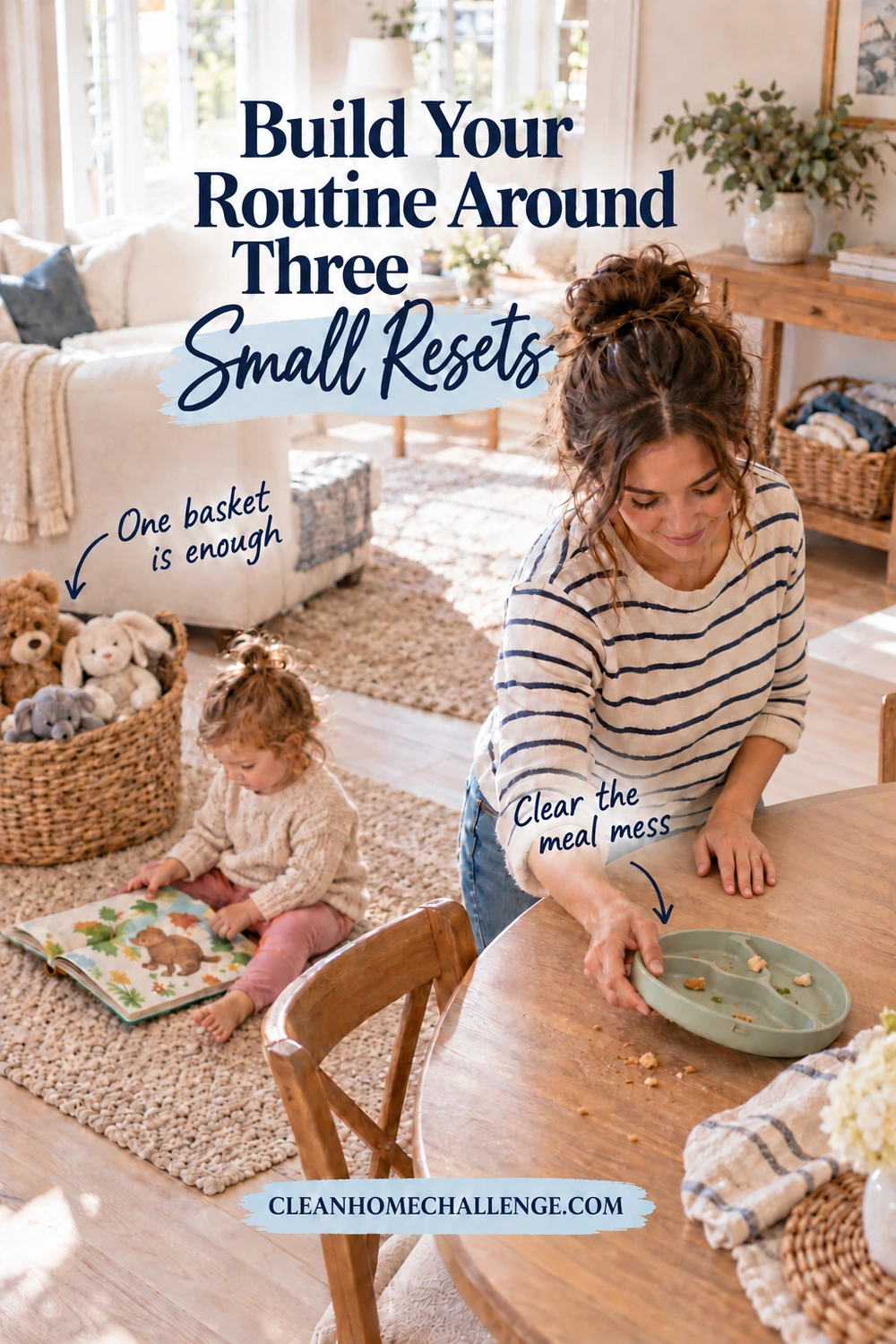
Build Your Routine Around Three Small Resets
Choose events that already happen in your day rather than depending on an exact clock time. Breakfast may move, but it still provides a useful reminder to deal with breakfast mess.
CDC’s guidance on family routines recommends simple, predictable routines matched to a child’s abilities. Start with one of the following resets. Add another only if it is helpful.
After a meal: make the eating area usable
Once eating is finished and you can maintain supervision, deal with the immediate food mess. Put leftovers away appropriately, move dishes to the washing area, and clean the table or high-chair tray according to its care instructions. Clear dropped food from the nearby floor.
Keep knives, dishwasher detergent, hot water, and dirty cleaning tools inaccessible. Your toddler does not need to sit alone with food while you clean another room. If washing all the dishes needs a longer, safely supervised window, finish the food and spill cleanup first and choose when to wash them.
At a play transition: open up the space
Before going outside or switching activities, return one category of toys to its basket. Start with whatever blocks the walkway. You might pick up the large building blocks together while leaving a safe, in-progress play setup in place.
This is a short tidy. You do not need to clean every toy, rearrange the shelving, or finish a complete room reset at each transition.
Before tomorrow: remove one morning obstacle
Choose the thing you are most likely to need next: a clear breakfast surface, clean everyday clothes, or a safe route through the living room. If another adult shares the home, divide the family tidy so one person is not carrying the entire evening routine.
You could try a two-to-five-minute limit for a small pickup. That is a planning suggestion, not a promise about how long cleaning or childcare will take. Pause when your child needs you, and never rush a product’s required contact time or safety steps to beat a timer.
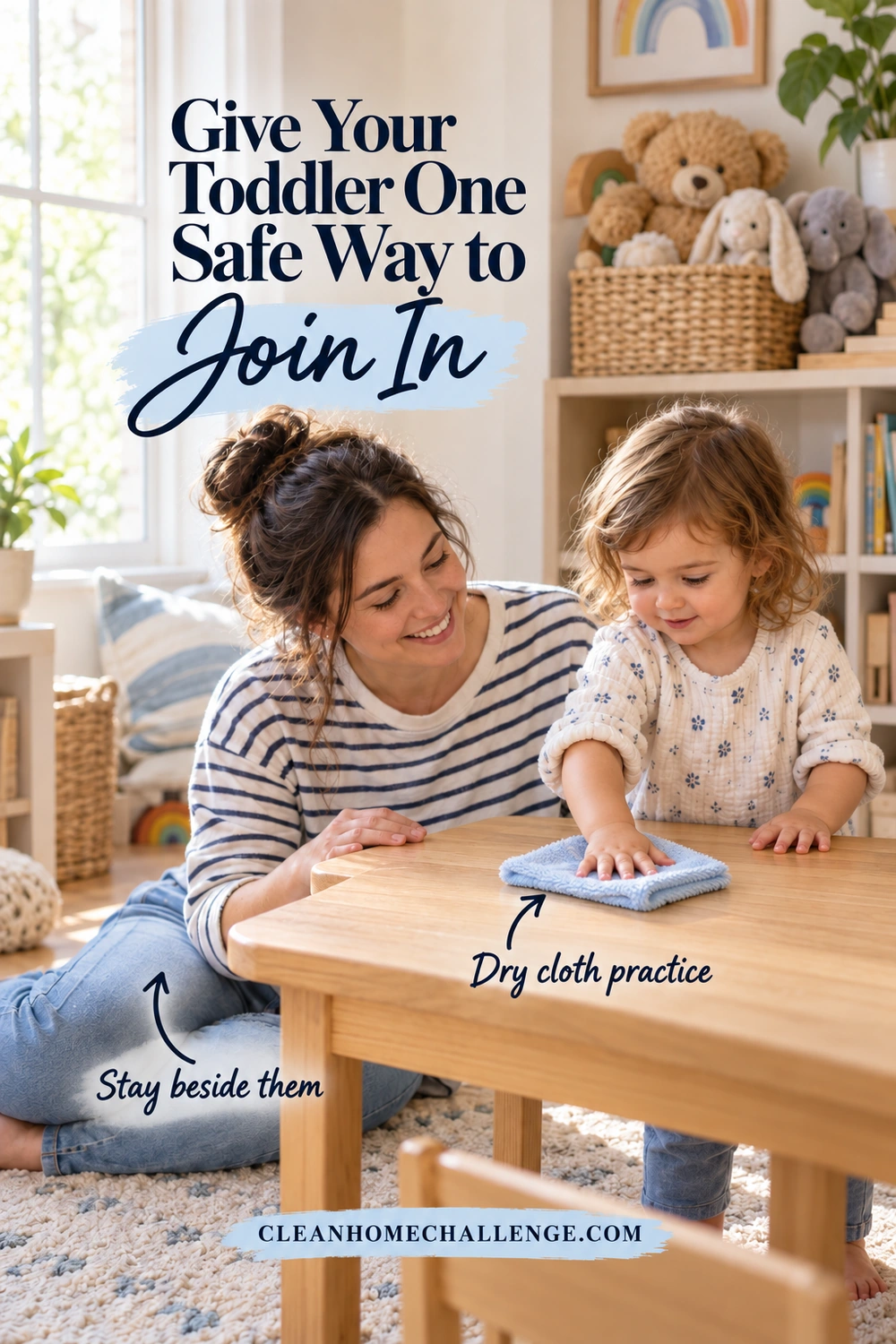
Give Your Toddler One Safe Way to Join In
Participation is optional practice. Some days your child may enjoy copying you; on others they may want attention, keep playing, or undo the tidy. Plan on doing the essential work yourself or sharing it with another adult.
Choose an age-appropriate task your child can do beside you, at floor level, with familiar items:
- Put a few large toys into an open basket while you do the same.
- Hand you clean washcloths as you put laundry away.
- Place sturdy board books in a low, stable storage spot.
- Practice wiping an already-clean, low surface with a clean, dry cloth after all cleaning products have been put away.
Keep the task small enough to explain in one sentence. “Put this truck in the basket” is clearer than a list of everything that needs tidying. CDC’s advice on giving directions supports specific, one-step instructions suited to the child.
Show the action, stay close, and notice the attempt: “You put the truck back where we can find it.” A short song or a choice between two safe items may make the moment pleasant, but neither guarantees cooperation.
If your toddler is not able or willing to join in, keep the safety boundary, finish the necessary pickup, and leave optional practice for another time. There is no need to turn every reset into a lesson. A child who is tired or upset may need care before anything else happens.
Do not give toddlers cleaning sprays, detergents, disinfectant wipes, toilet brushes, or used cleaning cloths. EPA’s guidance for protecting children says children should not use sanitizers or disinfectants. That includes disinfectant wipes and sprays. A child-sized tool also does not make a hazardous job suitable.
Stay actively involved throughout. If you cannot watch and respond because the adult task demands too much attention, stop that task or arrange another responsible adult to supervise.
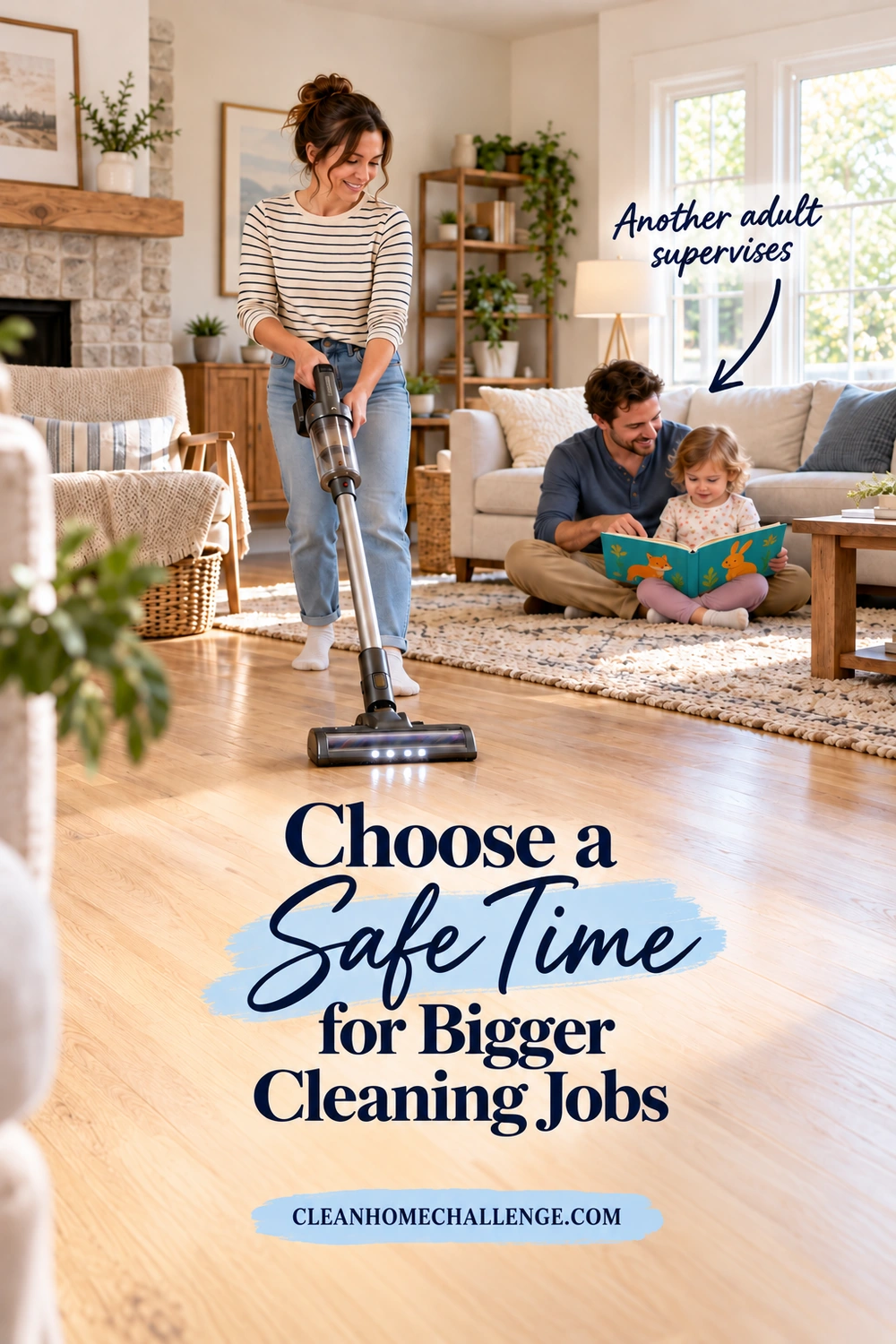
Choose a Safe Time for Bigger Cleaning Jobs
Some jobs do not fit alongside toddler care. Cleaning an oven, dealing with strong cleaning products, moving heavy items, working at height, or leaving a whole floor wet needs more planning than returning toys to a basket.
When possible, arrange a time when another responsible adult is looking after your child away from the work area. Be specific about the handover: “Can you take over toddler care while I clean the bathroom and put everything away?” Knowing who is responsible is more useful than assuming someone else is watching.
Before starting, decide:
- What single job will you finish?
- How will your child stay away from tools, products, and wet surfaces?
- How much time is needed for preparation, the cleaning method, and safe cleanup?
- What will you do if you need to stop partway through?
For disinfecting, the label’s wet contact time matters. Complete any required rinsing and let surfaces dry as directed before returning them to use. EPA explains why following disinfectant directions matters. Never shorten the process because your available window is ending.
If you do not have another adult available, keep optional deep cleaning on a short later list and choose tasks you can safely interrupt. Do not assume a nap will happen, or that your child’s sleep means you should spend every rest period cleaning. Rest can remain rest.
For ongoing upkeep, the CHC weekly areas provide a loose reminder: Monday kitchen, Tuesday bathrooms, Wednesday bedrooms, Thursday living areas, Friday floors, and Saturday laundry catch-up. Pick one suitable task from the area when you have capacity. If Tuesday’s bathroom job must move, move it; you do not need a double workload on Wednesday.
A schedule helps you remember what matters over time. It should also have room for childcare, paid work, appointments, illness, and the days that simply do not go to plan.
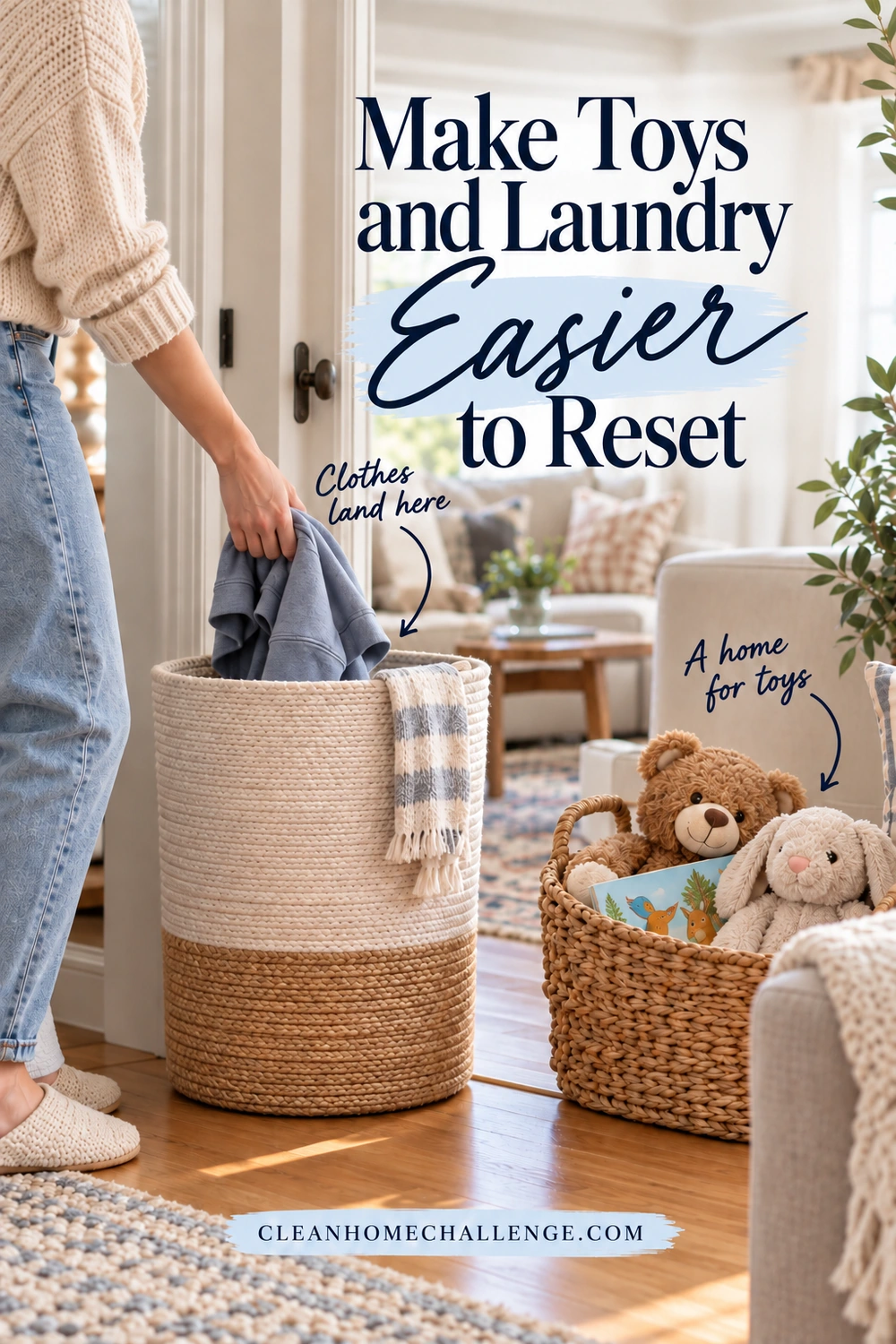
Make Toys and Laundry Easier to Reset
If every pickup requires opening several boxes, matching tiny labels, or carrying things upstairs, the storage system may be asking too much of an ordinary day.
Start with the mess you touch most often. For toys, try a few broad categories near where play happens: vehicles, large blocks, and soft toys, for example. A low, open basket gives each group an obvious home without requiring careful stacking. Books can have their own stable, reachable spot.
Use storage suited to children and inspect it for sharp edges, damaged parts, and entanglement hazards. Avoid improvised trunks or storage chests with lids that can fall or latch shut. CPSC’s toy-chest warning explains the entrapment and suffocation risks. Secure storage furniture according to its instructions.
You can also reduce the number of toys available at once if the volume makes pickup unmanageable. Keep the rest safely stored and swap a few when useful. There is no required rotation schedule and no need to buy matching baskets before trying a simpler arrangement.
Laundry needs similarly clear destinations:
- Put a hamper near the place clothes usually land, without blocking a walkway.
- Keep clean clothes separate from dirty items.
- Wash the clothing needed soonest, using the garment and appliance instructions.
- Follow through to drying before starting more than you can manage.
- Put easy everyday items into simple drawers or bins; fold only as much as works for your household.
One load can be a useful goal when your family needs it, but it is not a daily quota. If there is already a clean load waiting, putting that away may help more than starting another.
Keep detergent storage separate from the child-accessible toy and clothing system. “Easy to reach” is helpful for a basket of toys; cleaning chemicals need the opposite arrangement.
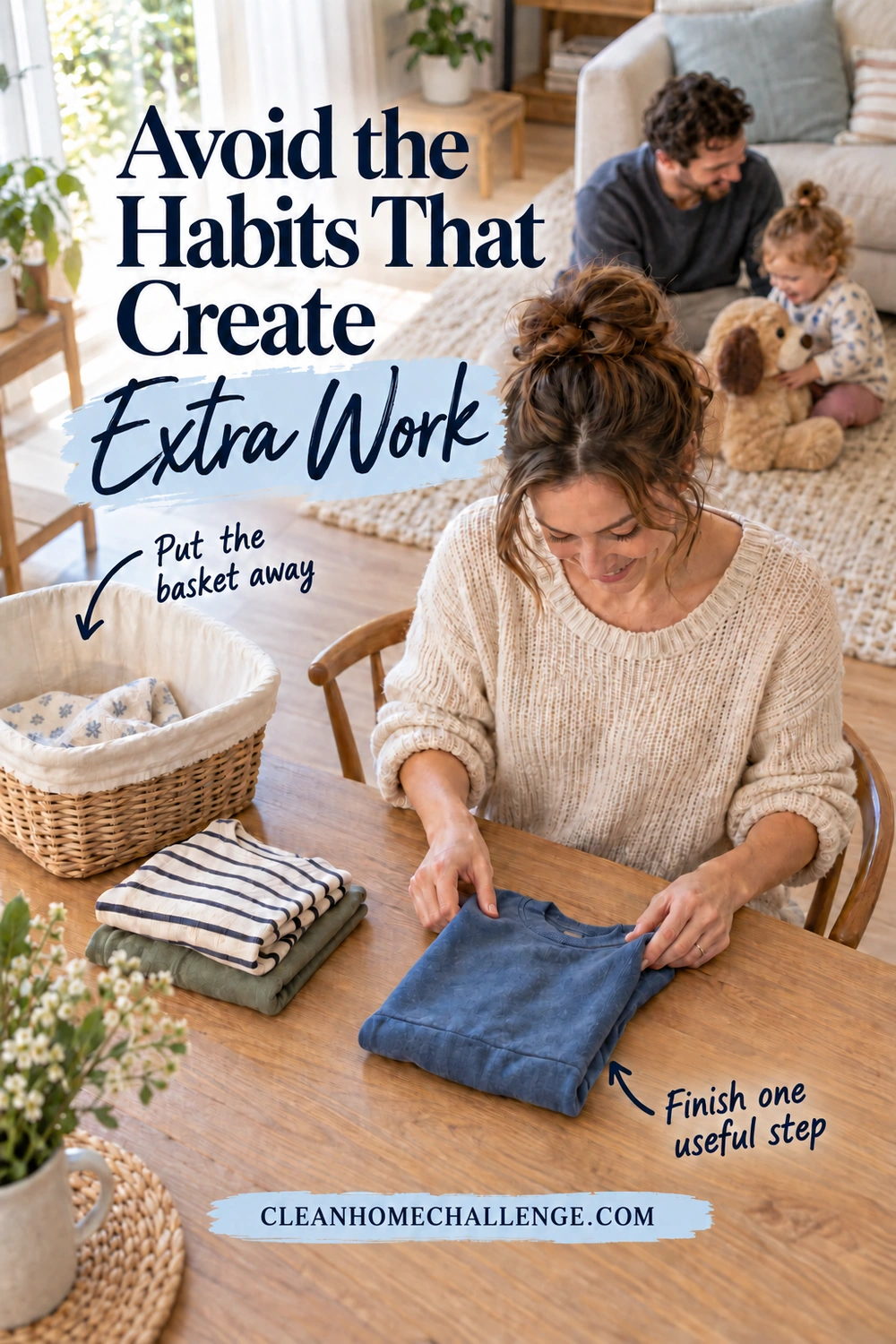
Avoid the Habits That Create Extra Work
A routine can feel impossible because too many decisions and extra jobs get added along the way. Watch for these common snags.
Picking up the same harmless toys all day
If play is still happening, repeated full resets can use up your energy without helping the next activity. Clear hazards immediately, but let safe play continue until a natural stopping point. Choose one or two deliberate pickups instead of constantly returning every item.
Turning a quick clean into a full reorganization
You begin wiping a shelf and end up emptying the cupboard. Now the child needs you and the floor is covered. Keep a short “later” note for extra jobs you notice. Finish the original small task before deciding whether to start another.
Expecting your toddler to save time
Helping often needs demonstration, reminders, and an adult finish. Leave space for that when you invite participation. If you need a job completed efficiently, choose a safely supervised time rather than relying on your toddler to cooperate.
Treating entertainment as supervision
A favorite program or activity does not make cleaning products, water, electrical equipment, or an open bathroom safe. Match the job to the supervision you can actually provide. Avoid setting up food or water play so you can leave the room to clean.
Sharing jobs without sharing responsibility
“Help more with cleaning” is hard to act on. When another adult is available, agree on a complete job: manage the dishes through putting them away, supervise the child during a bathroom clean, or take a laundry load through drying. Include the preparation and cleanup rather than leaving those pieces to one person.
Restarting the whole plan after a difficult day
Missed tasks do not all become today’s emergencies. Recheck safety and hygiene needs, choose what is useful now, and resume from there. You can revise the routine if the same step keeps failing. Moving a basket or dropping an unnecessary reset may help more than trying harder.
Use the Low-Energy Plan When You Need It
On a day shaped by broken sleep, a clingy toddler, or too many demands, shrink the plan. Start with your child’s immediate care and any urgent household hazard.
Then work through this short order as you are able:
- Make the immediate space safe. Remove accessible hazards and keep walking routes clear.
- Deal with food and hygiene needs. Put food away, clean necessary eating or preparation surfaces, and attend to spills and bathroom accidents properly.
- Prepare one essential for later. Choose clean clothes, a usable dish, or space for the next meal.
- Stop before adding appearance jobs. Detailed folding, toy sorting, and whole-room resets can wait.
This is a priority list, not a timed challenge. You can complete it in separate moments, share it with another adult, or do only the next necessary step. If the mess is mainly toys and clean laundry, gathering the toys away from the walkway may be enough to make the room workable for now.
When you have more capacity, return to one familiar reset instead of planning a catch-up marathon. Notice what caused the biggest difficulty: no clean lunch dishes, too many toys out, or an overloaded laundry basket. Adjust that one part of the system first.
For more support, Cleaners Clubhouse can be a place to build manageable family routines and daily habits. Choose guidance that fits the season you are in, and keep the version you use small enough to repeat.
Cleaning with toddlers will include interruptions and unfinished jobs. A useful routine leaves you with safer spaces, the essentials ready, and a clear next step, while allowing time for the child and the person doing the cleaning.

CLEANERS CLUBHOUSE
Turn Small Daily Habits Into a Cleaner Home
Make cleaning feel more achievable by sharing simple routines and building habits that stick. The Cleaners Clubhouse includes the 7-Day Daily Habits Bootcamp, printable support and motivating monthly challenges.