
THIS POST MAY CONTAIN AFFILIATE LINKS. PLEASE READ MY DISCLOSURE FOR MORE INFO.
You can love reading and still want your bookshelves to feel less crowded. Decluttering a book collection does not have to mean keeping a tiny number, giving away every unread book, or proving that you are a minimalist. It means choosing which physical copies deserve a useful home in the space you actually have.
Start with one reachable shelf. Keep the books you want to return to, the references you use, and the copies that matter to you. Question the books you no longer want to read, duplicates that serve no purpose, and titles you could happily borrow if the interest returns. Then finish the outgoing books’ journey before starting another shelf.
The aim is simple: make your collection easier to enjoy. A full shelf can be a lovely thing when you can find a book, remove it without a struggle, and put it back. The free Book Collection Decision Sheet below gives you a place to record tricky decisions, donation plans, and titles you would rather borrow next time.
Disclosure: This post may contain affiliate links. As an Amazon Associate, Clean Home Challenge earns from qualifying purchases. If you make a purchase through these links, we may earn a small commission at no extra cost to you. This helps us keep creating practical cleaning tips, routines and resources for busy families! 🧽
Choose a Shelf and Set a Comfortable Limit
Before pulling books out, decide what you want to improve. Perhaps the floor beside the bed has become a book tower, the children’s picture books fall over whenever someone chooses one, or the living room shelves are packed so tightly that reading feels inconvenient. Choose that particular problem rather than setting an arbitrary target such as getting rid of half your books.
Use the shelf as a practical boundary
Look at the storage you already have. Which shelves can you reach comfortably? Are books hanging beyond the shelf edge, stacked on top of other rows, or blocking something you need? Leave walkways and exits clear. Keep the bookcase’s required anti-tip anchoring in place, follow its load limits, and arrange children’s books where they can reach them without climbing. Moving books is not a reason to loosen furniture hardware or overload a shelf.
Your useful limit might be one bookcase, a few shelves and a bedside stack, or a dedicated room. It is a household decision, not a rule about how many books a reader should own. Shared shelves need an agreement: ask other people which books are theirs and leave those decisions to them. An unread book belonging to your partner is not yours to donate.
Avoid filling every last gap. You need enough space to take a book out and return it without forcing the neighboring bindings. The Library of Congress recommends supporting upright books rather than leaving them leaning; large books that do not fit upright can be stored flat with their full size supported. Give oversized volumes a suitable place rather than squeezing them into a shallow shelf.
Set up a small session you can finish
Gather a clean, dry sorting surface, a pencil, your worksheet, and a manageable outgoing container. You do not need new baskets to make the first decisions. Separate borrowed books from your own collection so library copies and friends’ books return to their owners instead of entering the donation pile.
Try a 15-minute session: a few minutes to select one shelf, most of the time for decisions, and the final minutes to put everything away. This is a suggested time budget, not a promise that a difficult collection will take only 15 minutes. If you have less energy, review five easy books and stop. Keep the sorting surface small enough that you can restore it before the household needs it again.
Do not empty every bookcase onto the floor. Aside from the lifting and trip hazards, that makes every undecided book an urgent job. Work from one end of one shelf, removing a small group at a time. Handle ordinary books with clean, dry hands, and keep drinks away from the sorting area.

Decide Which Books Earn Their Place
Begin with the obvious keeps. That favorite novel you reread, the cookbook with recipes you use, the reference you reach for, and the signed copy that matters to you can go straight back. Keeping a book because you enjoy owning it is a valid reason. You do not have to defend every volume through a strict usage test.
Next, make the easy exits: an unwanted duplicate, a book you have finished and do not want to revisit, or a guide to a hobby you no longer plan to pursue. Leave the emotionally complicated copies until you have practiced making a few simpler decisions.
Ask a more useful question than “Have I read it?”
For each uncertain book, consider:
- Would I choose this book now? Judge your current interests rather than the person you hoped to become when you bought it.
- Do I want this particular physical copy? Notes, illustrations, translation, format, accessibility, or family connections may make one edition worth keeping.
- Will I use or enjoy it again? Reference use, rereading, browsing illustrations, sharing a favorite story, and sentimental value all count.
- Could borrowing meet the need? Check your library’s catalog before assuming a specific edition, audiobook, or accessible format will be available later.
- Can I store it properly? Keeping a book should include a realistic home for it, not an unstable pile that creates daily frustration.
No single answer has to decide the outcome. You might keep an unread art book because you love browsing it, while donating a novel you enjoyed because you know you will not reread it. You might retain two copies when they serve different readers or have meaning, while passing on an accidental duplicate.
Give unread books a fair review
An unread shelf is not a record of failure. Pick up the book and read the description or a short opening section. Ask whether you want to spend your next available reading time with it. If yes, place it in a small next-to-read area. If your interest has gone, the purchase price does not require years of extra storage.
Use an optional review date for books you genuinely cannot decide about. Keep that group small enough to revisit, and record what you need to find out: “Try the first chapter,” “Ask Sam whether this is their copy,” or “Check which translation I prefer.” A review date is a reminder to decide, not an automatic instruction to discard something meaningful.
Do not turn the next-to-read pile into a second crowded bookcase. Choose a few titles you are interested in now and leave the rest in an orderly home while you review them gradually. If a particular book has waited for years, you can still keep it; just make that an intentional choice rather than an obligation.
Protect sentimental and potentially valuable copies
A gift can have been appreciated without becoming a permanent storage commitment. If the physical book no longer matters, a note about the gift or a photograph may preserve the memory for you. Equally, if the book itself is the memory, keep it somewhere suitable. You do not need to replace a meaningful object with a photo just to clear a shelf.
Set aside signed, scarce, fragile, illustrated, or potentially collectible editions before using ordinary donation or cleaning methods. Age alone does not establish value, and online asking prices do not prove what your copy will sell for. Ask a reputable bookseller or qualified appraiser when value could affect your decision. Seek conservation advice for valuable damaged books; avoid sticking tape onto a loose page or attempting a wet cleaning repair during a decluttering session.
For children’s books, involve the child in age-appropriate choices. Keep well-loved favorites even if they seem young for the reader. Review unwanted duplicates and genuinely outgrown titles together. With school, work, or reference books, consider whether the information still serves its purpose; do not present outdated technical information as current simply because the volume is in good physical condition.

Send Unwanted Books Somewhere Useful
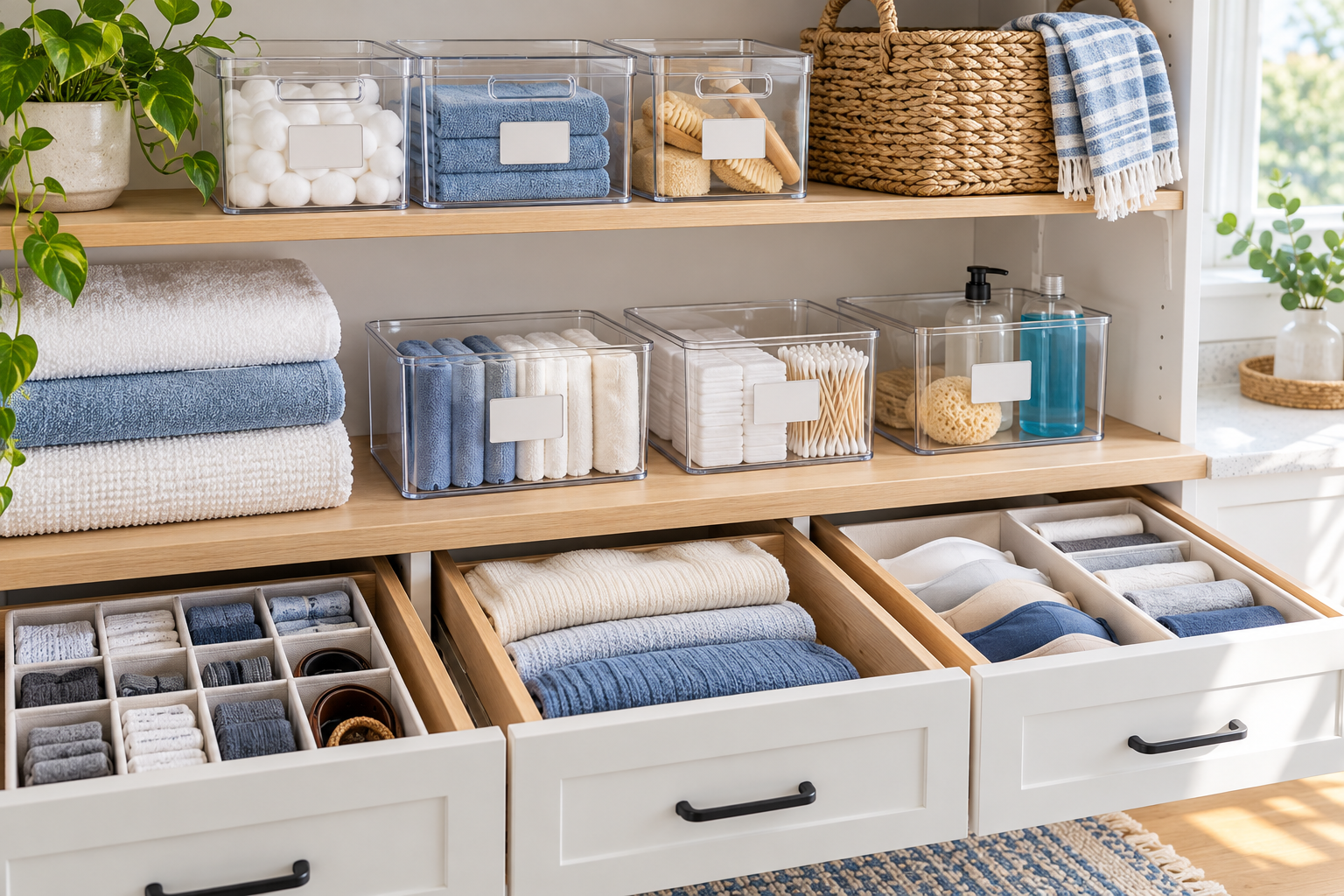
The outgoing container needs a destination and a next action. “Donate someday” often means the books remain in the hallway for months. Write down who may accept them, what you need to check, and when you expect to take them. Use containers you can safely handle rather than filling one enormous box with heavy hardbacks.
Match condition to the receiving organization
Inspect books before offering them. Look for dampness, suspected mold, pest signs, loose or missing pages, broken bindings, and personal items tucked inside. Do not pass a damp or suspect mold-affected book into an ordinary donation or neighborhood book collection. Ask the relevant waste service or a conservation professional about the appropriate next step, depending on the book and its significance. This guide is about sorting; treating damaged collections is a separate task.
Check the recipient’s current rules before packing or traveling. Libraries may accept selected donations for sales, decline donations entirely, or have limits on categories and quantities. Schools, charities, used-book stores, and community groups also have different needs. A good-condition book is not automatically useful to every organization.
As one US example, Better World Books describes donation routes through its drop boxes and by mail, with location and material guidelines to check first. Its private-donation guidance says it does not provide prepaid shipping labels, walk-in acceptance, or private pickups. Those arrangements are specific to that organization and can change; verify the route you plan to use. Outside the US, check a local service instead of assuming an overseas program is available.
For damaged books unsuitable for reuse, ask your local recycling service about bindings, covers, and mixed materials. Do not assume that a whole hardback belongs in every paper-recycling bin. Acceptance depends on your collection service. Avoid leaving books outside a closed donation point or overfilling a community book cabinet.
Keep selling proportionate to the likely return
If selling is worth considering, check realistic sold-price evidence for the correct edition and condition, then account for fees, packing, postage, and your time. A small sale can be worthwhile, but you do not need to list every inexpensive paperback individually. A bookseller’s offer or a suitable local bundle may be more manageable.
Set a review date for unsold books and choose an alternative destination you are comfortable with. Do not assign the same deadline to a potentially valuable volume that needs specialist advice. Keep outgoing books dry and securely stored without blocking family access while you wait.
Before a book leaves, check for bookmarks, photos, letters, receipts, and identifying information. Remove loose personal items carefully. Do not tear out an inscribed page from a potentially valuable book without understanding how that may affect it. If privacy or sentiment makes giving away that copy uncomfortable, pause and decide on a suitable route rather than rushing.
Borrowed copies go back to the person or library that owns them. Record the return separately from donations. For books promised to friends, agree on a real handoff rather than letting the promise become indefinite storage.
Keep a Collection You Can Enjoy Using
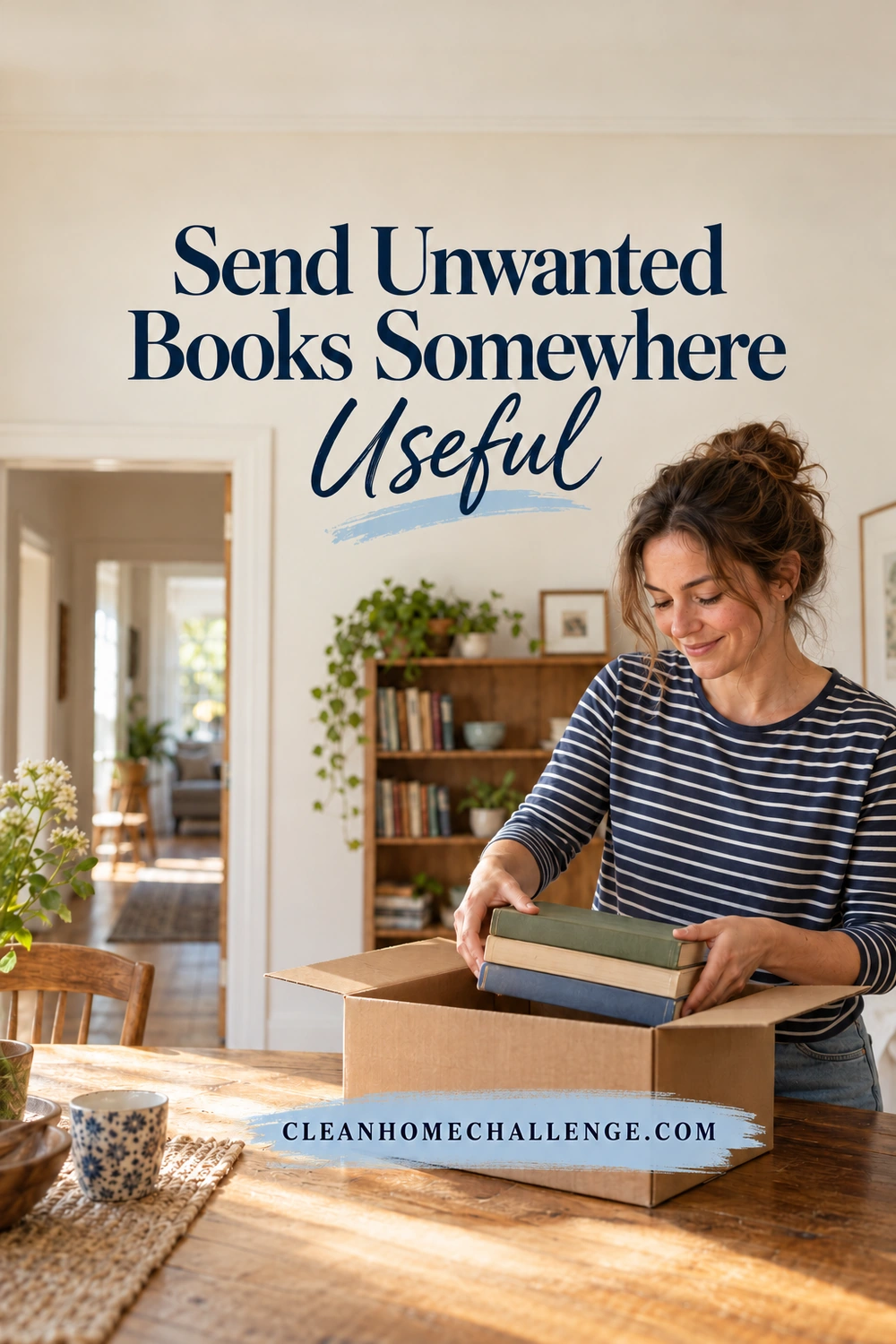
Return the books you have chosen to keep in a way that helps your household find them. You might group by author, subject, reader, language, or series. Choose a system people can understand and maintain; arranging by color is optional and may be unhelpful if it makes finding a title harder. Face spines outward when that suits the reader, and preserve predictable locations for anyone who relies on them.
Store books away from obvious dampness, heat, and prolonged direct sunlight. The National Archives advises against storage in hot or damp attics and garages. Ordinary reading copies do not need a museum display, but a stable indoor location is more useful than sending the overflow into an unsuitable shed. Keep shelves accessible and supported, and avoid forcing books into tightly packed rows.
A simple shelf reset
When you notice books becoming awkward to return, take a few minutes to:
- Return borrowed books and put your own stray copies in their agreed homes.
- Check whether the next-to-read group still matches your interests.
- Remove any completed books you already know you do not want to keep.
- Finish the donation, sale, or return action already recorded on your worksheet.
- Make a deliberate space decision before adding more shelving or buying storage.
You can keep buying and borrowing books. Consider a wish list or library request for a title you are curious about, and reserve purchases for copies you want to own. A one-in, one-out agreement is optional; it should not force you to give away a cherished book when your storage already works. If shelves are full, decide where a new copy will live before bringing it home.
Use the free Book Collection Decision Sheet
Download the Book Collection Decision Sheet (PDF). Use one sheet for a shelf or a small group. It includes a clear finish line, decision questions, space for a few uncertain titles, a borrow-next-time list, and an outgoing-books plan. There is no signup required for this download.
Here is an example: you review a short shelf containing 18 paperbacks, keep 11 you want to revisit, choose two unread titles for your current reading area, and identify five books to pass on. You confirm a nearby recipient accepts those five, record the drop-off, and put the kept books back with enough room to remove them easily. The numbers are simply an example, not a quota to copy.
If you enjoy having a plan for the rest of the house, the Cleaners Clubhouse’s 30-Day Declutter Challenge offers small steps and printable support. Start with your free book worksheet, finish one shelf, and decide whether that additional structure would help you keep going.
Your collection can remain generous, personal, and full of possibilities. A useful result is being able to find something you want to read and put it away comfortably afterward. One shelf that works is a complete piece of progress.
Sources and further guidance
Care and donation guidance reviewed October 24, 2026. The decision questions and session budgets are editorial suggestions, not preservation standards or measured demand claims.
- Library of Congress: storing books
- Library of Congress: handling books
- Library of Congress: book preservation FAQs
- National Archives: preserving books
- Better World Books: US donation routes

CLEANERS CLUBHOUSE
Ready to Clear the Clutter One Step at a Time?
Join the 30-Day Declutter Challenge and work through your home in small, achievable steps. The Cleaners Clubhouse includes the plan, printable support and encouragement to help you keep going.