THIS POST MAY CONTAIN AFFILIATE LINKS. PLEASE READ MY DISCLOSURE FOR MORE INFO.
A sink that empties slowly can turn a quick after-dinner tidy into a frustrating job. Before buying another bottle or a longer tool, work out what you need to achieve: remove a reachable obstruction, maintain a drain that still flows, or get a recurring plumbing problem investigated.
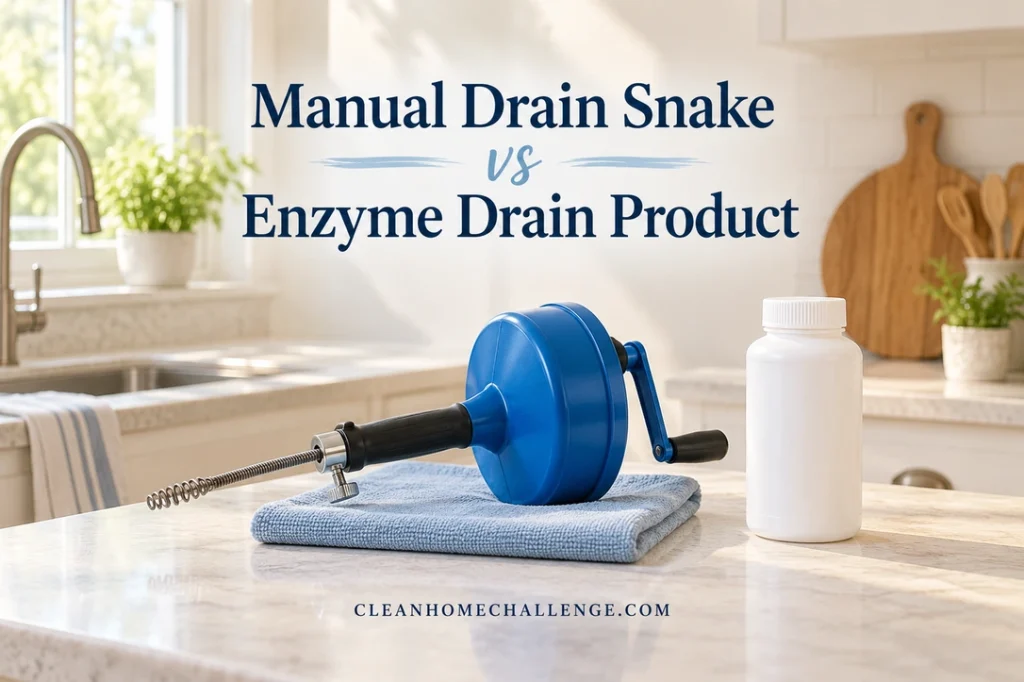
For the manual drain snake vs enzyme drain product decision, the useful difference is physical removal versus product-specific treatment of organic buildup. Neither option repairs damaged pipes, and neither deserves an automatic place on every household shopping list.
A sensible starting point: for a small, accessible hair obstruction in a compatible sink or shower, a suitable manual tool may help. For ongoing buildup maintenance, consider an enzyme product only if its label covers the fixture, plumbing system, and problem. Standing wastewater, several affected fixtures, or repeated blockages call for a different plan.
Disclosure: This post may contain affiliate links. As an Amazon Associate, Clean Home Challenge earns from qualifying purchases. If you make a purchase through these links, we may earn a small commission at no extra cost to you. This helps us keep creating practical cleaning tips, routines and resources for busy families! 🧽
Match the Method to the Drain Problem

Start with what you can observe
Stop running the faucet if water is rising toward the rim. Keep children and pets away from wastewater and the work area. From a safe position, note whether just one fixture is slow, whether the problem began suddenly, and whether anything has already been poured into it. Those observations are more useful than guessing at the blockage hidden inside a pipe.
Check only an accessible, user-removable strainer or hair catcher when no drain treatment is present. Empty captured debris into the trash rather than washing it back down. Follow the fixture instructions and leave fixed covers, seals, and unfamiliar fittings alone. An ordinary sink basket full of food does not automatically require an auger or a drain product.
This comparison helps you choose the next step; it is not a diagnosis of unseen pipework.
| What you notice | Manual drain snake | Enzyme drain product | Better next step |
|---|---|---|---|
| Hair caught in a removable catcher | Usually unnecessary | Usually unnecessary | Empty and clean the removable part |
| A localized obstruction in a compatible sink or shower line | May reach and retrieve or break up debris | May be unsuitable for immediate clearing | Check tool instructions and safe access first |
| A flowing drain with an appropriate maintenance need | Not necessarily needed | May suit a label-approved buildup routine | Check the exact product claims and directions |
| A lost hard object, damaged fitting, or uncertain access | Can push, snag, or damage something | Will not retrieve the object or repair a fitting | Get plumbing advice |
| Repeated backups or several affected fixtures | A small household tool may not address the cause | Repeated doses do not identify the cause | Arrange a plumbing assessment |
What each option actually does
A cable auger works mechanically: a flexible cable reaches into a suitable drain line and interacts with an obstruction. Models differ in cable size, access requirements, and operating method. RIDGID’s POWER SPIN+ product information gives hair, soap scum, and soft debris as examples of suitable blockages for that model. That does not establish that every cheap plastic strip or hand auger can tackle the same job.
An enzyme drain product is a formulation, not one standardized method. Some contain enzymes and bacteria and are marketed for organic buildup maintenance. Read the exact scope: Drano FlowGuard Build-up Remover, for example, explicitly says it will not open clogs. A promise about prevention is not a promise to clear a completely blocked sink tonight.
Choose for the household you have
If this is the only kitchen sink, a treatment that needs an undisturbed period may be awkward during dinner cleanup. If safe tool access is difficult, buying a tool does not make the job manageable. Think about storage, physical effort, protective equipment, and whether another adult needs the bathroom before you start.
Allow time to read instructions and prepare the area. Tool work may also involve collecting debris, cleaning equipment, and reassessing drainage; the treatment period for a product depends on its label. Avoid a guaranteed five-minute fix or an overnight promise based only on the words on the front of a bottle.
Choose and Use a Manual Drain Snake Carefully
Check the tool before the price
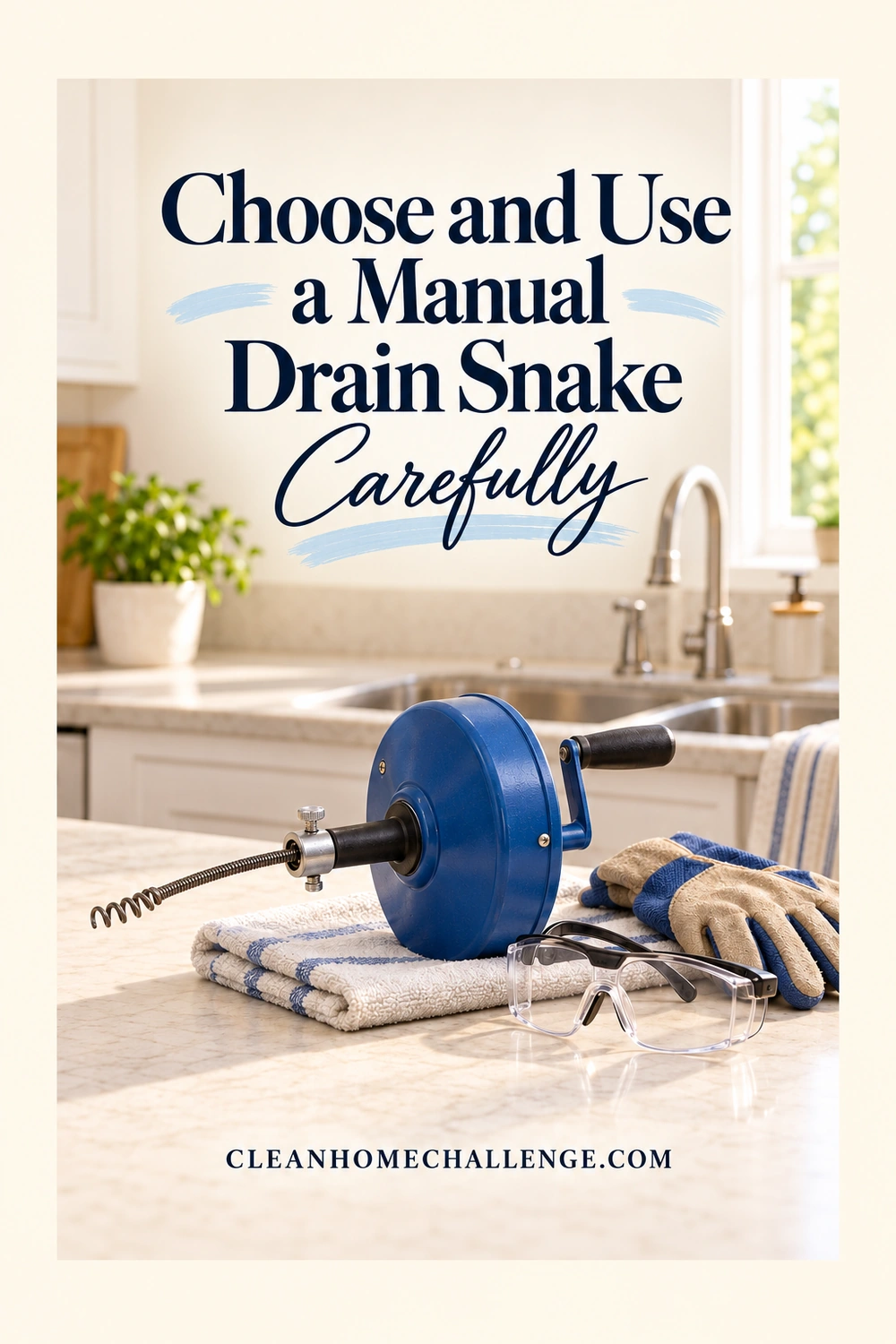
A short barbed hair-removal strip, a hand-cranked drum auger, and a toilet auger are different tools. Match the tool to the fixture, permitted pipe size, cable route, and instructions. An inexpensive device is poor value if it cannot enter the intended access point safely.
Look for a readable manual, a cable and tip in sound condition, clear use limits, and practical cleaning and storage instructions. Ask the manufacturer about uncertain compatibility before purchase. Keep the receipt and manual together so another adult can identify the tool later.
For a useful model-specific example, the POWER SPIN+ operator’s manual requires eye protection and suitable gloves, explains cable support and access, warns against forcing the cable, and excludes toilet use. Its operating sequence is specific to that tool. Do not turn a general comparison article into a substitute for those instructions.
Prepare before attempting a permitted job
Use this preparation order for a drain that has no treatment chemicals present:
- Read the complete instructions. Confirm that the fixture and access point are included. This guide covers choosing a manual tool, not converting one to powered operation.
- Make space. Move dishes, toiletries, clean towels, and loose objects away. Protect nearby surfaces in a way that does not create a slipping hazard.
- Gather what your manual requires. Include the specified protective equipment, a suitable debris container, and a place to set contaminated equipment away from food and children’s belongings.
- Set a stopping point. If access requires unfamiliar dismantling, the cable catches, or the job feels beyond your ability, stop and seek help. Do not keep escalating force because the tool is already out.
- Follow the actual model sequence. Use its feeding, turning, withdrawal, cleaning, and storage directions. Never copy the rotation or grip instructions from a different design.
Do not put your hands into a garbage disposal or send a cable through it. Use the disposal manufacturer’s service guidance instead. For fragile or valuable fixtures, unknown old pipework, or a suspected lost item, professional help can prevent a small obstruction becoming a repair job.
If cleaner has already been added
Pause before snaking, plunging, removing a trap, or reaching into the opening. Identify the product and contact its manufacturer or a plumber for the next safe action. Tell the plumber what was used, how much, and when. A sink that appears to have drained is not proof that all treatment has disappeared.
Poison Control explains that some drain cleaners are corrosive and can splash back from a drain. Do not add bleach, vinegar, another drain opener, or a homemade mixture to improve the result. If an exposure occurs, seek immediate advice from your local poison service or emergency care as appropriate; do not experiment with neutralizing chemicals.
After a permitted mechanical clean, dispose of retrieved debris appropriately, follow the tool’s care instructions, and wash your hands. Keep a record of whether normal use improved. A brief opening through a clog does not prove that the whole pipe is clean or that an underlying fault has been fixed.
Check What an Enzyme Drain Product Actually Promises

Read the back before trusting the front
Words such as enzyme, biological, natural, or maintenance do not tell you the full formula, suitable plumbing, or exposure precautions. Keep the original container and read the directions and warnings before deciding to use it.
Check these points while the bottle is still closed:
- Job: routine maintenance, slow drainage, or a specific kind of buildup?
- Fixture: sink, shower, toilet, or disposal, as explicitly listed?
- System: any restrictions for septic systems, materials, or connected equipment?
- Preparation: whether the drain needs to be flowing and what must happen before treatment?
- Method: the actual amount, water temperature, waiting period, and any later rinse?
- Limits: what the label says to do if drainage worsens or treatment does not work?
- Safety: handling, storage, first-aid, and compatibility warnings?
If the directions do not answer a question relevant to your home, ask the manufacturer before use. A different product from the same brand may have entirely different ingredients and instructions.
Compare directions without combining them
Bio-Clean’s application guidance says it is not an instant clog remover and recommends restoring some flow before treating a fully blocked drain. Its general-use guidance also addresses removing a hair clog before treatment. These are examples of why the condition of the drain matters before purchasing a maintenance product.
The appropriate amount and treatment schedule must come from the exact container you own. Do not borrow a powder’s mixing directions for a liquid, use a laundry enzyme product in place of a drain treatment, or assume that a larger dose will work faster. Do not add boiling water unless the relevant product and fixture instructions expressly allow the required temperature.
If mechanical clearing is recommended before a later maintenance treatment, treat them as separate stages under the applicable instructions. That does not authorize inserting a tool into a drain containing chemicals or mixing treatments. Uncertain prior product use needs clarification first.
Plan for a fair, safe check
Write down the product name, date, intended use, and the label’s follow-up instructions. Choose a time when you can meet those directions without someone unknowingly using the fixture. Tell other adults what is happening and keep the work area inaccessible to children and pets.
Assess the result through ordinary drainage after the instructed treatment is finished. Fragrance, fizz, and a freshly cleaned basin do not establish that hidden buildup has been removed. If the issue continues, resist turning every evening into a different product trial. A useful record helps you explain the history to a plumber and avoid repeating unsuccessful steps.
Store the closed product as its label requires, securely away from children and pets. Do not decant it into a drink bottle or leave a measured portion beside the sink. The goal is a manageable maintenance choice, not another unmarked container in a busy family kitchen.
Build a Simple Drain-Care Routine

Reduce what enters the drain
A small prevention habit is easier to repeat than an emergency clear-out. Sydney Water’s blockage guidance recommends kitchen strainers and keeping fats, oils, and grease out of drains. Hot water and dish soap do not make a pan of used cooking oil suitable for the sink.
After food preparation, scrape scraps into your appropriate waste collection, empty the basket, and collect cooking fat for disposal under local guidance. In the bathroom, empty a compatible removable hair catcher before debris builds up. Choose a catcher designed for the drain rather than forcing a poorly fitting cover into the opening.
Add a quick check to the routine you already follow:
- After dishes or hair washing: remove captured food or hair.
- During the room clean: wash user-removable parts as the fixture instructions permit and check ordinary flow.
- If you use a maintenance product: follow its own schedule rather than adding an automatic weekly dose.
- When a problem returns: note the date and symptoms, then arrange advice instead of repeating treatments indefinitely.
For odors with otherwise normal drainage, use the separate kitchen sink smell guide to check accessible residue and nearby sources. A smell alone does not identify a clog or justify treating the whole pipe.
Keep a useful record, then stop when help is needed
Download the free Drain-Care Decision Card (PDF). Keep it with your home maintenance notes so previous products and follow-up plans are easy to find.
The card gives you a place to record the affected fixture, what you observed, previous products, the selected method, and the result. Fill it out before a job so another adult or a plumber can see what has already happened. You do not need perfect measurements; clear dates and product names are useful.
Stop household treatment and arrange plumbing advice if drainage repeatedly slows, a cable is stuck, a fitting leaks, several fixtures are affected, wastewater returns elsewhere, or you suspect damaged pipework or a hard object. Reduce use of affected fixtures and keep people away from sewage. Follow your local utility’s reporting advice for a suspected sewer backup; DC Water’s guidance illustrates why public sewer and property-line problems need the appropriate service response. Local responsibilities vary.
If you only have a few minutes today, empty a safe removable catcher, record the symptoms, and decide whether the job needs booking. You can make progress without starting a treatment you cannot supervise or a tool job you cannot finish safely.
For help making these little jobs part of an achievable cleaning routine, explore Cleaners Clubhouse below. The free decision card is available directly above; no membership is needed to download it.

CLEANERS CLUBHOUSE
Use the Right Tools With a Routine That Works
Good cleaning tools work best when you know where and when to use them. Inside the Cleaners Clubhouse, recommended products sit alongside practical routines, printable worksheets and monthly challenges.