
THIS POST MAY CONTAIN AFFILIATE LINKS. PLEASE READ MY DISCLOSURE FOR MORE INFO.
If you have ever wiped the kitchen counter while wondering when you last cleaned the ceiling fan, you already know the problem: everything in a home gets dirty at a different speed. A long checklist can make it feel as though you are always behind, even when you are doing the jobs that matter most.
So, how often should you clean your house? Start with food mess and spills as they happen, a short daily reset, a weekly pass through the main rooms, and a rotation for less urgent monthly and seasonal jobs. Then adjust for how your household actually lives. A rarely used guest room and a kitchen feeding five people do not need the same attention.
This guide gives you a practical starting point, explains when to bring a task forward, and helps you leave lower-priority work for another day. The frequencies are flexible housekeeping recommendations unless a specific safety or manufacturer requirement is identified. Your product label, appliance manual, surface-care instructions, and any health advice for your household take priority.
Disclosure: This post may contain affiliate links. As an Amazon Associate, Clean Home Challenge earns from qualifying purchases. If you make a purchase through these links, we may earn a small commission at no extra cost to you. This helps us keep creating practical cleaning tips, routines and resources for busy families! 🧽
Your Flexible Cleaning Frequency Chart
Use this cleaning frequency chart to plan your next job, rather than to grade your home. “Weekly” means a useful reminder to check and clean, not proof that something becomes unsafe on day eight. Visible dirt, food contamination, wetness, and equipment warnings should never wait for a calendar square.
| Starting rhythm | What belongs here |
|---|---|
| After use or right away | Food-preparation surfaces and boards, spills, raw-food contamination, pet accidents, and wet flooring. Empty the dryer lint filter before or after every load. |
| Daily check | Dishes, used kitchen counters and sink, crumbs in eating areas, food waste, bathroom splashes, and clear walking paths. |
| Every few uses | Bath towels: about 3–5 normal uses if they dry fully between uses; sooner if dirty or persistently damp. |
| Weekly starting point | Used bathrooms, vacuuming, dust on main surfaces, bed sheets, and cleaning the hard floors that need it. Check the refrigerator before grocery shopping. |
| Monthly review | Washer care, dishwasher maintenance, reachable baseboards, door edges, interior bins, and overlooked corners. Follow each appliance’s own timetable. |
| Seasonal review | Window tracks, washable curtains, pillows and bedding protectors, accessible spaces under furniture, and deeper carpet or upholstery care if needed. |
| On the required maintenance schedule | HVAC filters, dryer exhaust, refrigerator coils if accessible and serviceable, and other model-specific tasks. Record the real instructions instead of assuming “yearly.” |
The towel range comes from the American Cleaning Institute’s laundry guidance. It recommends washing sheets at least every two weeks, with more frequent washing for heavy night sweating. A weekly sheet change is an easy routine to remember, but it is not a universal medical deadline. We’ll cover situations that need a different approach below.
Separate cleaning from disinfecting
Cleaning removes dirt and many germs. Sanitizing reduces germs to specified safe levels; disinfecting uses a suitable product to kill germs covered by its label. These are different jobs. The CDC’s household guidance says routine cleaning is usually enough, with disinfection particularly important when someone is sick or immunocompromised. High-touch surfaces deserve regular cleaning and attention after visitors.
You do not need to disinfect every wall, floor, and shelf on a weekly rotation. Food-contact surfaces contaminated by raw meat or poultry need appropriate cleaning and sanitizing; illness needs targeted precautions. Choosing the right job saves time without treating an ordinary dusting session like a hospital cleanup.

Daily Cleaning That Keeps Mess Manageable
Daily cleaning is mainly about dealing with what happened today. Allow perhaps 10–15 minutes for a small reset, recognizing that family size, mobility, and the amount of cooking change that estimate. If only five minutes are available, handle food mess, wet spills, and clear paths first.
A useful after-dinner order
- Put food away and clear dishes. Load the dishwasher or wash what you need. Don’t leave perishable food sitting out while you tackle the rest of the kitchen.
- Clean the work surfaces you used. Remove crumbs, then use a cleaner suitable for the finish. Work from the cleaner areas toward the messiest spot, folding or changing the cloth when it gets dirty.
- Finish the sink. Remove food debris, clean with a compatible product, rinse if required, and leave it ready for the next use. A cloth used on the sink should not return to a ready-to-eat food area.
- Spot-clean the floor. Pick up crumbs under the table and handle sticky or slippery spills. You do not need to mop every room because one area needs attention.
- Deal with waste and reset the room. Empty a leaking, smelly, or full bin. Gather misplaced items in a basket and return only what you have energy for.
Keep a few clean cloths, dishwashing liquid, a surface-compatible cleaner, and a broom or suitable vacuum within easy adult reach. Store chemicals securely away from children and pets. A complicated caddy is optional; clean tools and the correct product matter more.
Food preparation has its own clock
Do not wait until evening to clean a cutting board. The USDA recommends washing boards after each use with hot, soapy water, rinsing, and drying. Use separate boards for raw meat and foods eaten without further cooking. After raw-food contamination, clean and then sanitize affected food-contact surfaces with a product labeled for that purpose, following its directions and any rinse requirement.
Dry bathroom splashes when you notice them, hang towels so air can circulate, and pick up items that create a trip hazard. Making the bed is a pleasant reset if you like it; it is not more urgent than a spill. Likewise, “one load of laundry a day” is an option for a busy household, not an instruction to wash clothes that do not need washing.
At the end, put used cleaning cloths aside for laundering and let cleaned tools dry. Starting tomorrow with a fresh cloth is more useful than spending tonight polishing an already-clean toaster. For a fuller tool-care routine, use our guide to washing, drying, and replacing reusable cleaning cloths.

Weekly Cleaning for the Main Rooms
Think of the weekly clean as several short room resets. You can spread them across the week: Monday kitchen, Tuesday bathrooms, Wednesday bedrooms, Thursday living areas, Friday floors, and Saturday laundry catch-up. For a fuller day-by-day example, see our weekly cleaning schedule. Swap days freely. An unused room can often wait; the busy bathroom may need a second quick pass.
Kitchen: look beyond the counter
Wipe appliance handles and the stovetop once it is cool, check cabinet fronts near cooking areas, and clean the microwave interior when splatters appear. Before grocery shopping, check the refrigerator for spills and food that needs using or discarding. Clean a sticky shelf now instead of emptying the whole refrigerator unnecessarily. The FDA advises cleaning refrigerators regularly and wiping spills immediately; a monthly reminder does not replace that immediate cleanup.
Bathroom: work from cleaner areas to the toilet
Gather separate bathroom cloths, an appropriate bathroom cleaner, a toilet brush, and gloves if directed. Remove loose items, clean the mirror and sink, then work on the tub or shower. Clean the toilet exterior and bowl with dedicated tools, finishing the floor last. Keep toilet tools away from sinks and kitchen supplies. Rinse products when instructed and let surfaces dry.
Weekly is a practical starting point for a used bathroom. Visible soil, a shared bathroom with heavy traffic, or illness can bring cleaning forward. A brief midweek sink-and-toilet touch-up can prevent the next full clean from becoming a larger job. Do not layer a bleach product over an acidic toilet or limescale cleaner.
Bedrooms and living areas: dust, then floors
Change sheets on a day that suits your laundry capacity. Dust reachable surfaces from high to low using a finish-safe method, then vacuum floors, rugs, and crumbs on suitable upholstery. Use the correct vacuum setting and attachment, and check the upholstery care label before wet cleaning. A quick basket pickup makes this easier, but organizing every drawer is a separate project.
Wash towels according to use and drying conditions, rather than automatically keeping the same towel until laundry day. Replace a dirty hand towel when needed. Wash and dry bath mats according to their care labels, especially backing that may be damaged by heat.
Match floor cleaning to the material
Remove grit before using any approved damp-cleaning method. For a compatible hard floor and flat mop, work in small sections with controlled pull-back strokes, change a dirty pad, and avoid leaving puddles. Use only the amount of cleaner the label specifies.
Wood needs particular care: the National Wood Flooring Association advises against wet and steam mops and recommends cleaning spills promptly. Laminate, stone, vinyl, and wood finishes have different requirements. Weekly vacuuming does not automatically mean weekly wet mopping everywhere.

Monthly Jobs That Prevent Buildup
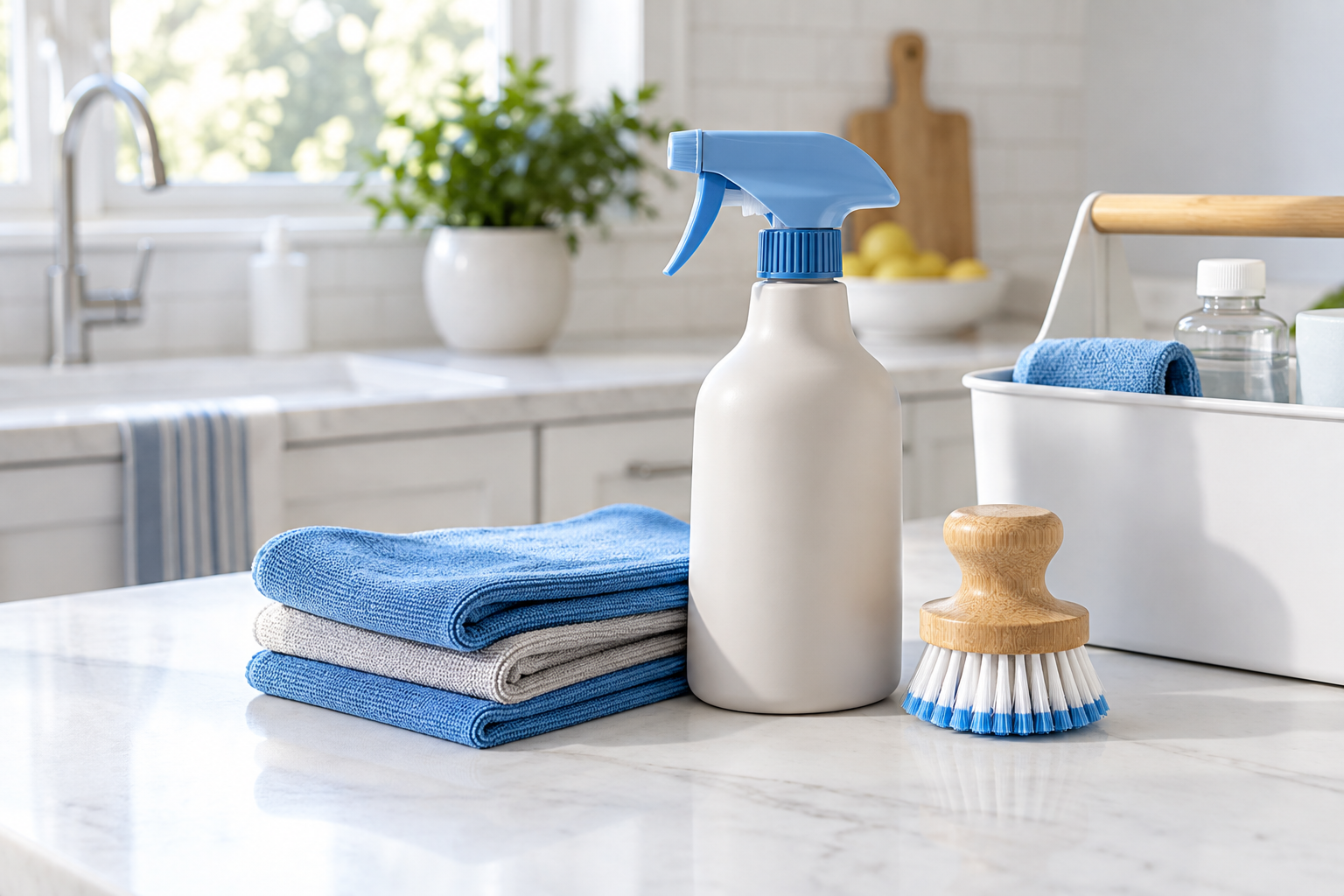
A monthly list works best as a small rotation, not a second whole-house cleaning day. Review what needs attention, choose one manageable job, and write down when you did it. You might spend 15 minutes on a baseboard section one week and handle an appliance check the next.
- Reachable edges: Remove dust from a few baseboards, door tops you can safely reach, and the edges of frequently used cabinets. Start dry, then use a lightly damp, compatible method only if needed.
- Bins: Clean spills inside trash and recycling bins as they occur; use the monthly review to catch missed residue. Wash with an appropriate cleaner, rinse if required, and dry before adding a liner.
- Washer: Check the manual for its cleaning cycle and approved product. Whirlpool commonly recommends monthly cleaning or every 30 cycles, but that is an example of manufacturer guidance, not a rule for every machine. Inspect accessible seals and dispensers as your manual directs.
- Dishwasher: Check for debris, odor, and the model’s maintenance instructions. Some have a removable filter; others have a different system. Whirlpool describes both serviceable filters and a maintenance-free filter design, so do not force out a part based on a generic tutorial.
- Cleaning tools: Empty the vacuum as directed, remove accessible hair from the brush roll safely, and check filter instructions. Only wash filters labeled washable, and let them dry fully for the required time before refitting.
Include a look at the refrigerator interior and oven, but clean according to actual spills, use, and the manual. A lightly used oven does not need a harsh monthly treatment. An oven with a spill that smokes or a refrigerator with leaking food needs attention sooner. Follow the appliance instructions before removing parts, running a cleaning cycle, or applying oven cleaner.
For range hood grease filters, check the manual’s interval and whether the filter is washable or replaceable. Use dishwashing liquid for a permitted hand-wash method; do not assume every filter belongs in the dishwasher. A baking-soda-and-vinegar mixture is not a substitute for the recommended method.
Keep the monthly list short enough to finish. “Clean the kitchen baseboards” is clearer than “deep clean downstairs,” and it gives you a useful stopping point before your energy runs out. Use the monthly cleaning checklist when you want to plan the next rotation.
Seasonal Cleaning Without the Overwhelm
Every three months or at a change of season, take a walk through your home and look for the jobs daily life does not put in front of you. This is a review interval, not a requirement to wash every curtain or shampoo every carpet four times a year. Choose work according to visible buildup, household use, care instructions, and your available time.
Possible jobs include vacuuming safely accessible spaces under furniture, cleaning window tracks, dusting reachable vents and blinds, and checking washable curtains, throws, pillows, and mattress protectors. Follow each care label. Not every pillow can be machine washed, and a damp mattress or cushion can be harder to deal with than the original mark. Use only approved spot-cleaning methods and allow adequate drying time.
For carpets and upholstery, decide whether routine vacuuming and spot treatment are enough or a deeper clean is due. Check warranty and care requirements before hiring equipment or a professional. There is no useful single extraction-cleaning deadline for every fabric, household, and manufacturer.
Separate safety maintenance from cosmetic cleaning
Dryer lint is not a seasonal-only task. The National Fire Protection Association advises cleaning the lint filter before or after every use and cleaning lint from the vent pipe yearly. Your installation may need attention more often; longer drying times can signal a blockage. Stop treating that as ordinary housekeeping and arrange appropriate inspection or service. Use qualified help for internal dryer work or difficult vent access.
Check the stated schedule for HVAC filters and any accessible refrigerator coils. Filter type, equipment, usage, and household conditions change the interval. Do not disconnect a gas appliance, remove guarded components, or drag heavy furniture alone just to tick a box. Put professional maintenance on its own list.
Give bigger jobs a realistic home
Assign one task to a lighter week, add the needed supplies, and note whether someone else must help. “Wash the living-room curtains when the care label allows and drying space is available” is a usable plan. “Clean everything before spring” is an invitation to postpone the whole list.

When to Clean More Often
The most useful schedule has a “sooner if needed” rule. Bring a job forward when something changes, rather than doubling every task because one room is busier.
- More traffic or shedding: Add a quick pass to the entryway, eating area, or favorite pet spot. Keep the weekly whole-room clean and target the extra grit or hair between sessions.
- More cooking: Clean cooking splashes after the surface cools and watch grease near the range. A daily-use kitchen will need more attention than one used mainly for breakfast.
- Illness or a weakened immune system: Follow relevant medical or public-health guidance. The CDC recommends disinfection in these situations in addition to cleaning, with attention to touched and contaminated surfaces.
- Dust-mite allergy: Follow a household-specific plan with your clinician. AAFA recommends weekly hot-water bedding washing as part of dust-mite control. Check fabric care limits and seek advice if the recommended method is unsuitable; cleaning cannot guarantee an allergen-free home.
- Persistent dampness or a leak: Address the water source promptly. A repeated musty smell is not a reason to keep adding fragrance. The EPA emphasizes moisture control and drying water-damaged materials within 24–48 hours. Extensive damage or contaminated water needs appropriate professional help.
Use a safe method every time
More frequent cleaning should mean smaller, suitable tasks, not stronger mixtures. Never mix bleach with vinegar, ammonia, alcohol, or other cleaning products. Ventilate and wear the protective equipment the label specifies. Keep products in their original containers and securely away from children and pets.
When disinfecting, first remove soil and choose an EPA-registered product labeled for the surface and relevant germ. Follow its dilution, wet contact time, and any rinse instructions. The EPA explains that a surface must stay visibly wet throughout the stated contact time. A quick spray followed by an immediate wipe may not achieve the label’s claim.
Check compatibility before trying a new product, and patch-test an inconspicuous area when appropriate. Vinegar is not an all-surface solution: the American Cleaning Institute warns that its acid can damage natural stone. Follow device instructions for screens and keyboards, avoid spraying liquid into openings, and never assume a bathroom cleaner is suitable for a kitchen countertop.

Make Your Cleaning Schedule Work
Choose a routine that survives an ordinary busy week. A schedule is useful when it reduces decisions; it stops being useful when maintaining the schedule takes more effort than the cleaning.
- Pick your daily essentials. Start with dishes and food mess, wet or sticky spills, and safe walking routes. Add bed making or a laundry load only when they help your household.
- Give the main rooms a weekly slot. Use the room-by-room rhythm above or combine jobs into two sessions. Assign a named task to a willing household member rather than asking vaguely for “help.”
- Add one less-frequent task. Choose from the monthly review or seasonal list. Record the next actual due date for maintenance with a manufacturer interval.
- Try the plan, then adjust it. If an area stays clean, review whether it needs less frequent attention. If it is already messy halfway through the week, add a short targeted reset.
A low-energy version still counts
On a difficult day, skip polishing, decorative dusting, and sorting cabinets. Clean the food-preparation space you need, deal with spills or contamination, remove leaking waste, and clear a route through the rooms you use. Sit for tasks when comfortable, use lightweight tools that suit your ability, and ask for help with work that is unsafe or too demanding.
Missed a weekly clean? Resume with the dirtiest essential area instead of doing two complete rounds to “catch up.” Leave one clear next step, such as “toilet and sink tomorrow,” rather than rewriting an impossible weekend plan.
Your repeatable cleaning checklist
- Today: Food mess handled, needed dishes washed, spills removed, and paths clear.
- This week: Used bathrooms cleaned, sheets and towels considered, main surfaces dusted, and floors checked.
- This month: One buildup job completed and appliance instructions reviewed.
- This season: Less-visible areas checked and due maintenance booked or completed.
- Any time: Move a task forward for contamination, illness, leaks, heavy use, or visible dirt.
Keep the frequency chart somewhere easy to find and write your own exceptions beside it. You may need a daily entryway sweep and only an occasional guest-room reset. That is a sensible response to your home.
A cleaner home grows out of a few repeatable decisions: clean what was used, handle urgent mess promptly, and return to the slower jobs before buildup makes them difficult. Start with the next useful task. The rest of the list can have its turn.

CLEANERS CLUBHOUSE
Make Your Cleaning Routine Easier to Follow
Stop wondering what to clean next. Inside the Cleaners Clubhouse, you’ll get a practical 12-month cleaning calendar, printable worksheets and monthly challenges to help you keep moving without trying to do everything at once.