
THIS POST MAY CONTAIN AFFILIATE LINKS. PLEASE READ MY DISCLOSURE FOR MORE INFO.
Folding the same towels, clearing the same table, picking up the same toys: some household jobs are boring because they keep coming back. You can appreciate the result and still wish the process were more interesting. A complicated reward system or an entire afternoon of cheerful energy shouldn’t be the price of a usable kitchen.
If you’re wondering how to make cleaning fun, start by pairing one necessary job with one thing you genuinely enjoy. That might be familiar music, an absorbing podcast, a simple sorting game, a fair chore swap, or the satisfaction of finishing one visible area. Choose an extra that makes the work more pleasant without making it harder to do safely.
The ideas below work best as a small menu. Try one, keep what helps, and leave the rest. Some days, “less irritating” is a perfectly good result. You don’t have to love cleaning, buy special supplies, or entertain the whole family every time the living room needs picking up.
Disclosure: This post may contain affiliate links. As an Amazon Associate, Clean Home Challenge earns from qualifying purchases. If you make a purchase through these links, we may earn a small commission at no extra cost to you. This helps us keep creating practical cleaning tips, routines and resources for busy families! 🧽
Choose a Small Job With a Clear Finish
Before choosing the fun part, name the job. “Clean the house” doesn’t tell you where to begin or what will count as enough. “Put the clean towels in the bathroom cabinet” gives your enjoyable extra somewhere useful to attach.
Choose a task with an obvious ending, then describe that ending in ordinary words:
- Dining table: Return the things that belong elsewhere, remove crumbs, and clean the surface with a suitable product.
- Clean laundry: Fold the towels in this basket and put them away.
- Entryway: Return shoes to their usual storage and hang the coats already on the bench.
- Living room: Put the books back and return the toys to their bins.
Tidying and cleaning are different parts of a reset. Returning toys clears the floor; it doesn’t remove a sticky spill. Keep both in view when you choose the task, but don’t quietly add the rest of the room once you begin.
Match the extra to the boring part
Ask what you dislike about this particular job. Repetition? Try a familiar playlist. Silence? Try spoken audio. Too many decisions? Choose an easy sorting task and leave a podcast for later. Feeling that you always get the same chore? Arrange a fair swap with another adult.
For example, folding towels while listening to a story is a straightforward pairing. Sorting a pile of important paperwork while following a complicated mystery gives your attention two jobs. Save the story for the towels and use quiet or gentle instrumental music for decisions.
Choose a finish you can manage today
A small basket may take five to ten minutes; a crowded table may take longer. Treat those as planning estimates, not targets to beat. Leave enough time to put supplies away and deal with anything wet or unsafe before stopping.
If getting started is the bigger difficulty, the five-minute cleaning rule for low-motivation days offers a separate starting approach. Here, the aim is to make an ordinary task more enjoyable once you’ve chosen it.
A useful first experiment is one basket, one soundtrack, one clear finish. Resist adding a second basket simply because the first pairing worked.

Match Your Soundtrack to the Chore
A cleaning playlist can make repetitive work more pleasant, especially when it is ready before the first cloth comes out. Start with a few songs you already like. You don’t need to research the perfect tempo or create an elaborate playlist before you can fold laundry.
Pick the audio for the attention the chore needs:
- Folding, pairing socks, or putting away familiar items: A podcast or audiobook can suit these repetitive jobs.
- Routine tidying: Familiar songs are easy to enjoy without watching a screen.
- Reading care labels, making decisions, or learning a cleaning method: Lower the sound or pause it.
- Vacuuming or other noisy work: Consider saving spoken audio for afterward rather than increasing the volume to compete.
Make the choice before you start
Queue one episode or a short selection of songs. Put the device on a dry, stable surface away from water, sprays, and the path where you are working. If notifications tend to pull you away, silence nonessential alerts while keeping anything you need available.
An enjoyable episode can become your folding companion without becoming a rule that says you are only allowed to enjoy it after doing chores. If the laundry is finished halfway through, stop folding. You can finish listening while resting.
Keep the volume and your awareness comfortable
Loud listening can damage hearing. The National Institute on Deafness and Other Communication Disorders explains that both sound level and exposure time matter. Keep audio low enough to remain comfortable, reduce it when needed, and give your ears quiet breaks. Turning music up over a loud appliance adds to the noise around you.
Hearing your surroundings matters too. Sony’s headset safety guidance warns against headphone use where being unable to hear surrounding sounds would be dangerous. Apply that principle at home: pause audio or remove headphones when supervising children, handling hazards, or needing to hear someone call for help. A quiet speaker may suit a shared room, but no audio setup replaces supervision.
If noise feels like one more demand, skip it. A quiet room, daylight, or a different order of tasks can provide the change you want. Enjoyment doesn’t have to be loud.

Try a Cleaning Game That Helps
The best cleaning game has almost no setup and leaves something useful done. You shouldn’t need to create an account, buy rewards, or maintain a spreadsheet before returning five books to a shelf.
Try one of these small games with ordinary household items. Keep walking pace, choose safe objects, and stop if the game creates arguments or extra mess.
The five-item return
Choose five items that have an obvious home: a book, a hat, a pair of shoes, a scarf, and a soft toy, for example. Return each to its actual storage place. Counting a pair of shoes as one item is fine; the counting is only there to give the game a simple shape.
Avoid collecting things into a mystery basket that stays in the hallway for a week. If an item needs a decision, set it in one agreed spot and choose something easier for this round. Don’t throw away another person’s belongings to keep the game moving.
A color hunt for toys
Invite a child to find the large blue toys and return them to the right bin. Then choose another color if everyone wants to continue. Show the destination first and keep it at an easy height.
An adult should check the area beforehand and stay involved. Keep chemicals, sharp objects, batteries, breakables, and small choking hazards out of the game. Let children walk and place objects gently rather than running or tossing them across the room.
Three-square cleaning bingo
Write three useful jobs on paper: pair socks, fold a few towels, and return books. Tick each one when it is done. Three squares are enough to try the idea; an elaborate board can wait until you know your household enjoys it.
Choose comparable tasks if several people are playing. One person’s square shouldn’t mean “clean the whole bathroom” while another person’s means “put away a cushion.” Make the shared result the point rather than declaring a fastest cleaner.
A timer cleaning game without the race
Set a timer for an interval that fits the task, such as ten minutes of returning everyday items. The challenge is to stay with that category until the signal, then check your stopping point. It is not a race to finish a room.
Never let a timer shorten a product’s required contact time, encourage hurried knife handling, or send anyone running over a wet floor. If timers make the task tense, count a few useful items instead.

Make the Work More Comfortable
Sometimes a chore feels miserable because the setup is awkward. A stiff brush, an overflowing basket, dim lighting, or repeated trips for supplies can make even a favorite playlist feel beside the point. Remove one of those annoyances before adding another game.
You can usually begin with what you already own:
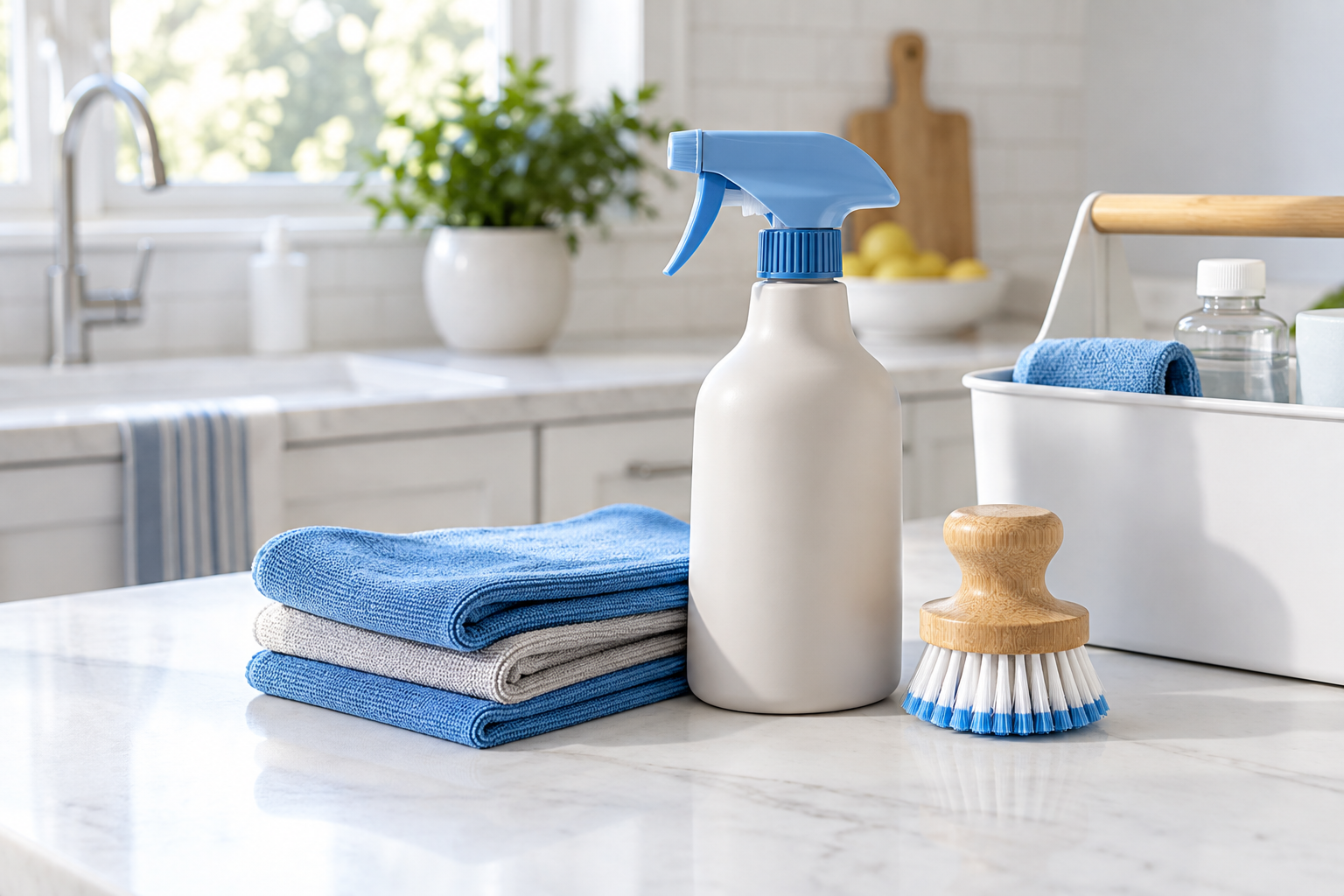
- A clean cloth appropriate for the surface
- The suitable cleaning product, if the task needs one
- Any protective equipment the label requires
- A manageable basket for clean laundry or items being returned
- A clear place to put the tool down safely
A basket of clean towels doesn’t need a collection of sprays beside it. Bring out only the supplies for the chosen job and return cleaning products to secure storage afterward. A caddy is a way to carry supplies, not a substitute for child-safe storage.
Arrange the job around a comfortable position
For clean laundry, place a light basket within reach of a stable chair and use a comfortable working surface. Pair socks or fold washcloths while seated if that works better for you. Keep the floor and your path clear; don’t reach across a heavy basket or balance on furniture to put things away.
For wiping a reachable surface, move loose objects first so you can work without juggling them. Use a product suitable for the material and follow its instructions. Test in an inconspicuous area if the care guidance recommends it. Pause the audio to read unfamiliar directions.
The CDC’s home-cleaning guidance recommends surface-appropriate products, label directions, ventilation, and recommended protective equipment. Never mix cleaners to make the job seem quicker or more interesting. When disinfecting is needed, keep the surface wet for the full label contact time; a song ending doesn’t change that requirement.
Make a lower-energy version available
Fold a few towels rather than carrying a full load around the house. Return the items already within easy reach instead of beginning a floor-to-ceiling reset. Ask for help with carrying or reaching when you need it. If a movement hurts or feels unsafe, stop and change the task.
Strong fragrances, extra gadgets, and decorative supplies are optional. Choose comfort and suitability over novelty. A tool worth keeping should make an actual part of the work easier, not create another object to store and maintain.

Share the Job Without Adding Pressure
Cleaning can feel more pleasant when the work and the choices are shared. Keep the agreement simple: who is doing what, what finished looks like, and which enjoyable extra fits the people involved.
With another adult, try a chore swap. If one person dislikes folding and the other dislikes putting items away, exchange those jobs for the day. Check that the effort is reasonably balanced. Trading the same difficult task back and forth without agreement is unlikely to improve anyone’s evening.
Offer choices that are genuinely available
For a child, two clear options are easier to work with than “help tidy up.” Depending on ability and supervision, you might offer “books on the low shelf or large toys in the bin?” Show the first step and demonstrate where the items belong.
The American Academy of Pediatrics’ guidance on age-appropriate chores supports matching responsibilities to children’s development and helping them learn the job. Choose tasks based on the individual child, not a competition with siblings.
For these games, adults handle cleaning chemicals, laundry detergent, sharp objects, hot items, heavy lifting, and anything involving heights. Keep children away from those jobs and supervise simple sorting or tidying. The AAP’s poison-prevention guidance says hazardous products should be out of reach and sight, ideally in locked or latched storage; laundry detergent packets are never play items.
Share the pleasant part too
Let household members take turns choosing a song, selecting a safe sorting category, or deciding which of two agreed jobs comes first. If someone prefers quiet, don’t make a noisy group game the only way to contribute.
Notice the useful result: “The walkway is clear now” or “We can find the school shoes.” Specific, ordinary acknowledgment is enough. Avoid comparing how quickly people work, redoing every small detail in front of them, or requiring a cheerful performance.
If company itself is the useful ingredient, see body doubling for cleaning for a fuller guide to companion sessions. A fair division of work still matters whether you work side by side or at different times.

Keep Fun From Becoming a Distraction
An enjoyable extra has done its job when the chore becomes easier to stay with. If it keeps pulling you away, change the extra before blaming yourself.
Put the screen somewhere boring
Choose your audio, press play, and turn the screen away. Keep the device in a dry location where you won’t need to move it repeatedly. If an episode needs you to watch the pictures to understand it, save it for a break or a separate seated activity.
Scrolling for a new song every minute can swallow the time you meant to spend on the task. Use one ready-made choice today and refine it later. Shopping for better supplies, photographing every step, and designing an elaborate challenge can also become ways to postpone the ordinary work.
Protect the parts that need attention
Pause entertainment before reading product instructions, handling anything sharp, carrying a load that blocks your view, or responding to a child. Put the load down safely before adjusting a phone. Keep movement steady and your eyes on the job.
Singing along can be fun; dancing while carrying glassware or moving across a freshly washed floor is a poor pairing. Choose dry, unobstructed activities for playful movement, and leave the slippery-floor “dance clean” out of the plan. Keep children and pets away from wet areas until the floor is ready to use.
Notice these common detours
- The playlist takes longer than the chore: Pick three familiar songs and start.
- A game causes a disagreement: Drop the scoring and agree on separate useful jobs.
- The timer makes everyone rush: Turn it off and use a clear task ending.
- An episode is too absorbing: Save it for folding; choose quieter audio for decisions.
- The reward keeps expanding: Choose something simple you already enjoy, such as sitting in the cleared space.
- The task keeps growing: Return to the original finish and leave extra jobs for another session.
You don’t need to earn meals, water, bathroom breaks, or rest through cleaning. Take care of those needs as they arise. A pleasant finishing ritual can be an optional extra, never a reason to push through exhaustion or ignore discomfort.

Build a Routine You Want to Repeat
Keep a short list of pairings that worked rather than building a new system from scratch each week. A note on paper or your phone is enough:
- Clean towels + a favorite podcast
- Entryway pickup + two familiar songs
- Large toy sorting + a supervised color hunt
- A low-energy day + seated sock pairing in a quiet room
Try one pairing a few times, then ask three practical questions: Did it make starting or continuing more pleasant? Did the useful job get finished? Was the setup simple enough to repeat?
If the answer is no, change one part. Choose a less demanding episode, a smaller task, or a different time when the household is quieter. You can also decide that a particular chore is simply easier without entertainment. There is no need to keep a method because it looked cheerful in someone else’s video.
Finish in a way that helps next time
Put tools away, deal with used cloths according to their care instructions, and leave the area safe. Return chemical products to secure storage. If you paused mid-job, leave a clear reminder of the next safe step rather than a trail of supplies.
Then enjoy what changed. Sit at the cleared table, find the matching socks, or walk through the entryway without stepping around shoes. Those small, usable results are worth noticing even when the rest of the home still looks lived in.
The most useful cleaning motivation tips are the ones you can actually use on an ordinary day. Pick one necessary job, add one enjoyable extra, and let the agreed finish be enough. Making cleaning feel less boring is a worthwhile improvement all by itself.
For more support with a manageable family cleaning rhythm, explore Cleaners Clubhouse through the invitation below. Choose the amount of structure that helps your household, and keep room for tired days and changing plans.

CLEANERS CLUBHOUSE
Turn Small Daily Habits Into a Cleaner Home
Make cleaning feel more achievable by sharing simple routines and building habits that stick. The Cleaners Clubhouse includes the 7-Day Daily Habits Bootcamp, printable support and motivating monthly challenges.