

THIS POST MAY CONTAIN AFFILIATE LINKS. PLEASE READ MY DISCLOSURE FOR MORE INFO.
Fingerprints, snack crumbs, and the ring under yesterday’s mug can make a glass coffee table look busy even when the rest of the room feels tidy. The temptation is to spray the whole top and keep polishing until every mark disappears. A calmer approach starts with the table’s care instructions, then works through the top, accessible edges, and any underside you can reach safely.
To clean a glass coffee table, clear it, check for damage, use the gentlest method its manufacturer allows, and dry the cleaned area with a separate soft cloth. You do not need to lift the glass or chase every mark. The steps below help you make the table usable again without turning a small job into an afternoon project.
Disclosure: This post may contain affiliate links. As an Amazon Associate, Clean Home Challenge earns from qualifying purchases. If you make a purchase through these links, we may earn a small commission at no extra cost to you. This helps us keep creating practical cleaning tips, routines and resources for busy families! 🧽
Check the Glass and Clear the Table

Check the table before choosing a cleaner
Look up the care guide for your particular model, including the frame and any lower shelf. A clear top, a mirrored panel, and glass with a painted underside are not automatically cleaned the same way. If the table is secondhand, look for a maker’s label you can see without tipping or dismantling it, or check your purchase records. Ask the maker or retailer if the finish is unclear.
For example, IKEA’s VITTSJÖ care instructions specify a damp cloth followed by a clean dry cloth. That is useful guidance for that model, not permission to use the same cleaner on every glass-and-wood table.
With good light, visually check the exposed top and edges for chips, cracks, or an obviously displaced panel. Do not run a finger around the rim to feel for damage or press on the glass to test its strength. If you see damage, or the top appears loose or unstable, stop cleaning and keep the table out of use while you contact the manufacturer or a qualified glass professional. Keep children and pets away from the area.
Harbour Lifestyle’s glass-table care guide specifically advises stopping use of chipped or cracked glass. A cloth cannot make a damaged edge safe, and hiding a chip beneath a tray is not a repair.
Clear one surface and gather a small kit
Remove cups, books, remotes, and decorations one at a time. Lift these items rather than sliding them across the glass. Put everyday belongings in a temporary basket and return dishes to the kitchen. Do not stack everything on the lower glass shelf or use the tabletop to support your weight while you bend.
- Two or three clean, soft, lint-free cloths: one for cleaning, one kept dry, and a spare if either becomes dirty.
- Plain water, if the table’s instructions permit damp wiping.
- A compatible cleaner only if the manufacturer recommends one and the marks actually need it.
- A nearby place for removed items, away from the walking route.
Check the cloths for crumbs, grit, stiff dried residue, or rough trim before they touch the glass. Set aside rings or a watch that could knock the surface, and keep spray bottles off the table. You can use the cloths you already own if they are suitable and clean; an elaborate cleaning kit is not required.
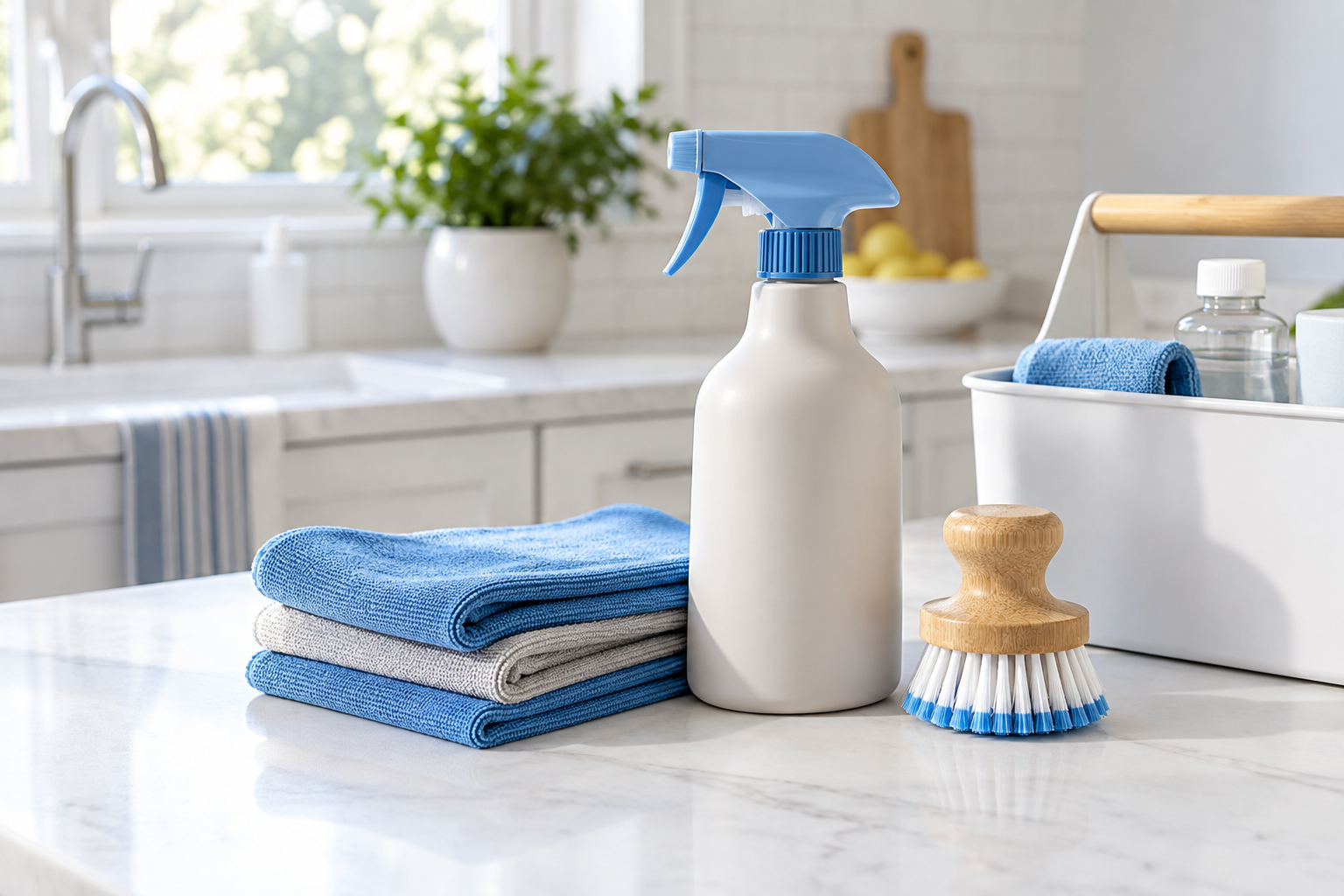
Treat the frame as a separate surface. Wood, painted metal, decorative finishes, and supporting pads may have different care instructions from the glass. Keep a dry cloth within reach so accidental moisture does not sit on these parts.
Clean the Top Without Chasing Streaks

Work in small sections with light pressure
Start at the side you can comfortably reach. If a low table is awkward for you, choose a stable seated position beside it or leave the job for someone who can reach safely. Do not lean on the glass, stretch across it, or use it as a handhold.
- Pick up loose crumbs gently with a soft cloth, lifting them away instead of grinding them across the top. Refold to a clean area as you go. If gritty debris remains, stop and check the maker’s removal advice before rubbing.
- Where damp wiping is permitted, wet a clean cloth with water and wring it thoroughly. It should be damp, not dripping. Wipe a manageable patch with light, overlapping strokes rather than soaking the whole table.
- If water is not enough, check the table guide and cleaner label together. Use only a compatible product, at its stated amount and dilution. Keep it on the intended glass surface; where the instructions allow, apply it to the cloth rather than spraying toward the frame.
- Follow any label directions for removing cleaner residue. Use a fresh cloth for this stage rather than redistributing what the cleaning cloth has collected.
- Dry the cleaned patch promptly with a separate soft cloth, then move to the next patch. Turn to a dry section or replace the cloth when it becomes damp. Finish with one visual check rather than endless polishing.
A simple water-and-drying routine is sufficient for some glass furniture. Montana Furniture’s glass care guidance allows a dry cloth or one well wrung out in clean water, followed by immediate drying. Its guide also excludes acid-based detergents. This is why vinegar should not be your automatic answer to a stubborn ring.
If your own table guide allows a mild soap solution, follow its proportions rather than adding an extra squirt for luck. A glass cleaner is another conditional option, not a requirement. Never combine cleaning products. Follow any ventilation, glove, and storage precautions on the label, and put products out of children’s and pets’ reach when finished.
Troubleshoot a smear without adding more work
Look at the dry table from a second angle before cleaning again. A mark you see through the top may be on the underside, not on the surface you just wiped. Check that your drying cloth is still clean and dry, and that you have followed any residue-removal instructions for the cleaner you used.
- A streak follows every wipe: switch to a fresh cloth face or a fresh cloth before adding more product. Reusing the same damp, dirty patch makes it difficult to judge whether you are removing the mark.
- A sticky spot remains: use the table’s approved treatment for that residue. If damp cleaning is allowed, a gentle repeat on that small area is a better stopping point than escalating to scrubbing, soaking, or an improvised solvent.
- A ring or cloudy patch will not change: stop and ask the maker for advice, especially on coated or unfamiliar glass. Appearance alone cannot tell you whether the mark is removable residue or damage.
- The top looks clear until you bend down: check the accessible underside during the next step. Do not keep cleaning the upper surface to fix a mark below it.
Leave scouring pads, abrasive powders, steel wool, razor blades, and metal scrapers out of this routine. Viridian’s glass cleaning guide cautions against abrasive tools and blades, including on heat-treated glass. Its advice also favors cleaning away from hot glass and direct sunlight, which can make the solution dry too quickly. If strong sun reaches your coffee table, wait for the shade rather than rushing.
Do not try to polish out scratches as part of ordinary cleaning. BoConcept’s glass care guide notes that tempered glass is not more scratch-resistant than regular glass. The label “tempered” is not a reason to use extra pressure or a tougher tool.
Reach the Edges and Underside Safely

Clean intact exposed edges without forcing the cloth
The rim deserves attention, but it is not a place for aggressive scrubbing. IKEA warns that damaged edges or scratched surfaces can lead to sudden cracking or breakage, and advises avoiding side impacts. Keep the cloth work gentle, with the glass supported exactly as designed.
For an intact, exposed ordinary glass edge whose care instructions permit damp wiping, fold a soft cloth to make a small cushioned cleaning face. Wipe a short section of the outer edge lightly, then dry it with the second cloth. Work from a position where you can see what you are doing. Do not pinch tightly around the rim or hook your fingers underneath to pull the glass toward you.
Where glass meets a frame, wipe only the visible, reachable area. Use a clean folded cloth corner to collect loose dirt if it fits without force. Do not push a knife, toothpick, brush handle, or other tool into the seam. Leave anything trapped beneath a retaining lip or support for the manufacturer’s recommended maintenance method.
Mirrored, laminated, painted, or backed glass needs particular care at the edges. Viridian’s specialist guidance keeps moisture away from mirror and painted-glass edges and cleaning solutions away from laminated-glass edges. Do not apply the damp-edge method above to these materials unless their exact care instructions permit it.
Reach only the underside that is already accessible
Leave the glass in place. Do not lift a loose top, remove clips, loosen fittings, slide a panel aside, or ask someone to hold it while you clean. If the design does not give you safe access, the hidden area can wait for proper guidance.
On a stable table with an accessible underside, first confirm that it is ordinary exposed glass rather than a coating or painted backing. From a comfortable position beside the table, use the same permitted cloth method on the small area you can reach without straining. Work lightly and dry each cleaned section. Do not push upward against the panel or brace your other hand on the top.
Move yourself around the table instead of trying to reach through it. A lower shelf may block access; that is a reason to skip the area, not to dismantle the furniture. If kneeling or crouching is uncomfortable, make the top your stopping point today.
Finish by checking the surrounding frame, joints, and floor for accidental drips. Dry moisture from nearby materials promptly using their appropriate care method. BoConcept specifically cautions that glass cleaner contacting other materials, such as frames, can discolor their finish. Do not extend a glass-cleaning product onto the base just because it is already on your cloth.
Keep the Table Clear With a Small Reset

Return the useful things, not every loose thing
Wait until the cleaned surfaces are dry, then put back the items you genuinely want within reach. Give remotes a small tray or another easy home nearby, return cups to the kitchen, and leave a clear spot for the next person who sits down. Keep the tray light and within the table’s load guidance; lift it when cleaning rather than dragging it.
Use coasters suitable for the table and keep their undersides clean and dry. Check beneath them during your reset instead of assuming the covered glass stays clean. Avoid placing hot cookware directly on the tabletop, and follow the table maker’s advice for hot drinks and protective mats.
Choose a reset you can repeat
Try attaching a brief table reset to something that already happens, such as the end of an evening show or the trip to the kitchen after a snack. The household job can be very small: each person takes their cup, someone returns the remotes, and an adult addresses a fresh spill using the table’s approved method. Children can help put belongings away without handling glass cleaner or cleaning edges.
For a fuller clean, add the table to your living-area routine rather than making a new daily chore. CHC’s Thursday living-area focus is one option, but choose a day that suits your home. Do a quick visual safety check, clean the top as needed, and include reachable edges and underside only when they need attention. Frequency should follow use, not a demand for constantly flawless glass.
On a low-energy day: clear one useful spot, return the dishes, and deal with any fresh spill you can safely manage. Leave harmless fingerprints and the underside for another time. A usable table is a worthwhile result even when you have not done every step.
Keep the care instructions where you will use them
Download the free Glass-Table Care Card (PDF) for a work-order checklist and a place to record your table model, approved cleaner, frame-care notes, and any methods to avoid. Fill it out from your own manufacturer’s instructions, then keep it with your cleaning supplies. The record is especially useful when another adult takes over the job.
If the coffee table is part of a bigger tidy-up, follow the living-room cleaning order to give the rest of the space a clear sequence. For ongoing support with a room-by-room routine, you can also explore Cleaners Clubhouse below. Start with the small reset that helps your home today; the free care card stands on its own.

CLEANERS CLUBHOUSE
Follow a Simple Room-by-Room Cleaning Plan
Break the house into manageable spaces and know exactly where to focus next. The Cleaners Clubhouse gives you a follow-along 12-month calendar, printable worksheets and motivating monthly challenges.