

THIS POST MAY CONTAIN AFFILIATE LINKS. PLEASE READ MY DISCLOSURE FOR MORE INFO.
Learning how to clean a rug at home starts with a small pause before you reach for water. Two rugs can look almost identical and need completely different care. The fiber, dyes, backing, construction, and manufacturer’s instructions all affect what you can safely do.
For an everyday refresh, begin by removing loose dirt and dealing with individual spills. Wash the whole rug only when its care instructions explicitly allow that method and you have a way to dry it completely. A rug that feels dry on top may still be damp underneath.
This guide takes you through the decisions in order, from reading the label to putting a fully dry rug back down. It covers washable rugs as well as rugs that need a gentler approach or professional help. You do not need a carpet-cleaning machine to make useful progress.
If today is already busy, make the first job a simple one: find the care label, pick up the room, and vacuum using the setting your rug needs. Save any wet cleaning for a day when you can stay available for the wash cycle and drying checks.
Disclosure: This post may contain affiliate links. As an Amazon Associate, Clean Home Challenge earns from qualifying purchases. If you make a purchase through these links, we may earn a small commission at no extra cost to you. This helps us keep creating practical cleaning tips, routines and resources for busy families! 🧽
Check the Rug Before You Clean
Read more than the fiber name
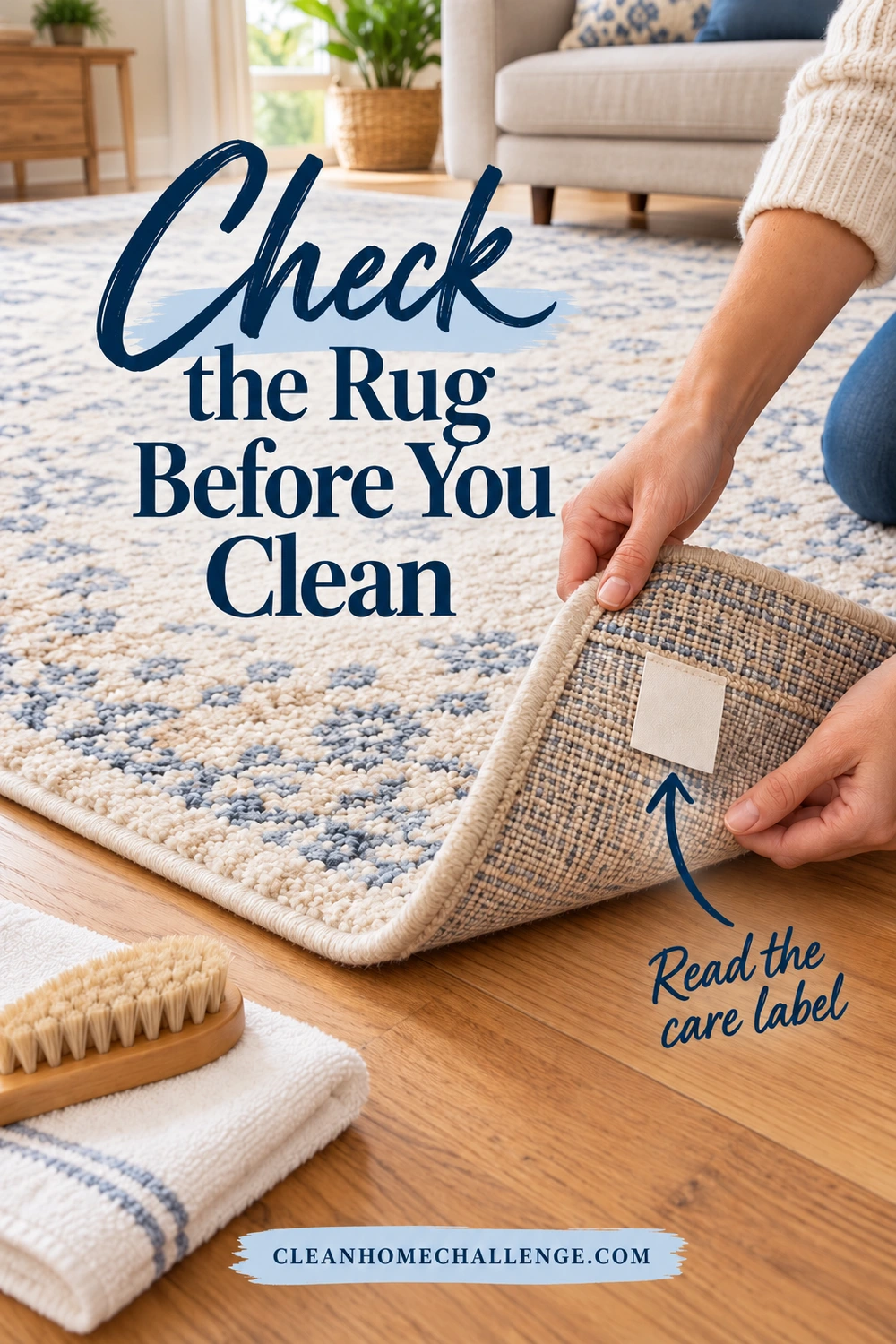
Look underneath a corner for the care label. If it is missing, check your order history and the manufacturer’s page for the exact model. Photograph the instructions so you can read them without repeatedly lifting the rug. Do not identify an unknown fiber by burning, cutting, or pulling out a strand.
Record the face fiber, any blend, the backing, and the approved cleaning method. Wool, cotton, polyester, and polypropylene describe materials; they do not, by themselves, mean a rug is washable. A washable cover may also sit on a pad that must never go in the washer.
Look for limits on water temperature, agitation, cleaning products, drying, and vacuum attachments. A crossed-out washing symbol is a reason to check the full care instructions, not permission to try a carpet shampooer instead. For example, Surya’s rug warranty warns that wet processes can damage its rugs and affect warranty coverage.
Check the rug’s condition
Before moving furniture or buying cleaner, inspect the edges and underside. Pause if you find loose fringe, open seams, brittle backing, adhesive coming away, existing dye bleed, or a patch that is already distorted. Photograph those areas. Cleaning will not repair a failing backing, and extra agitation can make a small problem larger.
Choose a rug-cleaning specialist for a valuable antique, silk rug, uncertain blend, or delicate handmade rug. Explain the material and construction when asking for advice. A service designed for fitted carpet may not be the right choice for a movable rug.
Plan a proper hidden test
Only test a liquid method if the rug’s instructions permit it. Apply the approved product at its labeled dilution to a small, inconspicuous part of the face pile, using a clean white cloth and the intended technique. Check separate colors where practical. Allow the test area to dry fully before judging color, texture, stiffness, or a remaining ring.
Stop if dye transfers, the pile changes, or the test leaves a mark. A successful test reduces uncertainty; it does not prove that soaking the entire backing is safe. BISSELL’s shag-rug guidance similarly emphasizes checking the label and testing a new formula or machine in a hidden area.
Remove Loose Dirt First
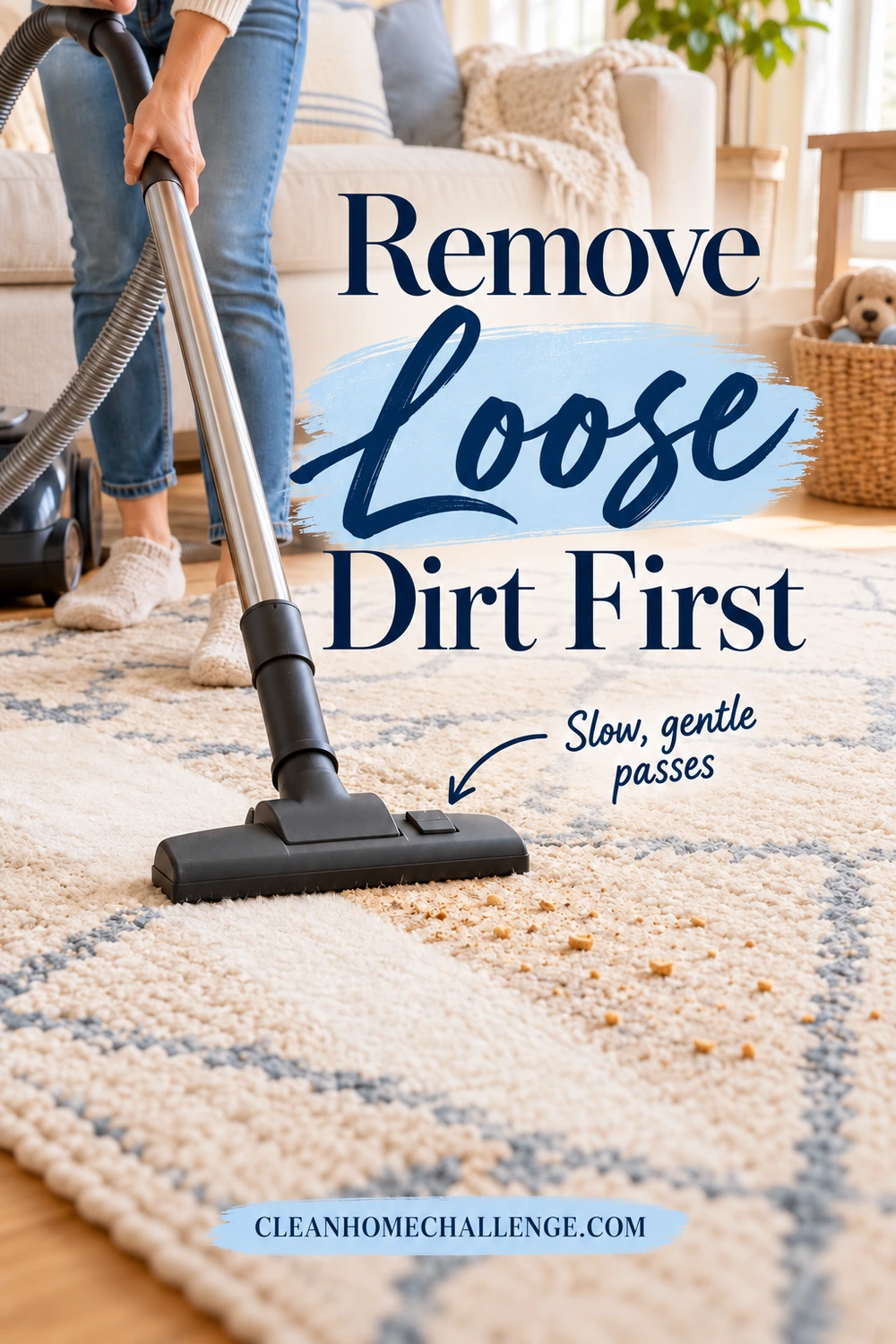
Dry soil is a good first target because you may discover the rug needs less cleaning than you expected. Pick up toys, coins, hair ties, and other small items. Move light furniture if it is safe to do so, and ask for help with anything awkward. Do not drag a heavy table across the rug to save a minute.
Use a setting suited to the pile
Check both the rug instructions and your vacuum manual. A suction-only floor head or suitable handheld attachment is often the gentler choice. Avoid a spinning beater bar on fringe, loose loops, and delicate construction. Reduce suction if the head grabs the rug, and stop if yarn catches or pulls.
Work in slow, overlapping passes rather than repeatedly scrubbing one patch with the vacuum head. Keep the head away from tassels and binding. Clean edges with an attachment approved for that rug, supporting a lightweight corner so it does not get sucked into the nozzle. Surya’s rug-care guide recommends avoiding beater bars and treating edges carefully.
For long pile, resist the temptation to force a powerful brush through the fibers. IKEA’s rug guide advises a flat nozzle and low power, with a final pass in the direction the pile lies. Follow a more specific instruction from your rug’s manufacturer if it differs.
Clean what is underneath
If the rug is manageable, lift or roll it back carefully and remove grit from the floor below. Vacuum the reverse only when its construction and instructions allow it. Clean the separate pad according to its own label; foam, felt, rubber, and washable pads are not interchangeable.
Let any floor cleaning dry fully before replacing a rug. Check the floor manufacturer’s guidance before using a particular pad, too. A pad that grips well can still be unsuitable for a specific floor finish.
A small, sturdy rug may be shaken outside if its maker allows it and you can handle it comfortably. Skip vigorous beating of a fragile rug or lifting one that is too heavy. If you have only ten minutes, vacuum the main walking area and the accessible edges. That is a worthwhile maintenance session on its own.
Choose a Rug-Safe Cleaning Method
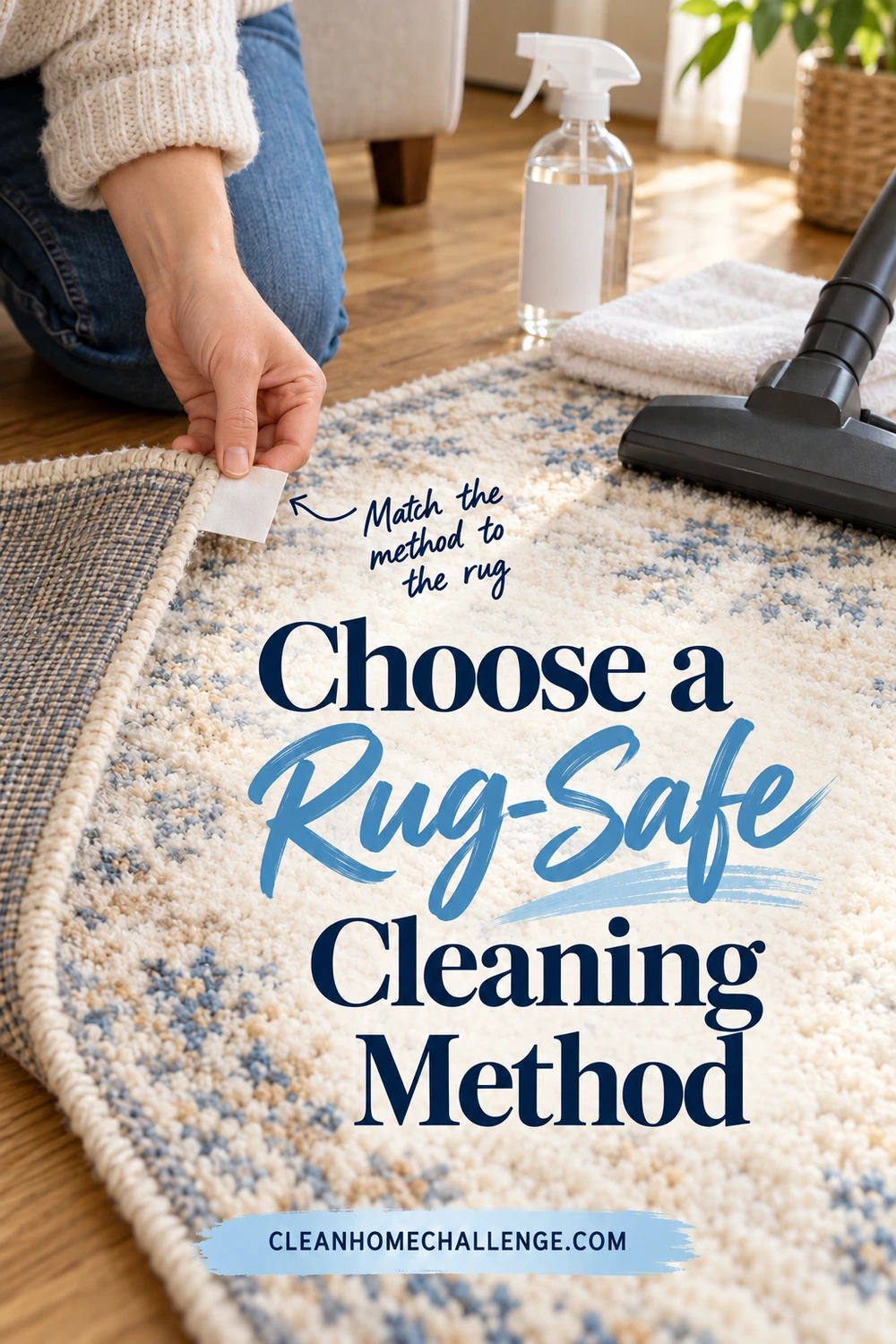
Choose the least intensive approved method that addresses the actual problem. A few crumbs, one spilled drink, and dirt throughout the pile are three different jobs. Use this material check to narrow the options, then let the exact care label make the final decision.
Match the method to the material
- Wool: Use gentle vacuuming and manufacturer-approved spot care. When a wool cleaner is permitted, look for a suitable WoolSafe-approved product. Do not substitute dish soap or a general-purpose household spray. WoolSafe’s consumer guide warns that household detergents can create residue, color, or backing problems. Whole-rug cleaning may belong with a specialist.
- Viscose, rayon, bamboo silk, or other delicate cellulosic blends: Be especially cautious with moisture. For its viscose and bamboo-silk rugs, Weave specifically prohibits liquid spot cleaning, including water. Blot a fresh spill with a dry, colorless cloth and seek rug-specific professional advice. Do not treat a wool-viscose blend as though it were plain wool.
- Jute, sisal, and similar plant-fiber rugs: Concentrate on dry maintenance. Do not hose down, soak, steam clean, or wet-shampoo them. Sisal Rugs Direct’s guidance stresses moisture control and avoiding saturation. Use a dry-cleaning system or spot treatment only if the rug maker approves it.
- Cotton: Some rugs are machine washable, some are hand-washable, and others need professional cleaning. Check this rug’s label rather than treating it like a cotton towel.
- Polyester, polypropylene, nylon, and other synthetics: The face fiber can be durable while the dyes, backing, adhesive, or trim limit cleaning. Synthetic does not automatically mean machine washable, hose-safe, or suitable for extraction.
There are purpose-designed washable wool rugs, too. Lorena Canals lists washable cotton and wool collections, which illustrates why the exact product matters more than a blanket rule about fiber.
Keep the kit small
Useful basics include a compatible vacuum attachment, several clean white absorbent cloths, a spoon for lifting soft solids, the approved cleaner if needed, and a place to dry the rug. Follow product instructions for gloves and ventilation, and keep products away from children and pets.
Do not mix cleaning products or make a stronger dilution than directed. Skip generic vinegar, baking-soda, bleach, and laundry-detergent recipes unless the rug manufacturer explicitly specifies that product and method. A powerful-looking foam or strong scent is not evidence that a rug is cleaner.
Treat Spills Without Spreading Them
The first goal is to lift the mess while keeping the affected area small. Put down the cleaner for a moment and gather dry white cloths. Move people and pets away so the spill is not tracked across the room.
Follow a careful spot-cleaning sequence
- Lift solids first. Use the edge of a spoon or another dull tool to pick up food, working toward the center. Avoid grinding it into the pile.
- Absorb liquid. Press a clean white cloth onto the wet area, then lift it. Repeat with a fresh part of the cloth. Work from the outside inward; do not rub back and forth.
- Check the material before adding anything. On a liquid-sensitive rug, continue dry blotting and get advice. On a rug approved for water-based spot cleaning, use only its approved method after the hidden test passes.
- Apply controlled amounts. Follow the cleaner’s directions for application and dwell time. For cloth-applied spotters, dampen the cloth rather than pouring cleaner into the rug. Keep treatment within the stain instead of flooding a large halo around it.
- Remove residue as instructed. If the product calls for a water rinse and the rug permits it, use a fresh cloth lightly dampened with clean water, then blot with a dry cloth. Repeat carefully as needed without saturating the backing.
- Dry and reassess. Keep the treated area open to air and check the underside. Judge the result after drying, rather than repeatedly adding product while the pile is still wet.
The core blotting, edge-to-center, small-quantity approach follows WoolSafe’s spot-removal guidance. Its advice is intended for compatible wool care; it does not override a no-liquid label on another material.
Know when to stop
Stop if color appears on the cloth, the pile becomes fuzzy, a ring spreads, or the backing gets wet. Do not use a stiff scrub brush to chase the last trace of a stain. A visible mark may need specialist treatment, and some discoloration is permanent damage rather than removable dirt.
For pet accidents, absorb what you can and check whether moisture reached the pad or floor. Use a pet-stain product only if both its label and your rug’s care instructions allow it. Enzyme cleaners are not a universal choice for wool or other delicate fibers. Persistent odor, repeated accidents, or contamination through several layers may require professional treatment. Perfume will not remove material trapped underneath.

Wash Only Rugs Designed for Washing
A whole-rug wash needs a clear yes from the care instructions, enough appliance capacity, and a drying plan. If one of those is missing, stay with dry maintenance and permitted spot cleaning while you ask the manufacturer or a rug specialist.
Machine-washable rugs
Check the exact rug size and product line against the manufacturer’s washer-capacity guide and your appliance manual. Do not force a rug into the drum simply because the door closes. Some rug instructions exclude agitator machines. Lorena Canals’ cotton-rug care instructions specifically warn against that machine type.
For a rug confirmed suitable for your washer:
- Remove loose dirt first and pretreat only as the rug instructions permit.
- Separate a removable cover from its pad when required. Check for any other removable components.
- Load the rug in the orientation its maker recommends, without adding other laundry unless expressly allowed.
- Select the stated temperature and cycle. Measure the approved detergent for the load and machine; extra detergent creates extra rinsing work.
- Skip bleach, softener, fragrance boosters, and other additives unless specifically permitted.
- Remove the rug promptly when the cycle finishes and begin its approved drying method.
For example, Ruggable’s current care guide distinguishes its all-in-one rugs from its two-piece systems. Only the cover of a two-piece system goes into the washer; the separate pad does not. Its wash settings are guidance for those products, not for every rug in a family home.
Hand washing, hosing, and carpet-cleaning machines
If the label says hand wash, use the specified water temperature, product, and handling method in a clean, suitable space. Support the wet rug’s weight, rinse as directed, and avoid wringing or twisting unless the maker explicitly allows it. If you cannot safely lift and dry it, arrange professional cleaning instead.
Do not turn a hand-wash instruction into permission to pressure-wash. Hosing belongs only to a rug specifically designed for that treatment, in a location where you can manage runoff and drying safely.
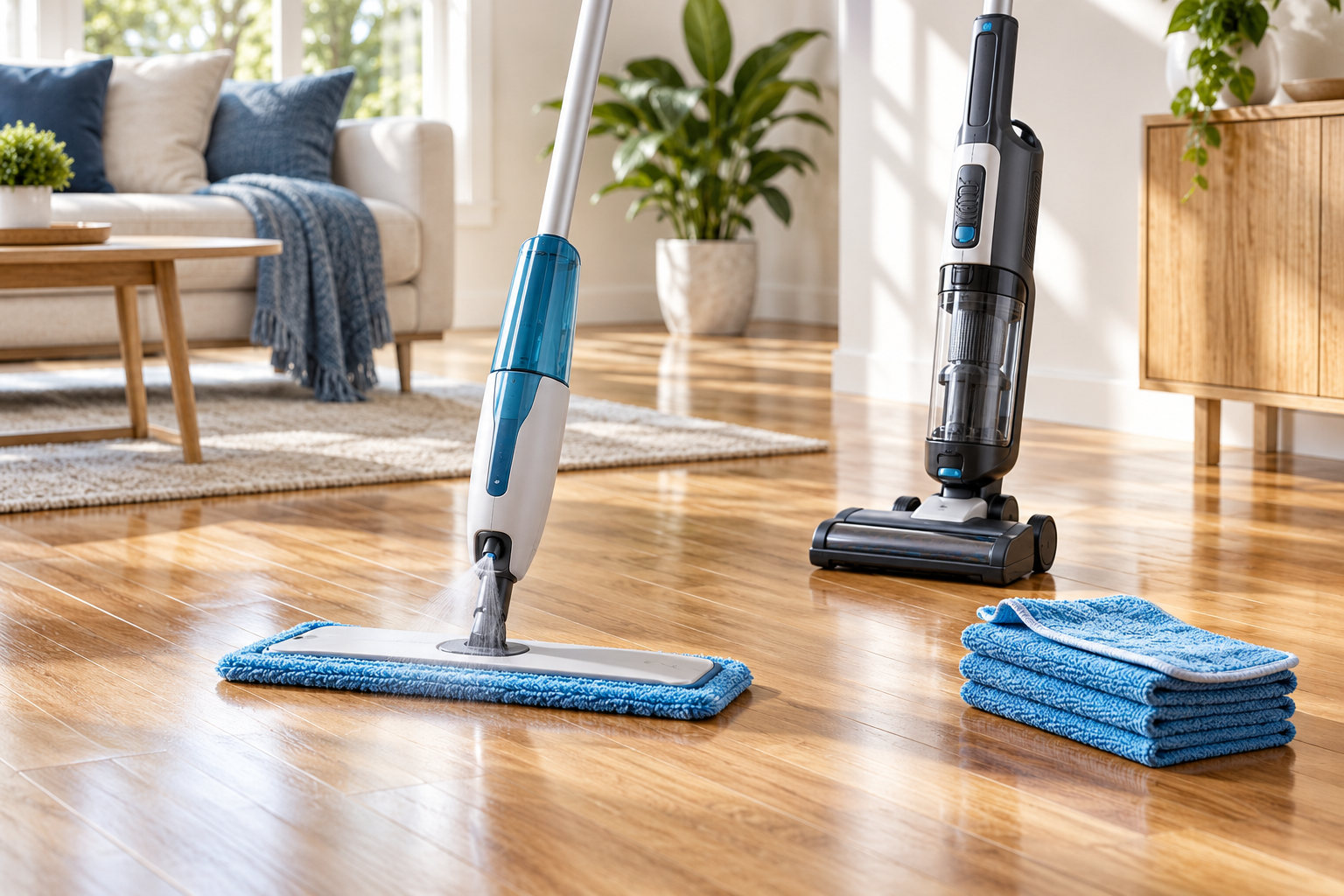
An extractor also needs approval from both the rug maker and the machine instructions. Use the specified compatible formula and settings, test first, and follow directions for moisture-removal passes. Do not shampoo a movable rug on top of a moisture-sensitive floor. A steam mop is not a substitute for rug-care instructions, and a label that prohibits wet cleaning rules out experimenting with a rental shampooer.

Dry the Rug All the Way Through
Drying is part of cleaning, not an optional final detail. Arrange the space before washing so you are not left holding a heavy wet rug with nowhere suitable to put it. Keep a safe walking route around the drying area.
Use the drying method the rug allows
If tumble drying is permitted, use the prescribed temperature and check progress before deciding it needs another cycle. Clean the dryer lint filter as instructed by the appliance maker. If the rug must air-dry, support it in the position its manufacturer recommends. Hanging a heavy wet rug over one narrow rail can pull it out of shape; do not assume every rug can dry like a towel.
Spread out folds and provide airflow to both sides where the instructions allow. A fan can help move air, with the appliance and cord kept safely away from wet surfaces. Use a well-ventilated space and, if available, a suitable dehumidifier. Avoid direct heaters, hair dryers, and strong sun unless the rug’s care guidance permits that approach.
There is no reliable drying time for all rugs. Thickness, backing, humidity, airflow, and the amount of water used all matter. As one product-specific example, Tumble advises allowing one to two days for its washable rugs to air-dry. Plan around the result you can verify, rather than promising yourself the living room will be back together in two hours.
Check the layers before replacing anything
Feel the center, edges, thicker areas, and backing. Press with a clean dry towel to check for remaining moisture, and inspect the underside rather than checking only the face pile. These are practical household checks, not a guarantee that hidden moisture is absent. If any area feels damp, give it more time and airflow.
Clean and dry the pad separately as directed. Check the floor underneath, especially after a spill. Tumble’s product care instructions specifically call for lifting the pad and checking dryness when liquid may have reached it.
Return the rug only when the rug, pad, and floor are fully dry. Do not cover a damp area with furniture or store a rug while it is moist. If it develops a persistent musty smell, visible growth, color change, or a drying problem you cannot resolve, stop adding treatments and ask a rug-care professional for help.

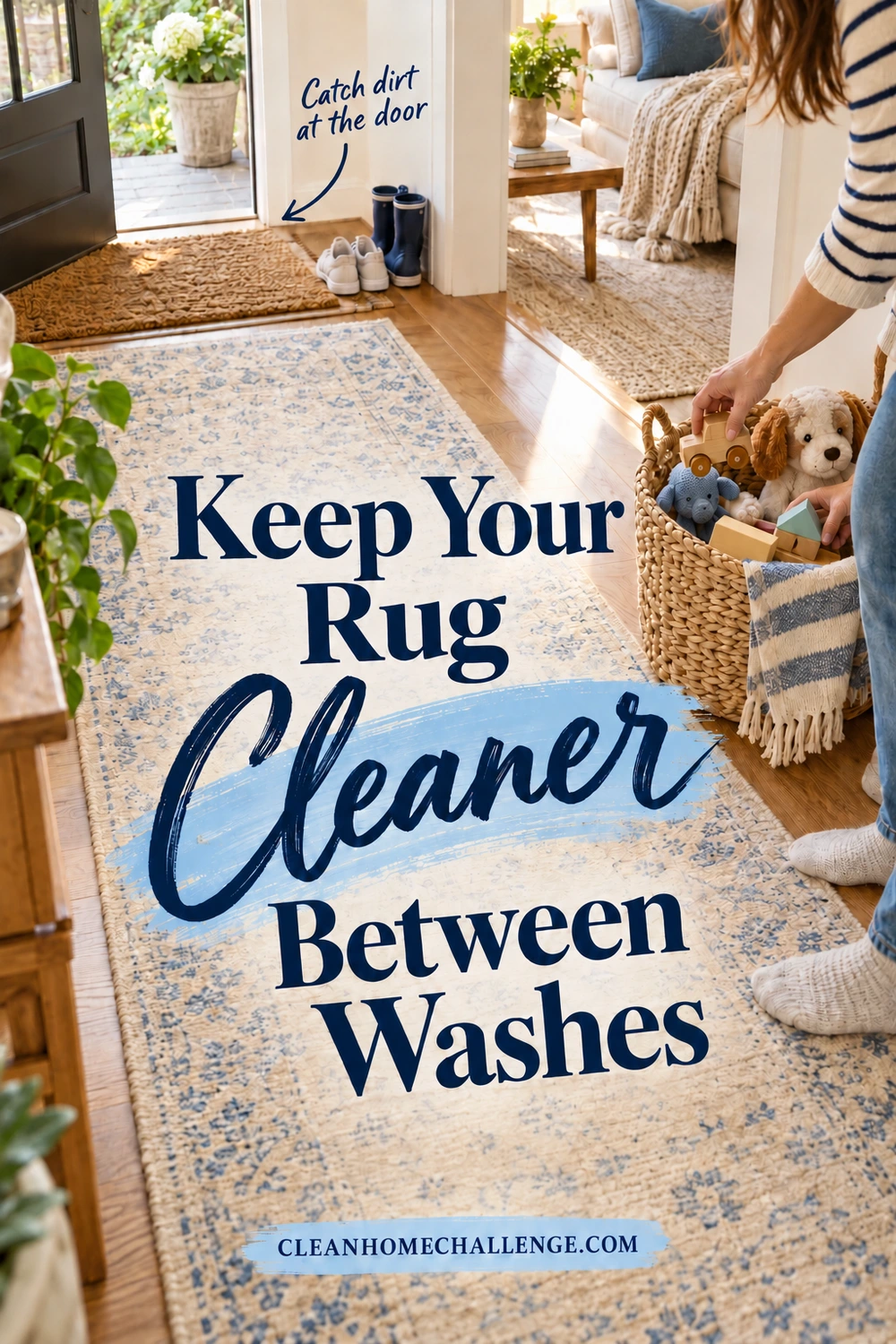
Keep Your Rug Cleaner Between Washes
A manageable routine reduces the need for big cleaning days. Use the rug’s condition and care instructions to decide when it needs more than vacuuming. There is no need to wash it on a fixed weekly schedule simply because it is washable.
Build a small weekly habit
On your usual floor-cleaning day, pick up the room, vacuum with the right attachment, and check for spills you missed. Give entrances and busy walking areas extra attention as needed. Quiet bedrooms may need less frequent work than a family room used for snacks and play.
Keep a few clean white cloths easy for adults to reach so a spill does not become a search for supplies. Store any spot cleaner in its original container, securely away from children and pets. A small response kit is more useful when everyone knows where it belongs.
Place suitable mats at entrances and clean those mats regularly. A shoe-removal routine can help limit tracked-in dirt if it works for your household. Keep a small basket near the room for toys and other floor clutter, then empty it rather than letting it become permanent storage.
Periodically look under the rug and pad for grit or moisture. Rotate the rug if its maker recommends it and the layout allows, and address furniture pressure or curled edges before they become a daily annoyance. Keep the rug flat and stable, with the pad positioned correctly.
Use a five-minute minimum on busy days
Pick up loose items, remove obvious crumbs, and deal with one fresh spill using the approved method. Leave a whole-rug wash for a day when you can finish the drying as well. You can have a comfortably clean room without making every small mark an afternoon project.
If a regular rhythm helps, the Cleaners Clubhouse offers a supportive place to build manageable home-care habits. For this rug, keep the finish line simple: the right method for its materials, no unnecessary soaking, and every layer dry before it goes back into everyday use.
CLEANERS CLUBHOUSE
Stay on Top of Floors Without Cleaning All Day
Give your floors a focused Friday reset instead of chasing every mark all week. The Cleaners Clubhouse helps you build a realistic routine with practical guidance, printables and monthly challenges.