

THIS POST MAY CONTAIN AFFILIATE LINKS. PLEASE READ MY DISCLOSURE FOR MORE INFO.
Stairs collect a little of everything: grit from shoes, pet hair around the edges, dust on the spindles, and sticky fingerprints along the handrail. Because there are several surfaces in one small space, it is easy to wipe the steps and then shower them with dust from the railing.
The simplest way to approach how to clean stairs is to clear the route, dust the railings, wipe the banister, remove dry dirt from the steps, and damp-clean suitable hard surfaces last. Work in manageable sections and finish with a dryness and safety check.
“Top to bottom” describes the order of the surfaces you clean. Your footing, your vacuum’s instructions, and a clear route always decide where you stand and how you move. There is no need to rush down a flight of stairs to keep to a cleaning rule.
For a regularly maintained flight, allow roughly 25–40 minutes of hands-on time, plus whatever drying time the materials and products need. That is a planning estimate, not a deadline. Intricate rails, several flights, or a neglected staircase will take longer, and splitting the job is fine.
Disclosure: This post may contain affiliate links. As an Amazon Associate, Clean Home Challenge earns from qualifying purchases. If you make a purchase through these links, we may earn a small commission at no extra cost to you. This helps us keep creating practical cleaning tips, routines and resources for busy families! 🧽
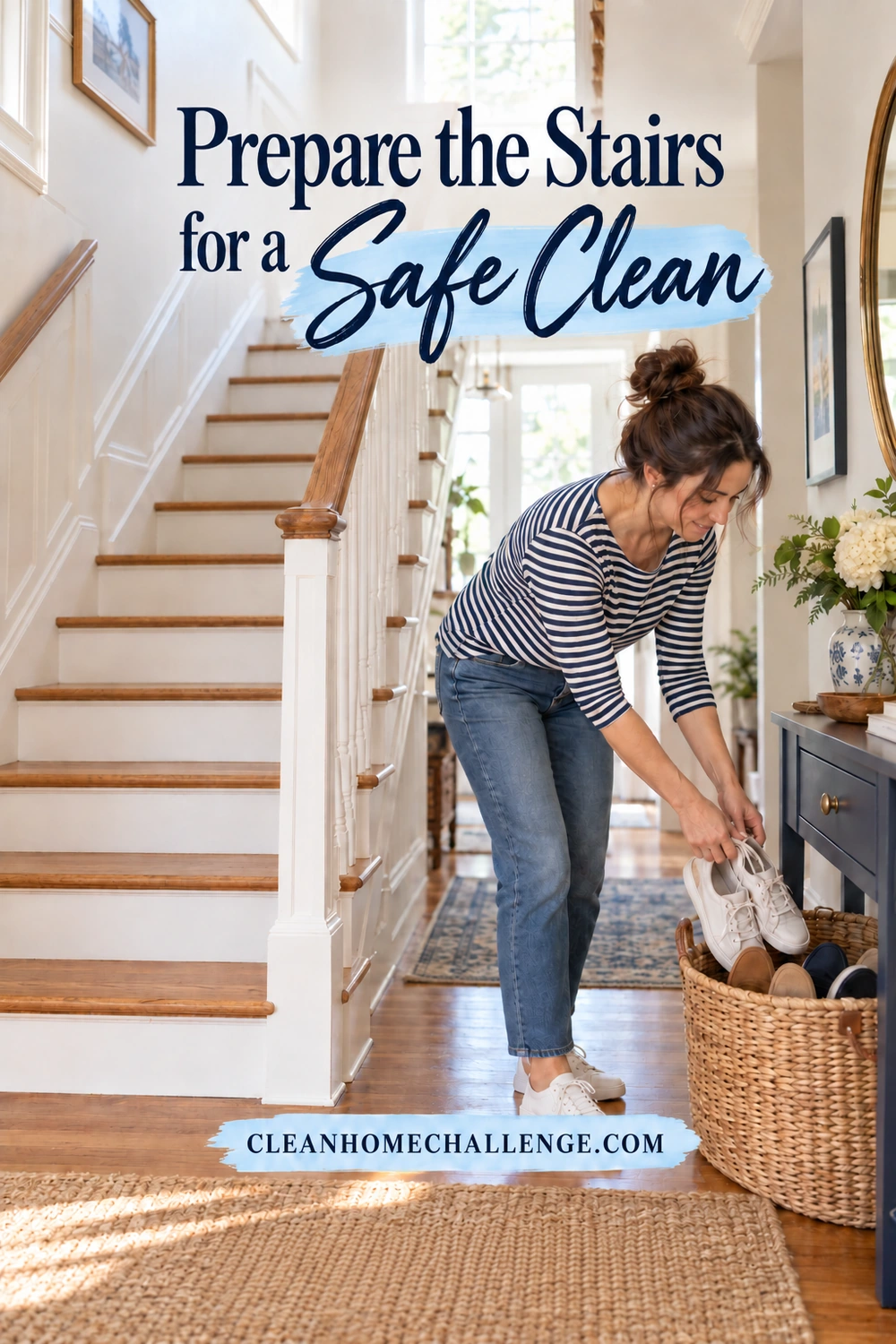
Prepare the Stairs for a Safe Clean
Start by making the staircase easy to use without carrying cleaning equipment. Move shoes, toys, bags, and laundry all the way off the treads and out of the landings’ walking routes. Putting everything on the top step just moves the obstacle.
Turn on the lights so that you can see each edge clearly. Wear secure footwear with dry, clean soles. Tell everyone at home which flight you are cleaning, and keep children and pets away from the work without blocking an emergency exit. Good lighting and the removal of trip hazards are basic precautions highlighted by the U.S. Consumer Product Safety Commission.
Before starting, look for a loose handrail, lifting runner, broken tread, protruding fastener, or damaged stair edge. Stop and arrange an appropriate repair if something is unsafe. Cleaning cannot secure a loose rail or flatten a poorly attached carpet.
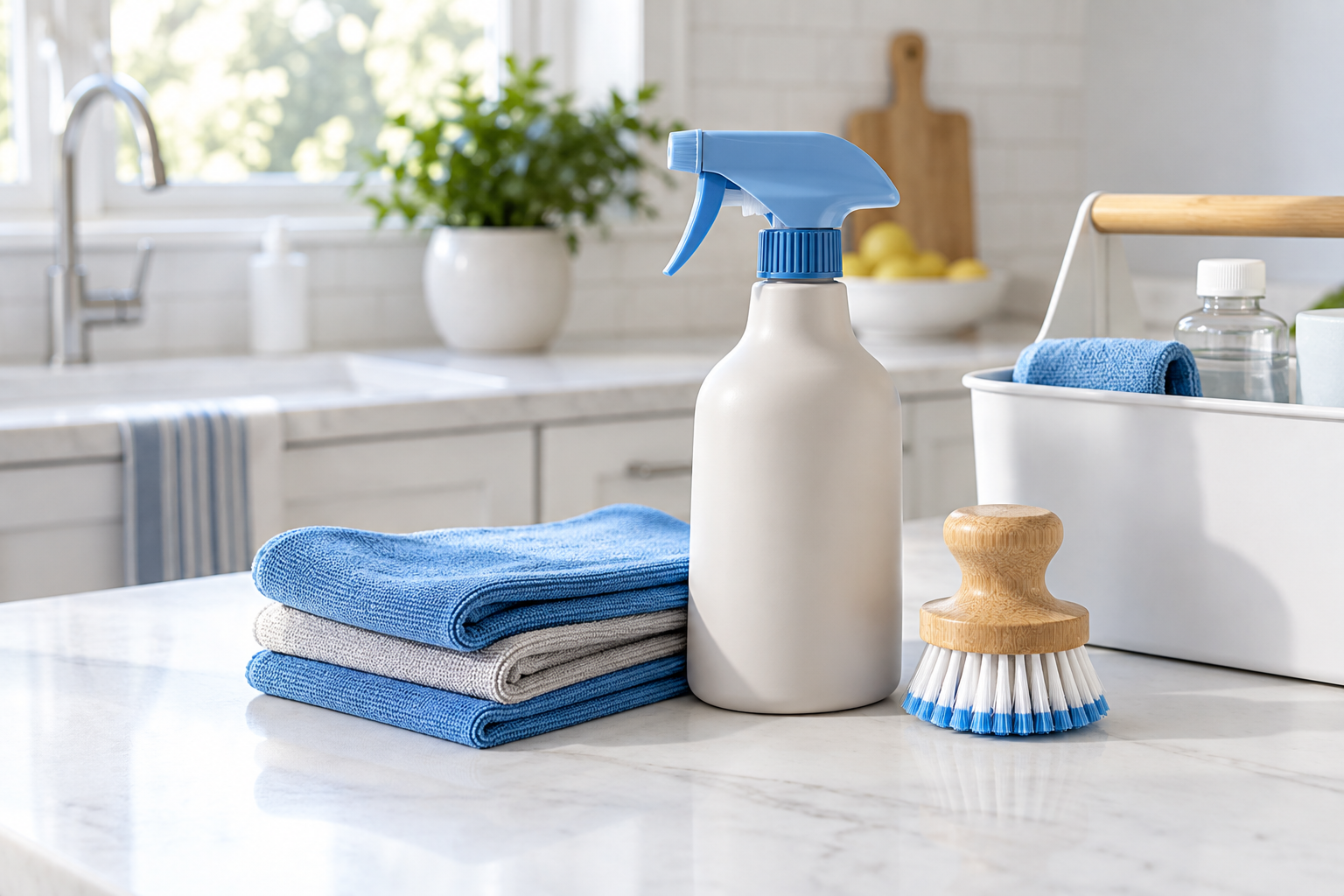
Gather a small, useful kit
Keep supplies in a caddy on a level surface outside the walking route. You will usually need:
- Several clean microfiber cloths, including separate dry finishing cloths
- A soft detail brush for small grooves and ledges
- A vacuum with attachments approved for the stairs and their surface
- A cleaner permitted by the relevant paint, finish, or flooring manufacturer
- A small container of water if the approved cleaning method needs it
- Any gloves or ventilation specified on the product label
A bucket balanced on a tread creates another thing to avoid. Prepare and wring out cloths at a nearby sink or on a safe landing instead. Keep bottles closed when you are not using them.
Identify the different materials
A staircase may have a painted rail, stained wood treads, a wool runner, and metal spindles. Each can need different care. Find the product name, installer paperwork, or finish instructions before choosing a cleaner. If the finish is unknown, stick to gentle dry dust removal while you seek advice, rather than testing stronger products one after another.
Plan where you will finish and how you will leave the staircase without stepping onto a damp tread. If reaching a surface means leaning over the rail, stretching across the stairwell, or balancing equipment on a narrow step, leave that part for someone with suitable access equipment. An ordinary household chair or improvised ladder setup is not a solution.
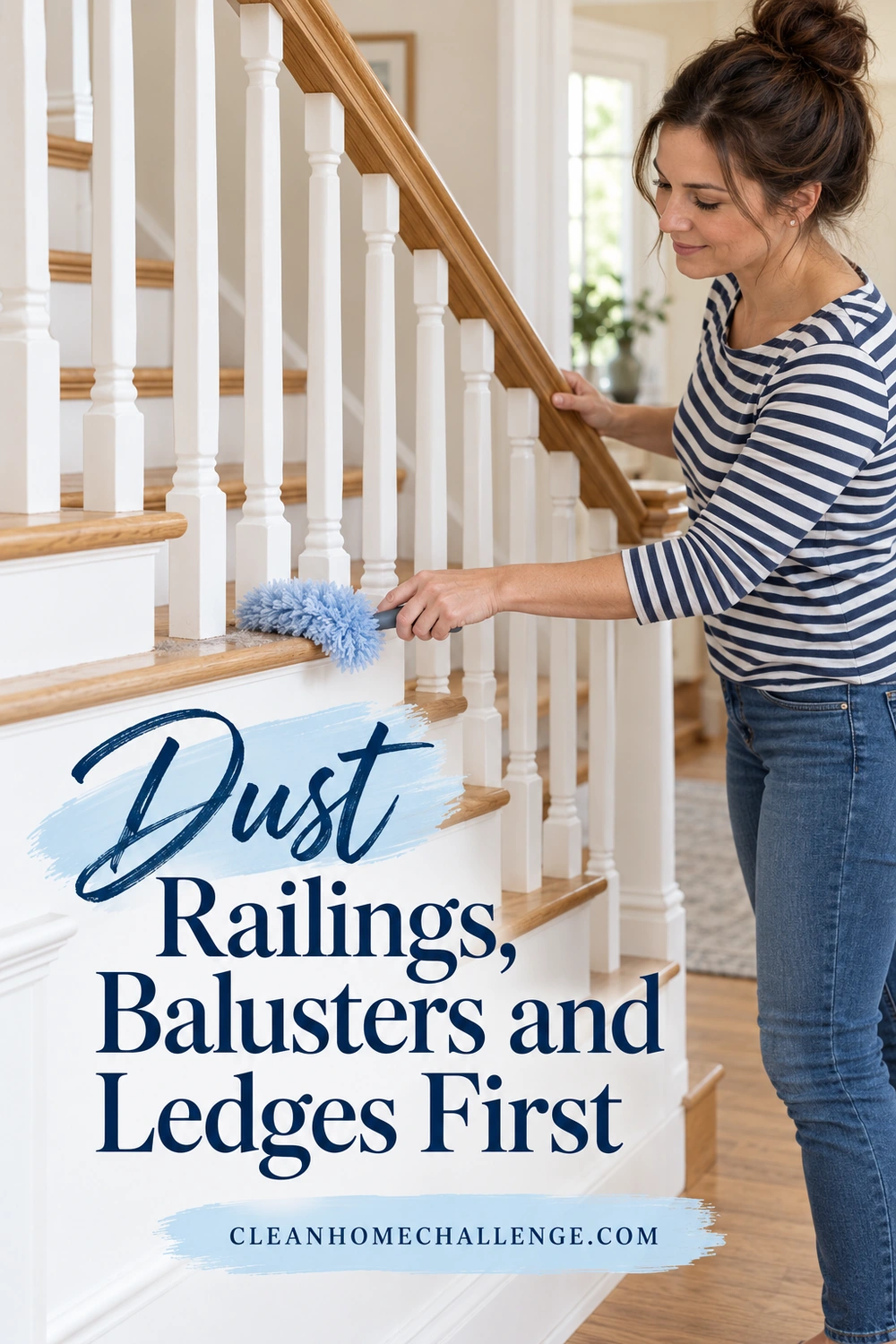
Dust Railings, Balusters and Ledges First
The handrail is the part you hold. Balusters, also called spindles, are the vertical supports beneath it. Dust can gather on their lower ledges even when the steps look reasonably clean.
Do this dry work before damp wiping or cleaning the treads. Start with higher surfaces you can comfortably reach from a stable position, then work down the nearby supports and ledges. Reposition your feet deliberately between sections rather than leaning farther and farther from one spot.
- Fold a microfiber cloth into a small pad. Wipe the top of the rail and the tops of nearby posts with controlled passes.
- Move down each reachable spindle. Wrap the cloth loosely around it so that you can collect dust from more than the front face.
- Use a soft detail brush to bring dust out of grooves and around the base of each baluster. Catch it with the cloth rather than flicking it through the air.
- Dust the accessible wall-side trim and small ledges above the steps.
- Refold the cloth to a clean face as it gets dirty. Replace it when every usable face is loaded with dust.
Work on the staircase side of the railing. Do not lean through or over it to chase a cobweb. There is no benefit in reaching one extra dusty corner at the expense of steady footing.
For accessible glass panels, remove loose dust gently before using the panel manufacturer’s approved cleaner and a separate clean cloth. Keep any cleaner away from neighboring wood, carpet, and tread surfaces. Metal rails also need finish-specific care: painted, plated, and bare metal surfaces are not interchangeable. Staircase maker Neville Johnson recommends soft cloths and appropriate products for its different staircase materials.
If the railings only needed dusting, you can leave the decorative supports there. Concentrate the next stage on touched or visibly marked areas instead of wet-wiping every surface automatically.
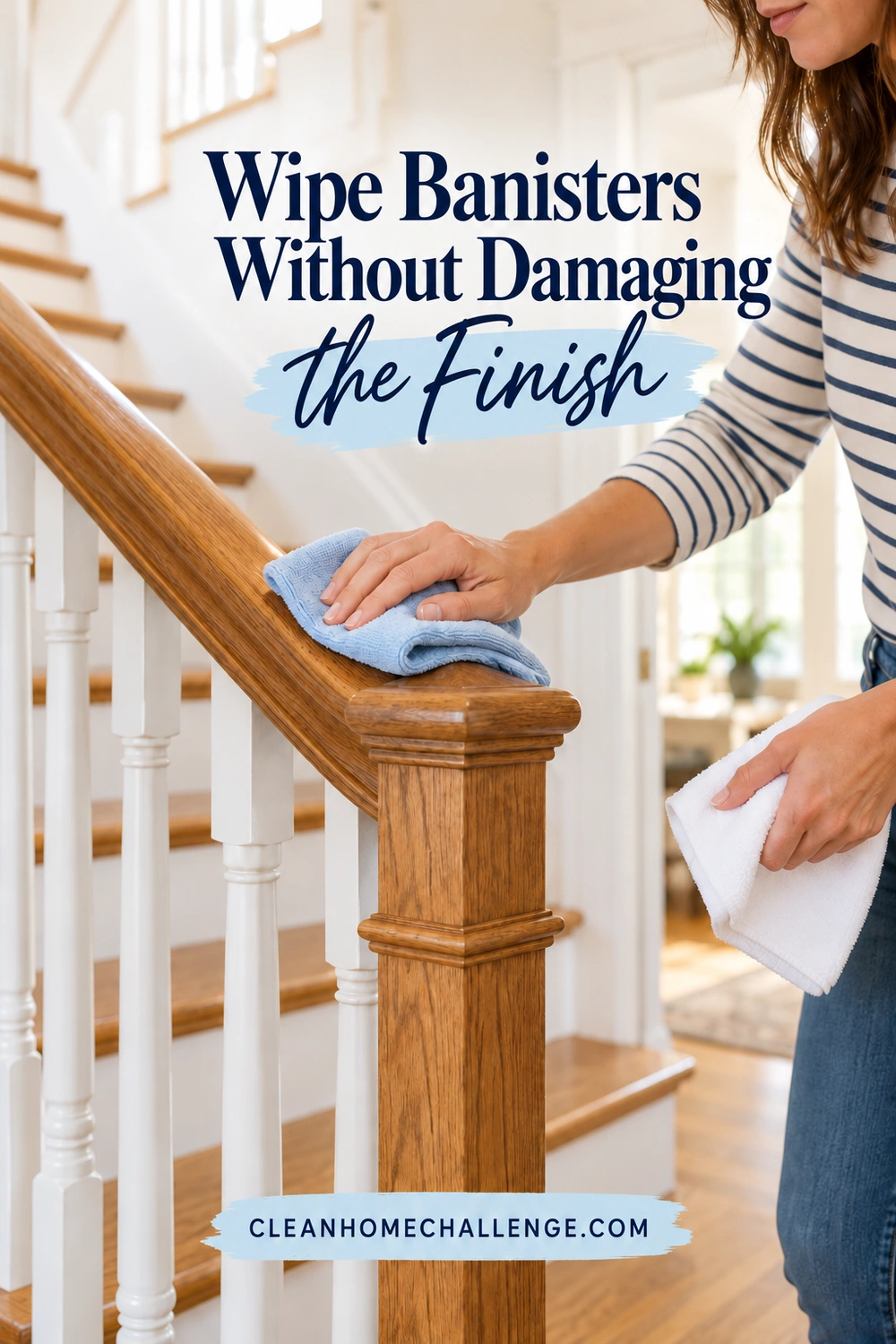
Wipe Banisters Without Damaging the Finish
The most-used parts of a banister are often near the bottom turn, top landing, and any point where hands change position. Check those areas first, along with the reachable underside of the rail.
Use the cleaner and method specified for the actual coating. A washable painted handrail may tolerate a mild cleaning solution that an antique, waxed, oiled, or deteriorating finish does not. For compatible painted surfaces, Sherwin-Williams advises nonabrasive cleaning, an inconspicuous test, and avoiding ammoniated products on waterborne paint. Fresh paint also needs the product’s full cleaning cure time, which can be longer than the time before it feels dry.
Clean a small section at a time
- Test the approved product on a hidden area and let the test dry. Check for color transfer, softening, dullness, or a changed sheen before proceeding.
- Prepare the cleaner exactly as its label directs. Where permitted, apply it to the cloth rather than spraying along the staircase.
- Wring the cloth well. It should be lightly damp, with no liquid running from it.
- Wipe a short section of the rail, including the sides and underside within easy reach. Use gentle pressure and turn the cloth as soil comes away.
- Remove cleaner residue as the product instructions require, using a separate barely damp cloth if appropriate.
- Finish with a clean dry cloth where the care instructions permit, including around joints where a droplet might collect.
Keep a dry, secure section of handrail available whenever you need it for support. Let the section you have wiped dry before gripping it or moving on. Never continue across the flight while the only usable rail is slippery.
If the handrail still feels sticky
Check the dried test area before repeating the treatment. Tackiness might be removable hand grime or old product residue, but it can also be a coating problem. If the cloth picks up finish, the surface softens, or the rail remains tacky after a permitted clean has dried, stop. Ask the finish manufacturer, installer, or a suitable refinishing professional what to do next.
Avoid abrasive pads, aggressive scrubbing, and improvised solvent treatments. A stair-cleaning session should not turn into an unplanned refinishing job.
Routine cleaning is generally enough for everyday upkeep. If illness or another specific situation calls for disinfection, choose a product compatible with the rail and follow its contact time and safety directions. Clean first, ventilate as directed, keep chemicals away from children and pets, and never mix products. A quick microfiber wipe is not a claim of disinfection. The CDC explains when home cleaning and disinfection are appropriate.
Vacuum Treads, Edges and Risers Safely
With the high-level dust removed and the handrail dry, tackle the loose dirt on the steps. The tread is the horizontal surface underfoot; the riser is the vertical face between steps. The front lip of the tread is often called the nosing.
Check the vacuum manual before starting. Use the stair tool and setup it allows, keep the main appliance below you when using a hose, and never balance a heavy vacuum above your working position. Dyson’s Big Ball safety instructions specifically warn against operating with the appliance above you on the stairs. They also require dry surfaces and attention to cable trip hazards. Your own model’s instructions determine accessory changes and safe positioning.
A hose may reach only a few steps from a safe, level base. Clean that reachable section, stop, and reassess the setup. Do not stretch the hose tight, pull an upright by its hose, or assume the machine will stay put on a narrow tread. If your equipment cannot reach safely, use a suitable alternative or ask for help.
Give each step a complete pass
Work from a stable position, keeping tools and any cable away from your feet:
- Remove larger objects by hand when safe to do so, rather than forcing them into the vacuum.
- Use the appropriate tool along the edges where the tread meets the wall or runner.
- Vacuum the usable tread surface with controlled, overlapping passes.
- Clean the front edge and accessible riser without catching loose carpet fibers or scraping a hard finish.
- Check the corners before repositioning for the next step.
Look where you are stepping whenever you move. Never walk backward down the stairs while watching the vacuum nozzle. Following a safe appliance setup may mean doing the dry vacuuming in a different direction from the dusting, and that is fine.
For hard treads, choose a compatible soft attachment or bare-floor setting. For carpet and runners, check both the fiber and the manufacturer’s brush guidance. The Carpet and Rug Institute recommends suction-only vacuuming for wool carpet; a powered brush is not a universal stair-cleaning tool. Stop if a tool catches a loop, pulls a loose edge, or leaves visible damage.
If you have no suitable vacuum, a soft hand brush and dustpan can collect loose dirt from accessible hard steps. Capture it on each step rather than sweeping it down the entire flight. This will not replace suitable vacuuming of carpet. Leave carpet extraction and stubborn stain treatment for the runner’s specific care method.

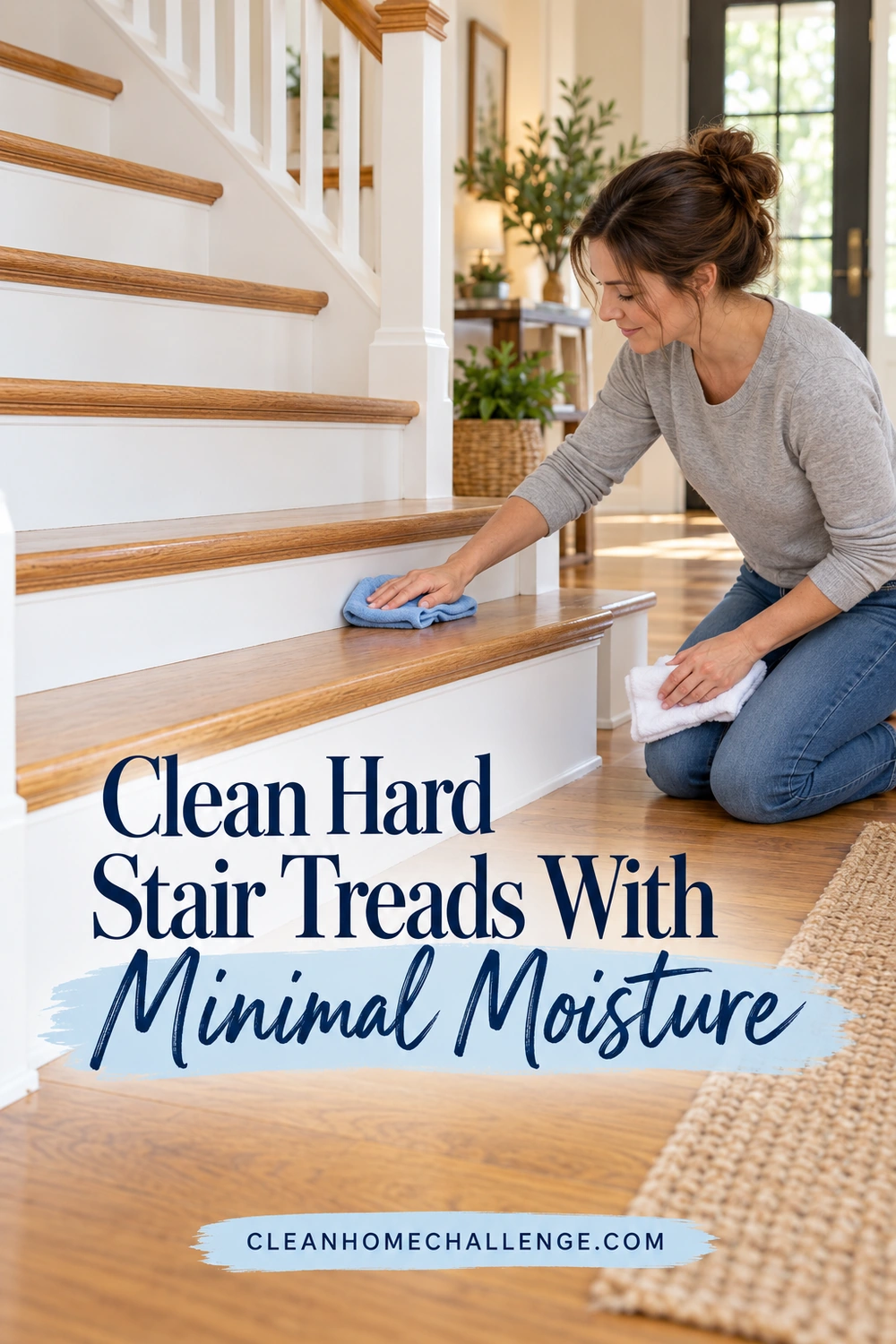
Clean Hard Stair Treads With Minimal Moisture
Once grit is gone, decide whether the hard treads actually need damp cleaning. A dry-cleaned staircase without marks or residue may be finished already. On mixed stairs, treat the exposed hard edges separately and keep their cleaner off the runner.
Match the method to the tread
- Finished wood: Follow the finish manufacturer’s cleaner and application instructions. Avoid wet mopping and steam. The National Wood Flooring Association also cautions that polishes, waxes, and restorers can leave wood slippery. Furniture polish has no place in this stair-cleaning routine.
- Laminate: Follow the particular stair system’s guidance, including its edge and joint requirements. Water resistance varies. Quick-Step’s laminate care method starts with dry cleaning and uses slightly damp cleaning when needed. That does not make every laminate staircase waterproof or steam-safe.
- Painted treads: Check the floor-paint care instructions and cure time. The product must be intended for foot traffic; advice for a painted wall does not establish what a stair coating can tolerate.
- Vinyl, tile, or stone: Identify the exact material, finish, and any sealer. Use the approved cleaner rather than transferring the wood or laminate recipe. Natural stone, in particular, needs its own compatible care directions.
Do not assume vinegar, a strong degreaser, or the cleaner used on your kitchen floor is suitable for all of these surfaces. A hidden test is useful, but it does not replace the manufacturer’s instructions.
Use a controlled, small-area method
Prepare a lightly damp cloth or an appropriately sized mop pad as the approved method directs. A cloth can make it easier to stay clear of carpet edges and joints, provided you can reach the surface without awkward bending or losing balance.
Clean one reachable tread or small section at a time. Wipe rather than flood, avoid leaving droplets in seams, and use fresh cloth faces as needed. Follow any residue-removal or drying instructions. If a mop is suitable, keep its head under control; a full-size head should not push you into overreaching around posts.
Work toward a safe dry exit. When it is practical to clean the flight from the upper landing downward, keep your feet on the dry step below the one you are cleaning, and stop the wiping action before moving. Turn and look at your route to reposition; do not back down the stairs. If the stairs or your mobility make this awkward, clean a smaller reachable area from a landing or get help instead.
Never mop alternate steps and expect the family to hop over the wet ones. Keep the flight out of normal use until every tread is ready. For more on avoiding excess moisture, see our guide to cleaning laminate floors without streaks or swelling.
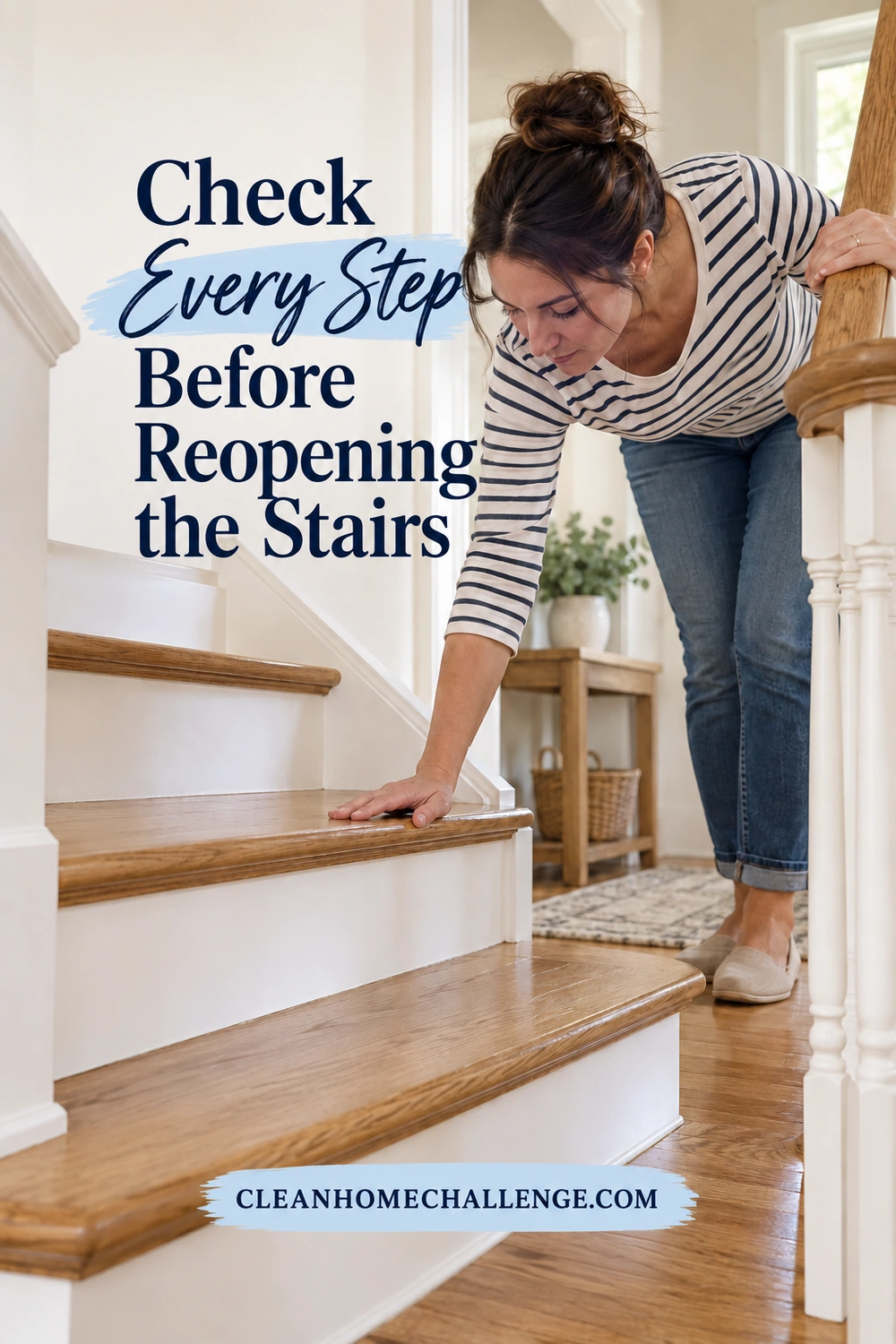
Check Every Step Before Reopening the Stairs
A staircase can look finished while a little moisture remains beneath the rail or against a runner edge. Take one final look from a safe, dry position before calling everyone through.
- Treads and landings: Check each cleaned area for remaining dampness, loose grit, streaks, or cleaner residue. Allow the required drying time and do not test a suspect slippery surface by walking on it.
- Handrail: Make sure the rail is dry and comfortable to grasp, including its underside. A glossy appearance alone does not prove it is ready to use.
- Runner and edges: Look for any newly noticed lifting, snagging, or damage. If something is loose, arrange a repair rather than hiding it under a mat.
- Tools and supplies: Remove the vacuum, cord, caddy, cloths, and water container from the entire route.
- Access: Restore normal use only when the flight is dry, clear, and free of any unresolved hazard.
There is no reliable universal “ready in ten minutes” rule. The amount of moisture, surface, airflow, product instructions, and room conditions all affect drying. If the family needs the staircase urgently, postpone the damp-cleaning stage rather than asking them to squeeze past it.
Persistent slickness or stickiness needs attention before reopening. Check whether the correct product and dilution were used, then follow the surface manufacturer’s residue-removal instructions. Adding another cleaner or more polish can make the problem harder to resolve. Our sticky-residue mopping guide explains the wider issue without treating every floor finish the same.
Wash reusable cloths according to their care labels, clean tools as their instructions require, and put products away securely. A reset kit is more useful when the next cloth you reach for is actually clean.
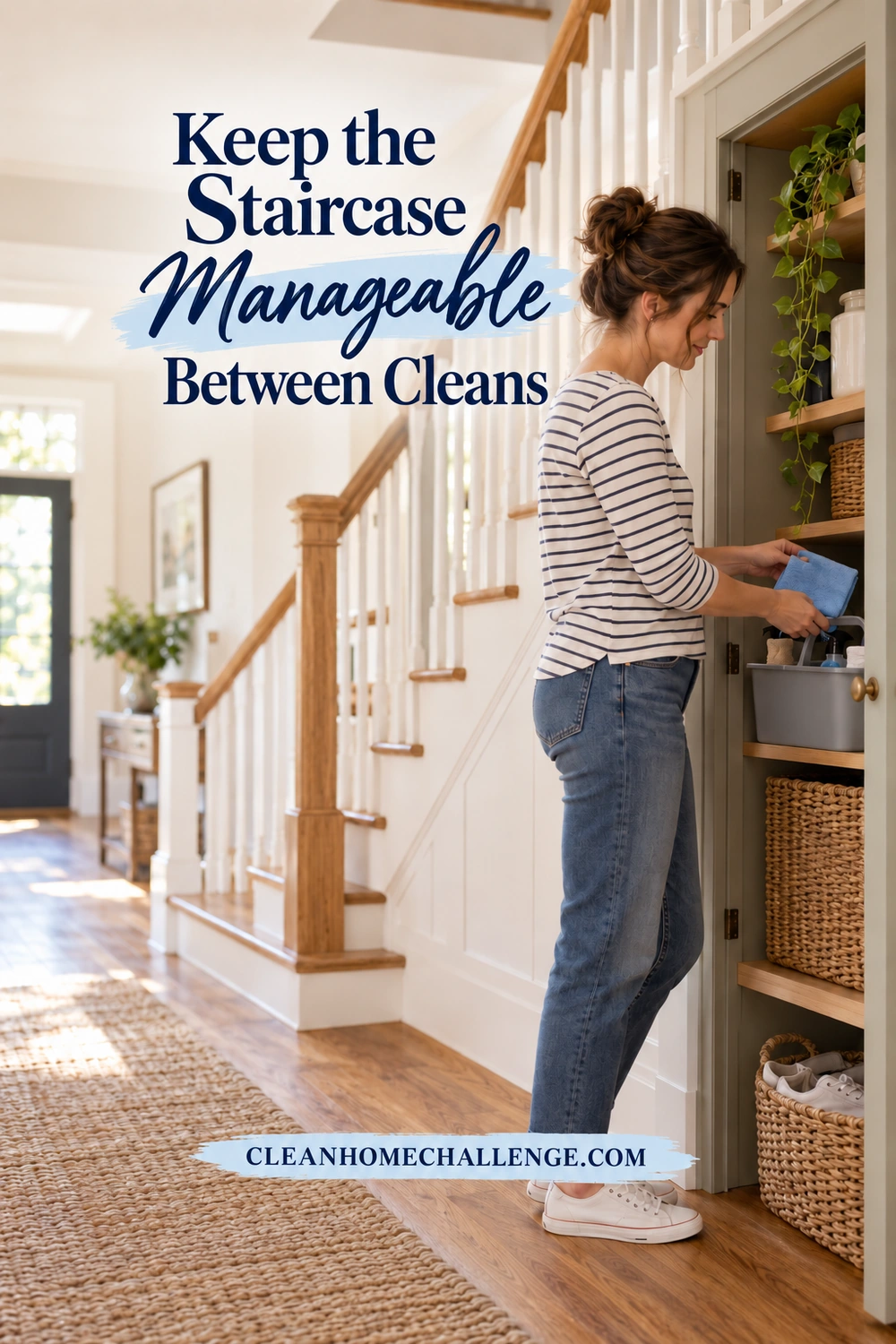
Keep the Staircase Manageable Between Cleans
A small routine makes the full staircase job less of a production. Use traffic and visible dirt to guide it; a quiet upstairs flight and the only staircase in a busy family home will not need identical attention.
A flexible starting rhythm
- As needed: Clear anything left on a step and deal promptly with spills using the surface’s appropriate method. Keep the area out of use until dry.
- During a quick household reset: Check the handrail’s most-used spots and pick up obvious fluff or grit you can reach safely.
- On your regular floor day: Vacuum the flight as needed and give the railings a look. For a busy staircase, a weekly check is a useful starting reminder; visible dirt or heavy traffic may call for earlier care.
- Occasionally: Spend an extra few minutes on post details, baluster bases, trim, and the safe-access corners that a quick clean misses.
Give things waiting to go upstairs an off-stair home, such as a shelf or basket positioned well outside the travel path. Empty it during a normal trip when the load is small enough to carry safely. Do not let the basket become a new obstacle at the landing.
On a low-energy day, clear the route, deal with an immediate spill or hazard, and stop. Dusting decorative details can wait. If you are splitting a larger clean across days, put away the kit and leave the stairs completely usable at the end of each session.
You can add this job to a cleaning routine you can actually stick to instead of creating a separate staircase project every weekend. Cleaners Clubhouse can offer a helpful next step if you would like more structure for everyday household routines.
The useful finish line is straightforward: a clear route, a comfortable handrail, and steps that are clean and dry. Once those are in place, you can move on with your day.

CLEANERS CLUBHOUSE
Follow a Simple Room-by-Room Cleaning Plan
Break the house into manageable spaces and know exactly where to focus next. The Cleaners Clubhouse gives you a follow-along 12-month calendar, printable worksheets and motivating monthly challenges.