THIS POST MAY CONTAIN AFFILIATE LINKS. PLEASE READ MY DISCLOSURE FOR MORE INFO.
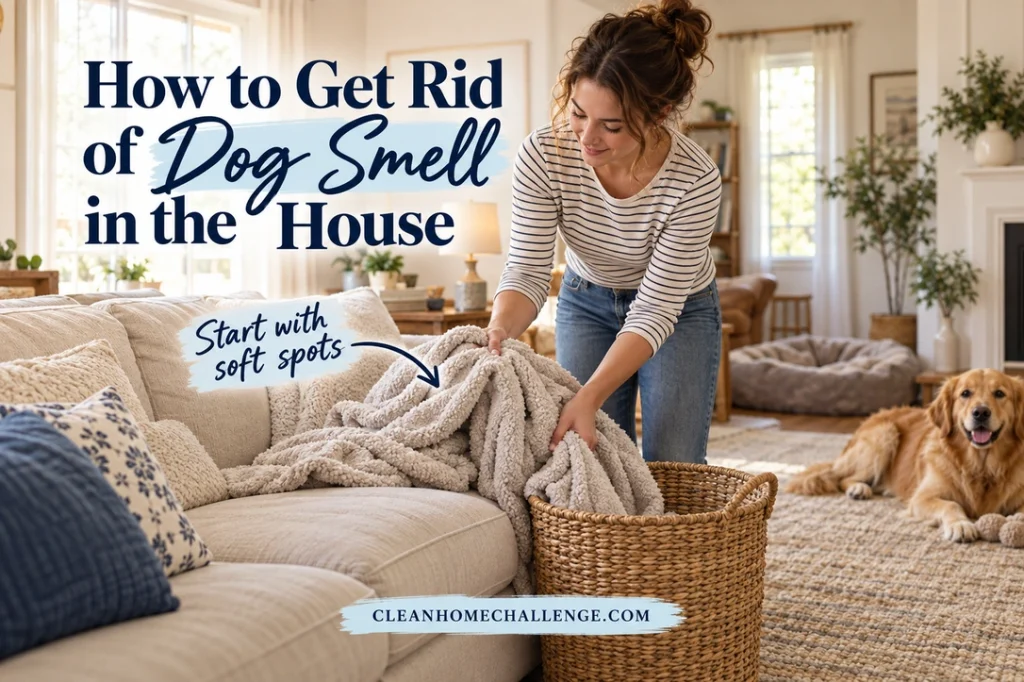
You have wiped the floors and straightened the living room, but there is still a doggy smell when you walk back inside. Before you clean the whole house again, check the places your dog actually uses. A favorite blanket, the space under a bed, or one damp sofa cushion can deserve more attention than every other room combined.
To get rid of dog smell in the house, remove the source: wash suitable pet fabrics, lift out hair and dirt, clean affected surfaces correctly, and let everything dry fully. Treat urine accidents separately with a product approved for the mess and material. Fresh air can help, but it cannot wash a dog bed or reach contamination inside a cushion.
Start with the strongest-smelling spot and work outward. You can divide this plan over several days, and there is a shorter reset below for low-energy days. All time estimates are flexible planning guides for a small area, excluding machine cycles, required product waiting times, and drying.
Disclosure: This post may contain affiliate links. As an Amazon Associate, Clean Home Challenge earns from qualifying purchases. If you make a purchase through these links, we may earn a small commission at no extra cost to you. This helps us keep creating practical cleaning tips, routines and resources for busy families! 🧽
Find Where the Dog Smell Is Coming From
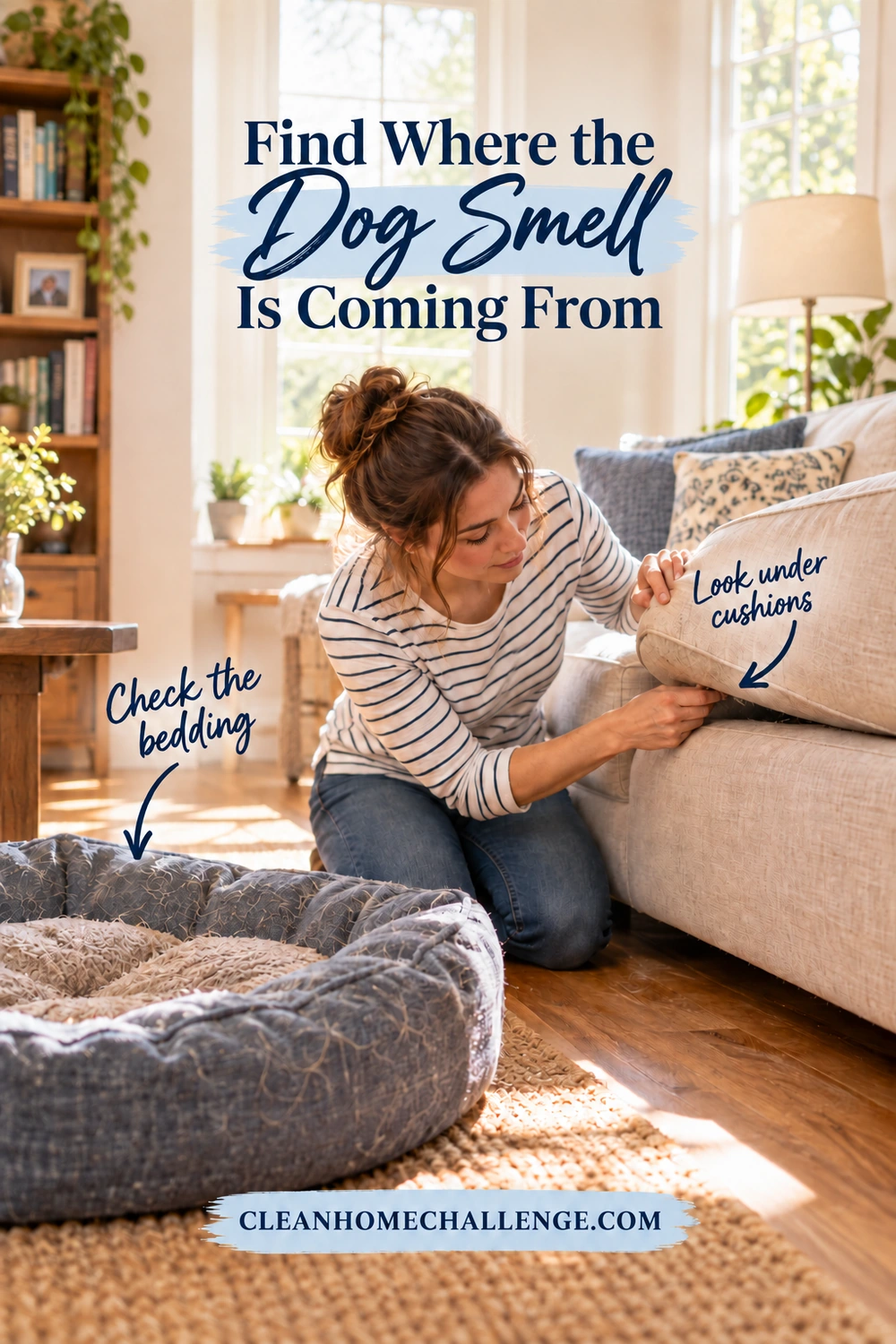
Take a quick walk through the rooms your dog uses, checking one item at a time. You are looking for a useful starting point rather than trying to diagnose every smell by its scent.
- General doggy odor: Check bed covers, blankets, sofa throws, cushions, and rugs where your dog rests.
- Smell after wet walks: Look for damp towels, a damp bed underside, wet entry mats, and the spot where your dog lies down afterward.
- A concentrated accident smell: Check a specific carpet patch, furniture edge, crate corner, or floor seam for urine or another mess.
- Odor around feeding or storage areas: Look beneath bowls, behind the treat container, inside the toy basket, and in the trash.
Moving a washable blanket out of a room temporarily can help you decide whether it is a major contributor. Inspect the surface underneath before replacing it. Do not press your face into suspect waste or inhale cleaning products to investigate.
Notice whether the smell is coming from your dog
A new, strong, persistent odor on your dog deserves attention, especially with scratching, skin changes, head shaking, ear discharge, or discomfort. VCA’s veterinary guidance on ear infections identifies odor alongside inflammation and other ear symptoms. Contact your veterinarian rather than repeatedly bathing your dog or trying household cleaners on their skin or ears.
This article covers cleaning the home, not diagnosing or treating a pet. A dog who suddenly starts having accidents should also have a veterinary check, as VCA explains in its house-soiling guidance.
Gather a small kit and make room to work
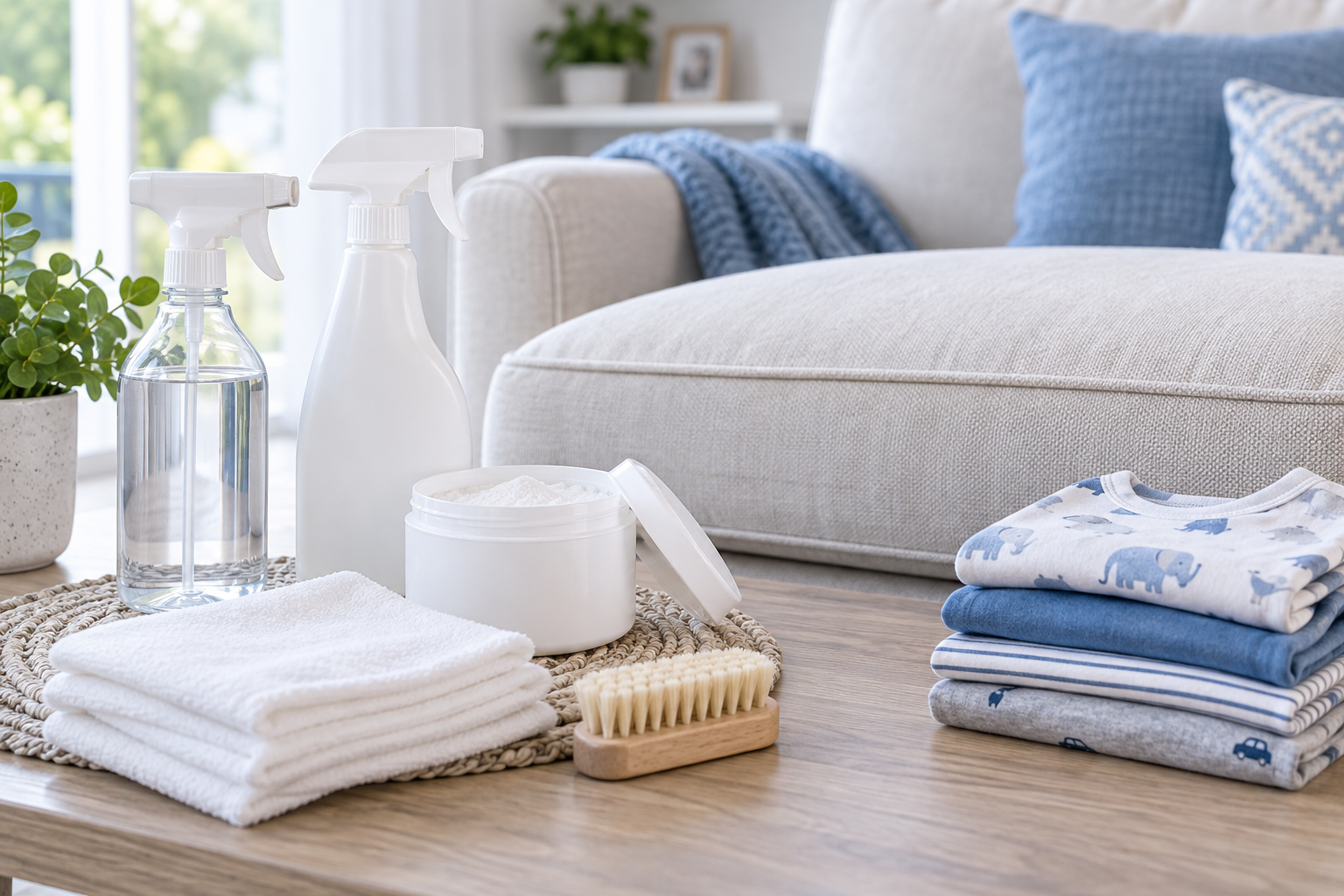
Use clean cloths or paper towels, gloves appropriate to the job, a vacuum with suitable attachments, laundry detergent, and the cleaner approved for the affected surface. Add a pet-urine product only when needed.
Set your dog up in a comfortable, separate area before opening products. Keep children away too. Follow label instructions for ventilation, protective equipment, rinsing, and re-entry. Store products in their original containers, securely out of reach. Never mix cleaners, including bleach with vinegar, ammonia, or another product. CDC’s household-cleaning guidance explains these precautions.
Wash Dog Bedding and Everyday Fabrics
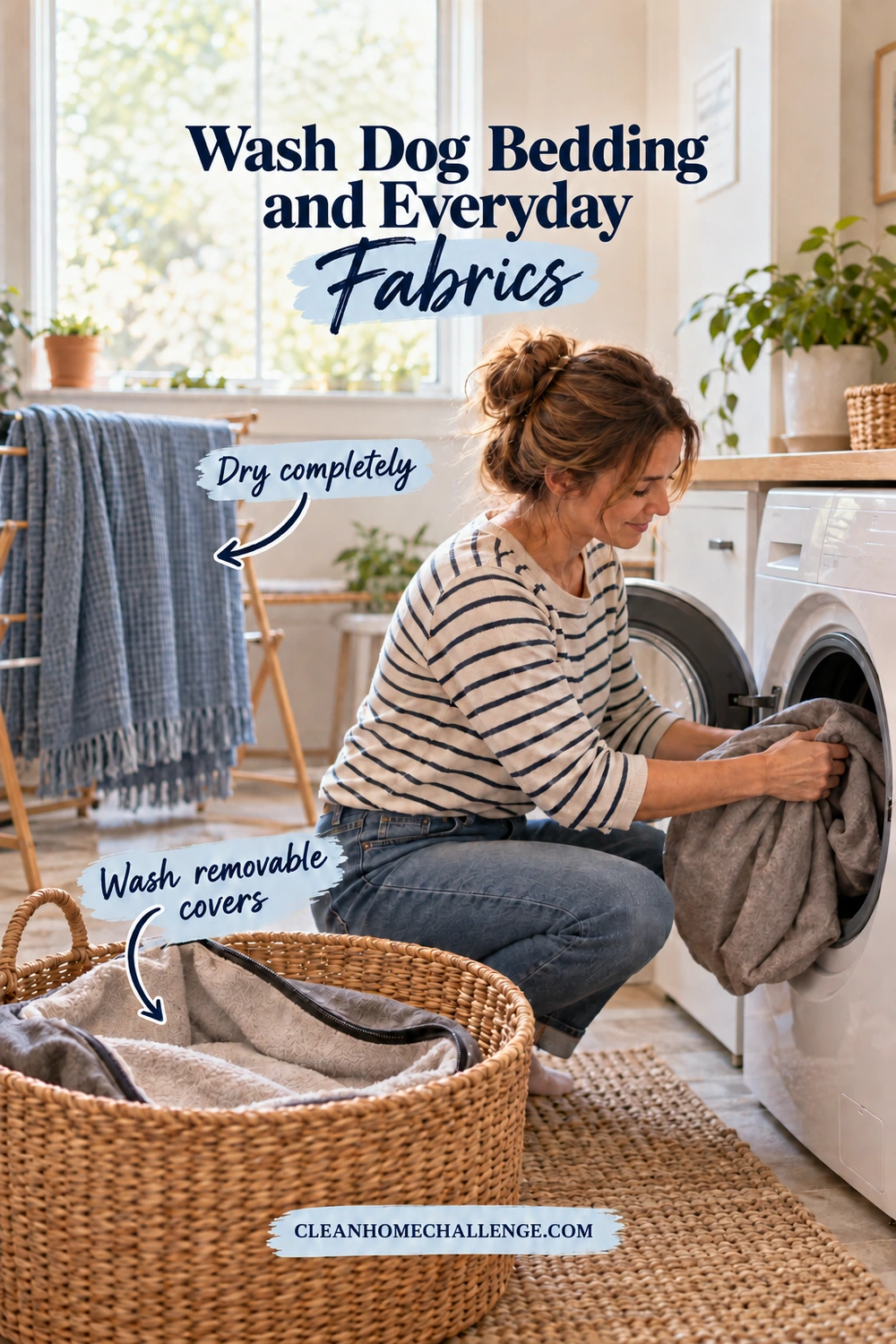
For widespread everyday dog odor, start with the fabric that gets the most contact: often the bed cover or favorite throw. Beginning this load first lets the machine work while you tackle another small job.
Read both the item’s care label and your washer’s instructions. A washable cover does not mean a foam insert is washable, and a large bed can be unsuitable for a particular machine even when its fabric can be washed. Maytag’s dog-bed guide emphasizes checking the care tag and avoiding an overcrowded washer; its Pet Pro support guidance specifically directs owners to wash only the cover.
- Remove loose hair first. Vacuum with a suitable upholstery attachment or use a compatible pet-hair tool. Pick off visible debris before carrying the cover through the house.
- Separate the parts. Remove the cover only if intended. Check the liner, bolsters, and underside individually so a clean cover does not go straight onto a dirty insert.
- Pretreat where necessary. Use a laundry pretreatment suitable for the fabric and stain, following its directions. Urine-soiled fabric needs an appropriate urine-treatment plan, not an extra splash of several products.
- Wash as directed. Choose the permitted cycle and water temperature. Measure detergent for the load and soil level rather than adding more because the fabric smells strong.
- Dry completely. Use the allowed dryer setting or air-drying method. Check thicker seams and padding before reassembling the bed.
Choose a mild, fragrance-free detergent when appropriate for the item; ask your vet about products if your dog has sensitive skin. Skip scent boosters as an odor-removal strategy. Keep all laundry supplies and dryer sheets inaccessible to pets.
Allow roughly 10–15 minutes of hands-on work for one simple cover-and-blanket load. Drying a permitted washable insert can take considerably longer than a thin cover, so provide another clean, comfortable resting place meanwhile.
If the cover smells fresh but the bed still smells after everything is fully dry, investigate the insert. Follow its own cleaning instructions, contact the maker, or consider replacing an affected component that cannot be cleaned satisfactorily. Repeatedly soaking unsuitable foam can create another problem.
Remove Hair and Odor From Sofas and Carpets
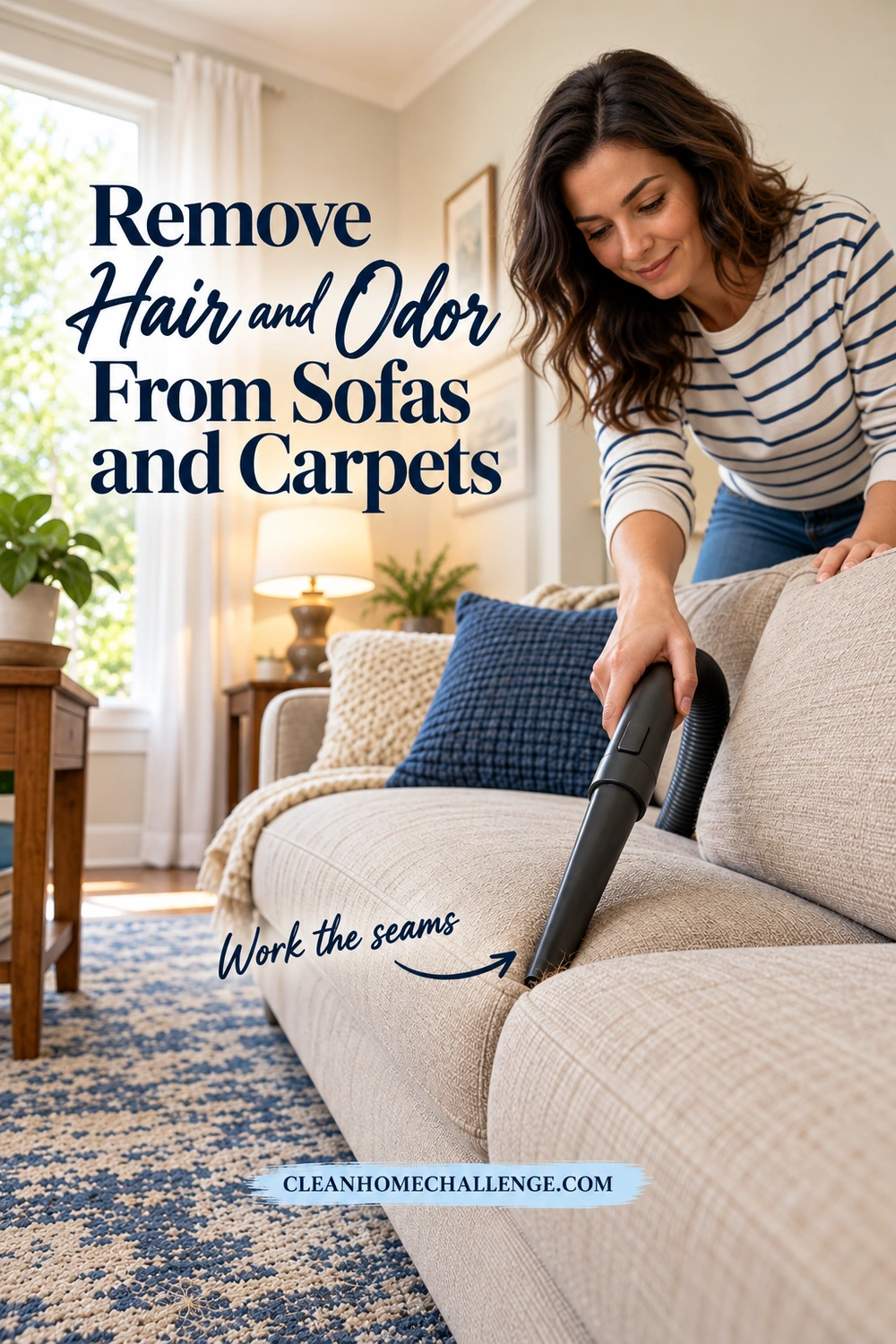
Clear toys and small items before vacuuming. Check first for wet accidents so you do not run an ordinary dry vacuum, or a robot vacuum, through them. Then work across your dog’s favorite sofa spot, the rug below it, and nearby edges.
Use the attachment and brush setting recommended for each material. Make steady passes over the fabric, including seams and cushion creases you can safely reach. A compatible reusable hair remover can help with clingy fur, but test it gently first; scraping tools can snag delicate fabric.
Empty the vacuum and maintain its brush roll and filters according to the manual. If the smell becomes obvious only when the vacuum runs, inspect the machine before repeatedly vacuuming the room. Wash filters only if the manufacturer permits it, and let them dry as instructed before reinstalling.
Check the sofa’s cleaning code before adding liquid
Look underneath cushions or on the furniture tag, then find the manufacturer’s care instructions. Common codes give a starting point:
- W: A specified water-based upholstery-cleaning method may be allowed.
- S: A suitable water-free cleaning solvent is required; water-based sprays are unsuitable.
- W-S or S-W: Approved water-based or solvent methods may be permitted, depending on the stain and instructions.
- X: Vacuum or lightly brush as directed; do not apply liquid or foam cleaners.
A W code does not mean a cover can go into the washing machine. For example, La-Z-Boy’s fabric-care instructions warn against laundering its W-coded cushion covers and against saturating the fabric. A zipper alone is not evidence of washability.
For an allowed spot treatment, test an inconspicuous area and wait for the specified test period. Use only the amount and method directed. Keep pets off the furniture until treatment and drying are complete. If you cannot identify the fabric or cleaning code, ask the manufacturer or an upholstery cleaner before experimenting.
Carpet shampooing also needs a compatibility check: carpet, backing, rug, machine, and solution instructions all matter. Do not soak a whole room to chase an unidentified odor. A rental machine is useful only when it suits the material and you can extract moisture and manage drying properly.
Allow approximately 15–25 minutes for dry hair removal from one modest sofa-and-rug area. Deep cleaning is a separate job. If odor persists inside upholstery foam, beneath a rug, or in carpet padding, get a professional assessment of the affected layers.
Treat Urine Accidents With the Right Cleaner
Ordinary doggy odor and a urine accident need different attention. An enzyme cleaner can be useful for a compatible urine-contaminated surface, but the word “enzyme” is not a promise that every product suits every floor, fabric, or mess.
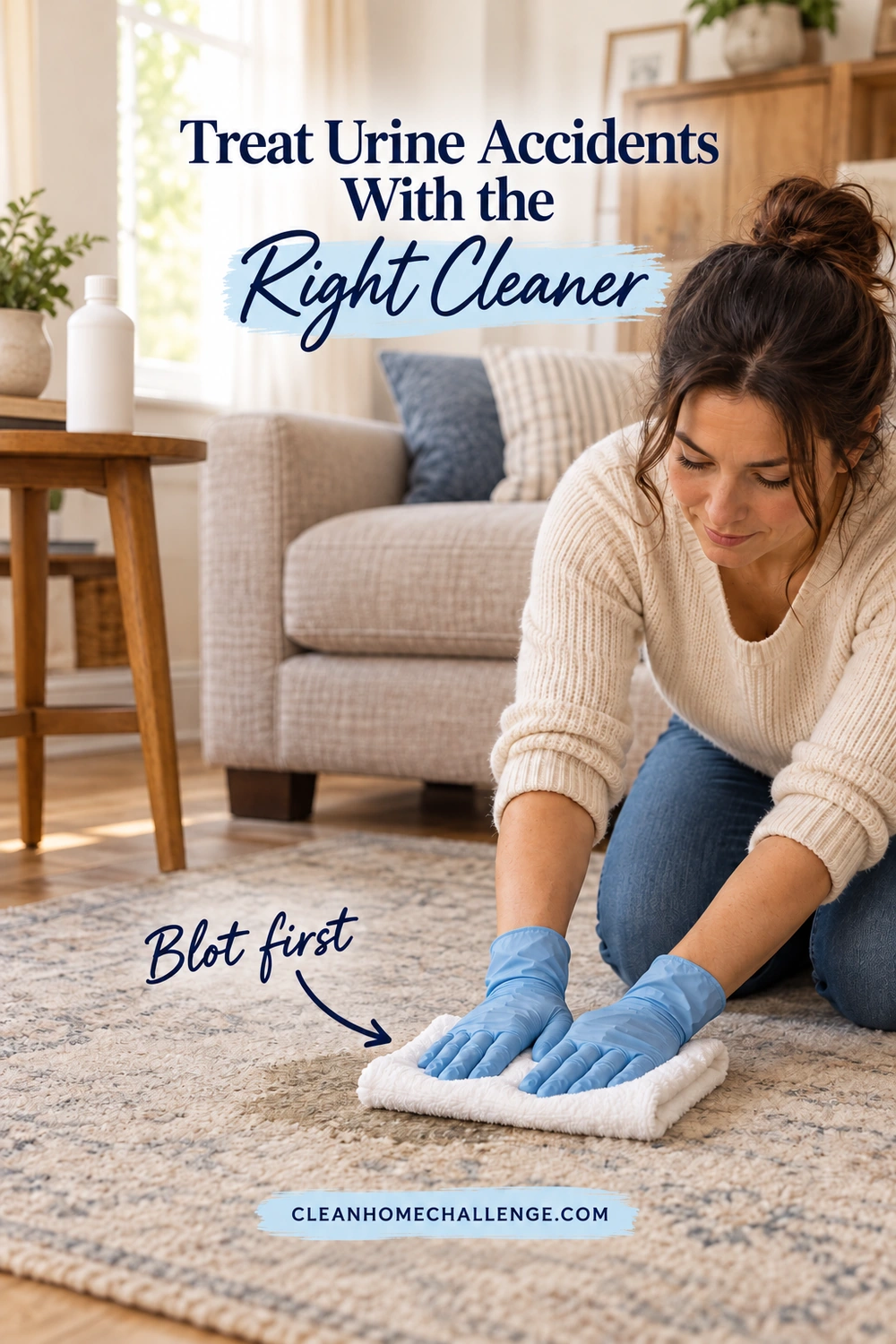
For a fresh accident, keep your dog away and blot up liquid with absorbent towels, replacing them as they become wet. Avoid vigorous rubbing. Bag disposable waste, keep used cloths away from food-preparation cloths, and wash your hands after cleanup.
Next, read the exact product label alongside the surface instructions. Check these points before applying anything:
- Does it specifically cover dog urine and this material?
- Are there excluded finishes or fibers?
- Does it require a hidden-area colorfastness test?
- Should it be used full strength or diluted?
- How much is required, how long should it remain, and should it be blotted, rinsed, extracted, or left to dry?
- When may people and pets use the area again?
Directions can differ even within one brand. As an example, Nature’s Miracle Stain & Odor Remover for Dogs has separate stain-removal and odor-elimination directions, excludes materials including untreated hardwood and wool specialty fabrics, and requires people and pets to stay away until the product has dried. Follow the bottle you own rather than borrowing a waiting time from another formula.
Apply a compatible treatment only after the required test passes. Do not add detergent, vinegar, bleach, or another cleaner to “boost” it. If you already used something else, tell the product manufacturer or cleaning professional what it was before adding a new treatment.
Avoid steam treatment for a urine spot. Humane World for Animals advises against steam cleaning urine-contaminated carpet or upholstery because heat can set the stain and odor. Its guidance also notes that contamination reaching carpet padding is harder to resolve.
Reassess after the full label-directed process and complete drying. If urine reached padding, cushion filling, or floor seams, repeatedly spraying the visible surface may miss the source. Ask a qualified cleaner or flooring professional about treatment or replacement of the affected material. Do not flood a moisture-sensitive floor to reach deeper contamination.
Clean Hard Floors and Hidden Pet Hotspots
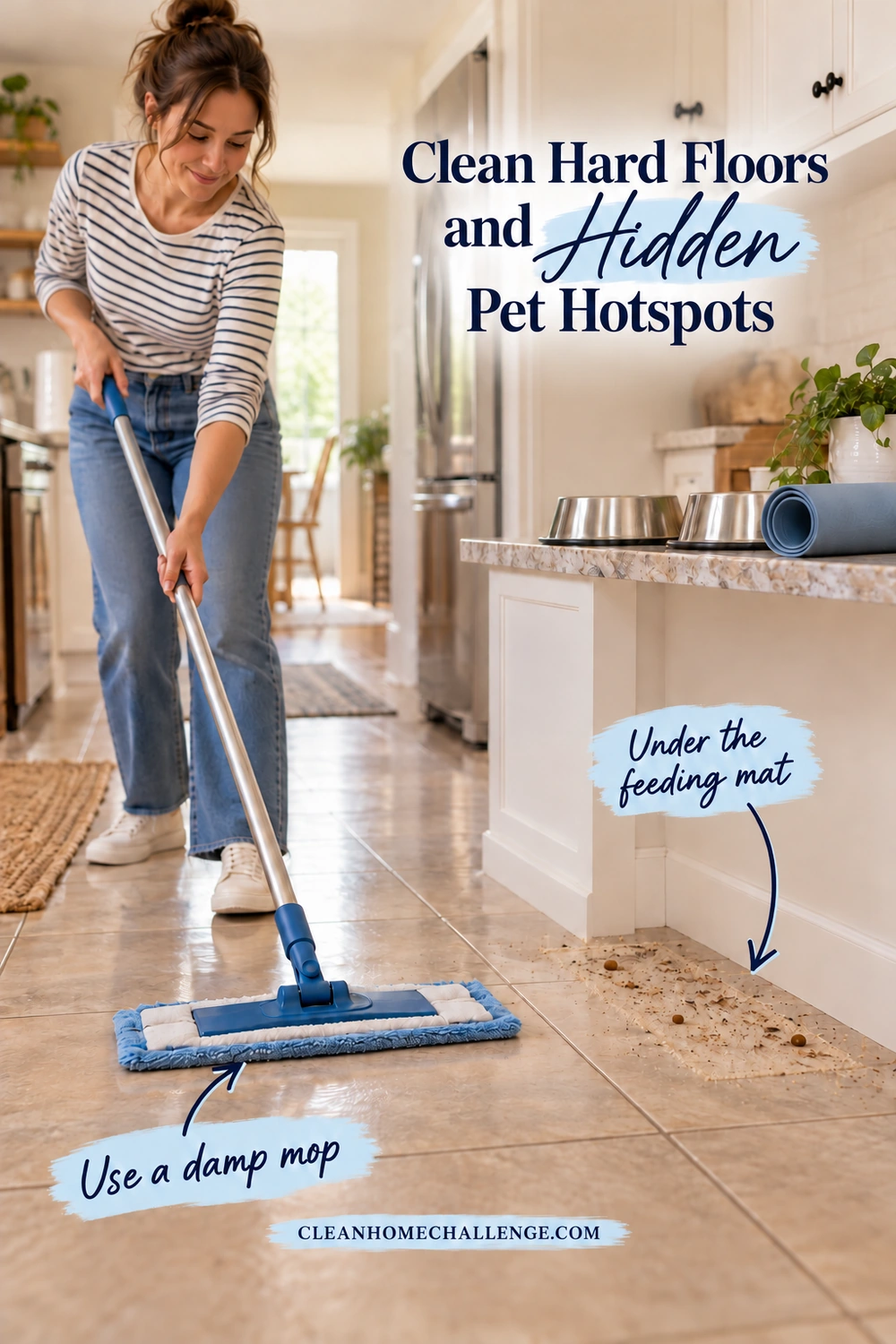
After collecting loose hair and grit, clean the hard floor with the method approved for its material and finish. A product suitable for sealed tile may be unsuitable for natural stone, laminate, or a particular wood finish. A “pet” label does not override those restrictions.
For wood, the National Wood Flooring Association recommends prompt spill cleanup, routine dry soil removal, and a cleaner suitable for the finish. It advises against wet mops and steam mops. Follow your flooring maker’s instructions rather than soaking the area with urine cleaner, vinegar, or a bucket of water.
If your flooring allows a flat mop, use a clean pad and the directed amount of cleaner. Work in small sections with controlled pull-back passes, collecting loosened dirt rather than repeatedly pushing it around. Change a dirty pad, complete any required rinsing, and leave the floor to dry with pets and children elsewhere.
Spend another few minutes on the less obvious spots:
- Lift bowls and their mat; clean both sides of the mat and the floor beneath it.
- Check the crate tray, bed base, nearby wall, and baseboard for residue.
- Inspect washable toys, collars, and harnesses and clean each according to its care instructions.
- Remove abandoned food, damp towels, and dirty fabric tucked into baskets.
- Empty the household trash if discarded cleanup materials are contributing odor.
Do one small area at a time so you do not leave multiple wet surfaces and open products around the home. Keep pet-waste cloths separate from kitchen cloths; the cleaning-cloth hygiene guide can help organize washing and storage.
Odor removal is a cleaning task, not proof of disinfection. If illness, pet waste, or another specific contamination calls for additional hygiene measures, follow appropriate veterinary or public-health advice and the relevant product label. Do not treat a room’s fragrance as evidence that it is hygienic.
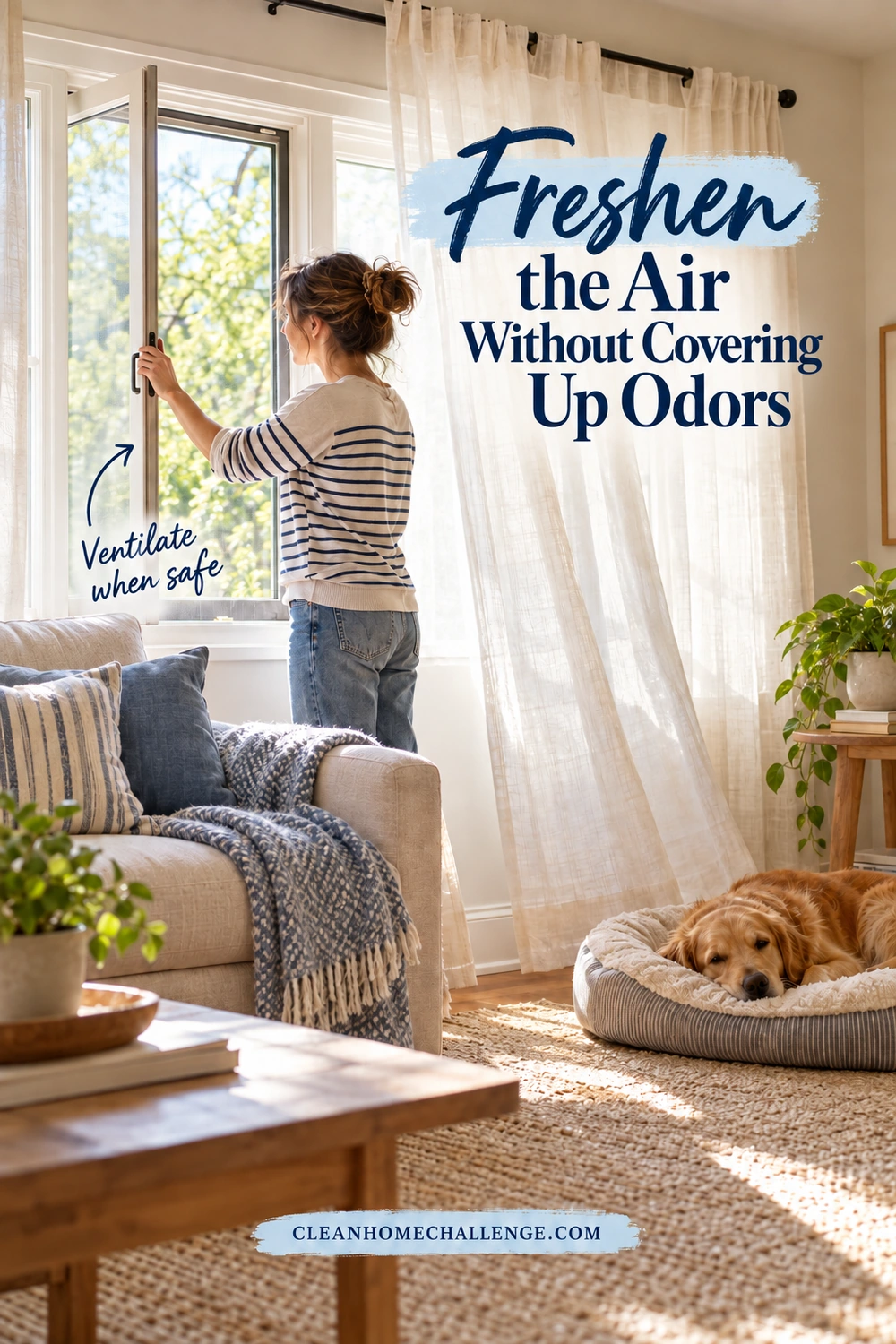
Freshen the Air Without Covering Up Odors
Once you have addressed the main sources, ventilate when outdoor air quality, weather, security, and your household’s needs allow. Secure doors and windows so pets cannot escape. Keep the dog in their clean resting area while floors, bedding, or treated furniture finish drying.
A fan can help circulate air when appropriate, but it does not replace a product’s required treatment time. Do not aim airflow so it spreads loose contamination or blows cleaning spray toward people or pets. If fabrics remain damp or a room has a persistent musty smell, investigate moisture rather than assuming every odor comes from the dog.
Know what an air purifier can do
A particle filter can help capture airborne particles; odor-causing gases require a suitable gas-removing filter. EPA’s air-cleaner guide explains that activated carbon can help with gases when there is enough filtering material. No air cleaner removes every pollutant, and filtration supplements source removal and ventilation.
If you already own a purifier, use it according to its room-size guidance and keep up with filter changes. Check the HVAC filter on its existing maintenance schedule, using the size and type your system supports. Buying another appliance should not be your first response to one unwashed blanket.
Skip ozone generators for household odor control. EPA warns that ozone is a lung irritant and that concentrations within public-health limits are ineffective against many odor-causing chemicals.
Room sprays, scented powders, and diffusers do not remove dirty fabric or dried waste. Do not apply essential oils, fabric freshener, or household cleaner to your dog. ASPCA’s essential-oil guidance warns about concentrated oils and direct exposure. For this cleanup, you can simply leave added fragrance out.
There is also no need to scatter baking soda over every carpet or mix it with vinegar. Use a method approved for the actual material and remove the odor source you identified.
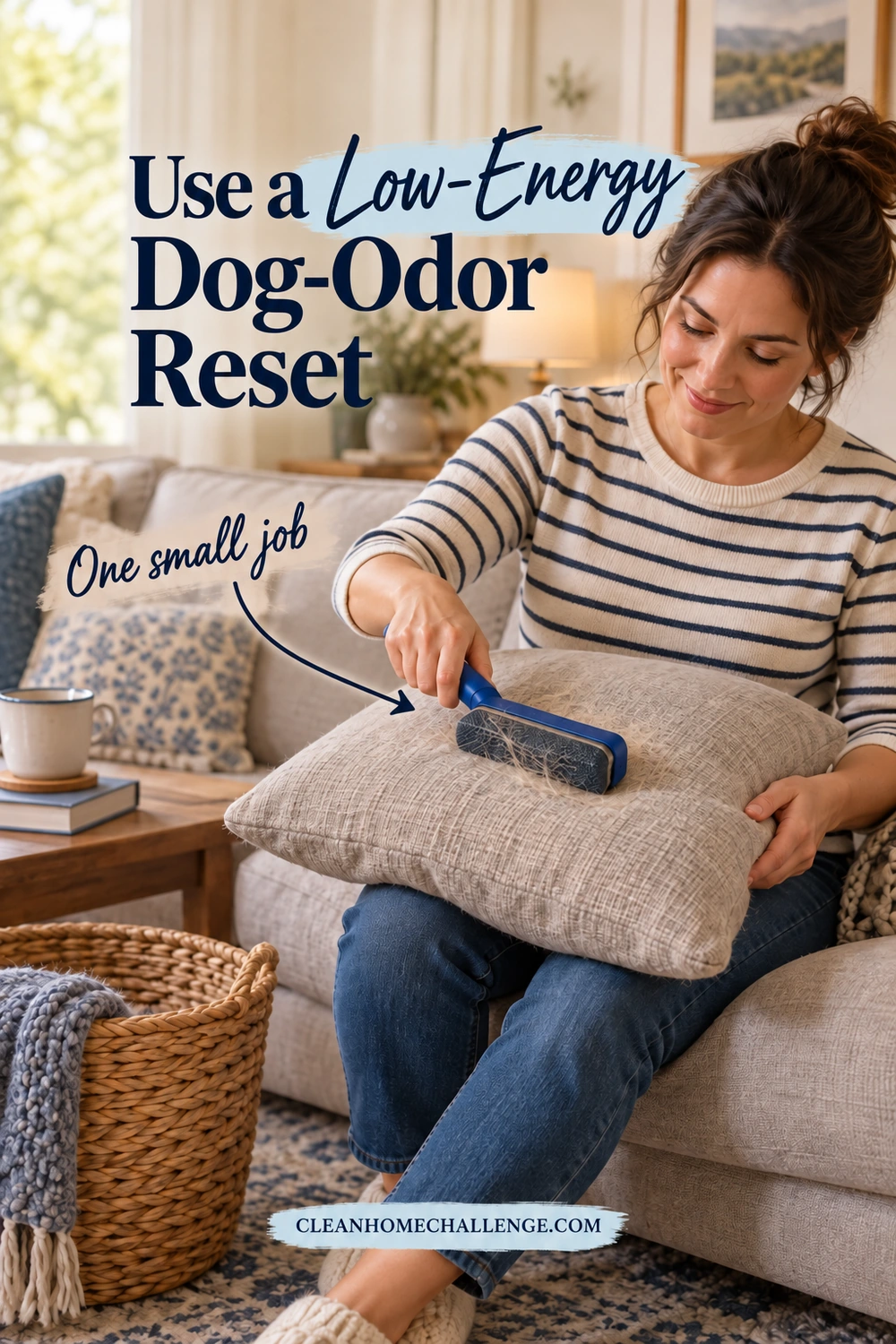
Use a Low-Energy Dog-Odor Reset
If you only have a little time, focus on the room you use most. A smaller, fully finished job is easier to manage than wet carpets, stripped furniture, and laundry waiting in every doorway.
About five minutes available
- Remove one obvious source, such as a damp dog towel, food scrap, or dirty throw.
- Check and deal with any fresh accident using the appropriate process; safety and treatment time take priority over the timer.
- Put a clean, dry cover or blanket on an otherwise clean resting spot, if you have a suitable spare.
If washing cannot happen yet, follow the item’s care guidance and keep soiled laundry securely away from children and pets. Avoid leaving ordinary damp towels bundled in a closed pile. Do not shake urine-soiled fabric around the room.
About fifteen minutes available
Start one suitable bedding load, then vacuum the dog’s main resting area and the accessible floor around it. Put products away and check that the laundry has a realistic next step: someone can move it to dry when the cycle ends.
About thirty minutes available
Add the bowl area, the underside of the bed, and one compatible floor-cleaning job. Leave the deep sofa treatment for a day when you can read the instructions, test the product, and keep the furniture unused while it dries.
These are suggested work windows, not guarantees that an odor will disappear within that time. Your available energy, floor area, amount of hair, and the cause of the smell will change the job.
If guests are due soon, choose dry hair removal, taking away dirty fabric, and safe ventilation. Starting a wet upholstery treatment just before everyone arrives can leave you with nowhere suitable to sit. A room can look lived-in and still feel comfortable to spend time in.
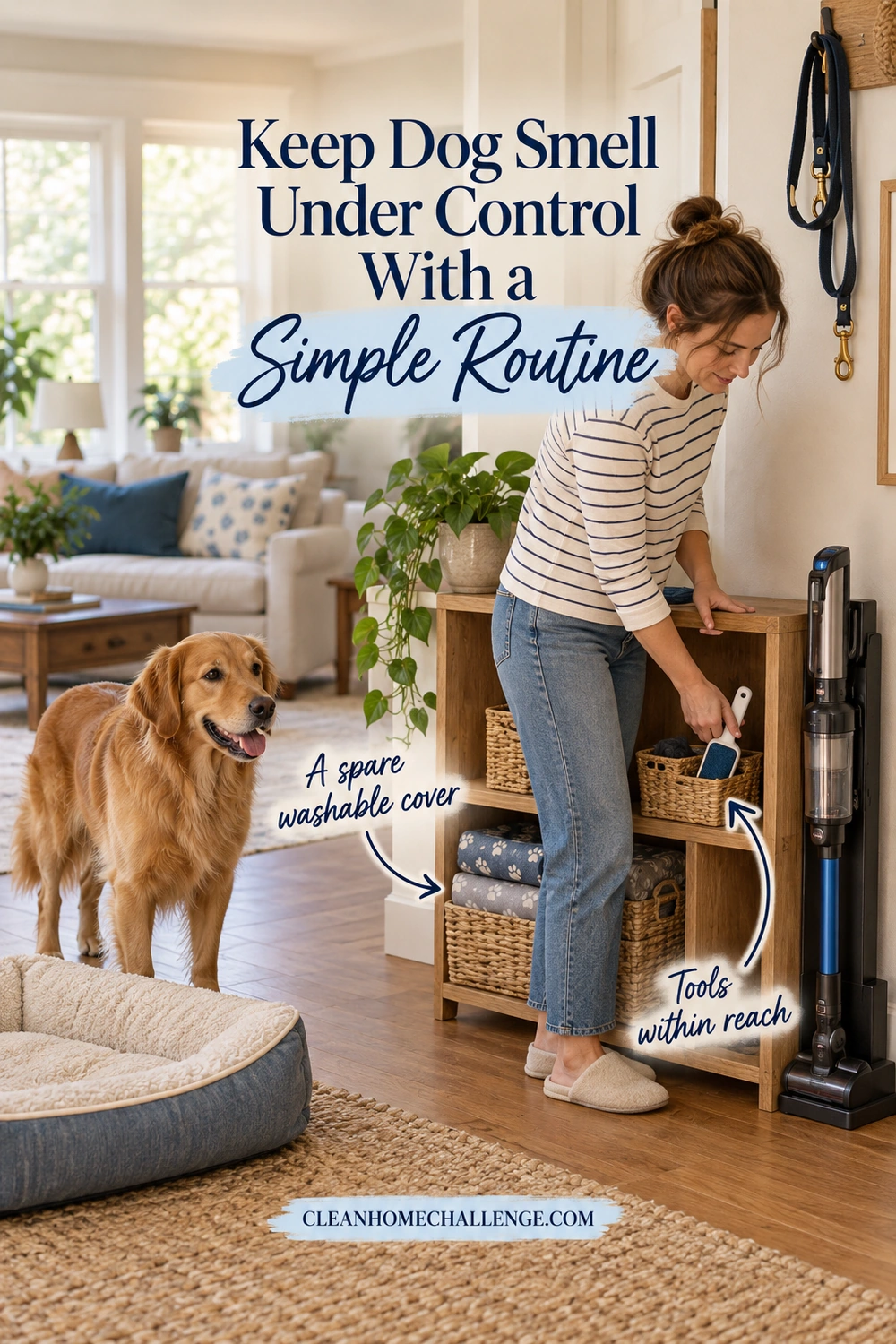
Keep Dog Smell Under Control With a Simple Routine
Once you know your home’s main odor sources, attach their care to jobs you already do. You do not need a separate whole-house pet-cleaning day.
Each day or as needed: Pick up visible debris, deal promptly with accidents, and hang ordinary wet dog towels where they can dry safely before washing. After a wet walk, gently towel-dry your dog as appropriate for their coat and comfort before they settle onto soft furniture. Keep grooming and bathing suited to your dog’s needs, with veterinary or groomer guidance rather than an automatic extra bath whenever the room smells.
During your weekly living-area clean: Vacuum the favorite resting spot, sofa seams, and nearby edges. Check the underside of the dog bed and rug. You can fold this into the usual Thursday living-area focus using the living-room cleaning order.
During laundry catch-up: Check bed covers, throws, towels, and washable mats. A weekly check is a practical starting point; wash sooner whenever something is soiled and adjust the schedule to the dog and item. Keep a spare cover if it makes drying time easier to manage.
On the appliance maintenance schedule: Inspect vacuum parts and air filters, and clean or replace them as their manufacturers direct. Add the next check to a reminder you already use.
If the smell returns quickly, notice exactly where and when. A freshly washed cover over an affected insert needs a different solution from a forgotten towel or recurring urine accident. An odor that follows the dog, especially with other symptoms, belongs on your veterinarian’s list.
You are aiming for clean resting places, dry fabrics, and a repeatable way to handle mess. Start with one source today, finish that job properly, and let the next useful step be enough for another day.
CLEANERS CLUBHOUSE
Get Step-by-Step Help With Tricky Cleaning Jobs
When a stain, smell or stubborn cleaning problem has you stuck, a clear plan makes all the difference. The Cleaners Clubhouse gives you practical guidance, useful printables and routines you can actually follow.