THIS POST MAY CONTAIN AFFILIATE LINKS. PLEASE READ MY DISCLOSURE FOR MORE INFO.
If your floor feels tacky after mopping, shows footprints almost immediately or looks duller than it did before you cleaned it, you are not imagining it. A sticky floor after mopping usually means something has been left behind: too much cleaner, dirty water, soil that was spread rather than removed, or a product that does not suit the floor.
The good news is that you normally do not need a stronger cleaner or a harder scrub. You need less product, a genuinely clean mop pad and a method that lifts residue instead of moving it around.
This guide explains how to mop floors without leaving sticky residue, how to correct a floor that is already tacky, and how to adjust the method for timber, laminate, vinyl, tile and stone. Always check the flooring manufacturer’s care instructions first because finish, sealant and installation method can change what is safe.
Disclosure: This post may contain affiliate links. As an Amazon Associate, Clean Home Challenge earns from qualifying purchases. If you make a purchase through these links, we may earn a small commission at no extra cost to you. This helps us keep creating practical cleaning tips, routines and resources for busy families! 🧽
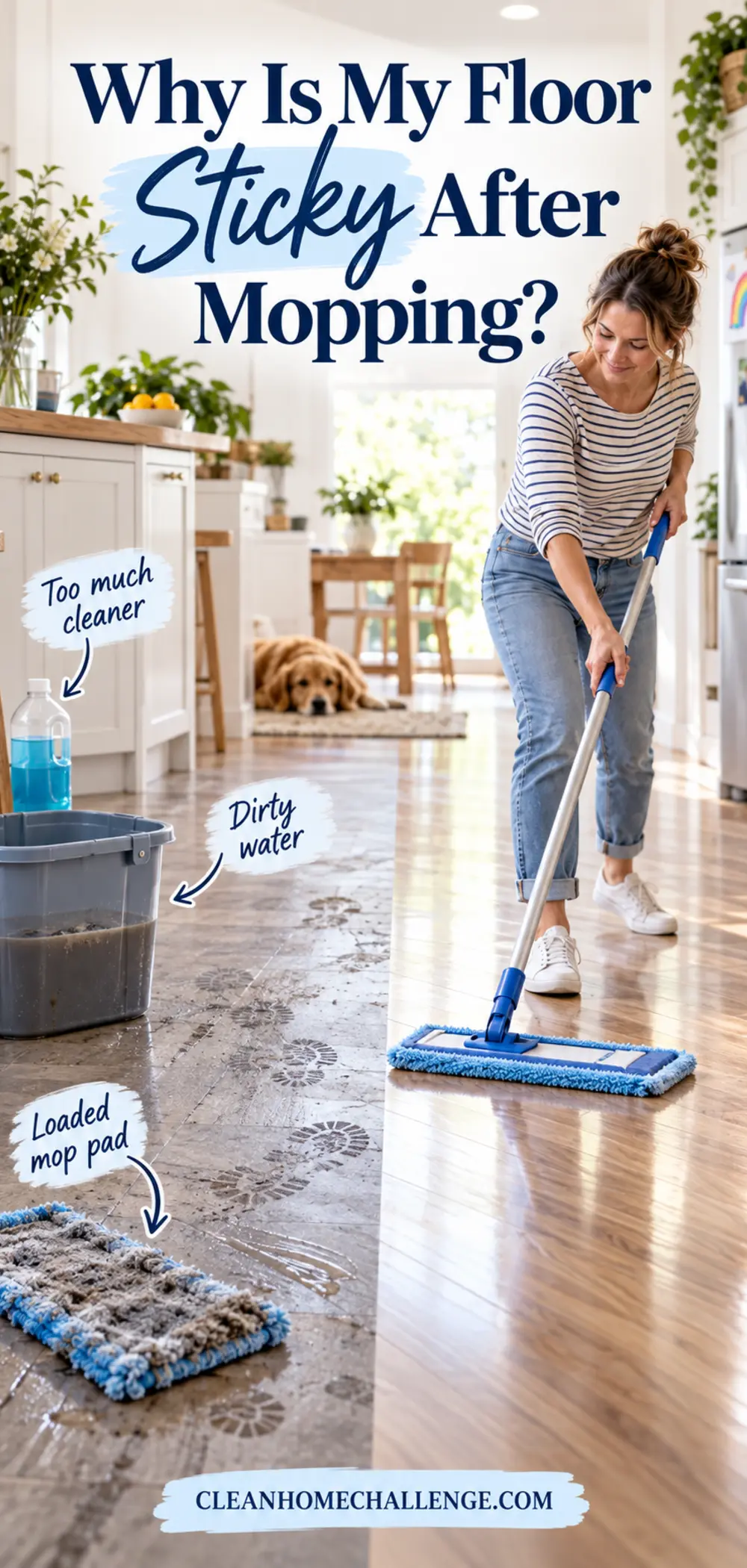
Why Is My Floor Sticky After Mopping?
A properly cleaned floor should not feel grabby under bare feet or leave shoe prints everywhere. Stickiness generally develops when dissolved cleaner and soil remain on the surface after the water evaporates.
Think of it like washing dishes with far too much detergent and never rinsing the plate. The floor may look wet and freshly cleaned at first, but the remaining film becomes noticeable as it dries.
The problem can happen in one clean or build gradually over several weeks. A floor that suddenly feels sticky may have been cleaned with an overly strong solution. A floor that has become dull or tacky over time may have layers of cleaner, polish, oil soap or incompatible products.
Before trying to remove the film, identify the floor and, if possible, the product that caused it. Flooring and cleaning-product manufacturers are the safest sources for a compatible removal method. Bona’s floor-cleaner guidance advises contacting the manufacturer of another product when removing that product’s residue because the manufacturer knows its formulation.
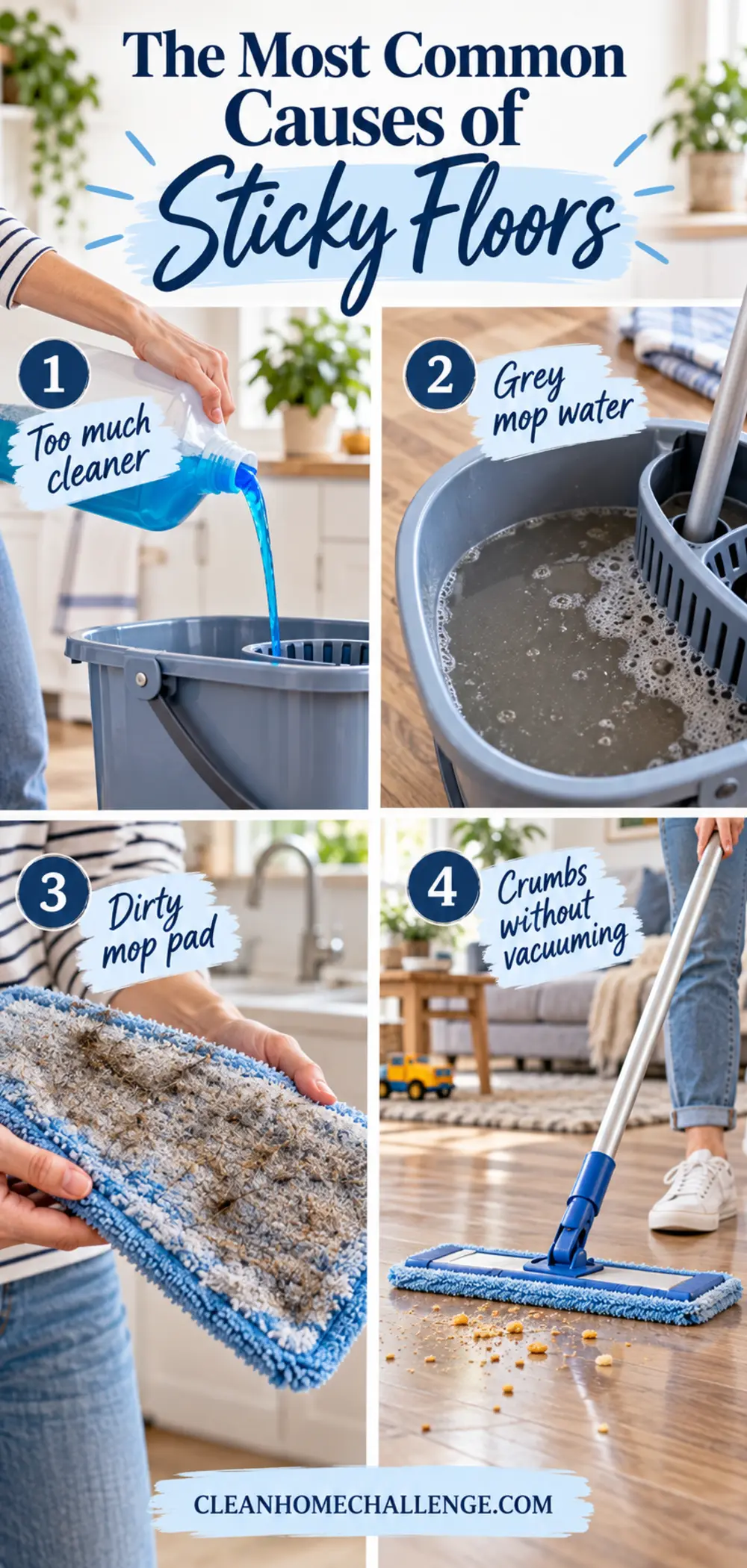
The Most Common Causes of Sticky Floors
Using too much cleaning product
More cleaner does not mean more cleaning. Concentrated products are designed for a specific dilution. Adding an extra splash can leave surfactants and other ingredients on the floor. Measure according to the label rather than pouring by eye.
Ready-to-use products should not automatically be diluted or combined with another cleaner. Concentrates must be diluted exactly as directed. Never mix different cleaning products. The NSW Poisons Information Centre advises following product directions, ventilating the area and avoiding chemical mixtures.
Mopping with dirty water or a loaded pad
Once bucket water is grey, you are spreading suspended soil over the next section. A microfiber pad also stops lifting effectively when it is saturated with grime. Large rooms, pet homes and busy kitchens often need more than one pad or a water change partway through.
Skipping dry soil removal
Hair, crumbs, dust and grit turn into a muddy film when they meet mop water. Vacuum or sweep first, including along edges and under the table. This short step makes the wet clean faster and helps protect the surface from grit.
Using an unsuitable product
Dish liquid, oil soap, wax, furniture polish and multipurpose cleaners may leave a film or conflict with the finish. Vinegar is not a universal floor cleaner: its acidity can damage some finishes and natural stone. Use a product approved for the actual floor and finish.
Too much water or poor drying
An over-wet mop can leave diluted grime behind and may damage moisture-sensitive flooring. Standing water is especially risky around timber joints, laminate seams and floor edges. Use a well-wrung or lightly damp microfiber pad and allow ventilation without directing unsafe heat at the floor.
What to Do Before You Mop
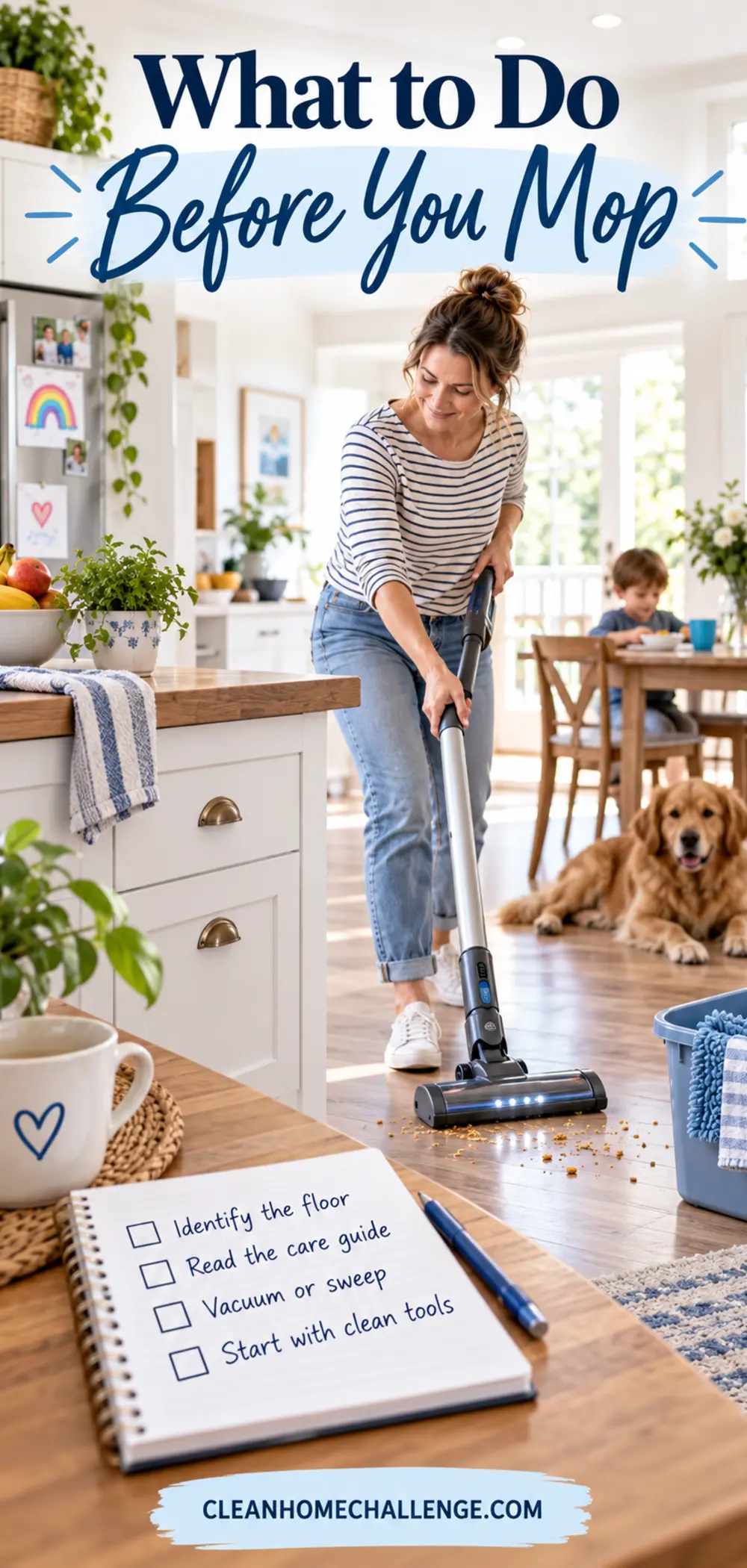
Good mopping starts before the floor gets wet.
- Identify the floor. Confirm whether it is sealed timber, laminate, luxury vinyl plank, ceramic or porcelain tile, natural stone, or another material.
- Read the care instructions. Check the flooring manufacturer’s instructions and the cleaner label. If the advice conflicts, stop and ask the floor manufacturer.
- Clear the working area. Move light chairs, baskets and floor mats. Do not strain to move heavy furniture; clean the accessible area and use suitable attachments for edges.
- Vacuum or sweep thoroughly. Remove loose grit, pet hair and crumbs, paying attention to corners and high-traffic paths.
- Start with clean equipment. Use a freshly washed microfiber pad, clean bucket and correctly measured solution.
- Patch-test. Test an inconspicuous area when using a product for the first time or treating buildup.
Keep children and pets away from the wet area until it is dry. Ventilate as the product label directs and store all products securely when you finish.
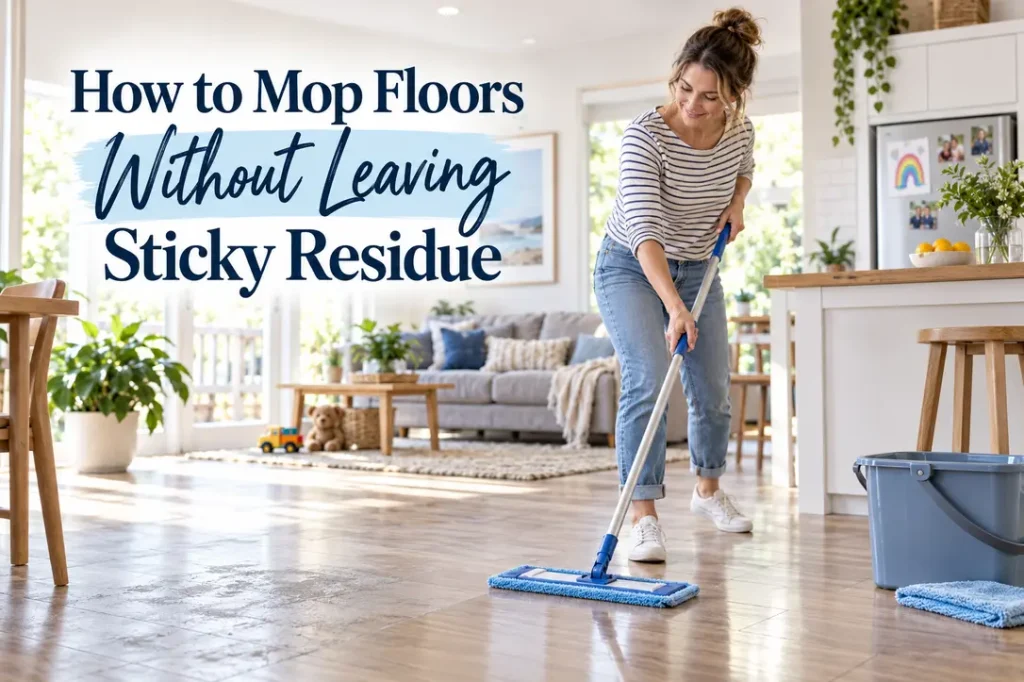
The Residue-Free Mopping Method
This method is suitable as a general framework, but the amount of moisture and cleaner must match your floor.
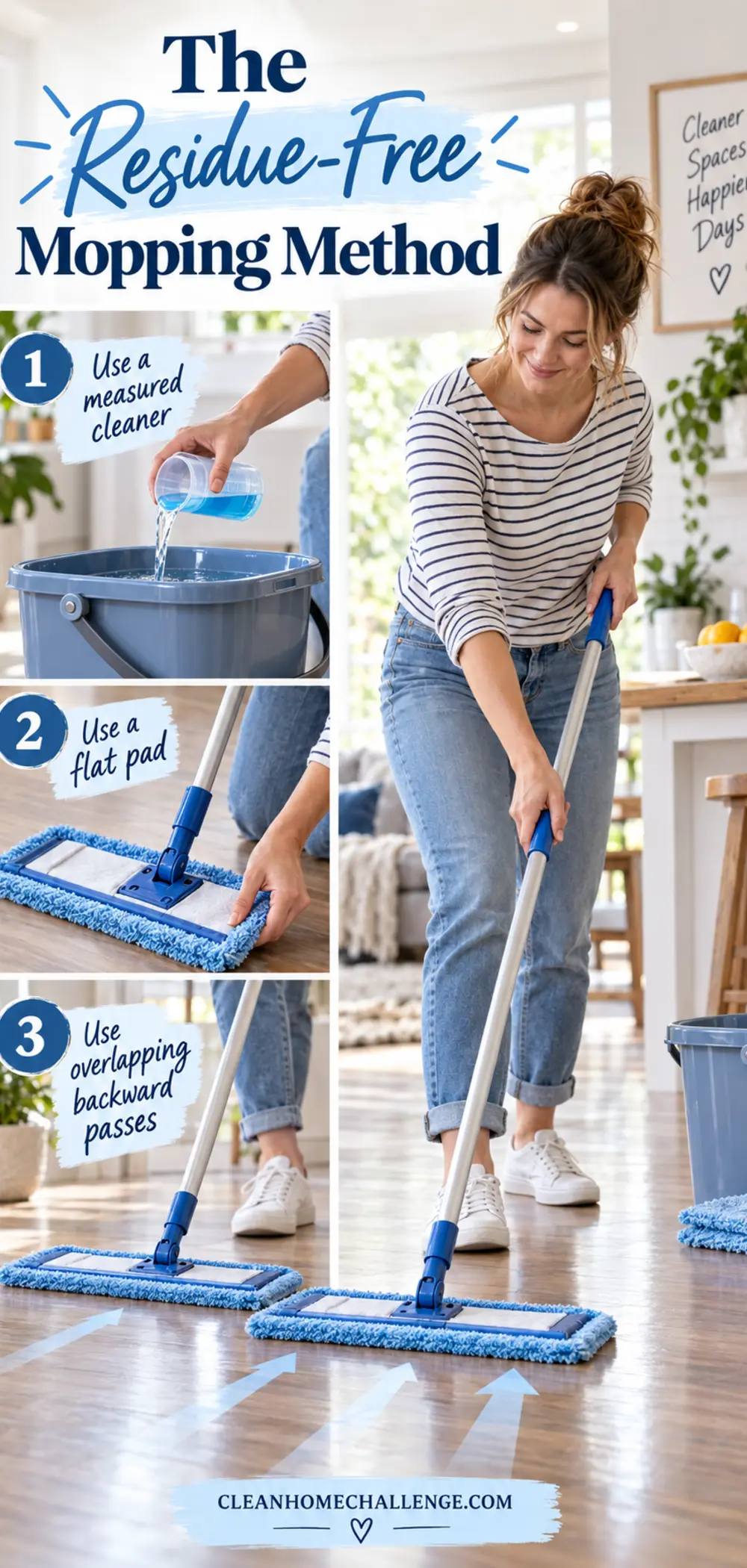
- Work in small sections. Start at the far side of the room and work toward the exit so you do not walk over the wet surface.
- Apply only the required amount. Lightly mist a ready-to-use product or use a properly diluted bucket solution. The floor should not be flooded.
- Use a flat microfiber mop. Keep the pad flat so the whole surface can lift soil.
- Pull the mop back toward you. Use overlapping pull-back passes rather than pushing dirty moisture into corners. Lift or turn the mop when changing direction instead of grinding grit across the floor.
- Check the pad often. Rinse it thoroughly or replace it as soon as it becomes grey or starts leaving streaks.
- Change dirty water. Fresh solution cannot clean effectively if the bucket is already holding the dirt from several rooms.
- Let the section dry. Do not add more product merely because the floor is still damp. Inspect it after it dries.
If the cleaner label requires rinsing, rinse with a fresh, well-wrung pad and clean water. If it is a no-rinse product used at the correct strength, an unnecessary water rinse may not be recommended. Follow the label.
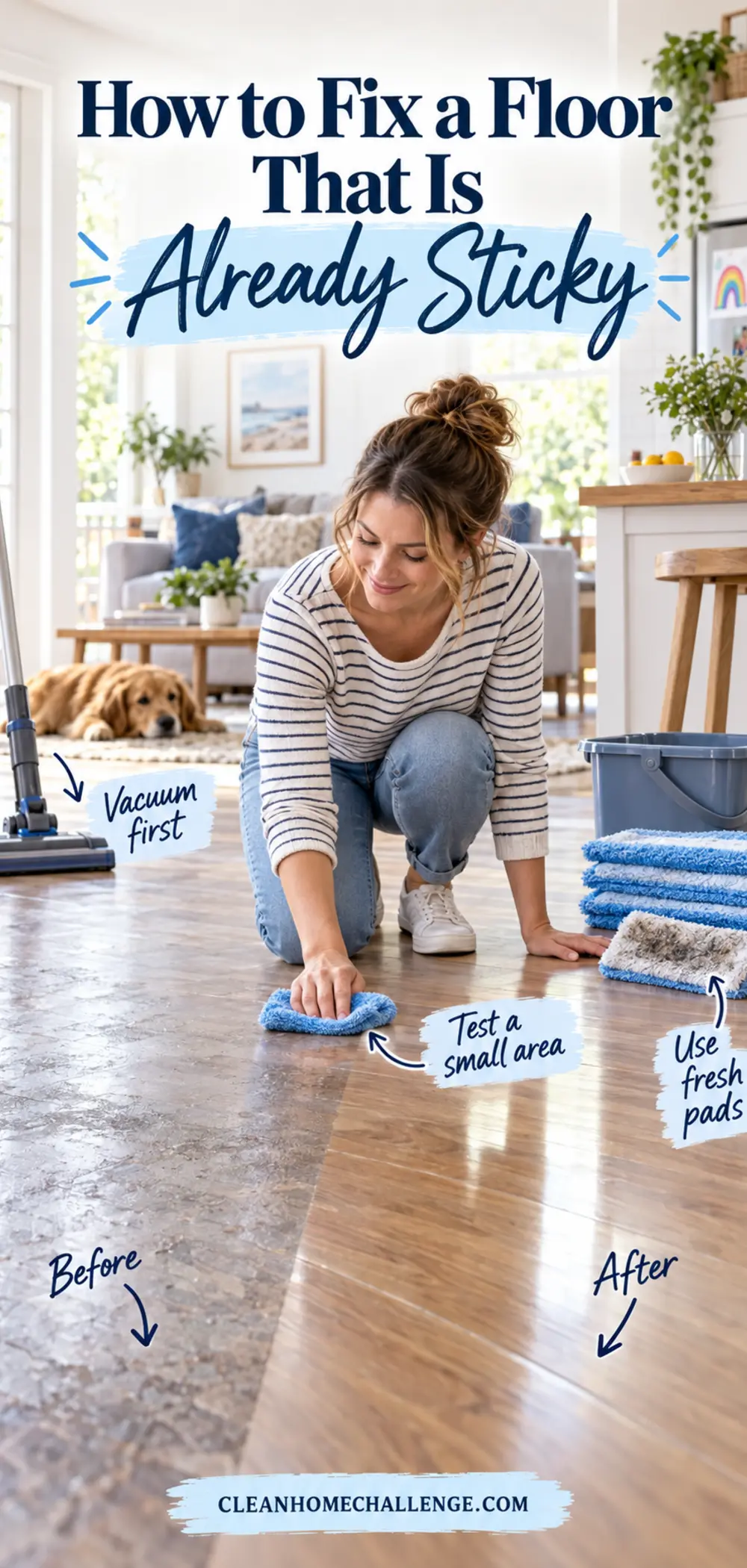
How to Fix a Floor That Is Already Sticky
Do not immediately add another strong cleaner. First try to lift the removable film gently.
- Vacuum or sweep the floor.
- Dampen a clean microfiber pad with plain water only if plain water is permitted for your floor.
- Wring it very well so it is damp rather than dripping.
- Work over a small test section using overlapping passes.
- Replace or rinse the pad as it collects residue.
- Let the test area dry fully and compare it with the untreated floor.
If the test area improves, repeat in small sections with clean pads. Several light passes are safer than soaking the floor once.
If plain water is not suitable, or if the film remains, consult the floor or product manufacturer for a compatible residue remover. Do not improvise with vinegar, ammonia, bleach, solvents or abrasive pads. Never mix cleaning chemicals. A persistent film could be wax, polish, oil soap, damaged finish or a reaction between products, and each requires a different response.
Stop if the finish changes color, becomes cloudy, softens, swells or feels rough. Those signs may indicate damage rather than removable cleaner residue.
Adjust the Method for Your Floor Type
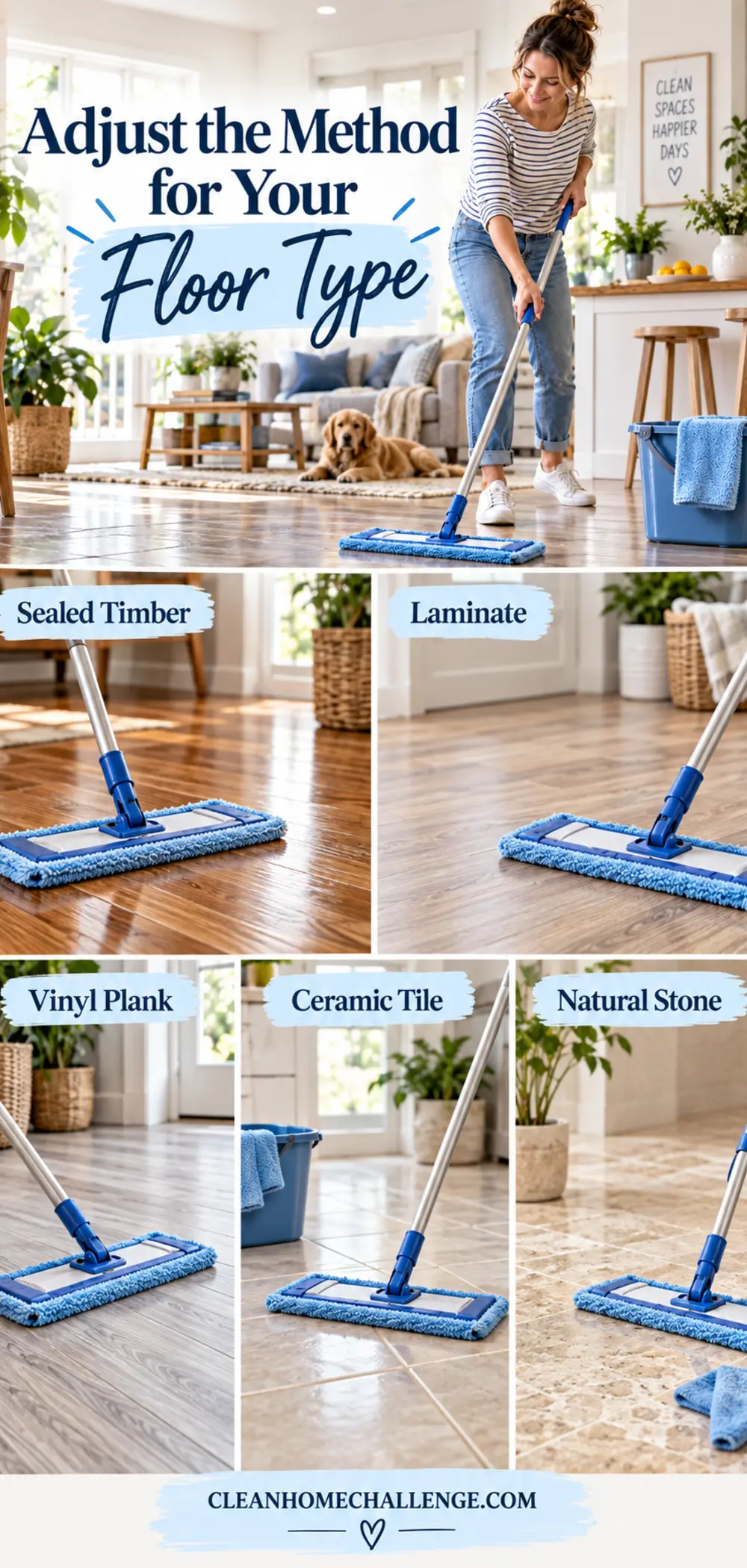
| Floor type | Safer starting point | Avoid unless specifically approved |
|---|---|---|
| Sealed timber | Floor-specific product, minimal moisture, clean microfiber pad | Flooding, steam, vinegar, wax or oil soap on incompatible finishes |
| Laminate | Very lightly damp microfiber and laminate-approved cleaner | Standing water, wet string mops, steam unless manufacturer permits it |
| Vinyl plank/LVT | Manufacturer-approved cleaner and damp microfiber | Solvents, abrasive pads, wax on no-wax finishes |
| Ceramic or porcelain tile | Suitable neutral cleaner; clean water and pad changes | Over-strong detergent that leaves film; aggressive tools on grout or glaze |
| Natural stone | Stone-specific pH-appropriate cleaner | Vinegar, lemon and acidic bathroom cleaners |
“Timber-look” does not tell you whether a floor is timber, laminate or vinyl. If you are unsure, check purchase documents, ask the installer or contact the manufacturer before treating buildup.
How Often to Rinse or Change the Mop Pad
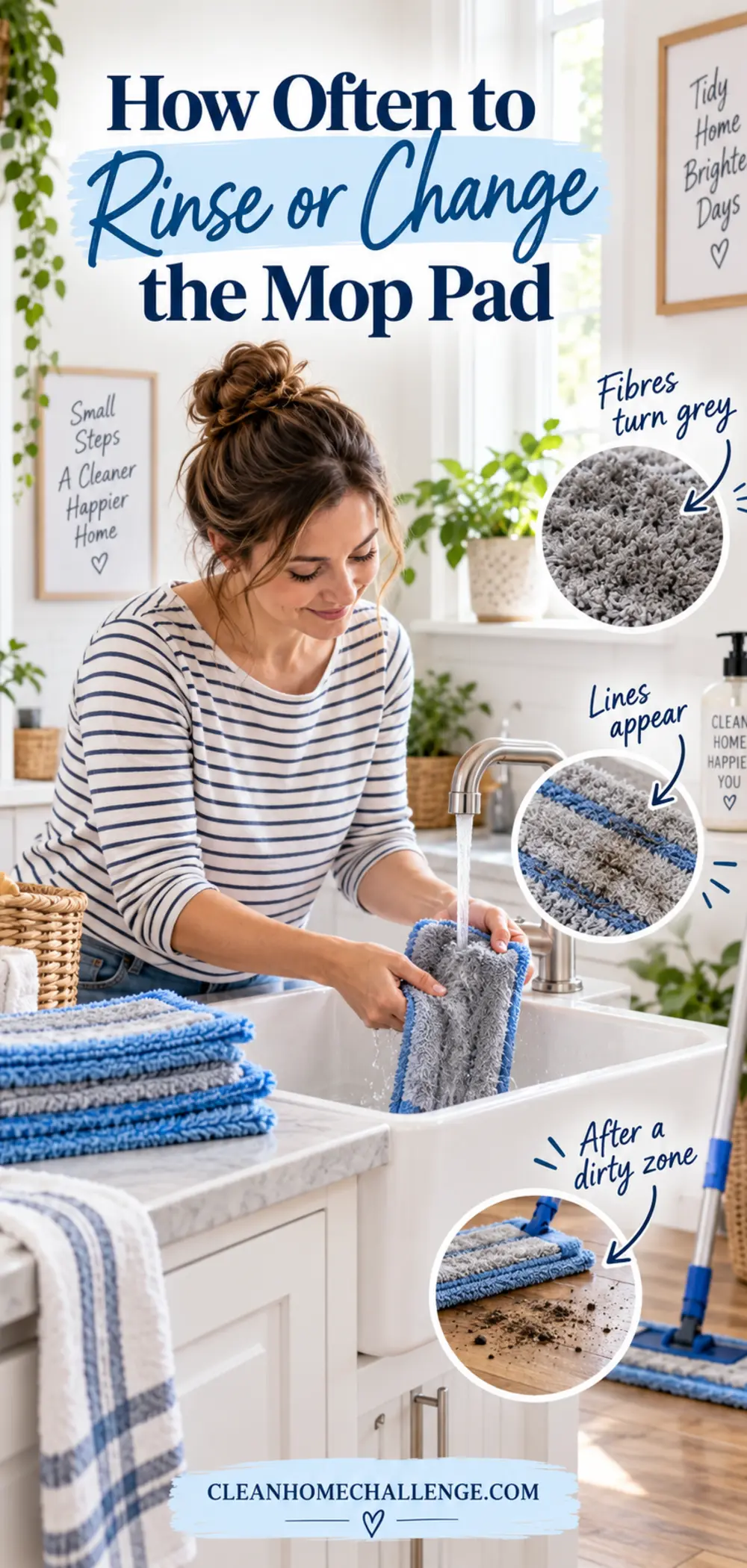
There is no useful one-pad-per-house rule. Change or rinse the pad when:
- the white or pale fibers turn grey;
- the mop begins leaving lines or dull patches;
- it stops gliding normally;
- you finish a particularly dirty entrance or kitchen zone;
- you move from a bathroom or pet-mess area to another room; or
- the pad has picked up grit that could scratch the floor.
Keeping several washable pads makes this easy. Use one clean side or pad per zone, then wash them according to their care instructions. Avoid fabric softener when the pad manufacturer advises against it because it can coat microfiber and reduce absorbency.
Mistakes That Keep Leaving Floor Residue
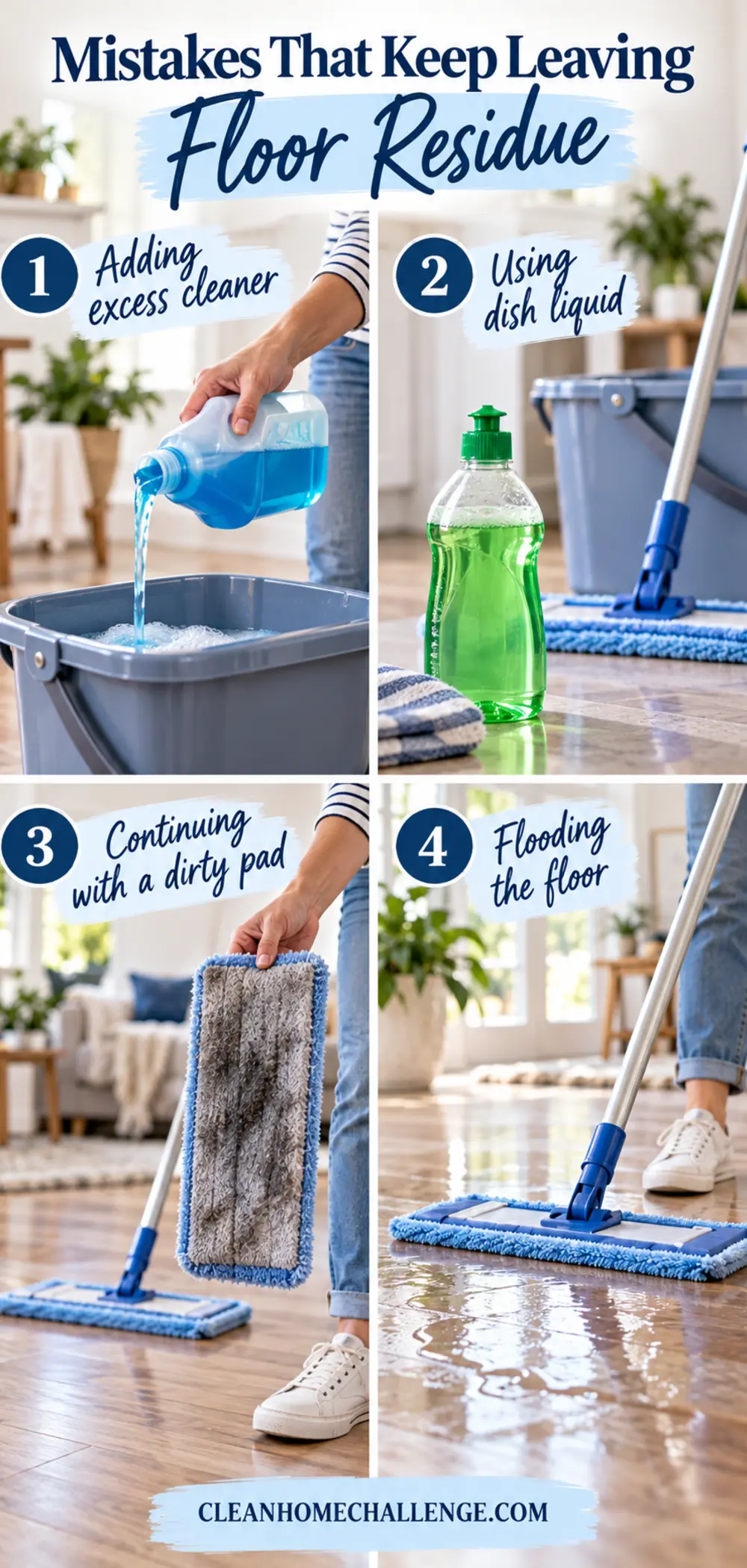
- Adding an extra capful “for luck.” Exact dilution is more reliable than guesswork.
- Using dish liquid as an all-purpose floor cleaner. It can foam heavily and leave surfactant behind.
- Mopping before vacuuming. Wet dust becomes a film.
- Cleaning every room with one dirty pad. The pad eventually redistributes grime.
- Using several products together. This can create unsafe fumes or an unpredictable residue.
- Assuming vinegar is safe everywhere. It can harm stone and some finishes.
- Flooding seams and edges. Excess moisture can reach vulnerable layers.
- Walking on the floor before it dries. Socks and shoes transfer soil and create prints.
- Applying polish to solve dullness. If the dullness is buildup, another coating can make it worse.
When a floor stays sticky after two careful corrective cleans, stop experimenting. Get advice from the floor manufacturer or a qualified flooring professional.
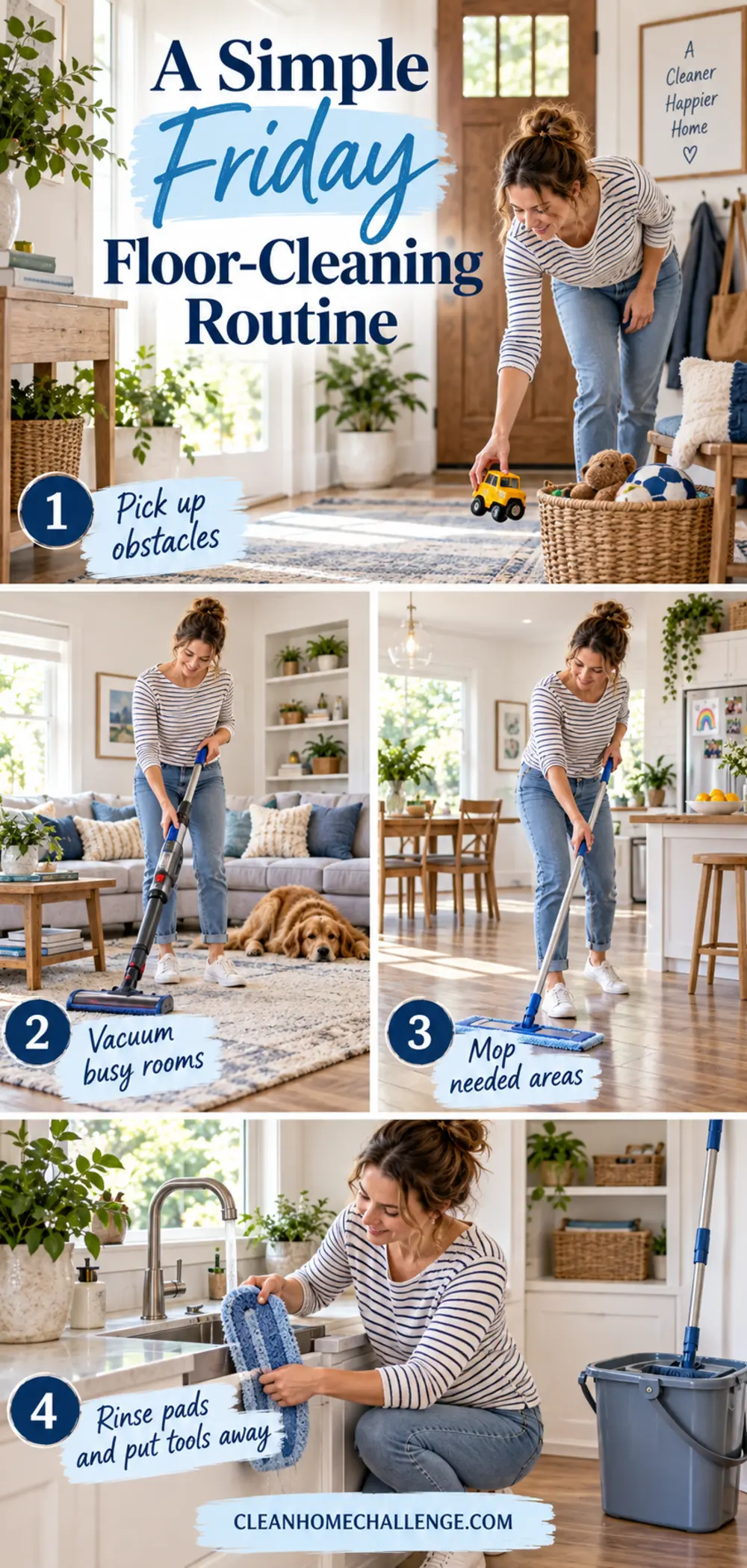
A Simple Friday Floor-Cleaning Routine
The Clean Home Challenge weekly rhythm uses Friday as the main floor day, so you do not need to chase every mark all week.
The 20-minute version
- Pick up shoes, toys and lightweight obstacles for 3 minutes.
- Vacuum or sweep high-traffic rooms for 7 minutes.
- Mop the kitchen, entry and other areas that genuinely need it for 8 minutes.
- Rinse pads, empty the vacuum and put tools away for 2 minutes.
The minimum version
Vacuum the obvious crumbs and grit, then damp-mop only the sticky spill zones. A whole-house mop can wait. Fresh spills are easier to remove than old buildup, so spot-cleaning during the week protects Friday from becoming an exhausting job.
CLEANERS CLUBHOUSE
Stay on Top of Floors Without Cleaning All Day
Give your floors a focused Friday reset instead of chasing every mark all week. The Cleaners Clubhouse helps you build a realistic routine with practical guidance, printables and monthly challenges.
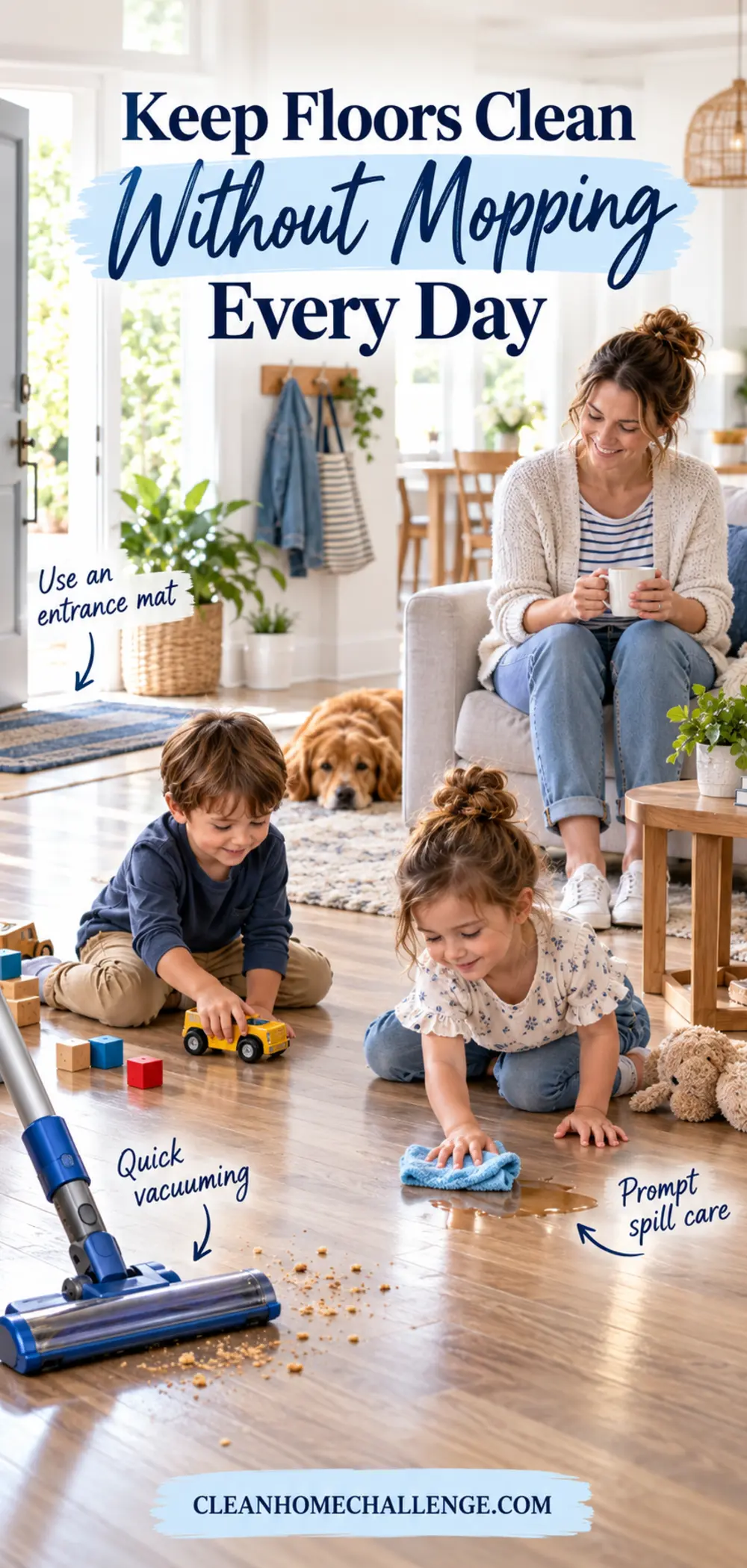
Keep Floors Clean Without Mopping Every Day
Residue-free floors depend as much on prevention as on mopping.
- Place effective mats at entrances and clean the mats regularly.
- Ask family members to remove muddy or gritty shoes.
- Vacuum kitchen crumbs and pet hair before they spread.
- Blot spills promptly using the approved method for the surface.
- Keep one or two clean mop pads ready instead of waiting for laundry day.
- Measure concentrated cleaner every time.
- Use one compatible product consistently rather than layering several products.
A clean floor should feel comfortable, not coated. When you remove dry soil first, use the right product at the correct strength and switch to a clean pad before the old one is overloaded, mopping becomes a quick maintenance job instead of the start of another cleanup.
Frequently asked questions
Should I rinse the floor with water after mopping? Only if the product label or floor manufacturer calls for rinsing, or if an approved plain-water test is being used to remove excess residue. Some ready-to-use, no-rinse cleaners are designed to dry without a water rinse.
Why is the floor sticky even when I only use water? The pad or water may be redistributing old cleaner buildup, grease or soil. Work on a small test area with multiple clean pads. If it does not improve, ask the floor manufacturer how to identify and remove the existing coating.
Can I use hot water? Use the temperature recommended by the cleaner and flooring manufacturer. Very hot water is not automatically more effective and may be unsuitable for some finishes or adhesives.
Is a steam mop the answer to sticky floors? Not automatically. Steam can damage some timber, laminate, vinyl and adhesive systems. Use it only where the flooring manufacturer explicitly allows it.
How much floor cleaner should I use? Use exactly the label rate. If the product is ready to use, do not add concentrate or combine it with another cleaner.