THIS POST MAY CONTAIN AFFILIATE LINKS. PLEASE READ MY DISCLOSURE FOR MORE INFO.
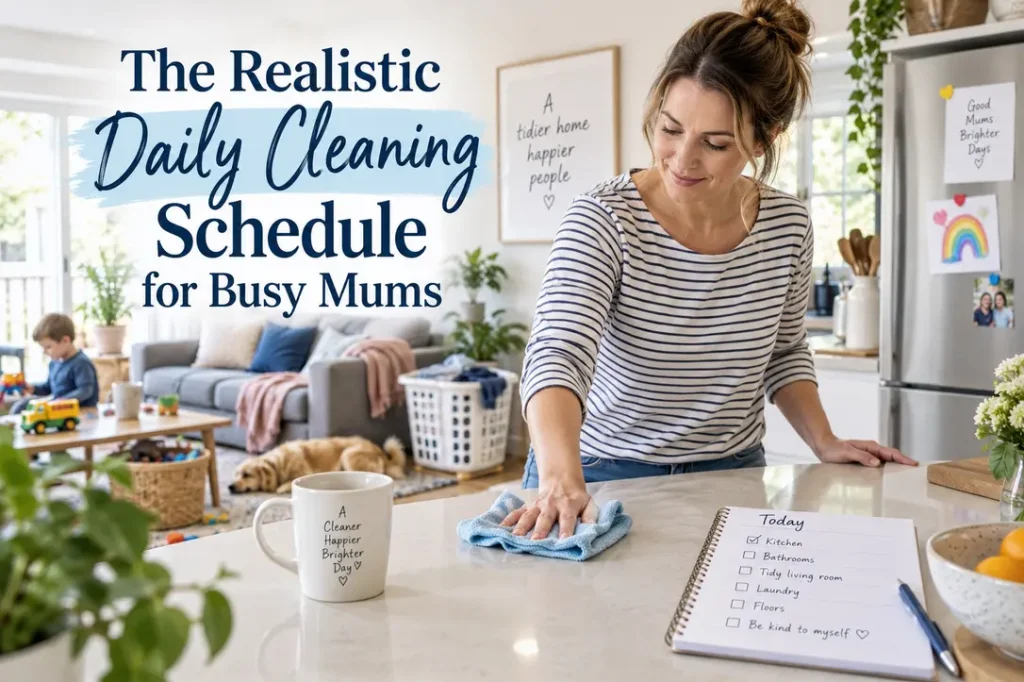
If keeping your home clean feels like a job that starts again every morning, you do not need a stricter routine. You need a smaller one that fits around breakfast, school, work, appointments, homework, dinner and the days when everyone is tired.
This realistic daily cleaning schedule focuses on five habits that stop ordinary mess from turning into a weekend-long catch-up: make the bed, pick up what is out of place, wipe the surfaces that were used, move one load of laundry forward and spot-clean the floors that need attention. Most days, these jobs can be split into a 10-minute morning routine and a 15-minute evening reset. The midday step is optional.
The aim is not a spotless home. It is a home that stays functional, comfortable and easier to reset tomorrow.
Disclosure: This post may contain affiliate links. As an Amazon Associate, Clean Home Challenge earns from qualifying purchases. If you make a purchase through these links, we may earn a small commission at no extra cost to you. This helps us keep creating practical cleaning tips, routines and resources for busy families! 🧽
What a Realistic Daily Cleaning Schedule Should Do
A useful daily cleaning routine should protect the parts of your home that affect family life most. That usually means having somewhere clear to prepare food, enough clean dishes for the next meal, clothing moving through the laundry cycle, safe walkways, and the main living spaces ready to use.
It should also leave deep cleaning where it belongs: on a weekly, monthly or seasonal list. You do not need to clean the oven, scrub every shower, dust every blind or mop the entire house every day. When those larger jobs appear on a daily checklist, the list becomes impossible before the day even begins.
A realistic schedule has three features:
- It has a clear stopping point. When the timer ends, you can stop.
- It prioritizes visible and functional areas. Deal with what is affecting today rather than searching for hidden jobs.
- It can shrink on a hard day. A routine that only works when you have plenty of energy is not a dependable routine.
Think of daily cleaning as maintenance. Weekly cleaning handles the rooms in more detail, while monthly and seasonal tasks deal with slower build-up.

The Five Daily Habits That Keep a Home Manageable
These five habits form the base of the Clean Home Challenge routine. They are simple enough to repeat and flexible enough to adapt to different homes.
1. Make the bed
Pull up the bedding and straighten the pillows when you get up. It gives the bedroom an immediate reset and takes less time when the bed is not overloaded with decorative cushions. On laundry day, stripping the bed counts; it does not need to be remade first.
2. Pick up what is out of place
Use a basket to collect items that belong elsewhere. Return them if time allows, or place the basket near the correct room for the next trip. Concentrate on floors, stairs, couches and the main surfaces your family needs.
3. Wipe the surfaces you used
After food preparation, clear crumbs and spills from the kitchen counter and dining table. Give the bathroom vanity a quick wipe when splashes are visible. Use a product suitable for the surface, follow its label and never mix cleaning products. The NSW Poisons Information Centre advises using cleaning products in a ventilated area, not mixing chemicals and storing higher-risk products away from children.
Routine cleaning is usually enough for ordinary household surfaces. Disinfecting is a separate step used when illness, contamination or a product instruction calls for it; cleaning first helps remove dirt that can interfere with a disinfectant.
4. Move one load of laundry forward
This does not have to mean washing, drying, folding and putting away a full load in one session. Start a load in the morning, move it to the dryer or line later, then fold it while dinner cooks or the family watches television. If there is no full load, put away a basket or gather towels for tomorrow.
5. Spot-clean the floors
Sweep or vacuum crumbs, pet hair, tracked dirt and obvious debris in the busiest areas. Wipe a fresh spill promptly using the correct method for the floor finish. Save whole-house vacuuming and mopping for the relevant weekly day unless your home genuinely needs it more often.

A Morning Cleaning Routine You Can Finish in 10 Minutes
The morning routine should make the home functional before the day becomes busy. Set a timer and work in the same order so you do not have to decide what comes next.
- Make the bed — 1 minute. Straighten the bedding as soon as you get up.
- Start or sort laundry — 2 minutes. Start one appropriate load, or sort and prepare it for later. Check garment care labels and machine instructions.
- Reset breakfast dishes — 3 minutes. Load the dishwasher, wash the essential items or stack them neatly beside the sink if you need to leave immediately.
- Wipe the kitchen counter and table — 2 minutes. Remove crumbs and fresh spills with a surface-appropriate cloth and cleaner.
- Do a fast pickup — 2 minutes. Clear the main walkway and put obvious items into a return basket.
If mornings are rushed, split the routine. Make the bed and start laundry before breakfast, then reset the kitchen just before leaving. If you work nights or have a baby who wakes frequently, “morning” simply means the first reliable point in your day.

A Five-Minute Midday Reset If You Are Home
The midday reset is optional. It is useful for families who are home during the day, work from home or have young children creating new layers of mess between morning and dinner.
- Put toys or activity supplies into one basket.
- Take cups and dishes to the kitchen.
- Move the laundry to its next stage.
- Wipe one fresh spill or sticky patch.
- Clear the dining table or another surface needed later.
Stop after five minutes. This is a bridge between the morning and evening routines, not an extra cleaning session. If you are out all day, skip it without trying to “make it up” at night.

A 15-Minute Evening Reset for a Calmer Morning
The evening routine closes the day and prepares the home for breakfast, school and work. Ask everyone who is able to join in for part of it.
Minutes 0–5: Close the kitchen
Load the dishwasher or wash the essential dishes. Put food away, clear the main preparation area, wipe the counter and table, and rinse the sink. Do not start detail cleaning appliances or cupboards.
Minutes 5–10: Reset the shared spaces
Pick up toys, cups, shoes, blankets and chargers from the living areas. Give each person a small category or zone. Return items that have an obvious home and use a basket for everything else.
Minutes 10–13: Finish one laundry step
Move the load, fold a basket or put away the clothing needed tomorrow. Avoid starting several new loads late at night unless you know they can be dried promptly.
Minutes 13–15: Spot-clean and prepare
Vacuum visible crumbs or wipe a fresh spill. Set out school bags, work items or anything needed early. Then stop. The aim is to make tomorrow easier, not to find another room to clean.

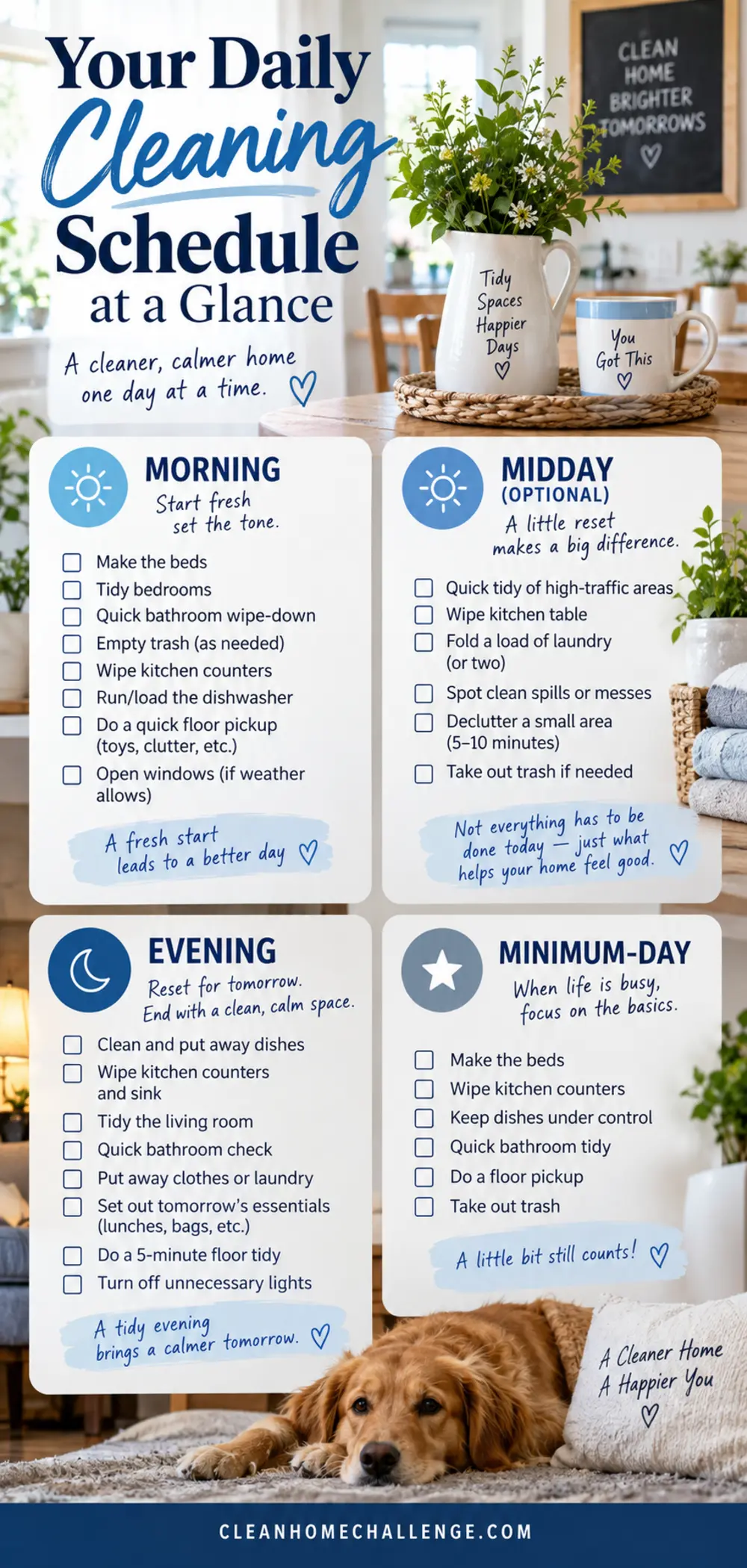
Your Daily Cleaning Schedule at a Glance
| Time | Task | Usual time |
|---|---|---|
| Morning | Make the bed | 1 minute |
| Morning | Start or sort one laundry load | 2 minutes |
| Morning | Reset breakfast dishes | 3 minutes |
| Morning | Wipe kitchen surfaces | 2 minutes |
| Morning | Clear the main walkway | 2 minutes |
| Midday, optional | Toys, dishes, laundry and one used surface | 5 minutes |
| Evening | Close the kitchen | 5 minutes |
| Evening | Reset shared spaces | 5 minutes |
| Evening | Move laundry forward | 3 minutes |
| Evening | Spot-clean and prepare for tomorrow | 2 minutes |
Your total is about 25 minutes on a standard day, divided into short blocks. Homes with pets, babies, shift work, mobility needs or more occupants may need a different split. Use the order as a starting point, then adjust the time rather than adding endless tasks.
The weekly Clean Home Challenge rhythm gives the more detailed work its own place: Monday kitchen, Tuesday bathrooms, Wednesday bedrooms, Thursday living areas, Friday floors and Saturday laundry catch-up. That structure stops every room from competing for attention every day.
CLEANERS CLUBHOUSE
Make Your Cleaning Routine Easier to Follow
Stop wondering what to clean next. Inside the Cleaners Clubhouse, you’ll get a practical 12-month cleaning calendar, printable worksheets and monthly challenges to help you keep moving without trying to do everything at once.
How to Fit the Routine Around Work, School and Real Life
Start with the fixed points already in your day. Attach one small cleaning action to something that happens reliably:
- Make the bed after getting dressed.
- Start laundry before making breakfast or coffee.
- Wipe the counter after packing lunches.
- Run the pickup after dinner.
- Spot-clean the floor after the kitchen is closed.
If your busiest time is morning, move the dishes and laundry to the evening. If evenings are taken up by children’s activities, do a 10-minute reset before leaving and a five-minute kitchen close when you return. A schedule should follow your household, not force your household to follow an arbitrary clock.
Use three versions of the routine:
- Standard day: morning and evening blocks, with the optional midday reset if helpful.
- Busy day: one 15-minute block focused on dishes, surfaces, pickup, laundry and floors.
- Minimum day: four essential actions only.
This removes the all-or-nothing decision. You are choosing the right version for the day, not failing to complete the longest version.

How to Share Daily Cleaning Without Carrying the Mental Load
“Helping” still leaves one person managing the work if that person must notice every task, explain it and remind everyone. Give household members ownership of repeatable actions instead.
Examples include:
- One person closes the kitchen while another resets the living room.
- Children return toys to labeled baskets before screen time or bedtime.
- A teenager empties the dishwasher each morning.
- The person who starts laundry is not automatically responsible for every later step.
- Everyone carries their own items from the return basket once a day.
Keep instructions visible and specific. “Tidy up” can mean something different to each person; “put toys in the blue basket and cups in the kitchen” has a clear finish. Choose age-appropriate tasks, supervise young children and keep cleaning products out of their reach.
Do not redo a safe, acceptable job simply because another person completed it differently. Shared routines become easier when “done” means functional rather than perfect.

The Minimum Routine for Exhausting Days
Some days include illness, poor sleep, extra work, appointments or caring responsibilities. On those days, protect hygiene and basic function with four actions:
- Deal with food, essential dishes and obvious kitchen spills.
- Put one load of laundry on, move it forward or make sure essential clothing is available.
- Pick up enough to keep the main walkways clear and reduce trip hazards.
- Spend the remaining time on the most urgent bathroom or floor mess.
Set a 10-minute timer. If you finish early, rest. If the timer ends before everything is done, stop at the safest point. Deep cleaning can wait. When someone is unwell, focus on the surfaces and laundry relevant to that illness and follow current health or product-label guidance rather than automatically disinfecting the entire house.

What Not to Put on Your Daily Cleaning List
A daily list becomes unmanageable when it absorbs every task that could possibly make the house cleaner. Unless your household has a special need, these usually belong on weekly or less frequent schedules:
- Deep-cleaning the oven or refrigerator
- Scrubbing the whole shower or bath
- Washing windows
- Cleaning baseboards, doors and walls
- Dusting ceiling fans, blinds and high shelves
- Vacuuming under every piece of furniture
- Mopping every room
- Organizing cupboards and drawers
- Washing all bedding and towels
- Disinfecting every touch point without a specific reason
Daily cleaning should prevent obvious build-up. Detailed cleaning should rotate. Keeping those lists separate protects your time and makes it easier to see what you have actually completed.

How to Make the Routine Stick Without Starting Over
Consistency comes from reducing decisions and making the next action obvious.
- Keep a small cleaning caddy where you use it, securely away from children and pets.
- Place a pickup basket near the busiest shared space.
- Use a timer with a gentle alarm.
- Keep the daily list short enough to remember.
- Attach tasks to breakfast, dinner or bedtime rather than a perfect clock time.
- Reset missed tasks at the next normal routine point instead of scheduling a punishment clean.
Review the routine after two weeks. If one task is repeatedly skipped, ask whether it is in the wrong time block, takes too long or belongs on the weekly list. Change the system before blaming yourself.
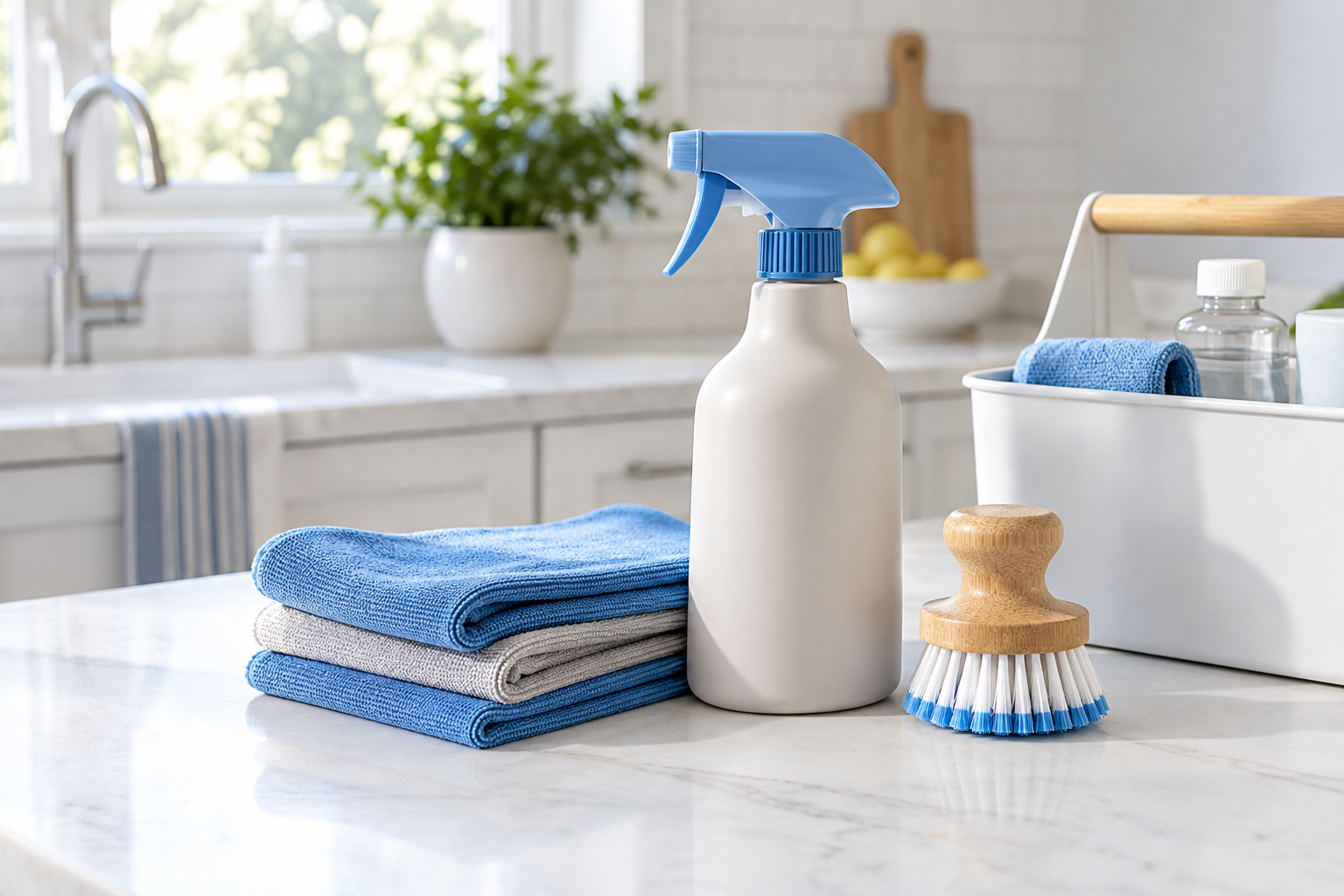
Useful tools can make the routine smoother, but you do not need a cupboard full of products. A few washable cloths, a suitable everyday cleaner, a laundry basket, a pickup basket and a practical floor tool will cover most daily jobs.

A Cleaner Home Comes From a Repeatable Rhythm
The best daily cleaning schedule is not the one with the most boxes. It is the one your household can repeat through normal weeks and scale down when life is demanding.
Start with the five habits: make the bed, pick up, wipe used surfaces, move one laundry load forward and spot-clean the floors. Add a short morning block and an evening reset. Let the weekly schedule handle the larger room clean, and allow the minimum version to count on hard days.
Small, repeated actions will not make family life mess-free. They will make the mess easier to recover from—and that is a far more useful goal.