
THIS POST MAY CONTAIN AFFILIATE LINKS. PLEASE READ MY DISCLOSURE FOR MORE INFO.
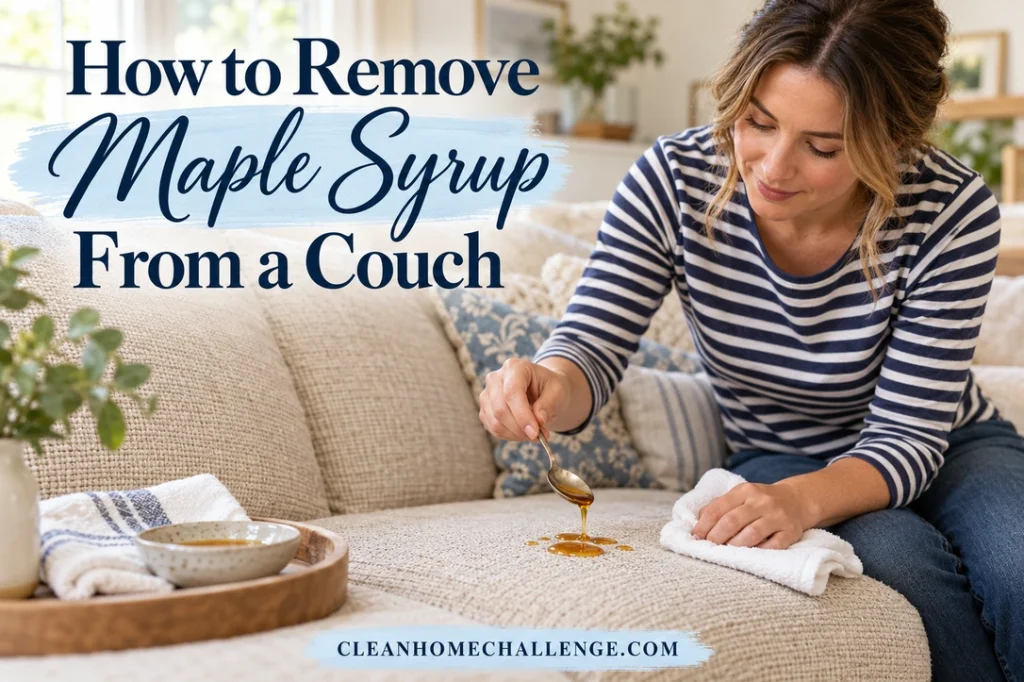
A pancake breakfast on the sofa can leave a surprisingly stubborn little patch. The amber mark is only part of the job: syrup can remain tacky between the fibers or along a cushion seam even when the surface looks clean.
To remove maple syrup from a couch, gently lift the excess first, check the upholstery care instructions, and use only the cleaning method approved for that fabric. On upholstery that permits water-based spot cleaning, work with a lightly dampened cloth or approved upholstery cleaner, lift the residue into clean cloths, and let the cushion dry completely. Do not pour water onto the seat or scrub the sticky patch.
This guide is mainly for fabric couches. Leather, suede, velvet, silk, and other specialty upholstery need their own manufacturer-approved care. A quick response helps, but protecting the fabric matters more than finishing in one rushed attempt.
Disclosure: This post may contain affiliate links. As an Amazon Associate, Clean Home Challenge earns from qualifying purchases. If you make a purchase through these links, we may earn a small commission at no extra cost to you. This helps us keep creating practical cleaning tips, routines and resources for busy families! 🧽
Check the Care Label Before Adding Moisture
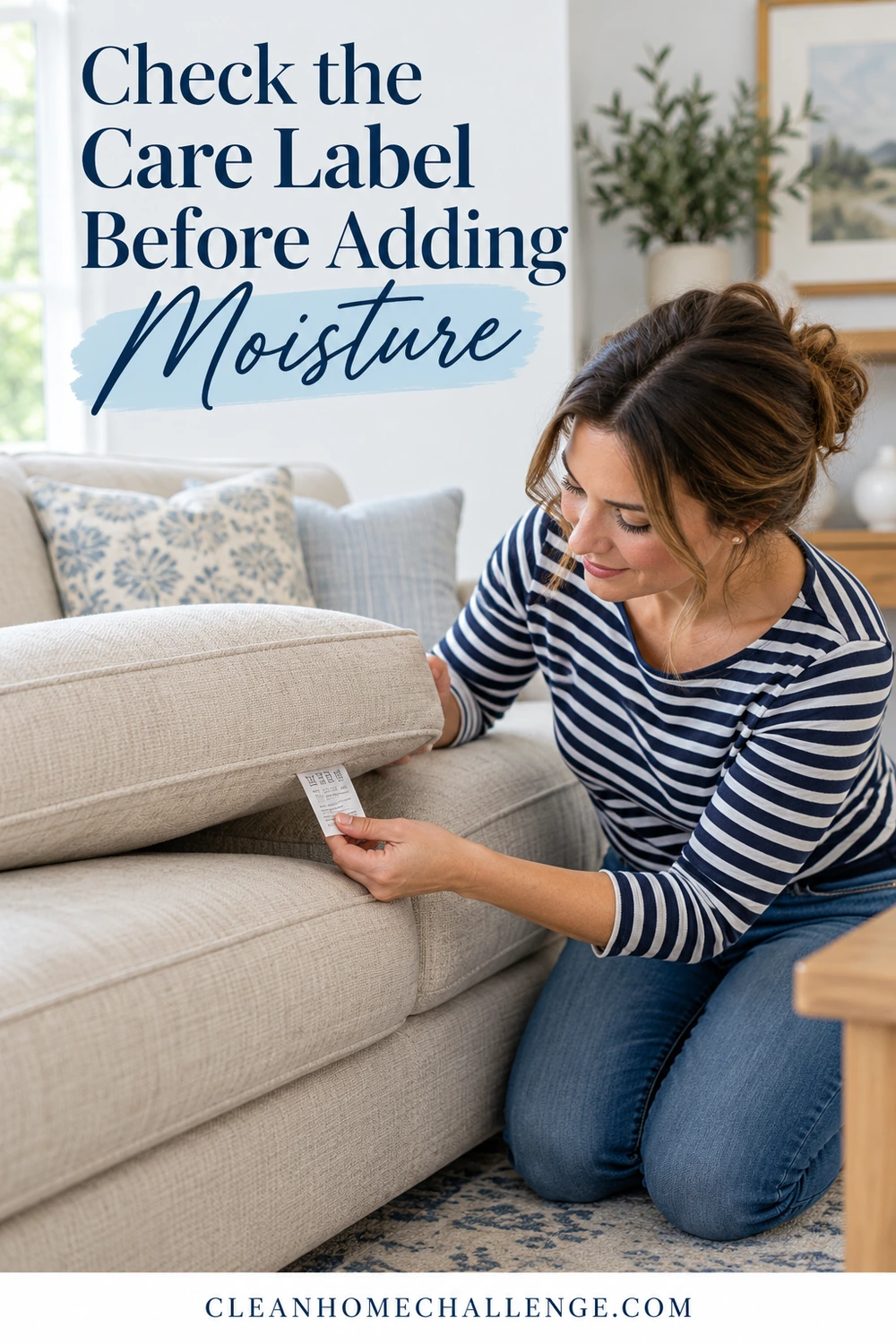
Start by moving the breakfast plate, syrup bottle, and any sticky throw away from the couch. Keep children and pets off the affected seat while you work. Set a dry towel on a nearby table for your supplies so a damp cloth or cleaner bottle does not leave another mark.
Find the actual upholstery instructions
Look beneath a removable seat cushion or on the furniture’s underside for a care tag. Check the manufacturer’s website using the couch model if the tag is missing. A fabric-content label saying polyester or cotton does not, by itself, tell you which cleaning method is safe. Fabric treatments, backing, dyes, trim, and cushion construction also matter.
Use this table as a starting point, then follow the instructions for your particular couch:
| Care code | What it generally allows | What to do with a syrup spill |
|---|---|---|
| W | A specified water-based upholstery shampoo or foam cleaner | Use the maker’s water-based spot-cleaning method; do not assume soaking or extraction is allowed. |
| WS, SW, or W-S | Specified water-based or solvent spot-cleaning methods | Select the maker’s method for a food spill and check the chosen cleaner’s label. |
| S | A specified water-free solvent method | Do not add water. Ask the manufacturer or a qualified upholstery cleaner about the sticky food residue. |
| X | Vacuuming or light brushing; no liquid or foam cleaner | Do not wet the stain or apply solvent. Arrange specialist advice. Do not vacuum wet syrup. |
| Missing or unclear | Unknown | Remove only loose surface material that lifts easily, then identify the couch or get professional advice. |
A W label does not mean washable. La-Z-Boy, for example, specifies water-based upholstery shampoo or foam for its W fabrics and advises against saturation, hot-water extraction, and laundering cushion covers. Ashley also distinguishes water-based spot cleaning from overwetting. The details for your furniture take priority over a general internet recipe.
Gather a small spill kit
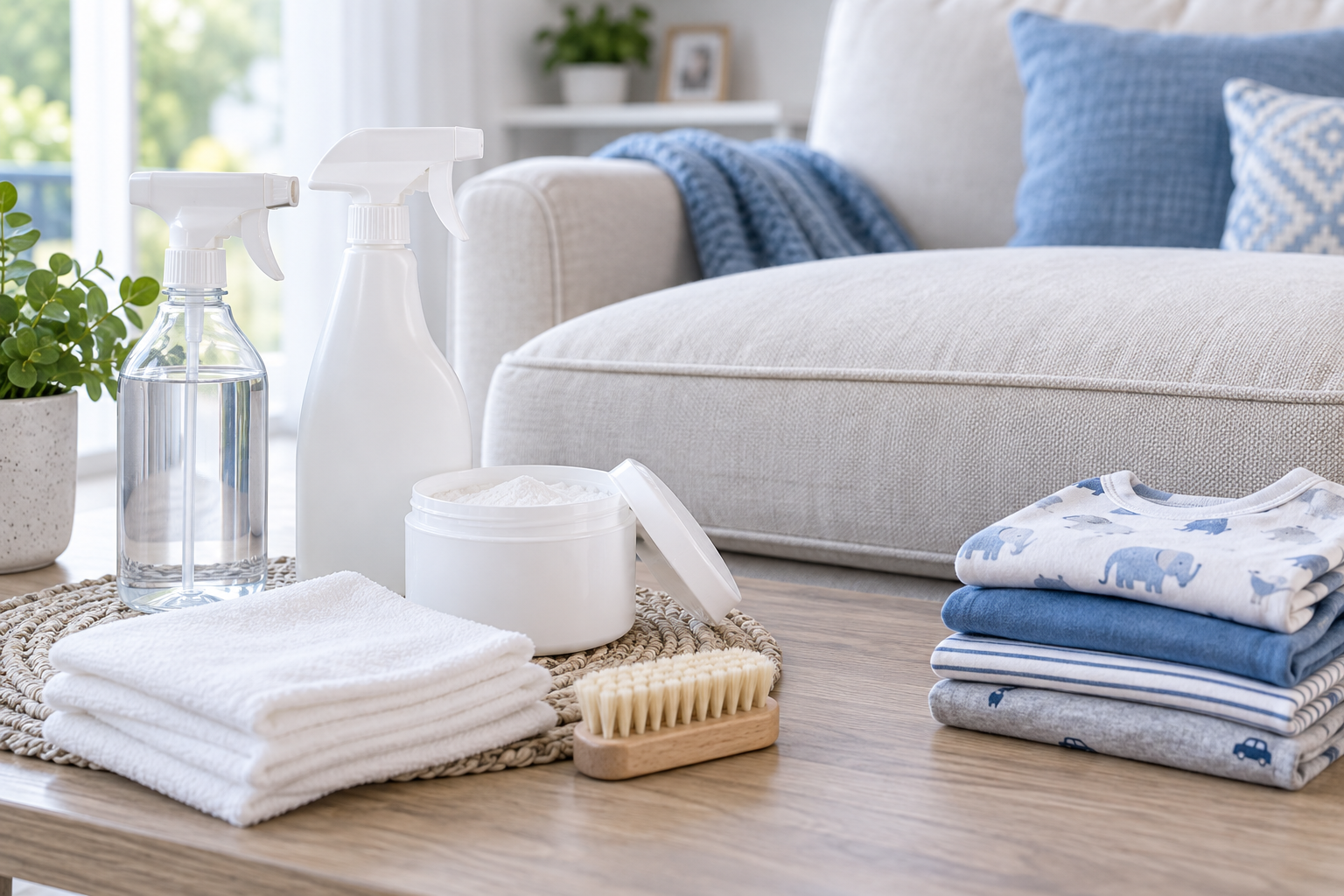
You will usually need several clean white absorbent cloths, a clean smooth-edged spoon, a small bowl, and the upholstery product your manufacturer permits. For a couch whose instructions specifically allow a plain-water or mild-soap method, have room-temperature or lukewarm water ready as directed. There is no universal detergent dilution for every couch: use the furniture and cleaner instructions rather than a generous squirt of dish soap.
White cloths let you see whether syrup or fabric dye transfers. Avoid colored napkins, abrasive sponges, stiff brushes, sharp scrapers, and a hair dryer. Wear any protective equipment stated on the cleaner label, ventilate the room, and keep cleaning products out of children’s reach. Never mix products.
Test before treating the visible spot
Test the permitted cleaner and method on an inconspicuous area of the same upholstery. Use the same small amount and gentle action you intend to use on the spill, then let the test dry. Check for color change, a ring, roughness, dye on the cloth, or a change in the pile. A successful test reduces risk; it does not make soaking safe.
If the test changes the fabric, stop. If you cannot identify an appropriate hidden test area, ask the manufacturer rather than testing on the front of the seat. For an expensive, delicate, antique, or strongly colored couch, professional help may be the most practical first step.
Lift Syrup and Blot the Sticky Residue
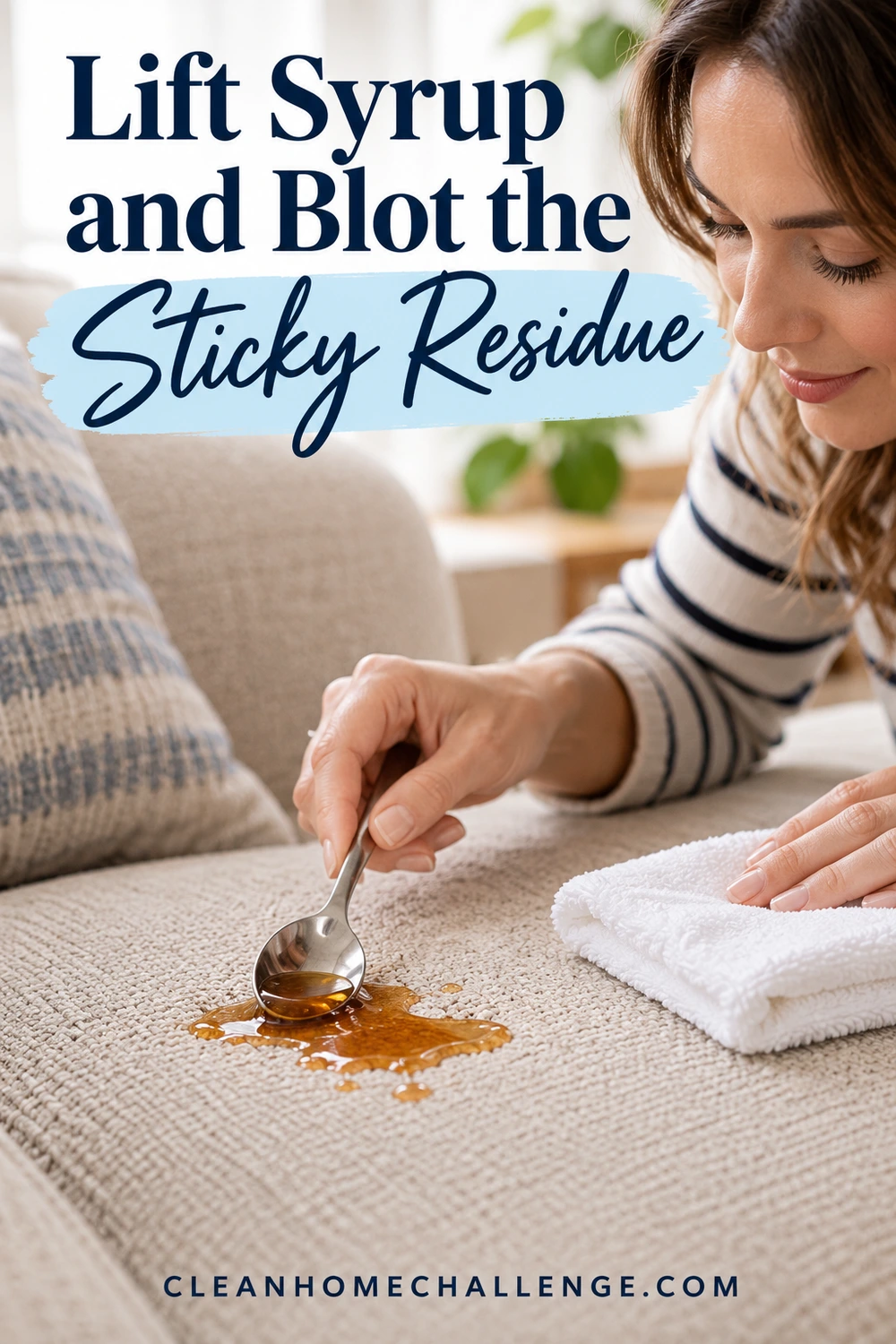
The aim is to move syrup out of the couch, not spread it over a wider area. For a small fresh spill, lifting the excess may take only a few minutes. Allow separate time for testing and drying; those stages are not a fixed five-minute job.
Lift the thick layer first
Use the rounded edge of a clean spoon to pick up syrup sitting above the fabric. Keep the spoon almost parallel to the surface, use very light pressure, and wipe it onto a spare cloth after each lift. Work from the edge toward the center. Do not dig into the weave or drag the syrup across a clean cushion.
If the syrup has dried into a hard or gummy patch, do not pick at it with a fingernail or scrape until fibers lift. On upholstery that permits the following water-based method, a lightly damp cloth can help loosen a little residue at a time. On S, X, or unidentified fabric, do not use water to soften it; ask for material-specific advice.
Use the permitted spot-cleaning method
The next steps apply only after the care instructions and hidden test support the selected water-based treatment:
- Prepare the product as directed. Some furniture calls for foam upholstery shampoo; other instructions permit a mild-soap method. Follow that distinction. If the directions say to apply to a cloth, do so; do not spray the couch simply because the bottle has a trigger.
- Keep moisture controlled. When a damp-cloth method is permitted, wring the cloth well. It should not drip onto the cushion. Work on the affected surface without pushing liquid down through the cover.
- Blot gently from the outside inward. Press and lift with a clean area of cloth. Avoid forceful back-and-forth rubbing. Thick syrup may require several small lifts rather than one hard wipe.
- Change cloth faces frequently. Once a section is syrupy, fold to a clean face or use another cloth. Reusing the sticky portion simply moves the residue around.
- Remove cleaner residue as the label directs. If the method calls for a plain-water wipe, use a separate well-wrung cloth and blot again with a dry towel. A foam cleaner may specify another removal method. Do not rinse a cushion by pouring water over it.
Stop if color transfers from the upholstery, the surface becomes fuzzy, or the wet area spreads beyond the treatment area. More liquid is not the answer to every remaining mark. If the permitted method is not making progress, let the area dry and reassess before doing more.
What if butter or pancake topping was mixed in?
A breakfast spill may contain butter, cream, chocolate, or colored pancake syrup as well as maple syrup. Those ingredients can leave a different stain after the sugar residue has lifted. Check the food packaging if you are not sure what spilled, and tell a professional exactly what was in it and what you have already used.
Do not add a degreaser, bleach, alcohol, vinegar, or another stain remover automatically. A method suitable for one performance fabric can damage another couch. Treat the known spill with the permitted product first; ask for guidance if a separate oily or colored mark remains.
Clean Seams and Let the Cushion Dry
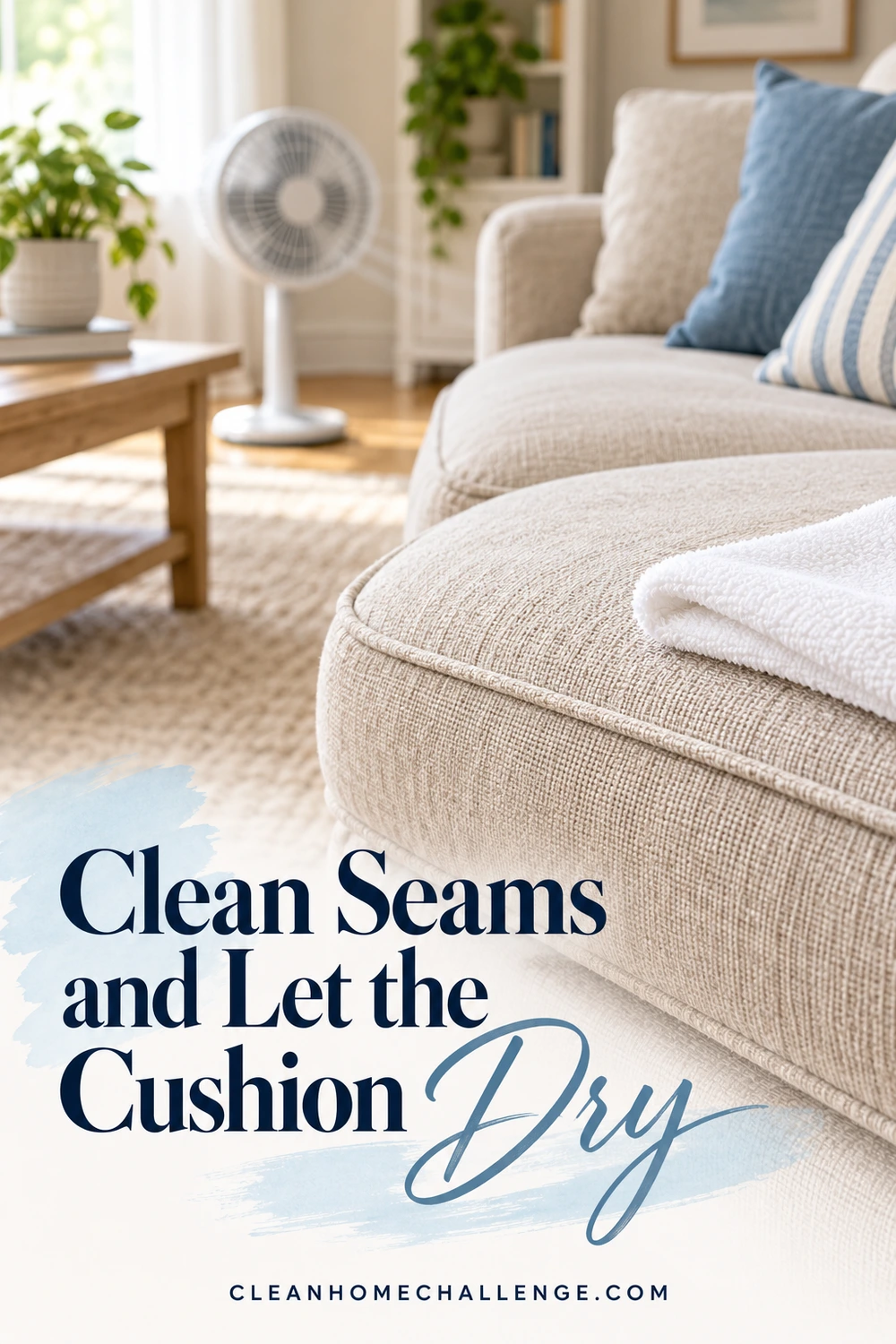
Seams deserve a careful look because syrup can collect where the seat fabric meets piping or the cushion edge. Check the front edge, the nearby side of the cushion, and any removable throw that touched the spill. Do not assume the couch is finished just because the main amber patch has disappeared.
Check the crease without flooding it
Lift out any remaining surface syrup that is easy to reach. If your approved method permits damp blotting, fold a white cloth into a narrow edge and lightly blot the accessible seam. Do not poke a knife, toothpick, or soaked cotton swab into the stitching. Avoid tugging the seam apart or pushing moisture into the filling.
If syrup has run through a zipper, beneath a fixed cushion, or deep into the padding, stop surface treatment and speak to an upholstery cleaner. A cleaner needs to know about the filling, not just the cover. An ordinary household vacuum is not suitable for collecting liquid or sticky syrup.
A zipper is often present for manufacturing or fitting the cover. It is not permission to remove and launder it. Wash a cover only when the furniture manufacturer expressly allows it and supplies washing and refitting instructions. Keep removable covers and cushions arranged as instructed so they are not distorted while damp.
Leave the seat open to air
Blot excess moisture with a dry white towel, using pressure that does not distort the cushion. Leave the treated area uncovered with normal room ventilation. If using a fan, place it safely so it moves room air past the couch without cords becoming a trip hazard. Do not use steam, a heater, or a hot hair dryer to hurry the process.
Keep people, pets, throws, and decorative cushions off the damp seat. Turning a damp cushion over and sitting on the other side hides the moisture rather than solving the problem. Drying time varies with the fabric, filling, humidity, ventilation, and amount of moisture used, so avoid relying on a set number of hours.
When the area is fully dry, check it with clean dry fingers and in good light. Does it still feel tacky? Is there a darker ring, stiff edge, changed pile, or a smell? A surface that looks lighter while wet may not show its final appearance until dry.
Use the free Maple Syrup Couch Spill Care Card to record your care code, approved product, hidden-test result, and dry recheck. Keep it with your cleaning supplies so the next person helping with a spill has the same instructions.
Download the Maple Syrup Couch Spill Care Card (PDF)
If you would like a little more structure for everyday cleaning and tricky jobs, explore the Cleaners Clubhouse for practical guidance, printables, and routines you can follow at a manageable pace.
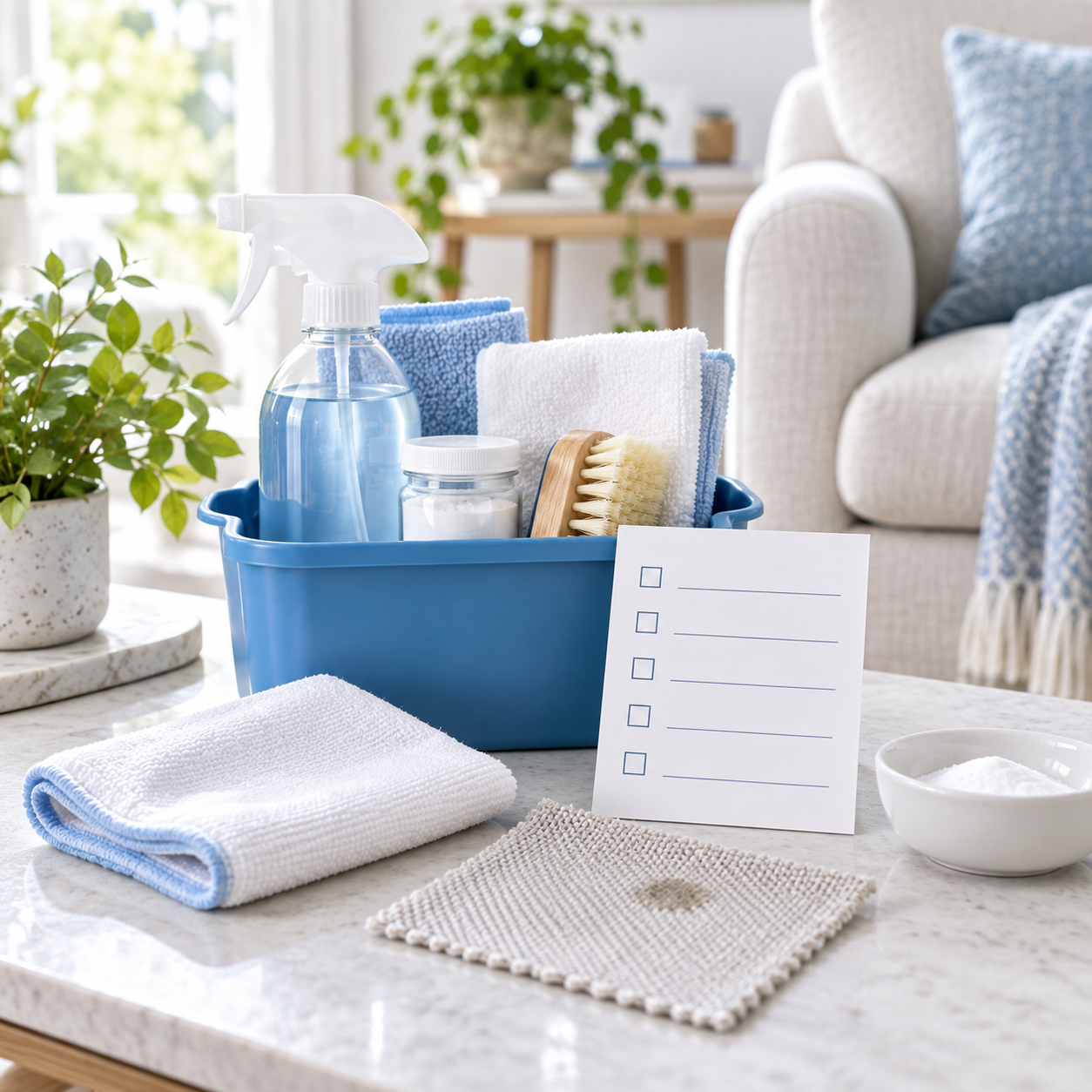
CLEANERS CLUBHOUSE
Get Step-by-Step Help With Tricky Cleaning Jobs
When a stain, smell or stubborn cleaning problem has you stuck, a clear plan makes all the difference. The Cleaners Clubhouse gives you practical guidance, useful printables and routines you can actually follow.
Handle Lingering Marks and Prevent Another Spill
A clean-looking surface and a residue-free surface are not always the same. The most useful next step depends on what remains after drying. Avoid cycling through stronger products just because the first pass was not perfect.
| What remains | A sensible next step |
|---|---|
| A small tacky patch, with no fabric change | Check that the first treatment followed the care instructions. If another gentle pass is permitted, repeat it sparingly using fresh cloths, then dry and recheck. |
| A sticky seam or damp filling | Stop adding moisture and contact a qualified upholstery cleaner. Explain where the syrup traveled. |
| A nonsticky brown or colored mark | It may be staining rather than leftover sugar. Ask the manufacturer or cleaner for the next compatible treatment. |
| A ring, dye transfer, roughness, or altered pile | Stop treatment. Give the cleaner the fabric code, photos, and the exact products used. |
| An odor or persistent dampness | Keep the area out of use and get advice on the cushion’s condition and drying. Do not mask it with fragrance. |
Know when professional help saves effort
Seek advice early for S- or X-coded upholstery, missing instructions, large spills, delicate fibers, changed color or texture, or syrup that has entered the filling. You do not need to prove that every home treatment failed first. Send a photo of the care tag, a photo of the affected area, the approximate spill size, and a list of any cleaners already applied.
Ask whether the cleaner has experience with your fabric and cushion construction. Avoid requesting a particular machine method simply because you own or have seen an extractor; the manufacturer may rule that process out. No one can guarantee full stain removal from every material.
Keep the next breakfast spill smaller
Choose a stable eating surface for syrupy food, keep the bottle capped after pouring, and wipe sticky hands before children return to the couch. A washable throw can help only if it is appropriate for the couch, genuinely washable, and cleaned promptly; it is not a waterproof shield or a reason to leave a spill underneath.
Keep a few clean white cloths and the furniture’s care instructions together. Store chemicals safely elsewhere, rather than in a basket accessible to little hands. Once the couch is dry and the sticky residue is gone, return to normal cleaning. You do not need to deep-clean the whole living room because one pancake escaped its plate.
For a busy family, the manageable plan is simple: lift what you can safely, choose the method from the care instructions, work gently with very little moisture where permitted, and check again after drying. That gives the couch a better chance without turning a small spill into a soaked-cushion problem.
Sources and care guidance
Checked October 24, 2026. This article adapts manufacturer guidance into a cautious household workflow; no universal maple-syrup treatment has been claimed for every couch.
- La-Z-Boy: Fabric and Leather Care – cleaning-code distinctions, testing, saturation limits, and cover restrictions.
- Ashley: Care and Cleaning – upholstery codes and furniture-specific care requirements.
- Sunbrella: Upholstery Cleaning – product-specific residue removal, air drying, and the need to consult the furniture maker before washing removable casings. Sunbrella instructions do not apply automatically to other upholstery.