THIS POST MAY CONTAIN AFFILIATE LINKS. PLEASE READ MY DISCLOSURE FOR MORE INFO.
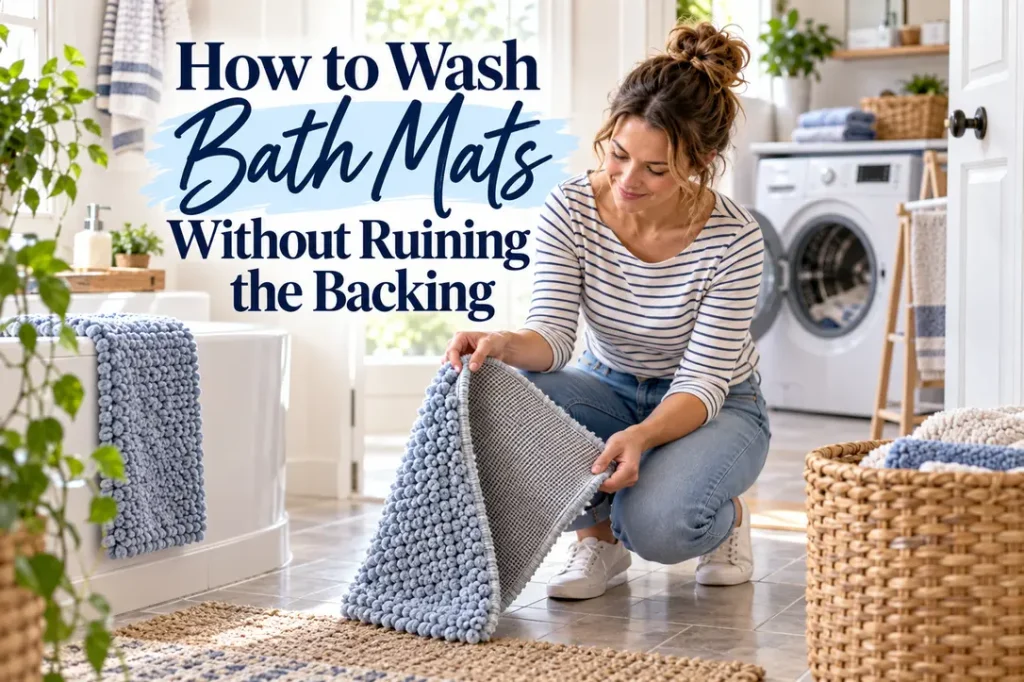
Bath mats quietly collect far more than water. Damp fibers can hold onto dust, hair, skin oils, product residue, and the grime carried in on bare feet. The trouble is that washing a bath mat like an ordinary towel can crack a rubber backing, distort memory foam, loosen glued layers, or leave the mat smelling worse because it dried too slowly.
The safest method is simple: check the care label and backing first, shake away loose debris, use the gentlest suitable wash method, and dry the mat completely without unnecessary heat. Most washable bath mats do not need aggressive products or a heavy cycle.
Disclosure: This post may contain affiliate links. As an Amazon Associate, Clean Home Challenge earns from qualifying purchases. If you make a purchase through these links, we may earn a small commission at no extra cost to you. This helps us keep creating practical cleaning tips, routines and resources for busy families! 🧽
Check the Bath Mat Before It Goes in the Wash
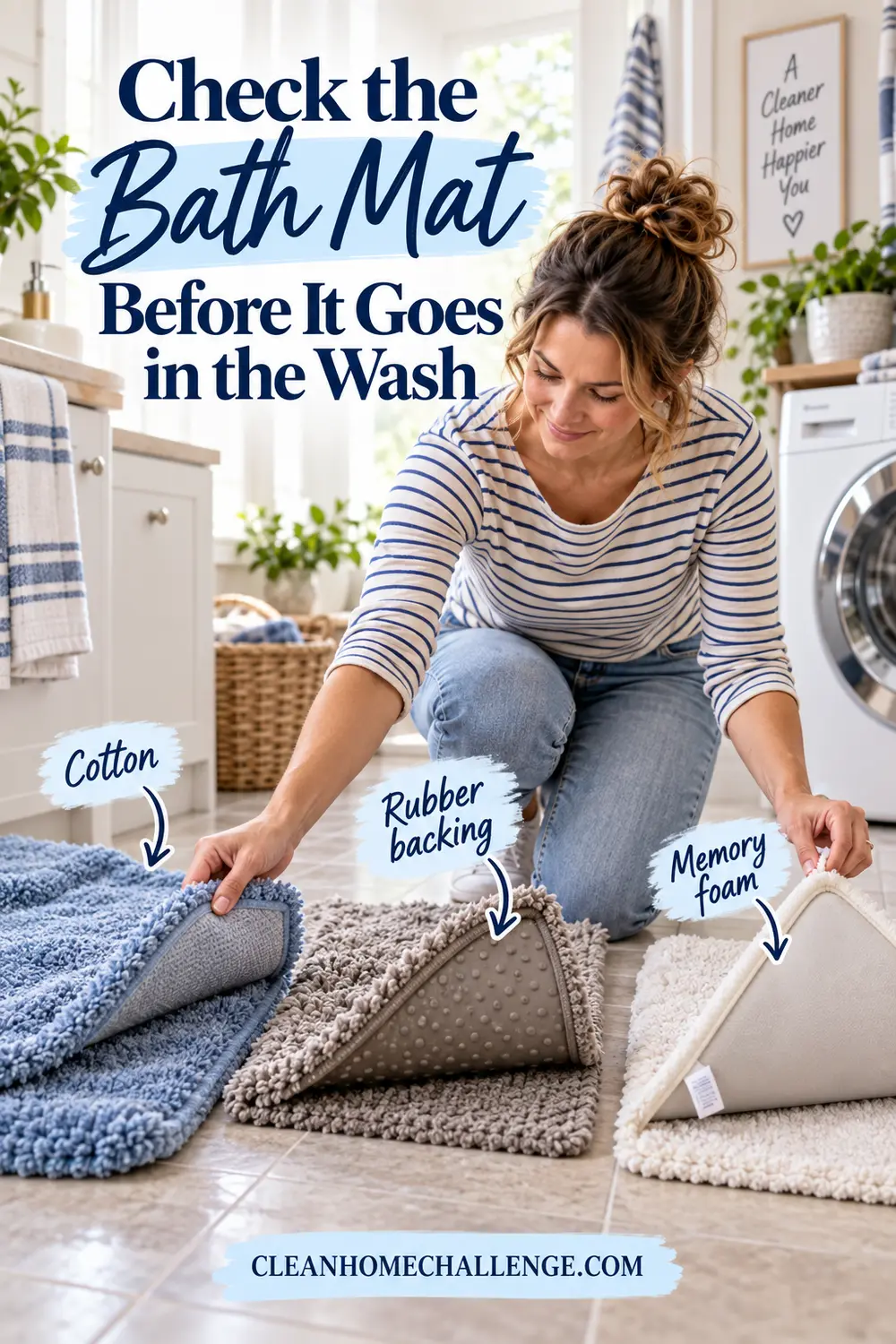
Start by turning the mat over. The fabric on top matters, but the backing usually decides how carefully the mat needs to be treated.
- Towel-style cotton mats without backing are often the easiest to machine-wash, but the label still controls water temperature and drying.
- Rubber- or latex-backed mats may be machine-washable while the backing is flexible and intact. Cracking, peeling, crumbling, or lifting edges are warning signs.
- Memory-foam mats vary. Unless the label specifically permits machine washing, hand washing is the safer choice.
- Bamboo, jute, wood, or rigid mats usually need surface cleaning rather than soaking.
If the backing is already shedding, do not put it in the washer. Agitation can release more fragments and may leave debris in the appliance. If the mat has no care label and you cannot identify the material, hand-clean a small area and avoid heat.
Sort Bath Mats by Material and Backing
Do not automatically put every bathroom mat into one load. Wash mats together only when their color, material, care instructions, and weight are compatible.
Pair a washable mat with another similar mat or a couple of sturdy towels if the appliance manual allows it. This helps distribute weight more evenly. Avoid combining a rough-backed mat with delicate clothes, and do not wash a heavily soiled toilet mat with face cloths or kitchen towels.
- Take the mat outside and shake it well.
- Vacuum embedded hair or grit if needed.
- Check seams, edges, and backing for damage.
- Blot or pretreat visible stains with a product suitable for the fiber.
- Test bright or dark colors for transfer if you are unsure.

How to Wash Bath Mats in the Washing Machine
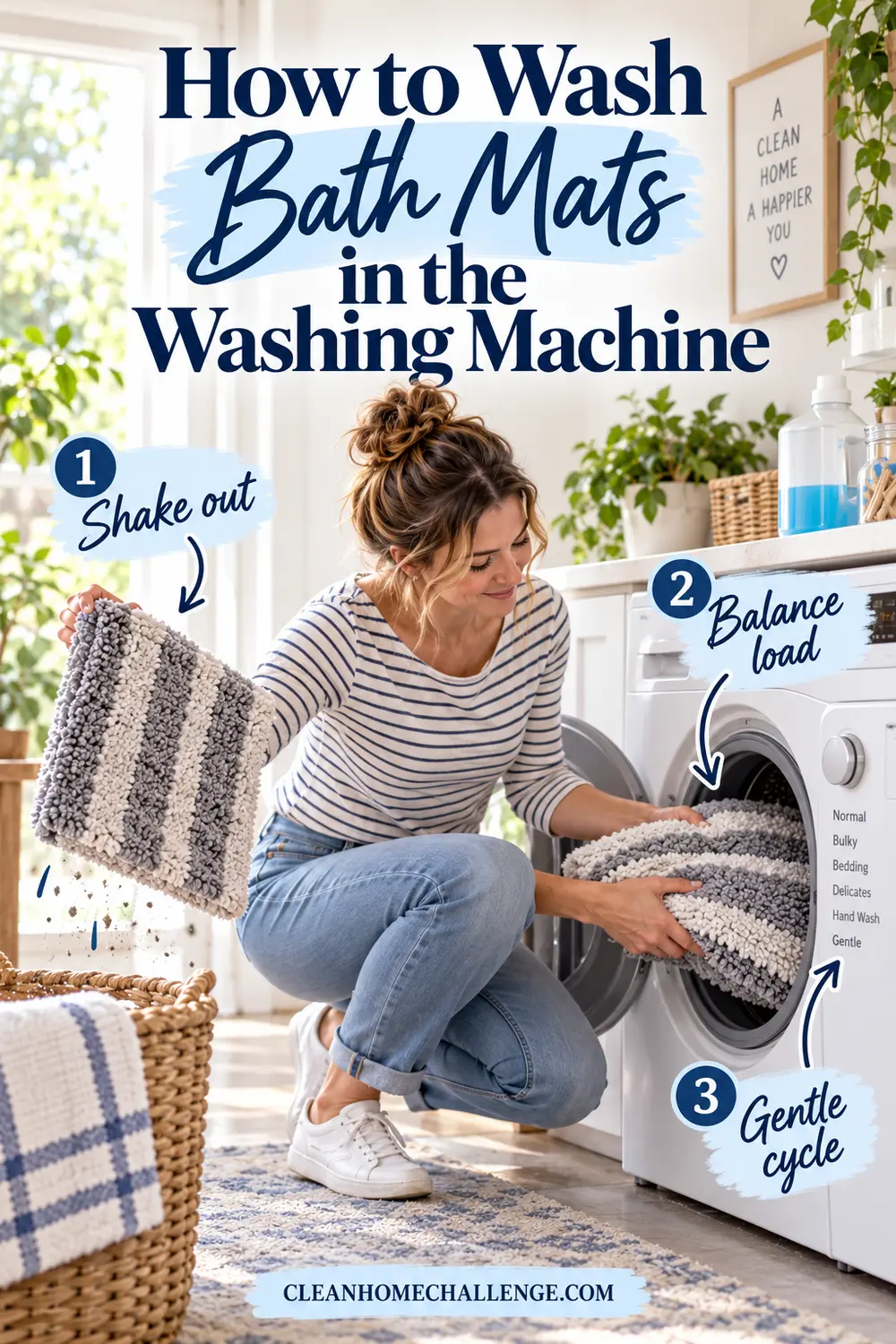
Machine-wash only when the care label permits it and the backing is sound. Current appliance guidance from Whirlpool likewise puts the care label first, recommends shaking out debris, using the specified cycle, balancing the load, and reducing spin speed for water-resistant backing.
- Load without stuffing the drum. The mat needs room to move and rinse.
- Balance the weight. Add a compatible mat or sturdy towels rather than one very heavy item on its own.
- Measure detergent carefully. Use the amount recommended for the load and machine.
- Choose the care-label temperature. When the label allows a choice, cool or warm water is generally gentler than hot water.
- Use a gentle or delicate cycle when suitable for the label.
- Add an extra rinse if needed.
- Remove the mat promptly. Reshape it and begin drying straight away.
Stop the washer if it bangs, thumps, or struggles to spin. Redistribute the load rather than allowing an unbalanced heavy mat to continue.
How to Hand-Wash a Bath Mat
Hand washing is useful for memory foam, aging backing, glued layers, or any mat whose label calls for gentler care.
- Shake or vacuum away loose debris.
- Fill a clean tub or large sink with the temperature stated on the label.
- Add a small amount of mild laundry detergent.
- Lower the mat in and gently press the solution through it.
- Let it soak briefly if the material permits.
- Drain and rinse thoroughly.
- Press out water without twisting or wringing.
- Support the entire mat when lifting it.
For a small local stain, spot cleaning may be enough. Patch-test first, work from the outside of the mark inward, and blot rather than scrub aggressively.

The Safest Way to Dry Bath Mats
Drying is where many backings are damaged. High heat can accelerate cracking, hardening, peeling, or distortion, so follow the label exactly.
Air drying is the cautious default when instructions are unclear. Lay the mat flat on a clean ventilated surface or support it broadly over a drying rack. Avoid hanging a very heavy wet mat from one narrow edge.
If the label permits tumble drying, use the stated setting—often low heat or no heat—and remove the mat promptly. Never put a visibly cracked or flaking rubber-backed mat in the dryer. Make sure the mat is dry all the way through before returning it to the bathroom.

How Often Should You Wash Bath Mats?
Weekly is a practical starting point for a busy family bathroom, not a rigid rule. Wash sooner when several people use the bathroom, the mat stays damp, it is visibly soiled, someone has been unwell, pets use it, or it develops a musty smell.
A lightly used guest-bathroom mat that dries quickly may not need the same schedule. Between washes, hang the mat so air reaches both sides, deal with splashes promptly, and clean the floor underneath.

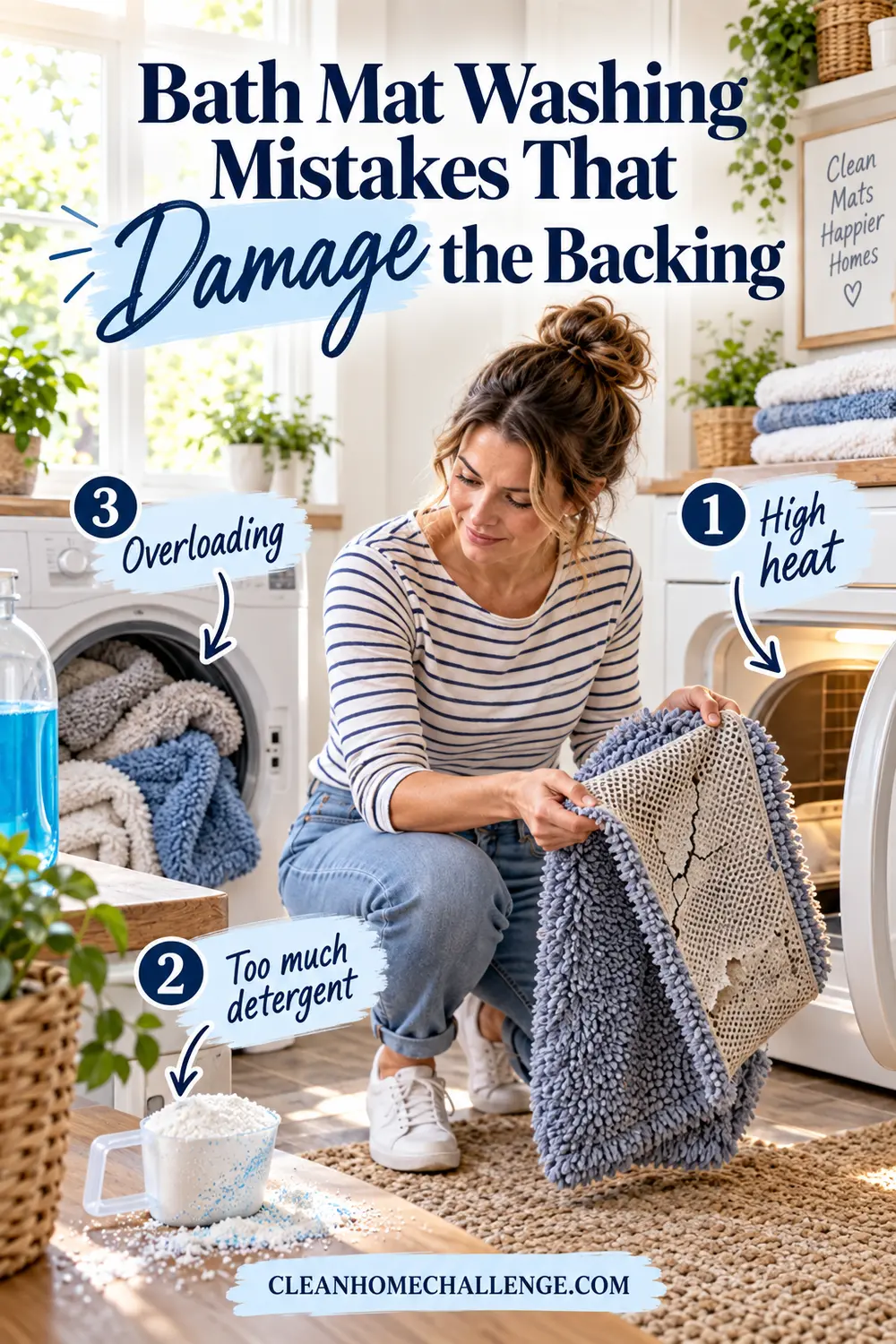
Bath Mat Washing Mistakes That Damage the Backing
- Ignoring the label.
- Using hot water or high dryer heat automatically.
- Overloading the washer.
- Using too much detergent.
- Adding bleach without permission. Never mix bleach with other cleaners.
- Wringing memory foam.
- Putting a damaged mat through the machine.
- Returning it to the floor damp.
If a mat remains sour-smelling after correct washing and complete drying, or the backing no longer lies flat and grips safely, replacement may be more sensible than repeated aggressive washing.
Add Bath Mats to Your Tuesday Bathroom Routine
- Shake out loose hair and grit.
- Lift each mat and let the floor underneath dry.
- Check the backing and edges.
- Wash any mat that is due.
- Wipe the exposed floor.
- Leave the mat off the floor until both the mat and floor are fully dry.
On a busy week, the minimum version is simply: lift, shake, hang, and wipe underneath. That small reset prevents dampness and grit from building up until you have time for the full wash.
Keeping bathroom care inside an established routine is much easier than remembering every task separately. The Cleaners Clubhouse includes follow-along bathroom routines and practical deep-clean printables for days when you want the steps already mapped out.
CLEANERS CLUBHOUSE
Take the Guesswork Out of Bathroom Cleaning
Use Tuesday as your bathroom reset day and work through the job in a sensible order. Inside the Cleaners Clubhouse, you’ll find practical routines, printable support and challenges that make deeper cleaning easier to manage.
Quick Bath Mat Washing Checklist
- Read the care label.
- Inspect the backing.
- Shake or vacuum loose debris.
- Sort by color, material, and weight.
- Use measured detergent.
- Choose the gentlest permitted wash.
- Balance the machine load.
- Rinse thoroughly.
- Reshape while damp.
- Air-dry, or use only the label-approved dryer setting.
- Return the mat only when completely dry.
Clean bath mats do not require perfection or a complicated laundry system. A quick weekly check, sensible washing, and patient drying protect the backing while keeping the bathroom feeling fresher.