

THIS POST MAY CONTAIN AFFILIATE LINKS. PLEASE READ MY DISCLOSURE FOR MORE INFO.
A laundry room does not need matching jars or a full renovation to work well. What matters is whether you can sort a load, reach what you need, treat a stain, and put the clean clothes away without walking around piles. These laundry room organisation ideas begin with those everyday actions, so they work in a dedicated room, a narrow closet, or a corner shared with another job.
Start with one clear surface and a few homes for things you actually use. You can make the first changes in about 20 minutes, then add storage only after you know what the space needs.
Disclosure: This post may contain affiliate links. As an Amazon Associate, Clean Home Challenge earns from qualifying purchases. If you make a purchase through these links, we may earn a small commission at no extra cost to you. This helps us keep creating practical cleaning tips, routines and resources for busy families! 🧽
Start With a 20-Minute Laundry Room Reset
Set a timer and collect stray clothes, empty bottles, packaging, and items that belong elsewhere. Wipe the accessible counter and shelf surfaces with a cleaner suitable for their finish, following its label. Avoid moving a washer or dryer or blocking hookups just to reach a hidden patch.
- Put dirty clothes in a hamper and clean clothes in a separate basket.
- Check the date and condition of products; dispose of unwanted products according to their labels and local rules.
- Group what remains into detergent, stain treatment, drying, mending, and cleaning supplies.
- Return only the items used here. Leave a small landing space for unloading and folding.
If the room is overwhelming, do just the floor and the top of the machine today. A clear route and a usable work surface are a real improvement.

Organise the Room Around the Way Laundry Moves
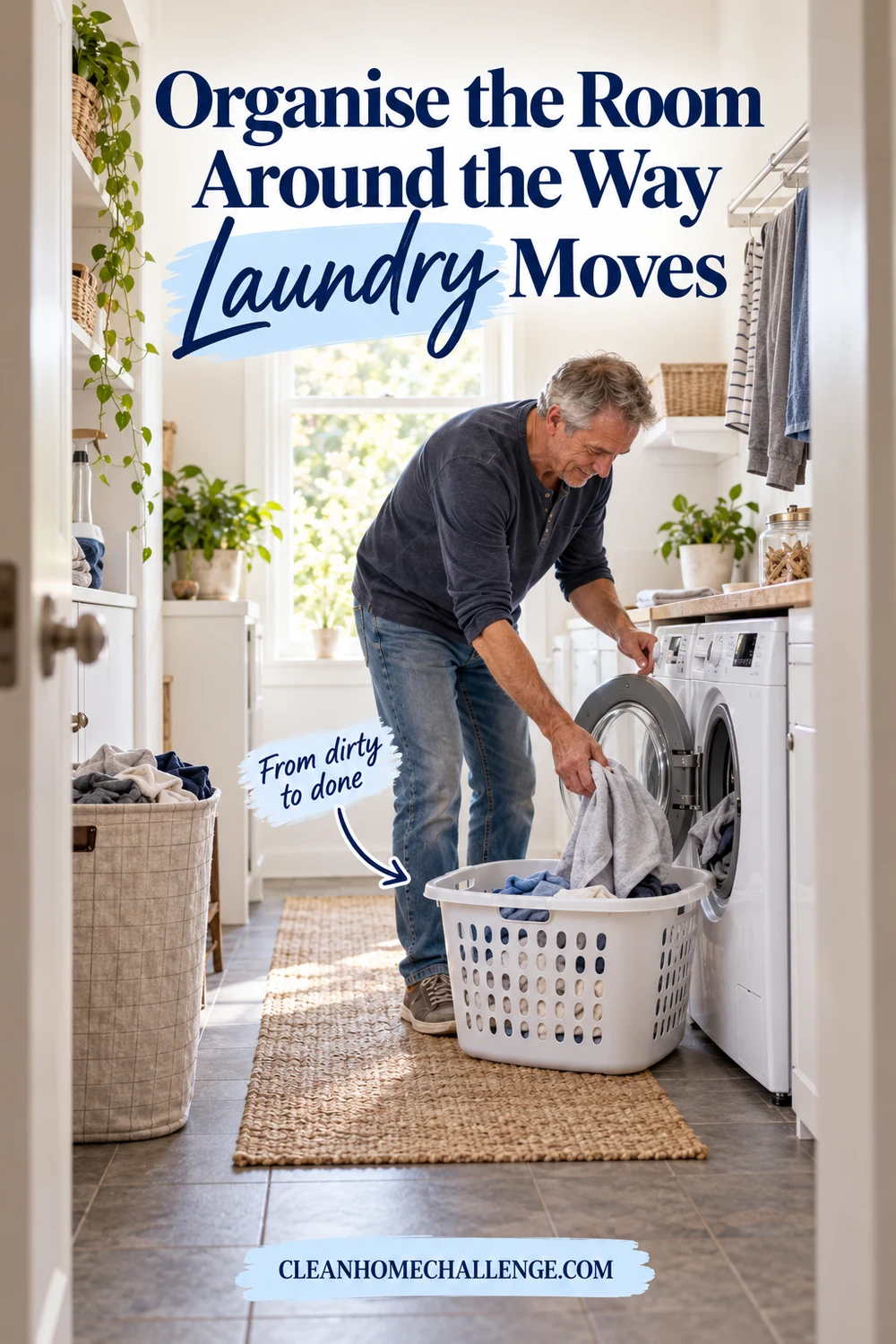
Think of four stations: collect and sort, wash and treat, dry, then fold and return. Keep an empty basket where clean items come out, a stain-treatment area near the washer, and a place for hang-dry pieces that will not drip onto electrical equipment. Give clothes awaiting repair or donation a small, clearly marked container so they do not circulate through the wash.
For a family, use a hamper for each destination or fabric-care need only if it saves time. Two categories, such as everyday clothes and towels or bedding, are often enough. Labels should describe an action people understand rather than a complicated color system no one follows.
Use Shelves and Vertical Space Without Crowding Appliances
A sturdy shelf or wall cabinet can move supplies off the work surface. Before drilling or adding a cabinet, check the wall, shelf load rating, appliance doors, ventilation, hoses, and the clearance specified in your model’s installation instructions. Top-loader lids need room to open fully; a shelf that makes loading awkward will not help.
Whirlpool suggests shelves, cabinets, and compact storage as possible ways to use wall space, while noting that appliance clearances depend on the exact model. Use those ideas as a starting point rather than a measurement for your own room. See Whirlpool’s storage ideas and clearance guidance.

Store Laundry Products Safely and Keep Labels Intact
Put detergent, stain removers, and other cleaning products in a secure cabinet or other place inaccessible to children and pets. Keep products in their original containers with labels, close them immediately after use, and give concentrated laundry packets particular care. A decorative clear jar on an open shelf can make a harmful product look like a snack. The American Cleaning Institute’s laundry safety advice and home safety guide explain the storage precautions.
Choose a cabinet by safety and reach, not appearance alone. If young children can access the room, use appropriate child-resistant storage and keep the cabinet closed. Never combine leftover chemicals to save a bottle. Follow each product’s label for use and disposal.

Give Stain Treatment and Small Tools a Simple Home
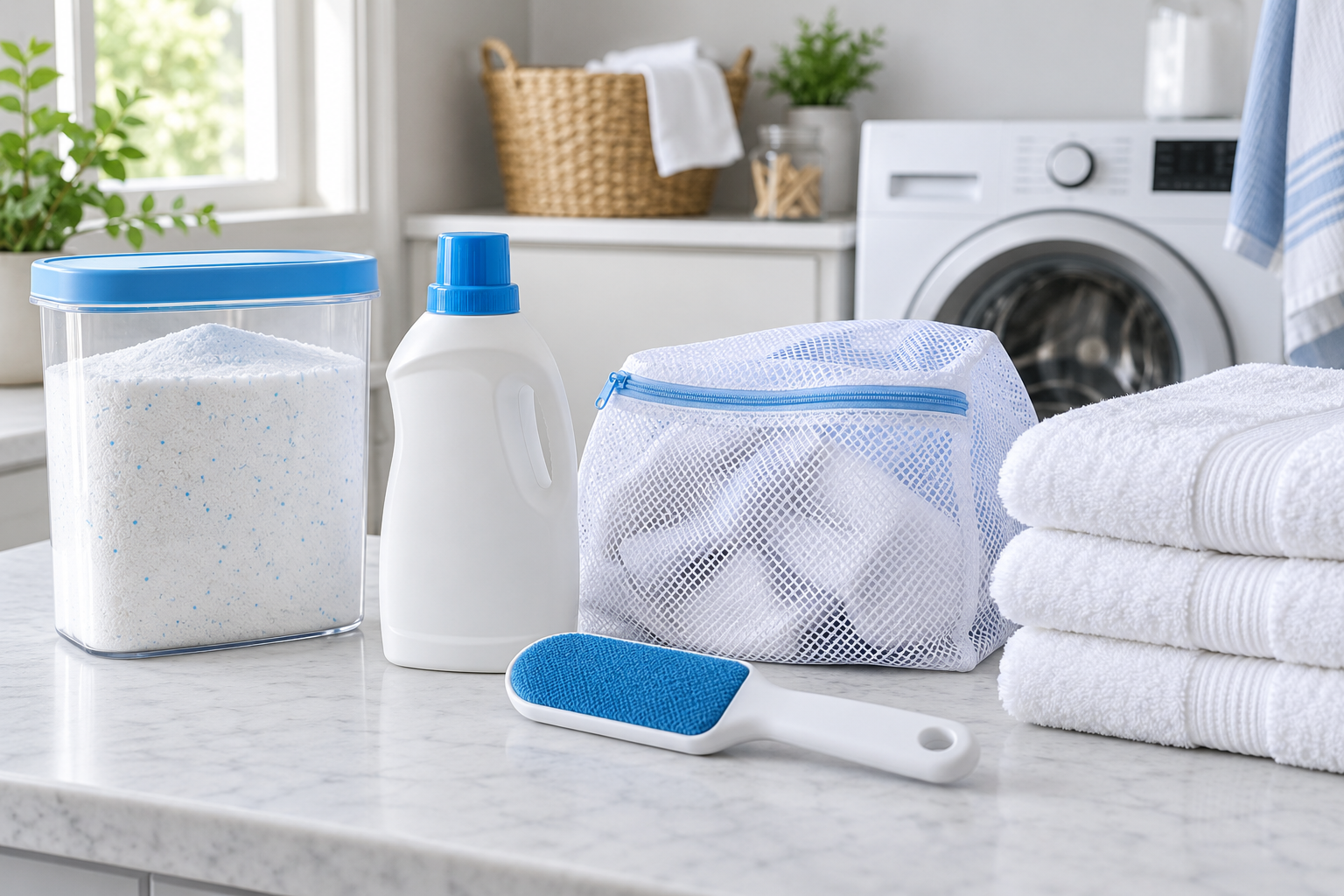
Keep a small washable tray for the products you use to pretreat clothes, with a stain brush if the fabric and product instructions allow one. The tray catches drips and makes it easy to put supplies away in secure storage after use. Store sewing items and spare buttons in a closed box rather than loose on the appliance.
Place a small container for pocket finds near the sorting area. Empty it weekly so coins, hair ties, and school notes do not become permanent laundry-room residents. Keep a lint bin near the dryer if one fits safely without blocking vents or access to the lint filter. Clean the filter according to the dryer’s instructions.

Make a Small or Shared Laundry Space Work Harder
In a laundry closet, use a slim hamper that does not block the doors and a folding basket that can leave the space after each load. In a laundry and bathroom combination, use a closed cabinet for products and keep the floor clear. A fold-down work surface may help if the wall and installation can support it; otherwise a portable basket is simpler.
If there is no folding counter, fold at a table in another room and return the empty basket immediately. Do not store things on top of a dryer if the appliance instructions prohibit it, and keep vents, controls, water connections, and service access clear.

Choose Storage That Earns Its Place
Measure the exact width, depth, and door swing before buying shelves, carts, baskets, or a pedestal. Choose a wipeable tray for drips, baskets with handles for moving laundry, and a cabinet that closes properly for products. A rolling cart helps only when it can be parked without blocking a walkway. A second hamper helps only if the family uses its categories.
Try the room with containers you already own for a week. If a shelf, hamper, or cart solves a repeated problem, then buy that one item. A larger storage system will not fix the step of carrying clean clothes back to bedrooms.

Keep It Working With a Five-Minute Weekly Reset
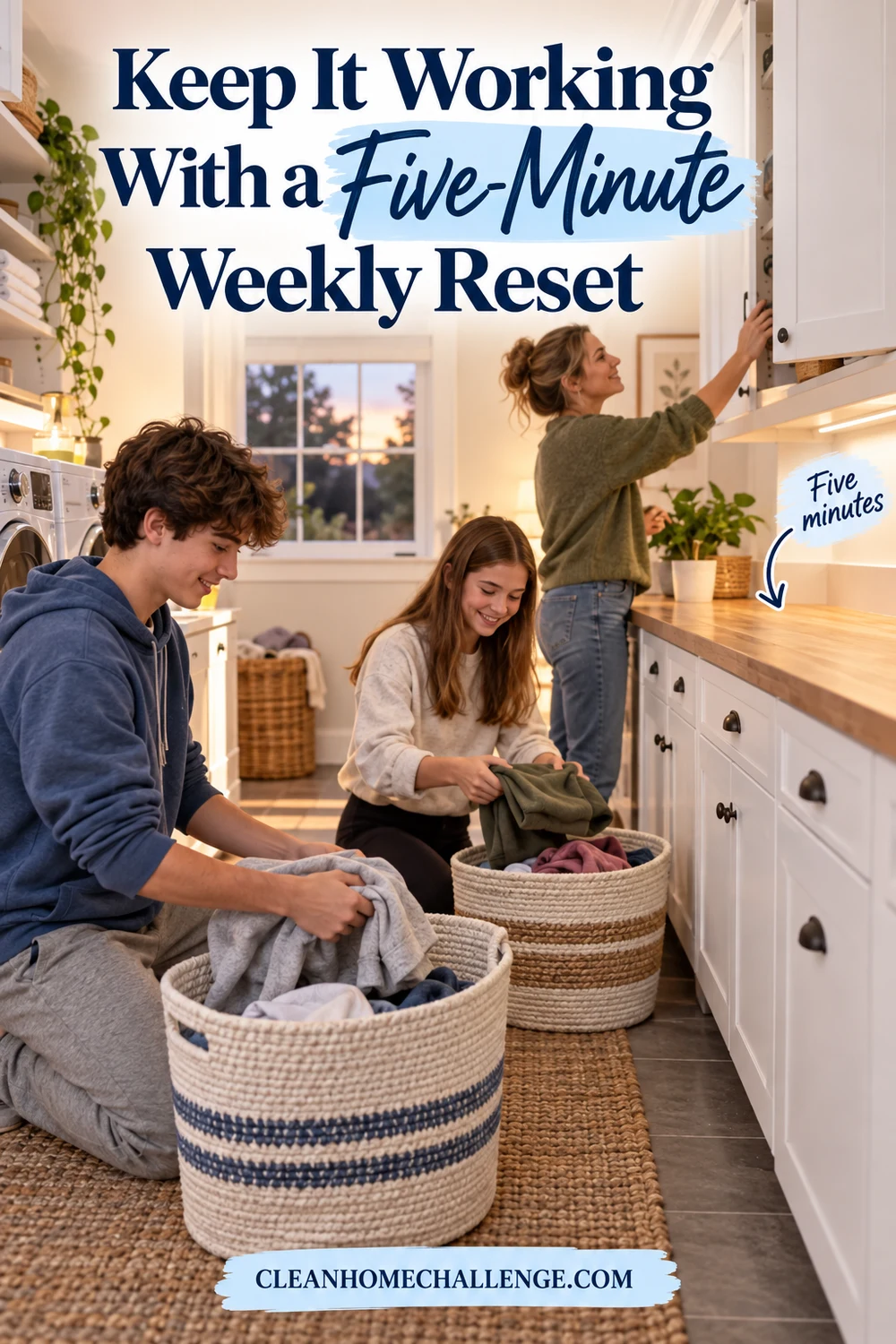
- Return products to their secure place and close every container.
- Move clean laundry out of the room.
- Empty the pocket-find container and bin.
- Wipe the work surface and check for drips.
- Put one basket back where the next load begins.
Saturday can be your laundry catch-up day, but the reset fits whenever a load finishes. If the system repeatedly breaks down, change the troublesome step. Move a hamper closer to where clothes land or reduce the sorting categories. The best laundry room organisation is the version your family can keep using on a busy week.
CLEANERS CLUBHOUSE
Make Laundry Catch-Up Feel More Manageable
Use Saturday to catch up without letting laundry take over the whole weekend. Inside the Cleaners Clubhouse, practical routines and printable support help you keep washing, folding and household jobs moving.