

THIS POST MAY CONTAIN AFFILIATE LINKS. PLEASE READ MY DISCLOSURE FOR MORE INFO.
A favorite wool blanket can make the couch feel inviting on a chilly evening. Washing it is less inviting when you are worried about pulling out a smaller, stiffer version. The most useful first step happens before the water runs: find out which cleaning method this particular blanket allows.
To wash a wool blanket, follow its care label, use a suitable wool detergent, minimize rubbing and twisting, and arrange enough support for drying. Machine washing is suitable only when the blanket’s instructions permit it. A wool setting does not turn a dry-clean-only blanket into a washable one.
This guide is for ordinary wool blankets and throws. Electric blankets, weighted blankets, wool-filled quilts, leather-trimmed pieces, and other specialty bedding need their own complete instructions. Set aside a calm window for handling a heavy wet blanket, rather than adding it to a rushed mixed load.
Disclosure: This post may contain affiliate links. As an Amazon Associate, Clean Home Challenge earns from qualifying purchases. If you make a purchase through these links, we may earn a small commission at no extra cost to you. This helps us keep creating practical cleaning tips, routines and resources for busy families! 🧽
Read the Label Before Wetting the Blanket
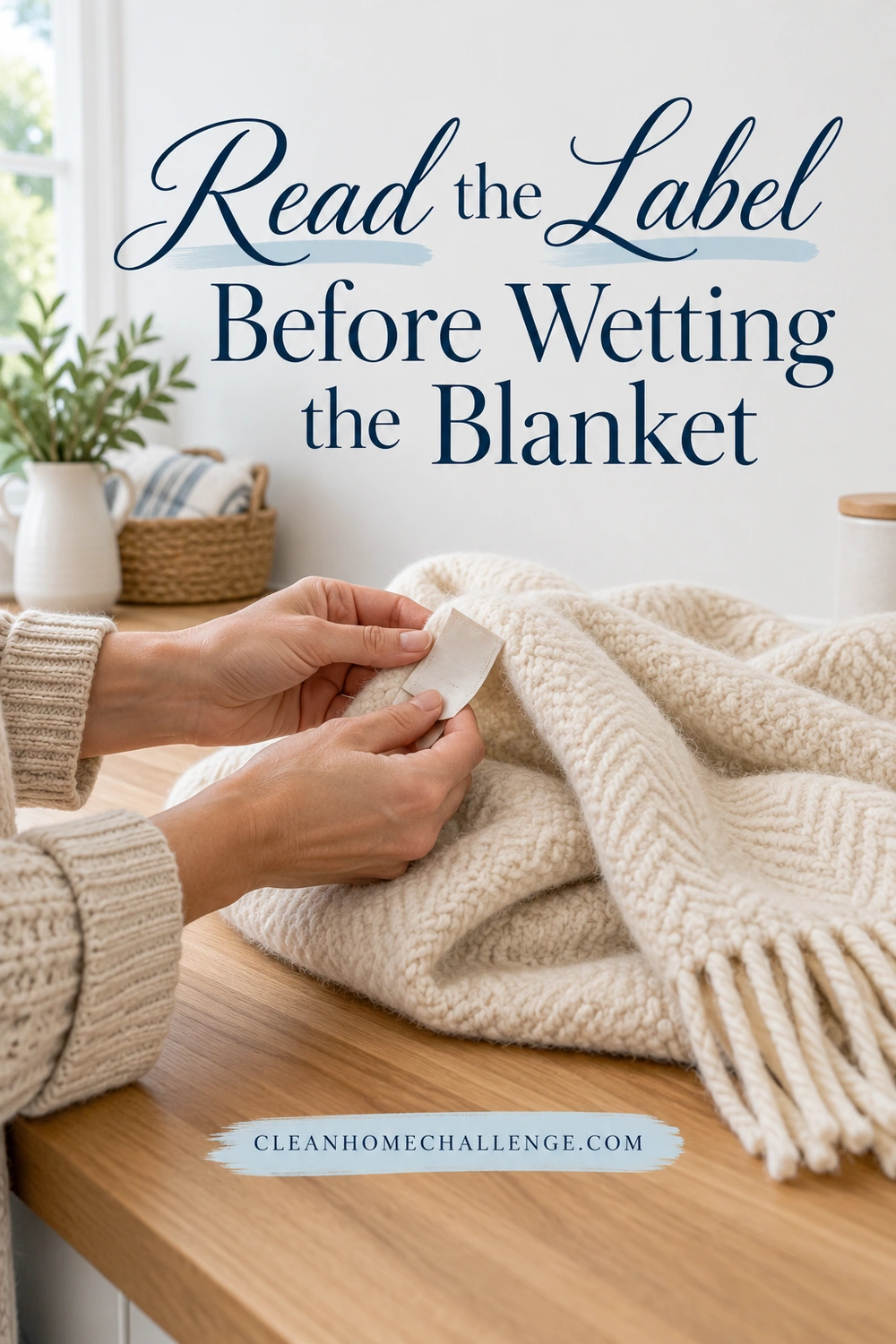
Start with the sewn-in care tag and the manufacturer’s guidance for the exact product. The fiber-content label tells you what the blanket contains; the care instructions tell you how the finished item can be cleaned. Two blankets marked 100% wool can have different permitted methods because their construction and finishing differ.
Use this decision table before choosing a tub or washer:
| What the instructions say | Your next step |
|---|---|
| Machine washable | Follow the stated cycle, water temperature, detergent, spin, and drying instructions; check washer capacity too. |
| Hand wash | Use the hand method allowed by the maker. Do not automatically substitute a machine’s hand-wash button. |
| Dry clean only or do not wash | Keep it out of the wash water and ask a cleaner experienced with wool about the appropriate service. |
| Label missing or instructions unclear | Identify the maker and product if possible. Ask for care advice before attempting a full wash, especially for an heirloom. |
Pendleton’s product-care guidance illustrates why this matters: its washable and nonwashable wool items do not share the same washing permission. Do not copy a method from another blanket just because the fabric looks similar. See Pendleton’s wool-care guidance.
What felting means
Wool fibers have tiny surface scales. Agitation in water can make those fibers interlock, producing a denser material and shrinkage. Woolmark explains that this felting process is irreversible; machine-washable treatments are designed to reduce that tendency. Cold water alone is therefore not permission to scrub, twist, or put untreated wool through an ordinary vigorous cycle. Woolmark’s explanation of washable wool provides the background.
Shrinking, stretching, and felting are not interchangeable descriptions. A sagging wet blanket may be distorted by its weight, while a felted one has fibers locked together. Neither is a reason to try a forceful stretching session or a promised conditioner rescue. If a valuable blanket changes texture or size, stop experimenting and ask its maker or a wool-care professional what is realistic.
Make a small care note
Before cleaning, photograph the label and record the blanket’s brand, cleaning method, and drying instructions. If useful, measure its length and width while it lies relaxed, without pulling. These notes give you a reference for gentle reshaping and save another label hunt next time.
Our free Wool Blanket Care Card has space for those details, your chosen drying spot, and a later dry-check reminder. Keep one card per blanket when family throws have different instructions.
Download the free Wool Blanket Care Card (PDF) to record the label instructions, drying setup, and next check.
If today’s only available time is five minutes, read the label and prepare the drying area. That is a useful completed job. Starting a wash without room to finish it creates more work later.
Wash With Gentle Handling and Wool Detergent
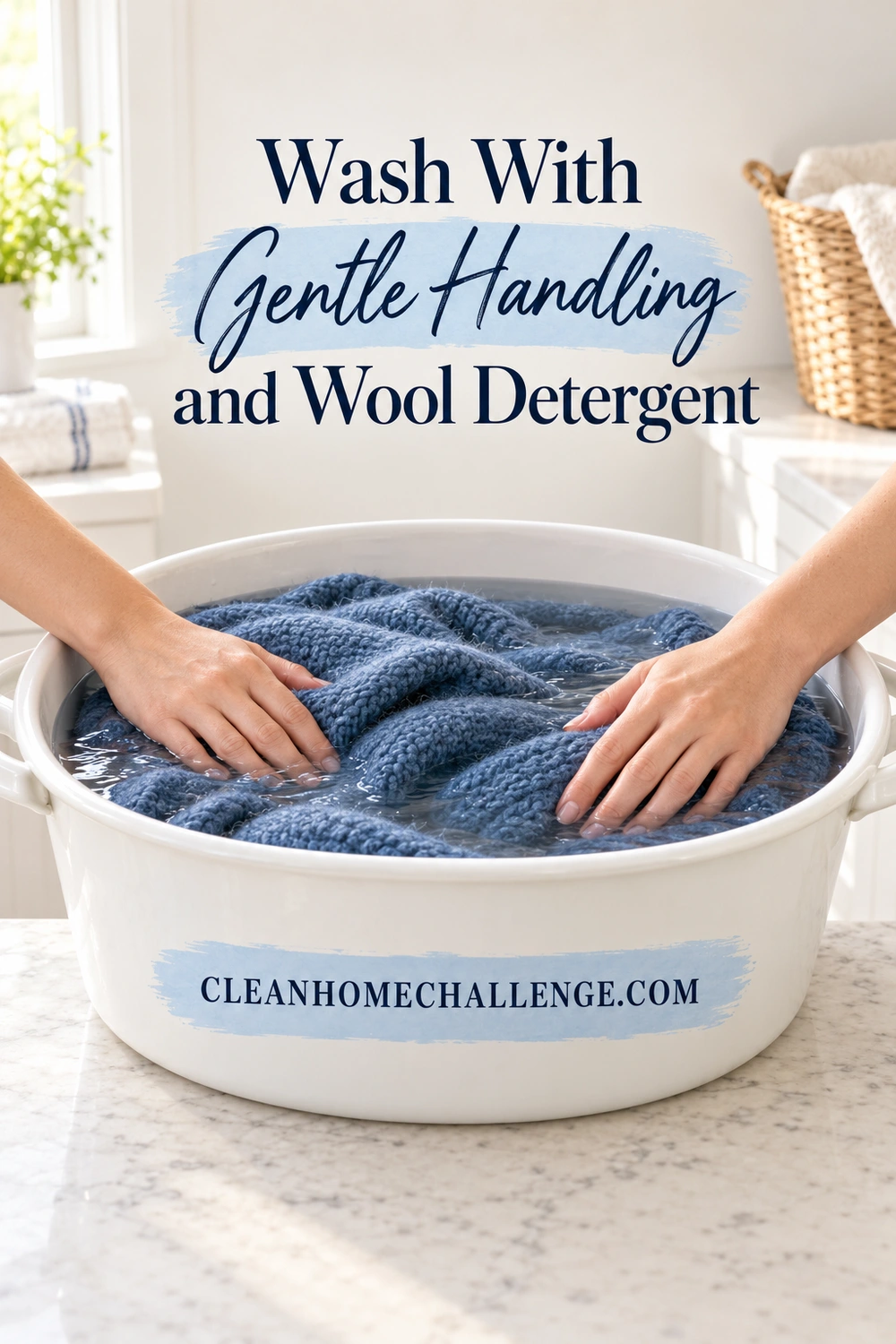
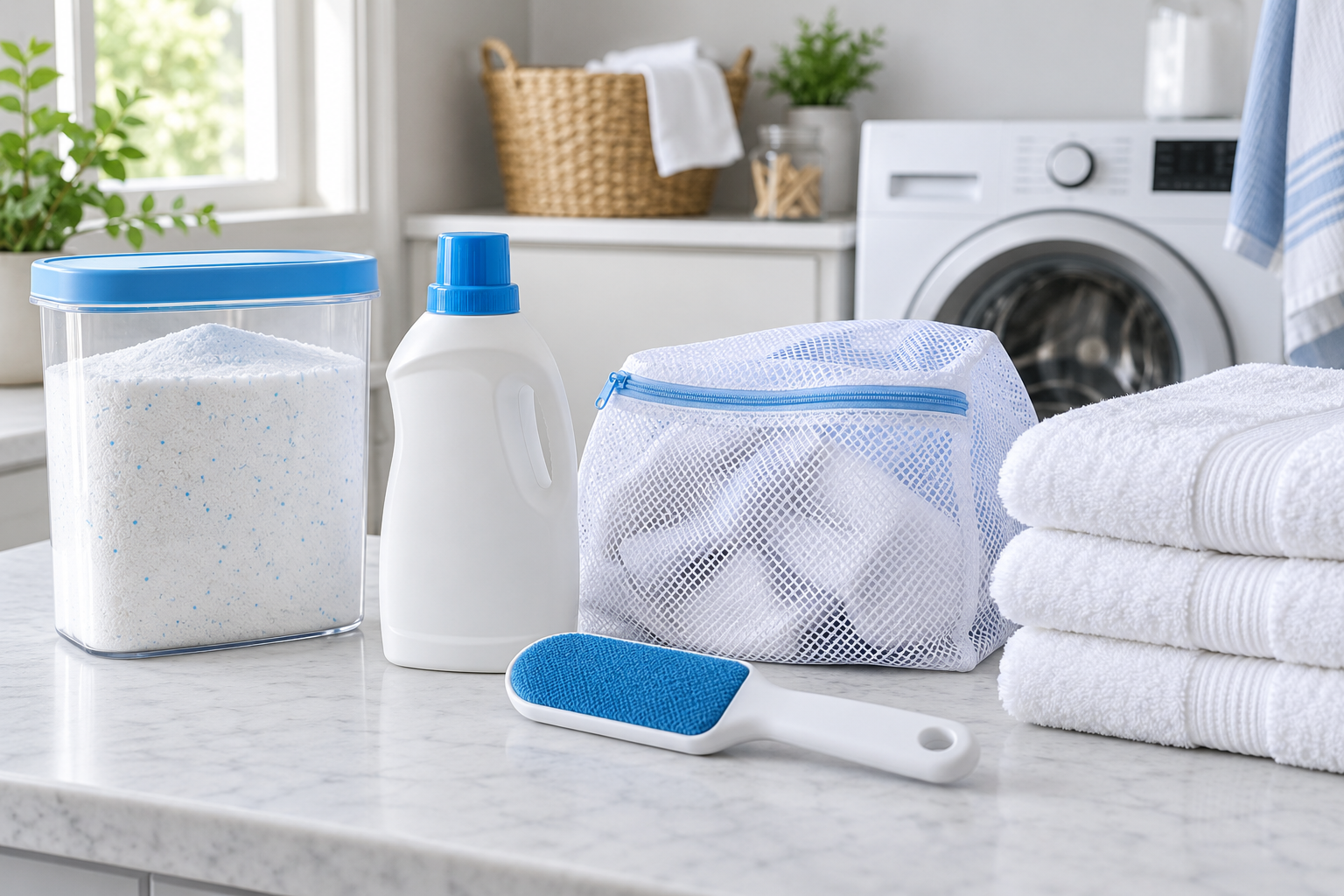
Once washing is permitted, gather a clean basin or suitable washer, a detergent explicitly suitable for wool, clean pale towels, and a stable drying support. Read the detergent’s directions for the method you will use. Keep supplies away from children and pets and follow any handling precautions on the product label.
Woolmark recommends a neutral, mild wool detergent and warns against heavy-duty detergents, enzyme-containing biological detergents, and bleach. Both chlorine and oxygen bleach are unsuitable for this wool-care method. Avoid laundry-stripping mixtures and improvised additions of vinegar, baking soda, or dishwashing liquid. A familiar household product is not automatically appropriate for this blanket. Read Woolmark’s detergent advice.
Do not add fabric softener as a default. It is unnecessary to this process, and the blanket maker may prohibit it. Measure the wool detergent according to its instructions instead of adding an extra cap for reassurance. More product means more product to remove.
Deal with a small spill first
If the blanket’s instructions permit spot cleaning, blot a fresh liquid spill with a clean cloth. Test the allowed wool-care solution in an inconspicuous area first and stop if color transfers or the surface changes. Use only the specified dilution, dab gently, and remove detergent as its instructions require. Do not scrub back and forth or use a stiff cleaning brush on a wet patch.
For persistent stains, ask the manufacturer or cleaner for a treatment appropriate to the stain and blanket. An unidentified old mark is not a good place to test a chain of different stain removers. Tell the cleaner what spilled and what has already been applied.
If the blanket can be machine washed
- Read both sets of instructions. Match the blanket’s requirements with the washer manual, including its wool-cycle load limit. A machine’s overall capacity is not necessarily its wool capacity.
- Give the blanket the permitted space. Do not force it into a packed drum or add towels, jeans, and the rest of the weekly washing. If your machine cannot handle it as directed, use an appropriate professional service.
- Select the approved settings. Woolmark’s blanket-specific guidance calls for a gentle wool cycle, cold water, and wool detergent for machine-washable blankets. A different exact product instruction still needs to be followed. Do not substitute a hot bedding, hygiene, or heavy-duty cycle.
- Use only a suitable spin. Follow the blanket and appliance instructions rather than adding an extra high-speed spin to hurry drying.
- Be ready when it ends. Transfer the blanket with its wet weight supported. Avoid pulling it out by a corner or fringe.
These are conditional steps for washable blankets, not instructions to test whether an unlabeled blanket will survive. Woolmark’s blanket-care guide is a useful general reference alongside your actual label.
If the blanket must be washed by hand
Choose a clean basin large enough to accommodate it without forceful bunching. A large blanket becomes awkward when saturated; arrange help if lifting or carrying it will be difficult. Never step into a slippery tub to tread or stomp the wool clean, and keep a filled tub inaccessible to children.
Follow the maker’s water temperature and soaking instructions. For hand-washable wool generally, Woolmark describes lukewarm water around 86°F/30°C with a mild detergent and about a ten-minute soak, followed by thorough rinsing. That general garment guidance is not a universal blanket recipe: use any different instructions supplied for your blanket and detergent. See Woolmark’s washing guidance.
Let water and the approved detergent do the work. Handle the blanket gently; avoid kneading, scrubbing, or repeatedly swishing it. Drain and rinse as directed while keeping the fabric supported. Press out excess water without wringing. If permitted, use clean towels to absorb moisture with gentle pressure. Faribault Mill’s care guidance also emphasizes pressing water out rather than twisting. See its product-care instructions, which are product-specific.
You do not need an improvised hot-then-icy-water trick. The useful controls are the permitted cleaning method, the right product, and restrained handling throughout the wash and rinse.
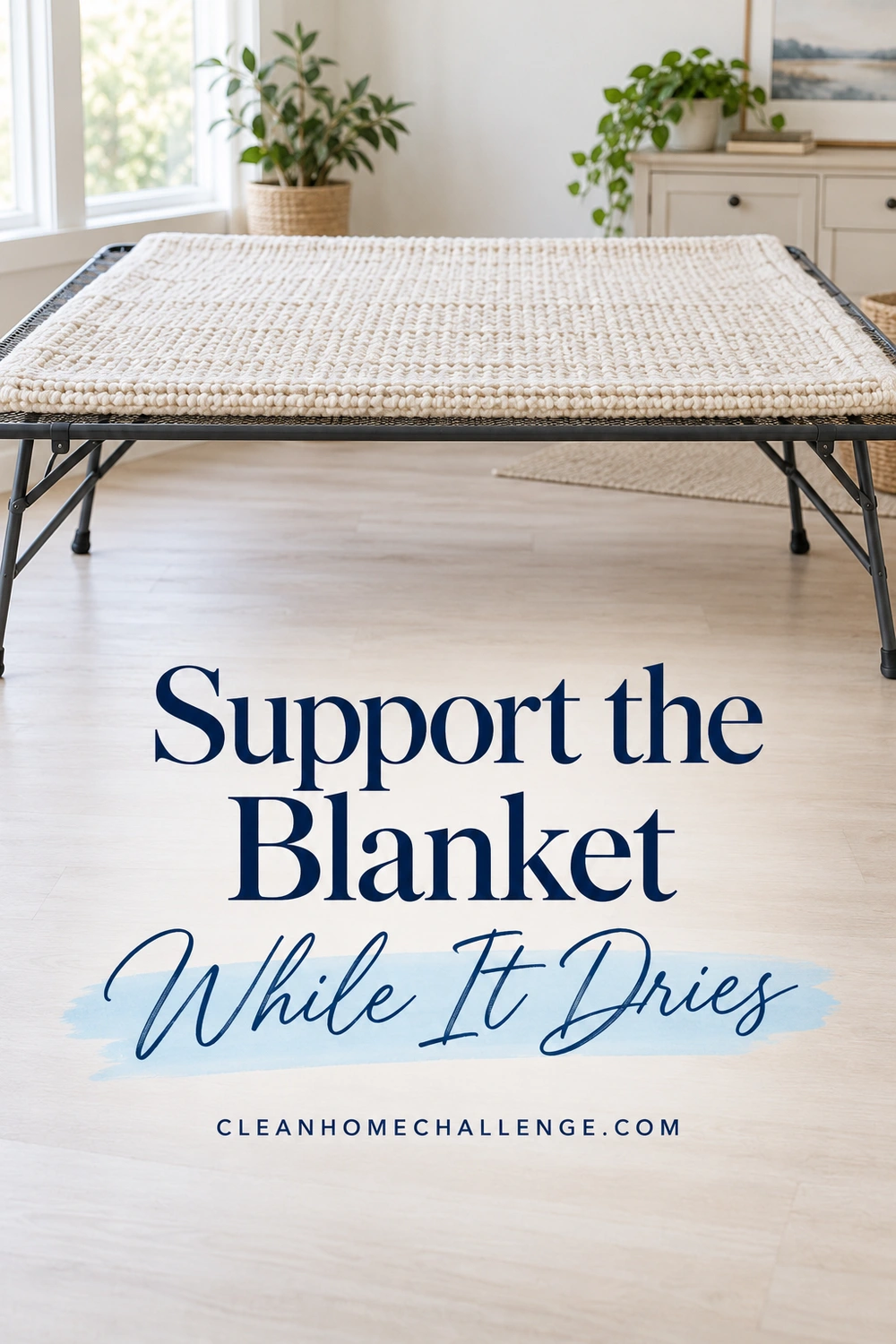
Support the Blanket While It Dries
The washing job is only halfway finished when the water drains. Decide how the blanket will dry before starting, especially if the family needs the bathroom, table, or drying room later that day.
Wet wool needs support. For a flat-dry blanket, use a clean, stable surface or suitable mesh support large enough for its weight and shape. A towel underneath should be clean, pale, and free of loose lint. Keep the arrangement away from floors or surfaces that could be damaged by moisture, and keep walking routes clear.
Gently ease the blanket toward its relaxed original outline. Do not tug the edges to meet measurements or pull the fringe to straighten the body. Smooth out unnecessary folds without stretching it. If using towels, replace wet ones with dry ones as needed and check the underside; moisture trapped beneath the blanket is easy to miss.
Some woven blankets have specific line-drying instructions. Follow that maker’s support method rather than assuming every wool blanket should hang from two corners. Woolmark advises supporting a wet blanket’s weight; its knitwear guidance also explains how unsupported wet fabric can stretch. A knitted throw and a tightly woven bed blanket may need different arrangements.
Keep drying gentle
Let the blanket air-dry in suitable airflow, away from direct heat and strong sunlight. Do not drape it over a radiator, aim a hair dryer at a damp patch, or place it against a heater. Woolmark’s drying guidance supports flat drying for knitwear and avoiding direct heat and sunlight.
Use a tumble dryer only if the exact blanket label explicitly permits it, with the specified settings and appliance suitability. A dryer having a wool option is not permission to use it for a blanket marked do not tumble dry. For a blanket with unclear instructions, get clarification rather than choosing low heat as an experiment.
There is no dependable one-size-fits-all drying time. Blanket size, construction, water retained, support, and room conditions all matter. Plan a later check rather than promising it will be ready for tonight’s movie.
Check before folding
Feel both surfaces, thick edges, bindings, and any areas that rested against the support. Move or turn the blanket gently only as its care instructions allow, keeping the weight supported. If the underside or folded areas remain damp, keep drying. A dry-feeling corner does not establish that the entire blanket is ready for storage.
For more help choosing a safe indoor drying location, see our guide to air-drying clothes indoors without blocking airflow. The blanket’s own drying instructions still come first.
Keep Wool Fresh Between Washes

Build the routine around the blanket’s condition and use. A lightly used throw may only need airing, while a spill or visible soil calls for the allowed cleaning method. Do not turn a blanket-care article into a compulsory weekly washing task.
Give a dry blanket an airing in a suitable shaded place with good airflow when its instructions allow. For an appropriate woven blanket, a soft garment brush used gently along the surface direction can help with loose debris; avoid aggressive brushing on loose knits, delicate finishes, or damaged areas. Stop if fibers snag or the surface changes.
Before seasonal storage, deal with soil using the approved care method and make sure the blanket is completely dry. Store it somewhere clean, cool, and dry, following the manufacturer’s packaging advice, and check stored blankets periodically. A scent sachet is not proof of moth protection, and fragrance does not replace cleaning.
A manageable household handoff
Try three short notes rather than relying on everyone to remember a special laundry rule:
- What this blanket allows: copy the actual washing and drying instructions.
- What happens next: airing, an approved wash, or professional cleaning.
- Who checks it later: name the person and set a reminder for the next useful dry check.
Keep a blanket waiting for professional cleaning separate from the everyday wash basket, with its care note attached. If someone else handles laundry, tell them which throw needs special treatment before the next load starts. A photo of the tag is useful when the printed instructions are small.
If a wash goes wrong, stop the cycle safely according to the appliance instructions and avoid adding more products or heat. A compact, stiff, smaller blanket may be felted; a blanket that has grown or sagged may be distorted. Take photos and contact the maker or a professional rather than following a guaranteed unshrinking hack.
Use the free care card to keep the label details and drying plan together. For broader help making washing, folding, and household jobs feel manageable, explore the Cleaners Clubhouse. One wool blanket can be its own small job within the week; it does not need to take over laundry day.

CLEANERS CLUBHOUSE
Make Laundry Catch-Up Feel More Manageable
Use Saturday to catch up without letting laundry take over the whole weekend. Inside the Cleaners Clubhouse, practical routines and printable support help you keep washing, folding and household jobs moving.