THIS POST MAY CONTAIN AFFILIATE LINKS. PLEASE READ MY DISCLOSURE FOR MORE INFO.
You are ready to pack, but the luggage tags are in one drawer, the packing cubes are inside a suitcase, and nobody knows which cable belongs to the travel charger. Buying another set feels easier than searching. Then the new set joins the old one after you get home.
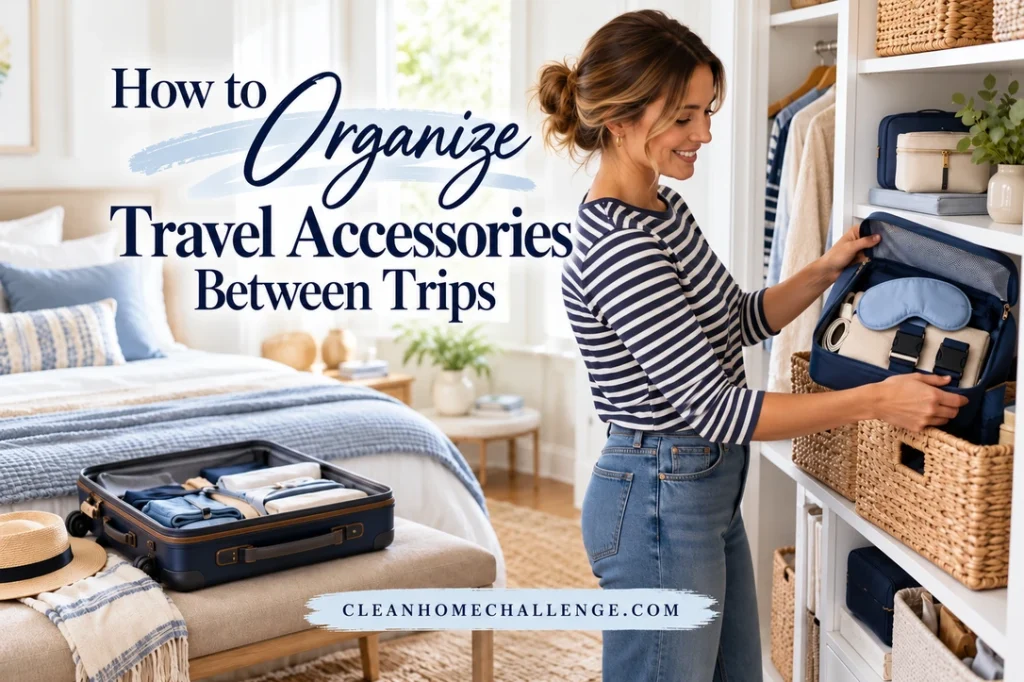
Travel accessory organization works best when you give useful items a clear home between trips. Start with what your family actually uses, clean and dry the pieces that need attention, and store small sets where you can find them. An ordinary shelf, drawer, or basket can be enough.
Allow about 30–45 minutes for a modest collection, plus any washing and drying time. If you have five minutes, start with one pouch. The goal is to make the next departure easier, rather than turn unpacking into another enormous job. Below you will find a practical sorting method, a storage plan, a copyable travel-kit inventory, and a short return-home reset.
Disclosure: This post may contain affiliate links. As an Amazon Associate, Clean Home Challenge earns from qualifying purchases. If you make a purchase through these links, we may earn a small commission at no extra cost to you. This helps us keep creating practical cleaning tips, routines and resources for busy families! 🧽
Sort Travel Gear by How You Actually Travel
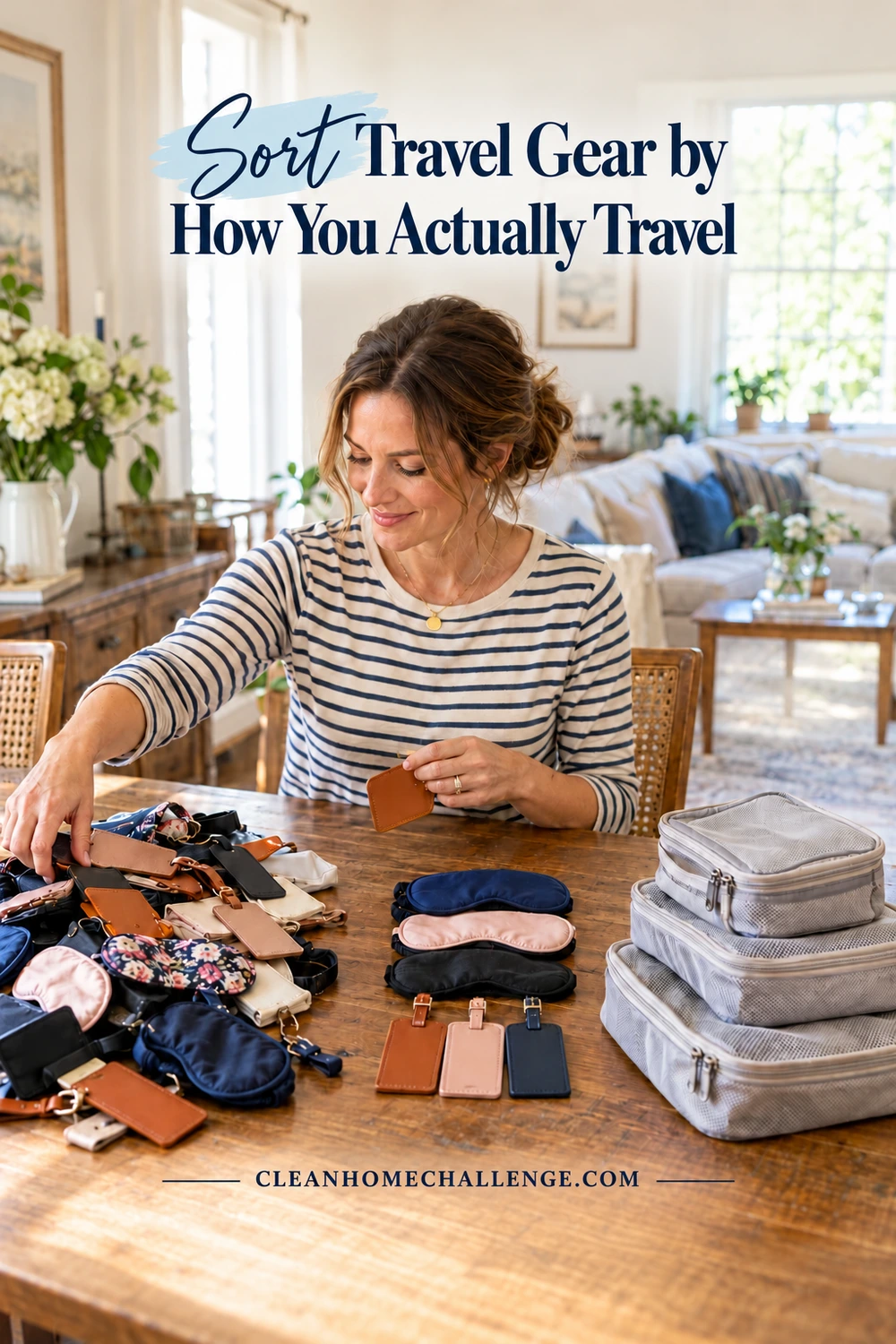
Choose a clear table or an area of floor away from walkways. Bring together travel-only items from suitcases, drawers, toiletry bags, the car, and closets. Leave daily-use electronics in their usual homes; add their locations to your inventory instead of making a second collection.
You might find packing cubes, luggage straps, spare tags, neck pillows, empty toiletry containers, adapters, travel laundry bags, shoe bags, sleep masks, or a small luggage scale. Do not empty every closet at once. Work through one bag or shelf, return what belongs elsewhere, then move on.
Decide which trips deserve a kit
Think about your last few trips and any realistic upcoming plans. A family taking weekend road trips needs a different set from someone regularly flying overseas. Make a core group for items used on most trips, then add only the specialist groups you need.
| Group | Useful examples | What should stay elsewhere |
|---|---|---|
| Most trips | Packing cubes, laundry bag, shoe bags, luggage scale | Everyday clothes and daily chargers |
| Overnight comfort | Sleep mask, clean pillow cover, reusable earplug case | Bedding used every night |
| International trips | Suitable plug adapters and a compatibility note | Unidentified electrical parts |
| Road trips | Travel-only car organizer and small activity pouch | Vehicle safety equipment needed year-round |
| Person-specific extras | A child’s familiar travel pouch or individual accessibility accessories | Medicines and essential aids needed day to day |
Keep essential medical or accessibility equipment in its appropriate care and storage system, following its instructions. A travel basket should never become the hiding place for something a family member needs at home.
Use four decisions
Put each item into keep for travel, return to everyday use, check or repair, or leave the house. Check zippers, fasteners, cracks, missing pieces, and whether the item still fits its intended job. Ask the owner before donating their belongings.
Avoid keeping three incompatible adapters simply because they look useful. Identify the model and purpose first. A plug adapter changes the plug connection; it does not automatically convert voltage. Keep the device’s input requirements and destination compatibility together in your notes, and consult the manufacturer when uncertain.
Useful duplicates can stay when they have a job. Two laundry bags may be sensible for separate travelers or clean and dirty compartments. Six extra ones with no planned use may be taking space from items you need. Set a quantity based on actual trips, rather than an arbitrary rule that every duplicate must go.
Place repair items in a small, dated action pouch with a specific next step. Do not put damaged electronics back into the ready-to-pack kit. Follow local electronics and battery disposal guidance; do not donate unsafe items or put lithium batteries into ordinary household trash or curbside recycling bins.
Clean and Dry Accessories Before Storage
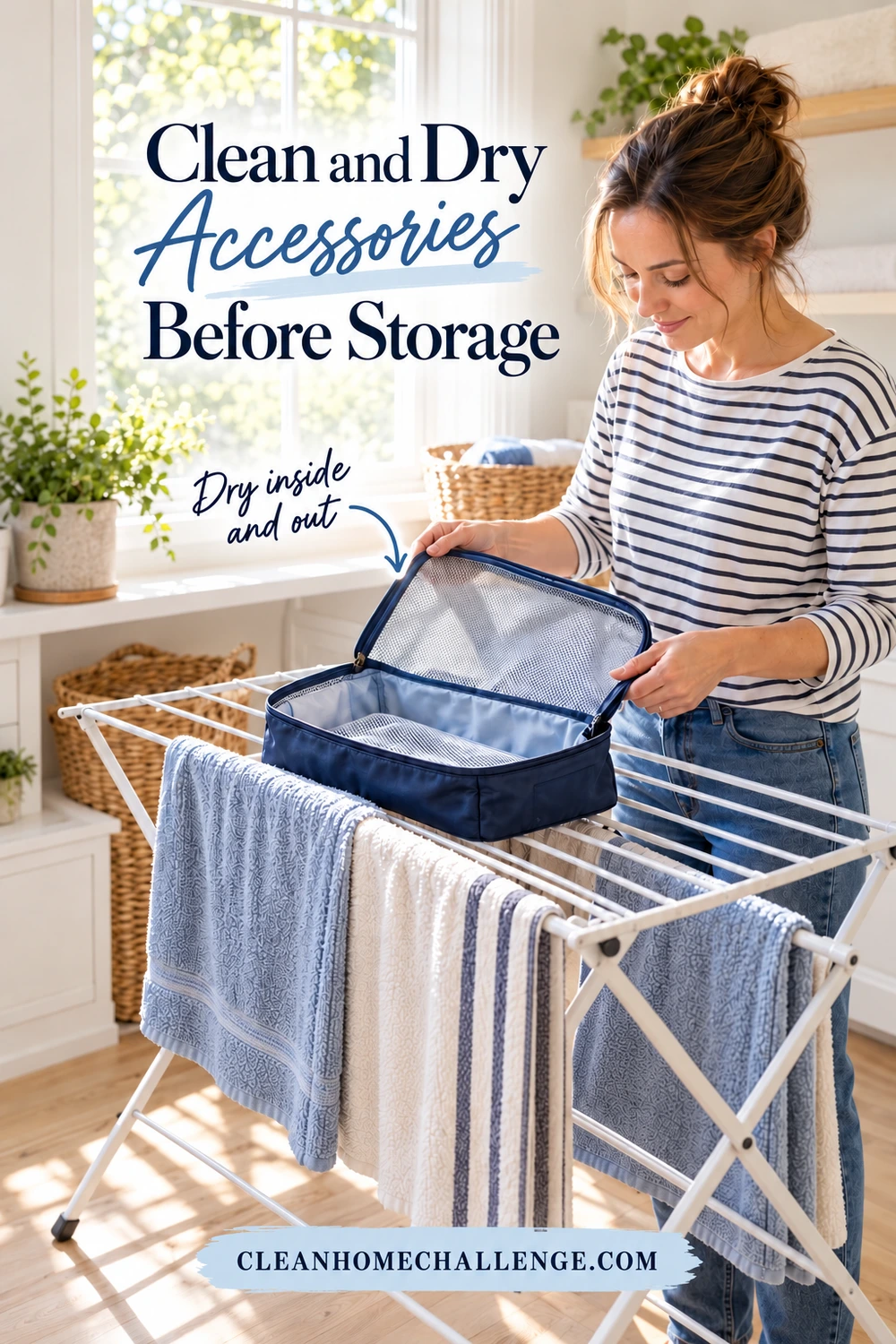
Separate cleaning from organizing. Empty crumbs, old receipts, hair ties, and tissues first. Check every pocket, including the little mesh one that is easy to miss. Remove contents before treating a bag or pouch, and read its care label.
For loose dirt, a gentle shake outdoors or a soft brush may be enough. If the label permits wiping, use a suitable cloth and the approved method. Test an inconspicuous area when recommended. Avoid inventing a universal wash recipe for coated fabrics, foam pillows, electronics, leather, or compression accessories.
Let the specific care label decide
Packing cubes from different ranges can have different instructions. Eagle Creek’s current general care guidance says not to machine wash or dry unless the label states otherwise, and to dry gear completely before storage. Older general advice may differ, so the label for the exact item is the better starting point. Do not assume that a washable-looking mesh panel means the entire cube is machine washable.
Open permitted compartments and leave cleaned pieces to dry with air circulation in a suitable location. Check seams, corners, padding, and the inside of toiletry pouches before putting them away. A dry outer surface does not prove the lining is ready. Do not close damp accessories inside a suitcase to deal with later.
| Item | Before it goes away | Avoid |
|---|---|---|
| Packing cube or fabric pouch | Empty it, follow its label, dry fully | A default hot wash or tumble-dry cycle |
| Toiletry container | Follow the container and product instructions; inspect closures | Mixing leftovers or topping up unidentified contents |
| Neck pillow | Follow instructions for cover and filling separately | Soaking foam or filling without permission |
| Adapter or charger | Disconnect; inspect; use the manufacturer’s exterior-care method | Immersion, wet ports, or damaged cables |
| Laundry or shoe bag | Remove debris; clean as directed; dry inside and out | Storing it with damp laundry or dirty shoes |
Do not put loose medication into decorative travel containers as part of this tidy-up. Keep medicines appropriately labeled and stored, and review travel requirements separately. Store toiletries according to their labels, away from children and pets. An old sunscreen bottle or mystery liquid should not automatically qualify as a ready-to-go essential.
If an accessory smells musty or has visible mold, keep it out of the clean kit while you check manufacturer care guidance and whether it can be safely recovered. Fragrance sprays are not a substitute for cleaning and complete drying. If a lining is sticky, peeling, or deteriorating, more scrubbing may not fix the material.
Give Each Travel Kit a Clear Home
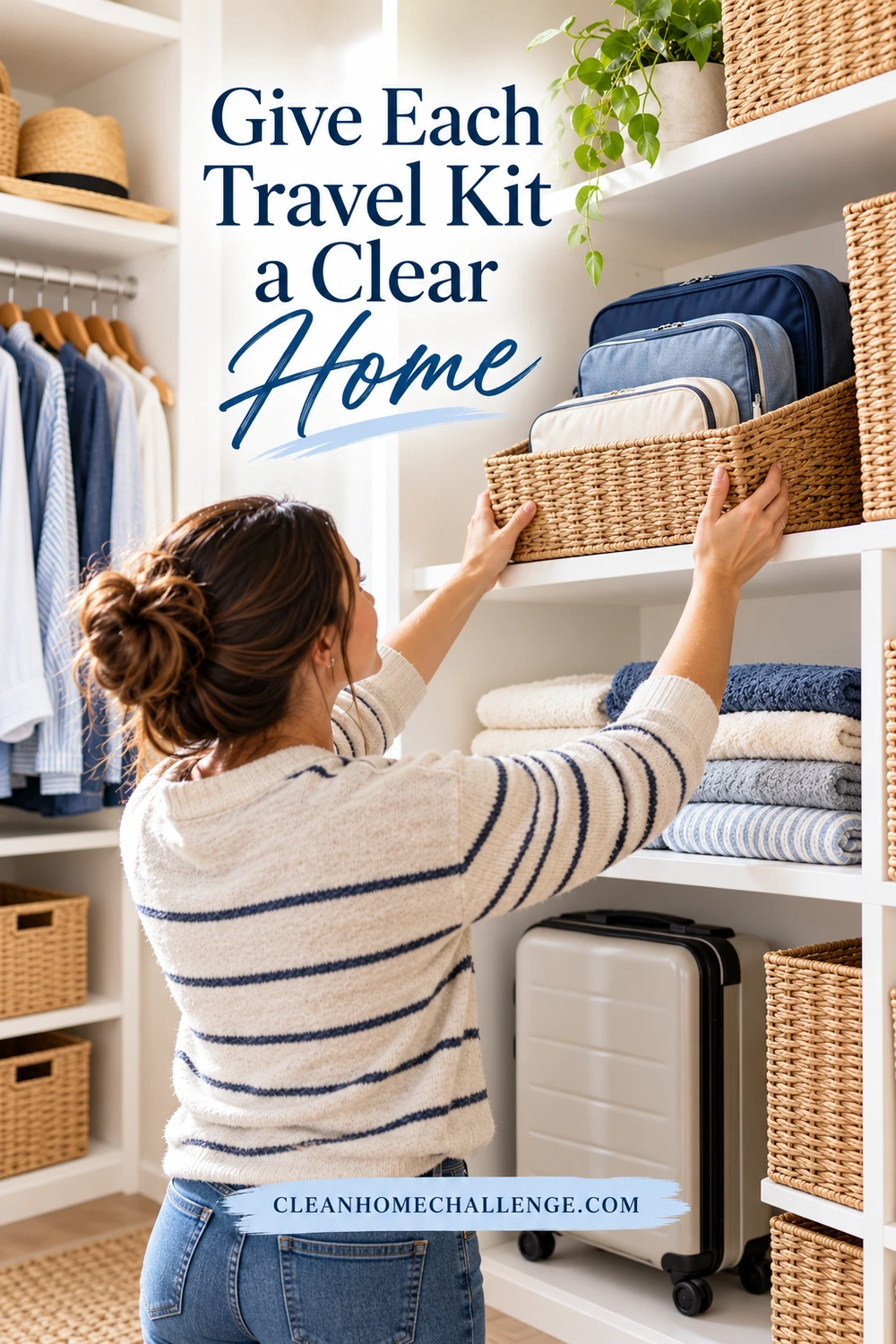
Choose the home after sorting, so you know how much space you need. Try an existing drawer, a shelf basket, or a lidded container you already own. Measure before buying anything. The container should allow you to take a kit out without dismantling the whole shelf.
Build a simple core-and-extras system
Store the most-used soft accessories together. Put specialist extras in separate pouches with labels that make sense to everyone who packs: Packing cubes, Sleep kit, or International adapters. A beautiful label saying Adventure is less helpful if nobody knows what is inside.
Keep matched components together without bending connectors sharply or crushing padding. Coil cables loosely according to their instructions, with reusable ties if you already have them. Label an unfamiliar charger with the device it belongs to. Before giving away an unidentified cable, check with the household rather than guessing.
For shared items, give each object one home. If you borrow the luggage scale, return it to the travel shelf instead of the junk drawer. When an everyday item must join a trip, list its home location and a packing reminder; you do not need to purchase a second one just to make the travel kit look complete.
Decide what can live inside luggage
Clean, fully dry, lightweight soft accessories may be stored inside a suitcase if its care instructions and storage conditions suit that use. Leave a note on the suitcase or in the inventory showing what is inside. Avoid nesting so many bags that the item you need sits behind three zippers.
Keep batteries, electronics requiring periodic checks, toiletries, documents, and essential daily items in their appropriate accessible homes instead. Do not bury a power bank in a rarely opened suitcase or leave it in a hot vehicle. Follow its manufacturer’s storage instructions, including any charge-level and checking schedule. Keep it protected from damage, away from heat and moisture, and separate from loose metal objects.
Before flying, check the current airline and destination rules. FAA guidance requires spare lithium batteries and power banks in carry-on baggage, protected against short circuits; they must be removed if a carry-on bag is checked at the gate. Airline restrictions can be stricter. A storage label is a reminder to check, not proof that an item is permitted on every flight.
Make the location work for your home
In a small apartment, one drawer with two pouches may work better than a large storage tub. In a family home, put child-specific soft accessories beside the core kit, with small or hazardous pieces out of children’s reach. Keep heavy luggage where you can move it safely; do not create a lifting problem just to free a low shelf.
If you pack infrequently, choose a dry, temperate indoor location instead of a damp garage or hot attic. If you travel often, favor easy access over deep nesting. Keep passports and other sensitive documents in your normal secure document system, and record only their location when appropriate. Avoid displaying personal information on an open shelf inventory.
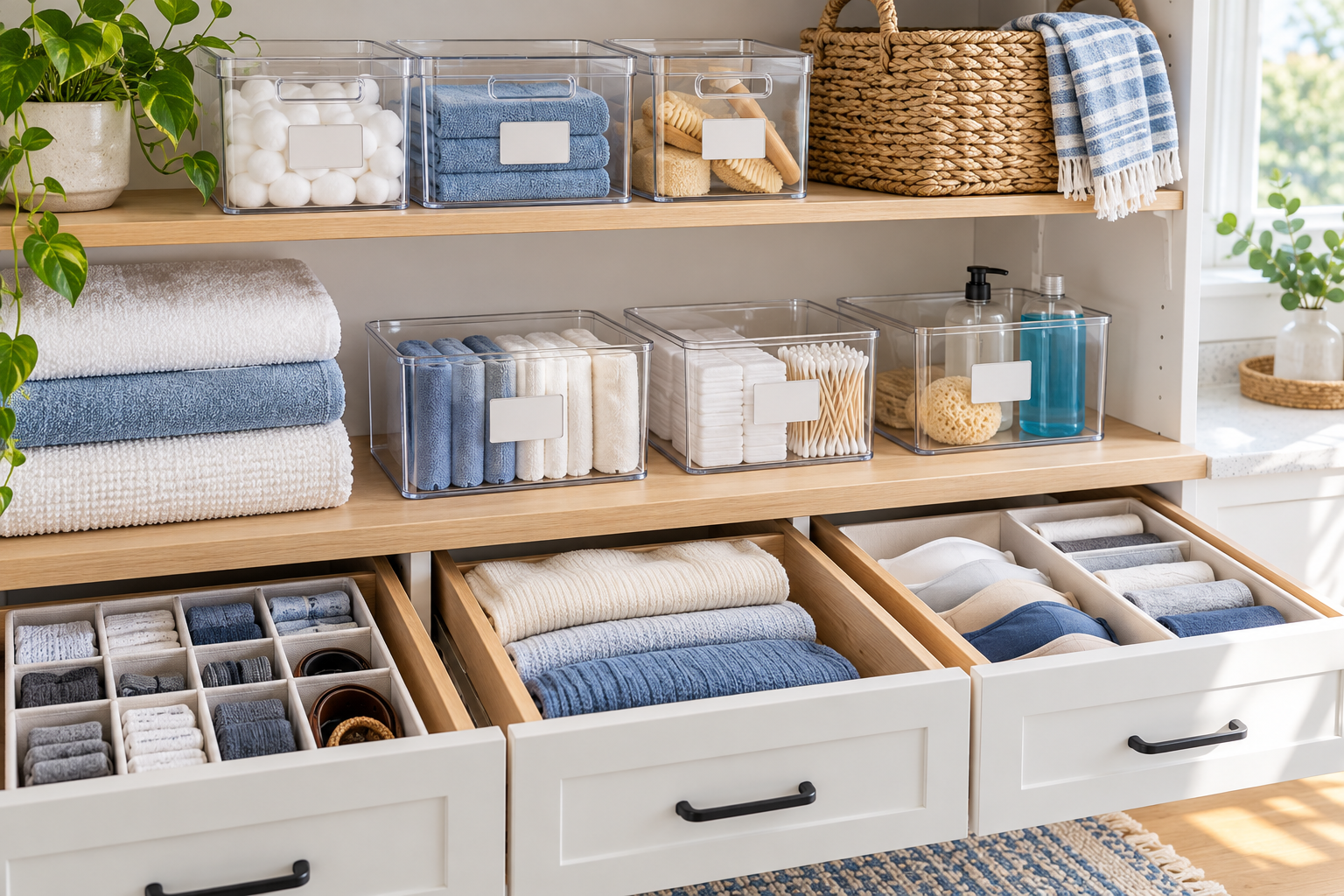
Use a Travel-Kit Inventory Before Buying More
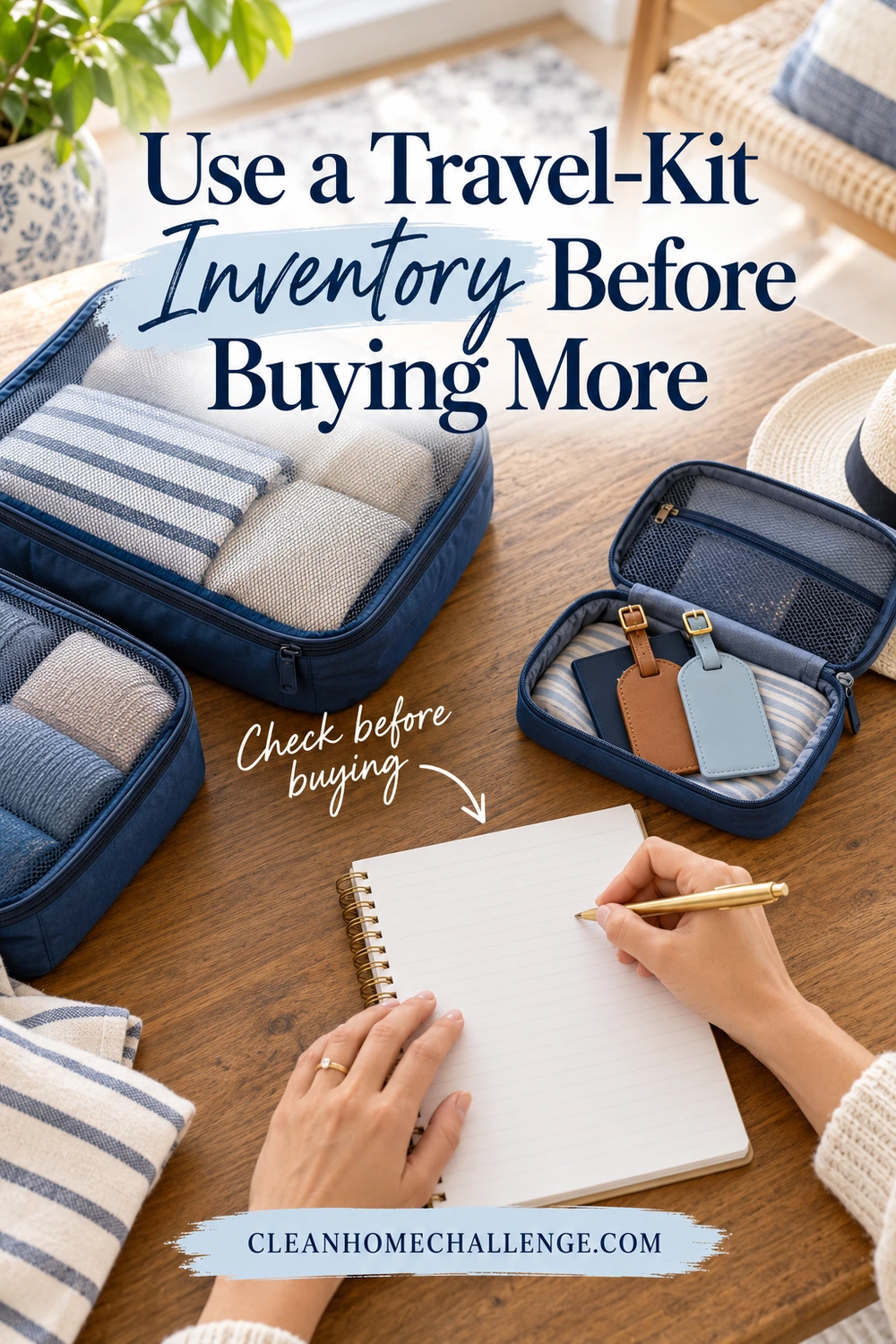
An inventory only needs to answer three questions: Do we own it? Where is it? Is it ready? Start with a short list of the accessories most likely to be lost or bought twice. A note on your phone, a sheet in the storage basket, or the copyable table below can work.
Use a household-accessible place for shared stock information without including passport numbers, passwords, or other sensitive details. If someone needs an accessible format, choose large print or a compatible digital note instead of relying on a tiny handwritten label.
Copyable travel-kit inventory
Kit or trip type: __________ Storage home: __________ Last checked: __________
| Item or matched set | Quantity owned | Exact home | Condition / ready? | Action before next trip |
|---|---|---|---|---|
| Packing cubes | ___ | ___ | ___ | ___ |
| Laundry and shoe bags | ___ | ___ | ___ | ___ |
| Sleep accessories | ___ | ___ | ___ | ___ |
| Luggage scale, straps, and tags | ___ | ___ | ___ | ___ |
| Identified adapters and cables | ___ | ___ | ___ | ___ |
| Empty toiletry containers | ___ | ___ | ___ | ___ |
| Specialist or personal accessories | ___ | ___ | ___ | ___ |
| Other: __________ | ___ | ___ | ___ | ___ |
Borrowed from everyday use: Item __________ Home __________ Return reminder __________
Check separately: Power-bank instructions and recall status; current airline rules; document validity; medicines and personal care requirements.
Buy only after checking: Missing item __________ Why needed __________ Existing alternative __________
Be specific about location. Blue zip pouch, bedroom closet, middle shelf is more useful than somewhere in the luggage. For condition, write ready, needs cleaning, check compatibility, or replace damaged strap, rather than an unexplained tick.
A realistic family example
Imagine you find four packing cubes, two shoe bags, one laundry pouch, three adapters, and a charger nobody recognizes. Your next trip is a two-night drive. The soft items cover that trip, so the shopping list stays empty. The adapters go into a separate identified set for international use. The unknown charger goes into the action pouch until its owner and compatibility are confirmed.
If you later discover the luggage scale is in a relative’s bag, write lent to Sam—ask before departure, rather than buying another immediately. The inventory should reveal the next action, not become an impressive catalog that nobody updates.
Before buying an organizer, try the setup with what you own for one packing cycle. If a particular problem remains—tiny tags disappearing, for example—then buy the smallest solution that addresses it. Extra containers can hide duplicates just as easily as they can organize them.
Reset the Kit After Your Next Trip
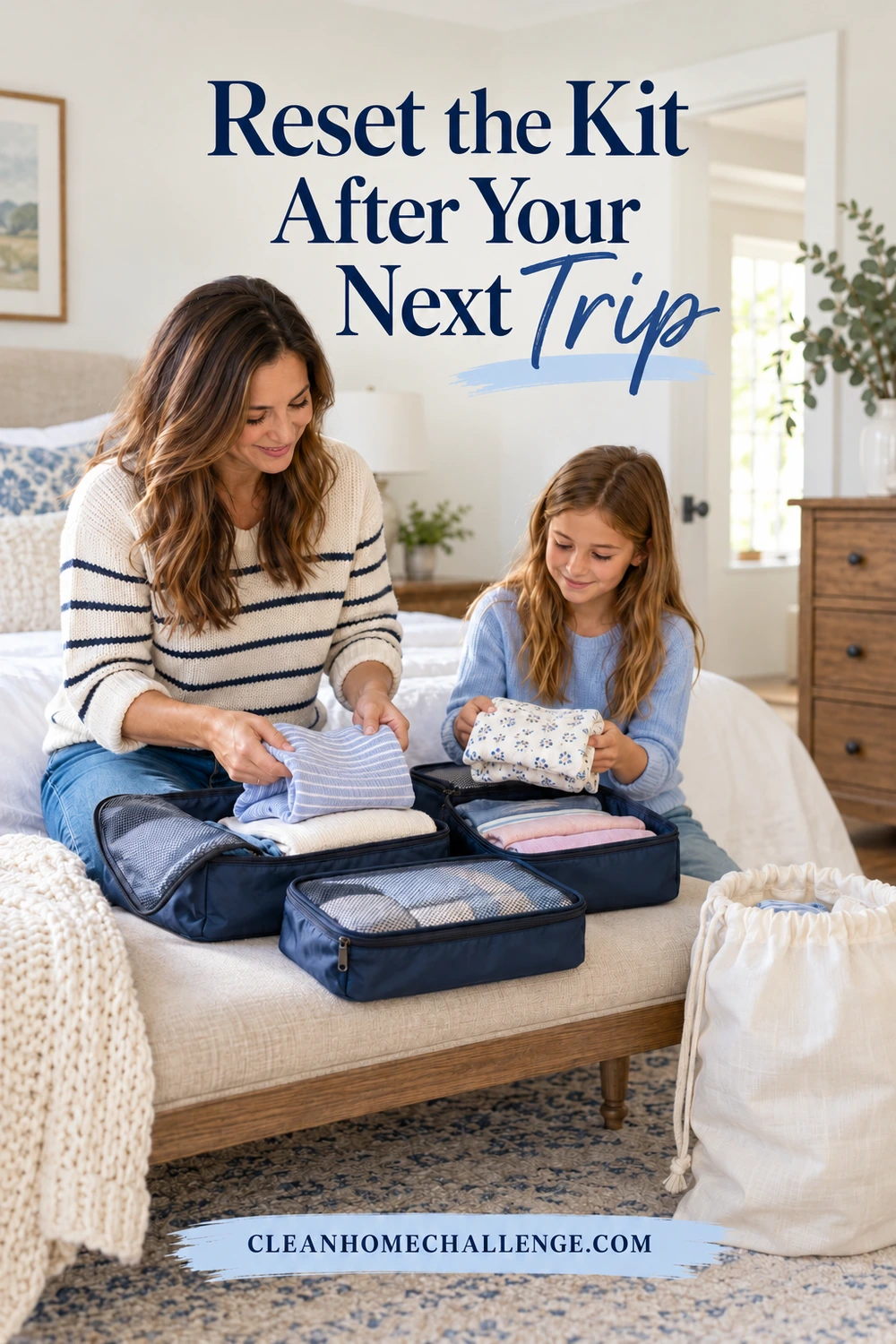
Give unpacking a small repeatable finish. The exact timing depends on how tired you are and what needs cleaning; the order matters more than completing everything on arrival night.
- Return essentials first. Put medicines, daily chargers, important documents, and personal aids back in their usual safe homes.
- Empty the travel-only pouches. Remove food, trash, receipts, used tissues, and forgotten products. Check pockets before washing anything.
- Separate dirty or damp pieces. Clean as directed and allow full drying before returning them to the ready kit.
- Check what failed or was missing. Record a torn zipper, uncomfortable pillow, or genuinely useful extra while you remember the trip.
- Return the ready pieces. Put each set in its labeled home and update the inventory with any loan, replacement, or changed location.
For a ten-minute first pass, spend roughly two minutes returning essentials, three emptying pouches, three sorting ready items from care items, and two updating the note. Washing and drying happen separately; do not rush them to meet a timer.
If you are exhausted, do the essential returns and separate wet items today. Leave the remaining dry accessories in one clearly designated unpacking spot, out of walkways, with a reminder to finish. That is a workable halfway point. Scattering them across the house usually creates more searching later.
Before the next trip, read the inventory, check conditions and current travel requirements, and take out only the kits you need. Your family does not need a display-worthy travel cupboard. A clear home, ready accessories, and one reliable note are enough to make packing feel lighter.
Sources and care notes
Research checked October 19, 2026. Organizational steps and timing are practical editorial suggestions, not measured performance claims. Follow the label for your exact accessory; general and older care advice can differ.
CLEANERS CLUBHOUSE
Ready to Clear the Clutter One Step at a Time?
Join the 30-Day Declutter Challenge and work through your home in small, achievable steps. The Cleaners Clubhouse includes the plan, printable support and encouragement to help you keep going.