

THIS POST MAY CONTAIN AFFILIATE LINKS. PLEASE READ MY DISCLOSURE FOR MORE INFO.
Hard water stains can make a clean bathroom look cloudy within days. The white spots on taps and shower screens are usually mineral deposits left behind when water evaporates. They are not the same as ordinary dirt, so repeated wiping with plain water often moves them around instead of removing them.
The safest approach is gentle and surface-specific: confirm the finish, loosen deposits for a short time, wipe with a non-scratch cloth, rinse thoroughly and dry. That order matters because an acidic descaler that is suitable for plain glass or some chrome finishes can damage natural stone, special coatings, grout, plated finishes or black and brushed fixtures.
This guide shows you how to remove hard water stains from bathroom taps and shower glass without turning a simple cleaning job into scratched glass or a damaged finish.
Disclosure: This post may contain affiliate links. As an Amazon Associate, Clean Home Challenge earns from qualifying purchases. If you make a purchase through these links, we may earn a small commission at no extra cost to you. This helps us keep creating practical cleaning tips, routines and resources for busy families! 🧽
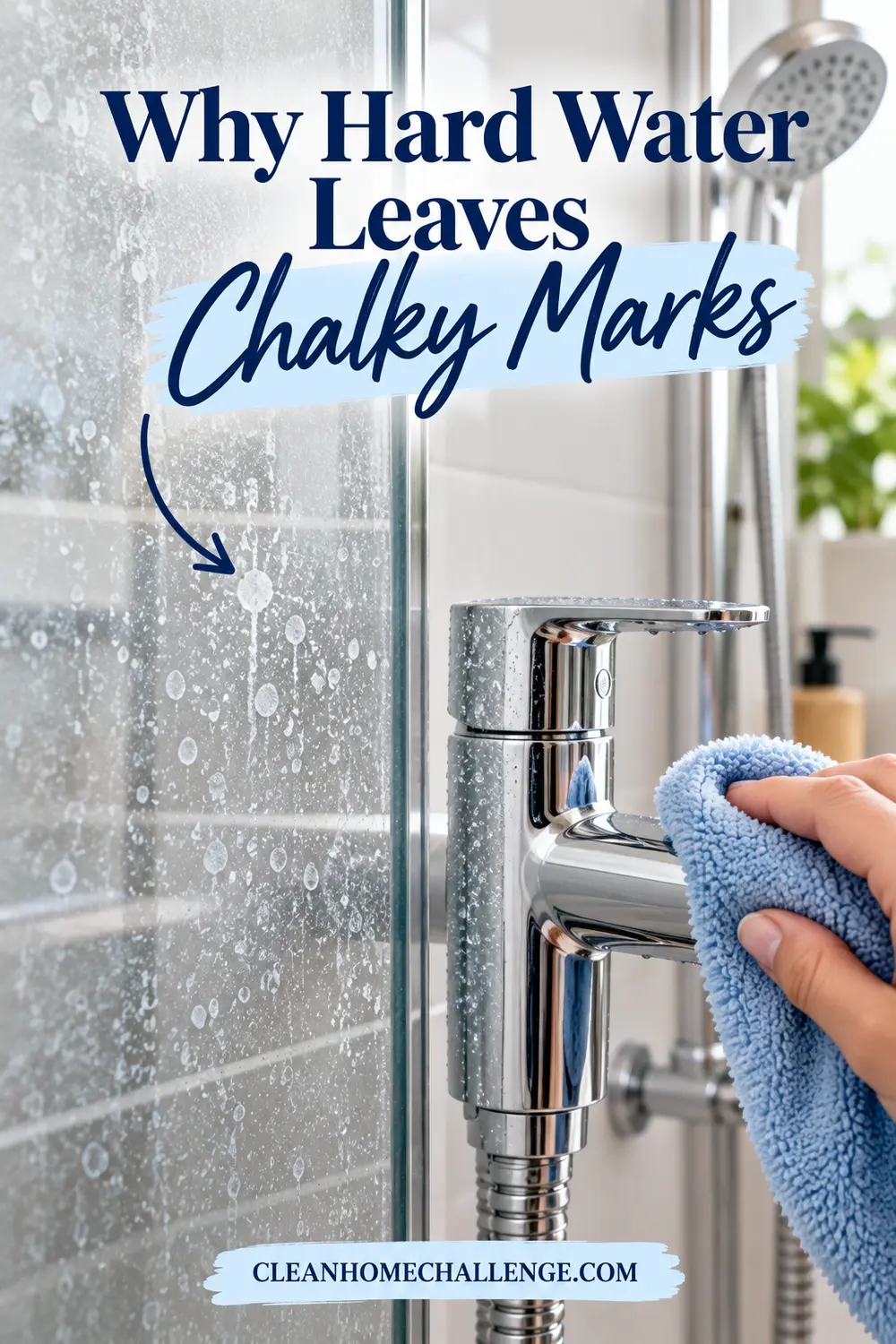
Why Hard Water Leaves Chalky Marks
Hard water contains dissolved minerals, mainly calcium and magnesium. When droplets dry on a tap or shower screen, the water disappears but some of those minerals remain. Fresh spots may look like pale rings. Layers that have been allowed to build can become a rough, cloudy film.
Soap residue often makes the problem look worse. On shower glass, body wash and shampoo can combine with mineral deposits to create a dull film that resists a quick wipe. Around taps, water collects at joints, the base and the end of the spout, so those areas usually develop marks first.
Mineral film is a cleaning issue, not automatic proof that a bathroom needs disinfecting. Cleaning removes the visible residue. Sanitizing or disinfecting is a separate task and should only be done with a suitable product used according to its label.
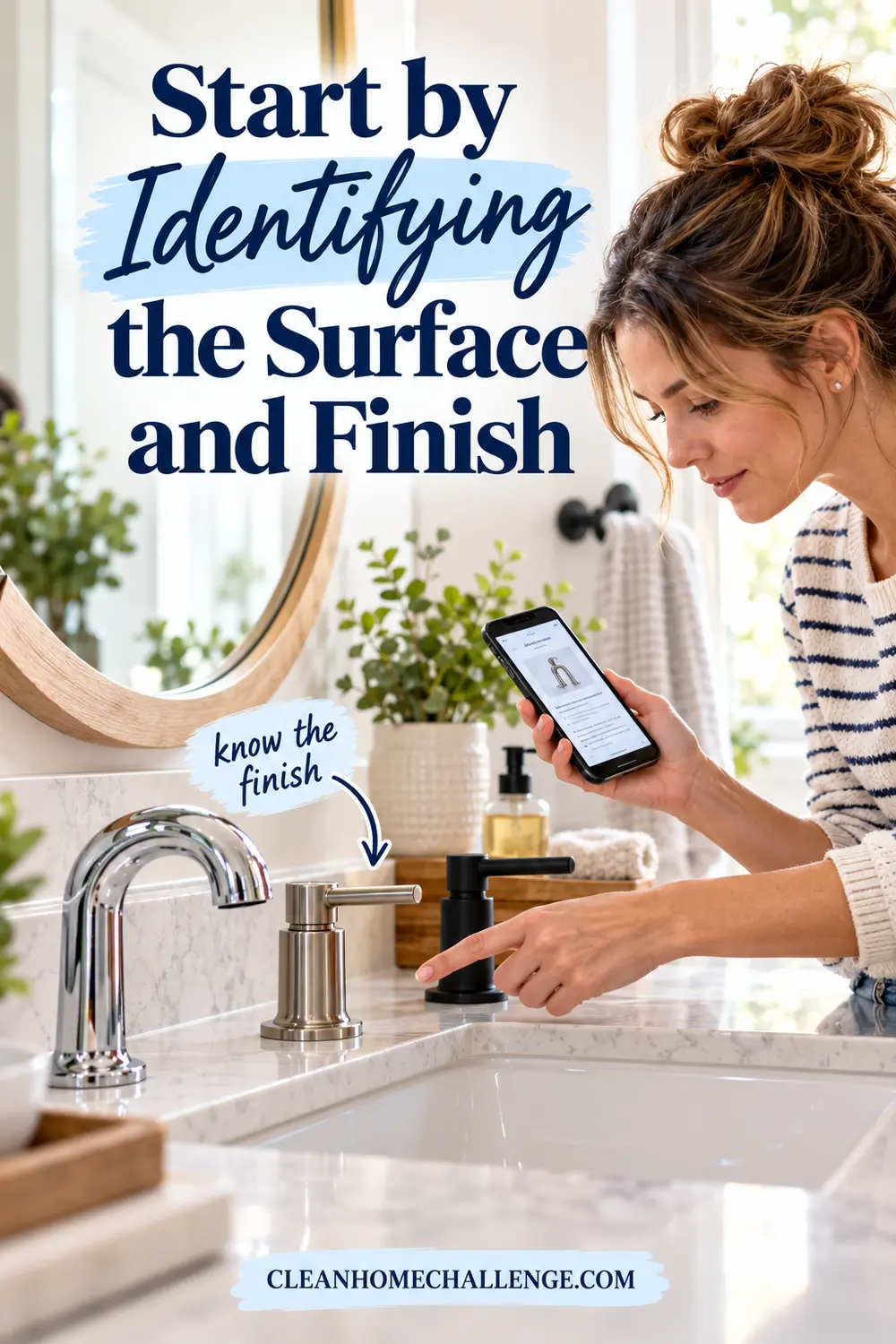
Start by Identifying the Surface and Finish
Before using vinegar, citric acid or a commercial limescale remover, identify what you are cleaning. Plain, uncoated shower glass is different from glass with a protective coating. Polished chrome is different from brushed nickel, matte black, brass, gold-toned plating or a living finish. The surrounding wall may be ceramic tile, natural stone, acrylic or another material that reacts differently to acidic cleaners.
Check the fixture or shower manufacturer’s care instructions first. Moen’s published faucet-care guidance allows mild dish soap for general cleaning and says a 50/50 vinegar-and-water blend may be used for a limited time on specified finishes, followed by thorough rinsing and drying. It also warns that abrasives, bleach, ammonia, solvents and harsh limescale removers can damage some finishes. Kohler likewise advises drying water from metal surfaces rather than allowing it to evaporate and form deposits.
Look closely before deciding a mark is limescale. White crust that becomes more obvious as water dries is likely mineral buildup. A greasy rainbow film is more often soap or body-product residue. Orange-brown marks may involve iron in the water, rust from damaged hardware or staining from another source. Green or blue deposits near a fitting can signal corrosion. If a tap is leaking, loose or visibly corroded, deal with the plumbing problem before concentrating on cosmetic cleaning.
If you cannot identify the finish, begin with warm water and a small amount of mild dish liquid. Patch-test any stronger method in a hidden spot. Protect natural stone, cement grout and metal trim from acidic drips.
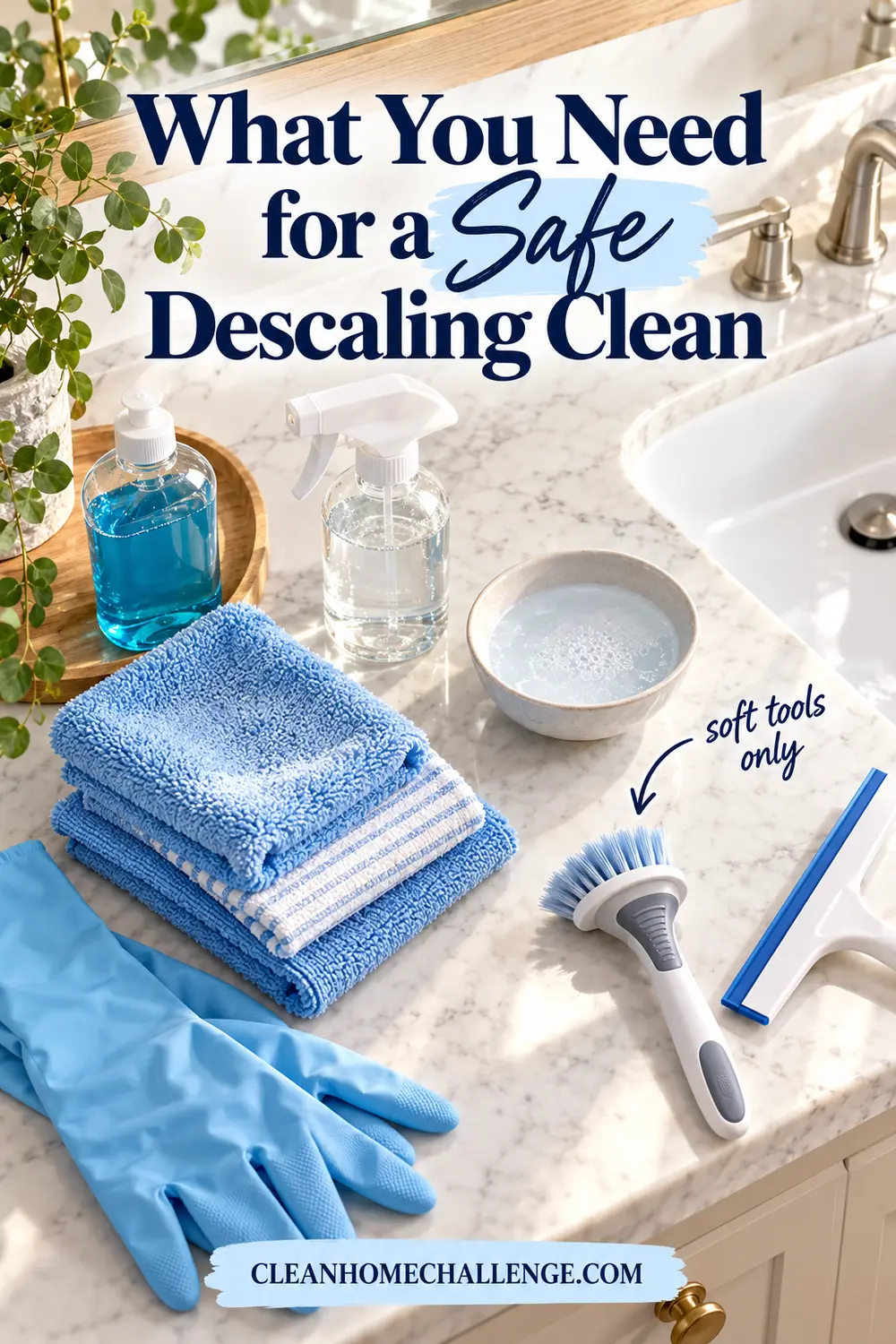
What You Need for a Safe Descaling Clean
Gather everything before you start so the cleaner does not sit longer than intended:
- two or three soft microfiber cloths
- warm water and mild dish liquid
- a soft detail brush or old soft toothbrush for seams
- a non-scratch sponge approved for the surface
- a shower squeegee
- gloves and good ventilation
- the manufacturer-approved cleaner, or a carefully patch-tested diluted vinegar solution where permitted
- clean water for rinsing
Do not mix descaler or vinegar with bleach, ammonia, disinfectant or any other cleaner. If another product was used recently, rinse the surface thoroughly and let the area ventilate before beginning. Keep cleaners in their original containers and away from children and pets.
For a quick fresh deposit, mild dish liquid may be enough. Save descaling for the stubborn mineral layer rather than using acid every time you clean.
Use separate cloths for cleaning and drying. A cloth that is already loaded with dissolved mineral residue can redeposit a faint film while you buff. Fold each cloth into quarters and turn to a fresh face as it becomes damp or dirty. This small habit makes the final finish clearer and reduces the temptation to scrub harder.
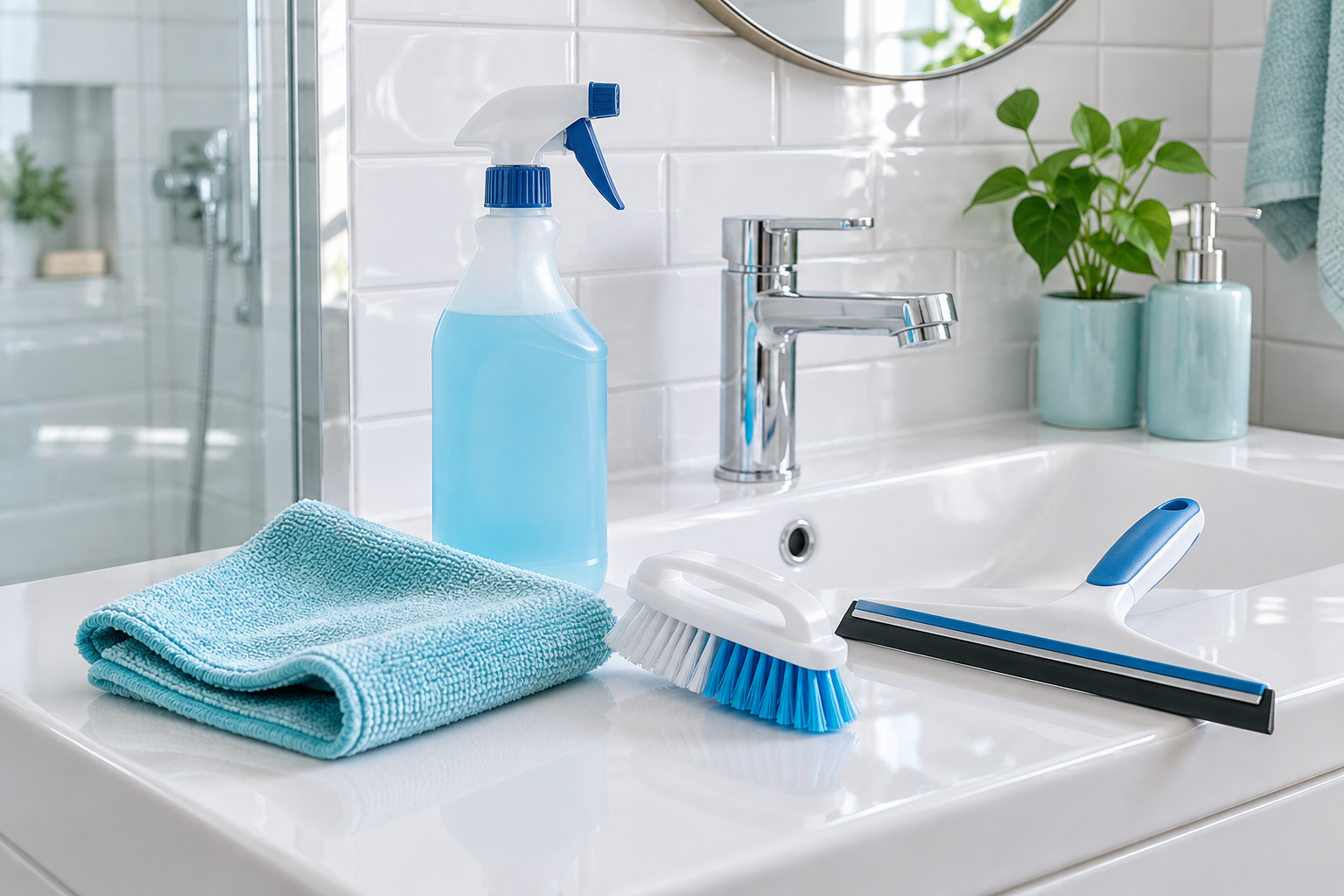
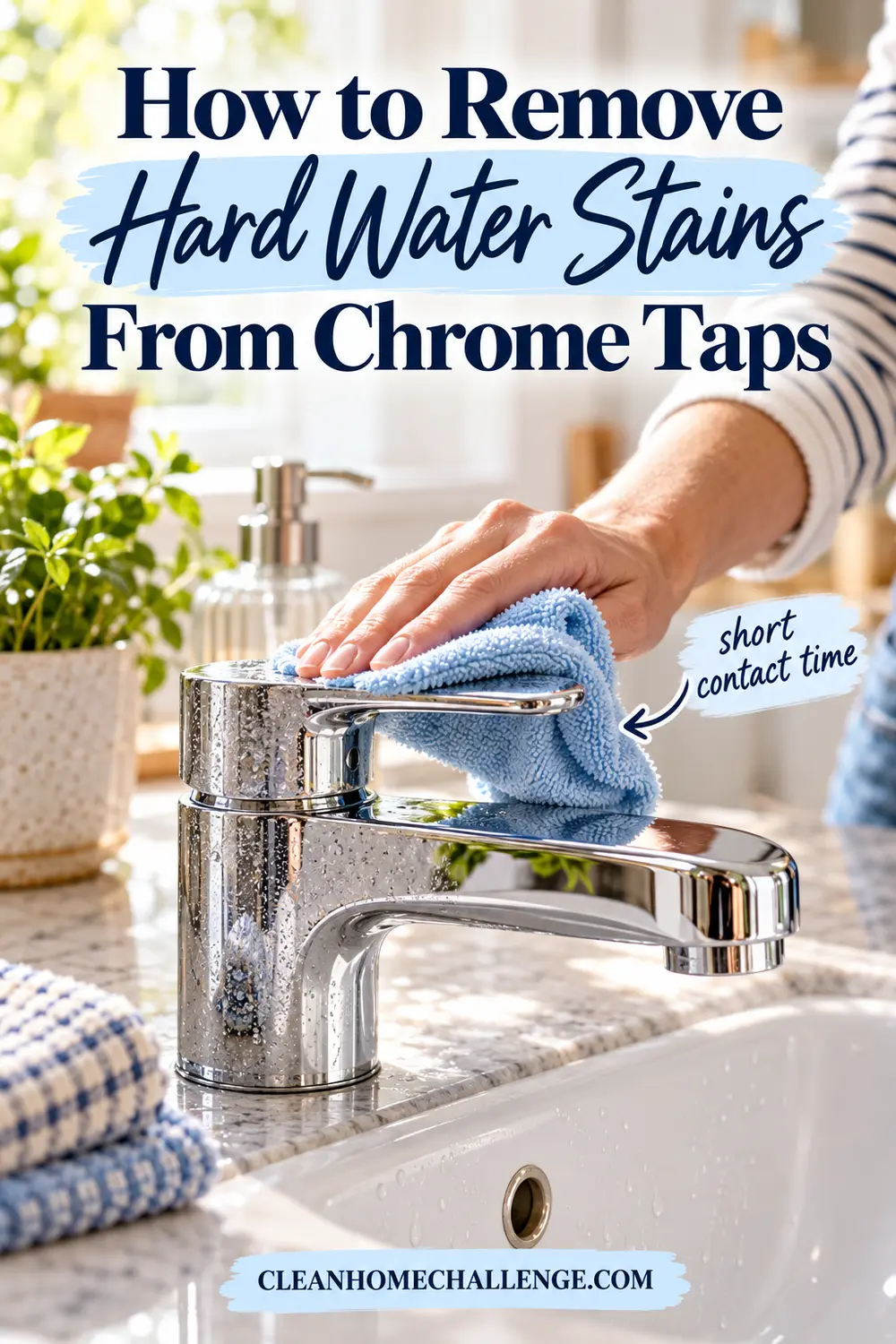
How to Remove Hard Water Stains From Chrome Taps
- Cool and clear the area. Make sure the tap is cool, remove toiletries and wipe away loose dust.
- Wash first. Use warm water with a drop of mild dish liquid on a soft cloth. This removes soap and skin oils that can block the descaler from reaching the mineral film.
- Rinse and inspect. If marks remain and the manufacturer permits diluted vinegar, dampen a cloth with a 50/50 vinegar-and-water solution. Do not spray it widely around stone or grout.
- Use short contact. Lay the damp cloth against the spotted chrome briefly so the solution stays on the deposit. Do not leave it wrapped for an extended soak unless the fixture maker specifically approves that method.
- Wipe gently. Use the cloth rather than an abrasive pad. Work around the base and joints with a soft brush, taking care not to force liquid into openings.
- Rinse immediately. Remove every trace of cleaner with fresh water.
- Dry and buff. Pat dry with a clean microfiber cloth, then lightly buff to remove streaks.
If the finish looks discolored, pitted or permanently etched rather than coated in residue, more scrubbing will not restore it. Stop and check the warranty or ask the manufacturer for advice.
Pay attention to the aerator at the end of the spout. Exterior mineral crust can usually be softened and wiped as part of the tap-cleaning routine, but a blocked aerator may need to be removed according to the tap instructions. Cover the drain before handling small parts, note their order and rinse them well before reassembly. Do not force a recessed aerator with the wrong tool.
How to Clean Hard Water Stains From Shower Screens
Start with the gentlest method and work in sections so you can control contact time.
- Rinse the glass with warm water to loosen surface soil.
- Wash with a small amount of mild dish liquid and a non-scratch cloth or sponge.
- Rinse, then inspect the dry glass. Remaining cloudy spots are more likely to be mineral deposits.
- If the glass and its coating permit it, apply the approved descaler or patch-tested diluted vinegar to one manageable section. Keep it off natural stone and sensitive metal trim.
- Give it only the label or manufacturer-approved contact time. Keep the surface damp rather than letting cleaner dry onto the glass.
- Wipe with gentle overlapping strokes. Repeat a mild treatment instead of increasing pressure.
- Rinse the glass and surrounding seals thoroughly.
- Squeegee from top to bottom, then dry edges and hardware with a microfiber cloth.
Do not use a razor scraper unless the shower-glass manufacturer explicitly permits it for that exact glass and coating. Scrapers can catch coating, sealant, film or an existing defect. For heavy, old scale that does not respond to an approved cleaner, contact the manufacturer or a glass-care professional rather than escalating to harsh abrasives.
Clean the bottom seal and frame separately with the gentlest compatible method. These areas often hold a mixture of soap, dust and mineral residue, but they may also contain silicone sealant or coated metal. Avoid flooding tracks and never pry at the seal with a sharp tool. A soft detail brush followed by a careful rinse is usually safer than aggressive scraping.

What Not to Use on Taps or Glass
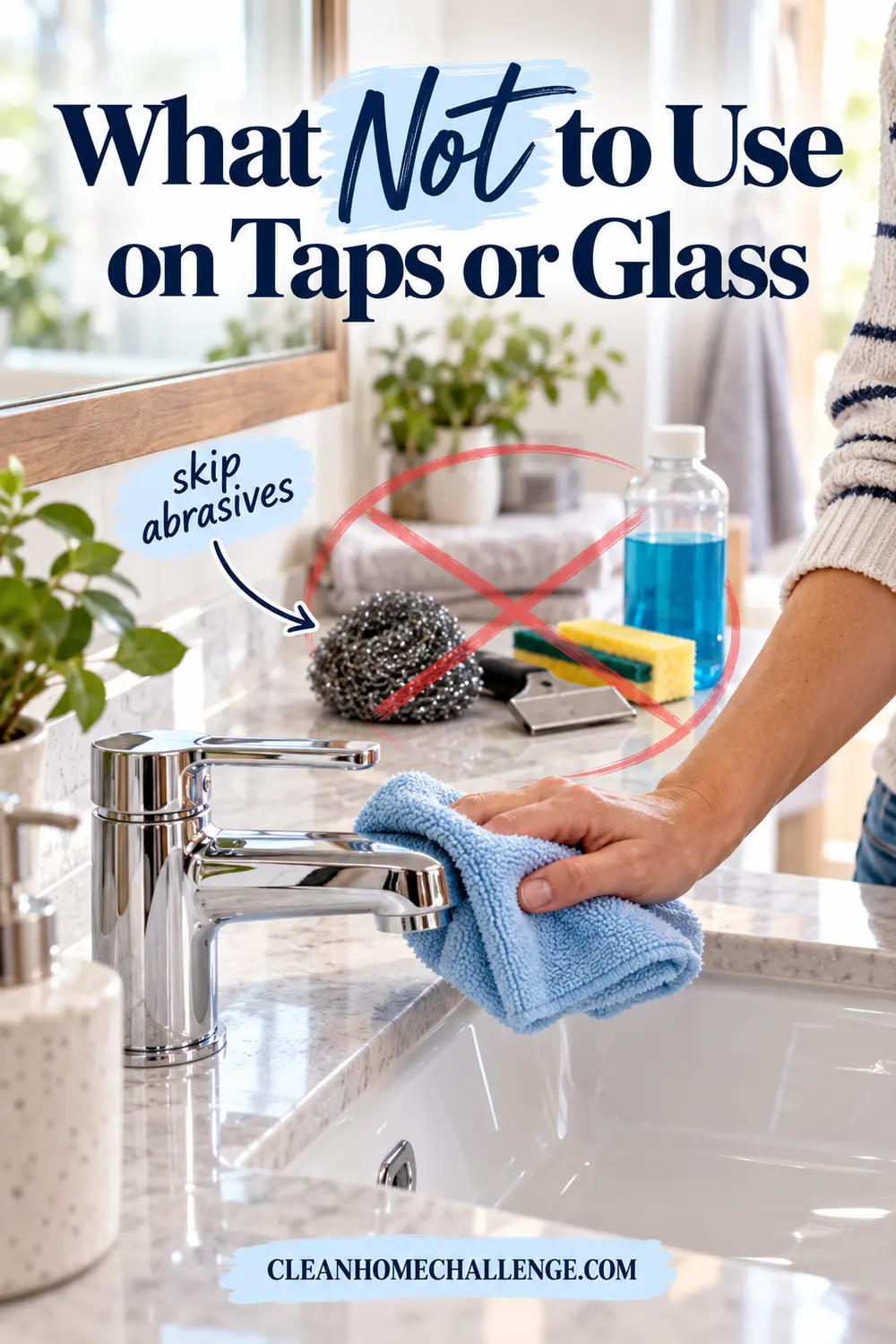
Avoid steel wool, scouring powder, abrasive cream, melamine foam and rough scrub pads unless the manufacturer explicitly approves them. A product can feel soft in your hand and still dull a polished or coated finish.
Do not assume full-strength vinegar is safe because it is a household ingredient. Acid can harm natural stone, some grout, plated finishes, protective coatings and damaged seals. Never combine vinegar or another acid with bleach. Do not mix multiple bathroom cleaners in the hope of making a stronger solution.
Skip improvised long soaks around tap bodies. Liquid can travel into joints or remain against a finish longer than expected. Also avoid letting any cleaner dry on the surface; dried cleaner may leave a new film and can increase the chance of damage.
Finally, do not keep scrubbing what may be permanent etching. If the glass remains hazy when completely clean and dry, the surface may have been altered rather than simply coated with mineral residue.
How to Prevent Hard Water Stains From Coming Back
Prevention is much faster than removing a heavy mineral layer. After a shower, pull a squeegee down the glass in overlapping passes. Wipe the tap, edges and bottom seal with a dry microfiber cloth. This removes droplets before they evaporate and leave minerals behind.
Keep the bathroom ventilated until surfaces are dry. Wash glass and fixtures regularly with a mild, compatible cleaner so soap film does not trap mineral deposits. Launder microfiber cloths without fabric softener, which can reduce absorbency and leave residue.
If your water is very hard, a water-treatment professional can test it and explain appropriate options. A shower filter is not automatically a water softener, so check exactly what a product is designed to remove before buying it.

CLEANERS CLUBHOUSE
Take the Guesswork Out of Bathroom Cleaning
Use Tuesday as your bathroom reset day and work through the job in a sensible order. Inside the Cleaners Clubhouse, you’ll find practical routines, printable support and challenges that make deeper cleaning easier to manage.
A Ten-Minute Bathroom Reset for Busy Weeks
When you do not have time for a full bathroom clean, focus on the spots that create the cloudy look:
- Spend two minutes clearing the vanity and rinsing the shower screen.
- Spend three minutes washing taps and the most marked section of glass with mild cleaner.
- Spend two minutes rinsing those areas thoroughly.
- Spend two minutes squeegeeing glass and drying chrome.
- Use the final minute to hang cloths to dry and return products safely to storage.
This reset will not remove years of scale in one session, but it stops fresh droplets from becoming another layer. On a calmer day, treat one small section at a time. A bathroom can become easier to maintain without turning the job into an exhausting deep clean.
Quick answers to common hard-water questions
Can I use vinegar on every bathroom tap? No. Some manufacturers allow diluted vinegar for a short time on specified finishes, while others warn against acids. Check the exact care guide and patch-test first.
Why does the glass still look cloudy after cleaning? It may still have mineral film, or old deposits may have etched the surface. Let the glass dry fully before deciding. If an approved cleaner and gentle repeat treatment do not improve it, ask the glass manufacturer or a professional.
How often should I squeegee the shower screen? After each shower is ideal in a hard-water area, but even a consistent several-times-a-week habit reduces buildup. Focus on the most frequently splashed panels and dry the lower edge.
Trusted Sources
- Moen Faucet Finish Care and Cleaning
- Kohler Care and Cleaning Instructions
- California Faucets Finish Care