

THIS POST MAY CONTAIN AFFILIATE LINKS. PLEASE READ MY DISCLOSURE FOR MORE INFO.
A day outdoors can leave a small laundry puzzle: a greasy neckline, a pale streak on a dark shirt, or an orange mark that seems to appear after washing. Before reaching for a stronger cleaner, look at the mark and the garment label. Sunscreen is a combination stain, and the same treatment does not suit every version.
To remove sunscreen stains from washable clothes, start by lifting excess product gently, checking the fabric’s care limits, and choosing a compatible treatment. Ordinary oily residue may respond to liquid laundry detergent used as directed. Orange, rust-like discoloration needs a more cautious decision, especially if bleach has already been used.
Allow a few minutes to assess and prepare one garment, plus the treatment, washing, and drying time required by its labels. You do not need to turn a whole afternoon into a stain-removal project. Start with the favorite shirt that needs attention, keep track of what you use, and stop if the fabric changes.
Disclosure: This post may contain affiliate links. As an Amazon Associate, Clean Home Challenge earns from qualifying purchases. If you make a purchase through these links, we may earn a small commission at no extra cost to you. This helps us keep creating practical cleaning tips, routines and resources for busy families! 🧽
Identify the Mark Before Treating It
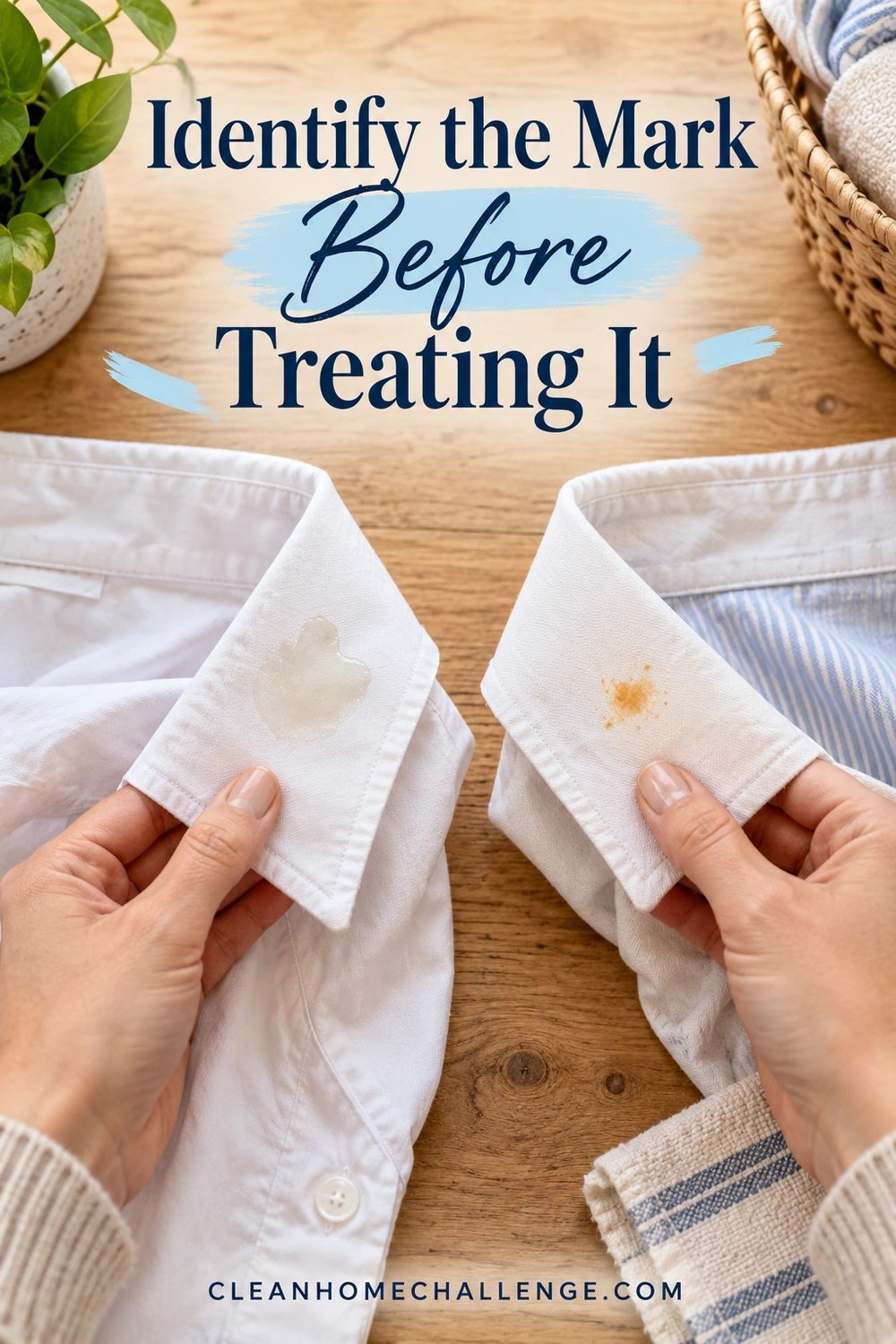
Read the garment label first
Check whether the item is washable, its temperature limit, and any restrictions on bleach, tumble drying, or professional care. A cotton-looking shirt may contain stretch fibers, delicate trim, a printed design, or a special finish. Treat the whole garment’s requirements as the limit, rather than relying on the main fiber alone.
Keep dry-clean-only clothing, leather, suede, and uncertain specialty fabrics out of this home-wash method. If a label is missing or the item is valuable, contact the maker or a professional cleaner before experimenting. Swimwear and UPF clothing can have their own care instructions; ordinary T-shirt advice is not permission to use the same products on them.
Describe what you actually see
Take a quick photo before treating the mark. Note whether it was present before washing, appeared afterward, or changed after a particular product. That information helps you avoid repeating an unhelpful treatment.
| What you notice | A sensible starting decision |
|---|---|
| Fresh lotion sitting on the fabric | Lift the excess without spreading it, then check treatment compatibility. |
| A translucent or greasy-looking patch | Consider the compatible liquid-detergent route below. |
| A chalky-looking streak on dark clothing | Gently remove loose excess; check the sunscreen and garment guidance rather than assuming rust. |
| Yellow-orange or rust-like discoloration | Pause before bleach and investigate the orange-mark route. |
| Fading, roughness, holes, or a changing print | Stop treatment; further cleaning may worsen damage. |
Color is a clue, not a laboratory diagnosis. Sunscreens have different oils, filters, pigments, and other ingredients. Tide explains that avobenzone can react with iron in water, producing orange, rust-colored marks. The label on your sunscreen can help establish whether that ingredient is present, but it cannot prove the cause of a particular stain on its own.
Gather a small, suitable kit
Use a clean spoon or similar blunt edge for lifting excess, a clean white cloth, your garment’s care instructions, and an appropriate liquid laundry detergent or labeled fabric treatment. Read whether the detergent can be used directly for pretreatment. Have a timer available so the product does not sit longer than directed.
Keep products in their original containers and away from children and pets. Follow any glove and ventilation instructions. Do not combine products in a bowl or layer one over another. A small kit with clear directions is more useful than several competing stain remedies.
Treat Oily Sunscreen Residue Gently

This route is for an ordinary washable garment with an oily-looking sunscreen mark, where the garment and product instructions permit the treatment. If the mark is orange, has worsened after bleach, or you are unsure what was already applied, use the next section first.
- Lift excess lotion. Use the blunt edge gently, lifting toward the center of the spot. Avoid grinding lotion into the fibers or dragging it across a clean area.
- Check rinse and pretreatment directions. For a straightforward fresh stain on a compatible washable fabric, Tide’s method starts with a cold-water rinse. Treat delicate constructions more cautiously and follow their own instructions.
- Test the chosen product. Follow its colorfastness test in an inconspicuous area. Stop if dye transfers unexpectedly or the finish changes. A test reduces uncertainty; it does not guarantee that every part of a garment will react identically.
- Pretreat as labeled. Use an appropriate liquid laundry detergent only if its instructions allow direct application. Work gently. Tide’s named liquid-detergent method specifies five minutes, but another formula may require a different time. Use the directions on the product you actually own.
- Wash within both sets of limits. Follow the garment’s care label and the treatment’s wash directions. Use the correct detergent dose and a suitable load size. More detergent or a hotter setting is not an automatic improvement.
- Inspect before using the dryer. Check the marked area in good light. If it remains, avoid tumble-drying it while deciding on the next compatible step. Follow the garment label for air drying and handling.
Manufacturer guidance on temperature is not identical. Tide’s general sunscreen method uses the highest temperature permitted by the care label, while Eucerin warns that heat and some laundry products can intensify sunscreen discoloration. That is a reason to check the sunscreen-specific guidance and stain type, rather than defaulting every mark to a hot wash. If the instructions conflict, ask the product maker before proceeding.
If the mark is still visible
Do not keep adding products to the wet patch. Check what changed, whether the original treatment was suitable, and whether its directions allow repeating. A mark that turns orange deserves reassessment. If you repeat an allowed treatment, record it so you know exactly what the fabric has already been through.
For dark clothes, color-safe does not mean suitable for every dye, finish, or fiber. Clorox’s dark-clothing guide describes a specific detergent and color-safe-product method; it is not blanket approval to use that combination on every garment. Follow the current labels for any named product and the garment itself.
Avoid aggressive brushing, a household degreaser, or machine dishwashing products. Do not pour dish soap into the washing machine as a substitute for laundry detergent. The aim is to treat one suitable fabric safely, not build the strongest possible cleaning mixture.

Handle Orange Marks With Extra Care
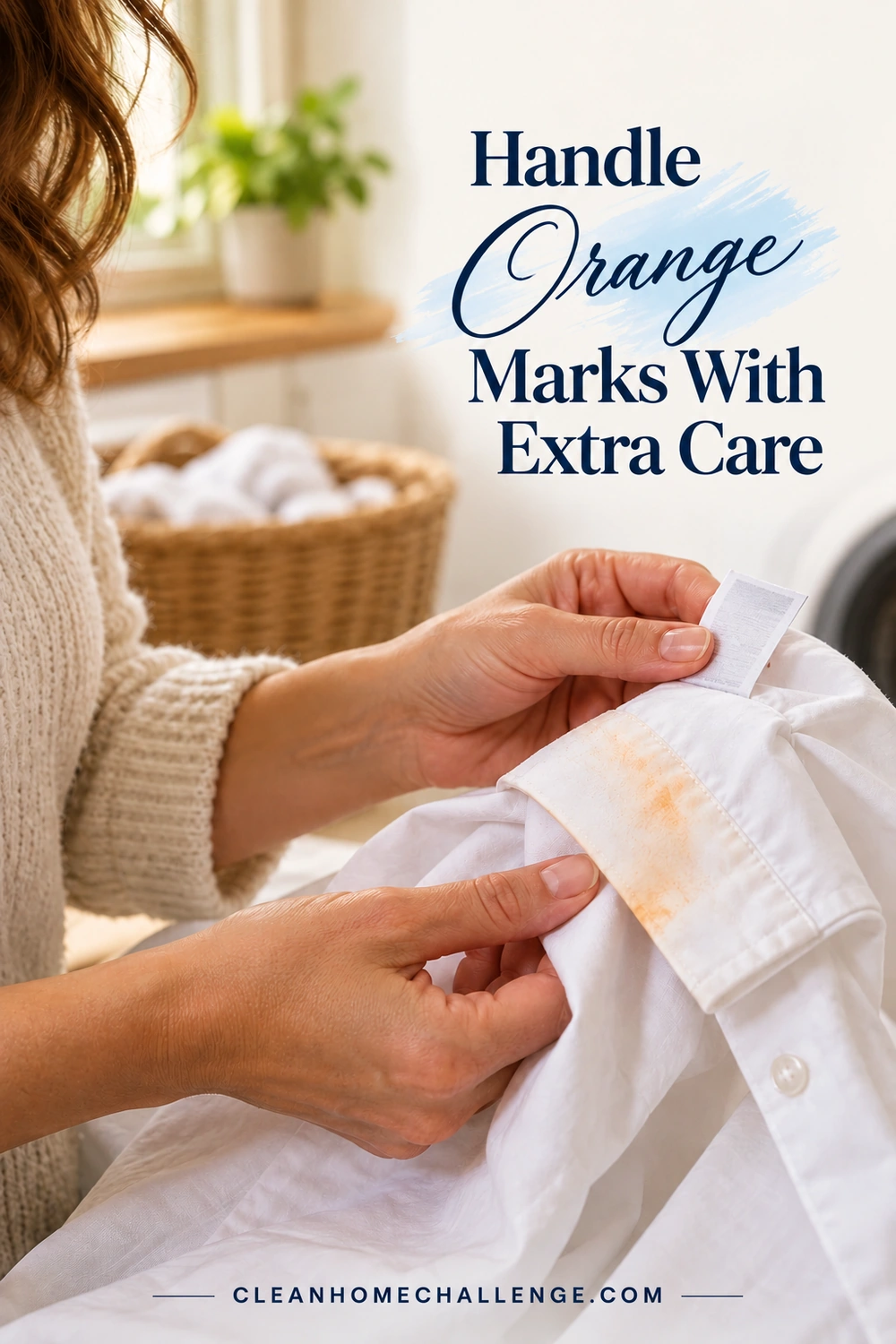
An orange collar or sleeve after washing can be frustrating, particularly when the item started white. However, white fabric does not make chlorine bleach an appropriate next step. Clorox advises against using chlorine bleach for rust stains. Its guidance also warns that combining rust removers and bleach can create hazardous gas.
Check previous treatments before doing anything else
Write down the detergent, pretreater, bleach, or other product already used. Keep the garment away from further treatment while you check those labels. Never apply a rust remover onto fabric that may still contain bleach or another incompatible product. If you cannot establish how to remove previous residues safely, contact the manufacturer or a professional cleaner.
A wash does not give you permission to ignore a product’s incompatibility warning. Follow the specific rinsing and laundering directions. Do not make your own neutralizing mixture with vinegar, ammonia, peroxide, or another cleaner.
Choose only a treatment explicitly suitable for laundry
If the evidence suggests a rust-like stain, look for a product specifically labeled for rust on the relevant washable fabric, or ask a professional cleaner. A toilet, patio, metal, or household surface rust remover is not a laundry treatment just because it removes rust elsewhere. Check exclusions for dyes, fibers, trims, and finishes before buying.
Read the current package, perform its specified test, and follow its application time and rinsing instructions exactly. Do not substitute an internet recipe or extend the contact time because the stain seems stubborn. If the maker cannot confirm suitability for your garment and sunscreen mark, stop there.
This guide deliberately does not give one universal rust-remover dose. Formulations and fabric permissions differ. A reader with an orange mark needs a safe product decision, not a stronger version of the oily-stain steps.
Know when professional advice is the better next step
Ask for help when the garment is valuable, its care instructions are unclear, the mark has been tumble-dried repeatedly, previous chemicals are uncertain, or treatment starts changing the fabric. Tell the cleaner that sunscreen is suspected and provide the product names and treatment history. They may still be unable to remove it completely; no home or professional method can promise every stain will disappear.
If similar orange marks keep appearing across loads, note the pattern and ask about your water supply or laundry setup. Avoid diagnosing hard water from one shirt. A sunscreen maker or laundry-product support team may be able to explain which next check is relevant.
Build a Simple After-Sun Laundry Routine

Make the return-home check small
Before beach or sports clothes disappear into the general hamper, check collars, cuffs, straps, and the places where lotion rubbed. Empty pockets, separate items that need individual attention, and follow their care instructions. Give damp items appropriate drying space while waiting; do not leave a wet pile sealed in a bag.
Set aside a few minutes for assessment rather than promising to fix every stain immediately. A simple note saying which product was used is helpful when another adult takes over the laundry. Keep the actual products secured, rather than leaving them beside a garment where children can reach them.
Record one treatment at a time
The accompanying Sunscreen Stain Treatment Log has space for the care label, sunscreen ingredients, previous products, and the result of one treatment. It also includes a short safety checklist and a drying check. Use one sheet per garment or take a photo of the completed record before starting a new one.
Download the free Sunscreen Stain Treatment Log (PDF).
If you have only five minutes, read the label, lift fresh excess if appropriate, and record the mark and treatment history. That is a useful start. You can make the next decision when you have the instructions in front of you.
Reduce transfer while keeping sun protection a priority
Allow sunscreen to settle according to its label before dressing, and handle clothing with clean hands where practical. Keep lotion bottles capped and away from folded clean clothes. A small washable mat under the bottle can make an accidental spill easier to contain.
Do not reduce sunscreen use or skip reapplication to protect a shirt. Follow the product’s protection directions and your local sun-safety guidance. The American Academy of Dermatology’s application guidance puts protection first. If clothing stains repeatedly, ask the sunscreen manufacturer about compatible options without sacrificing appropriate protection.
For the rest of the kit, the CHC guide to organizing travel accessories between trips can help you put clean, dry items back where the family can find them. Keep stain treatment as one small part of your normal laundry routine.
For practical support with tricky cleaning jobs and manageable routines, you can explore the existing Cleaners Clubhouse resources below. You do not need membership to use the free treatment log through the download above.

CLEANERS CLUBHOUSE
Get Step-by-Step Help With Tricky Cleaning Jobs
When a stain, smell or stubborn cleaning problem has you stuck, a clear plan makes all the difference. The Cleaners Clubhouse gives you practical guidance, useful printables and routines you can actually follow.
The useful habit is simple: notice the mark, check the labels, use one suitable treatment, and inspect before drying. If a stain needs a different route, pause and reassess. That gives your clothes a more careful chance without making laundry the whole day’s job.