THIS POST MAY CONTAIN AFFILIATE LINKS. PLEASE READ MY DISCLOSURE FOR MORE INFO.
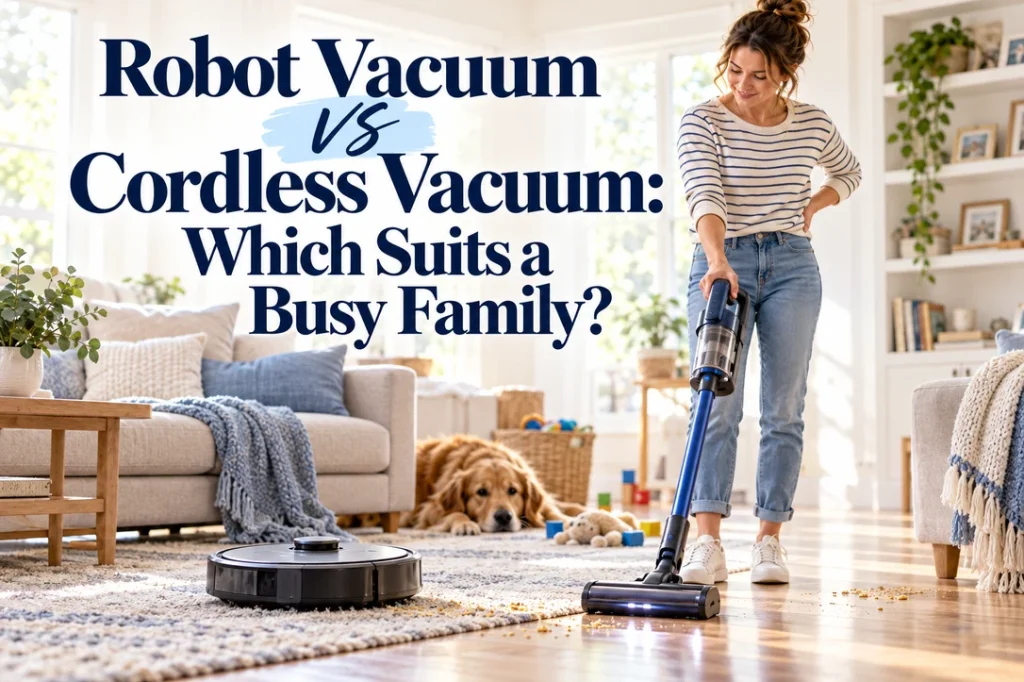
When floors seem to collect crumbs, pet hair and hallway grit five minutes after you finish cleaning, both robot vacuums and cordless stick vacuums promise a faster answer. They solve different problems, though. A robot vacuum reduces how often you need to initiate a routine floor clean. A cordless vacuum lets you respond immediately and control exactly where the cleaning power goes.
For many busy families, the best choice is not the machine with the longest feature list. It is the one that fits the home’s floors, stairs, clutter, storage and the way people actually clean. A robot that needs constant rescuing will not feel automatic. A powerful cordless model stored behind three boxes will not make quick pickups easier.
This guide compares the two formats without declaring one universally better. Start with the jobs you want to remove from your week, then compare floor coverage, stairs, pets, maintenance, battery care, app privacy and ongoing costs. Allow about 10 minutes to audit your home before shopping; that small check can prevent an expensive mismatch.
Disclosure: This post may contain affiliate links. As an Amazon Associate, Clean Home Challenge earns from qualifying purchases. If you make a purchase through these links, we may earn a small commission at no extra cost to you. This helps us keep creating practical cleaning tips, routines and resources for busy families! 🧽
Start With the Job You Want the Vacuum to Do
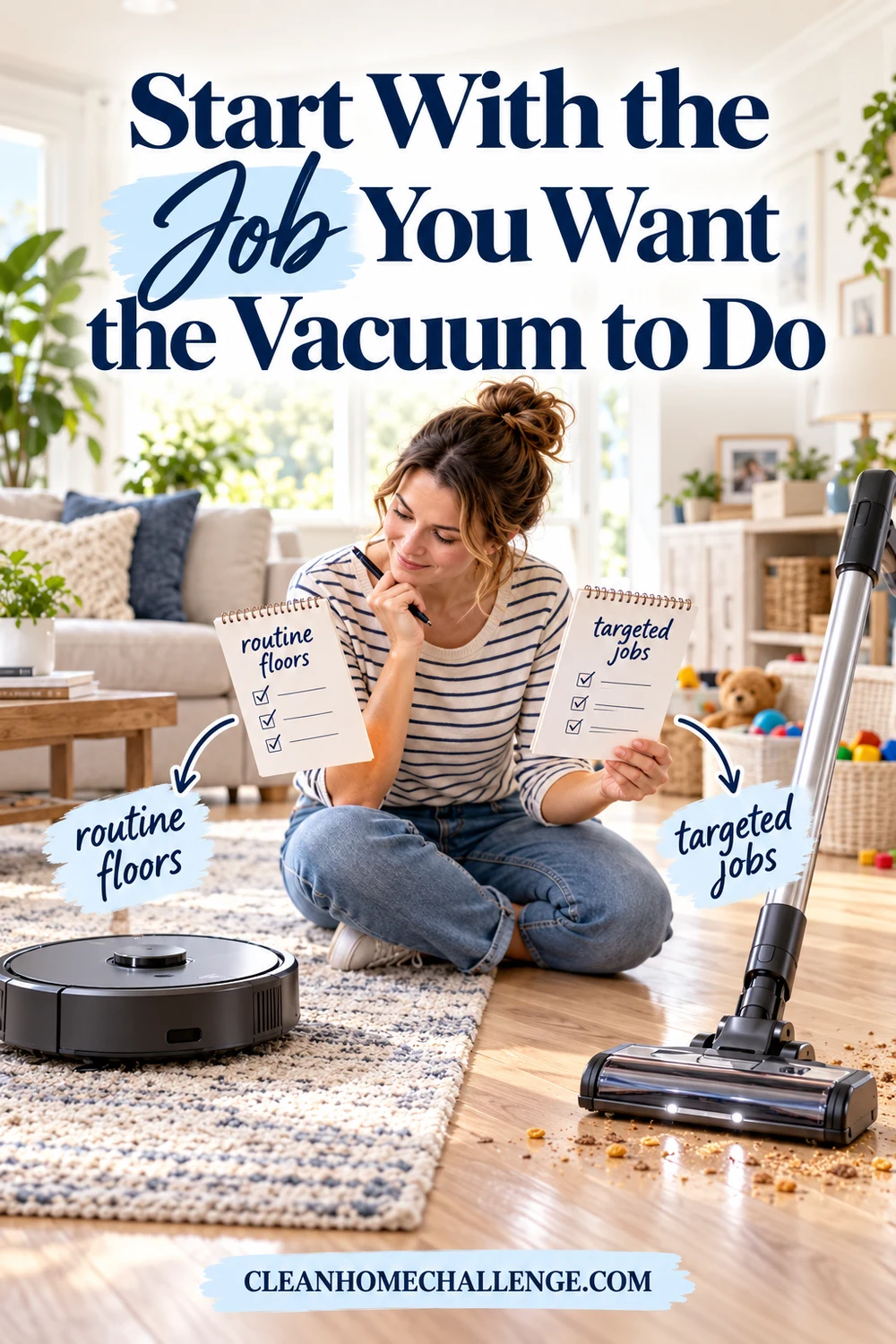
Write down the floor-cleaning jobs that happen most often. Do you want the open-plan living area cleaned every weekday while everyone is out? Do you need to grab cereal from under the table, vacuum the sofa and clean the stairs before school? Those are different use cases.
A robot vacuum is primarily a maintenance tool. It can follow a schedule and repeatedly collect loose dust, crumbs and hair from accessible floors. Its value comes from frequency and consistency, not from reaching every edge, stair, sofa or tight corner.
A cordless stick vacuum is an active cleaning tool. You steer it, change attachments and decide how slowly to pass over a rug or how carefully to clean along a baseboard. It can move between floors and usually handles stairs, upholstery and sudden messes more easily.
Make a two-column list labeled “routine floor coverage” and “targeted jobs.” If the first column dominates, a robot deserves serious consideration. If the second is longer—or the home has several levels—a cordless vacuum may deliver more value. If both lists matter every day, the realistic answer may be a two-machine system rather than expecting one format to replace everything.
Where a Robot Vacuum Saves the Most Time
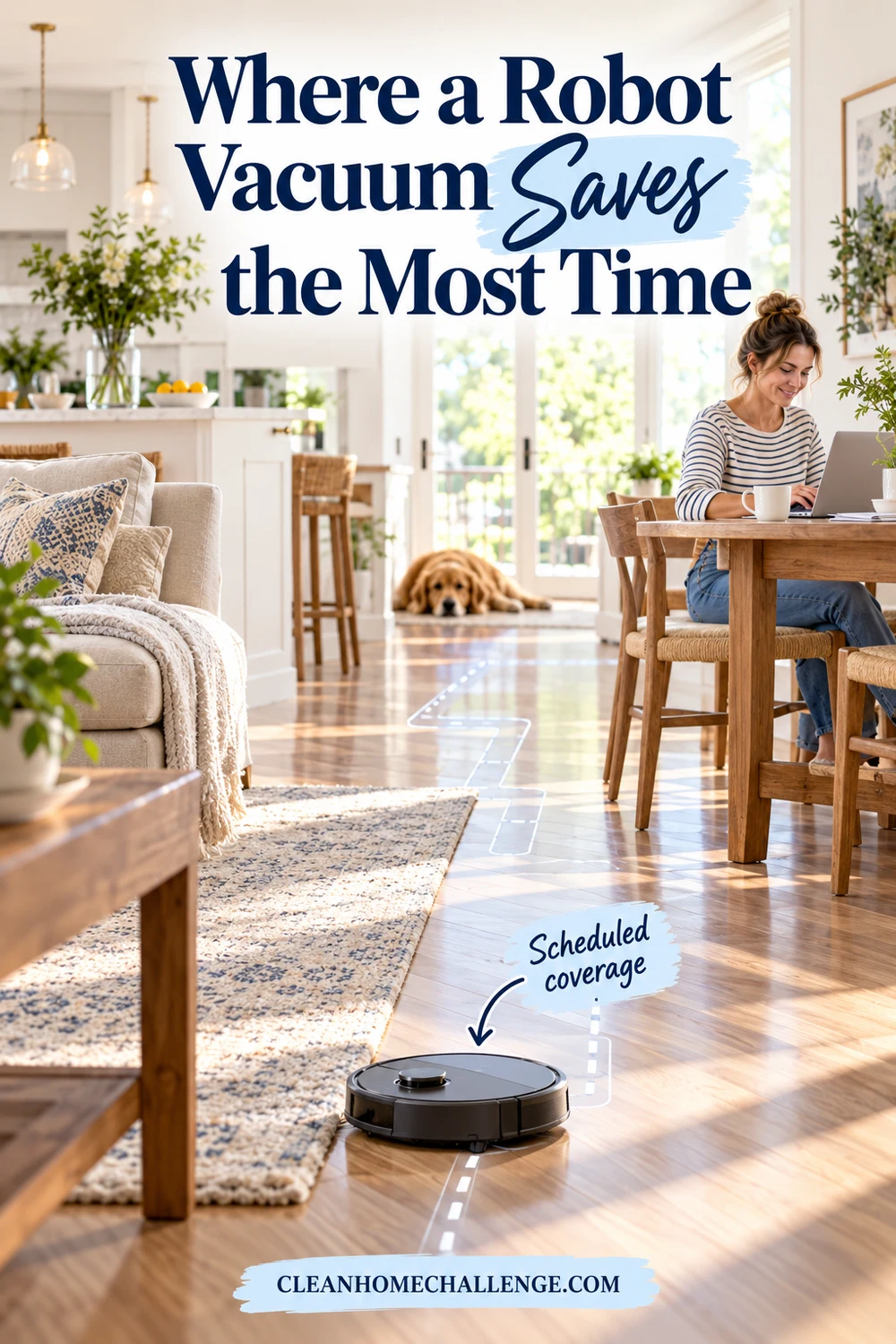
A robot earns its keep when it can run with little supervision. The strongest use case is a mostly open level with hard floors or low-pile rugs, a dock with clear access and a family willing to do a quick pickup of cords, socks and small toys.
Scheduling is the main advantage. Instead of finding a separate block of time to vacuum, you can set a route for high-traffic rooms and let the machine collect everyday debris. Reliable mapping, room selection, no-go zones, recharge-and-resume and sensible obstacle handling matter more than a dramatic suction number that cannot be compared consistently between brands.
However, “automatic” still includes preparation and maintenance. You may need to lift light bath mats, secure cords, check for pet accidents and clear anything small enough to jam the brush. A self-empty dock reduces bin emptying but adds bags, filters, noise and floor space. A mopping feature adds pads, tanks and drying tasks.
Choose a robot when repeated floor coverage is the chore you most want to hand off. Do not choose it solely because the app looks impressive. A robot that cannot cross a threshold, fit under key furniture or navigate the family’s normal clutter will spend more time asking for help than saving it.
Where a Cordless Vacuum Is More Practical
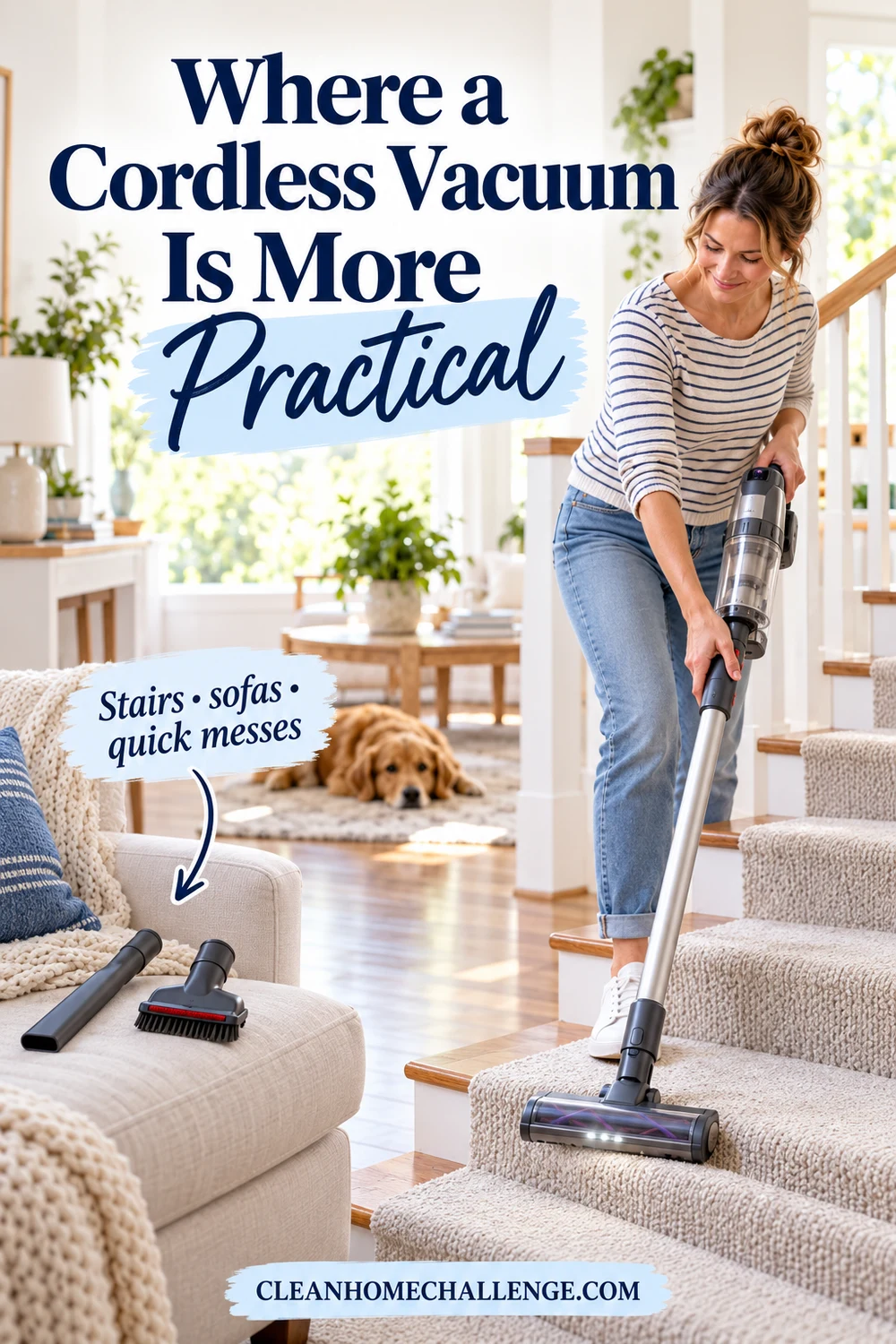
A cordless vacuum is usually faster for a visible mess because there is no map, schedule or floor-prep routine to manage. Take it from a wall mount or stand, clean the problem area, empty the bin if needed and put it back on charge.
This format suits split-level homes, stairs, vehicles, sofas, mattresses, skirting boards and rooms where toys or furniture move frequently. A motorized floor head can be guided slowly over a rug, while crevice and dusting tools handle edges and upholstery. You can also stop instantly if you see a delicate object, wet spill or loose cord.
The trade-off is that a cordless vacuum only works when someone uses it. Weight in the hand, trigger design, wand length, bin release, attachment changes and storage location influence whether quick cleaning actually feels quick. Test the machine at normal reach if possible. A specification sheet cannot tell you whether the balance will tire your wrist or whether the controls are comfortable.
Runtime claims also need context. High-power settings, motorized heads and older batteries can shorten a session. Instead of comparing one maximum runtime number, ask whether the machine can complete your usual job on the setting and head you expect to use.
Compare Floors, Rugs, Stairs and Family Clutter
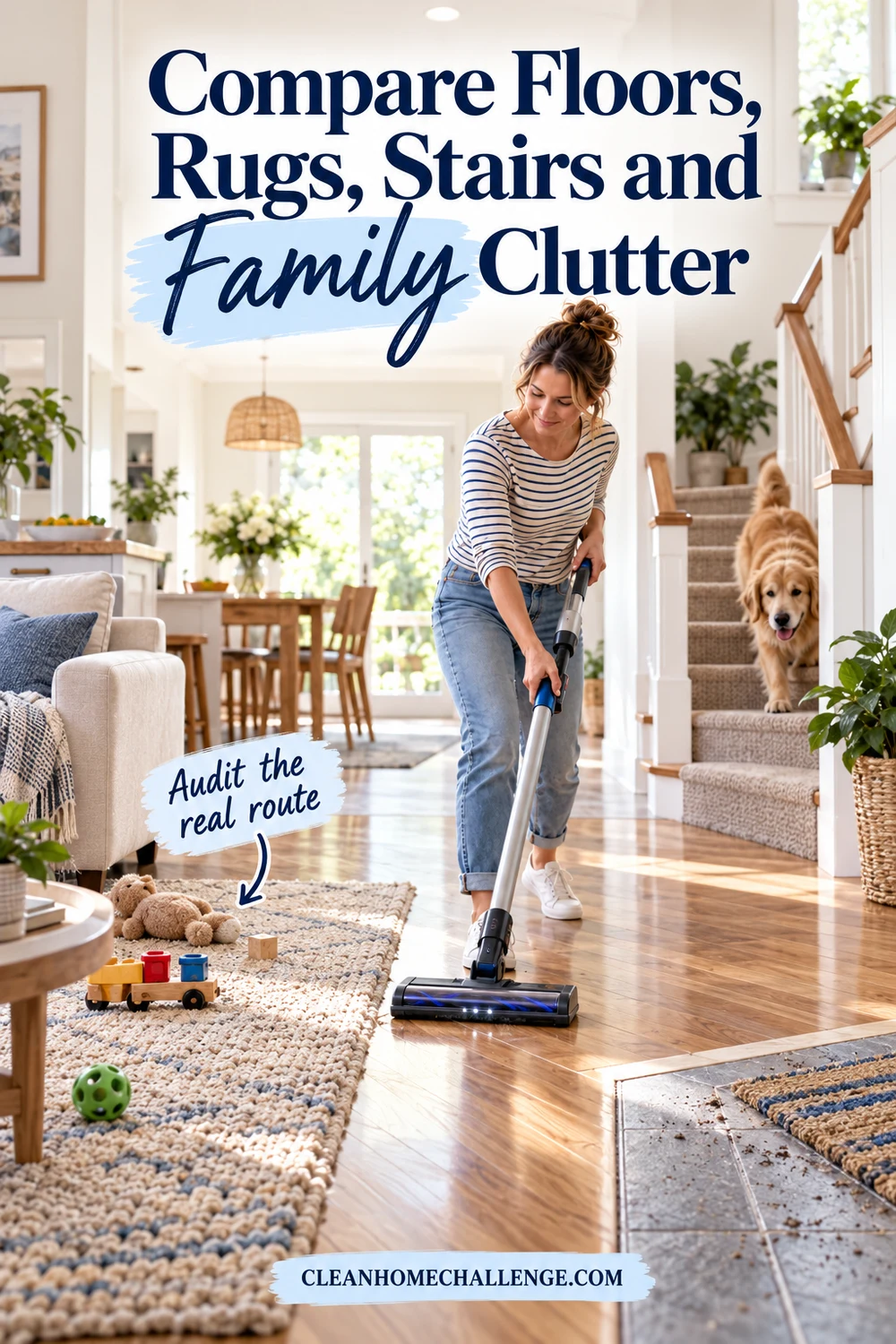
Walk the intended cleaning route before choosing. Note hard-floor types, rug pile, dark rugs, tassels, transitions, door tracks and thresholds. Measure clearance under the sofa and beds. Count the stairs and identify any rooms on another level.
Robots work best on a predictable floor plan. Multi-map support can help in a multi-level home, but someone still has to carry the robot and return it to a suitable dock or starting point. Cliff sensors are designed to avoid drops, yet stairs still need a sensible clear boundary and the owner’s manual must be followed.
Cordless vacuums are less dependent on layout. They can be lifted over a tall threshold and taken upstairs, but the cleaner must carry the full machine. Check whether the selected floor head is approved for delicate timber, thick carpet or other specialty surfaces, and use manufacturer settings for adjustable rollers or suction.
Clutter changes the comparison. If the floor is normally clear after a two-minute family pickup, scheduled robot cleaning can work well. If projects, chargers, pet bowls and toys move constantly, a cordless vacuum offers control with less preparation. Avoid judging the home on its tidiest day; choose for the version of the floor you see most weeks.
Think About Pets, Children and Everyday Mess
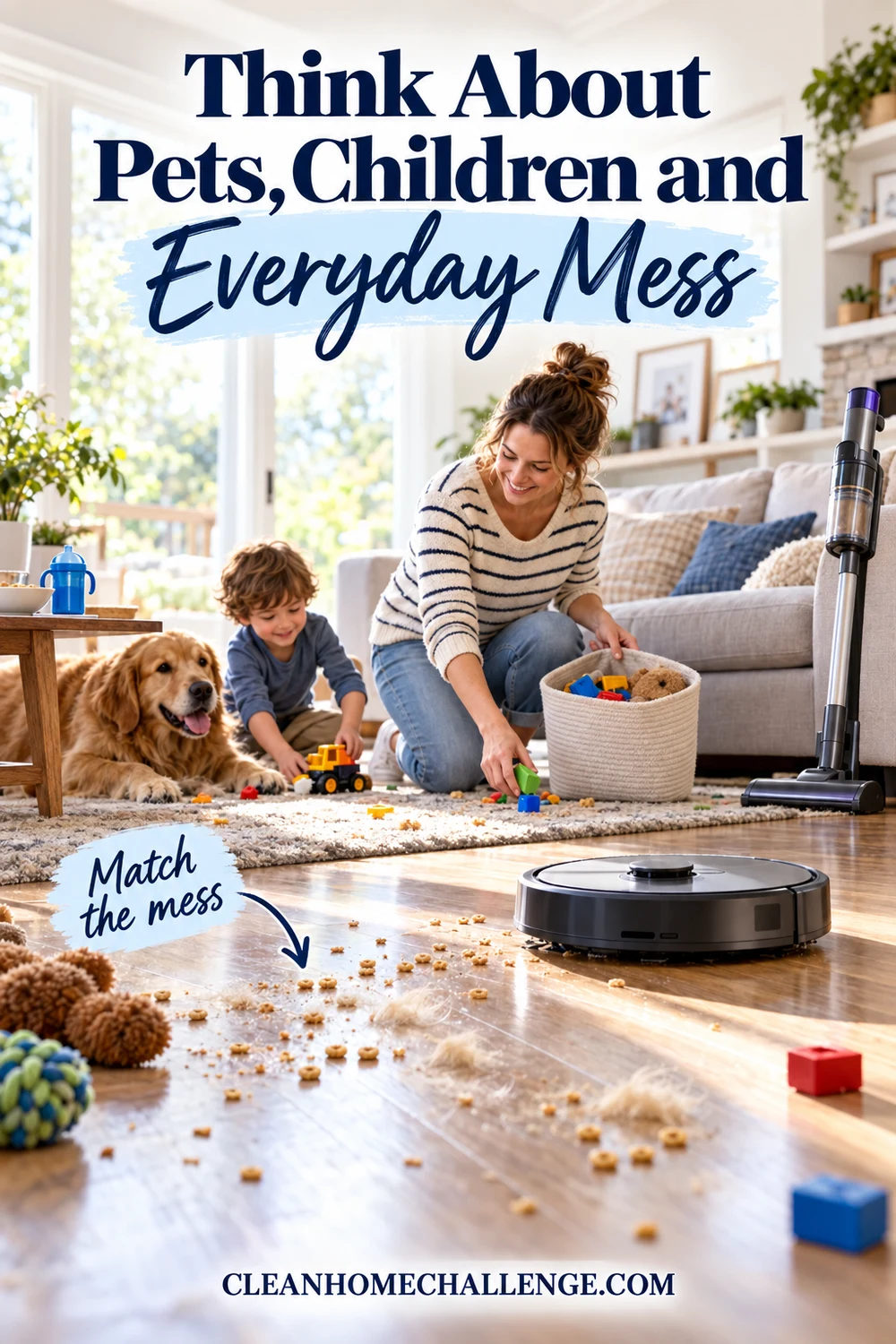
For shedding pets, frequent robot runs can prevent hair from forming visible drifts in open rooms. Look for easy roller access, removable end caps, a bin that can finish the route and replacement brushes and filters that are readily available. Obstacle recognition may reduce rescues, but it is never a guarantee that every toy, cord or pet accident will be avoided.
A cordless vacuum is often better for concentrated messes: litter beside a tray, crumbs under a high chair, hair on the sofa or dirt carried into an entry. A small powered upholstery tool can be useful, but confirm what is included rather than assuming every model has the same attachments.
Neither format should pick up liquid unless the product is specifically designed and labeled for wet pickup. Remove small sharp objects, hot ash and anything the manual excludes. Keep children away from moving parts, charging contacts and unattended maintenance, and store spare batteries where they cannot be damaged or short-circuited.
If your household includes a noise-sensitive child, shift worker or pet, compare the sound and timing of both cleaning and dock-emptying cycles. A robot can run when rooms are vacant, while a cordless vacuum finishes a small area quickly. The least disruptive option depends on when your family is home.
Count Maintenance, Storage and Ongoing Costs
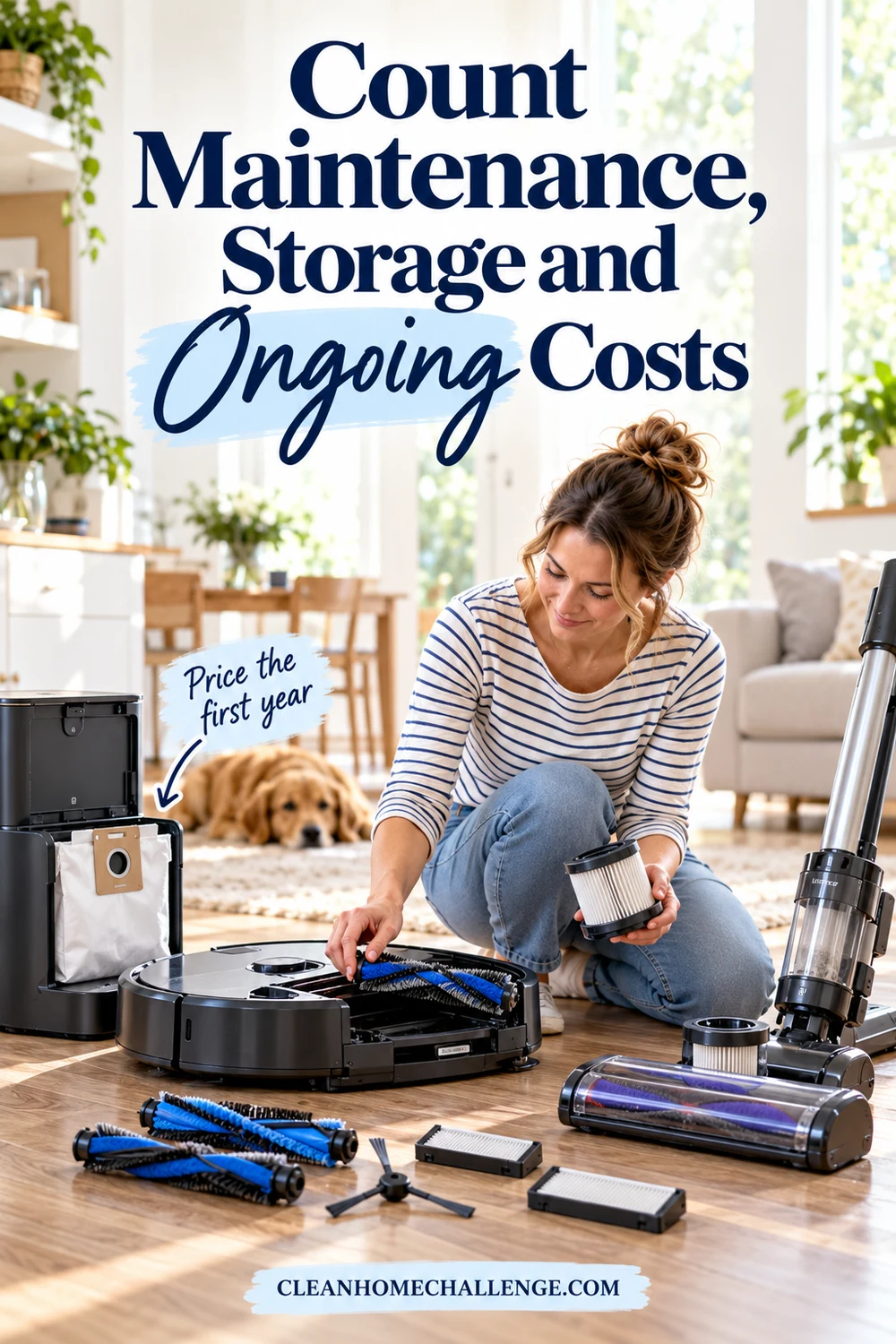
Both machines need regular care. Robot owners empty the onboard bin or replace dock bags, remove hair from rollers and caster wheels, clean sensors and charging contacts, wash or replace approved filters, and maintain any mop system. Cordless owners empty a smaller bin, clear the brush roll, clean attachments and maintain filters and batteries.
Use the exact manual rather than a universal schedule. Some filters are washable and must dry fully before refitting; others are not washable. Water in a motor or an incorrectly fitted damp filter can damage the machine. Never improvise a battery or charger. Use parts approved for the specific model and stop using equipment that is swollen, cracked, excessively hot or recalled.
Before buying, price a realistic first year: replacement filters, side brushes, rollers, dock bags, mop pads and any approved floor solution for a robot; filters, rollers, specialty heads and possible future battery replacement for a cordless. Check warranty length, service options and how long ordinary replacement parts appear to remain available.
Storage matters too. A robot dock needs open floor space and power. A wash-and-empty station may need room above it to lift tanks. A cordless vacuum needs a stable charging location that keeps the unit from falling and makes attachments easy to reach. Convenience disappears when the machine has no sensible home.
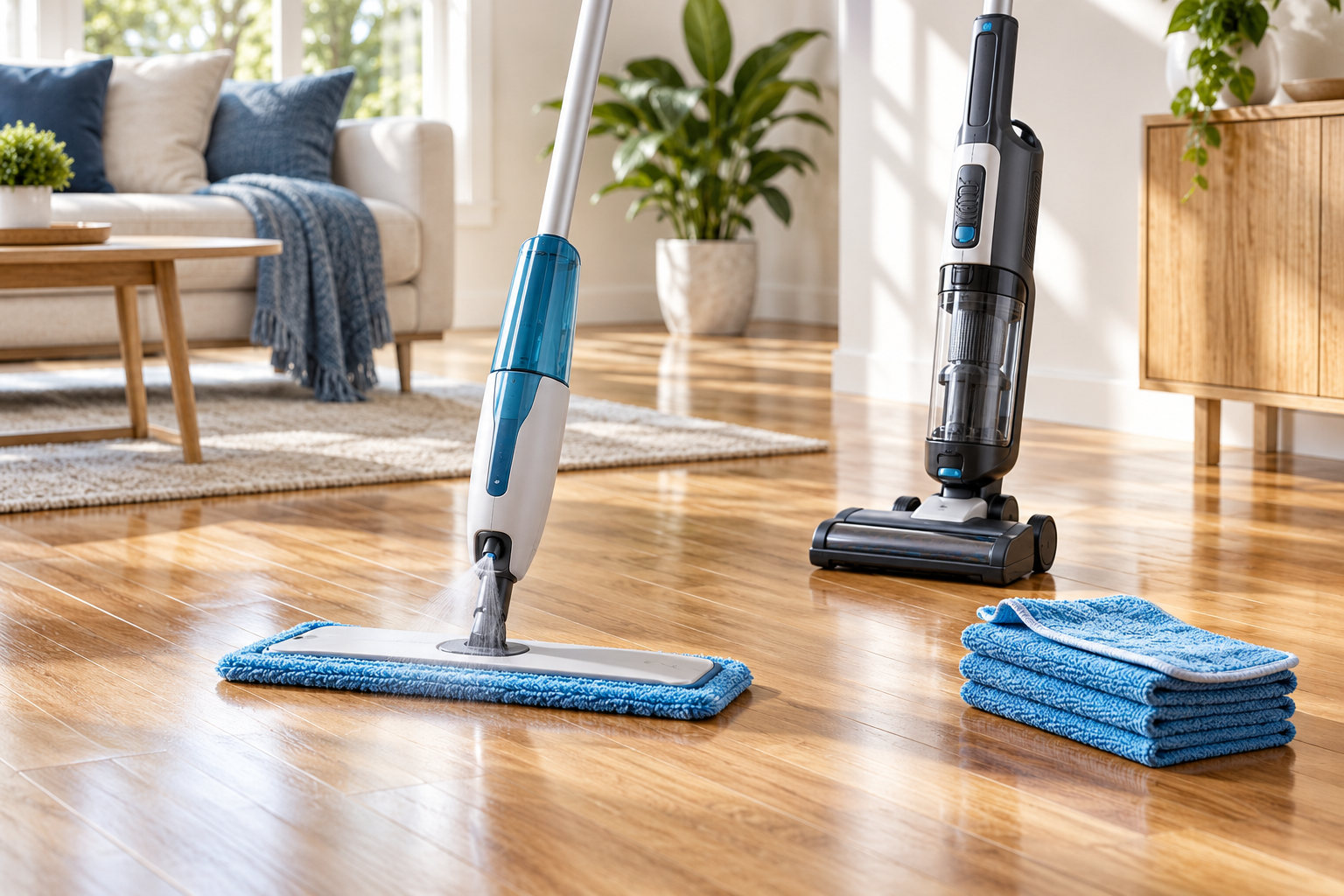
Check Battery Safety and Smart-Home Privacy
Both formats commonly use rechargeable lithium-ion batteries. Follow the manufacturer’s charging, storage and temperature directions, use the supplied or approved charger and register the product so safety notices are easier to receive. Check the U.S. Consumer Product Safety Commission recall database before buying secondhand and whenever a battery or charger behaves unusually.
Do not charge a visibly damaged machine or battery. Stop using it if you notice swelling, smoke, unusual odor, hissing, leaking or excessive heat, and follow local emergency and disposal guidance. Do not put lithium-ion batteries in household trash where local rules prohibit it.
Robot vacuums add a connected-device decision. Depending on the model, the app may store maps, schedules, account information and obstacle images. Before purchase, read the privacy notice, learn how to delete stored data and check how long security updates are promised. The Federal Trade Commission recommends protecting internet-connected devices with a secure router, unique passwords, two-factor authentication when available and current software.
Ask whether the robot can perform basic cleaning without a cloud account, whether household members can have separate access and what happens if the manufacturer ends app support. Smart features are useful only when their privacy and maintenance requirements feel acceptable to your family.
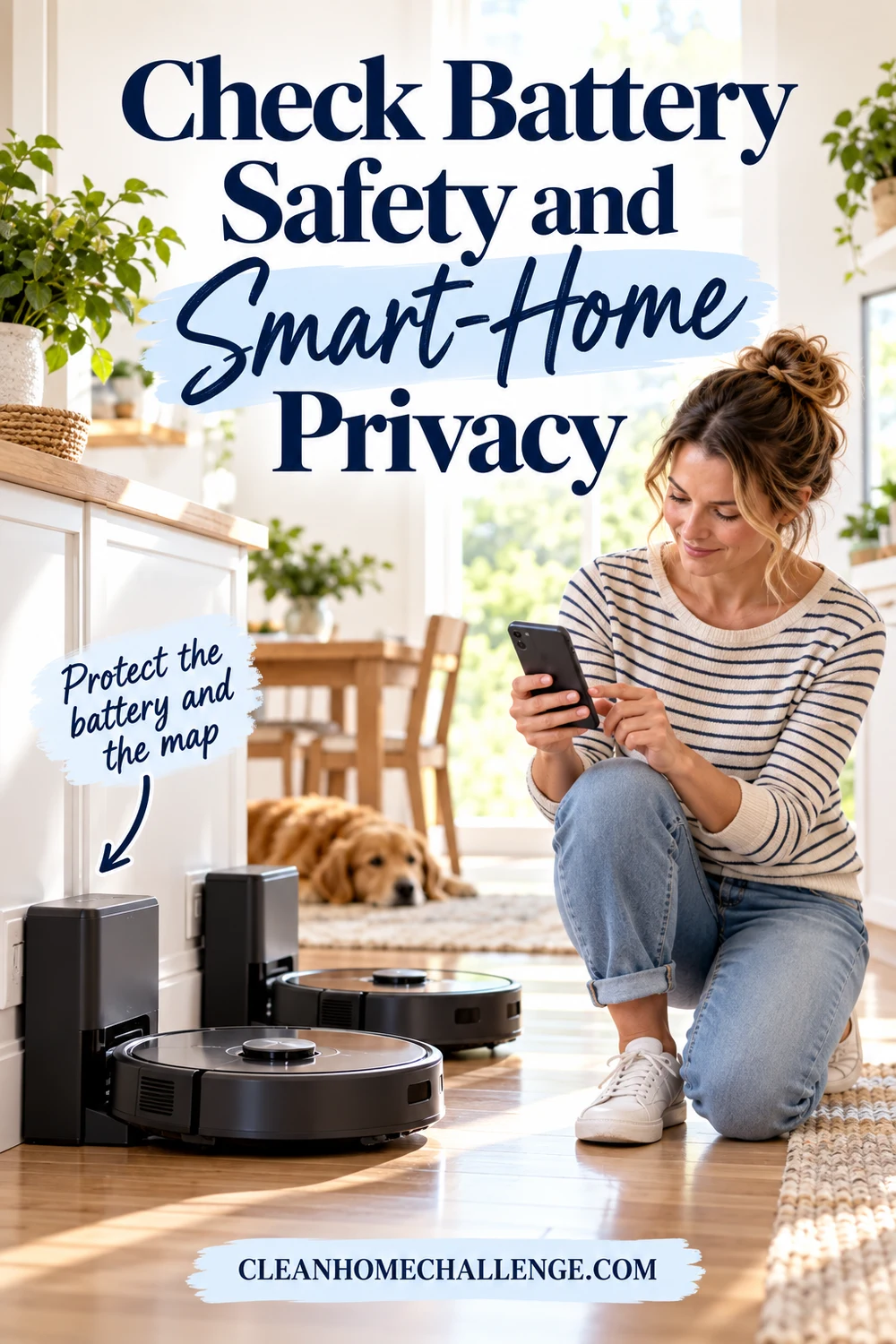
Choose One—or Build a Simple Two-Vacuum Routine
Choose a robot vacuum first when most debris is on one accessible level, the floor can usually be cleared, and the goal is frequent hands-off maintenance. Keep a small manual tool for stairs, furniture and the few places the robot cannot reach.
Choose a cordless vacuum first when the home has stairs, changing clutter, frequent spot messes, upholstery or vehicle cleaning, or when you prefer direct control. Store it where the most common mess occurs, not in the least convenient closet.
Many busy families get the best result from combining the two: schedule the robot in open rooms three to five times a week, then use the cordless for stairs, edges, upholstery and quick spills of dry debris. That is not duplication if each machine has a defined job.
Before the return window ends, test the real routine. Run the robot around ordinary furniture and clutter, or use the cordless for the full floor and stairs. Track rescues, charging, emptying, hair removal and storage friction—not just pickup on one clean patch. The winner is the vacuum you can maintain and will actually use.
Trusted Sources
- Federal Trade Commission, “Securing Your Internet-Connected Devices at Home”: https://consumer.ftc.gov/articles/securing-your-internet-connected-devices-home
- U.S. Consumer Product Safety Commission, “Recalls”: https://www.cpsc.gov/Recalls
- NIST, “Cybersecurity for IoT Program”: https://www.nist.gov/itl/applied-cybersecurity/nist-cybersecurity-iot-program
CLEANERS CLUBHOUSE
Stay on Top of Floors Without Cleaning All Day
Give your floors a focused Friday reset instead of chasing every mark all week. The Cleaners Clubhouse helps you build a realistic routine with practical guidance, printables and monthly challenges.