THIS POST MAY CONTAIN AFFILIATE LINKS. PLEASE READ MY DISCLOSURE FOR MORE INFO.
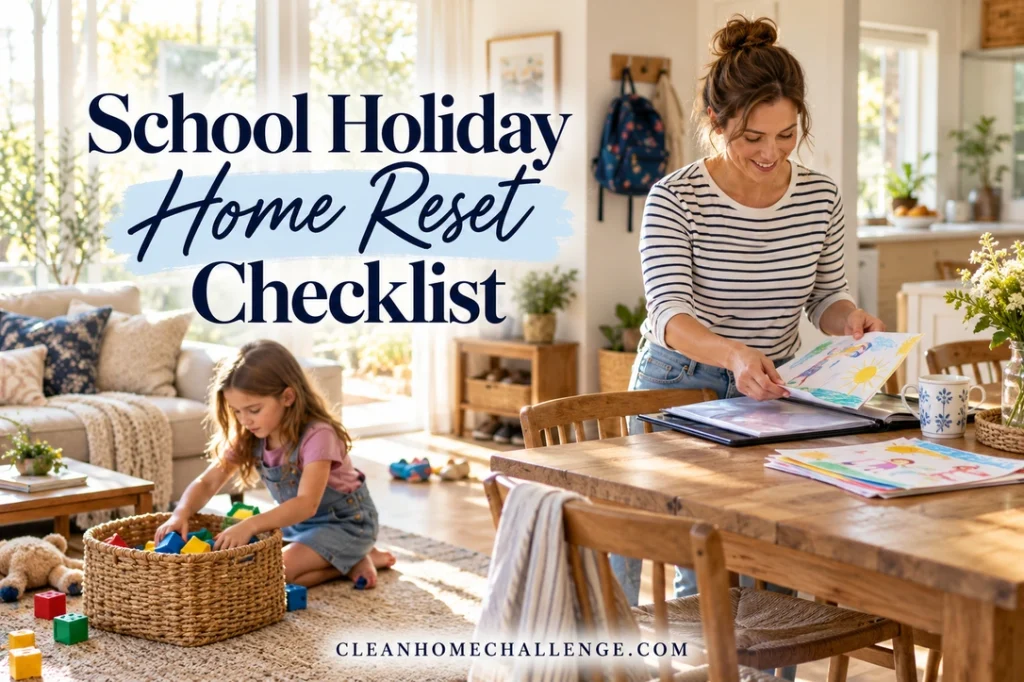
School holidays can leave a trail of craft supplies, half-finished games, snack crumbs, school papers, and bags that never quite got unpacked. You do not have to spend the break putting the whole house back together. A useful reset makes the spaces your family needs easier to use, then leaves room for the holiday itself.
This school holiday cleaning checklist works at the beginning of a break, halfway through a busy week, or before school starts again. Choose a few priorities, sort before you clean, and finish small areas completely. The suggested times below are planning estimates, not a promise about how quickly your family should work.
If you only have enough energy for one job today, clear a walking path and unpack anything that contains food. That is a worthwhile start. You can come back to the toys, papers, and deeper cleaning later.
For everyday maintenance throughout the break, use the school holiday cleaning routine. This guide focuses on a planned reset: reviewing belongings, checking care instructions, cleaning cleared spaces, and preparing school gear.
Disclosure: This post may contain affiliate links. As an Amazon Associate, Clean Home Challenge earns from qualifying purchases. If you make a purchase through these links, we may earn a small commission at no extra cost to you. This helps us keep creating practical cleaning tips, routines and resources for busy families! 🧽
Choose Your Reset Priorities
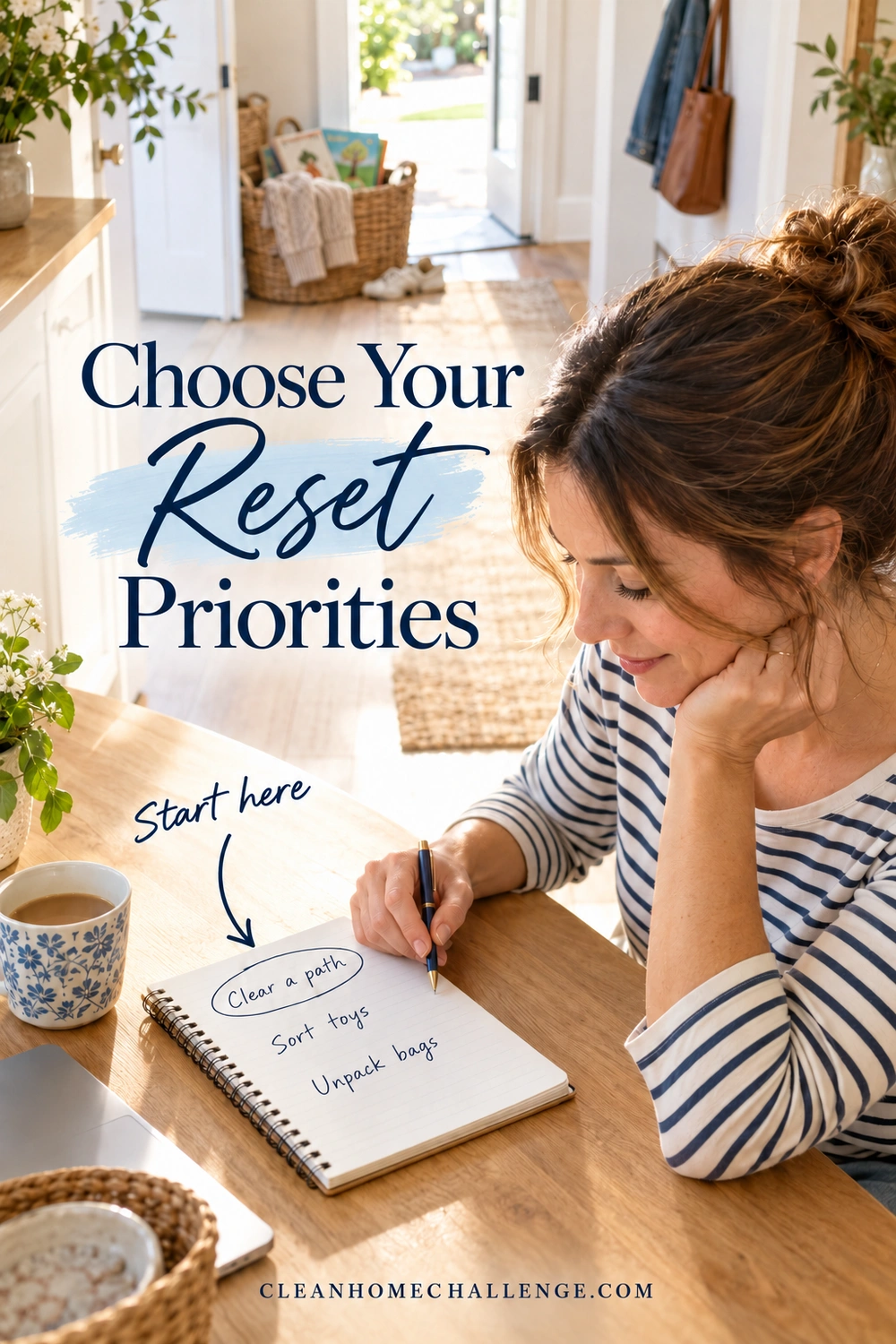
Start with how you want the house to work during the break. A clean craft table is more useful than an immaculate cupboard nobody needs to open. A clear floor beside the bed can matter more than reorganizing every shelf.
Walk through the main family spaces without carrying a cleaning caddy. Look for a blocked route, a surface you cannot use, or something that needs attention before it becomes harder to deal with. Pick three outcomes at most. Write an action and a finish point for each: “clear enough of the dining table for lunch,” “put the building blocks in their basket,” or “empty and check both school bags.”
Decide what belongs in this reset
Use three categories:
- Do now: food left in bags, spills, blocked paths, an unusable table, or a laundry load needed for tomorrow.
- Do during the break: a manageable toy sort, school paperwork, cleaning a frequently used play area, or checking school clothes.
- Plan separately: a whole garage, every wardrobe, major repairs, or a large collection of belongings that needs careful decisions.
Do not turn the third category into a hidden requirement for finishing the first. Put those bigger projects on a dated list, rather than spreading them across the floor.
Gather a small kit
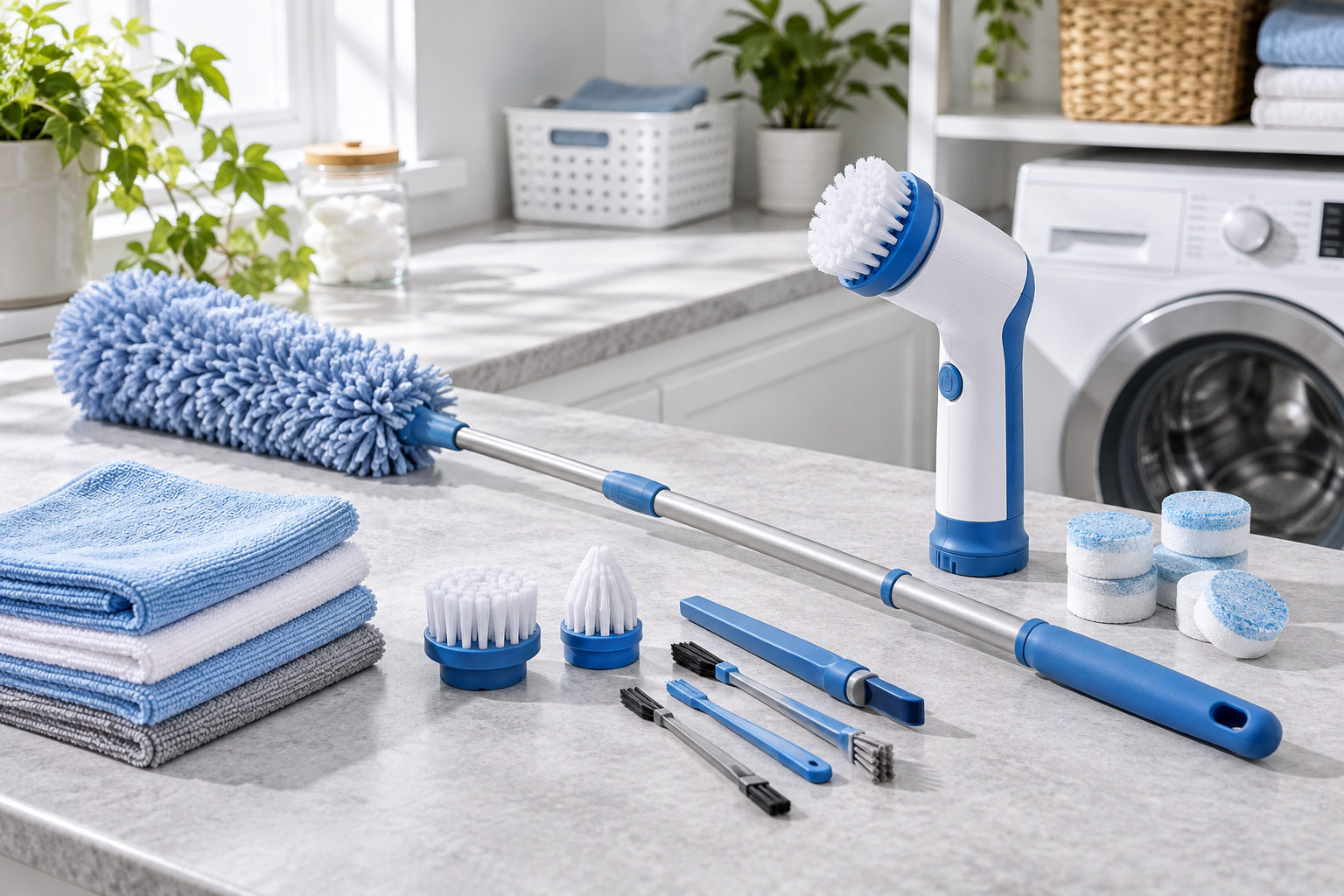
You will usually need a return basket, a laundry basket, a bag or box for suitable donations, a trash bag kept away from children, clean cloths, your usual surface-compatible cleaner, and a vacuum or broom. Add a notebook or the copyable checklist at the end of this guide. You do not need to buy matching bins before you know what you are keeping.
Put cleaning products somewhere children cannot access, and keep the sorting area out of doorways. Handle broken toys, sharp items, batteries, or unknown spills yourself. Choose a place for donations that does not become another obstacle; confirm what the recipient accepts before packing items for them.
For a small first session, allow about 10–15 minutes to choose priorities and gather what you need. If the walk-through uses your available energy, stop there. A clear plan still makes the next session easier.
Sort Toys and School Gear
Work on one container, drawer, or bag at a time. Emptying an entire bedroom creates decisions and cleanup that may be difficult to finish before lunch, visitors, or the next activity.
Make toy decisions with your child
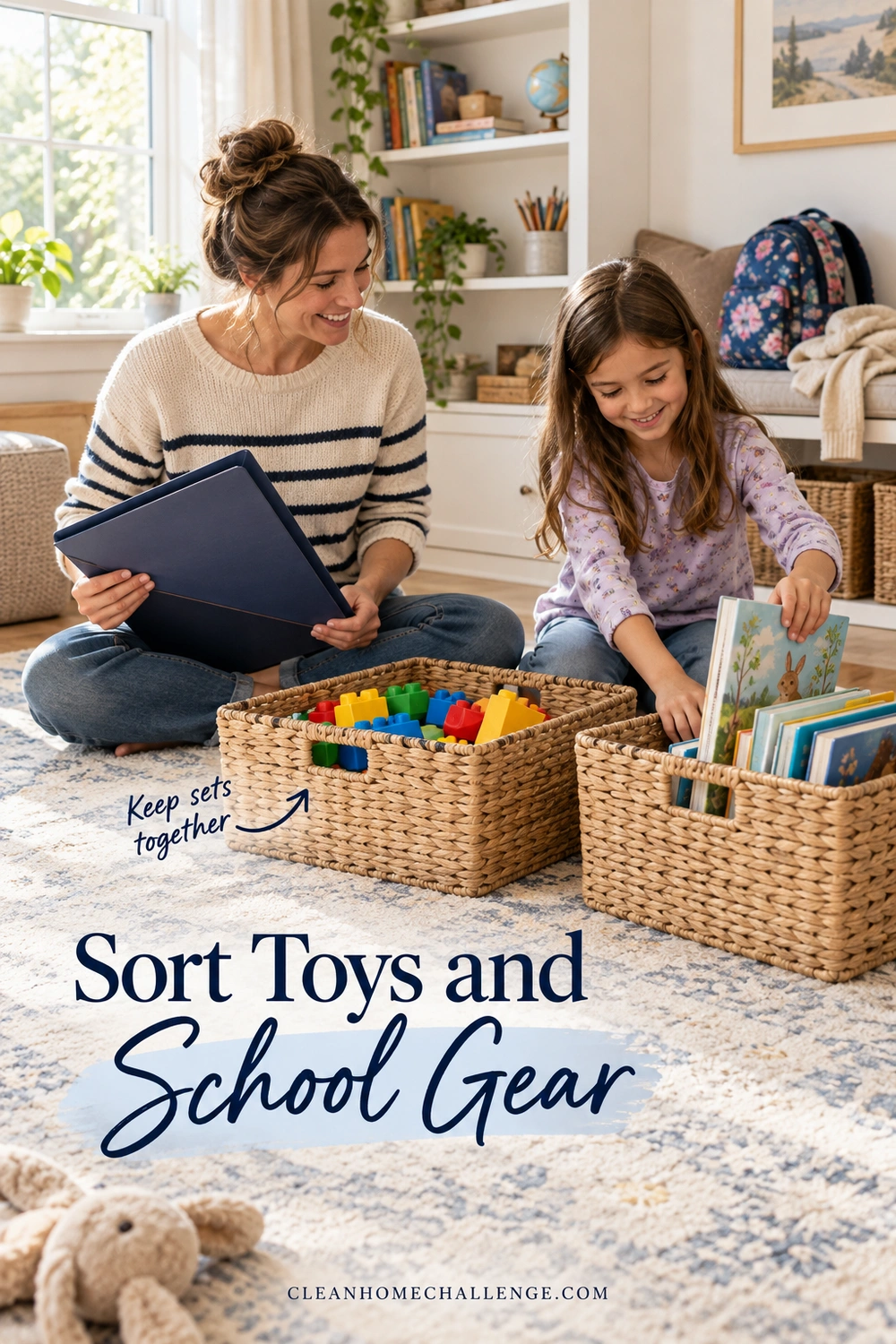
Bring a small selection of toys to a clear surface. Ask which ones are being used, which belong to a current game, and which your child is ready to pass on. Let them help decide what happens to their belongings. Avoid surprising them with a donation bag full of favorites.
Keep sets together where practical. Put uncertain pieces in a small, dated “match later” container and give it a specific next check; do not create an unlimited mystery-parts bin. Set aside damaged items for an adult assessment before they return to play. Keep small parts appropriate for older children away from younger siblings. Check that battery compartments are secure, and remove a toy from use if a magnet is loose or missing. CPSC child-safety guidance explains why loose magnets need attention.
Use the storage you already have first. A broad, low basket can be easier to use than a tightly packed container that requires an adult to rearrange it every time. Leave enough room for a child to put things back without forcing the lid. Use a simple word or picture label when it helps. Before adding shelves or moving furniture, follow the manufacturer’s anchoring instructions; tempting toys on high furniture can encourage climbing. See CPSC’s furniture tip-over guidance.
Unpack school bags completely
Check the main section, small pockets, lunch compartment, and any removable sleeve. Remove food, wrappers, damp clothing, papers, and items that belong elsewhere. Separate papers into “act on,” “keep,” and “recycle or discard”; check that permission forms, personal details, or borrowed items are not accidentally thrown away.
Read the bag’s care instructions before cleaning. Shake or remove loose crumbs first, then use the approved method. Do not assume every backpack can go in the washer. For example, JanSport’s school-backpack care guide recommends gentle damp-cloth cleaning, small amounts of mild soap when needed, and thorough air-drying; it advises against machine washing, bleach, and a dryer. Other brands and materials can need different care. Keep leather or suede areas out of a generic soaking routine.
Clean lunch bags and reusable bottles according to their own instructions, including removable parts where permitted. Allow everything to dry fully before closing it or packing it away. Check clothing sizes, worn shoes, missing stationery, and repairs now, but put purchases on one list. Checking what you already own can prevent duplicate supplies.
Keep useful papers without keeping every pile
Set a realistic home for artwork and school memories, such as one portfolio or a folder per school year. Ask your child to choose favorites. Photograph a bulky project if they want a record and agree it can go. A photo is an option, not a reason to discard something meaningful without their involvement.
Return active craft materials to a reachable container. An unfinished project can have its own tray so the table can still be used for a meal. Finish this session by returning kept items, removing outgoing items, and putting the sorting surface back into use.
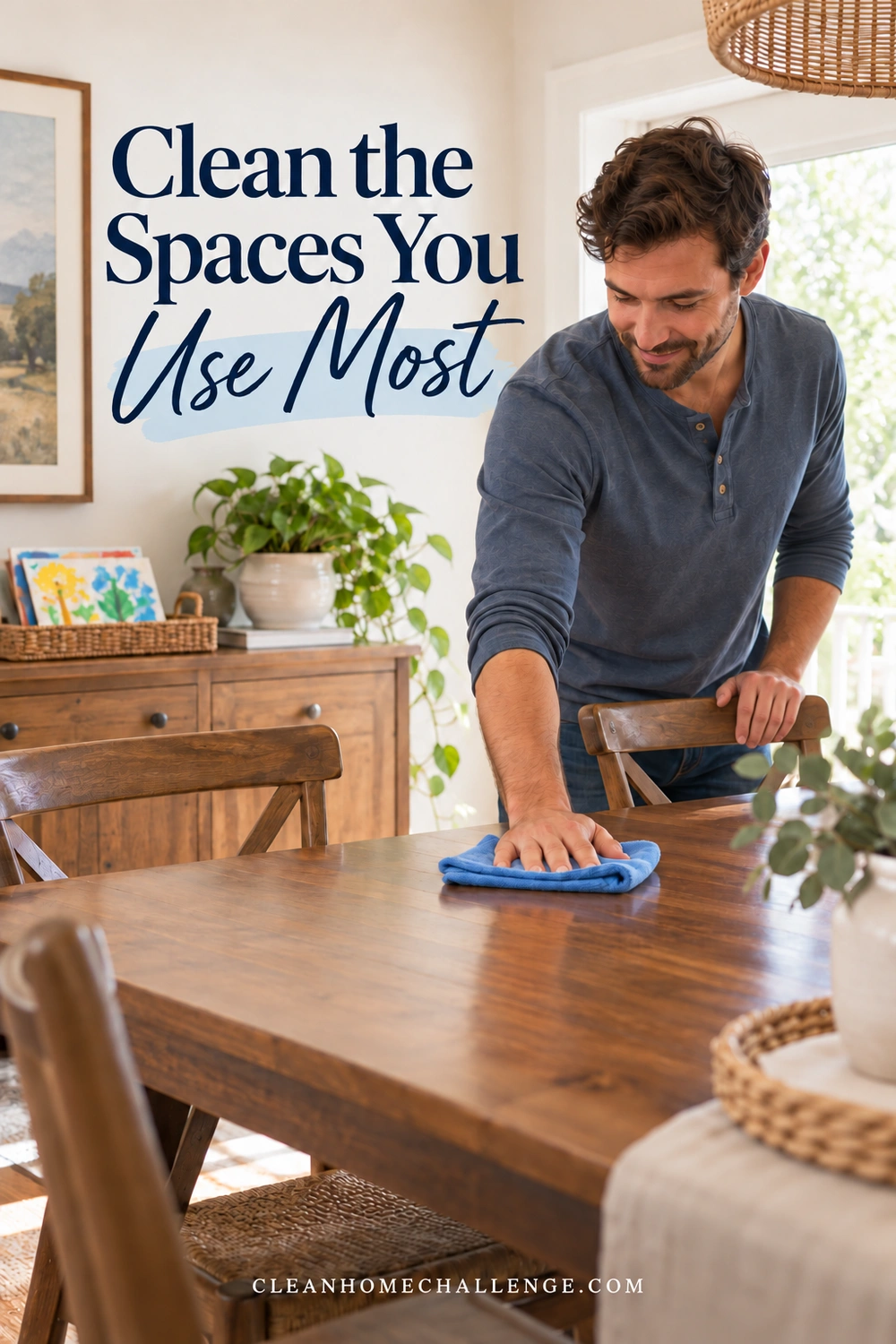
Clean the Spaces You Use Most
Once a small area is clear, clean it before moving on. Sorting and cleaning one zone to completion prevents every room from ending up halfway done.
Begin with the surfaces your family will use during the holiday: the dining or craft table, a play shelf, the main seating area, the kitchen, the bathroom, and the floor routes between them. Use a cleaner suitable for each material and follow its label. Keep cloths used for bathroom or dirty tasks separate from kitchen cloths, and change a cloth when it becomes dirty.
Work from the cleared surface to the floor
- Remove loose crumbs, paper scraps, and dust from the cleared zone.
- Clean the surface with its approved method, including the areas that were hidden beneath the pile.
- Remove cleaner residue if the label or surface instructions require rinsing, then dry as appropriate.
- Return only the items that belong there.
- Vacuum or sweep the floor, moving small safe objects first. Spot-clean marks with a material-compatible method.
If a hard floor needs mopping, remove loose grit first and avoid excessive water. With a flat mop, work in controlled pull-back passes toward yourself, lifting and repositioning rather than pushing the same dirty pad around the room. Change or clean the pad as needed. Follow the flooring maker’s instructions, particularly for wood, laminate, and water-sensitive edges.
Avoid spraying an unknown cleaner onto children’s artwork, toys, wood, screens, or fabric just because it works on the kitchen counter. Test a permitted method inconspicuously when the material guidance calls for it. Electronics and battery-operated toys need their manufacturer’s cleaning method; do not soak them.
Clean toys by their actual care instructions
Washable does not mean dishwasher-safe. Separate ordinary washable plastic pieces from electronics, metal components, delicate decorations, and materials that absorb water. For example, LEGO’s care advice allows hand cleaning ordinary bricks with mild detergent and water no hotter than 104°F/40°C, followed by a clean-water rinse. It rules out a washer, dishwasher, and heated drying. Its sensitive or electronic pieces need a different cloth-based approach. Use these directions for the relevant LEGO items, not as a rule for every toy.
Clean storage containers too, using their permitted method. Let toys and containers dry before storing them. Do not trap damp items inside a closed tub or return a wet basket to a shelf.
Keep cleaning and disinfection separate
A routine holiday reset does not require disinfecting the whole house. CDC home-cleaning guidance supports regular cleaning with suitable products, with additional disinfection when someone is sick or a household member has increased risk. If disinfection is needed, clean first, choose a product approved for the surface and purpose, and follow its wet contact time, ventilation, protective equipment, and any rinsing instructions. Do not mix products. Keep children and pets away from the treatment area as the label directs.
Leave illness-related cleanup or an unknown hazardous mess to an adult using the appropriate specific guidance. A family reset checklist cannot replace those instructions. For an ordinary cleared table or toy shelf, a careful cleaning session is a sensible finish point.
Give Kids Safe, Simple Jobs
Children can contribute without handling cleaning chemicals. EPA advises that children should not apply disinfectants, including disinfectant wipes. Keep products and adult cleaning tasks separate from children’s sorting and tidying jobs.
Choose work based on the child’s abilities, supervision needs, and interest rather than assigning a job solely by age. Show a single action, point out its finish point, and stay available. “Put these five books in this basket” is clearer than “clean your bedroom.”
| A manageable contribution | Adult preparation or check |
|---|---|
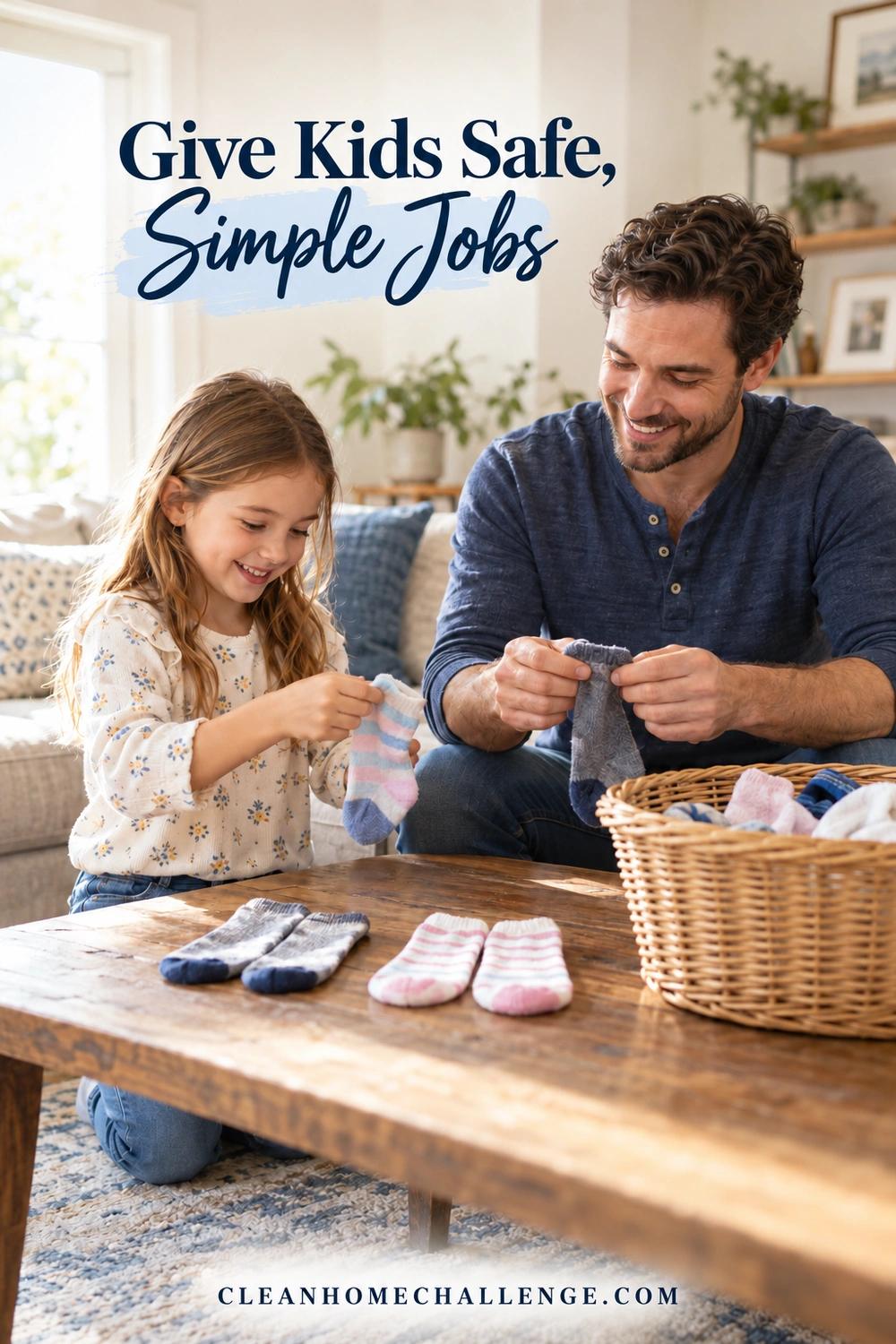
| Match a few clean socks | Provide a small pile and a place for unmatched socks |
| Put large toys in a low basket | Remove broken items and unsuitable small parts first |
| Choose favorite artwork | Keep essential school paperwork separate |
| Return books to a reachable shelf | Check storage stability and avoid climbing |
| Put clean clothes in a drawer | Make sure the drawer is accessible and furniture secured |
| Place their empty bag in its home | Adult handles cleaning, drying, and any food-related mess |
Keep scissors, loose batteries, magnets, sharp debris, hot water, ladders, and heavy furniture moves out of children’s jobs. Do not let a child stand on a chair to reach storage. Adults should also avoid lifting furniture alone when it is not manageable.
Try a short shared session with one basket each. A younger child may work beside you for a few minutes; an older child may prefer a clearly defined area and a check-in afterward. Offer a choice between two safe tasks when possible. Stop before tiredness turns sorting into an argument, and acknowledge the useful action: “We can find the books now.”
If your child wants to keep a game set up, agree on a workable boundary instead of packing it away automatically. A play tray, one corner of a table, or a basket for the pieces can let the rest of the room function. Leave space for play as part of the reset.
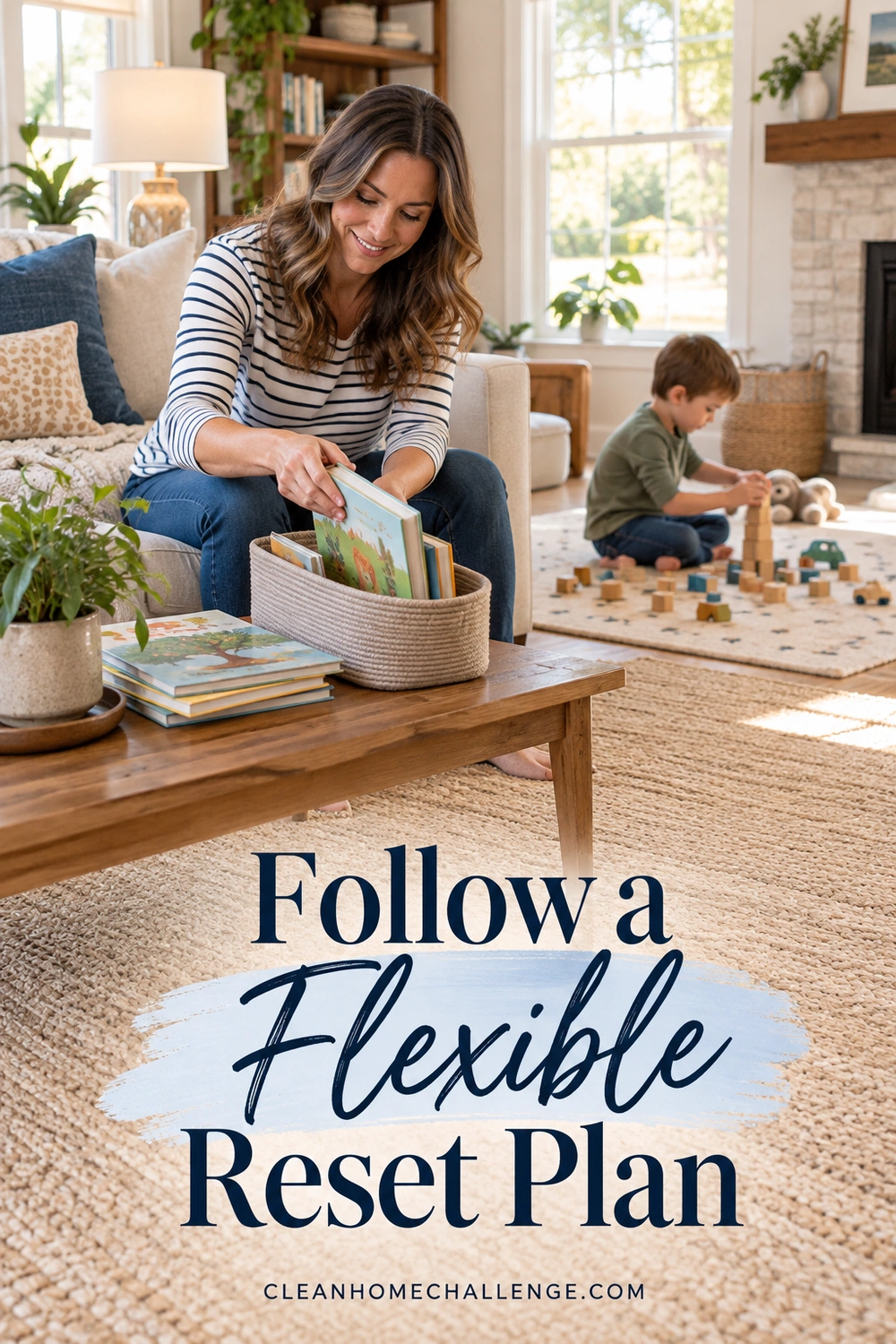
Follow a Flexible Reset Plan
Pick a plan that fits the break you actually have. Drying time, sentimental decisions, repairs, and interruptions are separate from hands-on cleaning time. Do not schedule washing a bag immediately before it must be packed and used.
When you have about 20 minutes
Choose one usable-space outcome. Spend roughly five minutes gathering items that belong elsewhere, ten minutes on a small sort or cleared surface, and five minutes returning items and putting supplies away. Adjust those blocks freely. A slow or careful job is not a failed session.
For example, empty one backpack, separate its papers, remove the crumbs, and leave any needed cleaning or drying as the next clearly identified step. Or clear the dining table, clean the exposed surface, and put the current craft project on its tray. Do not start both if you cannot finish either.
A three-session family reset
| Session | Main focus | A realistic finish point |
|---|---|---|
| 1 | One toy area and school bags | Kept toys have a home; food and damp items are removed from bags |
| 2 | A cleared living space, kitchen table, and necessary bathroom cleaning | The family can use these spaces and the main paths are clear |
| 3 | Dry school gear, clothes, supplies, and a quick closing tidy | Bags are ready for storage or school; shortages and repairs are on one list |
Sessions might happen on three different days. Keep the next session’s materials in their proper homes, not in a pile that blocks everyday living. If a child is away or a decision needs their input, reserve that small task rather than deciding for them.
The last few days before school
Check that cleaned bags and lunch gear are dry, borrowed items have been returned or located, and the first day’s clothes and supplies can be found. A few days before the return, gradually restore the family routines that make mornings easier. The Australian Government’s Learning Potential school-holiday guidance encourages involving children in getting their school things ready and easing back into the school routine. You can use that principle for a term break or a US school vacation without copying another family’s schedule.
Leave time for an ordinary evening: eat, put away the essentials, and rest. A school return is not a deadline for completing every deep-cleaning project. If larger seasonal jobs would benefit from guided steps, the Cleaners Clubhouse’s Deep & Seasonal support can help you plan those separately.
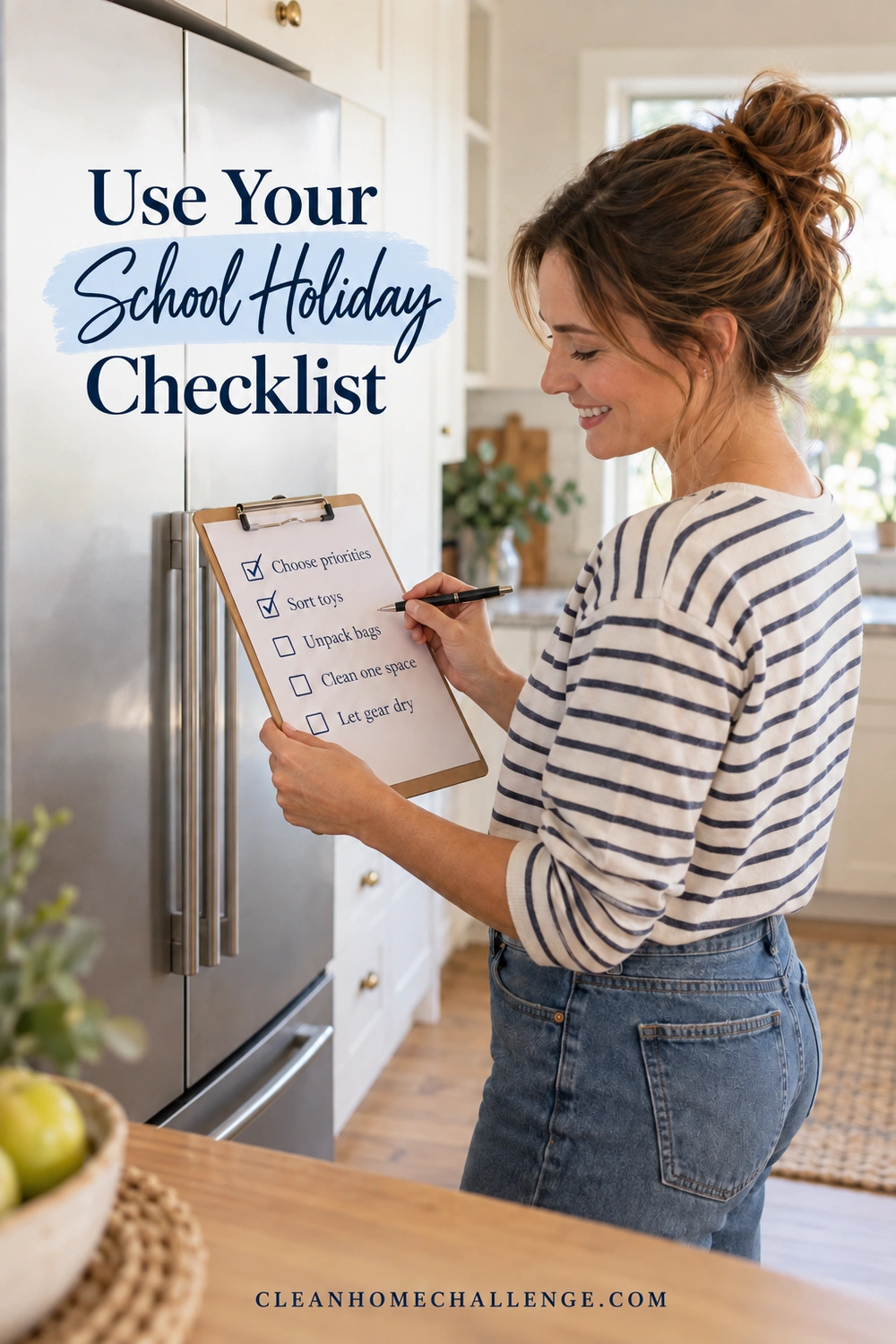
Use Your School Holiday Checklist
Copy, print, or save this checklist. Mark only the tasks your household needs; crossing out a task is a valid decision. Use the notes underneath to identify what happens next rather than keeping unfinished work in your head.
Choose and prepare
Sort a small area
Reset the spaces and school gear
Close the session
Our three priorities: __________________________________________
One thing we can finish today: _________________________________
Next small job / who / when: __________________________________
Supplies or repairs to check before buying: ______________________
For the rest of the break, keep one small closing habit: return toys to their homes, clear the eating space, or empty bags when you come in. Choose the habit that removes the most friction for your family. The aim is a home that supports the holiday and the return to school, with a plan you can resume whenever you need it.
CLEANERS CLUBHOUSE
Need Help Getting Through a Proper Deep Clean?
Follow the 7-Day Deep Clean Bootcamp when your home needs more than a quick tidy. The Cleaners Clubhouse breaks the work into achievable steps with printable support and seasonal cleaning guidance.