
THIS POST MAY CONTAIN AFFILIATE LINKS. PLEASE READ MY DISCLOSURE FOR MORE INFO.
A spare bedroom can quietly become the place where clean laundry, wrapping paper, and things without a home all land. Then visitors confirm their plans, and suddenly that room needs to work as a bedroom again. Start with what someone will actually use: the bed, the floor around it, a place for their belongings, and a clear route to the bathroom.
This guest room cleaning checklist takes you through those jobs in a useful order, with a short version for days when you have very little time or energy. You can spread the work across a few small sessions. Clean, dry bedding and a usable room matter much more than matching towels or an elaborate welcome basket.
The steps cover ordinary household cleaning. If you uncover a leak, persistent dampness, visible mold, or signs of pests, pause the guest-room setup and get the problem assessed rather than hiding it with fresh bedding or fragrance.
Disclosure: This post may contain affiliate links. As an Amazon Associate, Clean Home Challenge earns from qualifying purchases. If you make a purchase through these links, we may earn a small commission at no extra cost to you. This helps us keep creating practical cleaning tips, routines and resources for busy families! 🧽
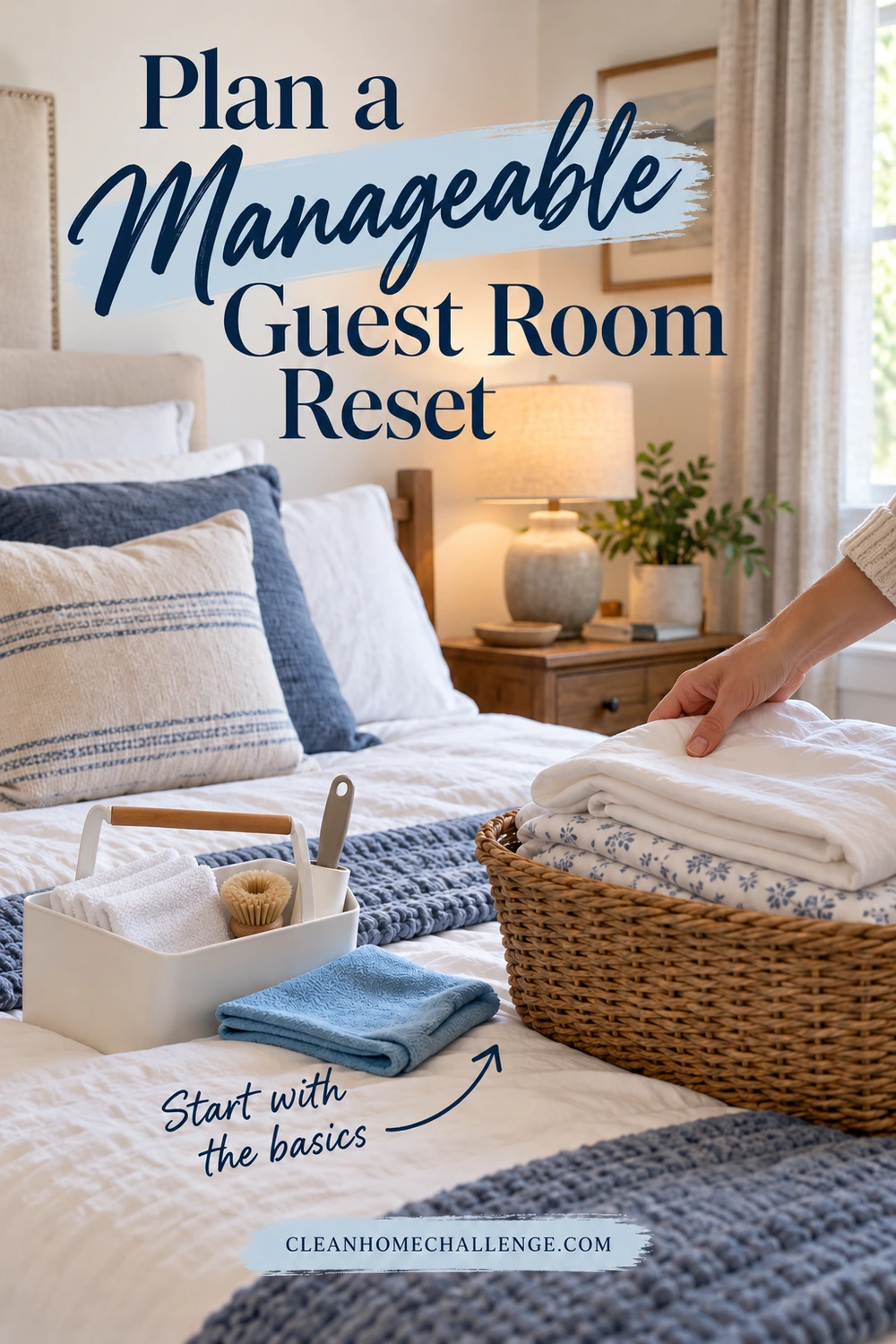
Plan a Manageable Guest Room Reset
Before opening a cupboard, look around the room and choose the jobs that need to happen before anyone sleeps there. A lightly used bedroom may need a quick refresh. A storage room with a bed will need a separate clearing session first.
Use this guest room cleaning checklist at a glance
- Remove trash, dishes, laundry, and household overflow.
- Clear the doorway, walking routes, and a place for luggage.
- Prepare clean sheets, pillowcases, and any other bedding that needs washing.
- Dust higher surfaces, then wipe furniture and frequently handled spots.
- Vacuum the floor and use a suitable hard-floor method where needed.
- Set out towels, check lighting and bathroom access, and put cleaning supplies away.
Give laundry and drying a head start
A few days ahead: Check the bedding labels and available clean sets. Arrange any bulky-item laundering or carpet cleaning early enough for everything to dry. This is also the time to deal with a broken lamp or a guest drawer full of paperwork.
The day before: Clear the room, start necessary laundry, dust, wipe, and clean the floor. Make the bed once the surrounding dusty work is finished and every bed layer is dry.
Arrival day: Remove anything that has wandered back in, check the bed and floor, and set out the final essentials. Save big reorganizing projects for another day.
As a planning allowance, set aside around 45–60 minutes of hands-on work for an ordinary one-bed room, excluding laundry cycles and drying. This is a flexible estimate, not a target you have to meet.
Gather a small cleaning kit
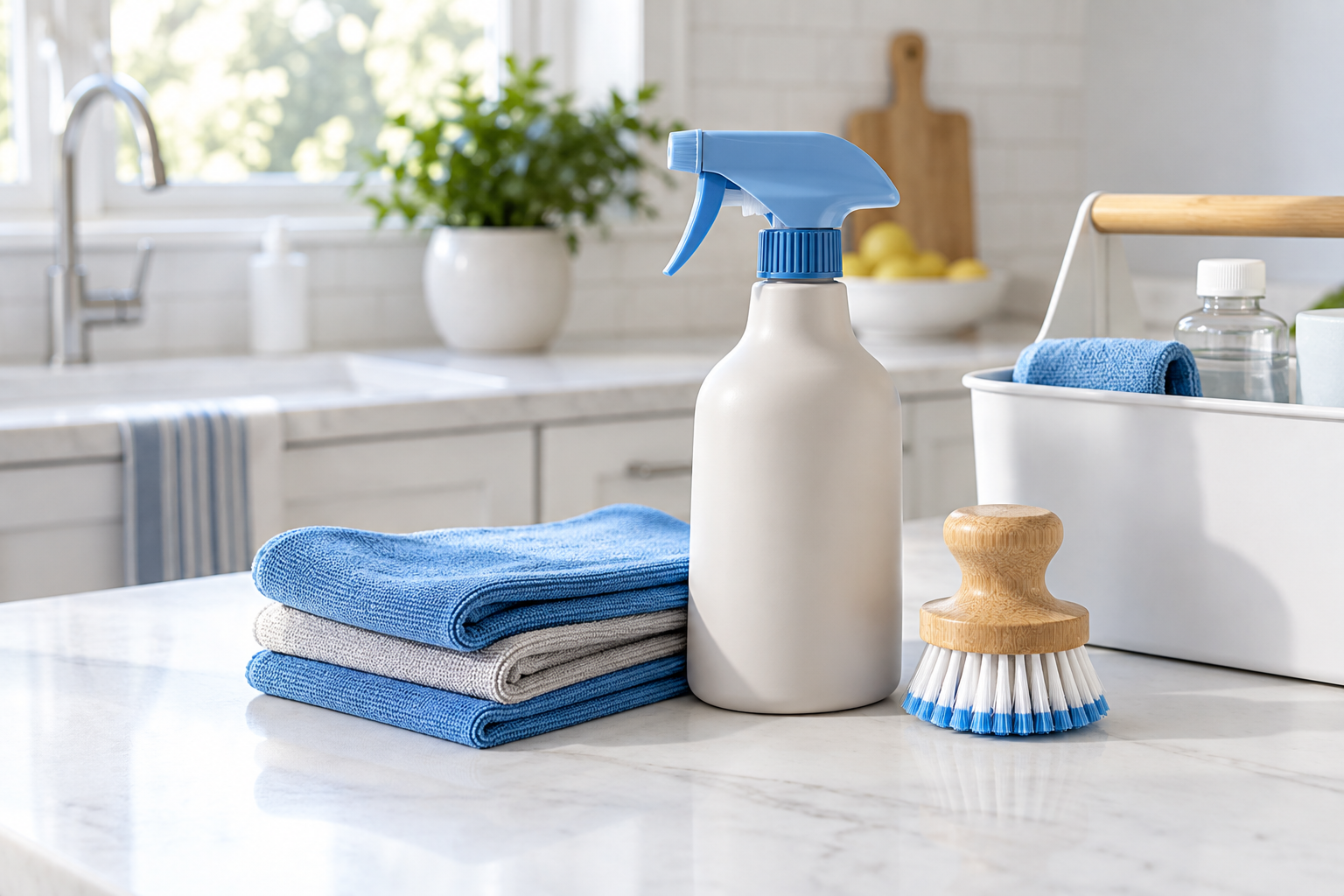
Bring a laundry basket, trash bag, several clean soft cloths, a duster or suitable vacuum attachment, your vacuum, and cleaners compatible with the room's finishes. Add a clean mop pad if the floor needs one. Keep bathroom cloths separate.
Read product directions, including dilution, ventilation, and any protective equipment. Never mix cleaning products. The EPA's household cleaning guidance also emphasizes checking surface compatibility. Keep the kit away from children and pets while you work, then return it to its usual secure storage.
Clear Walkways and Guest Storage
Start at the door and move around the room once. Take out cups and plates, empty the trash, and put laundry in the appropriate basket. Collect household items that belong elsewhere in one carry basket, then put them away without starting a project in every room you visit.
If sorting everything would take hours, choose a sensible temporary storage spot and make a note to finish later. Avoid transferring the pile to the hallway, the guest closet, or the floor beside the bed.
Make the room easy to move through
Walk from the doorway to the bed, from the bed to the light switch, and from the bed toward the bathroom. Remove shoes, loose cables, toy baskets, and furniture that pinch those routes. Look at the route with the bedside light on as well as in daylight.
Doors and windows must stay accessible. The U.S. Fire Administration's home escape guidance recommends identifying two ways out of each room and keeping doors and windows unblocked. Show visitors the household escape routes and outside meeting place when they arrive.
Offer one genuinely empty place
Clear a drawer, a shelf, or a section of hanging space. Wipe it using a method suitable for its finish, let it dry, and leave a few usable hangers. Check that opening the drawer does not require moving a chair or suitcase first.
A sturdy luggage rack or suitable bench is helpful if you already have one. In a small room, a clear area that lets a suitcase open without blocking the route works too. Do not turn a lightweight decorative table into luggage storage.
Leave bedside space for a phone, glasses, and a drink. One available surface usually helps more than several decorative extras that guests must relocate before settling in.

Refresh the Bed and Bedding
Strip used sheets and pillowcases and carry them to the laundry basket. Keep clean replacements away from dusty furniture and the floor while you work. Check the mattress protector, duvet cover, blankets, and pillows for spills, hair, odors, or other signs that they need attention.
Read each item's care label
Sheets, protectors, pillows, and comforters may need different treatment. Follow the item's washing instructions, the detergent dose, and your machine's loading limits. A bulky comforter needs enough space for the machine to wash and rinse it properly; check the bedding maker's instructions before squeezing it into a small drum.
There is no single laundry temperature that suits every guest bed. For example, Brooklinen's care guide gives different instructions across its bedding range, including low-heat drying for many sheets and spot-clean-only care for some products. Use your own item's label rather than copying instructions from a different fabric or filling.
Dry everything fully before making the bed or storing it. The CDC's laundry guidance specifies the recommended water temperature and complete drying. With thick bedding, check the seams and filled sections as well as the outer fabric. If it needs longer, give it longer using the permitted method.
Check the mattress without starting a soaking project
Look over the exposed bed surface and seams. If the manufacturer permits vacuuming, use a clean upholstery attachment and work gently. Treat a mark only with a method approved for that mattress and allow the area to dry fully before covering it.
Do not assume a zipper means a mattress cover is washable or intended for routine removal. Tempur-Pedic's cover instructions distinguish washable covers from spot-clean-only models. Check the exact model before removing anything. Keep sprays, steam, and wet cleaning away from the mattress unless its maker specifically allows that method.
Make a simple, usable bed
Once dusting is finished, fit the clean, dry protector where used, add the sheets and pillowcases, and finish with appropriate bedding. Put an extra clean blanket somewhere easy to find. Give decorative pillows a separate home so guests do not have to pile them on the floor.
Do unused guest sheets need another wash?
Check how they have been kept. A clean set stored dry and protected from dust can be ready to use. Bedding that has collected pet hair, dust, spills, or an unwanted odor needs attention before the next guest. If you cannot remember whether the sheets were changed after the last stay, use a freshly laundered set.

Dust and Wipe From High to Low
Do the dustier work before cleaning the floor or laying out fresh towels. Work around the room in one direction so you can see what is finished.
Start with reachable high surfaces, then move through the headboard, shelves, lamps, window ledges, and furniture. Finish with baseboards and lower edges. Use a tool appropriate for each material. Avoid climbing on the bed, a chair, or an unstable piece of furniture to reach a high corner.
Give everyday surfaces a useful clean
Lift small items rather than wiping a ring around them. Fold the cloth so you can turn to a clean section as it becomes dirty. Swap it for a fresh cloth when needed instead of spreading the same dust across the entire room.
- Wipe bedside tables, drawer fronts, handles, and the luggage surface with a finish-compatible method.
- Remove visible dust from the headboard and bed frame, following upholstery or wood-care instructions.
- Clean obvious marks from mirrors using a suitable product and cloth; avoid soaking edges or surrounding frames.
- Give switches and door handles attention without getting liquid into electrical openings.
- Follow the manufacturer's directions for remotes, screens, and other electronics; do not spray cleaner into them.
Check less obvious spots at bed level: the top of a bedside drawer, the lamp base, and the ledge behind the pillow. These are easy to miss when you only look from the doorway.
Is disinfecting necessary before every visit?
Routine cleaning and disinfecting are different jobs. For ordinary home preparation, focus on removing dust and dirt with suitable cleaning products. The CDC explains when disinfecting is needed, including when someone is sick. Use the relevant guidance if the household situation calls for it rather than treating every guest-room surface with disinfectant automatically.
If you use a disinfectant, choose one labeled for the surface, clean first, and follow all directions. The EPA explains that contact time matters: the surface needs to remain wet for the label's specified time. A quick wipe followed immediately by drying may not meet those directions.
A freshly cleaned room does not need a scented finishing spray. Deal with a forgotten trash can or damp towel directly instead of trying to cover its smell.

Clean Floors for a Comfortable Stay
With the higher work finished, remove loose dirt from the floor. Check behind the door, beside the bed, under accessible bed edges, and around the luggage area. Move only lightweight items you can handle safely. Leave heavy furniture in place unless you have appropriate help and can protect the floor.
Carpet and rugs
Use the vacuum setting and attachment recommended for the carpet or rug. Make slow, overlapping passes, paying attention to the walking route and the area where guests will step out of bed. Use a suitable edge tool around baseboards.
Shaw's carpet-care guidance supports slow passes and notes that different piles need different brush settings. Long fibers and fringes need particular care. For a spill, follow the carpet maker's treatment guidance, test an appropriate cleaner in an inconspicuous place, and blot rather than scrub aggressively.
If a carpet needs a full wet clean, arrange it with enough time for complete drying. An arrival-day rush is a poor time to discover that the sleeping area is still damp.
Wood, laminate, and other hard floors
Identify the material and check its care instructions before choosing a product. Remove grit first with a suitable hard-floor vacuum attachment or soft sweeping tool. Avoid a rotating beater bar where the floor maker prohibits it.
Do not assume every hard floor can take a wet or steam mop. Shaw's hardwood guidance warns against both, while its laminate guidance specifies laminate-compatible care and cautions against wet mopping.
Where your floor permits cleaning with a lightly damp flat mop, use the recommended product and amount. Work in small sections with controlled pull-back strokes, changing the pad when it becomes dirty. Do not leave puddles. Let the floor dry before replacing a rug or inviting anyone into the room.

Set Up Useful Guest Essentials
Now use the room as a guest would. Sit on the bed, reach for the lamp, and look for somewhere to put a phone. Close the curtains or blinds and check that they work. Try the door handle and make sure the room can offer the expected privacy.
Keep the final setup simple:
- A clean, fully dry towel for each guest, with a washcloth or hand towel as useful.
- An obvious place to hang used towels so they can dry.
- An empty wastebasket and any liner you normally use.
- A working bedside light and an accessible outlet.
- A clean drinking glass if you are providing water.
- An extra blanket and clear directions to any spare supplies.
Place towels on a clean shelf, bench, or freshly made bed rather than directly on the floor. Keep charging cables out of walking routes and avoid trailing a cord across the doorway to create a bedside charging spot.
Check the bathroom connection
The guest room may be ready while the bathroom still needs a quick pass. Check the sink, toilet, shower or bath, floor, soap, toilet paper, and hand towel. Show guests where supplies and towel hooks are, especially if the bathroom is shared.
Use the 10-minute bathroom reset for a separate bathroom pass. For the kitchen, entry, and other shared spaces, follow the broader cleaning checklist before hosting overnight guests. Keeping those jobs separate helps you finish this room without starting a whole-house deep clean.
Finish with an arrival-day glance
Check that the bedside light is reachable, the floor is dry, and no laundry basket has returned to the luggage spot. Remove the cleaning kit. If you opened a window, check it is appropriately secured for the weather and household before leaving the room ready.
Flowers, snacks, and extra toiletries are optional. Leave enough empty space for the belongings your visitors actually bring.

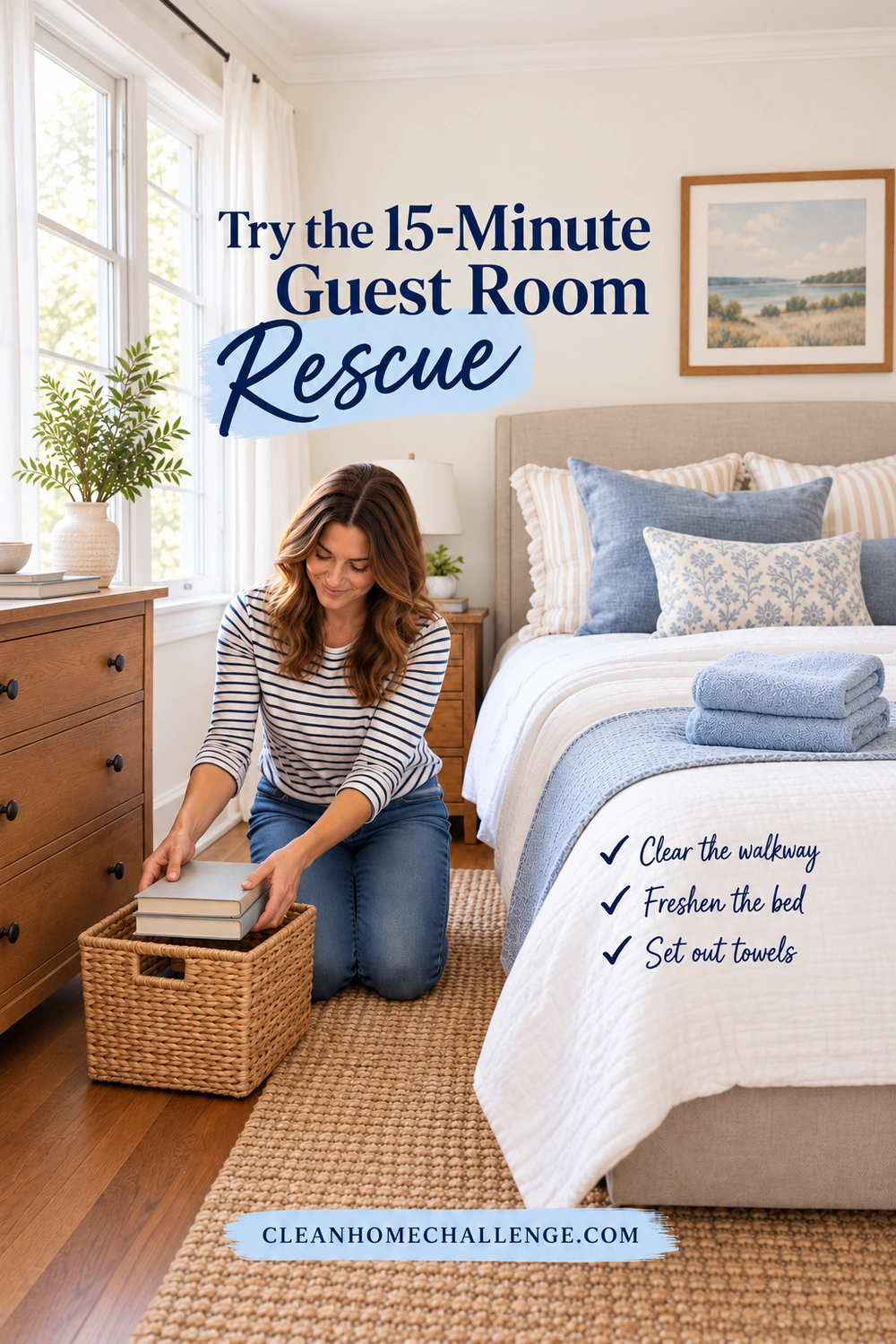
Try the 15-Minute Guest Room Rescue
When time or energy is short, use a timer as a guide and concentrate on the room's basic jobs. This version assumes you already have clean, dry bedding available. Laundry cycles, wet cleaning, and drying need their own time.
Minutes 0–3: Clear the essentials. Take out trash, dishes, and laundry. Open a safe route to the bed and bathroom. Clear a bedside surface and somewhere for a bag. If the route remains obstructed, keep working on that before moving on.
Minutes 3–8: Prepare the bed. Check the sleeping surface and put on the clean bedding. Ask someone to help with the far corners if making the bed is difficult. Skip decorative layers.
Minutes 8–11: Wipe the useful surfaces. Clean the bedside surface and the obvious handled spots with a suitable method. This is a light cleaning pass; it does not replace a disinfectant's required contact time when disinfecting is needed.
Minutes 11–14: Vacuum the route. Focus on the doorway, the sides of the bed, and the luggage spot. Pick up visible debris first. Leave detailed edge work for another session.
Minute 14–15: Add towels and check the light. Put out the basics, confirm the bathroom is usable, and store the cleaning supplies.
If you have only five minutes, start with the clear route and clean bedding. Ask for help with the floor or bathroom rather than trying to squeeze every task into the same minute. If the room needs more than a refresh, extend the time or choose another suitable sleeping space. The timer should help you prioritize, not pressure you to cover up unfinished essentials.
Keep the Room Ready Between Visits
A short reset after visitors leave makes the next invitation easier. Once you have checked for forgotten belongings, take out dishes and trash, collect used towels, and strip the used sheets and pillowcases. Check the remaining bed layers for anything that needs washing or treatment.
Clean the handled surfaces and any spills, then vacuum where needed. Put borrowed lamps, chargers, and furniture back where they belong. Keep forgotten belongings together so they do not disappear into a household drawer.
Choose a bedding system that fits the room
If visitors come often, you might remake the bed with clean, dry bedding after the reset, then check it again before the next stay. If the room doubles as an office or pets spend time there, storing the clean linen set in a dry, protected cupboard may suit you better.
Keep the pieces of each set together and label the shelf by bed size if that helps. Check stored blankets and towels before using them. Avoid packing anything away while it is still damp.
Add one small check to your normal routine
On Wednesday's bedroom-cleaning day, take a brief look into the guest room. Remove items that have landed there, check the empty guest drawer, and dust or vacuum where needed. Add any necessary guest laundry to Saturday's laundry catch-up rather than saving it all for the next arrival.
There is no need to repeat a full guest-room clean on a rigid schedule when the room has barely been used. Adjust the work to its actual use, dust, pets, and upcoming plans.
Before the next visit, return to the same priorities: a usable room, clean and dry bedding, clear walking routes, and a few easy-to-find essentials. Keeping that finish line simple makes the guest room easier to maintain and leaves more time to enjoy the people coming to stay.


CLEANERS CLUBHOUSE
Follow a Simple Room-by-Room Cleaning Plan
Break the house into manageable spaces and know exactly where to focus next. The Cleaners Clubhouse gives you a follow-along 12-month calendar, printable worksheets and motivating monthly challenges.