

THIS POST MAY CONTAIN AFFILIATE LINKS. PLEASE READ MY DISCLOSURE FOR MORE INFO.
To keep floors clean longer, catch dirt before it spreads, remove loose grit where it lands, and check whether your cleaning tools or products are leaving residue. You rarely need to mop every room again just because the entry, eating area, or pet corner has become messy.
A lived-in floor will collect new marks. The useful goal is fewer repeat jobs and a comfortable walking surface, not a house where nobody can play, eat, or come inside. Start with the one area that makes you reach for the vacuum most often.
You will need your floor-care instructions, an appropriate vacuum or dust mop, clean washable pads or cloths, and whatever entry mats you already have. Allow about ten minutes to trace the problem and make one change. That is a planning estimate; drying a mat or washing equipment will take longer.
Disclosure: This post may contain affiliate links. As an Amazon Associate, Clean Home Challenge earns from qualifying purchases. If you make a purchase through these links, we may earn a small commission at no extra cost to you. This helps us keep creating practical cleaning tips, routines and resources for busy families! 🧽
Find Where the Dirt Starts
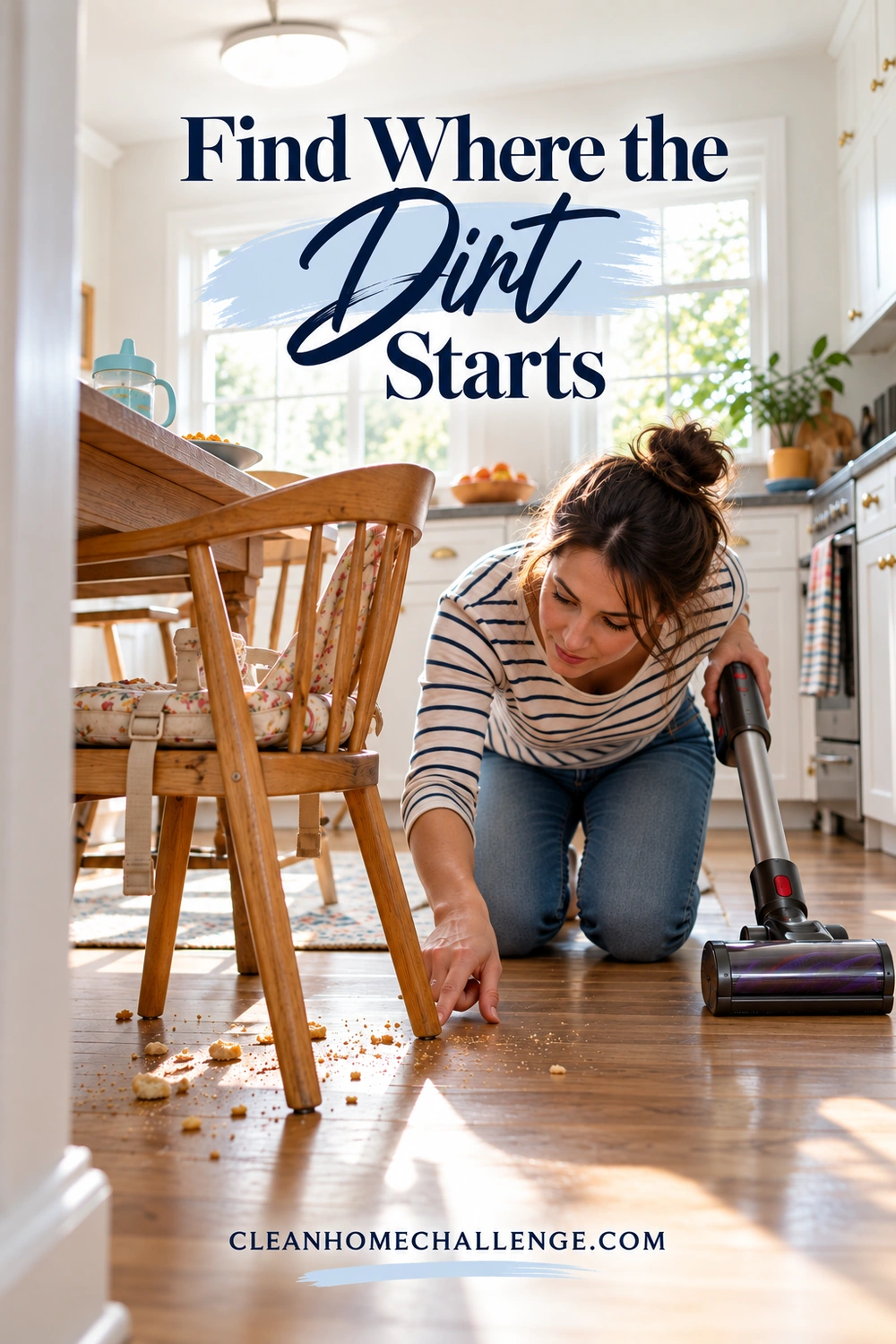
Look at the floor before cleaning it again. Is the new mess gritty, furry, crumbly, sticky, or simply a dull patch? Follow its location rather than treating every mark as the same problem. Sand by the back door needs a different response from crumbs under a high chair or haze left immediately after mopping.
Use these clues to choose your first action:
- Grit leading inward from a doorway: check the mat, footwear, and path from the outside.
- Crumbs beneath a particular chair: clean that small eating zone after use and keep a suitable tool nearby.
- Hair along edges or under furniture: inspect those collection points during the regular dry-cleaning pass.
- Paw marks after outdoor trips: set up a calm, practical arrival routine.
- Haze or tackiness as soon as the floor dries: check cleaner instructions, pad condition, and the floor manufacturer’s care advice before adding more product.
These are useful observations, not a diagnosis. A mark that remains in exactly the same place after a correct gentle clean could be wear, a finish problem, or staining. Repeated scrubbing will not necessarily repair it. Photograph the area and seek advice from the flooring supplier when you are unsure.
Indoor dust has several sources, so a mat cannot stop all of it. The EPA explains that settled household dust can include outdoor material, fibers, hair, and particles from normal indoor activities. Avoid interpreting every returning speck as proof that the last clean failed.
For two ordinary days, notice where the mess first appears and when. Change one thing, then compare that same spot after the same activity. This small check helps you avoid buying several organizers or cleaners without knowing what would help.
Catch Dirt at the Door
Start with the entrance people actually use, including the back door or garage access. An attractive mat by the front door does little for muddy shoes coming through the laundry. The EPA recommends exterior doormats and leaving shoes at the door to reduce tracked-in dirt and dust.
A practical arrangement is a suitable scraping mat outside and an absorbent mat inside, where the layout allows. Both should sit flat, stay stable, and leave doors and walking routes usable. Avoid adding a raised mat or loose rug that creates a trip hazard. Check accessibility needs before deciding where shoes and mats should go.
Check the floor manufacturer’s requirements for mat backing. For example, Shaw advises against latex or rubber-backed mats on its resilient vinyl because discoloration can occur. “Non-slip” does not automatically mean compatible with every finish. Keep the floor beneath a mat clean and dry, and inspect it when you lift the mat for cleaning.
Make wiping or changing footwear easy:
- Put the mat directly in the useful route without obstructing access.
- Place a low shoe tray or existing storage beside the route rather than across it.
- Provide a stable place to sit if someone needs one to change shoes.
- Agree on the simplest household habit: wipe carefully, change shoes, or use suitable indoor footwear.
- Clean the mat before its collected soil becomes a new source of track-in.
A shoes-off rule is optional. Some people need supportive footwear or assistance. Clean indoor shoes, better mat placement, and a quick entry vacuum can be more practical than a rule the household cannot follow.
Shake a mat only where its care directions permit and where you will not spread dust into the house or onto someone nearby. Vacuum or wash it as directed. Return it only when suitably dry; do not put a damp mat over a moisture-sensitive floor.

Contain Crumbs and Pet Mess
Choose one small collection zone rather than trying to prevent all mess. A dining chair, a feeding corner, or the door used after a dog walk is often a sensible starting point. Keep the arrangement easy to clean and clear of the main walking route.
After meals, collect loose food from the chair and table before cleaning below. Otherwise, crumbs can drop onto a floor you have just finished. Pick up large pieces by hand or with an appropriate tool, then vacuum dry debris if the machine permits it. Ordinary dry vacuums are not for liquid spills or wet food. Follow the machine’s instructions and deal with wet or greasy marks separately using the floor’s approved method.
For pets, keep an absorbent towel where it is accessible to the adult helping them. Gently clean and dry dirty paws as appropriate for the animal; the American Kennel Club emphasizes checking for trapped debris and drying paws thoroughly. Never use floor cleaner, disinfectant, or a household cleaning wipe on an animal. Ask a veterinarian about irritated paws or unfamiliar substances.
Check beneath feeding mats and water bowls as well as around them. Hidden moisture still needs attention. Use only a mat or tray compatible with the flooring and the animal’s needs, and clean it as directed. A protective mat is not permission to leave standing water underneath.
Make requests concrete for children and other household members. “Please put your outdoor shoes in this tray” is easier to follow than “Stop making the floors dirty.” Give someone a complete small job, such as clearing dry crumbs after a meal, with the right tool and a clear place to return it.
Do not trade safety for a clean-looking floor. Pet waste, broken glass, or an unidentified hazardous spill needs its own appropriate cleanup; keep people and animals away while you deal with it. Do not send a robot vacuum through it or spread it with the routine mop.

Remove Grit Before Mopping
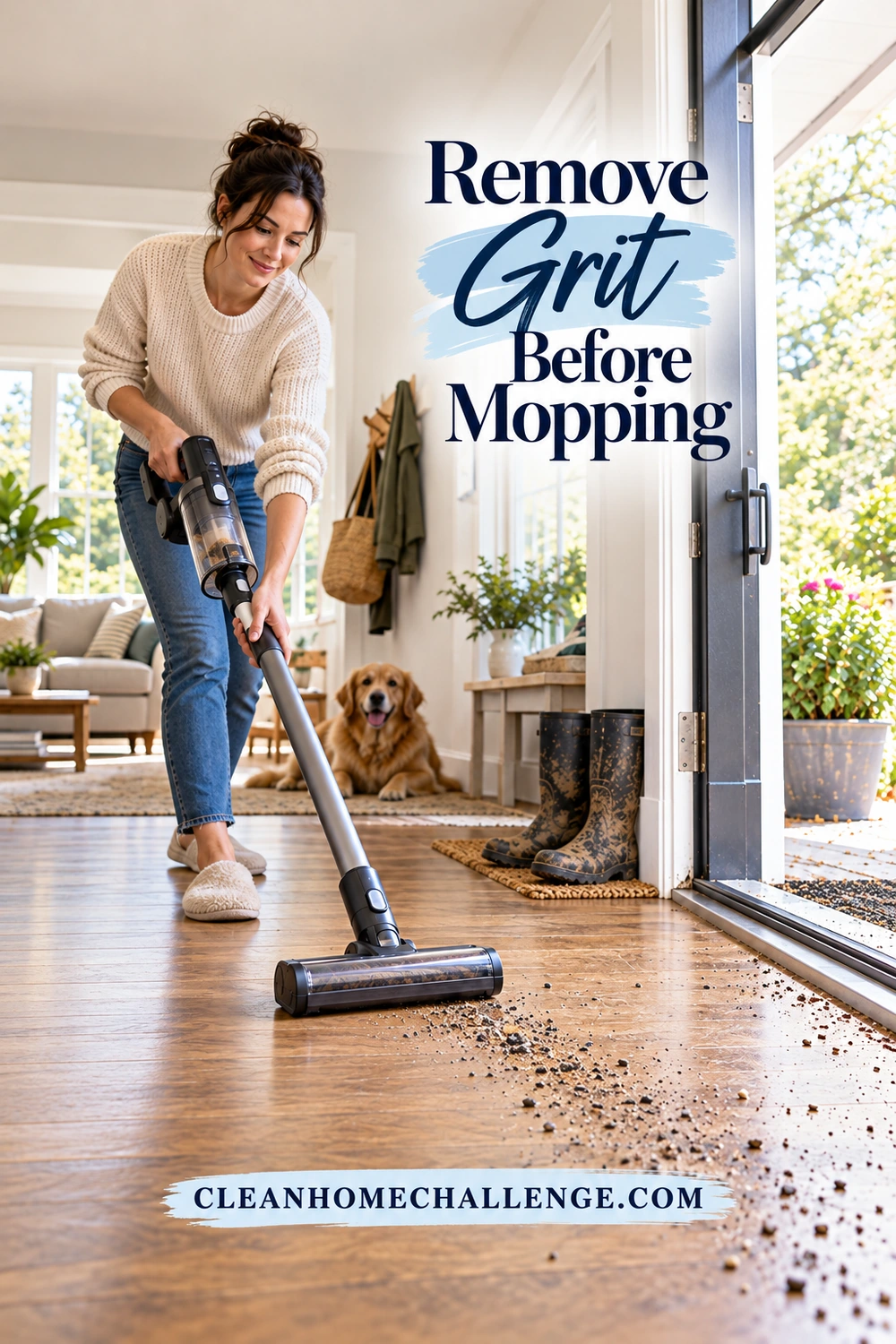
A quick dry-cleaning pass can be more useful than another whole-house mop. Start at the area that produces the most grit or crumbs, then cover the route along which they spread. Include accessible edges where hair collects, without turning a small reset into a furniture-moving project.
Select tools for the actual floor and machine. Use the vacuum setting or attachment approved for that surface. Check the head and wheels for lodged grit or tangled hair before moving across a delicate finish. A rotating brush suitable for a carpet is not automatically appropriate for every hard floor.
Bona’s timber-floor maintenance guidance recommends regular dry removal of surface dirt and sand and cautions against excessive water. Your own floor’s care requirements take priority, especially for unfinished wood, natural stone, older coatings, and damaged areas.
Use a simple work order:
- Pick up larger objects and clear the section you intend to clean.
- Remove loose dry debris with a suitable vacuum or dust mop.
- Treat remaining spots with the floor-approved product and method.
- Damp-clean only the areas that need it, using the permitted amount of moisture.
- Keep traffic away until the surface is dry and safe to walk on.
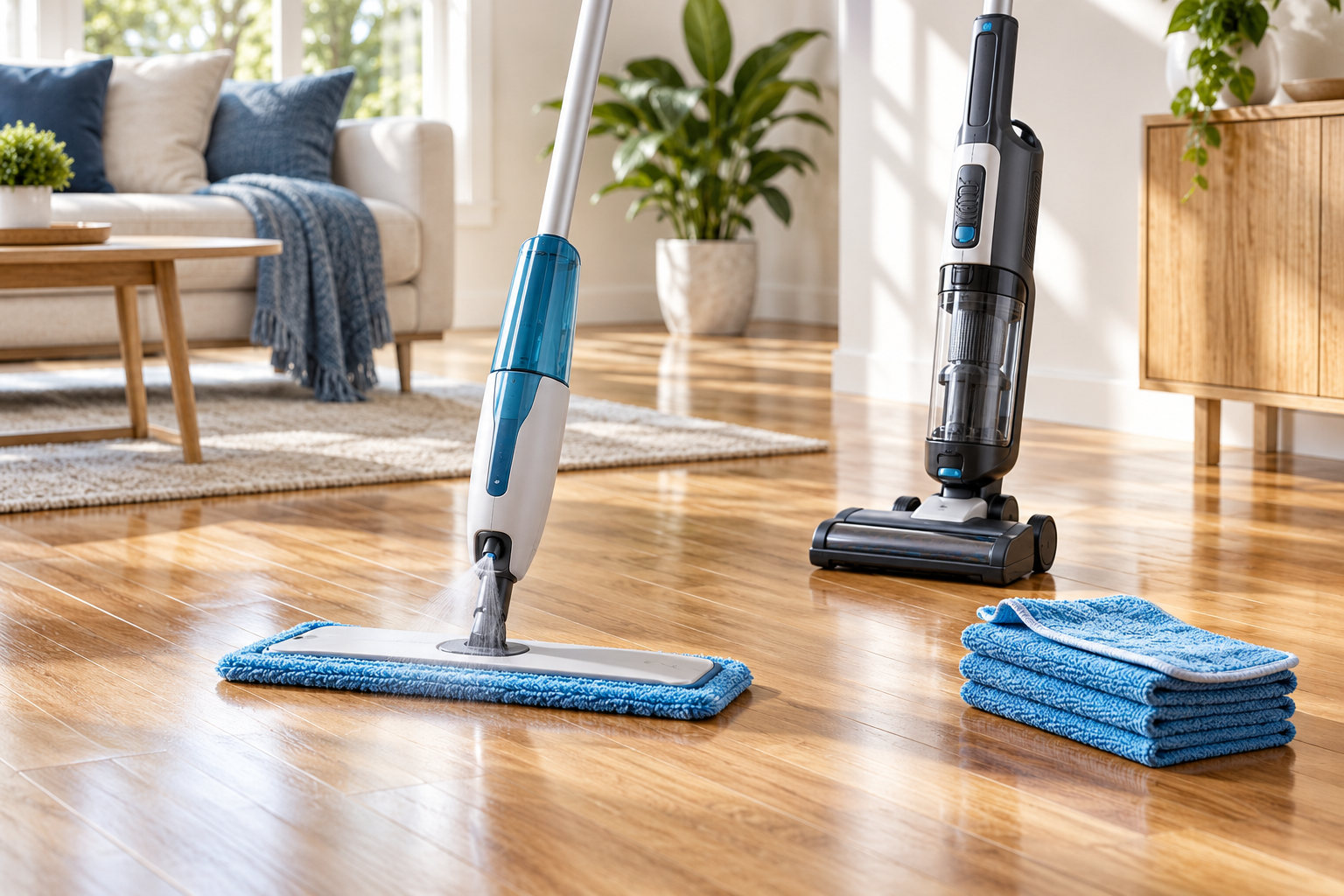
With a flat mop, use controlled pull-back passes to collect material toward yourself, repositioning on the dry area as needed. Do not repeatedly push dirty moisture across the room. Work toward your exit and change or clean the pad when it becomes soiled. Never apply this technique with more moisture than the floor allows.
Do not assume steam is a shortcut for every surface. Shaw’s resilient-floor guidance, for example, advises against steam. Avoid abrasive pads or a stronger homemade mixture simply because a mark is persistent. For a full material-specific routine, use our guides to vinyl plank care and laminate cleaning.
Check for Residue and Tool Buildup
When a floor looks hazy or feels tacky immediately after cleaning, pause before repeating the same method. Check whether the cleaner is approved for the floor, whether it is ready to use or concentrated, and whether you measured it as instructed. Do not dilute a ready-to-use product unless its directions permit it.
Bona notes that overdosing its cleaner can cause excessive foaming and streaking. That is a reason to follow the specific product directions, not a universal dilution recipe. More cleaner is not a reliable solution to a floor that seems to get dirty quickly.
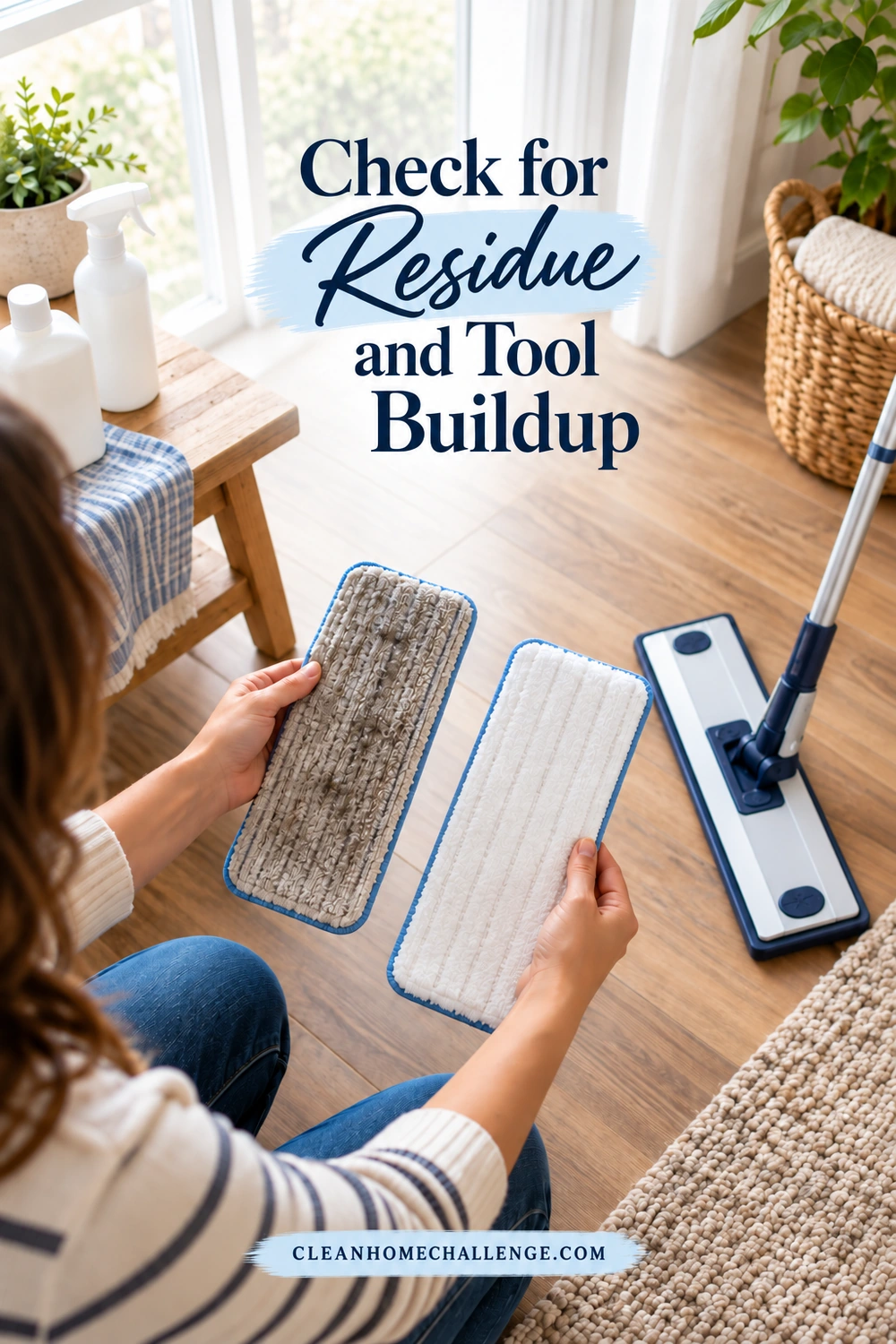
Inspect the pad, bucket, and vacuum as part of the same check. A pad loaded with old dirt can redistribute it. A full dust container, blocked air path, or tangled head may reduce how well a machine collects debris. Switch equipment off and disconnect it as the manual directs before maintenance. Keep fingers away from moving parts and let washed components dry as required before refitting.
Wash reusable mop pads according to their own care labels. Do not assume all pads tolerate the same temperature or laundry additive. Bona’s guidance for its pads excludes fabric conditioner; check your pad’s instructions rather than applying that rule blindly to every textile. Store clean, dry equipment where you can use it easily and where children cannot reach cleaning chemicals.
If residue remains, check the flooring manufacturer’s remedy. Some floors permit a carefully controlled clean-water pass; others have specific product and moisture restrictions. Do not flood the floor to rinse it, and do not add vinegar, bleach, dish soap, or a stripping product without verified compatibility. Never mix cleaning products.
A dull or worn finish may require professional advice rather than more cleaning. Our sticky-residue mopping guide covers that separate troubleshooting job in more depth. This prevention routine works best once the existing surface and equipment are in a suitable condition.
Keep a Small Floor Reset
Build the repeat job around the household’s busiest areas. A short pass after dinner or when everyone comes home may be easier than a fixed cleaning time that interrupts the day. Start with one entry and one eating zone; expand only if it helps.
Try this flexible plan:
- After a spill: make the area safe, blot promptly, and follow the surface-specific cleanup.
- After a messy meal or outdoor trip: deal with the small source zone before debris travels.
- During a quick daily check: remove obvious grit and hair from the main route if needed.
- On the weekly floor day: clean a wider area, inspect mats, check beneath them, and maintain the equipment.
The timing is a starting point, not a hygiene guarantee. Household traffic, weather, pets, and floor materials change what is useful. A quieter room may need less attention than the kitchen doorway. You do not have to clean a dry, usable room simply because another area needs a spot clean.
Copy this floor-prevention checklist
- Identify the first place the dirt appears.
- Check the most-used entrance, mat condition, and compatible backing.
- Make footwear storage accessible without blocking the route.
- Remove crumbs from the chair and table before the floor.
- Deal with pet arrival mess and check below water bowls.
- Remove loose grit before damp cleaning.
- Follow the floor, cleaner, and equipment instructions.
- Finish with a clean pad, a dry safe surface, and tools ready for next time.
A two-day observation note
Copy these lines into your phone or onto paper:
Area: __________
What appears and after which activity: __________
One change to try: __________
Tool or care instruction to check: __________
What improved or still needs attention: __________
If you have only two minutes, remove the grit at the busiest door and clean one obvious spot using the right method. Stop there. A practical floor routine reduces the mess that spreads; it does not need to erase every sign of family life. For help building that wider routine, the Cleaners Clubhouse offers floor-focused guidance, printables, and monthly challenges.
CLEANERS CLUBHOUSE
Stay on Top of Floors Without Cleaning All Day
Give your floors a focused Friday reset instead of chasing every mark all week. The Cleaners Clubhouse helps you build a realistic routine with practical guidance, printables and monthly challenges.