
THIS POST MAY CONTAIN AFFILIATE LINKS. PLEASE READ MY DISCLOSURE FOR MORE INFO.
You plan to wipe the kitchen counter. Then you notice crumbs under the toaster, fingerprints on the cabinets, and a drawer that needs sorting. Before long, one small job has become a whole-kitchen project. With dinner to make and everyone needing something, you put the cloth down and promise to do it properly another day.
Cleaning perfectionism can make ordinary housework feel surprisingly heavy. You might struggle to begin, keep adding tasks once you start, or overlook everything you finished because one corner still looks messy.
A more manageable approach starts with deciding what each job needs to achieve. Keep the hygiene and safety steps. Give everyday tidying a clear endpoint. Let decorative details wait when your time or energy is needed elsewhere.
You can begin today with three decisions: choose one useful task, describe what finished looks like, and decide what belongs in a later session. That gives you a practical way to build a realistic clean home without waiting for an uninterrupted afternoon.
These are household-planning suggestions. If cleaning involves intense distress, intrusive fears, or actions you feel unable to control, the support guidance at the end is important; a cleaning checklist cannot provide treatment.
Disclosure: This post may contain affiliate links. As an Amazon Associate, Clean Home Challenge earns from qualifying purchases. If you make a purchase through these links, we may earn a small commission at no extra cost to you. This helps us keep creating practical cleaning tips, routines and resources for busy families! 🧽
Spot the All-or-Nothing Cleaning Loop
Wanting a pleasant home is understandable. The difficulty comes when the rules around cleaning become so demanding that daily life has to bend around them. The Centre for Clinical Interventions' perfectionism resources explain that rigidly high standards can become costly, and that concern about doing something perfectly can contribute to putting it off.
Around the house, that might sound like:
- “There is no point starting the bathroom unless I can do everything.”
- “The laundry is unfinished until every item is folded exactly right.”
- “I missed Monday, so this week's schedule is ruined.”
- “I cannot invite anyone over while that room looks like this.”
- “If I have time to sit down, I have time to find another chore.”
These examples are prompts for reflection, not a test or diagnosis. Notice which rules make a task larger than it needs to be.
An all-or-nothing cleaning loop often has a recognizable household sequence: a very big plan, difficulty starting, a growing backlog, and an exhausting catch-up session. The catch-up can make the next cleaning session seem just as daunting. You may also find yourself polishing one area while a more useful task waits elsewhere.
Look for the point where the job expands
Think about one recent session. What did you originally mean to do? What extra jobs joined it? Which of those additions genuinely needed attention then?
For example, putting groceries away might reveal a sticky spill that needs cleaning and a shelf arrangement you would like to change. Handle the spill. Put the groceries away. Save rearranging the shelf for a separate time if it still matters later.
Try replacing one demanding instruction with a specific household decision:
- “Clean the bedroom properly” becomes “Put dirty clothes in the hamper and clear the walking space.”
- “Catch up on everything” becomes “Wash the clothes we need next and plan the remaining loads.”
- “Make the living room guest-ready” becomes “Clear somewhere to sit and somewhere to put a drink.”
Choose wording that describes an action you can actually finish. You do not need to redesign your entire approach before washing today's dishes. Start by noticing one rule that keeps turning a manageable job into a much bigger one.

Set a Good-Enough Standard for Each Room
“Good enough housework” can sound vague until you define it. Make your standard concrete enough that someone else in the household could understand it too.
Separate the result you need today from the occasional maintenance the room still requires. A small daily reset does not replace cleaning the shower, washing bedding, or dealing with a spill. It simply prevents every visit to a room from becoming a deep clean.
Here are examples to adapt to your home, its occupants, and any specific care needs:
- Kitchen: Food is stored appropriately, used dishes are being dealt with, and the preparation area is cleaned for its next use. The pantry labels can stay mismatched.
- Bathroom: The sink and toilet receive appropriate cleaning, spills are addressed, and essentials are available. Towels do not need to hang at identical heights.
- Bedroom: The route through the room is clear, dirty clothes have a place, and the bed is ready to use. A decorative cushion arrangement is optional.
- Living area: People can sit down, move around safely, and find the things they use. A book beside the sofa can remain there.
- Laundry: Clean clothes are fully dry and stored where their owners can find them. Everyday towels do not need perfectly aligned edges.
Write one finish line before you begin
Use this sentence: “This job is finished when ______.”
For a laundry basket, that could be: “This basket is finished when the dry clothes are sorted into each person's storage space.” You can hang crease-prone clothes and use a simple fold for everything else, according to garment care needs. Sorting an entire closet belongs on another list.
For a kitchen table, the finish line might be: “The dishes are removed, food mess is cleaned up, and the table is ready for breakfast.” It does not automatically include polishing the chairs or reorganizing the nearby shelves.
There is room for personal preference here. If straightening the bed makes your morning nicer, keep it. If carefully folded towels are something you genuinely enjoy, enjoy them when you have capacity. The useful question is whether a detail earns its place in today's workload.
Avoid turning these examples into another strict checklist. Try one room first. After a few ordinary days, ask whether the standard gives you a usable space and fits the time available. Adjust the task or share it before deciding that you need to work harder.

Separate Hygiene Needs From Appearance
Relaxing an appearance standard should never mean skipping a necessary hygiene step. A cushion facing the wrong way and a counter contaminated by raw chicken need different responses.
The CDC's household cleaning guidance says regular cleaning is sufficient in most situations. It also recommends disinfecting when someone is sick or has a weakened immune system. High-touch surfaces need regular cleaning, with other cleaning adjusted to visible dirt and household needs.
Keep these terms separate:
- Cleaning removes dirt and other material from a surface.
- Sanitizing reduces germs to a specified safe level.
- Disinfecting kills germs using an appropriate product and method.
The exact product instructions matter. The EPA explains the differences between cleaning, sanitizing, and disinfecting products, including the need to follow the labeled contact time. A disinfectant may need the surface to stay wet for several minutes; a tidying timer does not shorten that requirement.
Food-contact surfaces contaminated by raw meat, poultry, or their juices need cleaning followed by appropriate sanitizing, as described in the CDC guidance. Follow the product's food-contact directions, including any required rinse. Illness cleanup, infant feeding equipment, and household medical needs may also require specific instructions beyond a general routine.
Use products compatible with the surface. Never mix cleaners. Follow label directions for ventilation and protective equipment, and keep chemicals away from children and pets. The EPA's disinfectant safety advice is a useful reference.
Use three practical priorities
Deal with a present safety or hygiene need. Examples include a slippery spill, food contamination, or something blocking a doorway. Follow the relevant safe method rather than rushing.
Maintain the room so it works. Wash dishes, manage laundry, clean bathroom fixtures, and remove ordinary dirt as the household needs them. Spread these jobs through a realistic routine.
Choose appearance extras when you want them. Matching containers, styled shelves, and perfectly straight cushions can wait. They do not need to become conditions for resting or using the room.
A dated finish or worn piece of furniture may still look aged after proper cleaning. Avoid escalating to stronger products or repeated scrubbing just to make it look new. Check the material's care guidance and recognize when the remaining issue belongs to maintenance or repair.

Make Small Cleaning Jobs Easy to Finish
“Do less” is easier to use when you know exactly what to leave out. Give one ordinary job a small boundary before you get your supplies.
Choose an action, an area, and an endpoint
Try: “Put the shoes in the entryway basket until the walking space is clear.” That gives you a verb, a location, and a visible result. “Sort the house out” gives you none of those things.
For a shelf tidy, work on one shelf without emptying the entire bookcase. For laundry, put away the clean items in one basket without starting a wardrobe clear-out. For dishes, finish the washing task without adding a cupboard reorganization.
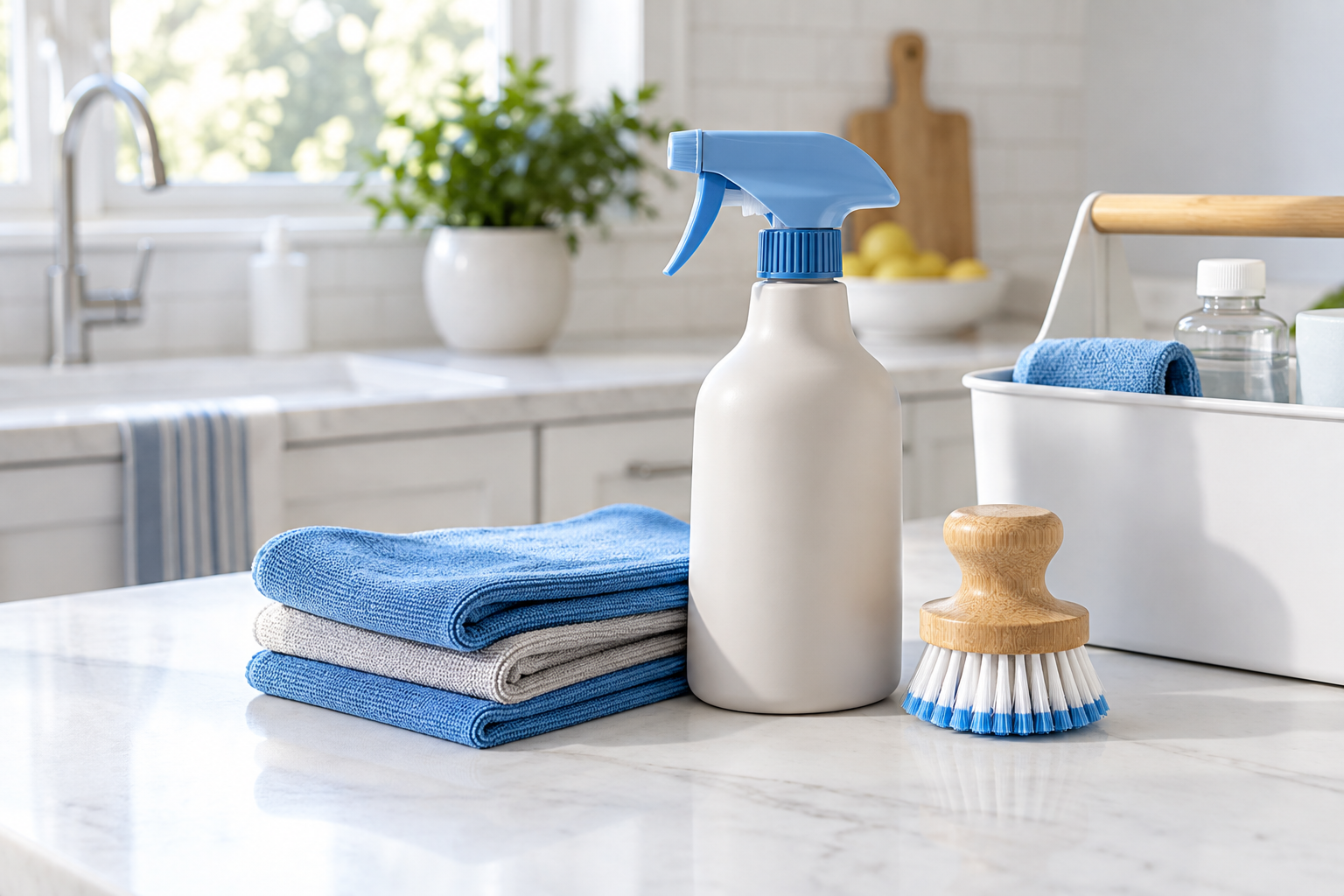
Gather only the equipment that job needs. An entryway pickup may need no products at all. A surface-cleaning job needs a clean cloth and a product or method suited to that material. You can start with what you already own; a matching caddy is not a prerequisite.
When another task catches your attention, decide whether it is urgent. Address a genuine hazard. Otherwise, make a brief note if you are likely to forget it, then return to the job you chose. Keep that note short enough that maintaining it does not become another project.
Close the job instead of extending it
After you reach the endpoint, return the supplies to safe storage and put used cloths where you normally manage them for washing. Leave the space safe to use. This little closeout helps a finished task stay finished rather than leaving equipment scattered around.
You can use an optional time allowance for ordinary tidying if that makes planning easier. Allow enough time for cleanup, work at a comfortable pace, and never abandon a chemical process, slippery floor, or other hazard because an alarm sounds. Our five-minute cleaning rule for low-motivation days offers more examples of small starting points.
Time boundaries here are planning aids for everyday housework. If stopping brings intense anxiety or you feel driven to repeat cleaning rituals, seek professional support rather than trying to use a timer as treatment.
On a day with extra energy, you can choose a second job. Make that a fresh decision after the first is closed. Yesterday's optional extra does not have to become tomorrow's minimum. A useful routine should still fit days when you have less to give.

Build a Minimum Routine for Busy Days
A long checklist can make every unfinished box feel like a problem. Build a smaller version you can use when work, appointments, parenting, or low energy have already filled the day.
Start with the tasks that protect safety and keep the next part of family life workable. Ask what is genuinely needed before the next meal, the next trip through the room, or tomorrow morning. If you cannot manage essential tasks, asking another person for practical help is part of the plan.
A flexible minimum to adapt
- Handle food and immediate mess. Store food appropriately, manage food waste, and clean contamination or spills using the right method.
- Make the next meal possible. Deal with dishes and the preparation area you need. Leave cupboard organizing for another session.
- Keep routes usable. Return the shoes, bags, or toys that block access to their usual places.
- Meet the next clothing need. Complete the necessary washing and drying, or put away the clean items already waiting. Choose what the household actually needs.
- Address the bathroom's current needs. Clean soiling promptly, check essentials, and keep ordinary bathroom cleaning on the wider schedule.
You might share these jobs, spread them through the day, or simplify further around your circumstances. The list is a starting point, and it does not mean every household should do the same amount daily.
On more typical days, Clean Home Challenge's familiar habits can provide a rhythm: make the bed, pick up, wipe appropriate surfaces, complete a laundry load when needed, and spot-clean floors. Put each action where it naturally fits your household. Our guide to building daily cleaning habits can help you choose a simple starting point.
For larger tasks, the CHC weekly areas give each room another turn: Monday kitchen, Tuesday bathrooms, Wednesday bedrooms, Thursday living areas, Friday floors, and Saturday laundry catch-up. Choose the relevant jobs within that area rather than assuming the whole room needs a deep clean every week.
If you miss a day, reassess the actual needs. Address anything urgent, move one necessary maintenance task if needed, and continue with the next useful step. Avoid automatically squeezing every missed chore into tonight.
For example, missing bedroom day might mean changing needed bedding tomorrow and postponing drawer sorting. It does not require adding a full bedroom overhaul to floor day. Keep a small place for occasional maintenance so “later” has a plan without taking over the daily routine.

Share the Work Without Rechecking Everything
A household standard is much easier to follow when everyone knows what it means. “Please clean up” can mean dishes to one person, floors to another, and a whole-room reset to someone else.
Have the conversation at a calm time. Pick one recurring job and agree on its owner, its usual timing, and the result you need. For example: “After dinner, the table needs to be cleared and cleaned so it is ready for breakfast. Who can own that this week?”
Share the noticing and planning as well as the physical work. If one adult always has to spot the task, collect the supplies, explain it, and check afterward, they are still carrying much of the responsibility.
Agree on the essential result
An adult handling laundry could own the process from sorting through washing, complete drying, and putting it away. They can follow the care labels and household storage system without copying someone else's exact folding style.
For a child learning to put toys away, the result might be blocks in the block bin and the walking space clear. Show the task, keep it appropriate to their abilities, and provide the supervision they need. Adults should handle chemicals, sharp objects, and other hazards. The EPA advises that children should not apply disinfectants, including disinfectant wipes.
Once a job is safely completed to the agreed standard, avoid quietly doing it all again for appearance alone. Before correcting something, ask whether a necessary step was missed or whether you simply prefer a different arrangement. A towel folded differently can still be ready to use.
When something important is missed, describe the specific step: “These clothes are still damp; they need to finish drying before they go away.” That is clearer than saying the laundry was done badly.
Flexibility should also be fair. Shared standards do not mean one person must accept unhygienic results or take on everyone else's unfinished responsibilities. They mean discussing the real requirement and dividing the work in a way the household can sustain.
If you live alone, the same idea applies to your systems. Give frequently used items obvious homes and make storage easy to use. An open basket that you use consistently may suit your life better than a complicated sorting system that needs constant adjustment. Choose the arrangement that makes the next ordinary day easier.

Reset Kindly and Know When to Ask for Support
There will be untidy days even with a workable routine. Visitors arrive, meals make mess, laundry keeps coming, and people get tired. A home being used will need repeated care.
When a day goes off plan, try this short reset:
- Describe what needs attention without judging yourself. “There are dishes waiting and clothes on the chair.”
- Choose the next useful action. “I will wash what we need for breakfast.”
- Name a realistic endpoint. “The dishes are clean and put where they can dry.”
- Decide what happens later. “The clothes can go into their places tomorrow.”
If tomorrow has no room for that task, adjust the plan honestly or ask for help. Writing down an impossible promise can recreate the pressure you were trying to reduce.
Notice practical progress at the end of the week. Could you find the clothes you needed? Was cooking easier? Did shared jobs get done without one person carrying all the reminders? Those answers can help you judge whether the routine serves your household.
You can also be selective about cleaning content. Save instructions that help you solve an actual problem. Step away from images or videos that leave you adding cosmetic requirements you did not want before. Your rooms do not have to resemble someone else's photo to work well for the people living in them.
Get help when cleaning is taking over
If worries or repeated cleaning interfere with sleep, relationships, work, or everyday activities, speak with a primary care clinician or a qualified mental health professional. You can describe what happens and how much of your day it takes without choosing a diagnosis yourself.
OCD is a mental health condition involving obsessions, compulsions, or both; enjoying tidiness alone does not establish it. The National Institute of Mental Health's OCD information explains that symptoms can be time-consuming and distressing, and that treatment can help. Household scheduling tips are not a substitute for that care.
For everyday cleaning perfectionism, keep today's next step small and clear: meet the genuine need, finish the job you selected, and leave optional details for another time. A home can be cared for a little at a time, with room left in the day for the people it belongs to.


CLEANERS CLUBHOUSE
Turn Small Daily Habits Into a Cleaner Home
Make cleaning feel more achievable by sharing simple routines and building habits that stick. The Cleaners Clubhouse includes the 7-Day Daily Habits Bootcamp, printable support and motivating monthly challenges.