

THIS POST MAY CONTAIN AFFILIATE LINKS. PLEASE READ MY DISCLOSURE FOR MORE INFO.
A muddy paw lands on the couch, or a child climbs onto a chair before the shoes come off. It is tempting to reach for a wet cloth and rub until the brown patch disappears. With upholstery, that can spread fine soil farther into the fabric and leave you with a larger damp mark.
To remove mud stains from fabric upholstery, first check the furniture's care instructions, gently lift any loose clumps, let ordinary remaining mud dry, and vacuum away the loose soil with an appropriate attachment. Treat a remaining stain only with a method approved for that fabric. Keep moisture controlled and let the seat dry fully before using it again.
This guide is for ordinary tracked-in soil on fabric-covered furniture. Leather, suede, floodwater, sewage, pesticide spills, and unidentified powders need different advice. If the mess may contain something hazardous, keep children and pets away and get substance-specific guidance rather than brushing or vacuuming it.
Disclosure: This post may contain affiliate links. As an Amazon Associate, Clean Home Challenge earns from qualifying purchases. If you make a purchase through these links, we may earn a small commission at no extra cost to you. This helps us keep creating practical cleaning tips, routines and resources for busy families! 🧽
Check the Care Code Before You Start
Find the sewn-in care tag under a loose cushion, along the furniture base, or in the manufacturer's paperwork. You do not need to turn a heavy sofa over by yourself. Photograph the label and look up the model's care instructions if the tag is difficult to reach.
A fabric that feels like cotton may contain other fibers, coatings, backing, or dyes that change how it responds to water. Color and texture are not reliable cleaning instructions. A zipped cushion cover is not proof that it can go in the washing machine.
Use this quick decision guide, then follow any more specific instructions supplied with your furniture:
| Care code | What it usually allows | Your next decision |
|---|---|---|
| W | Specified water-based upholstery shampoo or foam cleaner | Check the approved product and application method; avoid soaking |
| S | Specified water-free upholstery solvent | Do not add water; use a qualified cleaner if unsure about safe solvent use |
| WS, W-S, or SW | Certain water-based or solvent methods | Confirm which method suits your exact fabric and stain |
| X | Vacuuming or light brushing only | Do not apply liquid or foam; seek advice about a remaining stain |
| Missing or unreadable | No confirmed liquid treatment | Ask the maker or an upholstery professional before spot-cleaning |
La-Z-Boy's upholstery care instructions explain the importance of the care tag and avoiding saturation. Their W instructions also show why a water-cleanable code does not automatically authorize steam cleaning or hot-water extraction. Follow the instructions for your own furniture rather than copying another sofa's treatment.
Gather only what the permitted method needs: clean white absorbent cloths, a spoon or other smooth blunt edge for loose clumps, a dry vacuum with a clean upholstery attachment, and the specified upholstery cleaner if one is allowed. A clean tray or dustpan helps catch lifted soil. Use a brush only when the fabric maker permits it; textured, looped, delicate, or loosely woven fabric can snag.
Keep cleaning products in their original containers. Follow the product label for ventilation, gloves, application, and safe storage. Children can help keep shoes by the door, but an adult should choose and handle cleaning chemicals.
If you only have a few minutes
Stop anyone sitting on the patch, lift the loose bulk without pressing down, and locate the care label. Leave the remaining ordinary soil undisturbed while you arrange the next step. That is useful progress; you do not have to finish the entire job during a busy afternoon.

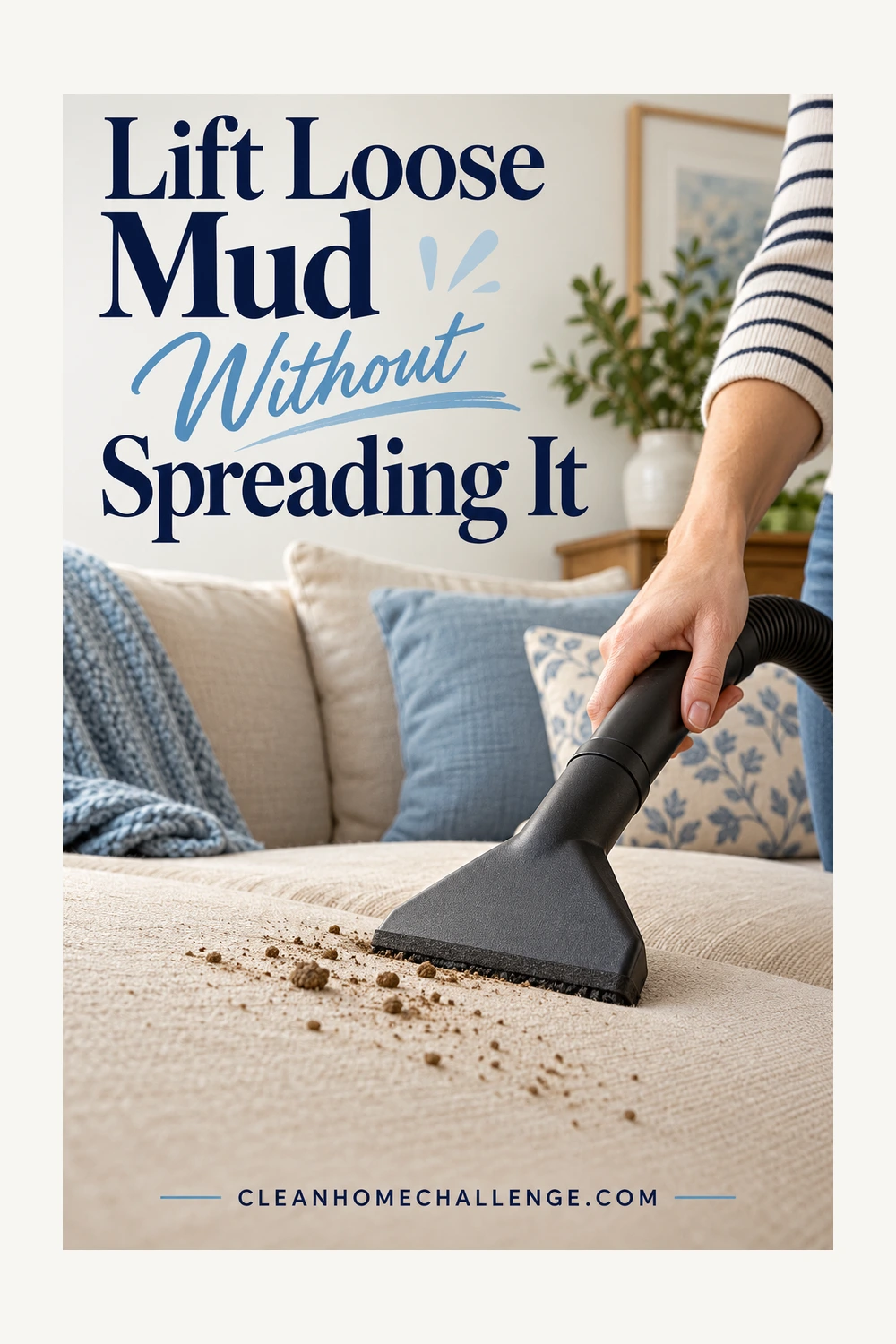
Lift Loose Mud Without Spreading It
Start by keeping the mess contained. Move clean throws and cushions out of the way without dragging them across the mud. Place a tray close to the seat so you can lift loose material straight into it instead of carrying it over the rug.
For a fresh lump, slide the edge of a spoon under material that lifts easily. Work gently and stop when removing more would mean scraping the weave. Avoid grinding the mud with the back of the spoon. Do not scrape a crust off delicate fabric or pull at dried dirt caught around loops.
If free liquid is pooling and the furniture instructions permit blotting, lift it with a dry white cloth without rubbing. Do not add water at this stage. For the ordinary muddy residue left on the surface, allow it to dry naturally so loose particles can be removed before deciding whether a stain remains. This dry-first sequence is an editorial application of the principle of removing loose soil before compatible spot treatment; it is not a reason to leave a deeply soaked cushion unattended.
Once the surface soil is dry and crumbly:
- Check that the vacuum and attachment are clean and suitable for the fabric. Use the maker's recommended setting; do not use a rotating beater brush on the seat.
- Lift loose crumbs gently with the upholstery attachment. Let suction do the work instead of pushing the nozzle into the weave.
- Make another light pass over the nearby seam where grit may have collected. Support loose fabric so suction does not pull it sharply.
- Inspect in daylight before reaching for cleaner. If the mud is gone and the fabric looks normal, stop here.
Do not use an ordinary dry vacuum on wet mud or a damp seat. If the cushion is soaked, the mud is strongly odorous, or the mess came from floodwater or an unknown source, pause the routine and ask for appropriate help.
Sunbrella's upholstery guidance emphasizes removing loose debris and avoiding rubbing spills. Its specific liquid-cleaning method belongs to Sunbrella fabric; it is not a general recipe for every couch.
Why rubbing makes the job harder
Wet soil can smear across a wider patch when pushed with a cloth. Repeated hard brushing can also change a fabric's surface, so a cleaned area may still look different afterward. The aim is to remove loose material with the least disturbance the furniture's instructions allow, then assess what actually remains.
Treat the Remaining Mark Only as Allowed
After dry soil removal, a brown tint may remain between the fibers. Choose one approved upholstery treatment, check its instructions, and test it on a hidden but comparable area. Let the test dry before judging color, texture, stiffness, and any ring. If color transfers from the fabric or the texture changes, stop.
For a fabric whose instructions permit the selected water-based spot treatment, use this controlled sequence:
- Apply the product exactly as directed. Some cleaners go onto a cloth, others are applied as foam, and some systems have their own removal method. Do not improvise a dilution or soak time.
- Gently blot from the outside toward the center if that matches the furniture's directions. Use a clean section of white cloth as soil transfers. Avoid circular scrubbing.
- Keep the fabric only as damp as the approved method requires. Do not pour cleaner onto the seat or repeatedly wet the same spot because it still looks brown while damp.
- Remove product residue using the specified method. If a light water rinse is permitted, use a well-wrung cloth and gentle blotting rather than flooding the cushion.
- Blot excess moisture with a fresh dry cloth. Then leave the area to dry before deciding whether another labeled treatment is appropriate.
Ashley's cleaning-code guidance distinguishes water-based, solvent, and dry-only care and warns against over-wetting. A washable throw on top of a sofa does not change the care requirements of the upholstery beneath it.
For S-coded furniture, do not substitute rubbing alcohol, nail-polish remover, a laundry stain remover, or a homemade mix for the specified water-free upholstery product. Solvent use has product-specific ventilation and fire precautions. If you cannot confirm the correct product and safe method, have a cleaner experienced with that fabric handle the remaining mark.
For X-coded fabric, stop after the permitted dry-care step. Liquid and foam treatments remain unsuitable even if someone online says that a tiny amount worked on their sofa.
Avoid turning a spot into a water ring
Some furniture needs treatment across a whole panel to prevent visible edges. Sunbrella, for example, recommends seam-to-seam cleaning for its upholstered pieces. That does not authorize soaking a different sofa from seam to seam. If your instructions call for whole-panel treatment and you cannot control wetting or drying, a professional clean may be the more practical choice.
Skip bleach, dishwashing recipes, vinegar, baking soda pastes, laundry detergent, and steam unless your exact upholstery instructions explicitly support the named treatment. Do not mix cleaning products or put another cleaner over unknown residue. A water-based code alone does not approve a carpet extractor.
If clay or brown discoloration remains
Mud varies. Some soil leaves a more persistent tint than loose garden dirt. If the dry result has not improved after an appropriate labeled treatment, stop adding stronger products. Photograph the area, record what you used, and ask the furniture maker or cleaner what is suitable. A changed pile, dye loss, or worn patch needs assessment rather than more stain remover.

Dry, Recheck, and Prevent the Next Muddy Mark
Keep the seat out of use until the treated area is fully dry, including any cushion material that became damp. Allow normal room airflow and follow the furniture's drying instructions. Avoid direct heaters, a hot hair dryer, and improvised high heat. Do not put a throw over the damp patch to make the room look finished.
There is no useful universal drying time: fabric, padding, humidity, ventilation, and the amount of moisture all matter. If the cushion feels deeply wet, develops an odor, or remains damp unexpectedly, get advice rather than repeating the treatment. Keep children and pets off the seat while it dries.
When dry, check in good light. Compare the treated area with nearby fabric, looking for leftover soil, a visible edge, dye change, or altered texture. Brush the pile only if the furniture instructions call for it. If the result is satisfactory, put the cushions back and finish; there is no benefit in another round of cleaner just to be thorough.
Keep a simple sofa care record
Download the free Sofa Mud-Care Card (PDF). It gives you space to record the furniture model, care code, approved cleaner, hidden-test result, and the dry result. Keep a photo of the tag on your phone so another adult can find the same instructions next time.
The card is a decision aid, not a substitute for your furniture label. If you pass the job to a cleaner, share the product name, amount or dilution used, treatment date, and what changed. That saves everyone from guessing about residue already in the fabric.
Make the next muddy entrance easier
Keep a washable mat and shoe tray near the door. Have a suitable paw towel within reach and clean muddy paws before pets jump onto furniture. Washable throws can help in busy family rooms, provided their own care instructions and the sofa's requirements are followed. Remove and clean a muddy throw promptly instead of shaking it over the couch.
Add a quick upholstery vacuum to your normal living-area reset when the fabric permits it. If a whole room feels overdue, our guide to how often to clean household spaces can help you choose one manageable next task. For marks on other materials, use the household stain guide to start with the right surface rather than transferring this sofa method to everything.
For ongoing step-by-step cleaning support, you can explore Cleaners Clubhouse. The free care card stands on its own; the membership is an optional next step if a routine and practical printables would help your household.
The useful finish is a dry, usable seat and a clearer plan for next time. Start with the tag, remove the loose soil, and only treat what remains with a method that belongs to your furniture.

CLEANERS CLUBHOUSE
Get Step-by-Step Help With Tricky Cleaning Jobs
When a stain, smell or stubborn cleaning problem has you stuck, a clear plan makes all the difference. The Cleaners Clubhouse gives you practical guidance, useful printables and routines you can actually follow.