THIS POST MAY CONTAIN AFFILIATE LINKS. PLEASE READ MY DISCLOSURE FOR MORE INFO.
The best spray mop for your home is one that suits your floor’s care instructions, feels comfortable to use, controls moisture well, and has replacement pads you can actually find. A refillable bottle and washable microfiber pads are useful features, but they only help when the whole system works with your floors and your routine.
A spray mop can make the small jobs easier: sticky footprints near the refrigerator, a few marks by the back door, or a quick kitchen clean after dinner. Most manual models carry clean solution in a bottle and collect soil on a pad. That pad still needs changing as it gets dirty.
This guide compares the features worth checking before you buy, with examples from current manufacturer information. It is a research-based buying guide, rather than a hands-on product test. Start with your floors, then use the practical checks below to narrow your shortlist.
Disclosure: This post may contain affiliate links. As an Amazon Associate, Clean Home Challenge earns from qualifying purchases. If you make a purchase through these links, we may earn a small commission at no extra cost to you. This helps us keep creating practical cleaning tips, routines and resources for busy families! 🧽
Match the Spray Mop to Your Floors
Before looking at bottle size or spare-pad bundles, find your flooring care guide. Check the exact material and finish, especially if your home has several floor types. Wood-look flooring could be hardwood, laminate, or luxury vinyl, and similar appearances do not mean identical care needs.
You are checking three things together: the floor’s approved cleaning method, the cleaner’s surface directions, and the mop manufacturer’s solution restrictions. A bottle advertised as refillable does not automatically accept every cleaner that is safe for your floor.
Hardwood and engineered wood
For wood, the finish matters as much as the material underneath it. Follow the flooring or finish manufacturer’s instructions, particularly for oiled, waxed, newly refinished, or worn surfaces. If you cannot identify the finish, ask the installer or flooring supplier before choosing a wet-cleaning method.
The National Wood Flooring Association recommends a cleaner made for the floor’s finish and warns against wet mops and steam mops. Look for controlled, light application when your care guide permits it, and avoid leaving puddles or a wet pad sitting on the wood. Read the NWFA’s wood-floor maintenance guidance.
Laminate and luxury vinyl
A fine spray is helpful only if you use it sparingly. Repeated trigger pulls can still put too much liquid on a floor. Shaw’s laminate instructions recommend flat microfiber pads and suitable neutral-pH cleaner, while warning against excessive water and standing cleaning solution. See Shaw’s laminate maintenance instructions.
Luxury vinyl needs its own check. Shaw, for example, recommends neutral-pH cleaning and advises against abrasive, ammonia-based, and vinegar-based products. That is a good reason to check the actual floor guide before following a general homemade-cleaner recipe. See Shaw’s luxury-vinyl care advice.
Tile, grout, and natural stone
For ceramic or porcelain tile, check both the tile finish and grout or sealer instructions. A flat pad may clean the tile faces well without reaching deeply into recessed grout. Do not buy a bigger spray bottle expecting it to solve that limitation.
Natural stone needs particular care. Marble, limestone, and travertine should not be cleaned with vinegar; the Natural Stone Institute warns that acids can damage these stones and that some other stones or sealers can also be affected. Choose a stone-compatible product approved for your surface. Read the Natural Stone Institute’s vinegar caution.
For mixed flooring, write a simple room-by-room list of approved cleaners before shopping. One mop may suit several rooms, but one solution may not. Plan for a clean pad and the manufacturer’s flushing procedure when changing products. Never combine leftover cleaners in the bottle.

Check the Trigger and Handle Comfort
A mop can look lightweight online and still feel awkward once the bottle is filled. The position of the bottle, the shape of the grip, and the force needed to squeeze the trigger all affect how pleasant it is to use.
If you can inspect a display model, stand as you would while cleaning. Hold the handle with relaxed shoulders, move the head forward and back, and try the trigger several times. Ask before spraying a store display. Your hand should reach the trigger without stretching, and you should be able to guide the mop without hunching over it.
Look beyond the word “ergonomic”
Use these practical questions:
- Can you squeeze the trigger comfortably with the hand you normally use?
- Does the handle height let you work without repeatedly bending at the waist?
- Is there a comfortable place for your other hand to help steer?
- Does the shaft feel secure at its joins during ordinary movement?
- Can you lift and carry the assembled mop where you need it?
- Can you remove the bottle and pad without a difficult twist or tight pinch?
Check whether handle length adjusts. A fixed handle that suits one person may be inconvenient for another, especially when several family members share the cleaning. Product photos do not reliably show scale, so read the assembled dimensions rather than judging by the model pictured.
Manual trigger or powered spray?
A manual spray mop avoids batteries for the spray mechanism, but your hand operates it each time. A powered model adds a battery or charging requirement and may still require holding a button. Compare the actual controls and replacement supplies rather than assuming either design will be more comfortable.
If frequent squeezing is tiring, a simple flat mop used with a separately applied, floor-approved cleaner may be easier to manage. It also lets you choose the mop handle independently from the spray bottle. Whichever option you choose, a small bottle and manageable cleaning area may feel better than carrying the largest tank available.

Inspect the Bottle and Spray Control
The most useful bottle is easy to fill, easy to reconnect, and appropriate for the way you clean. For a small kitchen touch-up, compact size may matter more than capacity. For several connected rooms, fewer refills may be convenient, provided the filled mop remains comfortable.
Check where the opening sits and whether you can get it under your faucet. A narrow neck may need careful pouring; a removable cartridge may have a particular release method. Read the instructions before deciding that a cap should unscrew or a bottle should pull straight out.
Refillable does not mean unrestricted
Some mops are designed around branded refill solutions. Others allow a suitable floor-cleaning solution, with restrictions. O-Cedar’s ProMist MAX care guidance, for example, advises against bleach or wax. That permission to select a cleaner still needs to agree with your floor’s instructions and the cleaner’s label. Check the ProMist MAX use-and-care guidance.
Do not treat a mop maker’s suggested amount of cleaner as a universal dilution recipe. Concentrates vary. A ready-to-use product may need no dilution, while another cleaner needs an exact measured ratio. If the cleaner and mop instructions conflict, choose a compatible product or ask the manufacturer rather than guessing.
Avoid adding dish soap, oils, polish, or homemade mixtures simply because they fit in the tank. You need explicit compatibility, not just an appealing cleaning tip.
Check the seal and spray on arrival
Before the return period ends, assemble the mop according to its instructions and test it on a suitable, inconspicuous area using an approved liquid. Inspect the cap, gasket, and bottle connection without dismantling parts that are not meant to come apart.
Look for a controllable spray directed toward the floor and a connection that stays dry. Check again after using the trigger. If the bottle leaks, remove it as instructed and wipe up the liquid immediately. Reseat only user-removable parts according to the manual; persistent leaking is a reason to contact the seller or manufacturer.
For a weak spray, first check assembly, bottle seating, fill level, and the official priming or cleaning steps. Do not force the trigger, puncture the nozzle, or pour in a descaler unless the manufacturer specifically instructs you to do so.

Choose Washable Pads You Can Replace
For a reusable spray mop, spare pads are part of the purchase. One pad may be enough for a small spot clean, but it is inconvenient when that pad is dirty and the floor needs attention again.
A practical starting point is one pad in use, one clean spare, and one in the laundry. Larger homes or several cleaning zones may need more. This is a planning suggestion, not a fixed replacement schedule: change pads according to how dirty they become and the job you are doing.
Check the attachment and replacement name
Look up the exact replacement pad before buying the mop. Match the model name, shape, size, and attachment method. Hook-and-loop strips, pockets, elastic edges, and clips are not interchangeable just because two pads look rectangular.
Check whether the pad stays flat, fully covers the cleaning head, and is straightforward to remove. A loose edge that folds underneath the frame makes an otherwise simple job frustrating. If considering third-party replacements, verify compatibility instead of relying on “universal” in the listing title.
A two-sided pad can give you a fresh cleaning face during a small job. It still needs washing when soiled. Flipping a dirty pad does not rinse it, and a fresh spray of solution does not clean the fabric already against the floor.
Read the laundry directions before checkout
Washable pads are most useful when their care fits your laundry routine. Check the allowed wash temperature, detergent guidance, bleach restrictions, and drying method. O-Cedar instructs ProMist MAX users to avoid fabric softener and bleach and to lay the pad flat to dry; other models may have different directions. Follow the label supplied with your pads.
After cleaning, remove trapped hair and loose debris, wash the used pad as directed, and let it dry fully before storage. Replace a pad when it no longer attaches securely or remains ineffective after proper washing, while also following its maker’s replacement guidance.
If laundry access is limited, disposable pads may be a workable choice. Compare their ongoing cost and waste with the convenience they offer. The useful question is whether you can keep a clean pad available whenever you need one.

Match the Mop Head to Your Home
The biggest mop head on the shelf is not automatically the easiest one to use. A wide head can cover an open room with fewer passes, while a compact head may suit narrow bathrooms, chair-filled dining areas, and small kitchens.
Think about the places where your current mop gets stuck. Measure the gaps between chair legs, beside the toilet, and under low furniture. Compare those measurements with the full assembled head, including its pad and any protruding scrubber.
For an online purchase, a paper rectangle cut to the listed head dimensions can help you picture the footprint. It will not tell you how well the joint swivels, but it can quickly reveal that a very wide head will be awkward in your smallest room.
Check the whole mop’s clearance
A head that lies low may still be stopped by a bulky bottle or connector farther up the handle. Look for a side-view demonstration of the exact model under furniture. Check whether the pad stays flat when the handle lowers and whether the joint turns without the head unexpectedly flipping.
Consider edges and corners too. Rounded or flexible corners may make maneuvering less awkward, but you still need to guide the mop carefully around baseboards and furniture. A built-in scrubber should only be used where the floor manufacturer allows that type of agitation.
Decide what the mop will do
A spray mop is useful for maintenance cleaning and small everyday marks. It does not replace dry debris pickup, and a basic model has no separate tank collecting dirty water. For a heavily muddy floor, repeated clean-pad changes or a different floor-approved cleaning system may be more practical.
Textured tile and recessed grout may need a compatible brush or more targeted cleaning. Our guide to cleaning floor grout without kneeling is a useful next step when the grooves need attention. Choose the spray mop for the jobs it will make easier, and keep a sensible alternative for the messes that need something different.

Compare Spray Mops and Ongoing Costs
Once you know your floor requirements and preferred shape, compare a short list of exact models. Brand names alone are not enough: kits, cleaner formulas, and included pads can differ between countries, sellers, and product generations.
Three manufacturer examples to help you compare
These examples illustrate useful design differences. They are not a ranked test or a promise that one will suit every household.
- Bona Premium Spray Mop: Bona’s US range includes separate hardwood and hard-surface versions, with refillable cleaner cartridges and reusable microfiber pads. This is worth comparing if you prefer a floor-specific cleaner system. Check the exact cleaner against your flooring finish, along with replacement cartridge and pad compatibility. See Bona’s US spray-mop range.
- O-Cedar ProMist MAX: The current manufacturer page lists a battery-free trigger, refillable bottle, and double-sided microfiber head that flips to another cleaning face. Consider whether the pad design and bottle release suit you, and read the solution restrictions before filling it. See the ProMist MAX product information.
- Rubbermaid Reveal Microfiber Spray Mop: Rubbermaid lists a refillable bottle, manual spray trigger, washable microfiber pad, and built-in scrubber. If this style appeals, check the exact kit contents and whether the scrubber is appropriate for your flooring. See Rubbermaid’s Reveal product information.
Do not transfer a feature from one model to another with a similar name. A newer compact version may use a different bottle or pad arrangement. Keep the model number in your shopping notes so you can buy the correct replacements later.
Budget for the first year
For a useful budget check, add the mop, any extra pads you need immediately, compatible cleaner refills, and expected pad replacements. Include batteries if required, and account for laundering washable pads. Use your own cleaning frequency rather than a brand’s best-case savings claim.
Check cleaner value by the amount of usable solution it makes. A concentrate and a ready-to-use refill cannot be compared by bottle size alone. Also consider whether you can buy replacements easily without ordering an oversized bundle.
Before checkout, confirm:
- The floor, cleaner, and mop instructions agree.
- The handle and trigger look manageable for the people using them.
- The assembled head fits your tightest regular cleaning area.
- The kit includes the pads and bottle shown in the listing.
- Correct replacement pads and any replaceable bottles are identifiable.
- You understand the seller’s return policy and the manufacturer’s warranty.
If your existing flat mop already fits your home, try it with a suitable separately applied cleaner before replacing it. You may only need clean replacement pads. Spend on a feature that removes a real inconvenience in your routine.

Build a Simple Spray Mop Routine
Once you have chosen a mop, keep the process small enough to repeat. You need a broom or vacuum suitable for the floor, the mop, approved cleaner, clean pads, and a cloth for spills or damp edges. Remove small obstacles before starting and keep children and pets away from the wet area.
Use a controlled pull-back technique
- Remove dry debris first. Sweep or vacuum using the floor’s recommended attachment or setting. A damp pad is harder to use when it is pushing crumbs and hair ahead of it.
- Prepare the mop. Fit a clean pad securely and fill or insert the bottle according to the mop and cleaner directions. Use the correct dilution where required.
- Work on one small section. Apply only the amount permitted for the floor. If the flooring instructions require spraying the pad rather than the floor, use that approved method instead.
- Pull the mop back toward you. With the pad flat, make controlled, slightly overlapping pulls toward your position, then reposition for the next strip. Work toward a clear exit, watching your footing. Avoid repeatedly pushing collected debris back across the area you have cleaned.
- Check and change the pad. Swap to a clean pad when the working surface is soiled or starts leaving dirt behind. Use a fresh pad when moving from bathroom cleaning to other rooms.
- Deal with stubborn spots separately. Use the floor-approved spot-cleaning method, including any stated wait or rinse instructions. Do not keep adding solution and pressing harder on a mark that is not shifting.
- Let the floor dry. Remove accidental puddles promptly and follow any rinse requirement. Keep people and pets off the area until it is dry and any product-label reentry directions are satisfied.
There is no universal spray count or drying time. Floor finish, pad condition, room airflow, and product directions all matter. If you see wet trails or pooling, stop adding solution and correct the moisture level. If the floor dries tacky, use our sticky-residue mopping guide before adding more cleaner.
Finish with a quick tool reset
Remove the used pad rather than parking it wet against the floor. Follow the mop’s directions for flushing the mechanism, emptying the bottle, or storing a cartridge in place. These steps vary by model; do not assume every bottle should be left full between uses.
Wash and dry the pad as directed. Store the mop securely, with cleaning products labeled and out of reach of children and pets. Ventilate as the product label requires and wear any specified gloves or other protection.
Ordinary mopping does not establish that a floor has been disinfected. If disinfection is needed, use a surface-compatible product with the required application and contact time; a quick pass with a spray mop may not meet those directions. Never mix cleaners, and never add bleach to another product. Follow the CDC’s cleaning and disinfecting guidance.
For a busy week, handle small spills promptly and reserve a few minutes for the area that needs attention most. On Friday floor day, check high-traffic rooms and do the broader cleaning they actually need. A five-minute touch-up is a useful option, not a promise to finish the entire house. For a broader plan, try our floor-cleaning checklist for homes with pets and children.
Choose a mop that is easy to get out, easy to keep clean, and comfortable enough to use again tomorrow. Those practical details will matter long after the new-tool excitement has worn off.

CLEANERS CLUBHOUSE
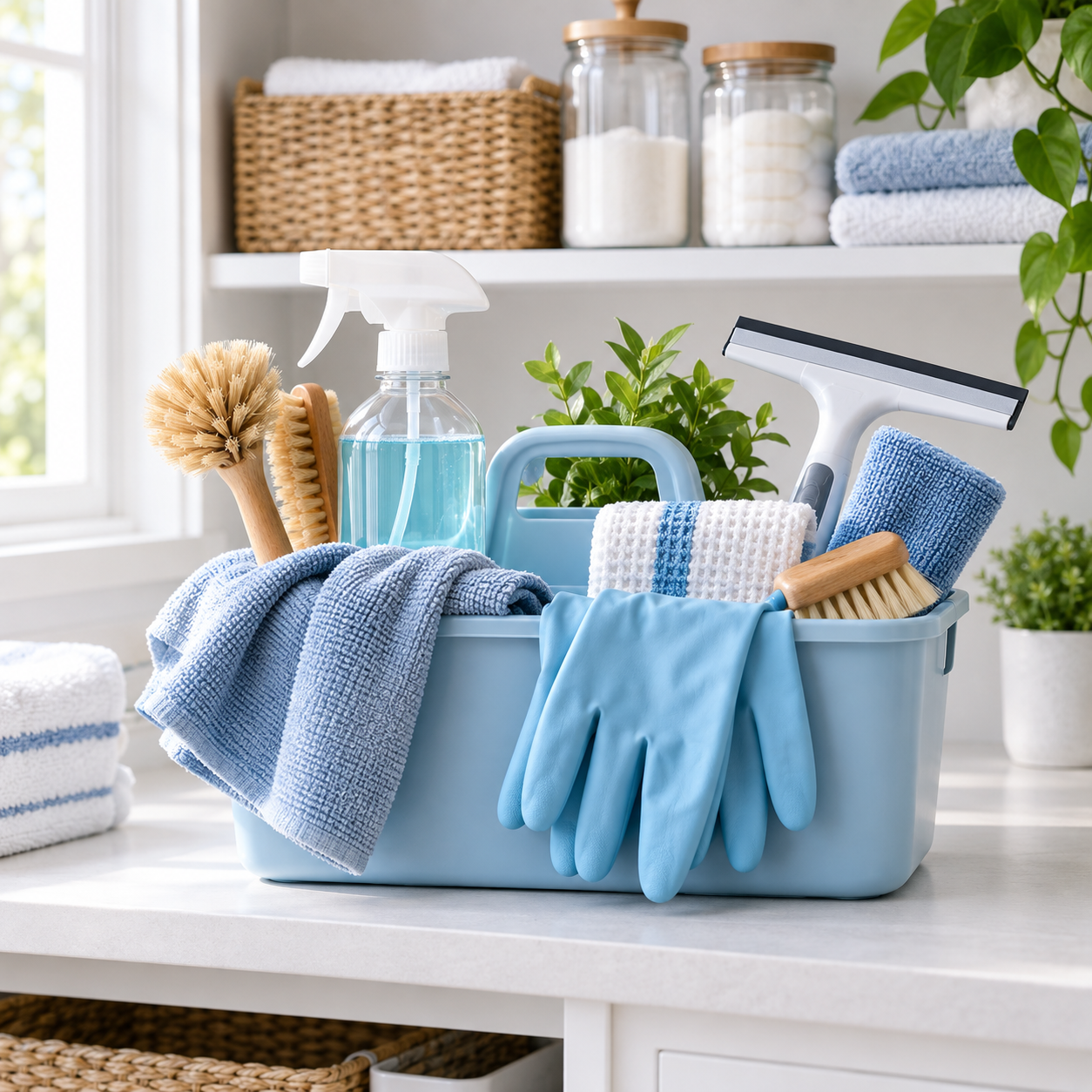
Use the Right Tools With a Routine That Works
Good cleaning tools work best when you know where and when to use them. Inside the Cleaners Clubhouse, recommended products sit alongside practical routines, printable worksheets and monthly challenges.