
THIS POST MAY CONTAIN AFFILIATE LINKS. PLEASE READ MY DISCLOSURE FOR MORE INFO.
The best steam cleaner for home use is the one that suits your surfaces, your most frequent cleaning jobs, and the space you have to store it. For approved hard floors, a steam mop may be enough. For small detail jobs, a handheld steam cleaner can be easier to put away. If you want to alternate between floors and above-floor cleaning, a canister deserves a closer look.
Start with those practical differences before comparing accessory counts or watching another satisfying grout-cleaning video. Steam still needs preparation, safe handling, and a way to collect the loosened dirt. Some surfaces should never meet it at all.
This guide will help you decide whether a steamer earns its cabinet space, which features are useful, and how to fit it into an ordinary cleaning routine. Manufacturer examples illustrate the choices; they are not hands-on test winners or a promise that one machine is suitable for every home.
Disclosure: This post may contain affiliate links. As an Amazon Associate, Clean Home Challenge earns from qualifying purchases. If you make a purchase through these links, we may earn a small commission at no extra cost to you. This helps us keep creating practical cleaning tips, routines and resources for busy families! 🧽
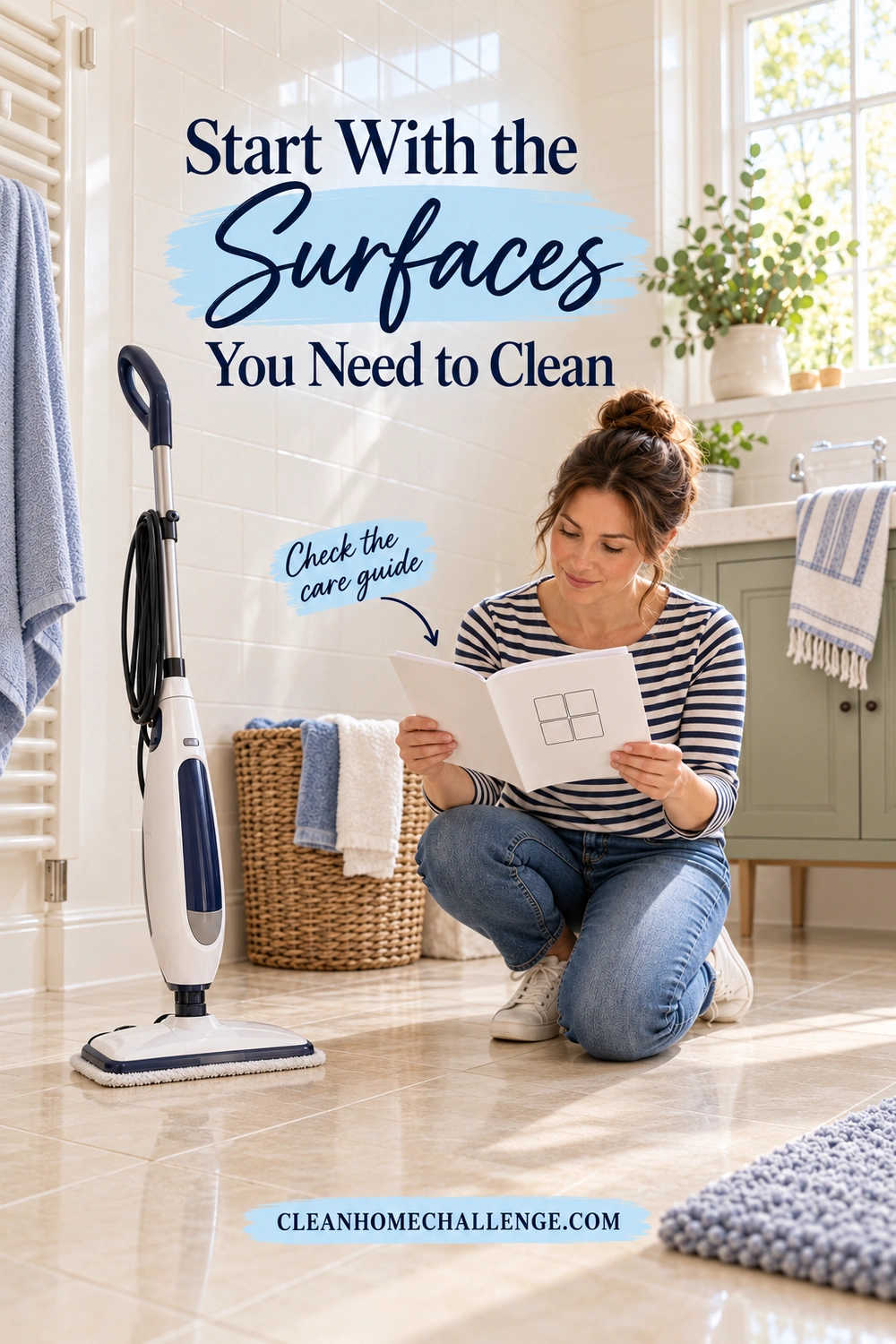
Start With the Surfaces You Need to Clean
Make a short list of the jobs you actually want help with. Perhaps it is the kitchen’s glazed tile floor, a section of bathroom grout, and greasy marks on an approved tile backsplash. Three recurring jobs are more useful than an imaginary list of everything a machine might clean.
For each job, check two things: the surface manufacturer’s care instructions and the steamer’s instructions. Both must allow the proposed use. A machine’s claim that it cleans “sealed floors” does not override your flooring warranty.
Sort your list before you shop
- Possible candidates after checking: compatible glazed tile, sound grout, and other hard surfaces whose care guidance explicitly permits steam.
- Get a specific answer first: laminate, vinyl plank, engineered flooring, natural stone, quartz, specialty coatings, and delicate bathroom finishes. “Waterproof” does not automatically mean heat-safe or steam-approved.
- Leave off your steam-cleaning list: unsealed or waxed wood, damaged flooring, lifting edges, cracked grout, electrical sockets, appliance controls, and any surface with instructions that prohibit steam.
Wood deserves particular caution. The National Wood Flooring Association advises against steam mops because they can damage the finish and wood over time. Shaw also warns against steam on its resilient vinyl floors. Choose the care method specified for your floor, even when a steamer advertises broader compatibility.
If you rent or cannot identify a surface, ask the owner, installer, or manufacturer rather than experimenting. A hidden-area test can reveal an immediate problem on an otherwise approved surface; it cannot prove that repeated heat will be harmless.
For a home dominated by steam-incompatible flooring, a good vacuum and a suitable microfiber mop may be the better purchase. Our vinyl plank cleaning guide offers a practical starting point.
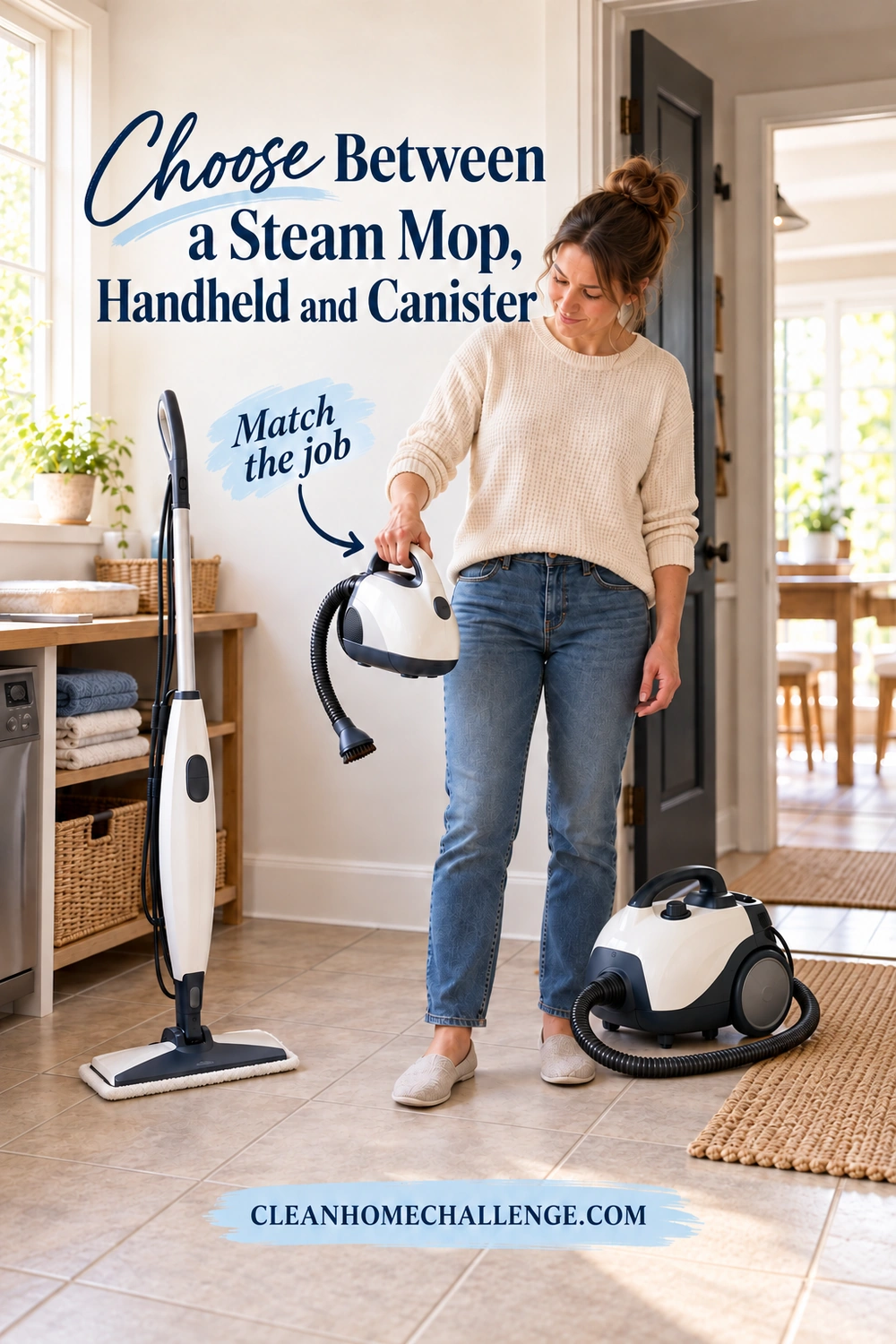
Choose Between a Steam Mop, Handheld and Canister
Choose the format around the job you will repeat most often. Picture carrying it out, filling it, using it, and putting it away on a busy weekday.
Steam mop: mainly for approved floors
An upright steam mop keeps the floor head, water supply, and handle together. It is the most straightforward format to consider when floor cleaning is your main goal.
Check whether it is genuinely floor-only. A mop does not become an above-floor steamer just because the box contains several pads. If you want to clean wall tile, look for a purpose-built detachable handheld unit or suitable hose system.
Choose this format when you have enough steam-approved flooring to justify a dedicated machine and would rather keep the setup simple.
Handheld: a few small detail jobs
A handheld steam cleaner makes sense for targeted work on compatible hard surfaces. Consider the filled weight, trigger grip, and whether a hose lets you position the tool without holding the entire machine at an awkward angle.
A small tank can be quite reasonable for one backsplash section. It becomes frustrating if you expect to clean a large floor or move through several bathrooms without stopping. Check the refill procedure as carefully as the advertised steaming time.
Canister: floors plus above-floor work
A canister keeps the main water unit separate from the tool in your hand. A hose and extension tubes can make it easier to switch between approved floor areas and detail work.
The trade-off is storage and setup. Measure the cabinet, include the hose and attachments, and think about stairs. A large accessory collection is less useful if retrieving the machine makes every job feel like a project.
A few real examples to compare
Current manufacturer listings show how much formats differ:
- The Kärcher SC 3 Upright and SC 3 EasyFix illustrate a floor-focused upright versus a canister supplied with floor and hand tools.
- The McCulloch MC1230 handheld lists a 6-fluid-ounce tank and 10-minute continuous-steam figure.
- The McCulloch MC1275 canister lists a 48-fluid-ounce tank and 45-minute continuous-steam figure.
These manufacturer figures were checked October 11, 2026. They illustrate capacity differences, not independent performance results. Confirm the exact local model, included tools, care instructions, and current availability before buying.
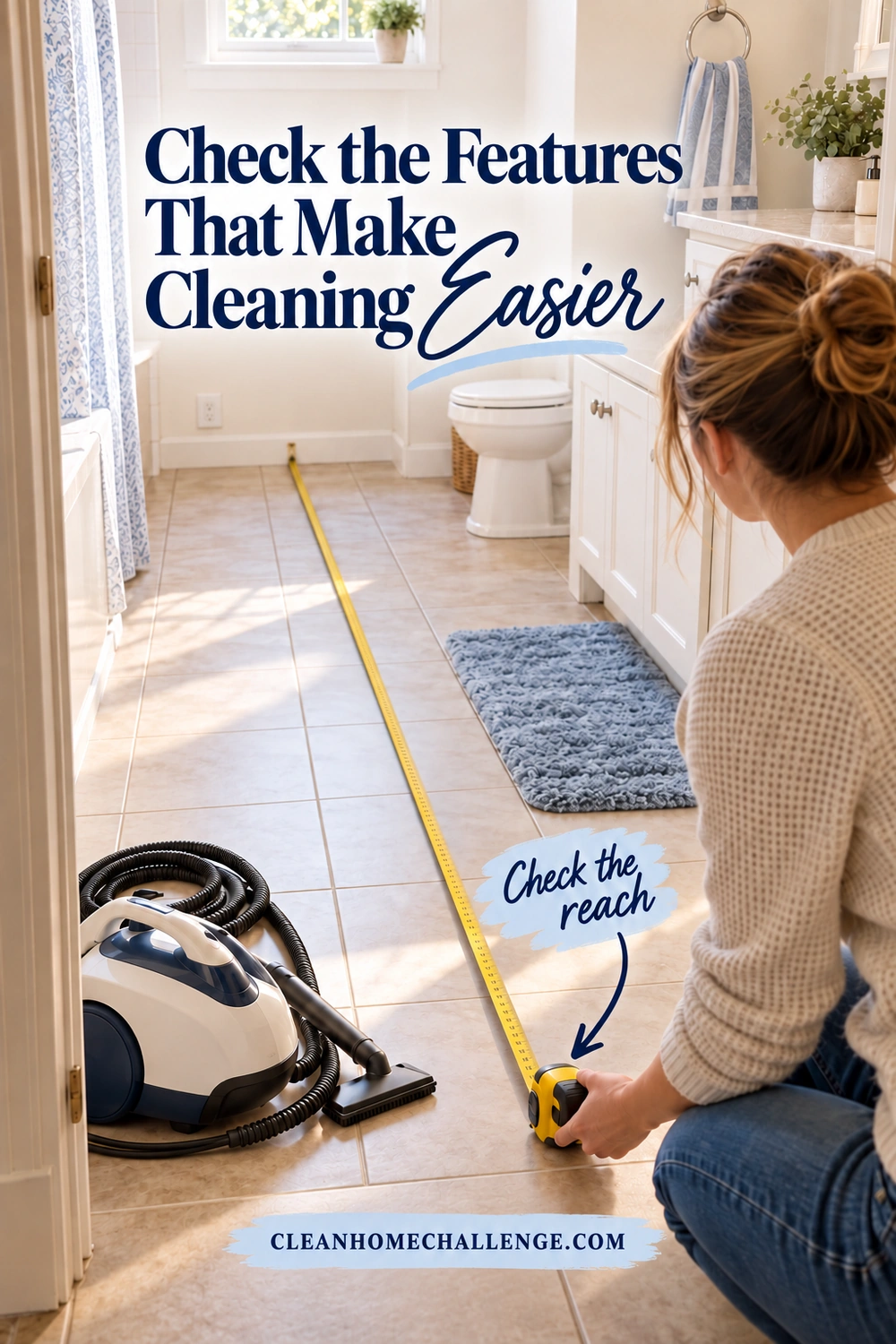
Check the Features That Make Cleaning Easier
Once you have chosen a format, compare two or three candidates against your real routine. A useful machine should be comfortable to handle and affordable to keep supplied with the parts it needs.
- Refilling and cooling. Read how the tank is filled and whether the machine needs to cool and depressurize first. A longer initial heat-up might be acceptable for a planned session; repeated cooling waits may be less convenient. Never assume a cap can be opened just because steam output has stopped.
- Reach and maneuvering. Check cord length, hose length, head height, and handle position. Think about the outlet you will use. Avoid buying a machine that only reaches the bathroom if the cord crosses a busy walkway.
- Steam control. Find out how steam starts and stops, how settings are selected, and whether the trigger is comfortable. A lower setting cannot make an incompatible surface safe.
- Usable pads and brushes. Budget for spare washable pads and replacement brushes. Locate the correct part numbers and check that replacements are actually available, rather than assuming any similar-looking accessory will fit.
- Water and scale management. Water requirements differ. Kärcher’s US SC range specifies tap water with its cartridge system, while McCulloch recommends distilled water to limit mineral buildup. Follow your model’s instructions and include cartridge or approved descaling costs in the budget.
- Storage and support. Look for a readable manual, local support, clear warranty terms, and a secure place for the cooled machine. Include pads, brushes, water treatment, and shipping when comparing total cost.
Check recalls and safety warnings before buying, borrowing, or using an older machine. The 2024 BISSELL Steam Shot recall covers model series 39N7 and 2994. A separate April 2026 recall covers certain Steam Shot Omni and OmniReach attachments. Other 2026 notices include a Dupray Neat boiler-cap recall and a CPSC stop-use warning for Dovety TMSC-001 steam cleaners. Match the full model and any batch code to the official notice and follow its stop-use and remedy instructions. Check for newer notices too; this is not an exhaustive list.
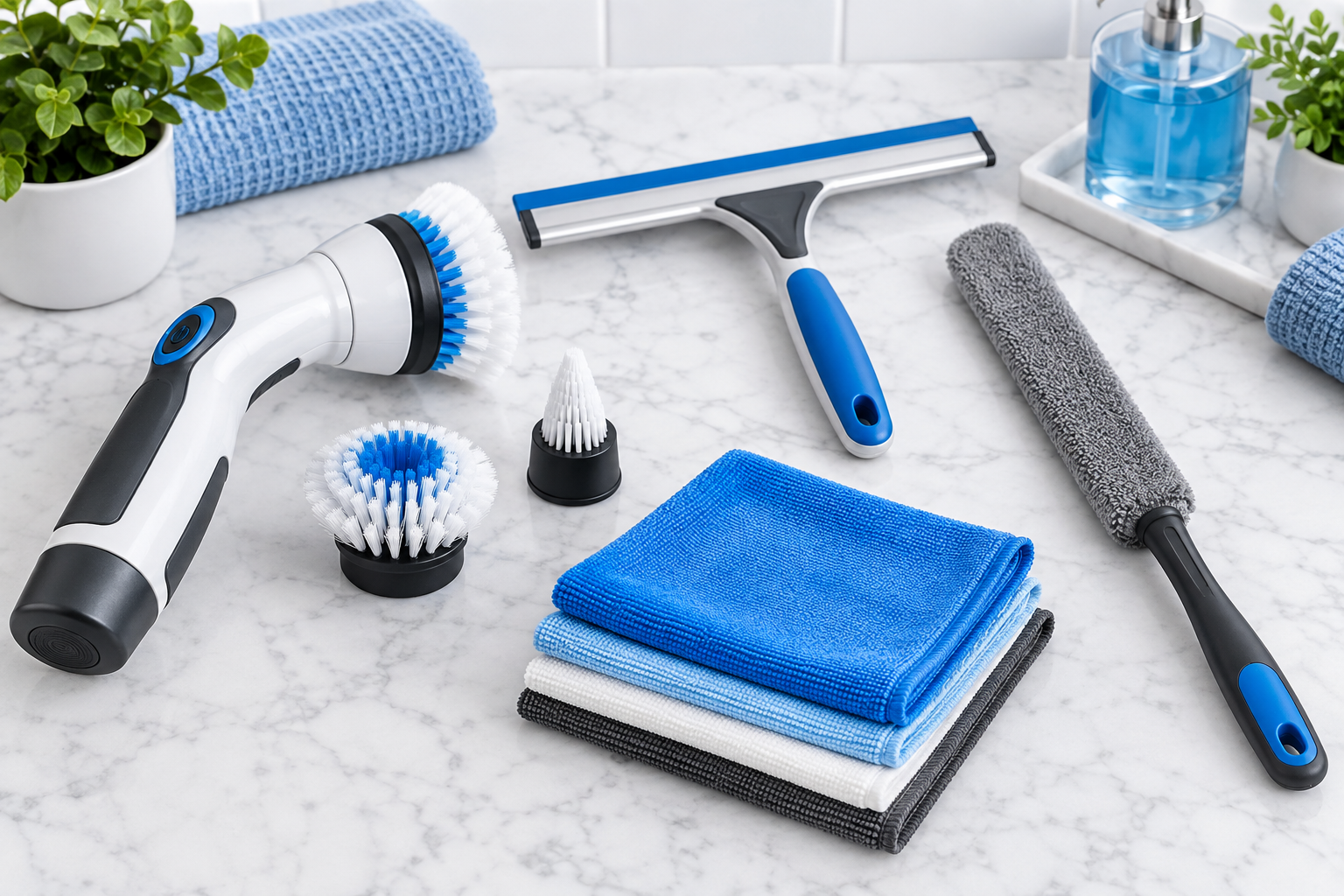
Put Steam Mop Attachments to Work Safely
Choose steam mop attachments by the approved task they help you complete. A smaller, useful set can be easier to manage than a bag full of tools you cannot identify.
Floor head and washable pad
The pad collects loosened dirt as you work across a compatible floor. Start with a clean pad and have a spare ready for a larger area. Keep the head moving as the manual directs; leaving it parked and steaming on one spot adds unnecessary heat and moisture.
A wide head helps in open rooms, while a smaller head may fit around a toilet base or chair legs more easily. Check the shape against your space rather than choosing the widest option automatically.
Detail nozzle and nylon brush
These can help with approved tile joints and small, sturdy crevices. A nylon brush adds agitation, but it can still mark a delicate finish. Begin with the gentlest manufacturer-approved option and light pressure.
Avoid treating missing grout, deteriorating caulk, or lifting trim as stubborn dirt. Those areas need repair or a different care method. Keep toilet-area brushes separate from kitchen tools and label them clearly.
Hand tool with cloth cover
A cloth-covered hand tool can be useful on approved larger vertical surfaces, such as a section of glazed wall tile. Work where you can comfortably reach without stretching over the hot hose. After steaming, switch off the flow and wipe away loosened residue with a separate cloth once safe to do so.
Squeegee, scraper, or metal brush
Treat these as specialist accessories. Glass needs both surface approval and the machine’s temperature precautions; choose conventional glass cleaning if you are unsure. Metal brushes and scrapers may damage coatings, grout, or finishes and should only be used on specifically approved materials.
Manufacturer instructions, such as the McCulloch MC1275 guide, assign different tools to different jobs and require safe cooling before handling hot parts. Do not improvise attachment combinations or disconnect a tool while steam is flowing.
A carpet glider is also easy to misunderstand. It does not turn a basic steamer into a carpet extractor. For embedded carpet dirt or wet messes, look at the separate carpet spot cleaner guide and follow the carpet’s care instructions.
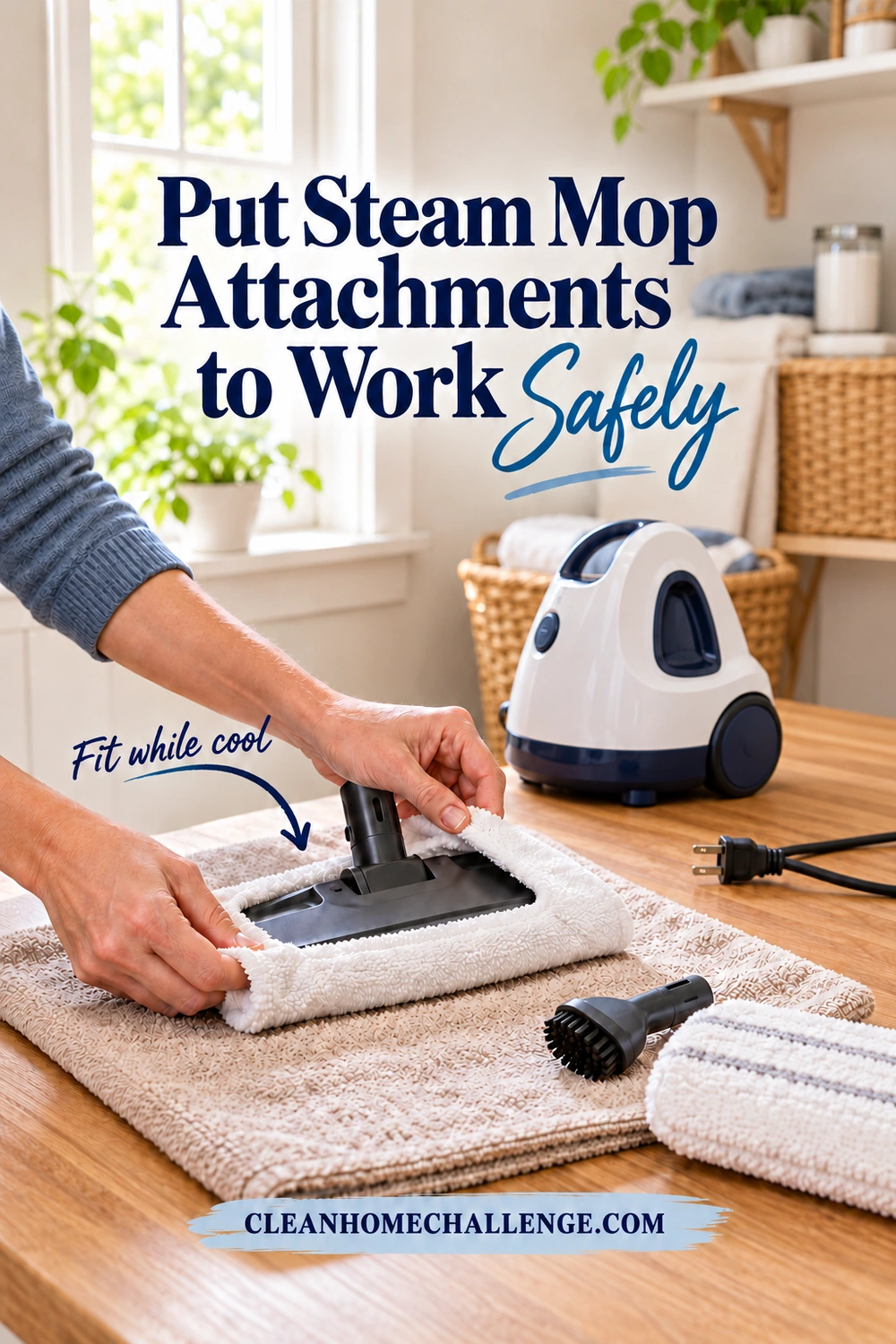
Plan a Manageable Kitchen, Bathroom or Floor Session
Give the machine one clear job. A small, finished area is more useful than getting every attachment out and running out of energy halfway through.
For planning, allow around 10–15 minutes of active work for one small detail area or 20–30 minutes for a modest cleared floor. These are suggested time blocks, not tested cleaning times. Add your model’s heat-up, refill, cooling, and the surface’s drying time. The first session will usually involve more reading and setup.
Gather a simple kit
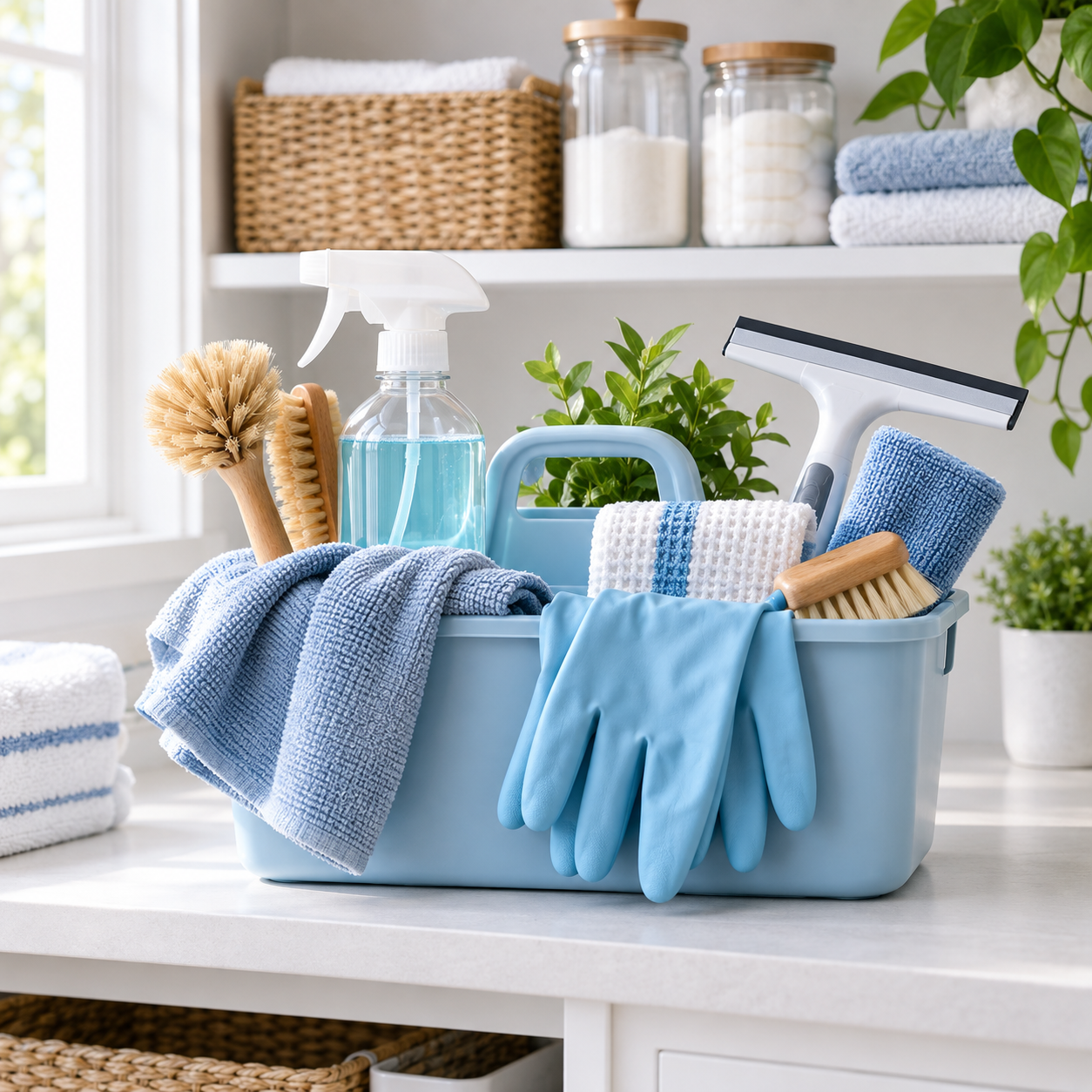
You will need the correct water, the approved attachment, clean pads or covers, several absorbent cloths, and a broom or vacuum for dry debris. Keep the manual nearby. Use protective equipment required by the machine or any separate cleaning product, and wear footwear with a secure grip.
Keep children and pets out of the work area until the equipment is cool, the cord is away, and surfaces are dry. Set the machine on a stable surface away from sinks and tubs. Never direct steam toward people, animals, electrical fittings, or controls.
Follow this order
- Clear and inspect. Remove loose items, sweep or vacuum grit, and check for cracks, loose edges, and worn seals. If you find damage, leave that area out.
- Prepare while unplugged. Attach the appropriate tool, fill only as directed, and position the cord safely. Unless the manual expressly specifies an additive, put only the required water in the tank. Do not add essential oils, detergent, bleach, or a homemade mixture.
- Heat and test. Follow the startup procedure and test an inconspicuous area already approved for steam. Check the cooled, dry result for any change in color, sheen, or texture before continuing.
- Work in small sections. Use the prescribed setting and movement. Collect loosened soil with the pad or, after stopping steam flow, a separate cloth. Never hold a wiping cloth in the steam jet.
- Check and finish. Change a dirty pad using the safe shutdown and cooling procedure. Stop if a surface becomes unusually wet or changes appearance. Leave the area dry and safe before reopening it to family traffic.
For Monday’s kitchen job, choose an approved tile backsplash section and remove nearby food and utensils first. Keep steam away from outlets, cabinet seams, appliance openings, and controls. For ordinary quartz countertop care, Caesarstone recommends a soft cloth with mild detergent and water, followed by rinsing and drying.
For Tuesday’s bathroom job, choose one compatible tile area, starting higher and working down. Use the exhaust fan and wipe up moisture. Clean the toilet with its own tools and an appropriate separate method; a jet around hinges is not a substitute for the whole toilet-cleaning routine.
For Friday’s floor job, clear the route first and work toward an exit. If you only have five minutes, remove grit and spot-clean today’s marks using the floor’s approved method. Save the steamer setup for a day with enough time to finish safely.
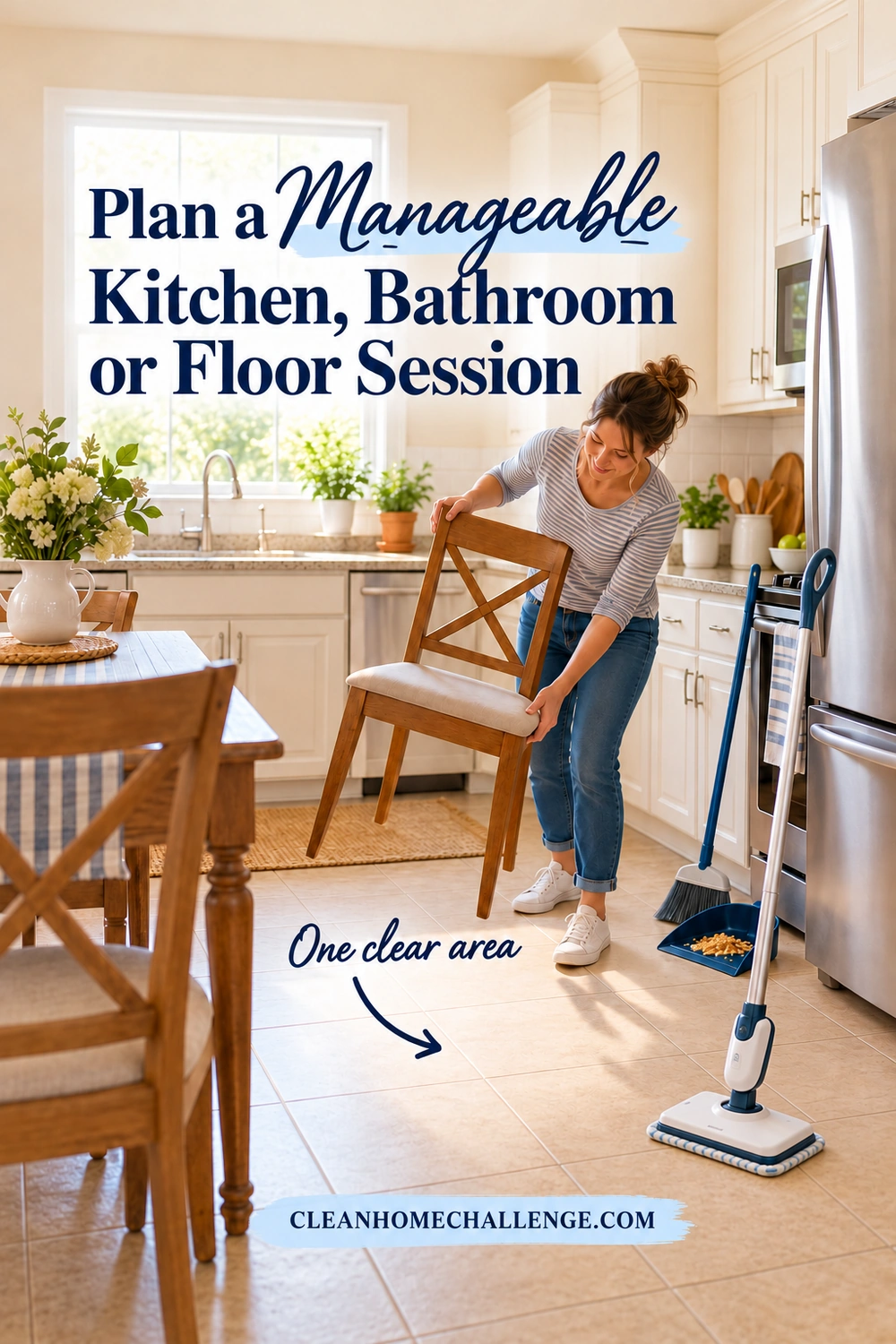
Understand Steam Cleaning Limits and Safer Alternatives
The most useful steam cleaning uses involve loosening manageable dirt on compatible surfaces. Buying with realistic expectations helps you avoid paying for a tool that does not solve your main problem.
Steam does not collect every mess
Most basic steamers loosen soil without vacuuming it away. You still need clean pads or cloths, and some jobs need a different machine entirely. McCulloch explains that its steamers do not extract water from carpet. Do not assume a carpet will be deep-cleaned because an accessory lets the head glide over it.
Heavy scale and damaged finishes need another approach
A steamer is not a reliable answer to every white deposit or dark grout line. Kärcher notes that heavy limescale on faucets may need other methods. Use a surface-approved treatment separately, following its label. Never put descaler in a steam-cleaning tank unless the machine’s maintenance procedure specifically requires it.
Stained grout, missing sealant, and recurring damp patches also deserve assessment rather than hotter or longer steaming. For a lower-effort manual approach, see how to clean floor tile grout without kneeling.
A quick pass is not a universal disinfecting method
Cleaning, sanitizing, and disinfecting describe different outcomes. Any germ-reduction claim belongs to the exact machine, approved surface, setting, contact method, and test conditions. Do not borrow a contact time from a different model or hold steam on a vulnerable surface to chase a claim.
The CDC recommends routine cleaning and additional disinfection when appropriate, such as when someone is sick. Use a suitable labeled disinfectant when that is the appropriate method, following its surface, contact-time, ventilation, and protective-equipment directions. Clean first and never mix cleaning products.
Our guide to cleaning, sanitizing, and disinfecting explains the distinction. For everyday crumbs, dust, or a small spill, you may simply need a cloth, vacuum, or suitable floor cleaner. A steam purchase should make those routines easier to maintain.
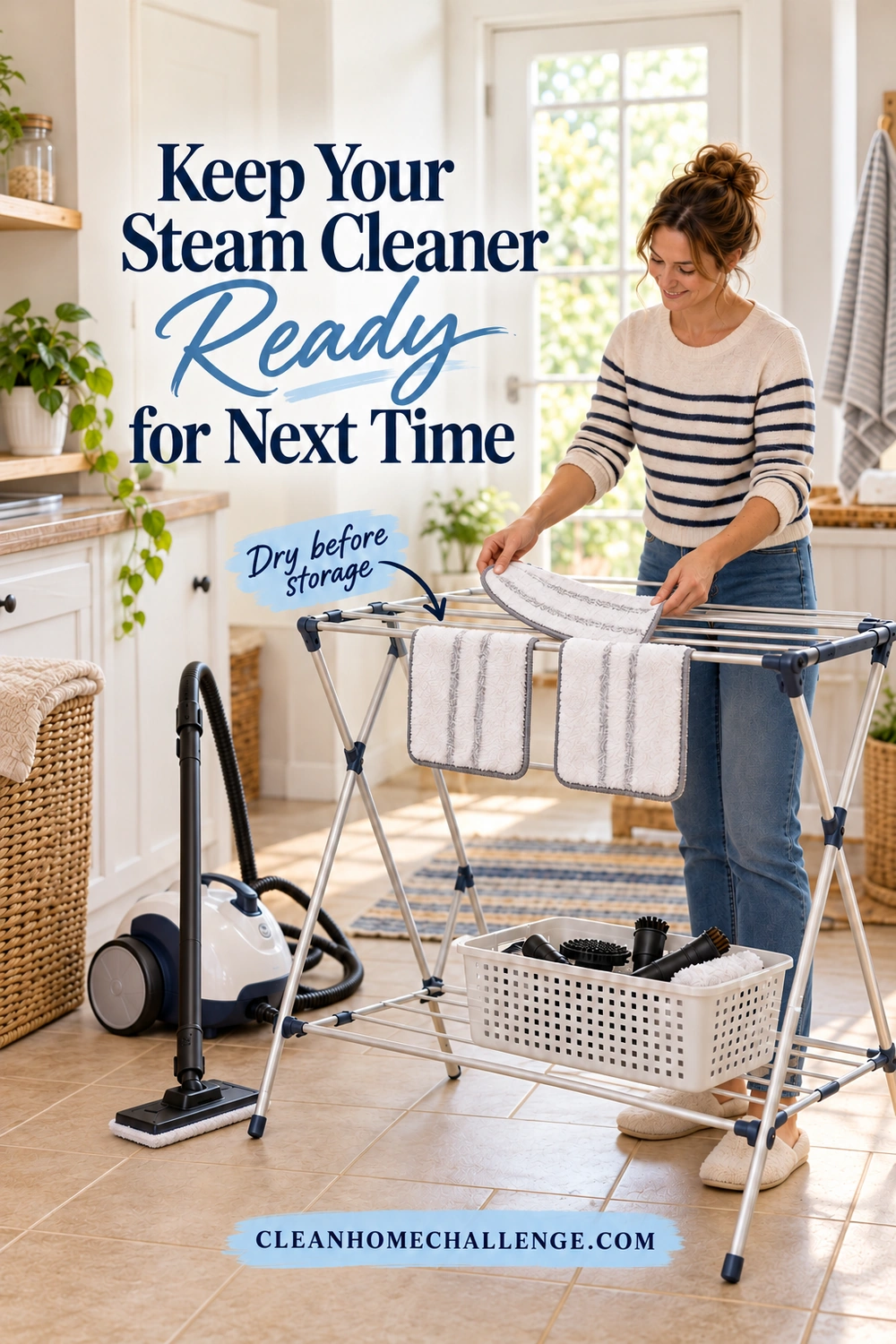
Keep Your Steam Cleaner Ready for Next Time
A small after-use routine makes the next session much easier. Start with the shutdown instructions for your exact model, especially if it has a pressurized boiler.
- Switch off and unplug, then allow the specified cooling time. Release pressure only as the manual directs. Never force a cap that resists opening.
- Remove the cooled pad or cloth cover. Wash it according to its care label and dry it completely before storage. Check detergent and fabric-softener restrictions rather than using the same laundry routine for every pad.
- Empty or retain water only as directed by the manufacturer. Cartridge systems and boiler machines can have different storage requirements.
- Clean and dry the approved accessories, keeping bathroom tools separate from kitchen ones. Replace worn brushes rather than pushing harder with flattened bristles.
- Follow the model’s scale-care schedule. Do not copy a vinegar flush from another steamer or bypass an indicator or safety lock.
- Once everything is cool and dry, store the machine and cord where children cannot reach them. Keep spare parts, the manual, and the purchase record together.
Before each use, check the cord, hose, cap, and attachment connections. Stop using a leaking or damaged machine and contact the manufacturer; an unexpected jet of hot water is not something to troubleshoot with your hands near the nozzle.
Your final buying decision can be simple: confirm the surfaces, choose the format, check refilling and replacement parts, and make room for safe storage. If you can name the jobs it will do and when you will do them, the machine is more likely to be useful.
Start with one room and a repeatable routine. A comfortably clean home does not require every available tool, and a smaller cleaning session still counts.
CLEANERS CLUBHOUSE
Use the Right Tools With a Routine That Works
Good cleaning tools work best when you know where and when to use them. Inside the Cleaners Clubhouse, recommended products sit alongside practical routines, printable worksheets and monthly challenges.