
THIS POST MAY CONTAIN AFFILIATE LINKS. PLEASE READ MY DISCLOSURE FOR MORE INFO.
Moving can make every drawer feel like a decision waiting to happen. There are boxes to find, meals to make, and a normal family day still going on around you. You do not have to clear your whole home in one weekend to make useful progress.
The simplest approach to decluttering before moving is to choose one small area, decide what belongs in your next home, and give everything else a clear destination. Pack the keepers when you can, then finish the job by arranging donations, sales, or suitable disposal.
This guide focuses on those decisions before packing. Work through it at your pace, keeping the things that support your household and leaving yourself enough energy for the move itself.
Disclosure: This post may contain affiliate links. As an Amazon Associate, Clean Home Challenge earns from qualifying purchases. If you make a purchase through these links, we may earn a small commission at no extra cost to you. This helps us keep creating practical cleaning tips, routines and resources for busy families! 🧽
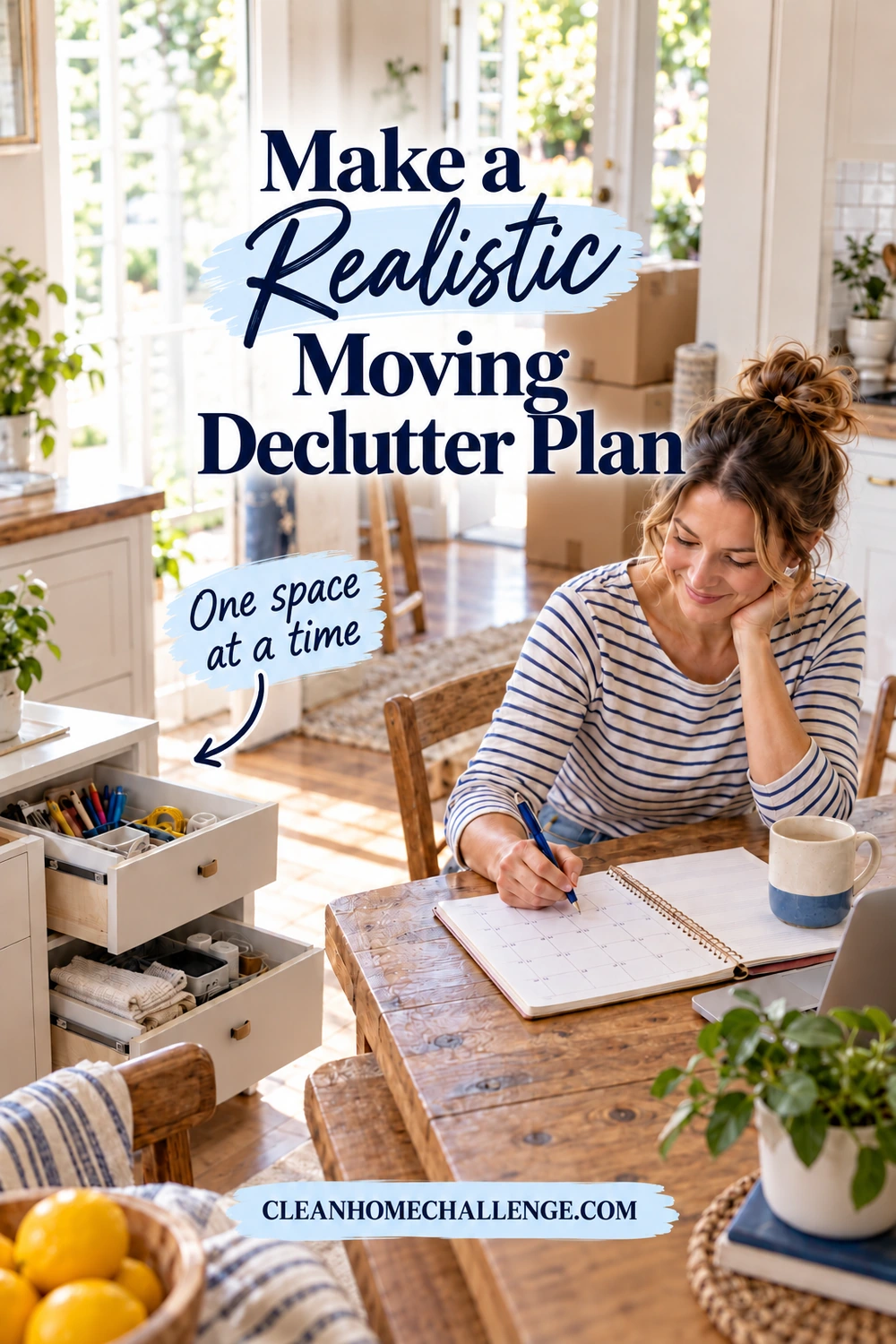
Make a Realistic Moving Declutter Plan
Start with a short walk through your home. Write down each room, any bulky items that need a decision, and places that hide extra belongings: the coat closet, garage shelves, under-bed storage, and that cupboard nobody opens very often.
Add your moving date and the last day you can access the old home. Then check donation appointments, bulky-waste collections, and specialist drop-off opening times. An available collection slot may shape your plan more than the amount of clutter does.
A flexible countdown
Use this as a suggested planning schedule, adjusting it for your home, health, support, and time available. These are practical targets, not rules about how long a move should take.
- Six to eight weeks before: Measure larger furniture and the new rooms if you can. Begin with easy decisions in rarely used storage. Arrange help for heavy items and check collection options.
- Four to six weeks before: Work through clothing, books, toys, hobby supplies, and spare linens. List selected sale items while there is time for collection.
- Two to three weeks before: Finish kitchen and bathroom decisions. Confirm donation drop-offs and specialist disposal. Pack belongings you will not need before the move.
- The final week: Complete outgoing collections, prepare essentials, and close remaining sorting areas. Keep daily-use items available until you need to pack them.
Put a few manageable sessions on your calendar. You might spend 20 minutes on a drawer after dinner and reserve a longer weekend block for one closet. Leave the final five minutes for putting things away and removing outgoing bags.
If you have only a week, prioritize unwanted bulky furniture, obvious duplicates, easy donations, and safe disposal arrangements. Protect paperwork and keepsakes for a calmer review. A clearly labeled box of unresolved belongings is better than a rushed decision you regret.
For a gentle starting point when everything feels urgent, try the 20-minute decluttering method.
Set Up Simple Sorting Zones
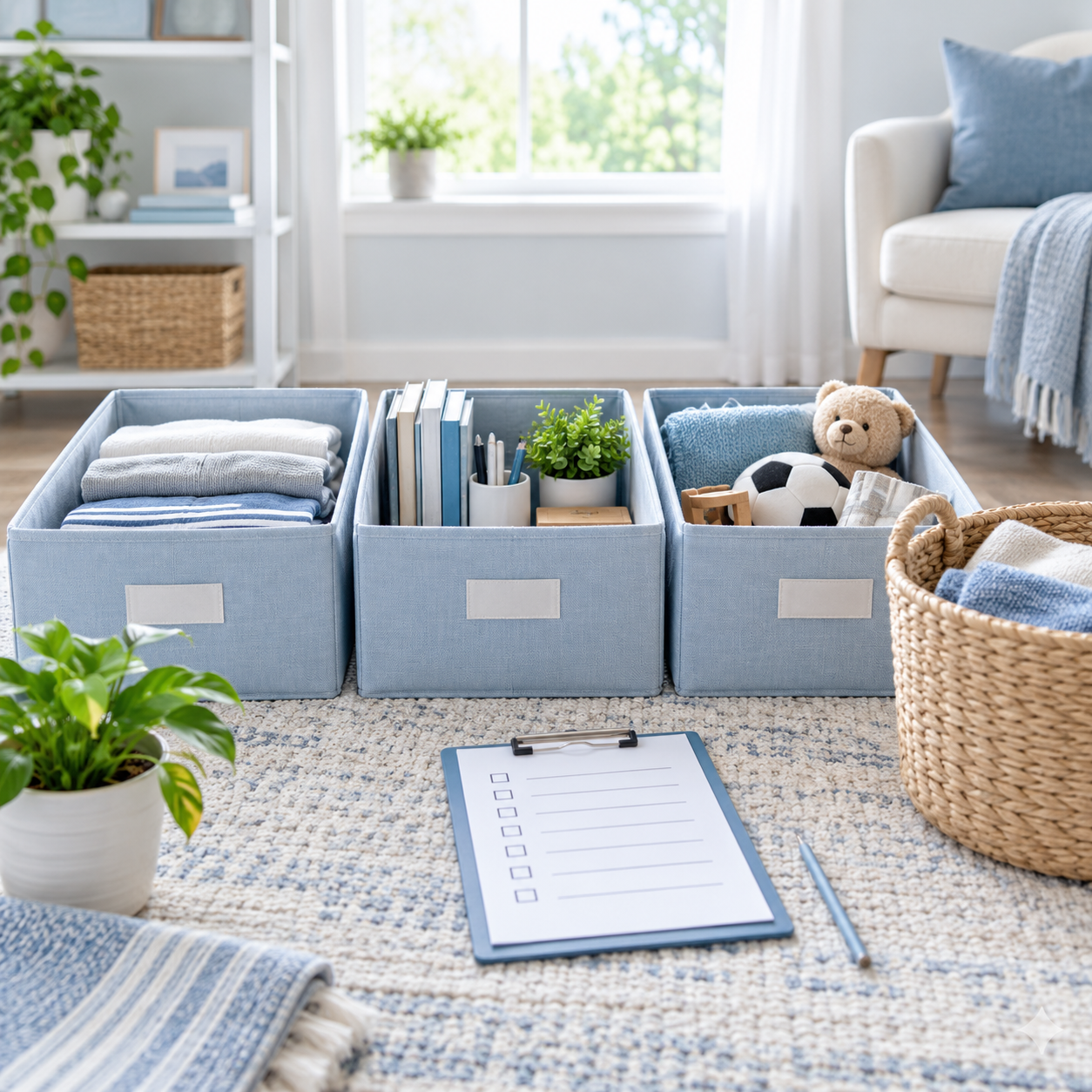
Gather sturdy boxes or bags, labels, a marker, a measuring tape, and a short list on paper or your phone. Use containers you already own where practical. Save buying storage organizers until you know what you are keeping and where it will live.
Set up five clearly labeled destinations:
- Keep and pack: Belongings moving with you that you can pack now.
- Keep in use: Everyday items you still need before moving day.
- Donate or give away: Suitable items with an identified recipient or collection plan.
- Sell: A small, realistic selection with a listing and collection deadline.
- Recycle or dispose: Ordinary accepted recycling and trash, separated according to local instructions.
Hazardous products, batteries, sharp objects, and private documents need their own safe handling. Do not sweep them into a mixed outgoing bag. Keep sorting zones away from doors, stairs, heaters, and children’s play areas.
For shared belongings, add a note naming the person who needs to decide. Ask before removing someone else’s possessions. Give each household member one manageable job, such as checking their shoes or choosing which books to pack first.
Work on a space small enough to finish: one shelf rather than the whole bookcase. Bring its contents to a comfortable working height if that helps. Return the keep-in-use items, pack the ready items, and move outgoing goods to their designated spot.
Before you stop, write the next action beside anything unfinished. “Call donation center about chair” is much easier to resume than “sort living room.”

Decide What Earns a Place in Your New Home
Choose what fits the life you are actually moving into. A smaller kitchen, different climate, new work routine, or home without a yard may change what is useful. If you do not yet know the layout, keep essential furniture decisions provisional until you can measure.
Ask these questions one item or small category at a time:
- Do we use this, need it for an occasional purpose, or genuinely enjoy it?
- Does it work, and is it safe to keep using?
- Is there space for it in the new home, including somewhere to store it?
- Do we already have another item that does the same job well?
- Would replacing it later be difficult or expensive for our household?
- Is this mine to decide about, or does someone else need a say?
For furniture, measure the item, its intended position, and access routes where possible. Think about opening drawers, walking around beds, and moving through doorways. A room can fit a sofa on paper while leaving very little usable floor space.
Avoid treating “unused for a year” as an automatic disposal rule. Seasonal equipment, emergency supplies, accessibility aids, and tools for occasional repairs can deserve their space. Likewise, keeping a useful backup may make sense when replacing it would stretch your budget.
For repair projects, choose a specific next step and a date that works before packing. Keep something because you realistically plan to repair it, rather than because every broken item feels like an obligation.
If a decision stalls, write down what is missing: measurements, another person’s answer, a repair estimate, or simply time. Limit ordinary undecided items to a manageable container and set a review date. Sentimental belongings and important records can need a different pace.
The purchase price does not have to decide everything. Consider usefulness, replacement cost, available space, and the effort of selling or moving it together. Decluttering before moving should help your household, not create pressure to buy everything again.

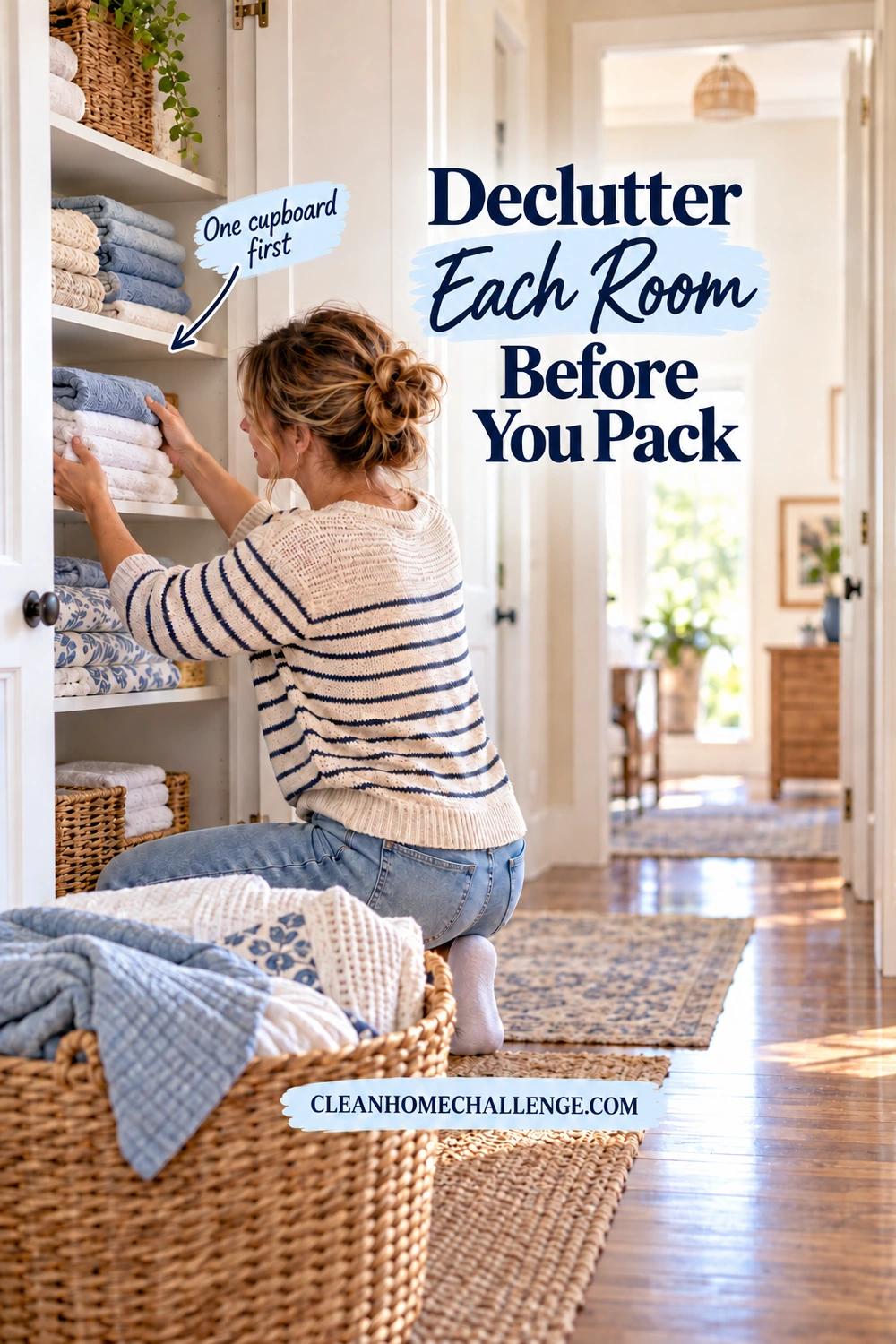
Declutter Each Room Before You Pack
Keep using the same destinations as you move from room to room. Once a category is decided, pack the nonessentials together and label the box for its destination in the new home.
Kitchen and pantry
Start with one drawer or cupboard, leaving enough everyday cookware available for meals.
- Match food containers with lids and keep the sizes you reach for.
- Compare duplicate utensils, pans, mugs, and small appliances. Keep the ones that suit your cooking and storage.
- Check whether serving dishes and occasional equipment still have a realistic use.
- Plan meals around food you already have, without using anything unsafe or ignoring storage instructions.
- Ask food-donation organizations what they currently accept before setting pantry items aside.
Pack occasional-use dishes first. Keep one practical set of plates, cups, utensils, and cookware accessible for the final days. Do not turn the last week into a test of how many meals you can manage without a pan.
For a more detailed cupboard-by-cupboard pass, use the kitchen decluttering checklist.
Bedrooms, clothing, and linens
Work through one person’s clothes at a time. Begin with easy decisions, then leave more emotional choices for another session.
- Keep clothing that fits current needs, including seasonal and occasional outfits.
- Put repairable favorites in a small repair pile with a realistic plan.
- Check shoes in pairs and match bedding to the beds moving with you.
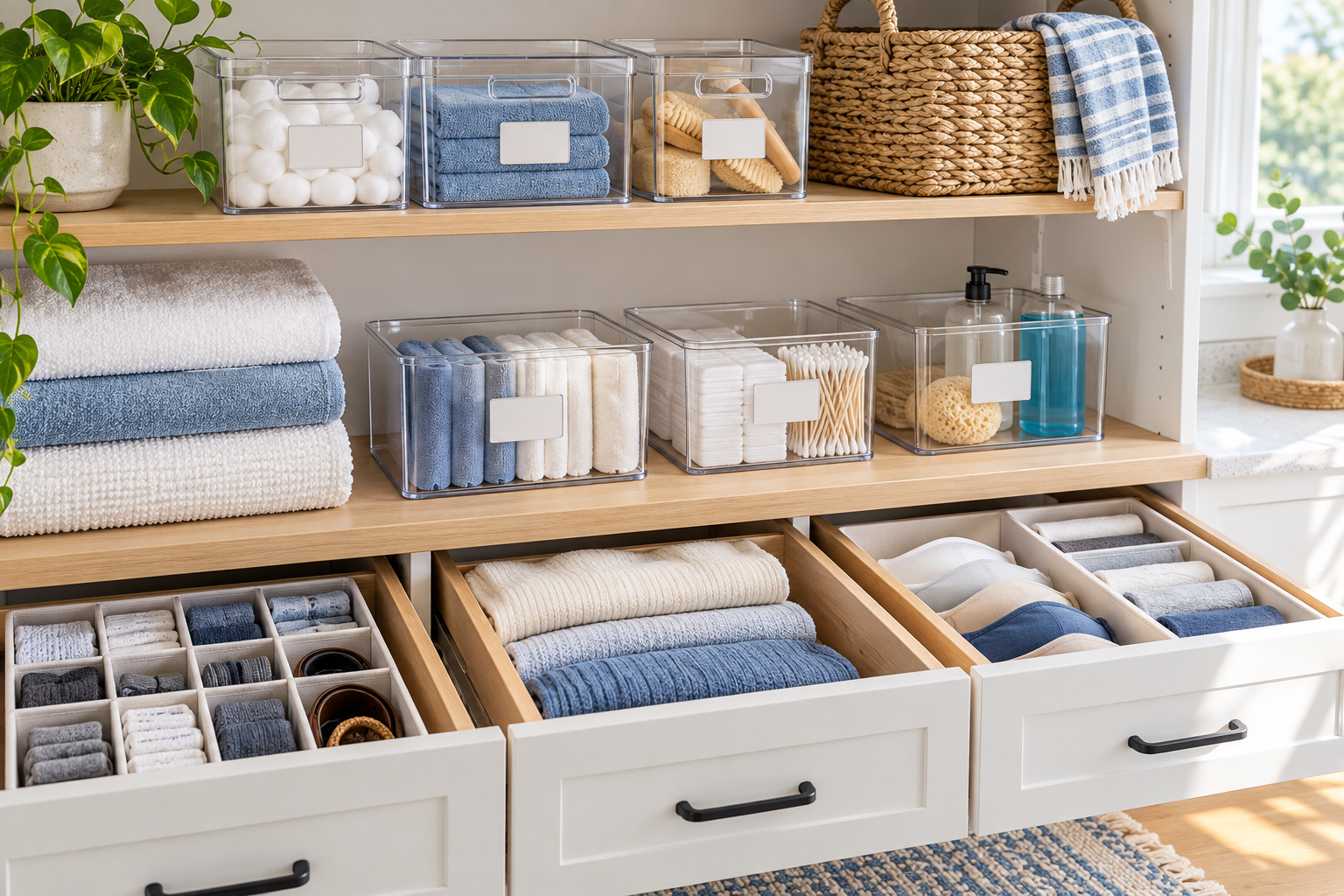
- Choose enough towels and sheet sets for your laundry routine, guests, and household needs.
- Ask recipients whether they accept worn textiles; a clothing donation bin is not automatically a textile-recycling service.
Keep a laundry basket available until the final day. Pack a change of clothes and bedding for the first night separately so they do not disappear among the bedroom boxes.
Bathrooms and laundry areas
Group similar toiletries without opening everything at once. Keep products you actually use and check their labels, condition, and storage requirements. Do not combine leftovers into one bottle to save space.
- Separate daily toiletries from backups and unused purchases.
- Check towels, cleaning cloths, and laundry accessories for realistic use.
- Keep medicines out of donation bags and general sorting piles.
- Retain the cleaning supplies needed for the move, stored securely.
For unwanted or expired medicines, the FDA recommends a take-back option for most medicines. Ask a pharmacist about suitable local options and follow product-specific instructions. Do not flush medicines as a general clear-out method; FDA guidance limits that option to certain medicines when take-back is unavailable. See the FDA medicine-disposal guide.
Living spaces, toys, and hobbies
Give each category a small area to work in. Avoid emptying every toy basket while the family still needs the room.
- Match games with their pieces and label any known missing parts honestly.
- Ask children to choose favorites and join age-appropriate decisions without pressure to give everything away.
- Separate books you want to reread, use, or keep from those ready for another reader.
- Decide which hobby projects still matter, including the materials needed to finish them.
- Match cables, chargers, remotes, and accessories to devices before packing.
Keep one familiar activity or comfort item available through the move. Belongings that make a changing home feel reassuring can be worth keeping within reach.
Garage, storage, and utility spaces
Check these areas early enough to arrange suitable removal, but choose an easy shelf if the whole space feels daunting.
- Return borrowed tools and set aside items belonging to other people.
- Review duplicate tools, unused sports equipment, and seasonal decorations.
- Identify paint, fuel, pesticides, batteries, and unknown containers for separate handling.
- Confirm what your mover will accept before packing potentially hazardous products.
- Arrange help for heavy or awkward objects rather than shifting them alone.
Keep an inventory of anything stored elsewhere, including a shed or storage unit. A cleared living room will not reveal the boxes you still need to collect from another address.
Handle Donations, Sales, and Disposal
The outgoing stage needs its own calendar space. A bag labeled “donate” still takes up room until it reaches an organization that accepts it.
Give donations a real destination
Check the organization’s current list of accepted goods, condition requirements, hours, and collection arrangements. Send clean, usable items with their essential parts. Ask about large furniture before arranging transport, and have a backup plan if a collection cannot take everything.
Before selling or donating consumer products, check for recalls using the model information. Follow the instructions for any affected item rather than passing the problem to someone else. The CPSC recall search is a useful starting point in the US; use your local product-safety authority elsewhere.
As a suggested target, aim to complete routine donations several days before moving day. Confirm actual booking dates with the provider and allow extra time where appointments are limited.
Keep selling manageable
Choose items whose likely return is worth photographing, listing, messaging, and arranging collection. Describe condition honestly and include dimensions for furniture.
You might list items three or four weeks ahead, review interest after a week, and set a final collection date at least a few days before the move. These are planning suggestions, not predictions of how quickly anything will sell. Decide beforehand whether an unsold item will be kept, donated, or sent through an appropriate disposal route.
Use the selling platform’s safety guidance, protect personal details in photos, and make collection arrangements you are comfortable with. A promised pickup is not complete until the item leaves.
Separate hazardous household products
Some paints, cleaners, oils, and pesticides need specialist disposal. Keep them in their original labeled containers, follow label directions, and never mix leftovers. Do not pour hazardous waste into drains, onto the ground, or into storm sewers. Ask your local waste authority about accepted items, appointments, and transport instructions. Corroded or leaking containers need specific handling advice before you move them. These precautions follow the EPA household hazardous waste guidance.
Check electronics and batteries separately
Before a computer leaves your possession, save needed files, check the backup, and follow its manufacturer’s erasure and reset instructions. Deleting a few visible files is not a complete preparation process. The FTC computer-disposal guide explains the backup-and-erase sequence.
Check which electronics your chosen service accepts and whether batteries need separate handling. The EPA electronics donation and recycling guide links to collection resources.
Keep lithium-ion batteries and devices containing them out of household trash and curbside recycling. For intact loose batteries, protect terminals with nonconductive tape and bag batteries individually, following collection instructions. Do not force out a built-in battery. Contact the manufacturer and collection provider for instructions about damaged or swollen batteries before handling or transporting them. See the EPA lithium-ion battery guidance. Other battery types also need checking against local requirements; do not assume every battery belongs in the same bin.

Protect Sentimental Items and Important Papers
Give meaningful belongings a quieter session, preferably before you are exhausted from packing. A move can bring up memories, grief, or uncertainty about a different stage of life. You can make useful progress elsewhere while keeping these decisions gentle.
Make room for the memories you want
Start with the pieces you know you want to keep. For photographs, letters, children’s artwork, or collections, choose a practical storage space that protects them and makes them easy to find again.
Photograph an object if its appearance or story matters more to you than the object itself. Add names, dates, or a short explanation while you remember them. A photo can be an option, but it does not have to replace an original you value.
Ask before offering shared family keepsakes to someone else. If a relative wants an item, agree on a collection date without turning the offer into pressure. Avoid sorting another person’s memory box without them.
If you are undecided, pack a clearly labeled keepsake box and revisit it after you have settled. The guide to decluttering sentimental items can help you work through choices at a slower pace.
Keep papers safe while you sort
Set up three folders: needed during the move, keep securely, and review before disposal.
Keep identification, vital records, current housing and moving paperwork, and other important originals easy to locate and under your control. Separate active bills or tasks so they do not disappear into a general archive.
Do not discard records simply because they are old, or assume a scan replaces an original. Retention needs depend on the document, issuing organization, and your circumstances. Check appropriate official guidance or ask the relevant professional before destroying uncertain records. Keep them safely until you have an answer.
For papers confirmed suitable for disposal, use a secure shredding method where they contain private information. Check your local program’s rules before putting shredded paper into recycling. Back up useful digital copies securely and make sure you can open them.

Pack Your Essentials and Reset Each Space
As each area is finished, separate the last everyday items from sealed moving boxes. Label boxes with the new room and a useful contents summary, such as “Kitchen: everyday plates and mugs.” Avoid displaying sensitive details on the outside of document boxes.
Prepare the first day and night
Build an essentials bag or box around your household’s actual needs:
- Daily medicines, glasses, and necessary personal-care items, stored as directed
- Phone chargers, keys, moving contacts, and important papers
- Drinking water, easy food, and a few meal supplies
- Toilet paper, hand soap, towels, and basic toiletries
- Clothes, sleepwear, and bedding for the first night
- Children’s comfort items and necessary pet supplies
- A small, safely stored toolkit and suitable basic cleaning supplies
Keep essentials with you or clearly separate from the main load. Plan medication storage for the journey with your pharmacist if needed. Check the rules for your travel method and mover rather than assuming every item can go in the truck.
Once a shelf or cupboard is empty, remove loose debris, wipe it with a suitable product, and let it dry. Follow the product label and surface-care instructions. Keep cleaners away from children and pets, use recommended protection and ventilation, and do not mix products.
Save the deeper cleaning plan for the appropriate stage. CHC’s moving cleaning guide covers the cleaning work, while the move-in cleaning checklist helps you prepare the next home before unpacking.

Keep Moving Day Simple
Do one final walkthrough with your room list. Open cupboards and drawers, check behind doors, and look in the places where everyday items tend to hide. Confirm that donation bags, borrowed belongings, and disposal items have reached their planned destinations.
Use a final check before the main load leaves:
- Essentials, important papers, keys, and valuables are accounted for.
- Keep-in-use items have been packed or deliberately kept with you.
- Outgoing goods are clearly separated from the moving load.
- Access routes are clear and heavy items have suitable help.
- Everyone knows which boxes or bags must remain accessible.
At the new home, unpack the basics first: somewhere to sleep, bathroom essentials, and what you need for simple meals. Give useful belongings a sensible place before filling every cupboard. Keep one small outgoing bag available for ordinary items you discover you no longer need.
Set a realistic date to review any undecided boxes, without automatically discarding their contents if the date slips. You can keep making thoughtful decisions once daily life has settled.
Successful decluttering before moving means arriving with belongings you can use, care for, and enjoy. Even a few well-chosen sessions can leave you with fewer unnecessary decisions when it is time to open the next box.

CLEANERS CLUBHOUSE
Ready to Clear the Clutter One Step at a Time?
Join the 30-Day Declutter Challenge and work through your home in small, achievable steps. The Cleaners Clubhouse includes the plan, printable support and encouragement to help you keep going.